Understanding a Left Thumb Joint Sprain: Symptoms, Causes, and Treatment starts with one key fact: a thumb sprain is usually an overstretch or tear of the ligaments that stabilize the thumb joint, most often near the base of the thumb. If your left thumb hurts with pinching, gripping, texting, or opening jars, conservative care such as rest, protection, manual therapy, and guided rehab often helps mild to moderate sprains recover in about 2 to 8 weeks, depending on severity.
What Is a Left Thumb Joint Sprain?
What is a left thumb sprain? It is an injury to the ligaments that hold the thumb bones in position. A ligament connects bone to bone. In the thumb, the structures most often involved are the ulnar collateral ligament near the metacarpophalangeal joint, the radial collateral ligament, and the support tissues around the carpometacarpal joint at the base of the thumb.
The thumb has two main working joints: the metacarpophalangeal (MCP) joint, which sits closer to the knuckle, and the carpometacarpal (CMC) joint, which sits near the wrist and allows opposition. A sprain happens when force bends the thumb farther than the ligaments can control.
What usually gets injured
- Ulnar collateral ligament: often stressed when the thumb is pulled away from the hand
- MCP joint capsule: can become painful and swollen after a jam or fall
- CMC joint support tissues: may be irritated by forceful twisting, gripping, or repetitive loading
Grade 1 sprains involve stretching with no major instability. Grade 2 sprains include partial tearing. Grade 3 sprains involve a more complete tear and need prompt evaluation. If you are dealing with multiple pain areas after a fall or impact, explore more health topics for related rehab content.
What are the common symptoms of a left thumb joint sprain?
Left thumb joint sprain symptoms usually include pain at the base of the thumb or near the thumb knuckle, swelling, bruising, and weakness with pinch. Pain when gripping with left thumb is common because the thumb provides counter-pressure for the index and middle fingers during almost every hand task.
Typical symptom pattern
- Pain when pinching keys, zippers, or a steering wheel
- Swelling around the MCP or CMC joint within the first 24 hours
- Bruising along the inside or outside of the thumb
- Reduced grip strength or weak pincer grasp
- Stiffness first thing in the morning or after inactivity
- Tenderness when pressing directly on the ligament
A mild sprain may hurt only with forceful pinch. A moderate sprain often hurts with routine tasks like typing, lifting a mug, or buttoning clothing. A more severe sprain may create a sense that the joint is loose or gives way.
Thumb injuries matter because the thumb contributes roughly 40% of hand function during grip and pinch tasks, which is why even a mild sprain can limit daily activity.
If hand pain developed after a neck or nerve problem rather than a direct thumb injury, related conditions can overlap with symptoms seen in Sciatica Treatment – Understanding the Pain and other nerve-irritation patterns, though the thumb itself still needs a local exam.
How is a sprained thumb different from other thumb injuries?
Sprained thumb vs broken thumb is a common question. A sprain affects ligaments. A strain affects muscle or tendon. A dislocation means the joint surfaces have shifted out of position. A fracture means a bone has cracked or broken. These problems can feel similar, so a provider uses the mechanism of injury, swelling pattern, joint stability tests, and sometimes imaging to sort them out.
Injury Type Primary Tissue Common Signs Typical Timeline Thumb sprain Ligament Pain with pinch, swelling, tenderness at joint, possible looseness 2-8 weeks in many mild to moderate cases Thumb strain Muscle or tendon Pain with active movement, less joint instability 1-6 weeks depending on tissue load Dislocation Joint surfaces Visible deformity, severe pain, major motion loss Needs urgent assessment Fracture Bone Sharp pain, swelling, bruising, pain with any load, possible deformity Varies; prompt evaluation advisedRed flags need same-day evaluation: visible deformity, numbness, blue or pale skin color, inability to move the thumb after trauma, or severe swelling that keeps increasing over several hours.
What causes a left thumb ligament injury?
Common causes of thumb ligament injury include falls, sports impact, forceful twisting, and overuse. The left thumb often gets injured when you brace yourself during a fall, catch a ball awkwardly, or jam the thumb into a handlebar, steering wheel, or another player.
- Falls: landing on an outstretched hand with the thumb bent backward or sideways
- Sports: basketball, skiing, volleyball, martial arts, and cycling
- Daily tasks: opening tight jars, lifting heavy grocery bags, carrying a child, using tools
- Overuse: repeated texting, gaming, scrolling, and prolonged pinch grip at work
The mechanism matters. A sudden side force points more toward ligament injury. Repeated low-level loading points more toward irritation around the CMC joint and surrounding tendons.
If repetitive upper-body mechanics are part of the problem, articles on regional movement patterns such as Medication Free Treatment for Tension Headaches and Treating Post-Concussion Syndrome By Natural Means show how posture, muscle tension, and joint loading often interact across the upper quarter.
Why does my left thumb hurt during daily activities?
Why does my left thumb hurt when tasks seem simple? Because the thumb acts as a stabilizer every time you pinch, grip, twist, or oppose the fingers. A sprained ligament gets compressed and stretched during these motions, especially at the MCP and CMC joints.
Activities that usually flare a sprain
- Opening jars or bottles
- Typing with the thumb extended away from the hand
- Texting or gaming for more than 10-15 minutes at a time
- Lifting a pan, backpack strap, or grocery bag with pinch grip
- Turning a key or door knob
The reason pain when gripping with left thumb shows up so quickly is that the thumb must oppose the index finger to create force. If the thenar muscles try to compensate for an unstable ligament, the area gets fatigued fast and grip strength drops.
Loss of function is often more noticeable than pain alone. Patients commonly report that the thumb feels weak before it feels severely painful.
How do you treat a sprained thumb without surgery?
How to treat a sprained thumb depends on severity, but left thumb sprain treatment without surgery usually starts with protection, load reduction, and progressive rehab. For a mild sprain, the early goal is to calm swelling and prevent repeated stretching of the healing ligament. For a moderate sprain, a provider may recommend temporary bracing or taping plus hand therapy, chiropractic assessment of wrist mechanics, or rehab-focused care.
First 72 hours
- Rest from heavy gripping, pinching, and twisting
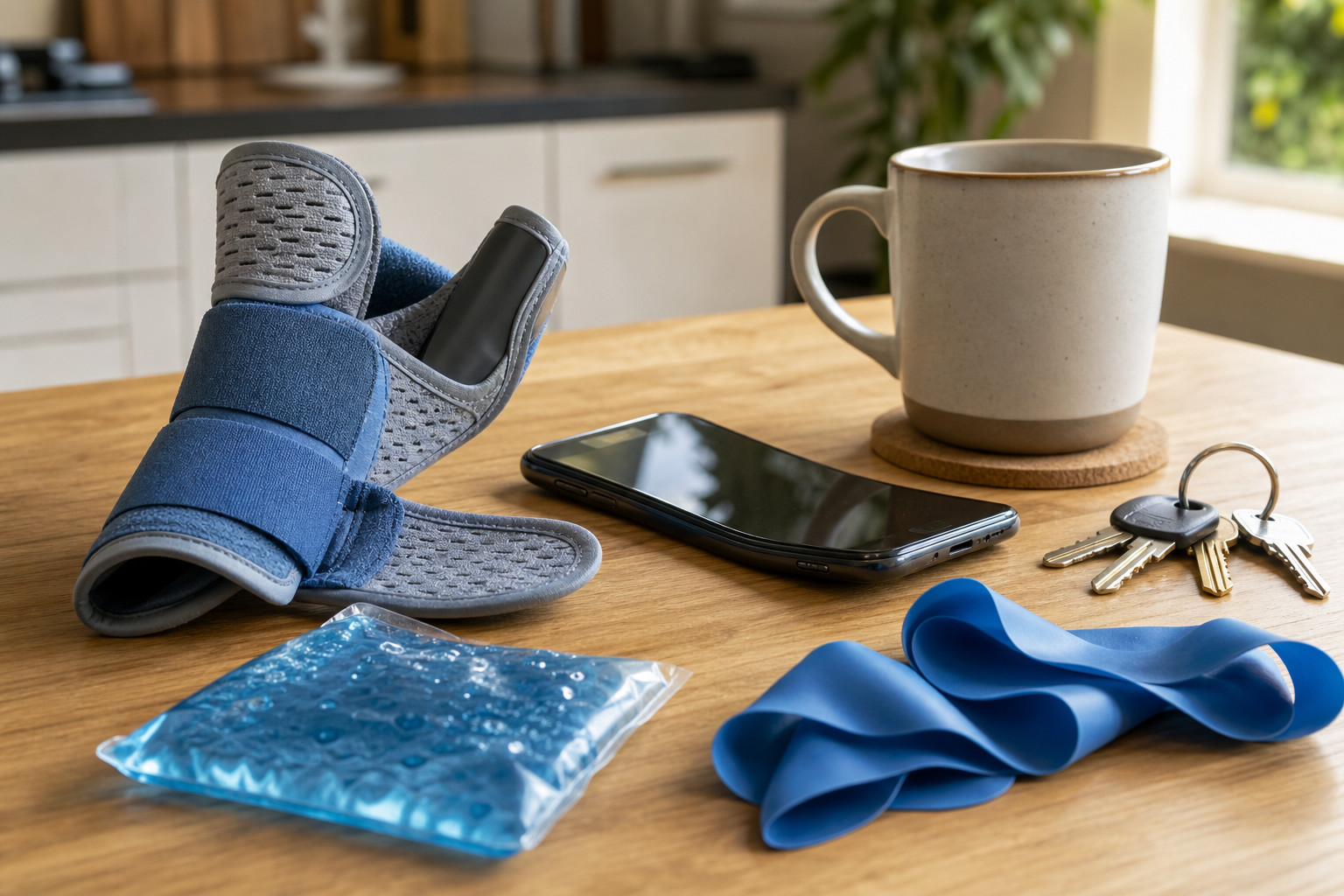
- Use a thumb spica brace or supportive wrap if recommended
- Apply ice 10-15 minutes, 3-5 times per day
- Keep the hand elevated above heart level when swelling is obvious
- Do not keep testing the thumb by squeezing objects
Conservative care options
Treatment What It Does Expected Outcome Timeline Bracing or taping Limits painful motion while tissue settles Less irritation with daily use 1-3 weeks for many mild cases Manual therapy Improves wrist, thumb, and forearm mechanics Better ROM and less guarding Often within 2-4 visits Exercise therapy Restores pinch strength and joint control Better function for typing, gripping, lifting 2-6 weeks Ergonomic changes Reduces repeated thumb load Fewer flare-ups Immediate once appliedIf joint mechanics higher up the chain are contributing, some patients also benefit from broader rehab support like the strategies discussed in Vestibular Disorders Treatment and Vertigo Solution with Chiropractic treatment, where coordination, balance, and movement quality affect tissue loading.
How can you rehab a thumb sprain at home and prevent it from coming back?
Thumb sprain rehabilitation exercises at home should start only after sharp pain and major swelling ease. The goal is to restore ROM first, then add light strength, then return to loaded pinch. A mild sprain may begin easy exercise in 5 to 7 days. A moderate sprain may need 10 to 14 days before resisted work.
- Thumb flexion-extension: move the thumb across the palm, then back out. Do 10 reps, 2 sets.
- Thumb opposition: touch the thumb to each fingertip slowly. Hold 3 seconds each. Do 2 rounds.
- Isometric pinch: press thumb to index finger at 25% effort for 5 seconds. Repeat 8 times.
- Rubber-band abduction: place a light band around fingers and thumb, then gently open. Do 10 reps.
- Grip reset: squeeze a soft towel lightly for 5 seconds, 8 to 10 reps, if pain stays mild.
- Stop if pain spikes during the exercise and lasts more than 2 hours after.
- Use larger-handled tools and kitchen items for 2 to 3 weeks.
- Limit long texting sessions; switch hands or use voice input.
- Warm up before sports with wrist circles and thumb opposition drills.
What to Do Next
If your thumb pain started after a fall, sports injury, or sudden twist, schedule an evaluation with a chiropractor, physical therapist, or rehabilitation provider who treats hand and wrist injuries. If you are searching for a thumb injury specialist near me, use Medximity to find a physical therapist near you, find a chiropractor near you, or browse providers.
At the first visit, expect a history of how the injury happened, grip and pinch testing, ROM assessment, palpation of the MCP and CMC joints, and stability checks of the collateral ligaments. Some cases also need imaging if fracture or dislocation is suspected.
- Seek urgent care now for deformity, severe swelling, numbness, color change, or inability to move the thumb after trauma.
- Book a routine visit soon if pain lasts more than 5 to 7 days, grip stays weak, or swelling returns with normal tasks.
- Start self-care today by protecting the joint, reducing heavy pinch, icing briefly, and using the home drills above once sharp pain settles.
For more rehab-focused education, see Meniere’s recovery with upper cervical treatment or explore more health topics.
Frequently Asked Questions
How long does a thumb sprain heal?
How long does a thumb sprain heal depends on grade. Mild sprains often improve in 2 to 4 weeks. Moderate sprains commonly need 4 to 8 weeks. If instability remains beyond that, get re-evaluated.
Is it normal to lose grip strength?
Is it normal to lose grip strength after a thumb sprain? Yes, temporarily. Grip drops because the thumb cannot provide stable counter-pressure. Persistent weakness after swelling improves suggests the ligament or surrounding muscles still need treatment.
Can I still move my thumb if it is sprained?
Usually yes. Many sprains still allow motion, but pinch, opposition, and twisting often hurt. Pain-free movement does not rule out a ligament injury.
When should I see a provider?
See a provider if bruising is significant, grip remains weak after several days, the joint feels loose, or you cannot use the hand normally for work, sports, or childcare.
Can overuse cause thumb joint pain without a major accident?
Yes. Repeated phone use, gaming, tool use, and prolonged pinch grip can irritate the CMC joint and nearby tendons, especially if wrist mechanics and thumb posture are poor.