Understanding Pinched Nerve in the Neck (Cervical Radiculopathy): Symptoms, Causes, and Treatment starts with one key idea: the problem may begin in the neck, but the symptoms often travel. A compressed or irritated nerve root in the cervical spine can send pain, tingling, numbness, or weakness into the shoulder, arm, hand, or fingers.
This pattern is different from ordinary muscle soreness. Some people notice sharp neck pain after sleeping awkwardly. Others feel a deep ache between the shoulder blade and spine, a buzzing sensation down the arm, or pain from neck to fingers. In many cases, symptoms improve with time and conservative care, but a proper evaluation can help identify what is likely contributing to the nerve irritation and what type of treatment may be appropriate.
If you are comparing options for neck pain care, searching for a chiropractor for neck pain, or looking for physical therapy for cervical radiculopathy near you, this guide explains what cervical radiculopathy is, common pinched nerve in neck symptoms, how providers evaluate it, and what to expect from non-surgical treatment.
What Is Cervical Radiculopathy in the Neck?
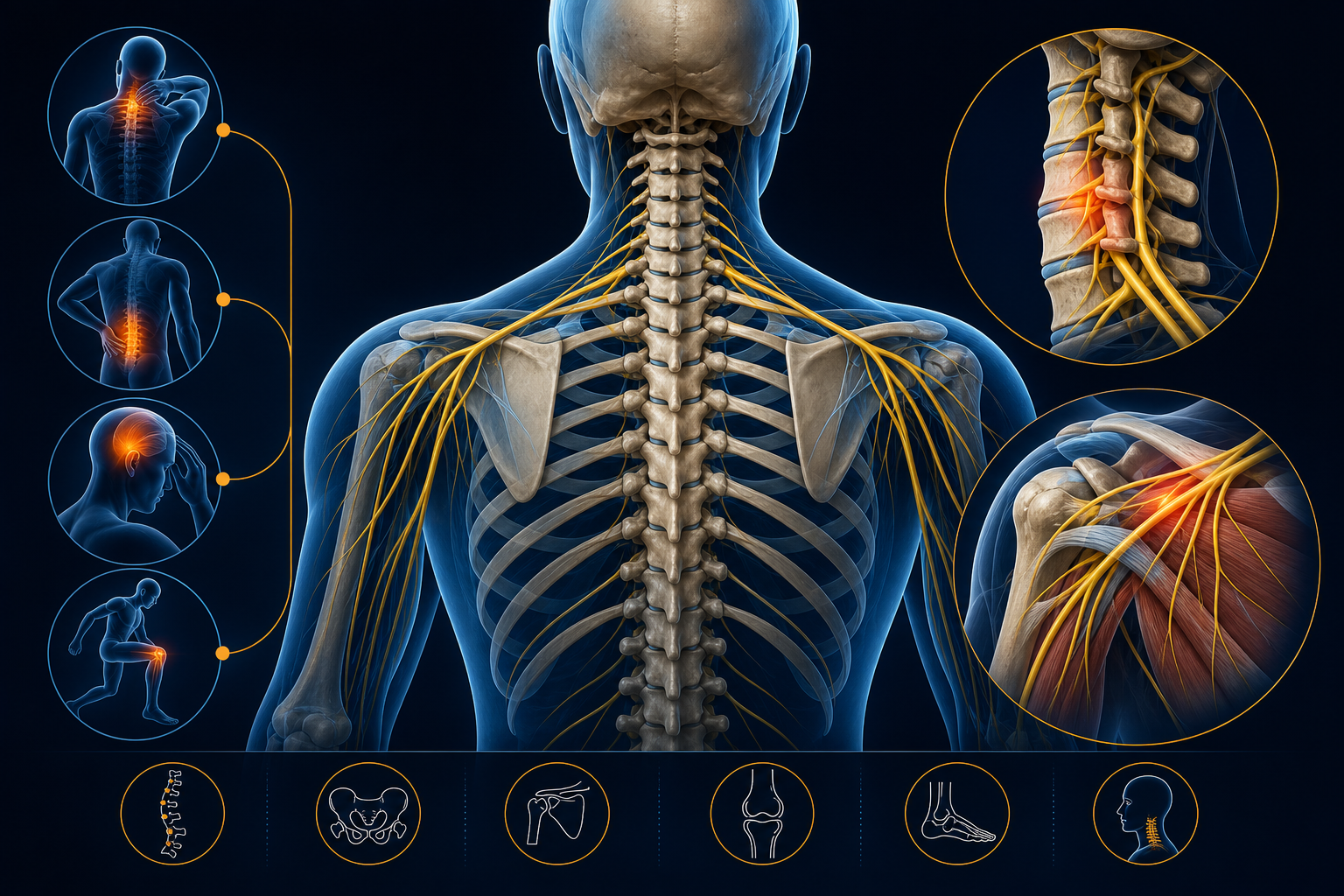
Cervical radiculopathy is a medical term for symptoms caused by irritation, inflammation, or compression of a cervical nerve root. The cervical spine is the neck portion of the spine. It includes seven vertebrae, spinal discs, joints, ligaments, muscles, and nerve roots that exit the spinal canal through openings called foramina.
Each cervical nerve root helps carry signals between the spinal cord and specific areas of the shoulder, arm, hand, and fingers. When one of these nerve roots becomes irritated, symptoms may follow the nerve pathway. That is why a neck problem can feel like arm pain, hand tingling, or finger numbness.
Patients often ask, what is cervical radiculopathy in neck pain terms? In plain language, it is a pinched or irritated neck nerve that may create symptoms away from the neck. The word radiculopathy refers to a nerve root problem. Cervical refers to the neck.
Why the symptoms can travel down the arm
Nerves work like communication lines. If a nerve root is irritated near the spine, the brain may perceive discomfort anywhere along that nerve pathway. Depending on which nerve root is involved, symptoms may be felt near the shoulder, outside of the arm, thumb side of the hand, middle finger, ring finger, or little finger. This is one reason a provider may ask exactly where the pain, numbness, or tingling travels.
Not every case follows a perfect textbook pattern. Muscle guarding, joint irritation, posture, inflammation, and previous injuries can make symptoms feel more widespread. Still, the pattern of pain from neck to fingers can give a clinician useful clues.
Pinched Nerve in Neck Symptoms
Pinched nerve in neck symptoms vary from mild and occasional to intense and limiting. Some patients feel mostly neck stiffness. Others have little neck pain but significant arm tingling from neck nerve irritation. Symptoms may worsen with certain neck positions, prolonged desk work, overhead activity, driving, or sleeping posture.
Common symptoms of cervical radiculopathy
- Neck pain that may feel sharp, burning, aching, or deep
- Pain that travels from the neck into the shoulder, arm, hand, or fingers
- Tingling, pins-and-needles, or buzzing sensations in the arm or hand
- Numbness in part of the arm, hand, or fingers
- Weakness with gripping, lifting, pushing, pulling, or holding objects
- Pain around the shoulder blade or upper back
- Symptoms that change when you turn, extend, or side-bend the neck
- A feeling that you cannot turn your neck with arm pain
Some patients describe symptoms that come and go. Others notice that looking down at a phone or laptop increases arm symptoms. If symptoms are new, worsening, or interfering with work, sleep, driving, or daily activity, it is reasonable to schedule an evaluation with a qualified provider.
Neck pain vs pinched nerve: how are they different?
Neck pain vs pinched nerve symptoms can overlap, but they are not always the same. Mechanical neck pain often stays mostly in the neck, upper shoulders, or base of the skull. It may be related to muscle strain, joint irritation, posture, stress, or reduced mobility.
A pinched nerve in the neck is more likely when symptoms travel below the shoulder into the arm or hand, especially if there is tingling, numbness, burning, electrical pain, or weakness. That does not mean every arm symptom comes from the neck. Shoulder conditions, elbow nerve irritation, wrist nerve compression, and other medical issues can also cause arm or hand symptoms. A provider can help sort out the source.
Common Causes of a Pinched Nerve in the Neck
Cervical radiculopathy may develop suddenly or gradually. In younger and middle-aged adults, disc-related irritation is a common contributor. In older adults, age-related joint and bone changes may narrow the space where the nerve exits. Many cases involve more than one factor.
Cervical disc herniation or disc bulge
Spinal discs sit between vertebrae and help absorb load. If disc material bulges or herniates toward a nerve root, it may irritate the nerve mechanically or chemically. Some disc changes cause no symptoms, and imaging findings do not always match pain intensity. When a disc is contributing to radiculopathy, symptoms may increase with sitting, bending the neck, coughing, or certain head positions.
Foraminal stenosis
Foraminal stenosis means narrowing of the opening where a nerve root exits the spine. This narrowing may be related to joint changes, bone spurs, disc height loss, or thickened soft tissues. When the available space is reduced, the nerve may become more sensitive, especially during neck extension or rotation.
Degenerative changes in the cervical spine
Over time, the discs and joints of the neck can change. These changes are common and do not always cause pain. However, in some people, they may be associated with nerve irritation. A careful clinical exam matters because normal age-related findings on imaging may not be the true source of symptoms.
Posture, workload, and repetitive strain
Posture alone is rarely the entire explanation, but sustained positions can contribute to symptoms in some patients. Long hours at a computer, frequent phone use, overhead work, prolonged driving, or repeated lifting may increase load on the neck and surrounding tissues. Ergonomic changes, movement breaks, and strengthening exercises may help reduce sensitivity over time.
Injury or trauma
A fall, sports injury, or motor vehicle collision can irritate the neck joints, muscles, discs, or nerves. If arm pain, numbness, tingling, or weakness starts after trauma, a timely evaluation is especially important to rule out more serious injury and guide safe care.
When to See a Provider for Neck and Arm Symptoms
You do not need to wait until symptoms become severe before seeking help. A provider can assess whether your symptoms are likely related to cervical radiculopathy, another musculoskeletal issue, or a condition that needs medical attention. Early evaluation may also help you avoid unnecessary fear and reduce aggravating habits.
Schedule an evaluation if you notice:
- Neck pain with tingling, numbness, or pain traveling into the arm or hand
- Arm pain that is worse than the neck pain
- Symptoms that persist beyond several days or keep returning
- Difficulty turning the neck, especially with arm symptoms
- Weakness, dropping objects, or changes in grip strength
- Pain that disrupts sleep or limits work, driving, or daily activity
- Symptoms after a fall, collision, or sports injury
Seek urgent medical evaluation if you develop progressive weakness, loss of coordination, trouble walking, loss of bowel or bladder control, fever with severe neck pain, unexplained weight loss, or symptoms that suggest a stroke such as facial drooping, sudden confusion, or sudden trouble speaking. These signs are not typical simple neck pain and should not be managed with routine conservative care alone.
How Providers Evaluate Cervical Radiculopathy
A cervical radiculopathy evaluation usually starts with a detailed history and physical exam. The goal is not only to label the condition, but to understand what movements and positions calm or aggravate symptoms, whether strength or sensation is affected, and whether conservative care is appropriate.
Health history and symptom pattern
Your provider may ask when symptoms started, where they travel, what makes them better or worse, and whether you have numbness, tingling, weakness, headaches, dizziness, shoulder pain, or previous neck injuries. They may ask about work activities, sleep position, exercise, stress, and daily habits because these details can influence treatment planning.
Movement and orthopedic testing
A clinician may check neck range of motion, posture, shoulder movement, reflexes, sensation, and strength. They may use gentle clinical tests that load or unload the cervical spine to see how symptoms respond. For example, some patients feel relief when the arm is supported or when traction-like positioning reduces nerve irritation. Testing should be adjusted to your comfort level and clinical situation.
When imaging may be considered
Imaging is not always needed at the first visit. Many patients with suspected cervical radiculopathy can begin conservative care based on history and exam findings. A provider may consider imaging or referral when symptoms are severe, progressive, linked to trauma, associated with concerning neurological signs, or not improving as expected. Organizations such as the American Academy of Orthopaedic Surgeons and the National Institute of Neurological Disorders and Stroke describe cervical radiculopathy as a condition that is often evaluated through both clinical findings and, when appropriate, diagnostic testing.
Pinched Nerve Neck Treatment Without Surgery
Many patients search for pinched nerve neck treatment without surgery because they want a conservative starting point. Non-surgical care may help reduce nerve irritation, improve neck and shoulder mechanics, restore strength, and teach strategies that make symptoms more manageable. The right approach depends on your exam findings, symptom severity, health history, and goals.
Conservative care does not mean doing the same treatment for everyone. A good plan is usually individualized and adjusted based on how symptoms respond.
Activity modification and symptom calming strategies
For many cases, the first step is reducing positions and loads that keep the nerve irritated. This may include changing workstation height, supporting the arm during flare-ups, avoiding prolonged end-range neck positions, taking movement breaks, or temporarily modifying overhead lifting. Resting completely for long periods is not usually the goal. Instead, providers often encourage tolerable movement that does not significantly worsen arm symptoms.
Chiropractic care for cervical radiculopathy
Chiropractors who treat neck pain may use a combination of joint mobilization, soft tissue therapy, gentle spinal manipulation when appropriate, traction-like techniques, exercise instruction, and ergonomic coaching. For some patients, chiropractic care may help improve mobility and reduce mechanical stress around the cervical spine. Treatment should be based on a careful exam, and high-force techniques are not appropriate for every patient.
If you are looking for the best chiropractor for pinched nerve neck symptoms, focus less on advertising claims and more on fit. Look for a provider who explains the exam, screens for red flags, discusses conservative options, modifies treatment to your comfort level, and tracks changes in arm pain, numbness, tingling, and strength. You can begin your search through Medximity's chiropractor directory and review provider profiles for services, location, and clinical focus.
Physical therapy for cervical radiculopathy
Physical therapy for cervical radiculopathy near me is another common search because rehabilitation plays an important role in many conservative plans. A physical therapist may use exercise, manual therapy, nerve mobility work, postural retraining, shoulder and upper-back strengthening, deep neck flexor training, and education on symptom management.
Therapy often progresses in stages. Early sessions may focus on calming symptoms and identifying positions of relief. Later sessions may emphasize strength, endurance, work-specific tolerance, and return to normal activity. Patients who have arm tingling from neck nerve irritation may also learn nerve gliding exercises, but these should be performed carefully because aggressive stretching can aggravate symptoms in some cases.
To compare local options, visit Medximity's physical therapist search page or learn more about physical therapy treatment.
Therapeutic exercise and strengthening
Exercise for cervical radiculopathy is not just neck stretching. Depending on your presentation, a provider may prescribe exercises to improve cervical mobility, strengthen the deep neck flexors, build shoulder blade control, increase thoracic spine mobility, and restore upper-body strength. The goal is to reduce sensitivity while improving the capacity of the neck and upper quarter.
Some patients respond well to repeated movements that centralize symptoms, meaning pain moves out of the arm and closer to the neck. Centralization can be a useful clinical sign, but it should be interpreted by a qualified provider. If an exercise increases pain from the neck to the fingers or worsens numbness, it may need to be modified or stopped until you are reassessed.
Cervical traction and decompression-style approaches
Some providers use manual or mechanical cervical traction as part of a broader plan. Traction gently creates space and may temporarily reduce nerve root irritation for certain patients. It is not a cure-all, and it is not appropriate for everyone. Your provider should screen for conditions that make traction unsuitable and monitor your response carefully.
Natural treatment for pinched nerve neck symptoms
Natural treatment for pinched nerve neck symptoms usually means conservative strategies that support the body's recovery without invasive procedures. These may include guided exercise, manual therapy, posture and ergonomic changes, heat or cold based on comfort, sleep-position adjustments, stress reduction, walking, and gradual return to activity. Some people also benefit from improving general health habits such as hydration, regular movement, and consistent sleep.
Natural does not always mean risk-free. Neck nerves can be sensitive, and overly aggressive stretching, self-cracking, or online exercise routines may worsen symptoms. A provider can help tailor a plan to your exam findings.
What to Expect at Your First Visit
Knowing what to expect can make care feel less intimidating. Whether you see a chiropractor, physical therapist, or another qualified provider, the first visit is usually focused on understanding your symptoms, checking for signs that require referral, and building a conservative plan that matches your needs.
Discussion of symptoms and goals
You will likely discuss where symptoms are located, whether they travel into the arm or fingers, what daily tasks are affected, and what goals matter most to you. For one person, the goal may be sleeping through the night. For another, it may be returning to lifting, computer work, childcare, or sports.
Physical examination
The exam may include neck and shoulder movement, strength testing, reflexes, sensation, posture, and symptom response to specific positions. Providers may also examine the shoulder, elbow, wrist, or upper back because symptoms in the arm and hand can have more than one source.
A care plan and home guidance
Your care plan may include in-office treatment, home exercises, ergonomic recommendations, activity modifications, and a follow-up schedule. You should understand what symptoms are acceptable during exercise, what symptoms mean you should stop, and when to contact the provider. If you are new to chiropractic care, Medximity's guide on what to expect at your first chiropractic visit may help you prepare.
How Long Does Cervical Radiculopathy Last?
How long does cervical radiculopathy last? The answer depends on the cause, severity, duration of symptoms, and individual health factors. Some mild cases improve over days to weeks. Others take several weeks or months, especially when symptoms involve persistent numbness, weakness, or significant disc or joint irritation.
Research and clinical experience suggest that many cases of cervical radiculopathy improve over time with conservative management, but recovery is not always linear. Symptoms may flare with poor sleep, increased workload, long driving, stress, or sudden activity changes. A flare does not always mean damage has occurred, but worsening or progressive neurological symptoms should be reassessed.
Signs you may be improving
- Arm pain becomes less intense or less frequent
- Tingling or numbness decreases
- Pain moves out of the hand or arm and closer to the neck
- You can turn your head more comfortably
- Sleep and daily activity become easier
- Grip strength and arm function improve
If symptoms are not improving after a reasonable trial of care, your provider may adjust the plan or coordinate further evaluation. The goal is to keep care responsive rather than repeating the same approach when it is not helping.
Everyday Habits That May Help Reduce Neck Nerve Irritation
Self-care cannot replace a professional evaluation, especially when nerve symptoms are present. However, small changes may reduce repeated irritation and support recovery.
Set up your workspace to reduce sustained neck strain
Keep your screen near eye level, bring frequently used items within reach, and avoid holding the phone between your ear and shoulder. If you use a laptop for long periods, an external keyboard and mouse may help you avoid prolonged looking down.
Take movement breaks
The neck often tolerates movement better than stillness. Short breaks to stand, walk, gently move the shoulders, and change positions may help prevent symptoms from building during the day. The exact frequency depends on your work and symptom response.
Support your arm during flare-ups
Some people with cervical radiculopathy feel less arm pain when the affected arm is supported on a pillow or armrest. This may reduce tension through the shoulder and nerve pathway. If support helps, your provider may incorporate that information into your treatment plan.
Be cautious with aggressive stretching
Stretching can feel helpful for muscle tightness, but nerve-related symptoms often need a gentler approach. If a stretch sends tingling farther down the arm or increases pain from neck to fingers, it may not be the right exercise at that stage.
Finding Pinched Nerve in Neck Treatment Near You
When you search for pinched nerve in neck treatment near me, you may find chiropractors, physical therapists, orthopedic clinics, pain clinics, and other providers. For many patients, a conservative care provider is an appropriate first step when symptoms are stable and there are no urgent red flags. The right provider should listen carefully, perform a focused exam, explain findings in plain language, and refer when symptoms suggest a need for additional medical evaluation.
Medximity helps patients compare local providers and learn about conservative care options. You can start at Medximity, explore chiropractic adjustment information, or search directly for chiropractors and physical therapists in your area.
Questions to ask before starting care
- Do you evaluate neck pain with arm tingling, numbness, or weakness?
- What signs would lead you to refer me for medical imaging or another specialist?
- How will you modify treatment if my arm symptoms worsen?
- What home exercises or activity changes are appropriate for my symptoms?
- How will we measure progress over the next few visits?
These questions can help you choose a provider who takes a thoughtful, safety-focused approach to cervical radiculopathy.
Frequently Asked Questions About Pinched Nerve in the Neck
What does a pinched nerve in the neck feel like?
A pinched nerve in the neck may feel like sharp neck pain, burning shoulder or arm pain, tingling, numbness, or weakness that travels into the hand or fingers. Some people feel symptoms mainly in the arm rather than the neck.
Can neck pain cause tingling in the arm or hand?
Yes, irritation of a cervical nerve root may cause arm tingling from neck nerve involvement. However, tingling can also come from shoulder, elbow, wrist, or other medical causes, so an evaluation is important if symptoms persist or worsen.
How do I know if it is neck pain vs pinched nerve?
Neck pain that stays in the neck and upper shoulders is often mechanical. A pinched nerve is more likely when pain, numbness, tingling, or weakness travels below the shoulder into the arm or fingers. A provider can help distinguish the source.
What if I cannot turn my neck and have arm pain?
If you cannot turn your neck with arm pain, especially if there is numbness, tingling, weakness, or symptoms after an injury, it is reasonable to schedule a prompt evaluation. Seek urgent care for progressive weakness, coordination problems, fever, or other concerning symptoms.
Can chiropractic care help a pinched nerve in the neck?
Chiropractic care may help some patients with neck-related nerve irritation through a combination of gentle manual therapy, mobility work, soft tissue care, exercise guidance, and ergonomic advice. Treatment should be individualized and modified if symptoms worsen.
Is physical therapy useful for cervical radiculopathy?
Physical therapy may help by improving neck and shoulder mechanics, strengthening supporting muscles, guiding nerve mobility exercises when appropriate, and teaching symptom management strategies. The plan should be based on your exam and response to treatment.
How long does cervical radiculopathy last?
Some cases improve within a few weeks, while others take longer. Duration depends on the cause, severity, nerve sensitivity, activity demands, and overall health. Worsening weakness or persistent symptoms should be reassessed by a qualified provider.
Can a pinched nerve in the neck be treated without surgery?
Many patients start with conservative care such as activity modification, physical therapy, chiropractic care, exercise, posture changes, and other non-invasive strategies. A provider can help determine whether conservative care is appropriate for your specific symptoms.
Key Takeaway
Cervical radiculopathy is a neck nerve root problem that may cause pain, tingling, numbness, or weakness into the shoulder, arm, hand, or fingers. While many cases improve with time and conservative care, symptoms involving the arm or hand deserve a thoughtful evaluation. If you are searching for pinched nerve neck treatment without surgery, consider starting with a qualified chiropractor or physical therapist who can assess your symptoms, explain your options, and guide a safe plan for recovery.