How often should you see a chiropractor for neck pain? Most new neck pain episodes start with 2–3 visits per week for 2–4 weeks, then taper to weekly or every other week as ROM, pain, and daily function improve. Chronic or recurring neck pain often needs 1–2 visits per week for 4–8 weeks before shifting to maintenance care every 3–6 weeks.
Your schedule should match the cause of pain, exam findings, symptom irritability, and response after the first 2–4 visits. A stiff neck from desk posture does not need the same frequency as whiplash, cervical radiculopathy, or long-term joint restriction in the cervical spine.
How Often Should You See a Chiropractor for Neck Pain?
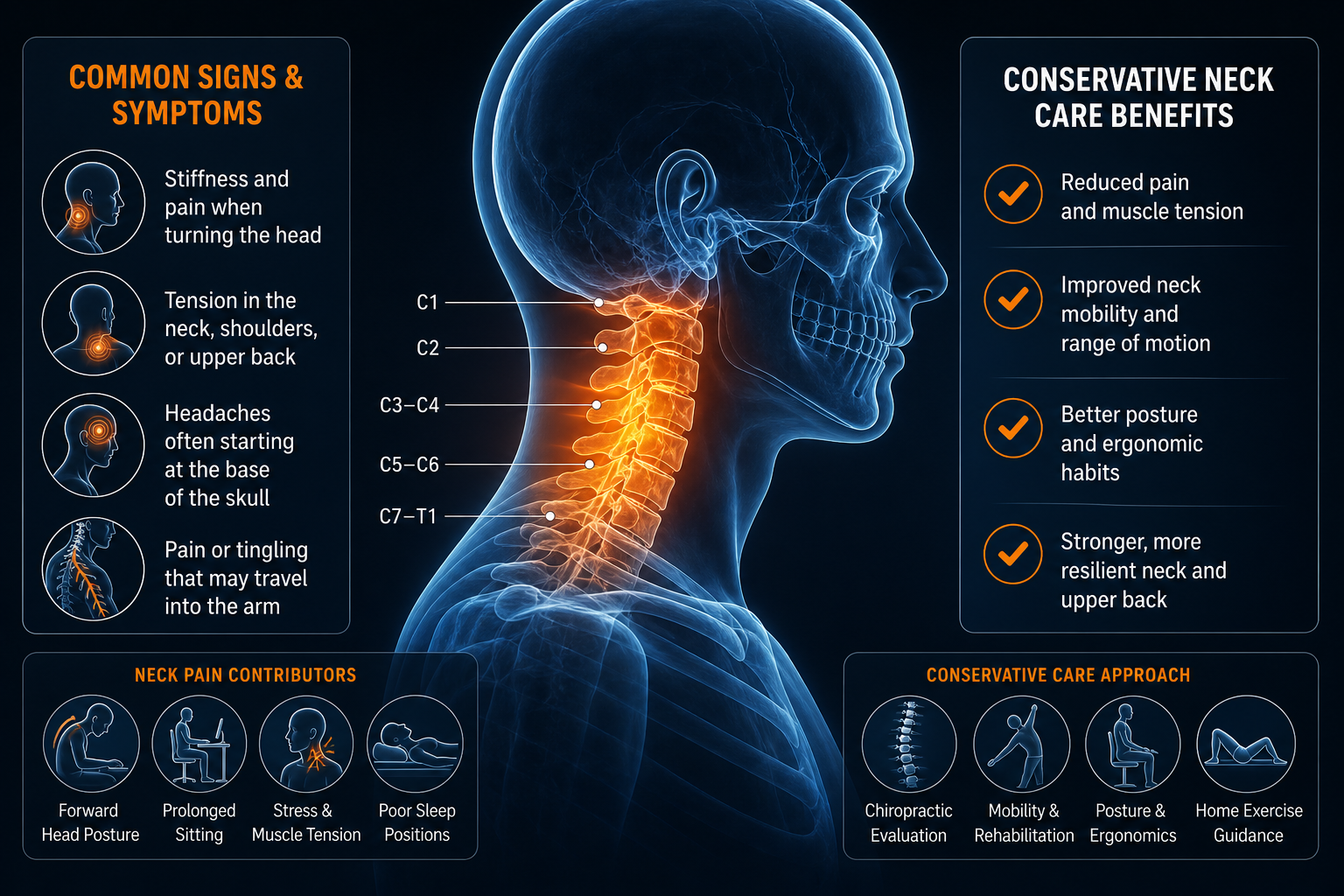
Most chiropractic care plans for neck pain begin with higher frequency, then reduce visits as symptoms stabilize. The common starting range is 2–3 visits per week for acute pain, 1–2 visits per week for chronic neck pain, and every 3–6 weeks for maintenance once function returns.
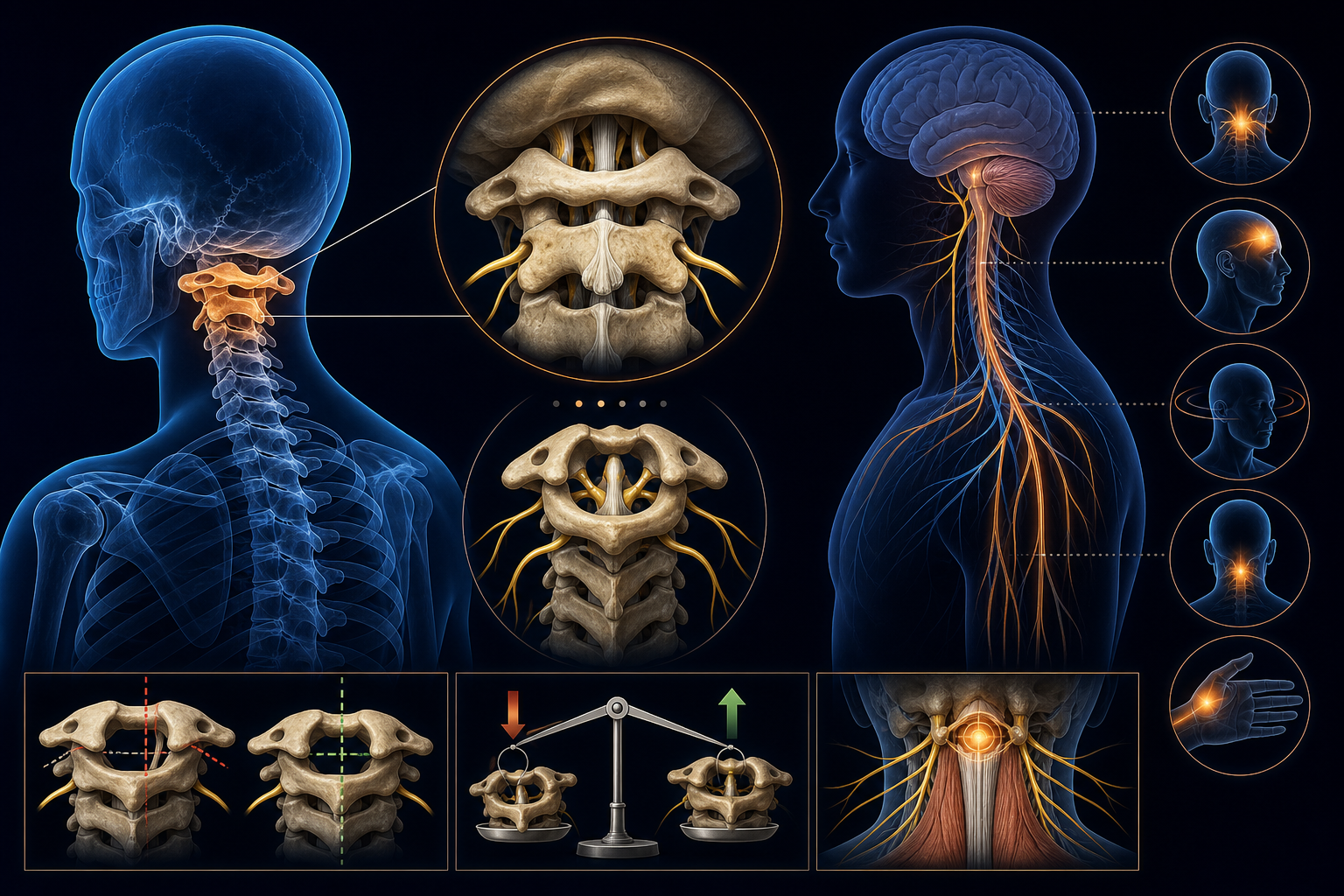
The exact answer to “how many chiropractic visits for neck pain” depends on whether your pain is acute, recurring, or linked with nerve symptoms. Acute muscle guarding in the upper trapezius, levator scapulae, and suboccipital muscles may improve within 2–3 weeks. Nerve-related pain from cervical joint or disc irritation may need 6–12 weeks of structured care and home exercise.
- Mild stiff neck: 1–2 visits per week for 1–3 weeks.
- Acute neck pain after strain: 2–3 visits per week for 2–4 weeks.
- Chronic neck pain: 1–2 visits per week for 4–8 weeks.
- Neck pain with arm symptoms: 2 visits per week for 3–6 weeks, reassessed often.
- Maintenance care: every 3–6 weeks if symptoms repeatedly return.
Seek urgent medical care now if neck pain occurs with new arm or leg weakness, trouble walking, loss of bladder or bowel control, severe headache unlike your usual pattern, fever, chest pain, fainting, or neck pain after major trauma. Routine chiropractic scheduling should wait until dangerous causes are ruled out.
The Three Phases of Chiropractic Care for Neck Pain
Chiropractic care frequency for chronic neck pain usually follows 3 phases: acute relief, corrective care, and maintenance. Each phase has a different goal, so the visit schedule should change as your exam changes.
1. Acute relief phase
The acute phase focuses on reducing pain sensitivity, muscle guarding, and restricted motion in the facet joints, cervical discs, and surrounding soft tissue. This phase commonly lasts 2–4 weeks.
- Frequency: 2–3 visits per week.
- Goal: reduce pain, restore basic neck rotation, and calm irritated tissue.
- Typical care: chiropractic adjustment, mobilization, soft tissue work, light ROM drills.
2. Corrective or functional phase
The corrective phase builds load tolerance. Visits usually drop to 1–2 per week for 4–8 weeks while you add strengthening for the deep neck flexors, lower trapezius, and serratus anterior.
3. Maintenance phase
Maintenance chiropractic care vs active treatment for neck pain is simple: active treatment is used to change symptoms and function; maintenance is used after symptoms are controlled. Maintenance often means 1 visit every 3–6 weeks, paired with daily mobility and strength work.
For related posture and workplace mechanics, review workplace safety and back pain prevention.
What Factors Affect How Often You Should Go?
The cause of neck pain is the main driver of visit frequency. A posture-related stiff neck from laptop use may need short-term care. Whiplash-type injuries, recurring headaches, and suspected cervical nerve irritation usually need closer follow-up.
Neck Pain Pattern Common Structures Involved Typical Frequency Expected Timeline Desk-related stiffness Upper trapezius, levator scapulae, cervical facet joints 1–2 visits weekly 2–4 weeks Acute strain Scalene muscles, suboccipitals, cervical ligaments 2–3 visits weekly 2–6 weeks Whiplash-type injury Cervical joints, discs, deep neck flexors 2 visits weekly 6–12 weeks Pinched nerve symptoms Cervical nerve root, disc, foraminal joints 1–2 visits weekly with reassessment 6–12 weeks Recurring chronic pain Facet joints, postural muscles, thoracic spine Weekly, then every 3–6 weeks 8–12 weeks, then maintenanceIf you are asking “can chiropractic fix neck pain from sitting at desk,” the answer is usually that care can help restore motion and reduce mechanical irritation, but your workstation and strengthening plan decide whether the pain stays away. If you are asking how often to see a chiropractor for pinched nerve in neck, expect a more cautious plan with frequent strength, reflex, and sensation checks.
Head pain can overlap with neck dysfunction. If your neck pain includes headaches, read what common head pain may mean and how migraine care may connect with musculoskeletal treatment.
How Do You Know Your Chiropractic Schedule Is Working?
Your visit schedule is working when function improves between visits, not only during visits. The best signs are measurable: more cervical ROM, fewer pain spikes, better sleep position tolerance, and longer work periods before symptoms return.
Research on spinal manipulation and exercise for neck pain generally supports multimodal care, especially when manual therapy is paired with supervised or home exercise rather than used alone.
Track these 5 markers weekly
- Rotation: you can turn your head farther while driving or checking blind spots.
- Pain intensity: your average pain drops at least 2 points on a 0–10 scale within 2–4 weeks.
- Flare duration: symptoms settle within hours instead of lasting 1–2 days.
- Arm symptoms: tingling, numbness, or radiating pain moves out of the hand and toward the neck.
- Exercise tolerance: chin tucks, rows, and thoracic mobility drills become easier.
How long does chiropractic take to work for neck pain? Mild stiffness may improve in 1–3 visits. Chronic pain often needs 6–8 visits before the pattern clearly changes. Neck pain worse after chiropractic adjustment can happen for 24–48 hours from temporary soreness, but worsening arm weakness, spreading numbness, severe headache, or dizziness needs prompt evaluation.
Neck symptoms can also contribute to ear and head complaints in some cases. Medximity covers this connection in neck-related tinnitus patterns.
What Happens at the First Chiropractic Appointment for Neck Pain?
The first visit determines frequency by identifying pain triggers, restricted joints, neurologic signs, and whether chiropractic care is appropriate. A provider should not assign a long schedule before examining your cervical spine, shoulders, thoracic spine, and nerve function.
Your first assessment usually includes
- History: onset, trauma, work posture, headache pattern, arm symptoms, prior imaging, and previous treatment.
- ROM testing: flexion, extension, side bending, and rotation measured by pain and limitation.
- Orthopedic tests: screening for facet irritation, disc sensitivity, and nerve root involvement.
- Neurologic screen: reflexes, grip strength, sensation, and upper limb tension testing.
- Palpation and motion testing: assessment of cervical joints, first rib, and upper thoracic segments.
- Care plan: visit frequency, home care, reassessment date, and referral plan if findings do not fit chiropractic care.
If you searched for a neck pain chiropractic adjustment near me, use the first visit to ask how often reassessment occurs. A reasonable plan includes a checkpoint after 4–6 visits, not an open-ended schedule. You can find a chiropractor near you on Medximity and compare providers by location and specialty focus.
What Home Care Supports Fewer Chiropractic Visits?
Daily home care helps reduce visit frequency because it maintains motion between appointments. The most useful plan for mechanical neck pain combines gentle mobility, deep neck flexor activation, and upper back strengthening.
10-minute neck reset protocol
- Chin tuck: lie on your back, gently slide your chin straight back, hold 5 seconds, repeat 10 times. Do not lift your head.
- Thoracic extension: sit tall with hands behind your head, extend over the top of a chair, repeat 10 slow reps.
- Levator scapulae stretch: turn your nose toward your armpit, gently nod downward, hold 20 seconds per side, repeat twice.
- Scapular retraction: squeeze shoulder blades down and back without shrugging, hold 3 seconds, repeat 15 times.
- Doorway pec stretch: place forearms on a door frame, step forward until the chest opens, hold 30 seconds twice.
Stop the protocol if symptoms travel farther down the arm, grip strength drops, or dizziness appears. Mild muscular stretch is acceptable; sharp neck pain or nerve symptoms are not.
Returning patients with recurring neck pain often need fewer visits than new patients because the provider already knows the pattern. A common restart plan is 1–2 visits in the first week, home care daily for 10–14 days, then reassessment.
If symptoms also involve the low back or leg, see Medximity’s guides on natural low back pain recovery and understanding sciatic pain.
Frequently Asked Questions About Chiropractic Frequency for Neck Pain
Chiropractic frequency should change when your symptoms change. Static schedules miss the point of treatment, which is to improve motion, reduce irritability, and restore daily function with the fewest necessary visits.
How long does chiropractic take to work for neck pain?
Mild neck stiffness may improve within 1–3 visits over 1–2 weeks. Chronic neck pain typically needs 6–8 visits over 4–8 weeks before you can judge whether the plan is working.
Is it normal to need weekly chiropractic visits?
Weekly visits are common during the corrective phase for chronic or recurring neck pain. Weekly care should have a measurable goal, such as improved ROM, reduced headache frequency, or better tolerance for desk work.
Can you see a chiropractor too often?
Yes. If every visit gives only short relief and symptoms return within 24–48 hours, the plan may need more exercise therapy, ergonomic changes, co-management with PT, or further evaluation.
How often should returning patients go for recurring neck pain?
Returning patients often start with 1–2 visits during the first week of a flare, then taper quickly if symptoms respond. Maintenance visits every 3–6 weeks may fit patients whose neck pain reliably returns despite consistent home care.
Neck pain relief chiropractic: how many sessions is typical?
Many cases need 4–12 sessions depending on severity and duration. Acute stiffness may need fewer than 6 visits; chronic pain with nerve symptoms may need 8–16 visits with regular reassessment.
- Insurance limits: some plans cap visits per year or require proof of functional improvement.
- Cost planning: higher-frequency care costs more early but should taper as function improves.
- Best question to ask: “What objective change should we see by visit 4 or 6?”
What to Do Next
Choose a chiropractor, physical therapist, or rehabilitation-focused provider who measures cervical ROM, screens nerve function, gives home exercises, and reassesses after a defined number of visits. The first appointment should produce a frequency recommendation, a short-term goal, and a clear reason for each treatment method.
- Seek urgent care now: new weakness, trouble walking, loss of bladder or bowel control, fever, fainting, severe unusual headache, chest pain, or major trauma.
- Schedule routine care: neck stiffness lasting more than 3–5 days, recurring pain with desk work, limited rotation, or headaches linked with neck motion.
- Expect at visit 1: history, ROM testing, orthopedic and neurologic screening, hands-on assessment, home care, and a visit-frequency plan.
- Reassess early: if no measurable progress occurs after 4–6 visits, the care plan should change.
Use Medximity to find a chiropractor near you, find physical therapy near you, or browse providers who focus on chiropractic, rehabilitation, and wellness care.