Understanding Left Hip Sprain: Symptoms, Causes, and Treatment starts with one key point: a left hip sprain means the ligaments supporting your left hip joint have been overstretched or partially torn. Most cases improve with conservative care, activity changes, and guided rehab over 2 to 8 weeks, but severe pain, inability to bear weight, or major swelling needs prompt evaluation. If your goal is to know what a left hip sprain is, why your left hip hurts, and what to do next, the answer is to identify the injured structure, reduce load early, and restore strength and ROM step by step.
What Is a Left Hip Sprain?
A left hip sprain is an injury to the ligaments that stabilize the left hip joint. Ligaments connect bone to bone. In the hip, they help control motion between the femur and the pelvis, especially around the acetabulum, where the ball-and-socket joint moves under load.
If you searched what is a left hip sprain, the short answer is this: the joint moved beyond what the ligament could control, usually after a fall, awkward twist, sports contact, fast change of direction, or repeated overload.
The ligaments most often discussed around the hip include the iliofemoral ligament, pubofemoral ligament, and ischiofemoral ligament. A provider may also assess nearby structures that can mimic a sprain, including the gluteus medius, hip flexors, sacroiliac joint, and lateral hip tendons.
- Grade 1: mild overstretching, pain with activity, minimal instability
- Grade 2: partial tearing, more pain, limping, reduced ROM
- Grade 3: severe ligament injury, major loss of function, often unable to walk normally
Hip sprains are less common than muscle strains, which is why a careful exam matters. Pain in the groin, outer hip, buttock, or front of the hip can all feel similar at first.
Clinical takeaway: hip pain is often labeled broadly, but treatment works better when the irritated tissue and movement pattern are identified early.
Left Hip Sprain vs. Hip Strain: What Is the Difference?
Left hip sprain vs hip strain comes down to the tissue involved. A sprain affects a ligament. A strain affects a muscle or tendon.
This distinction changes treatment emphasis. A ligament injury usually hurts more with end-range joint motion, twisting, and sudden loading. A muscle strain often hurts with resisted contraction, sprinting, lifting the knee, or pushing off.
How the symptoms usually differ
Condition Main Tissue Involved Typical Pain Pattern Expected Timeline Left hip sprain Ligament Pain with twisting, pivoting, joint loading, end-range stretch Often 2-6 weeks for mild cases, 6-12 weeks for more significant injury Hip strain Muscle or tendon Pain with contraction, stairs, sprinting, kicking, lifting leg Often 1-4 weeks for mild cases, 4-8 weeks if more involved Lateral hip tendon irritation Gluteal tendon Pain lying on side, walking long distances, single-leg stance Often several weeks with load management and rehabBoth conditions can cause limping. Both can limit walking. Both can produce pain near the groin or outer hip.
That is why providers test strength, passive ROM, gait, and joint provocation separately. If your pain increases during resisted hip abduction, the gluteus medius may be more involved. If your pain spikes at end-range rotation or with a pivot, the ligament and capsule become more suspicious.
If your pain also runs below the knee, compare it with common nerve-related patterns in sciatica treatment and pain patterns.
What are the common symptoms of left hip sprain?
The common symptoms of left hip sprain are pain, reduced ROM, stiffness after rest, and pain when walking on the left hip. Many people also notice a limp, especially during the first 3 to 7 days after the injury.
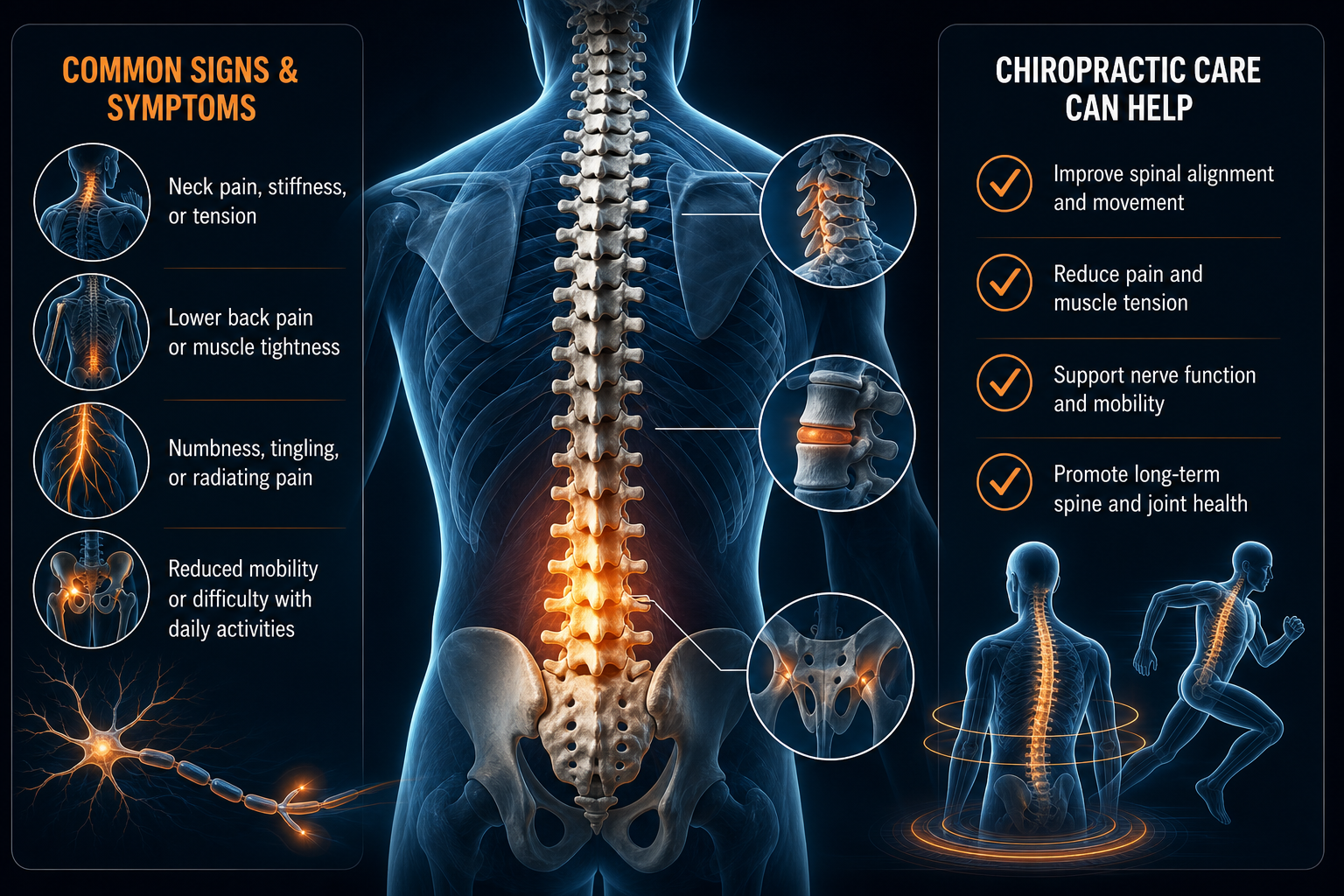
- Pain in the groin, front of hip, outer hip, or deep buttock
- Pain when walking on left hip, especially during push-off or turning
- Limping or shortened stride length
- Stiffness after sitting 20 to 30 minutes
- Pain with stairs, getting in or out of a car, or rolling in bed
- Tenderness near the hip crease, greater trochanter, or posterior hip
- Reduced internal rotation, flexion, or extension
Some findings suggest a more significant problem and need prompt evaluation.
Red flags you should not ignore
- Inability to bear weight for more than a few steps
- Visible deformity after a fall
- Rapid swelling or bruising spreading into the thigh
- Fever or unexplained night pain
- Numbness, marked weakness, or loss of bowel or bladder control
If you cannot stand on the left leg without severe pain, if the hip locked after trauma, or if the pain followed a major fall, seek urgent medical evaluation. A sprain is possible, but fracture or dislocation must be ruled out first.
What causes pain in the left hip?
If you are asking what causes pain in left hip, the most common triggers are falls, sports twists, overuse, poor landing mechanics, and compensation from the low back, knee, or opposite hip. A true sprain usually needs either a sudden force or repeated stress that exceeds ligament tolerance.
Typical mechanisms include stepping off a curb awkwardly, slipping on a wet floor, pivoting during pickleball or soccer, or pushing through fatigue during loaded training.
- Falls: direct impact to the side of the hip or forced twist during landing
- Sports: cutting, pivoting, contact, or forced hip rotation
- Overuse: repeated end-range motion without enough recovery
- Compensation: weak gluteals, stiff ankle, or limited thoracic and pelvic control
- Postural load: standing with weight always shifted to the left leg
The left hip can also hurt when the pelvis is not moving well. Restricted motion at the sacroiliac joint or lumbar spine changes how force passes through the hip during gait. That does not guarantee the back is the main problem, but it often affects treatment planning.
Research on lower-extremity mechanics consistently shows that poor single-leg control increases joint stress at the hip and knee during walking, stairs, and cutting movements.
If balance issues contributed to a fall, related rehab principles appear in vestibular disorders treatment and vertigo solution with chiropractic treatment.
Why does my left hip hurt more on one side?
Why does my left hip hurt is often a side-specific mechanics question, not just a tissue question. One hip becomes more irritated when it is taking more load, rotating less efficiently, or compensating for weakness somewhere else.
Most people are asymmetrical. You may always cross one leg, carry children on one side, get in and out of the car the same way, or pivot repeatedly on the left leg during work or sport. Over weeks, that changes load distribution through the hip capsule, adductors, gluteals, and pelvis.
Reasons the left side gets overloaded
- Pelvic rotation pattern: one side stays more anterior or posterior, changing hip socket mechanics.
- Glute weakness: weak gluteus medius allows the femur to drift inward during single-leg stance.
- Ankle restriction: reduced dorsiflexion shifts rotation demand upward to the hip.
- Past injury: an old knee or low-back issue changes your gait.
- Sleep and sitting habits: always sleeping on the left or sitting with the hip flexed and crossed keeps the joint compressed.
Side-specific pain also affects where symptoms show up. Front-of-hip pain often points toward flexor and capsular irritation. Outer-hip pain often implicates gluteal tendon load or compression near the greater trochanter. Deep buttock pain can reflect posterior capsule, rotator, or sacroiliac contribution.
If upper-body posture and spinal mechanics are part of your pattern, movement-based care is also discussed in medication free treatment for tension headaches, where load and posture drive symptoms in a different region.
How do providers evaluate a left hip sprain?
Providers evaluate left hip pain by finding out whether the pain source is ligament, muscle, tendon, joint capsule, spine referral, or a more urgent injury. The exam usually takes 20 to 40 minutes and starts with history, gait, and ROM.
- How the injury happened: fall, twist, sport, overuse, or gradual onset
- Where the pain is: groin, lateral hip, buttock, or front of thigh
- What aggravates it: walking, stairs, sitting, turning, lying on the side
- What relieves it: rest, position change, shorter stride, unloading
What the physical exam often includes
- Gait assessment: limp, shortened stance time, trunk shift
- ROM testing: flexion, extension, internal rotation, external rotation
- Strength testing: gluteus medius, adductors, hip flexors, extensors
- Palpation: greater trochanter, ASIS region, posterior hip, proximal adductors
- Provocation tests: FABER, FADIR, resisted abduction, single-leg stance
If the pattern suggests referral from the back, the provider may also screen the lumbar spine and nerve tension. If dizziness, balance loss, or head injury contributed to the fall, related rehabilitation concepts appear in treating post-concussion syndrome by natural means.
Imaging is not always needed for a mild sprain. It becomes more likely when you cannot bear weight, symptoms are severe after trauma, or progress stalls after a reasonable trial of conservative care.
What does left hip sprain treatment without surgery look like?
Left hip sprain treatment without surgery usually means load reduction, manual care when indicated, progressive exercise, and a short period of activity modification rather than complete rest. Mild sprains often calm down in 2 to 4 weeks. Moderate injuries more often take 6 to 8 weeks, and some take 12 weeks before higher-level sport feels normal.
If you want to know how long does hip sprain last, the answer depends on grade, daily load, and whether the diagnosis is accurate. Continuing to push through pivoting pain usually extends recovery.
Treatment Goal Expected Outcome Typical Timeline Activity modification Reduce ligament stress Less pain with walking and stairs First 7-14 days Chiropractic or rehab assessment Identify joint and movement restrictions More precise treatment plan Visit 1 Manual therapy Improve joint mobility and soft-tissue tolerance Better ROM, easier gait 1-3 weeks Exercise therapy Restore strength and control Reduced limp, improved stability 2-8 weeks Home mobility and walking progression Build tolerance gradually Return to normal daily activity 2-6 weeksStep-by-step self-care in the early phase
- Shorten your walking stride for 3 to 7 days if full stride increases pain.
- Avoid deep hip flexion, pivoting, and side-sleeping on the left hip.
- Use brief movement breaks every 30 to 45 minutes instead of long sitting blocks.
- Begin gentle ROM within pain limits, not forced stretching.
- Start strengthening once you can walk with less limp.
Conservative care often works best when the pelvis, low back, and hip are all assessed together. That is one reason many patients look for a find a chiropractor near you option or a rehab provider who treats gait and mobility, not just the painful spot.
What daily activity changes and exercises help most?
Daily modifications matter because the hip gets loaded hundreds of times per day. Small changes in walking, stairs, sitting, and sleep position can reduce irritation enough for tissue recovery to start.
Daily activity changes that help
- Walking: take shorter steps and avoid fast turns for 1 to 2 weeks.
- Stairs: lead with the less painful leg going up; use the rail temporarily.
- Sitting: keep hips slightly higher than knees; avoid crossing the left leg.
- Sleeping: sleep on your back or on the right side with a pillow between knees.
- Getting out of a car: swivel the whole body instead of twisting through the left hip.
Left hip mobility exercises for pain
Providers often start with controlled mobility and glute activation, not aggressive stretching.
- Supine heel slides: lie on your back, slide the left heel toward your buttock, stop before sharp pain, then return. Do 2 sets of 10.
- Isometric glute squeeze: tighten both glutes for 5 seconds without lifting the pelvis. Do 10 reps.
- Bent-knee fallout: knees bent, feet flat, let the left knee move slightly outward, then return. Keep motion small. Do 2 sets of 8.
- Bridge: lift hips only to a comfortable height, pause 2 seconds, lower slowly. Do 2 sets of 8.
- Supported hip abduction: stand holding a counter, move the left leg out 8 to 12 inches without leaning. Do 2 sets of 10.
Stop if pain sharply worsens, if you start limping more afterward, or if pain spreads below the knee. Controlled progression matters more than doing many exercises.
For more provider-focused education and condition articles, explore more health topics.
What to Do Next
If your pain is mild to moderate, you can usually start with a chiropractor, physical therapist, or rehabilitation provider who evaluates hip mechanics, gait, and pelvic control. The best provider for left hip pain is one who can distinguish ligament irritation from muscle strain, tendon overload, and referred pain from the low back.
- Seek urgent care now if you cannot bear weight, the hip looks deformed, pain followed a major fall, or numbness and major weakness are present.
- Schedule routine care soon if limping lasts more than a few days, pain wakes you at night, stairs remain difficult, or ROM is clearly limited.
- Expect at the first visit a history, gait exam, ROM testing, strength testing, and a plan for activity modification plus home exercises.
If you have been asking is it normal to limp hip pain, a short-term limp can happen after a sprain, but it should improve steadily. If it is not improving within 5 to 7 days, get evaluated.
To find care, find a physical therapist near you or browse providers. If you are specifically searching for a chiropractor for left hip pain near me, Medximity can help you compare local options by specialty and location.
A left hip sprain usually responds well to early load management, targeted rehab, and careful return to activity. The faster you identify whether the pain is coming from the ligament, capsule, gluteal system, or lumbar referral, the faster you can stop guessing and start the right plan.