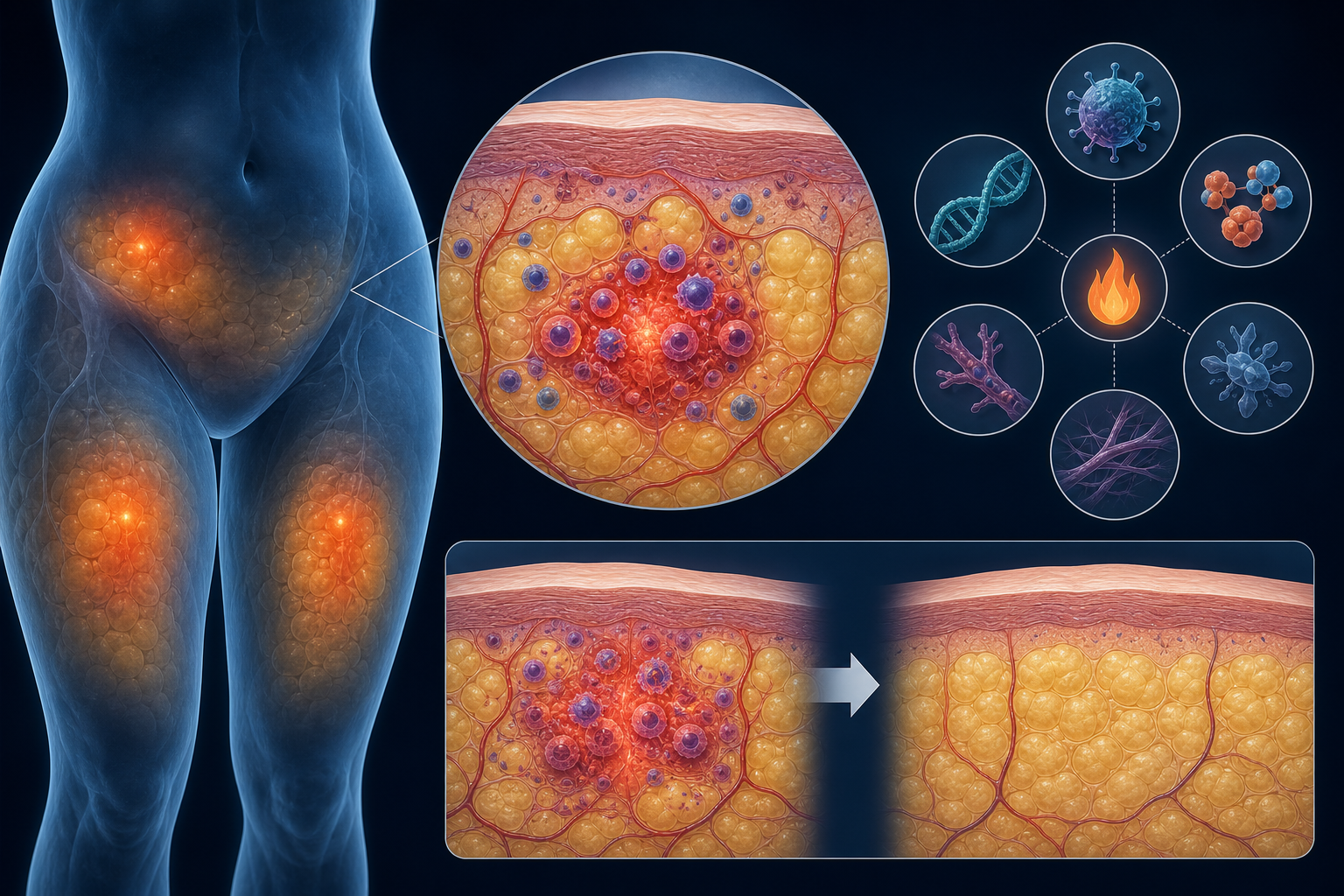
If you have noticed painful red or skin-colored lumps developing under the surface of your skin — particularly on your legs, thighs, or abdomen — and they do not seem to be going away, panniculitis may be a possibility worth discussing with a qualified healthcare provider. This inflammatory condition is more common than many people realize, and yet it is frequently misunderstood or mistaken for other skin conditions.
This article is designed to give you a clear, plain-language overview of what panniculitis is, what may cause it, how it is diagnosed, what treatment options exist, and when it is time to seek professional care. It is not a substitute for a medical evaluation — only a licensed clinician who can assess your specific situation can provide a diagnosis or recommend a treatment plan.
What Is Panniculitis?
Panniculitis refers to inflammation of the panniculus — the layer of subcutaneous fat that lies just beneath the dermis (the skin's deeper layer). This fat tissue is found all over the body, but panniculitis most commonly affects the lower legs, thighs, and buttocks, though it can appear elsewhere.
The inflammation produces characteristic nodules: firm, raised, often tender bumps beneath the skin that may be red, purple, or skin-toned depending on the type and stage. These nodules can range in size from a few millimeters to several centimeters, and they may appear one at a time or in clusters.
Panniculitis is not a single disease — it is a category of conditions, all sharing the common feature of inflamed subcutaneous fat. Identifying the specific type is important because the underlying cause and the most appropriate treatment approach can differ considerably.
Subcutaneous Fat Inflammation: Why It Matters
The subcutaneous fat layer serves several important functions: it cushions underlying structures, helps regulate body temperature, and stores energy. When this tissue becomes inflamed, it can disrupt all of these functions, sometimes causing significant discomfort that affects how a person moves and carries out daily activities.
Explore skin and soft-tissue conditions on MedximityTypes of Panniculitis: Erythema Nodosum and Beyond
Several distinct types of panniculitis have been identified by clinicians and researchers. Understanding which type a patient has requires careful evaluation and, in many cases, a tissue biopsy. Below are some of the most recognized forms.
Erythema Nodosum
Erythema nodosum is the most common form of panniculitis and the one most patients encounter. It typically presents as tender, red nodules on the front of the lower legs — the shins — and is often associated with an underlying trigger such as a bacterial or viral infection, an inflammatory bowel condition, certain medications, or pregnancy.
The nodules of erythema nodosum tend to be painful to the touch and may change color as they evolve, shifting from bright red to a bruise-like purple or yellow over days to weeks. Importantly, erythema nodosum rarely breaks down or ulcerates — a feature that helps clinicians distinguish it from some other panniculitis types.
Lupus Panniculitis (Lupus Profundus)
In some individuals with systemic lupus erythematosus, the inflammatory process can extend into the subcutaneous fat layer, producing deep, firm nodules most commonly on the face, arms, shoulders, or trunk. This form is sometimes called lupus profundus and requires management that addresses the underlying autoimmune condition.
Cold Panniculitis
Cold panniculitis occurs when exposure to very low temperatures triggers an inflammatory reaction in subcutaneous fat. This can be seen in infants exposed to cold and, less commonly, in adults who have had cold-based cosmetic or medical procedures applied to the skin.
Post-Traumatic or Factitial Panniculitis
Trauma to soft tissue — including injuries from accidents, blunt impacts, or even repeated pressure — can trigger a localized inflammatory response in the fat beneath the skin. Patients who develop painful lumps under skin after injury may be experiencing this form. This is one reason why proper documentation and evaluation of soft-tissue injuries following an accident is important, particularly when symptoms persist.
Other Forms
Additional types include pancreatic panniculitis (associated with pancreatic disease), infectious panniculitis, and several others that are identified on the basis of biopsy findings and clinical context. A specialist — often a dermatologist, rheumatologist, or internist — can help determine which type is present.
Find a dermatologist near you on MedximitySymptoms and How Panniculitis Affects Daily Life
The primary symptom of most panniculitis types is the development of painful red nodules beneath the skin. These nodules may be:
- Tender or painful to the touch
- Warm compared to surrounding skin
- Red, violet, or skin-toned in color
- Firm and well-defined, or softer and less distinct
- Single or multiple, scattered or clustered
Systemic symptoms — meaning symptoms affecting the body beyond just the skin — may accompany certain types. These can include fatigue, fever, joint aches, or general malaise, particularly when panniculitis is linked to an underlying systemic condition.
How Panniculitis Affects Movement and Daily Activities
When nodules are located on the lower legs, inner thighs, or other weight-bearing areas, they can make walking, standing, or even sitting uncomfortable. Some patients report that pressure from clothing — tight waistbands, compression garments, or footwear — worsens pain. In more extensive cases, the discomfort may significantly limit a person's ability to exercise, work, or perform routine daily tasks.
Persistent inflammation can also cause emotional and psychological strain. Living with unexplained, recurring lumps that do not respond quickly to treatment is stressful, and many patients describe frustration during the diagnostic process.
Learn what to expect during soft-tissue injury recoveryPanniculitis vs. Cellulitis: How to Tell the Difference
Panniculitis and cellulitis are both conditions involving skin and soft tissue, and their appearances can overlap — which is one reason professional evaluation is so important. Here is a general comparison to help frame the difference, though only a clinician can make a reliable distinction:
Cellulitis
Cellulitis is a bacterial infection of the skin and the tissue immediately beneath it. It typically presents as a spreading area of redness, warmth, and swelling — not usually discrete nodules — and is often accompanied by fever. It tends to progress quickly and usually responds to antibiotic treatment, which is beyond the scope of conservative care.
Panniculitis
Panniculitis, by contrast, tends to produce distinct, palpable nodules rather than a uniformly spreading red area. It is not primarily an infection (though infectious panniculitis exists), and it may persist for weeks or months without the rapid spread typical of cellulitis. Many forms of panniculitis have identifiable triggers or underlying associations that cellulitis does not.
Because these conditions can look similar and because cellulitis requires prompt medical treatment, any new, spreading, or rapidly worsening skin inflammation warrants timely evaluation by a healthcare provider. Do not delay seeking care to self-diagnose.
What Tests Are Done to Diagnose Panniculitis?
Diagnosing panniculitis typically involves several steps, and because many types share similar surface appearances, laboratory and pathological evaluation is often necessary to reach a definitive answer.
Clinical Evaluation
A provider will take a thorough history — including when nodules first appeared, whether any injury or illness preceded them, any medications you are taking, and your personal and family health history — and will perform a physical examination of the affected areas.
Blood Tests
Blood work may be ordered to look for signs of systemic inflammation, infection, autoimmune activity, or organ dysfunction that could point toward a specific panniculitis type. Common panels may include a complete blood count, inflammatory markers such as CRP or ESR, and autoimmune panels depending on clinical suspicion.
Skin Biopsy
Because the definitive classification of panniculitis often depends on the pattern of inflammation within the fat tissue itself — something visible only under a microscope — a punch or excisional skin biopsy is frequently the most important diagnostic step. The biopsy sample is examined by a pathologist to determine whether the inflammation is primarily in the septa (the walls between fat lobules) or in the fat lobules themselves, which helps identify the specific type.
Imaging
In some cases, imaging such as ultrasound or MRI may be used to assess the extent and depth of soft-tissue involvement, though these are typically adjuncts to — not replacements for — biopsy and blood work.
Find a rheumatologist on MedximityWhat Is Panniculitis and How Is It Treated?
Treatment for panniculitis depends heavily on the underlying type and cause. There is no single universal approach, and management often involves addressing both the inflammation itself and any identifiable trigger.
Addressing the Underlying Cause
When panniculitis is associated with an infection, a medication, an autoimmune condition, or another underlying factor, addressing that root cause is a central part of management. Removing the trigger — stopping a medication, treating an infection, or managing a systemic condition — may allow the panniculitis to resolve or improve.
Anti-Inflammatory Approaches
Non-steroidal anti-inflammatory medications are commonly used for symptomatic relief in conditions like erythema nodosum, though medication decisions should always be made by a licensed provider familiar with a patient's full health picture. Corticosteroids may be considered in more severe or refractory cases under medical supervision.
Natural Treatment for Panniculitis Without Steroids: Conservative Care Options
Many patients ask about managing panniculitis symptoms through conservative, non-pharmacological approaches, particularly when steroid side effects are a concern or when symptoms are mild. While conservative care does not replace medical evaluation and is not appropriate for all panniculitis types, the following strategies are commonly discussed in a supportive role:
- Rest and activity modification: Reducing pressure and mechanical stress on affected areas may help decrease local inflammation and discomfort during active flares.
- Elevation: Elevating affected limbs — particularly the lower legs — may help reduce swelling and improve comfort.
- Gentle movement and physical therapy: Once acute inflammation begins to subside, guided movement may help maintain function and prevent secondary stiffness. A physical therapist experienced in soft-tissue rehabilitation can help design a program appropriate to the patient's current condition.
- Thermal support: Some patients find gentle warmth or cool compresses provide symptomatic relief; comfort preferences vary by individual and by panniculitis type.
- Nutritional and lifestyle factors: General anti-inflammatory lifestyle habits — balanced nutrition, adequate sleep, and stress management — are broadly supportive of the body's healing processes, though they are not a substitute for targeted medical treatment.
Conservative care providers, including physical therapists and chiropractors skilled in soft-tissue management, may play a supporting role in helping patients maintain function and manage musculoskeletal discomfort that often accompanies prolonged inflammatory conditions. These providers are not equipped to treat panniculitis itself as a primary medical condition, but they can be valuable members of a coordinated care team.
Find a physical therapist near you on MedximityHow Long Does Panniculitis Take to Heal?
The healing timeline for panniculitis varies considerably depending on the type, the severity, and whether an underlying cause can be identified and addressed. Erythema nodosum, the most common form, often resolves within three to six weeks when the underlying trigger is treated, though nodules may take longer to fully flatten and the skin may remain discolored for weeks after the active inflammation subsides.
Other types of panniculitis — particularly those associated with ongoing autoimmune conditions or without an identifiable cause — may follow a more chronic, relapsing course, with flares recurring over months or years. In these cases, long-term management strategies and regular follow-up with appropriate specialists become particularly important.
It is reasonable to expect some degree of residual skin discoloration or subtle texture change even after the nodules resolve. Significant scarring or tissue destruction is more characteristic of certain rare or severe panniculitis types.
When to See a Doctor for Inflamed Fat Tissue
Knowing when to seek professional evaluation is one of the most important takeaways from this article. You should consider speaking with a healthcare provider if you notice:
- Painful nodules or lumps under the skin that have persisted for more than a week or two without improvement
- Red, warm, or tender skin areas that are spreading rapidly
- Nodules accompanied by fever, significant fatigue, or joint pain
- Skin changes that appear after an injury and do not resolve as expected
- Recurring nodules that come and go over months
- Any skin finding that is causing significant pain, limiting your movement, or worrying you
Early evaluation can shorten the diagnostic journey and help ensure that any underlying condition driving the panniculitis is identified promptly. If your primary care provider suspects a complex or systemic cause, they may refer you to a dermatologist, rheumatologist, or other specialist.
Search for providers in your area on MedximityFrequently Asked Questions About Panniculitis
Is panniculitis serious?
Panniculitis itself ranges from a self-limited, mild condition to a sign of a more serious underlying illness. The seriousness depends on the type and the associated cause. Any persistent or worsening skin inflammation should be evaluated by a provider to rule out conditions that require more intensive management.
Can panniculitis go away on its own?
Some forms — particularly erythema nodosum — may resolve on their own once an underlying trigger resolves, often within several weeks. Other forms may persist or recur, especially if no underlying cause is identified or addressed. Professional evaluation helps determine which course is most likely for a given patient.
How is panniculitis different from lipomas?
Lipomas are benign, slow-growing fat-tissue tumors that are generally not painful, not red, and not inflamed. Panniculitis nodules, by contrast, are typically tender, may be red or warm, and are caused by inflammation rather than abnormal fat-cell growth. A provider or dermatologist can help differentiate these and other soft-tissue findings through examination and, if needed, biopsy.
Can physical therapy help with panniculitis?
Physical therapy does not treat the inflammatory process of panniculitis directly, but it may help patients maintain function, manage pain, and recover strength and mobility — particularly when the condition has limited movement over a prolonged period. A physical therapist should be made aware of the diagnosis so they can tailor their approach appropriately.
Are there dietary changes that may help panniculitis?
While no specific diet has been established as a treatment for panniculitis, general anti-inflammatory dietary patterns — emphasizing vegetables, fruits, whole grains, and healthy fats — are broadly associated with reduced systemic inflammation in some research contexts. These are supportive habits, not curative interventions, and they should complement rather than replace medical evaluation and treatment.
Can panniculitis come back after it heals?
Yes, some types of panniculitis — particularly erythema nodosum — may recur, especially if the underlying trigger is still present or if a new trigger arises. Patients with recurring nodules should work with their provider to identify patterns, manage any associated conditions, and reduce the likelihood of future flares.
Finding the Right Care for Panniculitis
Navigating a panniculitis diagnosis can feel overwhelming, particularly during the diagnostic phase when symptoms are present but answers are not yet clear. A coordinated care approach — beginning with a primary care or urgent care evaluation, potentially including specialist referral, and supported by physical therapy or rehabilitation when appropriate — tends to serve patients best.
Medximity connects patients with qualified chiropractors, physical therapists, and rehabilitation providers across the country who can play a meaningful supporting role in your overall recovery and well-being. While conservative care providers do not diagnose or treat panniculitis as a primary medical condition, they can help you stay active, manage musculoskeletal side effects of prolonged inflammation, and coordinate with your medical team.
Find a chiropractor near you on MedximityIf you have been experiencing painful lumps under the skin, particularly following an injury or alongside other systemic symptoms, the most important step you can take is to speak with a qualified healthcare provider about your specific situation. Early, accurate diagnosis makes meaningful recovery far more achievable.


