When most people think about recovering from a musculoskeletal injury, they focus on muscles, joints, and pain levels. Skin health rarely enters the conversation — yet the skin is your body's largest organ and one of the first systems affected by trauma, inflammation, and immobilization. Whether you are working through a soft-tissue injury, post-surgical rehabilitation, or chronic pain management, paying attention to your skin can meaningfully support your overall recovery.
This guide walks through what healthy skin looks like, how the skin heals after an injury, and practical, medication-free strategies — from nutrition to movement to proper wound care during physical therapy — that may help you recover more comfortably.
What Does Healthy Skin Look Like?
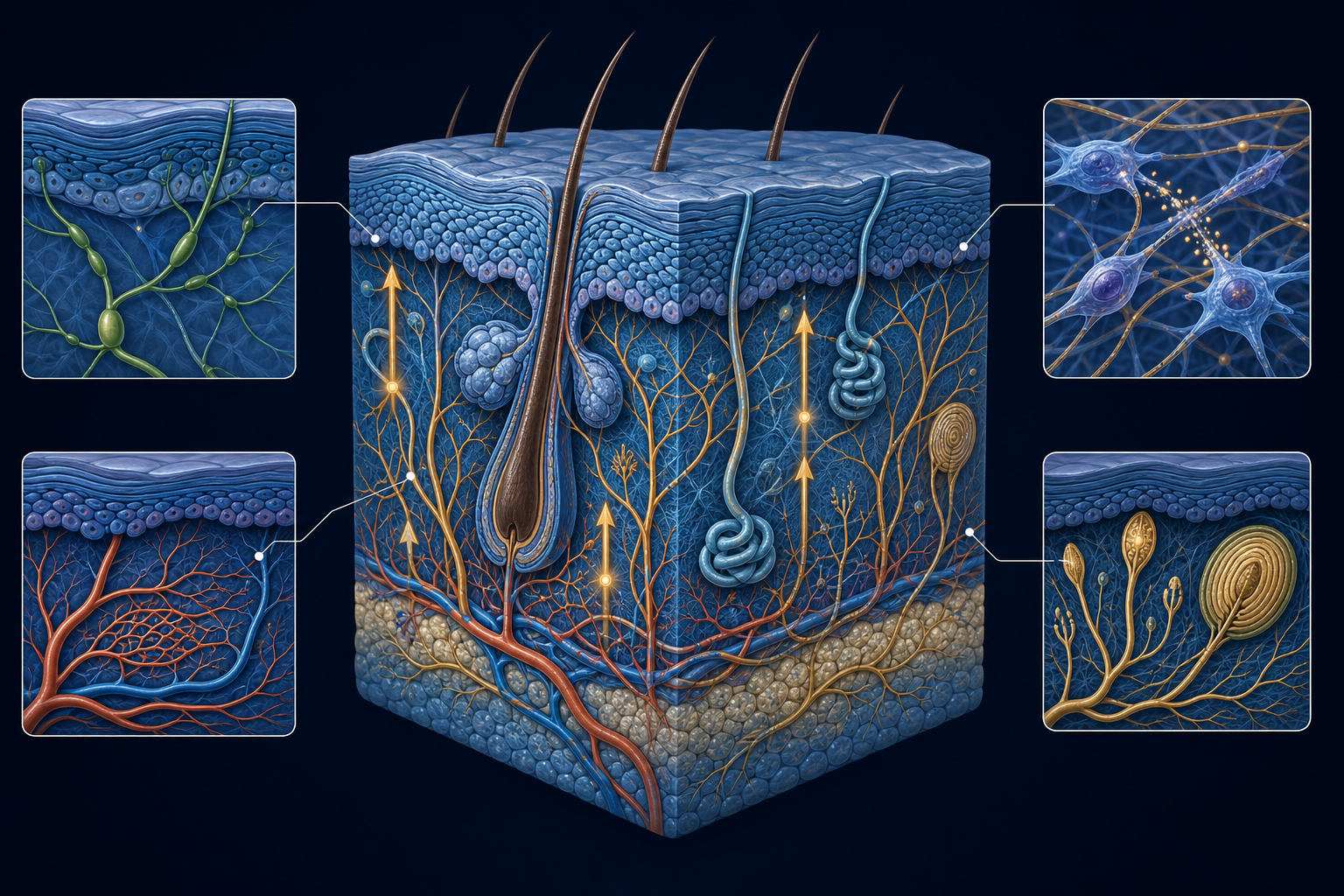
Healthy skin tends to look consistent in tone, feel supple rather than tight or flaky, and recover quickly from minor abrasions or pressure. In clinical terms, signs that skin is functioning well include adequate turgor (the skin snaps back when gently pinched), minimal cracking or scaling, and intact barrier function that protects underlying tissue from bacteria and environmental stressors.
After an injury, healthy baseline skin responds to the healing process more efficiently. Patients who arrive at physical therapy or chiropractic care with well-hydrated, nourished skin may find that bruising resolves faster, that scar tissue forms with less rigidity, and that pressure or friction from therapeutic devices — braces, tape, ultrasound probes — causes less irritation overall.
How Does Skin Heal After an Injury?
Skin healing after injury generally moves through four overlapping phases: hemostasis (bleeding stops), inflammation (immune cells clear debris), proliferation (new tissue forms), and remodeling (scar tissue matures and strengthens). Each phase relies on adequate circulation, nutrition, and cellular signaling.
During the inflammatory phase, the affected area often appears red, warm, and swollen — which is normal in the short term. Problems arise when inflammation becomes prolonged, circulation is impaired, or nutritional deficits slow the arrival of the building blocks new tissue requires. Understanding this timeline helps explain why skin care is not a cosmetic afterthought but a functional part of your rehabilitation plan.
How Long Does Skin Take to Heal?
Healing timelines vary considerably depending on injury depth, location, circulation, age, and overall health. Minor abrasions or surface-level contusions may resolve within one to two weeks. Deeper wounds, surgical incisions, or areas with compromised blood flow — such as a limb that has been immobilized — can take several weeks to months to fully remodel. Research in wound healing consistently identifies hydration, protein intake, and controlled movement as factors associated with more efficient repair. If healing appears stalled — the wound is not closing, new tissue looks pale or necrotic, or infection signs appear — that warrants prompt evaluation by a qualified provider.
Is Dry Skin Normal After an Injury?
Yes, dry skin is quite common during injury recovery, and several mechanisms contribute to it. Inflammation increases transepidermal water loss, meaning the skin barrier temporarily becomes less efficient at retaining moisture. Immobilization reduces local circulation, which can leave skin appearing dull, flaky, or tight. Some patients also reduce their fluid intake when activity levels drop, inadvertently worsening dehydration at the tissue level.
Mild to moderate dryness is generally manageable with the strategies described below. However, severely cracked skin, open fissures, or skin that is scaling in unusual patterns alongside other symptoms should be evaluated — these can occasionally signal underlying circulatory or systemic issues that conservative self-care alone will not resolve.
How Does Hydration Affect Skin Healing?
Hydration is one of the most consistently supported variables in skin health and wound healing. Adequate fluid intake helps maintain skin turgor, supports the transport of nutrients and immune cells to healing tissue, and keeps the extracellular matrix — the scaffold on which new tissue forms — pliable enough for efficient remodeling.
Patients in active rehabilitation are often more physically active than they realize, and fluid needs can increase accordingly. A general principle, though individual needs vary, is that urine color is a practical hydration indicator — pale yellow typically suggests adequate intake, while dark amber may indicate that fluid intake should increase. Consult your provider for personalized guidance, particularly if you have kidney or cardiovascular conditions that affect fluid management.
Foods That Help Skin Heal Faster
Nutrition plays a direct role in tissue repair. Several dietary components are associated with more efficient skin healing:
- Protein: Collagen and other structural proteins that rebuild skin require amino acid precursors from dietary protein. Lean meats, eggs, legumes, and dairy are common sources.
- Vitamin C: This vitamin is essential to collagen synthesis and may support the body's inflammatory response. Citrus fruits, bell peppers, broccoli, and strawberries are rich sources.
- Zinc: Associated with wound closure and immune function, zinc is found in meat, shellfish, seeds, and legumes.
- Omega-3 fatty acids: Found in fatty fish, walnuts, and flaxseed, omega-3s are associated with modulating excessive inflammation.
- Vitamin A: Supports cell turnover and is found in orange and yellow vegetables, leafy greens, and eggs.
Dietary changes are complementary to, not a replacement for, professional care. If you have specific nutritional concerns during your recovery, a registered dietitian can provide individualized guidance.
Can Exercise Improve Your Skin Condition?
Regular, appropriately dosed movement may support skin health through several pathways. Exercise increases circulation, delivering oxygen and nutrients to skin cells and supporting the removal of metabolic waste. Some research suggests that physical activity is associated with improved skin thickness, elasticity, and barrier function over time, though the mechanisms are still being studied.
During injury rehabilitation, structured movement — the kind guided by a physical therapist — helps prevent the circulatory stagnation that contributes to dull, dry skin around an injured area. Even gentle range-of-motion exercises in the early recovery phases can help maintain local blood flow. The key word is appropriate: overloading injured tissue in the name of skin health is counterproductive. Work with your rehabilitation team to find the right intensity and frequency for your stage of recovery.
Skin Problems During Physical Therapy Recovery
Patients in active physical therapy sometimes encounter skin issues specific to the rehabilitation environment. Common concerns include:
Tape and Adhesive Reactions
Kinesiology tape and athletic tape are widely used in physical therapy for support and proprioceptive feedback. Some patients develop contact dermatitis or mechanical irritation, particularly over fragile or recently healed skin. Inform your therapist immediately if you notice persistent redness, blistering, or itching under tape — alternative taping materials or application techniques are usually available.
Pressure Points from Orthotics or Bracing
Rigid or semi-rigid orthotic devices can create pressure points, particularly when swelling fluctuates. Regular skin checks under braces — examining for redness that does not resolve within 20 to 30 minutes of removing the device — are an important part of self-monitoring during recovery.
Scar Tissue Management
Post-surgical or post-traumatic scars may become adherent, limiting tissue mobility and contributing to pain. Scar mobilization techniques, applied by a trained physical therapist, are commonly used to improve scar tissue pliability. If you have scars that feel tight, raised, or that restrict your movement, ask your provider whether scar tissue work is appropriate for your situation. You can explore physical therapists in your area who specialize in post-injury rehabilitation.
Natural Ways to Improve Skin Health Without Medication
Many patients prefer to start with non-pharmacological approaches before adding topical or systemic medications. The following strategies are generally well-supported and carry low risk when applied sensibly:
- Consistent moisturization: Applying an unscented emollient after bathing — while skin is still slightly damp — can reduce transepidermal water loss and soothe dryness associated with recovery.
- Sun protection: Healing skin, particularly scarred tissue, is more vulnerable to UV damage and hyperpigmentation. Protecting healing areas from direct sun exposure may improve long-term cosmetic outcomes.
- Avoiding smoking: Smoking is consistently associated with impaired wound healing and reduced skin perfusion. Patients who smoke and are in recovery may benefit from cessation support.
- Stress management: Chronic psychological stress is associated with elevated cortisol levels, which can impair barrier function and slow healing. Breathing exercises, guided relaxation, and gentle movement are all accessible strategies.
- Sleep quality: Tissue repair is most active during sleep. Protecting sleep duration and quality during recovery is a meaningful, often underappreciated, component of healing.
For condition-specific guidance, explore our injury recovery resource library or connect with a provider who can tailor recommendations to your situation.
Skin Care Tips During Injury Rehabilitation
Practical day-to-day habits make a difference in how comfortably and efficiently skin heals during rehabilitation:
- Keep rehabilitation areas clean and dry between sessions to reduce infection risk.
- Use lukewarm rather than hot water when bathing over healing tissue — heat can increase inflammation and strip natural oils.
- Communicate openly with your provider about any skin changes you notice, including new rashes, unusual texture changes, or wounds that seem to be growing rather than closing.
- Follow your therapist's wound-care instructions precisely — timing, dressing changes, and activity restrictions around wound sites are clinically determined for good reason.
When Should I See a Doctor About My Skin?
While many skin changes during recovery are expected and manageable, certain signs warrant prompt professional evaluation:
- Signs of infection: increasing redness, warmth, pus, red streaking from a wound, or fever
- Wounds that are not closing or appear to be getting larger after two weeks
- Sudden, unexplained rashes — particularly if accompanied by systemic symptoms
- Skin that appears black, gray, or significantly different in color from surrounding tissue
- Severe or worsening dryness, cracking, or scaling that does not respond to basic moisturization
- Blistering under orthotic devices or tape that does not resolve quickly
Your primary care physician or a dermatologist is the appropriate first contact for skin concerns that extend beyond the scope of your rehabilitation team. For musculoskeletal dimensions of skin health — scar mobility, circulation related to injury, movement-based strategies — a chiropractor or physical therapist with experience in soft-tissue rehabilitation may also play a useful role in your care team. Use our provider search to find qualified practitioners near you.
Frequently Asked Questions
What does healthy skin look like during injury recovery?
Healthy skin in a healing area typically transitions from initial redness and swelling toward more normal coloration, closes wounds progressively, and does not show signs of infection such as increasing warmth, pus, or spreading redness. Some dryness, mild itching as nerves regenerate, and early scar formation are expected parts of the process.
Is it normal for skin to itch during healing?
Yes, mild to moderate itching is a common and generally normal part of the proliferative phase of wound healing, associated with new nerve fiber growth and collagen remodeling. Scratching should be avoided to prevent re-injury to healing tissue. If itching is severe, persistent, or accompanied by a rash, consult your provider.
Can a physical therapist help with scar tissue affecting my skin?
Physical therapists are trained in soft-tissue techniques, including scar mobilization, that may help improve the pliability and function of scar tissue. If a scar is restricting your range of motion or causing discomfort, discuss it with your PT. Find a qualified physical therapist through the Medximity provider directory.
How does dehydration affect skin healing?
Dehydration can impair skin barrier function, slow the transport of nutrients to healing tissue, and reduce skin elasticity and turgor. Staying adequately hydrated throughout your recovery is a simple, low-cost strategy that may support faster and more comfortable healing. Individual fluid needs vary, so consult your provider for guidance specific to your health status.
Are there foods that specifically support skin healing after injury?
Dietary protein, vitamin C, zinc, vitamin A, and omega-3 fatty acids are among the nutrients most consistently associated with skin repair and tissue regeneration. Focusing on a varied, whole-food diet that includes adequate protein and colorful fruits and vegetables provides many of these nutrients naturally. A registered dietitian can offer personalized nutritional guidance during recovery.
When should I be concerned about skin changes during physical therapy?
Seek prompt evaluation if you notice signs of infection (increasing redness, warmth, pus, fever), wounds that are not progressing, blistering under tape or bracing, or unusual rashes. Your physical therapist or chiropractor should be informed immediately about any skin changes in areas they are actively treating. For systemic or unexplained skin issues, contact your primary care physician or a dermatologist.
Can chiropractic care support skin health indirectly?
Chiropractic care focuses primarily on the musculoskeletal and nervous systems, but improving circulation, reducing mechanical tension in soft tissues, and supporting overall movement may indirectly benefit skin health in injured areas. If you are interested in how chiropractic fits into your broader recovery plan, use our chiropractor search to find a provider near you.