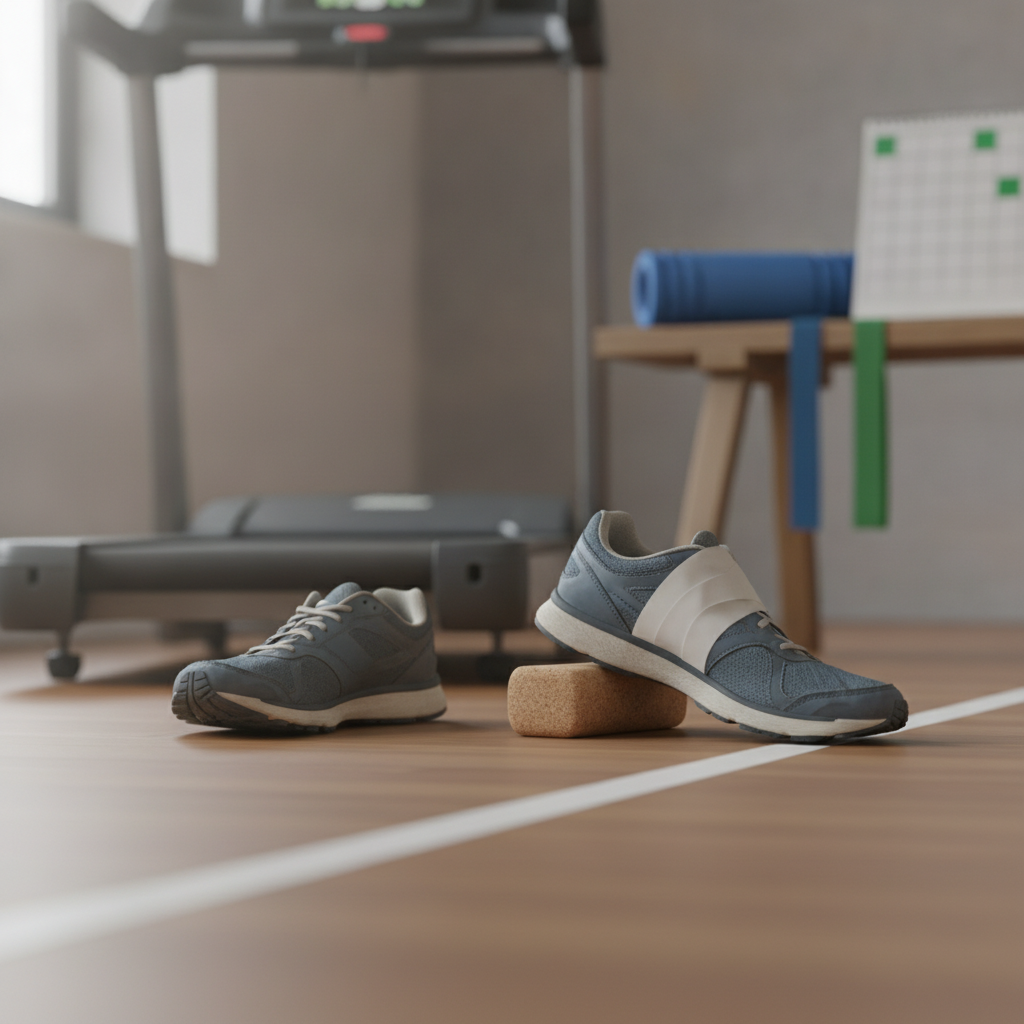
Understanding Left Fibula Stress Fracture: Symptoms, Causes, and Treatment starts with one key point: a left fibula stress fracture is a small bone injury caused by repetitive load, not usually one single twist or fall. Most cases improve with early load reduction, accurate evaluation, and a structured return to walking, exercise, and sport.
The “left” side usually does not change the condition itself, but side-specific pain matters because it helps your provider pinpoint where the stress injury is located and how your gait, footwear, training volume, and lower-leg mechanics may be contributing.
What Is a Left Fibula Stress Fracture?
A fibula stress fracture is a tiny crack or bone overload injury in the fibula, the smaller of the two lower-leg bones. The tibia handles more body weight, but the fibula still absorbs repeated force from running, jumping, cutting, uneven ground, and muscle pull from the peroneal muscles and surrounding connective tissue.
When people search “what is a fibula stress fracture,” they are usually asking whether this is a true fracture or just overuse soreness. The answer is that it sits on a spectrum. Early on, the bone becomes irritated from repetitive load. If that load keeps exceeding recovery, the bone can develop a stress reaction and then a stress fracture.
Why the fibula gets overloaded
The fibula is not just a “support bone.” It helps stabilize the ankle and lower leg. Repeated traction and impact can concentrate stress along the shaft, especially in runners and court-sport athletes.
- Fibula: stabilizes the outer lower leg and ankle
- Tibia: takes the larger share of vertical load
- Peroneus longus and peroneus brevis: muscles on the outer lower leg that can increase pull on the fibula during repetitive activity
- Ankle joint: altered mechanics here can shift stress upward into the fibula
A stress fracture usually develops over days to weeks, not minutes. That is the main reason it gets confused with shin splints or routine training soreness.
Research on bone stress injuries consistently shows that training errors and inadequate recovery are major drivers, especially when activity volume increases faster than tissue adaptation.
What symptoms suggest a left fibula stress fracture?
Left lower leg pain when running that starts as a small, local pain spot and becomes easier to trigger is one of the most common patterns. Pain is often on the outside of the lower leg, usually several inches above the ankle, though exact location varies.
Fibula stress fracture symptoms in athletes often begin during impact activity, then linger after activity, and eventually show up during walking if the bone stays overloaded.
Common symptom pattern
- Pain on the outer part of the left lower leg
- Point tenderness in one specific spot rather than a broad sore area
- Pain that worsens with running, jumping, or fast walking
- Pain that eases with rest early on, then returns faster over time
- Mild swelling in some cases
- Pain with hopping on the affected side
Symptoms that make providers more suspicious
A fibula stress fracture is more likely when the pain is sharply localized. Shin splints usually feel more diffuse along the tibia. A stress fracture also tends to follow a progression: activity pain first, then pain sooner during activity, then pain after activity, then pain with normal daily loading.
- Pain that appears at a predictable time in a run, such as after 10-15 minutes
- Pain that starts after a recent mileage jump, new hill work, or sport season change
- Pain that lasts more than 2-3 weeks despite cutting back somewhat
- Pain that changes your stride or causes limping
If you also have low back or nerve-like leg pain, a provider may compare your symptoms with conditions such as sciatica treatment and referred leg pain patterns, because not all lower-leg pain comes from bone.
Fibula stress fracture vs. shin splints
Fibula stress fracture vs shin splints comes down to location, irritability, and how precise the pain is. Shin splints usually refer to overuse irritation along the inner border of the tibia. A fibula stress fracture usually causes a more focused pain point along the outer lower leg.
Condition Typical Pain Location Pain Pattern Tenderness Timeline Fibula stress fracture Outer lower leg along the fibula Starts with impact activity, may progress to walking pain Usually one small, distinct spot Often worsens over 2-6 weeks if loading continues Shin splints Inner or front-inner lower leg along the tibia Diffuse ache during or after running Broader tender area May settle faster with training modification General muscle overuse Calf or outer leg muscles Soreness, tightness, fatigue Muscular rather than bony Often improves within days with recoveryThe distinction matters because treatment intensity changes. Shin splints may tolerate modified loading sooner. A stress fracture needs stricter impact control to let bone heal.
If your symptoms include dizziness or balance changes that affect walking mechanics, movement compensation can also matter. Related reading on vestibular disorders treatment and vertigo and balance-related compensation can help you understand how altered gait adds stress to the lower leg.
What causes a fibula stress fracture?
What causes a fibula stress fracture is usually not one problem but several stacked together: sudden load increase, incomplete recovery, footwear mismatch, and movement mechanics that shift repeated force into the outer lower leg.
Sports are a common trigger, but not the only one. Fitness walking, job-related standing, dancing, military training, and abrupt changes in activity can all overload the fibula.
- Running mileage increased too quickly, often more than 10-20% over a short period
- Added sprinting, hills, plyometrics, or court drills
- Worn-out shoes or a sudden switch to a different shoe type
- Harder training surface such as concrete or indoor courts
- Calf weakness, hip weakness, or poor single-leg control
- Foot mechanics that increase outer-leg loading
- Low energy availability or under-fueling during high training volume
- Reduced recovery sleep or back-to-back hard sessions
Bone adapts to load, but adaptation lags behind a rapid training jump. Muscle fatigue also matters. As the calf, gluteus medius, and peroneals tire, shock absorption and limb control drop, which can increase repetitive bending stress through the fibula.
A practical pattern providers see often: the training plan changes in 1 week, but bone remodeling takes several weeks to catch up.
How do providers diagnose stress fractures in the lower leg?
How providers diagnose stress fractures starts with history and physical exam, not imaging alone. Your provider wants to know exactly where the pain is, when it started, what activity changed, whether you can bear weight, and whether the pain is focal or diffuse.
What happens at the visit
- History: recent mileage, sport, footwear, surface, work demands, and prior bone stress injuries
- Palpation: checking for one exact tender spot along the fibula
- Gait assessment: looking for limp, shortened stance time, foot strike issues, and hip drop
- ROM and strength: ankle ROM, calf capacity, hip stability, and single-leg control
- Functional testing: squat, heel raise, step-down, and sometimes hop testing if appropriate
Early X-ray can be normal. That does not rule out a stress injury. If symptoms and exam fit a stress fracture pattern, providers may use repeat imaging or more sensitive imaging depending on the case and the level of activity you need to return to.
They also check for other causes of lower-leg pain, including tendon overload, compartment-related symptoms, lumbar referral, or ankle mechanics problems. For broader noninvasive care principles, you can explore more health topics on Medximity.
What are the main conservative treatment options?
Left fibula stress fracture treatment options center on reducing impact load, protecting healing bone, restoring lower-extremity mechanics, and progressing back to activity in stages. Fibula stress fracture treatment without surgery is the standard for many uncomplicated cases managed early.
Phase 1: Calm the bone down
- Stop running, jumping, and impact drills for a period directed by your provider
- Reduce long walks if they reproduce pain
- Use supportive footwear and avoid barefoot impact around the house if painful
- Switch temporarily to non-impact conditioning if approved, such as certain bike or pool sessions
Phase 2: Fix the load problem
Rest alone is not enough if the original mechanics stay the same. Providers often assess stride pattern, ankle dorsiflexion, foot stability, calf endurance, and hip control. Conservative care may include:
- Physical therapy for gait retraining and progressive strengthening
- Chiropractic evaluation of lower-quarter mechanics and load distribution
- Manual therapy for restricted ankle and foot motion
- Progressive calf, glute, and single-leg stability work
- Training review: volume, intensity, surface, and recovery spacing
Noninvasive care is often most effective when the diagnosis is made before the pain reaches the point of constant limping.
How long does fibula stress fracture heal, and how do you return safely?
How long does fibula stress fracture heal depends on severity, location, how long you trained through the pain, and whether daily walking is still painful. Many uncomplicated cases need roughly 6-8 weeks before impact activity is reintroduced, and some take 8-12 weeks for a fuller return to running or court sport.
Returning too soon is one of the main reasons symptoms recur. Bone may feel “better” before it is ready for repeated impact.
Basic progression back to activity
- Pain-free walking first. You should walk without limping and without next-day flare-up.
- Strength before speed. Restore calf raises, single-leg balance, and controlled step-downs.
- Introduce impact gradually. Start with walk-jog intervals if approved.
- Watch the 24-hour response. Mild soreness can occur; focal bone pain is a warning sign.
- Increase one variable at a time. Distance before speed, flat ground before hills.
A simple home program often begins before running returns:
- Stand facing a wall with the injured side behind you.
- Keep the heel down and stretch the gastrocnemius for 30 seconds.
- Bend the back knee slightly to target the soleus for 30 seconds.
- Perform 2-3 rounds, 1-2 times daily if this does not reproduce sharp bone pain.
- Add controlled double-leg calf raises: 2 sets of 10-12, then progress to single-leg only when approved.
This is a load-management drill, not a test of toughness. Stop if you get focal fibula pain during or after the session.
If you are already working on other noninvasive rehab strategies, articles on medication-free treatment approaches and natural rehabilitation planning show the same principle: progress only when the tissue response stays stable.
When should you see a provider for shin pain or lower-leg pain?
When to see a doctor for shin pain becomes simple when the pain is focal, progressive, or changes how you walk. Routine soreness should improve with a few days of reduced load. Bone stress pain usually does not.
- See a provider soon if pain lasts more than 7-10 days with activity modification
- Book an evaluation if you have one exact tender spot on the outer lower leg
- Get assessed if pain returns every time you try to run
- Seek prompt care if you start limping or cannot complete normal walking
Red flags need faster medical evaluation:
- Inability to bear weight
- Rapidly worsening swelling
- Visible deformity after injury
- Severe pain at rest or night pain that is escalating
- Numbness, significant color change, or a cold foot
A provider can tell whether you are dealing with a probable fibula stress injury, shin splints, tendon overload, or another cause of lower-leg pain. Early evaluation usually shortens the total downtime because it stops the cycle of repeated re-irritation.
What to Do Next
If you think you may have a left fibula stress fracture, stop impact exercise now and get evaluated by a provider who manages sports and overuse injuries conservatively. Good options include physical therapists, sports-focused chiropractors, and rehabilitation providers who assess gait, ankle mobility, calf strength, and training load.
Your first visit typically includes a history of symptom timing, a lower-leg and ankle exam, walking assessment, strength testing, and guidance on whether you should fully stop impact or begin modified activity. You should expect a plan with specific weekly limits, not vague advice to “take it easy.”
- Seek urgent evaluation if you cannot bear weight, swelling is increasing quickly, or the leg looks deformed.
- Book routine evaluation soon if pain is localized, activity-related, and not settling after 1 week of modified activity.
- Ask about rehab progression before returning to running, jumping, or sport drills.
Use Medximity to find a physical therapist near you, find a chiropractor near you, or browse providers who offer conservative sports injury care. If you are comparing options for a sports injury provider near me or the best provider for stress fracture near me, look for experience with gait assessment, return-to-run programming, and load management rather than passive care alone.
FAQ
Can you walk on a left fibula stress fracture?
Sometimes, yes, especially early on. The key issue is not whether walking is possible but whether it increases focal pain or causes limping. If walking pain is rising, the injury may be progressing and needs evaluation.
Is a fibula stress fracture the same as shin splints?
No. Shin splints are usually a broader overuse pain pattern along the tibia. A fibula stress fracture usually causes a smaller, more specific pain spot on the outer lower leg and often worsens in a more predictable progression.
How long before running is allowed again?
Many cases need about 6-8 weeks before impact is reintroduced, and some need 8-12 weeks for a fuller return. Running should wait until walking is pain-free, strength is improved, and your provider clears progressive loading.
What exercise can you do while it heals?
That depends on irritability. Some people tolerate low-impact bike or pool work. Others need a shorter period of broader unloading first. The rule is simple: do not continue any exercise that recreates focal fibula pain during the session or the next day.
Does the left side mean anything different from the right side?
Usually no. “Left” mainly helps identify the location. The underlying problem, evaluation, and conservative treatment principles are generally the same on either side unless one-sided gait mechanics or prior injury are contributing.


