Educational disclaimer: This article provides general health information for patients and consumers. It is not a diagnosis, does not replace professional medical advice, and should not be used to decide what care is right for you. For individualized guidance, speak with a qualified healthcare professional. If symptoms suggest an emergency, seek immediate medical care.
Sciatica Care in Fountain Inn: What Patients Are Looking For
Patients searching for back in motion fountain inn sciatica care are often looking for local access and clear information. They may want to understand whether leg pain, tingling, or lower back discomfort could be related to the sciatic nerve, while also finding a nearby conservative care option that explains the evaluation process before they schedule.
Sciatica is commonly used to describe pain or nerve-related symptoms that travel from the lower back or buttock into the leg. The term can be helpful, but it is not a complete diagnosis by itself. Different tissues, joints, muscles, and nerve pathways can contribute to similar symptoms, which is why a careful evaluation matters.
For additional background, Medximity’s guide to sciatica treatment and pain patterns explains the condition in patient-friendly terms. This page focuses on local search intent, conservative options, visit expectations, and when symptoms deserve prompt attention.
What Sciatica-Related Symptoms May Feel Like
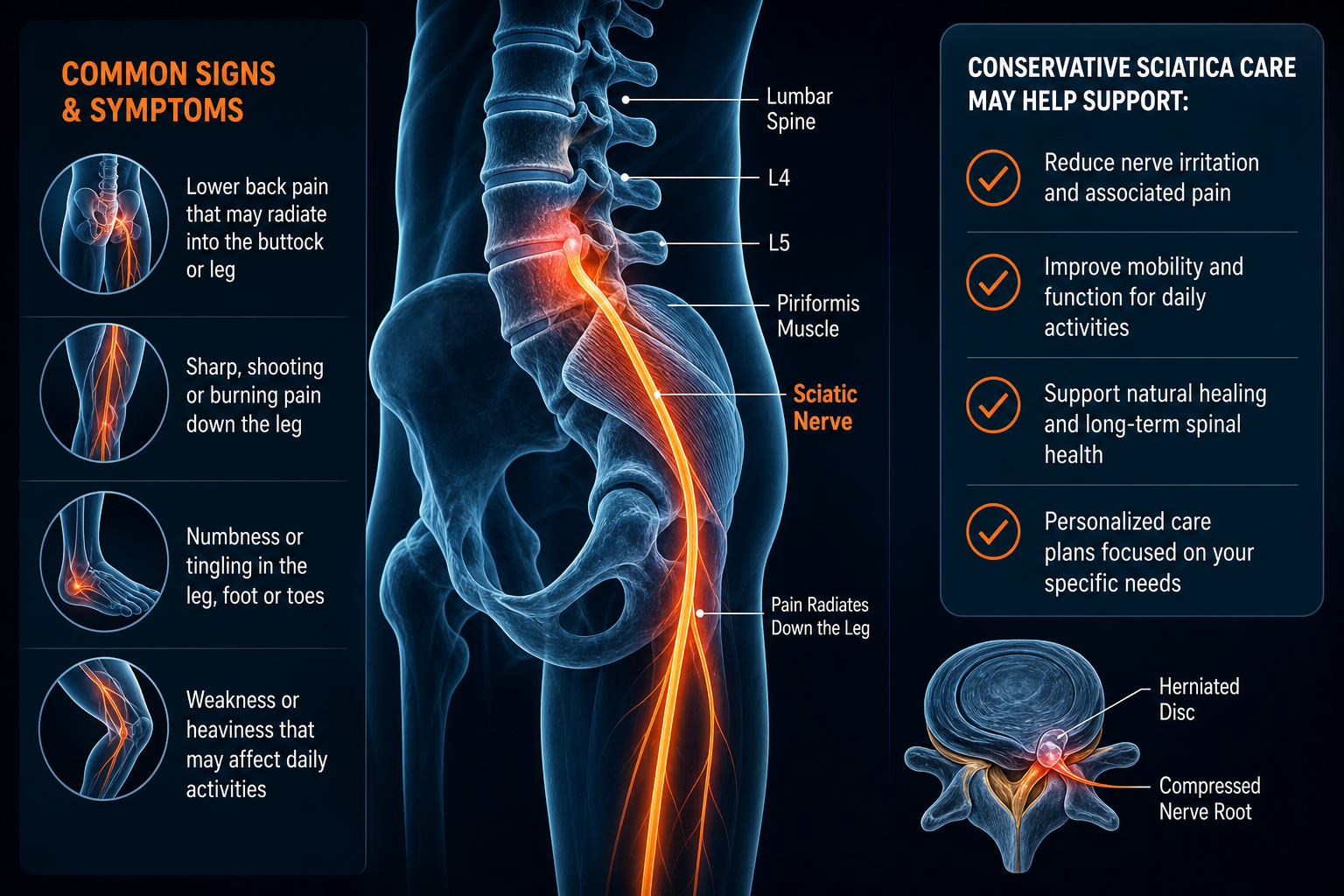
If you are wondering what does sciatica pain feel like, the answer can vary. Some people describe a deep ache in the buttock or back of the thigh. Others notice burning, tingling, numbness, or a sharp sensation that travels down part of the leg. Symptoms may be felt on one side, though patterns differ.
Sciatica-like symptoms may change with posture, walking, sitting, bending, lifting, or prolonged time in one position. Some patients report symptoms mainly in the lower back; others feel more discomfort in the hip, buttock, calf, or foot. Because several conditions can mimic sciatica, a provider should assess the pattern rather than relying on symptoms alone.
Common Factors That Can Contribute to Sciatica-Like Pain
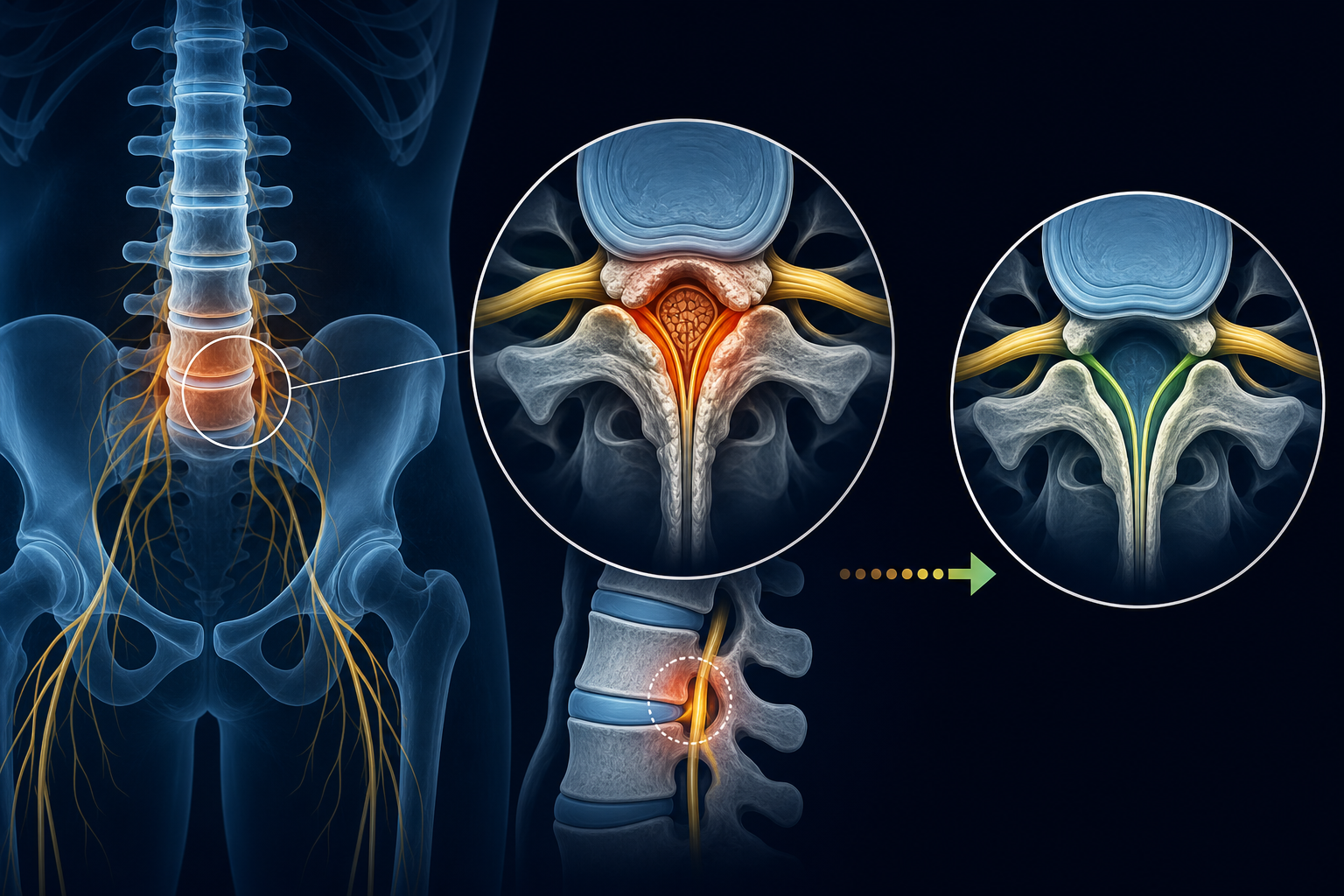
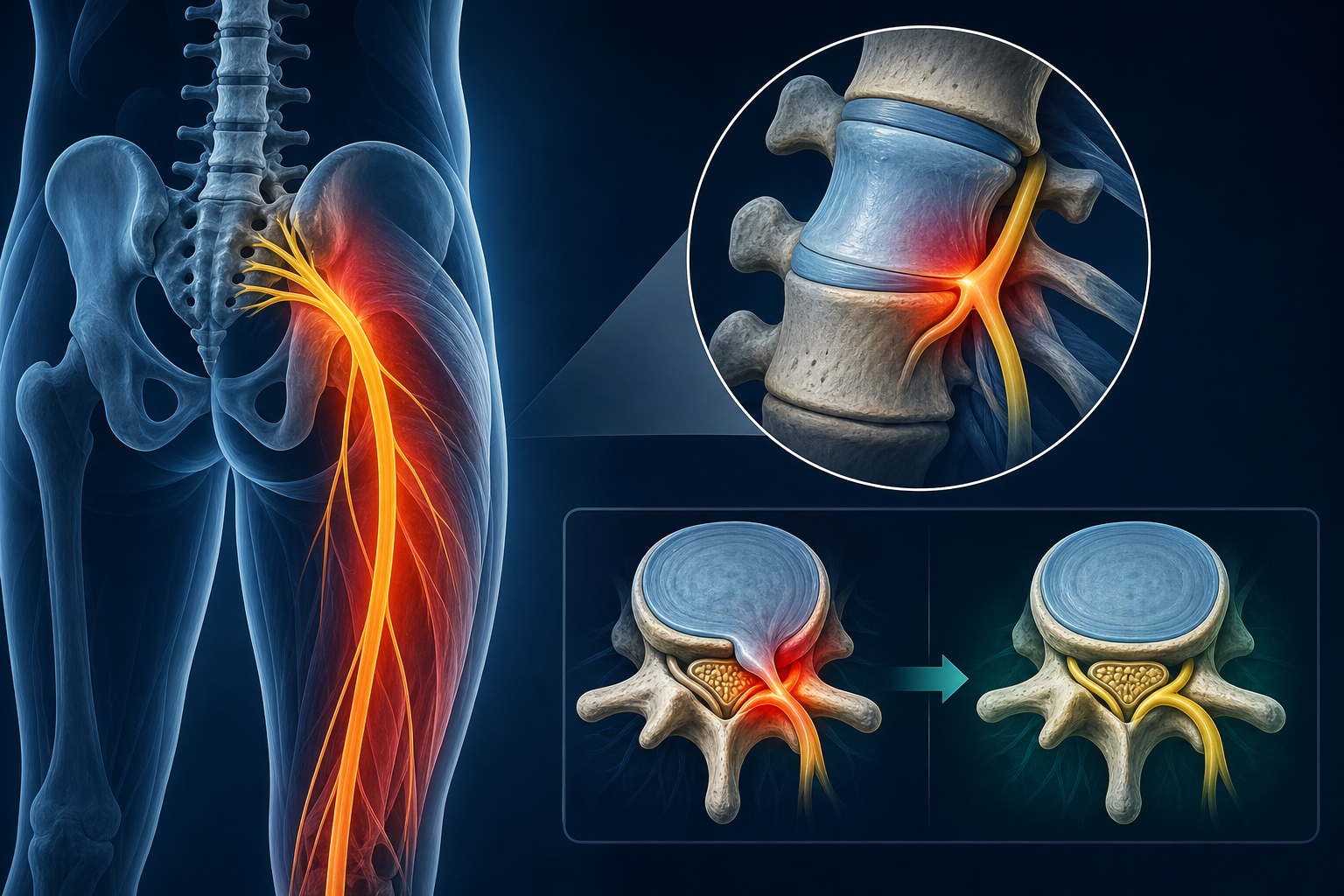
Patients often search for leg pain from lower back causes because the path of discomfort can be confusing. The sciatic nerve is formed from nerve roots in the lower spine and travels through the pelvis into the leg. Irritation or sensitivity along this pathway may contribute to radiating symptoms.
Common contributing factors can include lower back joint irritation, muscle tension around the pelvis or hip, changes in spinal movement, prolonged sitting, repetitive lifting, deconditioning, and posture or workplace strain. In some cases, a disc-related issue or narrowing around nerve pathways may be involved. These possibilities require clinical evaluation; they cannot be confirmed from an online description.
Patients with work-related back strain may also find value in Medximity’s article on preventing back pain at work, which discusses ergonomics and practical movement considerations.
Conservative Care Options That May Help Some Patients
Conservative treatment for sciatica symptoms focuses on non-invasive approaches that may reduce irritation, improve movement quality, and support daily function. Care recommendations vary based on exam findings, symptom behavior, activity level, and health history.
Conservative options may include chiropractic adjustments, mobility work, guided stretching, strengthening exercises, soft tissue therapy, posture coaching, ergonomic changes, activity modification, and home movement strategies. Some patients may also benefit from coordinated care involving rehabilitation professionals when appropriate.
People searching for chiropractic care for sciatica Fountain Inn often want to know whether an appointment will involve a one-size-fits-all adjustment. A responsible conservative provider should first evaluate how symptoms behave, what movements aggravate or ease them, and whether referral is needed. Care should be adapted to the patient rather than based only on the label “sciatica.”
For broader low back pain education, Medximity offers related resources on chronic low back pain and natural approaches to low back pain relief.
What to Expect During an Initial Sciatica Care Visit
If you are researching what to expect at sciatica appointment, a first visit generally starts with a conversation about symptoms, activities, and health history. The provider may ask where symptoms travel, how long they have been present, what movements affect them, and whether any signs need referral or urgent evaluation.
A conservative exam may include posture and movement assessment, range-of-motion checks, orthopedic or neurological screening, strength testing, reflex or sensation checks when appropriate, and functional movements such as walking, bending, or position changes. The goal is not to force a diagnosis from a brief symptom description. The goal is to understand patterns, identify reasonable care options, and determine whether conservative care is appropriate.
Depending on the findings, the provider may discuss next steps, expected visit structure, home recommendations, and whether co-management with another healthcare professional is advisable. Individual results vary, and no conservative approach should be presented as a guaranteed outcome.
How Providers May Personalize a Conservative Care Plan
A personalized care plan for sciatic pain should reflect the patient’s presentation. For one person, the priority may be reducing sensitivity during sitting. For another, it may be improving hip mobility, building trunk strength, or adjusting lifting mechanics. A plan may include in-office care, specific home exercises, education about symptom triggers, and gradual return to activities.
Personalization also means monitoring response. If a movement increases symptoms, the plan may need modification. If symptoms improve with certain positions or exercises, those findings may guide progression. A thoughtful plan avoids overpromising and instead focuses on measurable function, comfort during daily activities, and appropriate safety screening.
When Sciatica-Like Symptoms Need Prompt Medical Attention
Knowing when to seek care for sciatica symptoms is important. Consider prompt evaluation if leg pain is severe, worsening, or accompanied by new weakness, significant numbness, fever, recent major injury, unexplained weight loss, or symptoms that interfere with walking or daily function. Seek immediate medical care for new loss of bladder or bowel control, numbness in the groin or saddle area, or rapidly progressing weakness.
These signs do not mean every case is severe, but they should not be ignored. Conservative providers should screen for red flags and refer for appropriate medical evaluation when symptoms fall outside the scope of routine conservative care.
Questions to Ask Before Scheduling Care in Fountain Inn
Patients comparing local options can use a few practical questions to ask sciatica provider before scheduling:
- Do you evaluate low back, hip, and leg symptoms before recommending care?
- What conservative services are available for sciatica-like symptoms?
- How do you decide whether chiropractic, exercise-based care, soft tissue therapy, or referral is appropriate?
- Will I receive home guidance or movement recommendations?
- How do you monitor progress and adjust the plan if symptoms change?
- What symptoms would lead you to recommend prompt medical evaluation?
These questions help set expectations and support informed, patient-centered decisions.
Fountain Inn and Nearby Areas Patients May Search From
Local search behavior often includes nearby communities. A person may search for sciatica care near Fountain Inn SC, physical therapy for sciatica near me, or sciatica care Simpsonville Mauldin Fountain Inn depending on where they live, work, or commute. A useful local care page should make it easy for patients to understand the service area while still providing meaningful education.
Patients in Fountain Inn, Simpsonville, Mauldin, and surrounding Greenville County communities may be looking for a conservative evaluation close to home rather than a broad national overview. Local relevance matters, but clinical clarity matters as much. A page should explain symptoms, conservative options, appointment expectations, and safety signs without implying that every case follows the same path.
Key Takeaways About Back in Motion Fountain Inn Sciatica Care
- Sciatica-like symptoms may include lower back, buttock, hip, or leg discomfort, but symptoms alone do not confirm a diagnosis.
- Conservative care may include chiropractic care, guided movement, stretching, strengthening, posture support, and soft tissue approaches when appropriate.
- An initial visit should include history, evaluation, safety screening, and a discussion of individualized next steps.
- Seek prompt medical attention for severe or worsening symptoms, new weakness, major numbness, or bladder or bowel changes.
- Patients searching for back in motion fountain inn sciatica care can benefit from choosing a provider who explains options clearly and personalizes care.
This article is for educational purposes only and is not a substitute for professional medical advice, diagnosis, or treatment. Always consult a qualified healthcare provider about your specific condition. If you may be experiencing a medical emergency, call 911 or seek emergency care immediately.