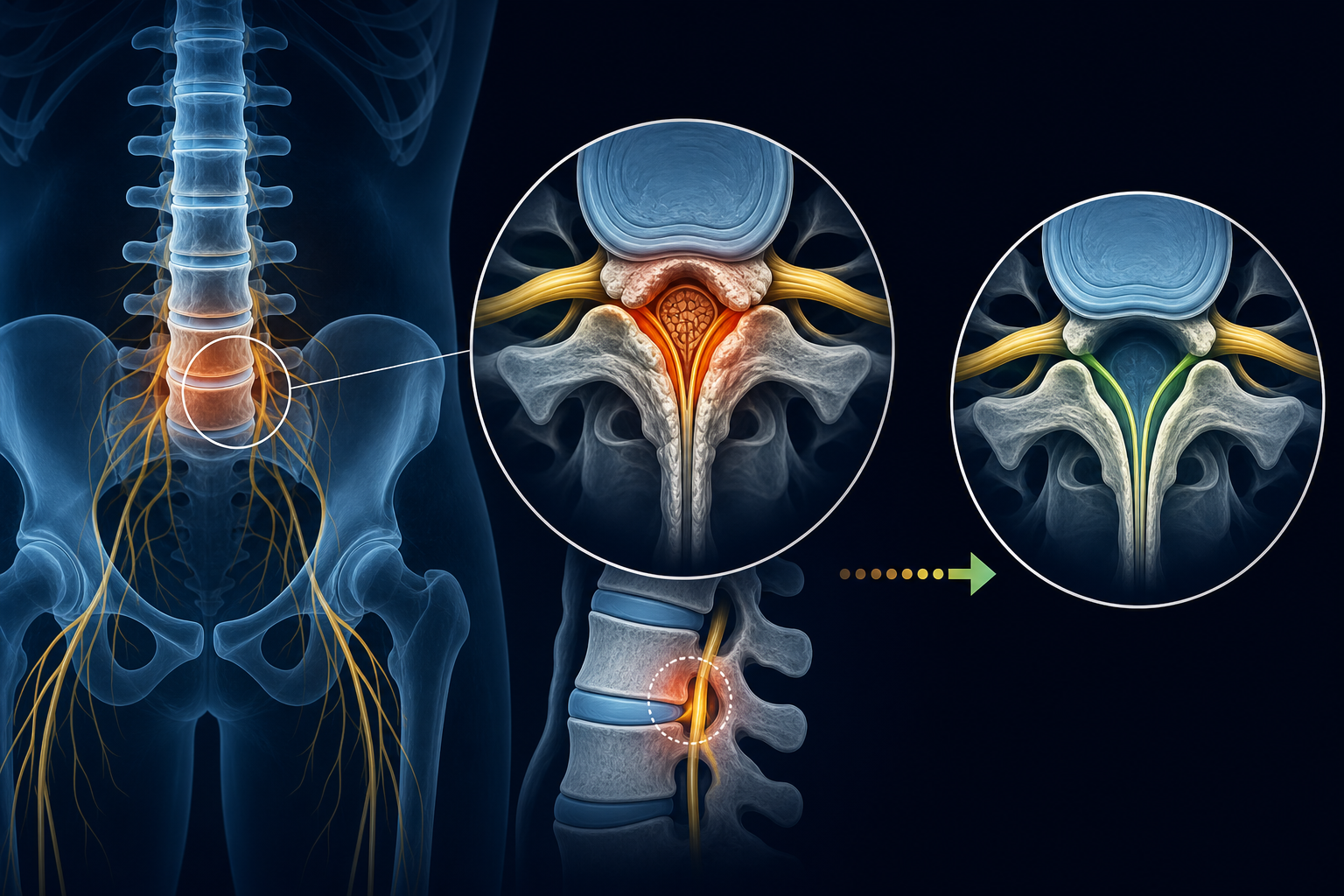
Understanding Lumbar Spinal Stenosis: Symptoms, Causes, and Treatment begins with a simple idea: the nerves in your lower back need enough space to move and function. When that space becomes narrowed, some people develop pain, heaviness, tingling, numbness, or weakness that travels into the buttocks or legs, especially with standing or walking.
Lumbar spinal stenosis can be frustrating because symptoms often come and go. You may feel better when sitting, leaning forward on a shopping cart, or bending slightly at the waist, then notice leg pain again when you walk upright. While lumbar stenosis is more common with age-related spine changes, it is not something you have to simply ignore. A qualified spine care provider can evaluate your symptoms, explain what may be contributing to them, and help you understand conservative care options such as physical therapy, activity modification, mobility work, and supportive chiropractic care when appropriate.
This guide explains what lumbar spinal stenosis is, common symptoms in the legs and feet, how it differs from sciatica, when to seek care, and what to expect from non-surgical treatment. If you are looking for a provider, Medximity can help you compare options such as a physical therapist for back and leg symptoms or a chiropractor near you.
What Is Lumbar Spinal Stenosis?
Lumbar spinal stenosis is a narrowing of one or more spaces in the lumbar spine, which is the lower part of the back. These spaces include the central spinal canal, where nerve structures travel, and the smaller openings on the sides of the spine, called foramina, where nerve roots exit toward the legs.
When the available space narrows, nearby nerves may become irritated or compressed. This can be associated with low back pain, buttock pain, leg pain, numbness, tingling, cramping, or a heavy feeling in the legs. Some people have imaging findings that show narrowing but have mild symptoms or none at all. Others have symptoms that interfere with walking, standing, sleep, exercise, work, or daily errands.
The word “stenosis” means narrowing. In the lumbar spine, that narrowing may develop gradually because of age-related changes such as thickened ligaments, disc height loss, bone spurs, or arthritis in the small joints of the spine. Less commonly, people may be born with a smaller spinal canal or develop narrowing after an injury or other spine condition.
Why Lumbar Spinal Stenosis Often Affects the Legs
Many people expect a lower-back condition to cause only back pain. Lumbar stenosis often behaves differently because the lower spine contains nerves that travel into the hips, buttocks, thighs, calves, and feet. When these nerves are irritated, symptoms may show up far from the spine.
Lumbar spinal stenosis symptoms in legs
Common lumbar spinal stenosis symptoms in legs may include:
- Aching, burning, or cramping in one or both legs
- Leg heaviness or fatigue while standing or walking
- Pain that improves with sitting or bending forward
- Tingling or “pins and needles” sensations
- Numbness in the feet or toes
- Weakness or a feeling that the legs may not support you as well
- Symptoms that travel into the buttocks, thighs, calves, or feet
Symptoms can vary depending on which nerves are affected and whether the narrowing is central, on one side, or present at multiple levels. Some people mainly notice calf tightness when walking. Others feel buttock pain, foot numbness, or a combination of back and leg symptoms.
Leg pain when walking and lumbar stenosis
Leg pain when walking from lumbar stenosis is often related to a pattern called neurogenic claudication. “Neurogenic” means nerve-related, and “claudication” refers to pain or fatigue that appears with walking or standing. In lumbar stenosis, symptoms may worsen when the spine is extended, such as when standing tall or walking downhill. Symptoms may ease when the spine is flexed, such as sitting, leaning forward, or using a walker or shopping cart.
This pattern is one reason people ask, “Is it normal to lean forward walking?” A slight forward lean can temporarily create more room in the lumbar spinal canal for some patients, which may reduce nerve irritation. However, a new or increasing need to lean forward is worth discussing with a provider, especially if it is paired with leg pain, numbness, balance changes, or reduced walking tolerance.
Can lumbar stenosis cause numb feet?
Yes, lumbar stenosis can cause numb feet in some cases because the nerves that exit the lower spine help supply sensation to the feet and toes. Foot numbness can also come from other causes, including peripheral nerve conditions, circulation concerns, diabetes-related nerve changes, local foot or ankle problems, or other spine conditions. Because symptoms overlap, a provider evaluation is important rather than assuming the cause.
Common Causes and Risk Factors
Lumbar spinal stenosis is often associated with gradual degenerative changes in the spine. “Degenerative” does not mean your spine is failing. It describes wear-and-adaptation changes that can happen over time, especially in the discs, joints, ligaments, and bones.
Age-related disc and joint changes
Spinal discs sit between the bones of the spine and help absorb load. Over time, discs may lose height or hydration. When disc height decreases, the openings where nerves exit may become smaller. The facet joints, which guide movement in the back of the spine, may also develop arthritic changes. These changes can contribute to stiffness, inflammation, and reduced space for nerve roots.
Bone spurs and ligament thickening
As the body responds to years of mechanical stress, small bony overgrowths called bone spurs may develop. Ligaments inside the spinal canal can also thicken. Either change may contribute to narrowing around nerve structures. Not every bone spur or thickened ligament causes symptoms, but these findings are commonly discussed when stenosis appears on imaging.
Posture, movement habits, and deconditioning
Posture alone does not “cause” lumbar stenosis in most people. However, movement habits, limited hip mobility, reduced core endurance, and deconditioning may affect how the spine handles standing and walking. When muscles around the hips, trunk, and legs are not supporting movement efficiently, symptoms may feel more limiting. This is one reason physical therapy is commonly used as part of conservative care.
Congenital or developmental narrowing
Some people are born with a naturally smaller spinal canal. They may develop symptoms earlier in life if other changes reduce the available space further. A provider can consider your age, symptoms, physical exam findings, and imaging if needed to determine whether congenital narrowing may be relevant.
Lumbar Spinal Stenosis vs Sciatica
Patients often ask about lumbar spinal stenosis vs sciatica because both can cause pain that travels into the leg. The terms are related but not identical.
Sciatica describes symptoms along the path of the sciatic nerve or related nerve roots. It is a symptom pattern, not a single diagnosis. Sciatica may be associated with a disc herniation, nerve inflammation, spinal stenosis, or other conditions that irritate lower-back nerves.
Lumbar spinal stenosis is a structural narrowing in the lower spine. It can cause sciatica-like symptoms, but it often has a distinct pattern: symptoms worse with standing or walking and better with sitting or leaning forward. A disc-related sciatica pattern may worsen with sitting, bending, coughing, or certain positions, though this varies.
If your main concern is radiating leg pain, you may also find Medximity’s guide to sciatica symptoms and conservative care helpful. Because leg pain can have several causes, an evaluation is the safest way to understand what may be happening.
How Lumbar Spinal Stenosis Is Evaluated
A provider usually starts with your history and a physical exam. Imaging may be considered when symptoms are persistent, worsening, associated with neurological changes, or not responding as expected to conservative care. The goal is not just to “find stenosis,” because many people have age-related imaging changes. The goal is to match your symptoms, function, exam findings, and imaging when appropriate.
Questions your provider may ask
Your provider may ask:
- Where do you feel pain, numbness, tingling, or weakness?
- Do symptoms affect one leg or both legs?
- How far can you walk before symptoms begin?
- Do symptoms improve with sitting or bending forward?
- Do you feel worse standing still, walking downhill, or walking upright?
- Have you noticed balance changes, falls, or foot weakness?
- What activities, work demands, or exercise routines are affected?
- Have symptoms changed over time?
These details help distinguish stenosis-like patterns from hip conditions, vascular problems, peripheral nerve issues, muscle strains, and other sources of leg pain.
Physical exam findings
A spine-focused exam may include posture, gait, range of motion, strength testing, reflexes, sensation, hip mobility, balance, and functional movements such as sit-to-stand or walking tolerance. A physical therapist, chiropractor, or medical specialist may use different tools, but the purpose is similar: to understand how your symptoms behave and whether nerve function appears affected.
Imaging and diagnosis
X-rays may show alignment, arthritis, disc height changes, or bone spurs. MRI is often used when a provider needs a more detailed look at discs, ligaments, nerves, and the spinal canal. CT scans may be used in certain situations. Imaging decisions depend on your symptoms, exam, health history, and the provider’s clinical judgment.
It is possible to have stenosis on imaging without major symptoms. It is also possible to have significant symptoms from a combination of factors rather than one single finding. That is why treatment planning should be based on the person, not the image alone.
When to See a Provider for Suspected Lumbar Stenosis
You do not need to wait until symptoms are severe to ask for help. Consider seeing a qualified provider if back, buttock, or leg symptoms are affecting your walking, balance, work, exercise, or daily activities.
Schedule an evaluation if you notice
- Leg pain, heaviness, or cramping when walking or standing
- Symptoms that improve when sitting or leaning forward
- Numbness, tingling, or burning in the legs or feet
- Reduced walking distance over weeks or months
- Low back pain paired with radiating leg symptoms
- New difficulty with stairs, hills, or standing in line
- Symptoms that keep returning despite rest or home stretching
If you are searching for the best spine care provider for stenosis, look for a clinician who evaluates both the spine and your overall function. Depending on your needs, that may include a physical therapist, chiropractor, primary care clinician, physiatrist, orthopedic spine specialist, neurologist, or other qualified provider.
Seek urgent medical attention for red flags
Some symptoms need prompt medical evaluation. Seek urgent care if you develop new loss of bowel or bladder control, numbness in the groin or saddle area, rapidly worsening leg weakness, fever with severe back pain, major trauma, or symptoms that feel sudden and severe. These signs are not typical of routine back pain and should be assessed quickly.
Lumbar Spinal Stenosis Treatment Without Surgery
Many people begin with lumbar spinal stenosis treatment without surgery, especially when symptoms are mild to moderate and there are no urgent neurological concerns. Conservative care does not “reverse” all structural narrowing, but it may help reduce irritation, improve mobility, build strength, support posture, and increase walking tolerance for some patients.
A conservative plan may include physical therapy, chiropractic care when appropriate, exercise progression, education, home modifications, ergonomic changes, and pacing strategies. The right plan depends on your symptoms, health history, goals, and how your body responds over time.
Physical therapy for lumbar spinal stenosis
Physical therapy for lumbar spinal stenosis often focuses on improving how the hips, pelvis, trunk, and legs share movement. A therapist may use exercises that emphasize comfortable spinal positions, hip mobility, core endurance, glute and leg strength, balance, and walking tolerance.
For some people, flexion-biased exercises may feel better. These are movements that gently place the lower back in a slightly rounded or supported position, which may temporarily reduce symptoms in stenosis. Examples may include seated mobility, knees-to-chest variations, posterior pelvic tilts, supported cycling, or gentle hip stretching. Not every exercise fits every person, so guidance matters.
A physical therapy plan may also include:
- Assessment of walking mechanics and standing tolerance
- Gradual conditioning to improve endurance
- Strengthening for the hips, thighs, calves, and trunk
- Balance training when confidence or stability is affected
- Education on symptom pacing and recovery positions
- Home exercises that can be progressed safely
If you are ready to compare options, Medximity can help you find physical therapy for lumbar spinal stenosis in your area.
Chiropractic care for lumbar spinal stenosis
Some patients search for a chiropractor for lumbar spinal stenosis near me because they want hands-on care, mobility support, and guidance for back and leg symptoms. Chiropractic care may include spinal or joint mobilization, soft-tissue techniques, gentle stretching, movement coaching, and exercise recommendations. The approach should be adapted to your age, comfort level, imaging findings when available, neurological status, and overall health.
High-force techniques may not be appropriate for every person with stenosis, osteoporosis, significant neurological symptoms, or other risk factors. A careful chiropractor should screen for red flags, explain the plan, and coordinate with other providers when needed. Chiropractic care is best viewed as one possible part of a broader conservative plan rather than a guaranteed solution.
You can explore Medximity’s overview of chiropractic care or search for a chiropractor for lumbar spinal stenosis near you.
Exercise and natural treatment for lumbar spinal stenosis
People often ask about natural treatment for lumbar spinal stenosis. In a conservative-care context, “natural” usually means non-surgical, movement-based, and lifestyle-supported strategies. These may help some patients manage symptoms and improve function, but they should be chosen carefully and adjusted if symptoms worsen.
Common conservative strategies may include:
- Low-impact aerobic activity: Stationary cycling, supported treadmill walking, or water-based exercise may be better tolerated than long upright walks for some people.
- Strength training: Building hip, glute, thigh, and trunk strength may improve support during standing and walking.
- Mobility work: Gentle hip flexor, hamstring, and lumbar mobility exercises may reduce stiffness.
- Pacing: Alternating activity and rest can help you stay active without triggering prolonged symptom flares.
- Weight and load management: For some patients, reducing repetitive spinal load may ease daily symptom burden.
- Ergonomic changes: Adjusting workstations, lifting habits, and standing tasks may reduce irritation.
Natural does not always mean safe for every situation. If an exercise increases leg numbness, weakness, or pain that does not settle, stop and discuss it with a provider.
Walking strategies
Because stenosis symptoms often show up during walking, your provider may help you adjust how you walk and how you build endurance. Shorter walking intervals, slight forward trunk support, trekking poles, a walker, or a shopping-cart position may reduce symptoms for some people. Stationary cycling may also be used as a conditioning bridge because the flexed posture can be more comfortable.
The goal is not to force through leg pain. A better goal is to find a tolerable baseline, gradually improve capacity, and use recovery positions before symptoms become severe.
Home and daily activity modifications
Small changes can make daily life more manageable. Some patients benefit from sitting briefly before symptoms peak, using a stool for tasks that require standing, breaking chores into shorter blocks, or choosing slightly flexed positions for relief. Supportive footwear, reducing long periods of standing, and planning errands with rest breaks may also help.
These strategies do not replace professional evaluation, but they can support a treatment plan and help you stay active while avoiding repeated flare-ups.
What to Expect During Conservative Spine Care
Knowing what to expect can make the first visit less stressful. Most conservative spine providers will begin with a conversation about your symptoms, goals, medical history, and daily limitations. They may ask you to describe when symptoms begin, what makes them better, and what you have already tried.
Your first visit
During an initial appointment, the provider may check your posture, gait, flexibility, strength, reflexes, sensation, and balance. You may be asked to perform gentle movements to see whether symptoms change with bending, standing, walking, or sitting. The provider should explain what they find in plain language and discuss whether your presentation is consistent with lumbar stenosis or whether another condition may need to be considered.
Your treatment plan
A treatment plan may include in-office care, a home exercise program, education, and follow-up visits to monitor progress. Your provider may adjust exercises based on symptom response. For example, if standing extension increases leg symptoms, the plan may emphasize positions and movements that you tolerate better while gradually building strength and endurance.
Progress is often measured by function, not just pain. Useful measures may include how long you can stand, how far you can walk, how quickly symptoms settle after rest, whether foot numbness changes, and whether daily tasks are easier.
Coordination with other providers
If symptoms are severe, worsening, or not responding as expected, your provider may recommend further evaluation by another qualified clinician. This does not mean conservative care has failed; it means your care team is trying to understand the full picture. Spine care often works best when providers communicate and when treatment decisions are based on both symptoms and objective findings.
How Long Does Lumbar Stenosis Last?
How long lumbar stenosis lasts depends on the cause of narrowing, symptom severity, overall health, activity level, and treatment response. Structural narrowing may be long-term, but symptoms can fluctuate. Some people have intermittent flare-ups. Others notice gradual changes in walking tolerance over time. With conservative care, some patients report improved function, less symptom intensity, or better confidence managing activity.
There is no single timeline that applies to everyone. A reasonable first phase of conservative care often focuses on learning symptom triggers, building a home program, improving mobility, and tracking walking or standing tolerance. Your provider can help determine whether your symptoms are improving, stable, or need additional evaluation.
It is also common for progress to be uneven. You may have better days and more symptomatic days. Weather, sleep, stress, activity spikes, prolonged standing, and unfamiliar exercise can all influence symptoms. A good plan should account for these fluctuations instead of treating every flare as a setback.
Living With Lumbar Spinal Stenosis
Lumbar stenosis can change how you move through the day, but many people can still remain active with the right plan. The key is to understand your triggers, improve physical capacity where possible, and know when symptoms need reassessment.
Track your symptom pattern
Consider noting how long you can walk before leg symptoms begin, what relieves symptoms, whether numbness changes, and which activities lead to next-day flares. This information helps your provider tailor care. It also helps you notice meaningful improvements that may not show up as a dramatic pain change.
Stay active within tolerable limits
Total rest can sometimes lead to stiffness, weakness, and lower endurance. On the other hand, pushing through escalating leg symptoms may aggravate nerve irritation for some patients. A middle-ground approach, using manageable movement and planned rest, is often more sustainable.
Use positions of relief wisely
If leaning forward or sitting helps, those positions can be useful recovery tools. However, relying only on relief positions without building strength and endurance may not improve function. A provider can help you balance symptom relief with progressive activity.
Questions to Ask a Spine Care Provider
Before starting care, it is reasonable to ask questions. Clear answers can help you feel more confident and make sure the plan fits your goals.
- Do my symptoms sound consistent with lumbar spinal stenosis, or could something else be involved?
- Are there any signs that suggest I need imaging or referral?
- What activities should I modify for now?
- Which exercises are most appropriate for my symptoms?
- How will we measure progress?
- What changes would mean I should contact you sooner?
- How often should I do my home exercises?
- Can this plan be adjusted if symptoms flare?
If you have broader low back pain in addition to leg symptoms, Medximity’s resource on lower back pain may help you prepare for your visit.
Finding the Right Provider Through Medximity
Searching for care can feel overwhelming, especially when symptoms affect walking and daily independence. Medximity helps patients find and compare providers who treat spine-related conditions, including chiropractors, physical therapists, and other medical specialists.
When reviewing provider options, consider the type of care you want, the provider’s approach to conservative spine treatment, appointment availability, location, and whether they explain care plans clearly. If your symptoms include numbness, weakness, or reduced walking tolerance, choose a provider who performs a careful evaluation and refers when additional medical assessment is appropriate.
You can start by searching for a spine care provider for lumbar spinal stenosis on Medximity.
Frequently Asked Questions
What is lumbar spinal stenosis?
Lumbar spinal stenosis is narrowing in the lower spine that may reduce space around nerve structures. When nerves are irritated, symptoms may include low back pain, buttock pain, leg pain, numbness, tingling, heaviness, or weakness.
What are the most common lumbar spinal stenosis symptoms in the legs?
Common leg symptoms include aching, cramping, heaviness, numbness, tingling, burning, or weakness. Symptoms often become more noticeable with standing or walking and may improve with sitting or leaning forward.
Is leg pain when walking a sign of lumbar stenosis?
Leg pain when walking can be associated with lumbar stenosis, especially when it improves with sitting or bending forward. However, leg pain can also come from hip problems, circulation issues, peripheral nerve conditions, or other spine conditions, so an evaluation is important.
Is it normal to lean forward when walking?
Some people with lumbar stenosis lean forward because that position may temporarily reduce nerve irritation. A new or increasing need to lean forward, especially with leg pain or numb feet, should be discussed with a provider.
Can lumbar stenosis cause numb feet?
Yes, lumbar stenosis may contribute to numbness in the feet if lower-spine nerves are affected. Foot numbness can also have other causes, so a qualified provider should evaluate persistent, worsening, or unexplained numbness.
How long does lumbar stenosis last?
Lumbar stenosis may be a long-term structural condition, but symptoms often fluctuate. Some patients improve function and symptom control with conservative care, while others need additional evaluation if symptoms worsen or do not respond as expected.
What is the best lumbar spinal stenosis treatment without surgery?
There is no single best treatment for everyone. Conservative care may include physical therapy, appropriate chiropractic care, exercise, mobility work, pacing, and ergonomic changes. The right plan depends on your symptoms, exam findings, health history, and goals.
Should I see a physical therapist or chiropractor for lumbar spinal stenosis?
Both may help some patients, depending on the case. Physical therapists often focus on exercise, strength, mobility, balance, and walking tolerance. Chiropractors may provide hands-on care, mobility work, and movement guidance. Choose a provider who performs a thorough evaluation and coordinates care when needed.
Key Takeaway
Lumbar spinal stenosis is a common lower-spine condition that may cause back, buttock, leg, or foot symptoms, particularly with standing and walking. Conservative treatment may help many people manage symptoms and improve function, but persistent numbness, weakness, balance changes, or reduced walking tolerance should be evaluated by a qualified provider. Medximity can help you find a spine care professional who fits your needs and location.
This article is for educational purposes only and is not a substitute for professional medical advice, diagnosis, or treatment. Always consult a qualified healthcare provider about your specific condition. If you may be experiencing a medical emergency, call 911 or seek emergency care immediately.


