Sciatica treatment in West Los Angeles starts with understanding exactly what's compressing your sciatic nerve and matching the right conservative therapy to the cause. Roughly 40% of adults experience sciatica at some point, and the shooting pain down one leg can sideline everything from your morning surf session to your commute on the 405. The good news: 80–90% of sciatica cases resolve with non-invasive care within 6–12 weeks when you get the right treatment early.
What Is Sciatica (And Why Does It Hurt So Much)?
Sciatica is not a diagnosis — it is a symptom. It describes pain that follows the path of the sciatic nerve, the longest and thickest nerve in your body. This nerve originates from nerve roots at the L4, L5, S1, S2, and S3 vertebral levels, merges in the pelvis, runs through the piriformis muscle in your buttock, and travels down the back of each leg to the foot.
What is sciatica and why does it hurt so badly? When something compresses, irritates, or inflames one of those nerve roots — or the sciatic nerve itself — you feel pain that radiates from the low back or buttock down the leg. The pain follows a specific nerve distribution, which is why it often shoots into the calf or foot rather than staying vague and diffuse.
Typical Sciatica Symptoms
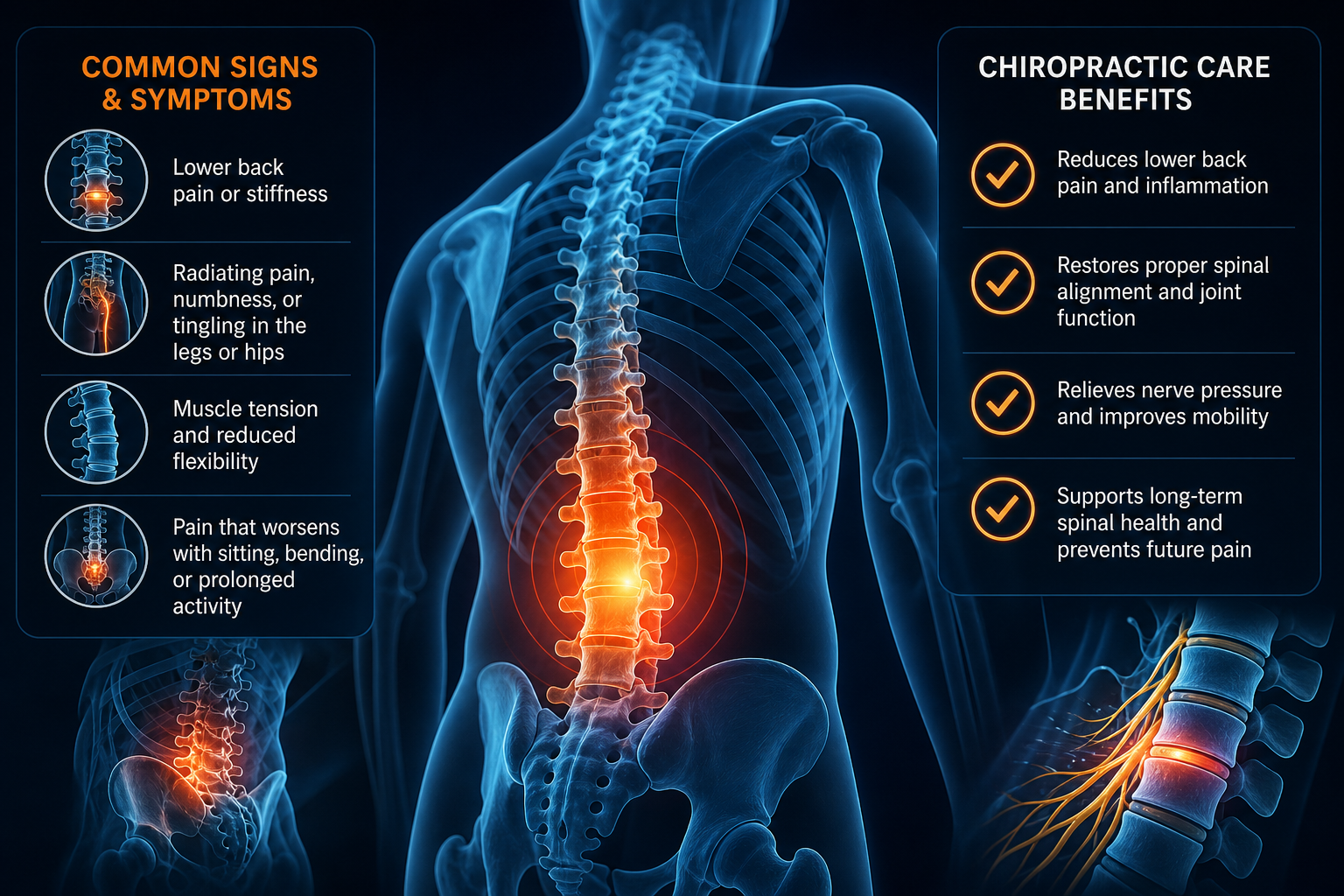
- Sharp, burning, or electric-shock pain from the buttock down one leg
- Numbness or tingling in the calf, ankle, or toes
- Weakness in the affected leg — foot drop in severe cases
- Pain that worsens with sitting, coughing, or sneezing
- Symptoms almost always on one side only
The causes of sciatica shooting pain down the leg vary, but the mechanism is consistent: mechanical pressure or chemical irritation on nerve tissue. Your provider's job is to figure out where and why the nerve is compressed. For a deeper look at the underlying mechanics, read our full guide on sciatica treatment and understanding the pain.
Common Causes of Sciatica in Active Adults
West Los Angeles residents tend to combine an active lifestyle — running, cycling, yoga, weekend hikes in Topanga — with long hours sitting at desks or in cars. That combination creates a specific set of sciatica triggers.
Disc-Related Causes
A lumbar disc herniation accounts for approximately 90% of sciatica cases. The most common levels are L4-L5 and L5-S1. The inner disc material (nucleus pulposus) pushes through the outer ring and compresses the adjacent nerve root. Sciatica from a herniated disc in active adults often develops after repetitive flexion-rotation movements — deadlifts, cycling in aggressive posture, or repeatedly bending to pick things up.
Non-Disc Causes
- Piriformis syndrome: The piriformis muscle in the deep buttock spasms or tightens, compressing the sciatic nerve where it passes underneath (or sometimes through) the muscle. Runners and cyclists are especially prone.
- Spinal stenosis: Narrowing of the spinal canal at the lumbar level, more common over age 50.
- Degenerative disc disease: Progressive disc height loss that narrows the neural foramen where nerve roots exit.
- Post-accident trauma: Auto accidents commonly cause sciatica through acute disc herniation or lumbar facet joint inflammation — a frequent finding in personal injury cases in the LA area.
Can sitting too long cause sciatica pain? Absolutely. Prolonged sitting increases intradiscal pressure by up to 40% compared to standing. If you already have a weakened or bulging disc, hours at a desk or in traffic compress it further against the nerve root. West LA's commuter culture makes this a particularly common aggravating factor.
Conservative Sciatica Treatment Options in West Los Angeles
The most effective approach to sciatica typically combines two or more conservative therapies rather than relying on any single treatment. Here's how the primary options compare:
Treatment Best For Typical Timeline Expected Outcome Chiropractic spinal manipulation Disc herniations, facet dysfunction, nerve root compression 8–12 sessions over 4–6 weeks 60–80% pain reduction; improved lumbar mobility Physical therapy Core instability, post-injury rehab, chronic sciatica 6–12 sessions over 4–8 weeks Strengthened stabilizers; reduced recurrence Acupuncture Muscular tension, chronic pain, piriformis syndrome 6–10 sessions over 3–5 weeks Reduced muscle spasm; improved pain thresholds Massage therapy Piriformis syndrome, gluteal/hamstring tension 4–8 sessions over 2–4 weeks Myofascial release; reduced nerve compression from soft tissue Combined multi-modal care Moderate-to-severe sciatica, post-accident cases 8–16 sessions over 6–12 weeks Best overall outcomes; addresses structural and muscular causes simultaneouslyMulti-modal care — combining chiropractic with PT and soft tissue work — consistently outperforms any single approach in clinical research for radicular low back pain.
Does Chiropractic Care Help Sciatica Without Surgery?
Yes. A 2010 study published in the Journal of Manipulative and Physiological Therapeutics found that 60% of sciatica patients who received chiropractic spinal manipulation experienced the same level of relief as those who eventually had spinal procedures — without the risks, downtime, or costs.
A chiropractic adjustment for sciatic nerve relief works by restoring proper alignment and motion to the lumbar vertebrae, reducing mechanical pressure on the compressed nerve root. The most common techniques used for sciatica include:
- Flexion-distraction technique: A gentle, pump-like motion on a specialized table that opens the disc space at L4-L5 or L5-S1 and moves herniated material away from the nerve root.
- Diversified adjustments: Specific high-velocity, low-amplitude thrusts to restore motion to fixated lumbar segments.
- Thompson Drop technique: Uses a segmented table to assist the adjustment with less force — useful for acute, pain-sensitive patients.
- Pelvic blocking: Cushioned wedges positioned under the pelvis to use gravity and body weight to gently reposition disc material.
Chiropractors also assess and treat the sacroiliac (SI) joint, which sits just below the lumbar spine and can refer pain down the leg in a pattern that mimics sciatica. An SI joint dysfunction is commonly mistaken for disc-related sciatica and responds rapidly to chiropractic care — often within 2–4 visits.
Nerve compression causing other pain patterns — such as trigeminal neuralgia or tension headaches — also responds to targeted chiropractic approaches, demonstrating how spinal alignment affects the entire nervous system.
Physical Therapy and Rehabilitation for Sciatic Nerve Pain
Physical therapy exercises for sciatica leg pain focus on three goals: reducing nerve irritation, stabilizing the lumbar spine, and restoring functional movement. A qualified PT will determine whether your sciatica responds better to extension-based or flexion-based protocols — getting this wrong can make symptoms worse.
McKenzie Method (Directional Preference)
The McKenzie approach identifies your directional preference — the specific spinal movement that centralizes (pulls back toward the spine) your leg pain. For most disc herniations, this is lumbar extension. Repeated prone press-ups can centralize radiating pain within 1–3 sessions when the directional preference is correctly identified.
Home Exercise Protocol for Sciatica
Here is a basic protocol most providers prescribe alongside in-clinic care. Perform 2–3 times daily:
- Prone press-up (McKenzie extension): Lie face down, hands under shoulders. Press your upper body up while keeping hips on the floor. Hold 2 seconds at the top. Repeat 10 times.
- Supine piriformis stretch: Lie on your back, cross the affected leg ankle over the opposite knee. Pull the bottom thigh toward your chest until you feel a deep stretch in the buttock. Hold 30 seconds, 3 repetitions.
- Bird-dog: On hands and knees, extend opposite arm and leg simultaneously. Hold 5 seconds. Alternate sides, 10 repetitions each. This activates the multifidus and transverse abdominis — the two deepest spinal stabilizers.
- Nerve flossing (sciatic glide): Sit on a chair edge. Extend the affected leg while tilting your head back. Then flex the ankle and tuck the chin simultaneously. This gently mobilizes the sciatic nerve through its tissue interfaces. 10 slow repetitions.
Stop any exercise that sends pain further down the leg. Pain centralizing (moving toward the back and out of the leg) is a positive sign. Pain peripheralizing (moving further toward the foot) means you need to modify or stop that movement.
How Long Does Sciatica Take to Go Away?
Most acute sciatica episodes improve significantly within 4–6 weeks of consistent conservative care. Here is a realistic recovery timeline:
- Weeks 1–2: Pain management phase. Symptoms may fluctuate. Focus is on reducing inflammation and nerve irritation through adjustments, manual therapy, and activity modification.
- Weeks 3–6: Active rehabilitation. Pain typically begins centralizing. Leg symptoms decrease. Core stabilization exercises are progressively loaded.
- Weeks 6–12: Functional restoration. Return to exercise, full activity, and sport-specific movements. Focus shifts to preventing recurrence.
Is it normal for sciatica to last months? It can happen — roughly 20–30% of cases persist beyond 12 weeks and are classified as chronic. Chronic sciatica usually involves a larger disc herniation, ongoing postural aggravation, or a missed diagnosis like piriformis syndrome or SI joint dysfunction. If your symptoms have not improved after 6 weeks of consistent treatment, your provider should reassess the diagnosis and adjust the treatment plan.
When Should You See a Provider for Sciatica?
Schedule an appointment with a chiropractor or physical therapist if your sciatica has lasted more than a few days, keeps you from normal activity, or wakes you from sleep.
Seek emergency care immediately if you experience:
- Sudden loss of bowel or bladder control
- Progressive weakness in both legs
- Numbness in the inner thighs or groin area (saddle anesthesia)
- Sciatica following a significant trauma (car accident, fall from height)
These symptoms may indicate cauda equina syndrome, a rare but serious condition affecting the nerve bundle at the base of the spinal cord. It requires emergency evaluation within hours to prevent permanent damage.
Outside of emergencies, when should you see a provider for sciatica? The earlier the better. Research from Spine Journal (2015) showed that patients who began conservative treatment within the first 2 weeks of symptom onset recovered an average of 4 weeks faster than those who waited longer than 6 weeks to seek care.
What to Do Next
If you are dealing with sciatica in West Los Angeles, start by getting evaluated by a provider who can identify the specific cause — disc herniation, piriformis syndrome, SI joint dysfunction, or something else — and build a treatment plan around it.
Here is what to expect at your first visit:
- Orthopedic and neurological exam of the lumbar spine and lower extremity
- Straight leg raise test and slump test to confirm sciatic nerve involvement
- Assessment of reflexes, muscle strength, and sensation in the L4-S1 distribution
- Possible X-ray or MRI referral if red flags or neurological deficits are present
- A clear treatment plan with expected visit frequency and recovery timeline
West Los Angeles has a strong network of chiropractors, physical therapists, acupuncturists, and massage therapists experienced in sciatica treatment near West Los Angeles, CA. The best outcomes come from providers who collaborate across disciplines and adjust the plan as your symptoms change.
Find a chiropractor for sciatica near you through the Medximity provider directory, or search for a physical therapist in your area. You can also explore more condition guides on the Medximity blog to understand your options before booking.
Frequently Asked Questions
What is sciatica and why does it hurt so much?
Sciatica is pain caused by compression or irritation of the sciatic nerve or its contributing nerve roots at the L4-S1 spinal levels. It hurts intensely because the sciatic nerve is the largest peripheral nerve in the body, and even small amounts of mechanical pressure trigger sharp, radiating pain signals down the leg.
Can sitting too long cause sciatica?
Yes. Prolonged sitting increases pressure on the lumbar discs by approximately 40% compared to standing. This can worsen an existing disc bulge or herniation, increasing compression on nearby nerve roots. If you sit for work or long commutes in West Los Angeles, take standing or walking breaks every 30–45 minutes.
Does chiropractic care help sciatica without needing invasive procedures?
Research supports chiropractic spinal manipulation as an effective treatment for sciatica caused by disc herniation and lumbar joint dysfunction. A study in the Journal of Manipulative and Physiological Therapeutics found that 60% of sciatica patients achieved significant relief through chiropractic care alone, comparable to outcomes from more invasive approaches.
How long does sciatica take to go away with treatment?
Most acute sciatica improves within 4–6 weeks of consistent conservative care including chiropractic adjustments, physical therapy, and home exercises. Full functional recovery typically takes 6–12 weeks. Approximately 20–30% of cases persist beyond 12 weeks and may require reassessment and modified treatment.
When should I go to the ER for sciatica?
Seek emergency care if you develop sudden loss of bladder or bowel control, numbness in the groin or inner thighs (saddle anesthesia), or rapidly worsening weakness in both legs. These symptoms may indicate cauda equina syndrome, which requires urgent intervention to prevent permanent nerve damage.
Where can I find the best sciatica treatment in West Los Angeles?
Start with a provider who performs a thorough neurological and orthopedic exam to identify the specific cause of your sciatica. You can search for chiropractors or physical therapists in West Los Angeles through the Medximity directory and filter by specialty and patient reviews.