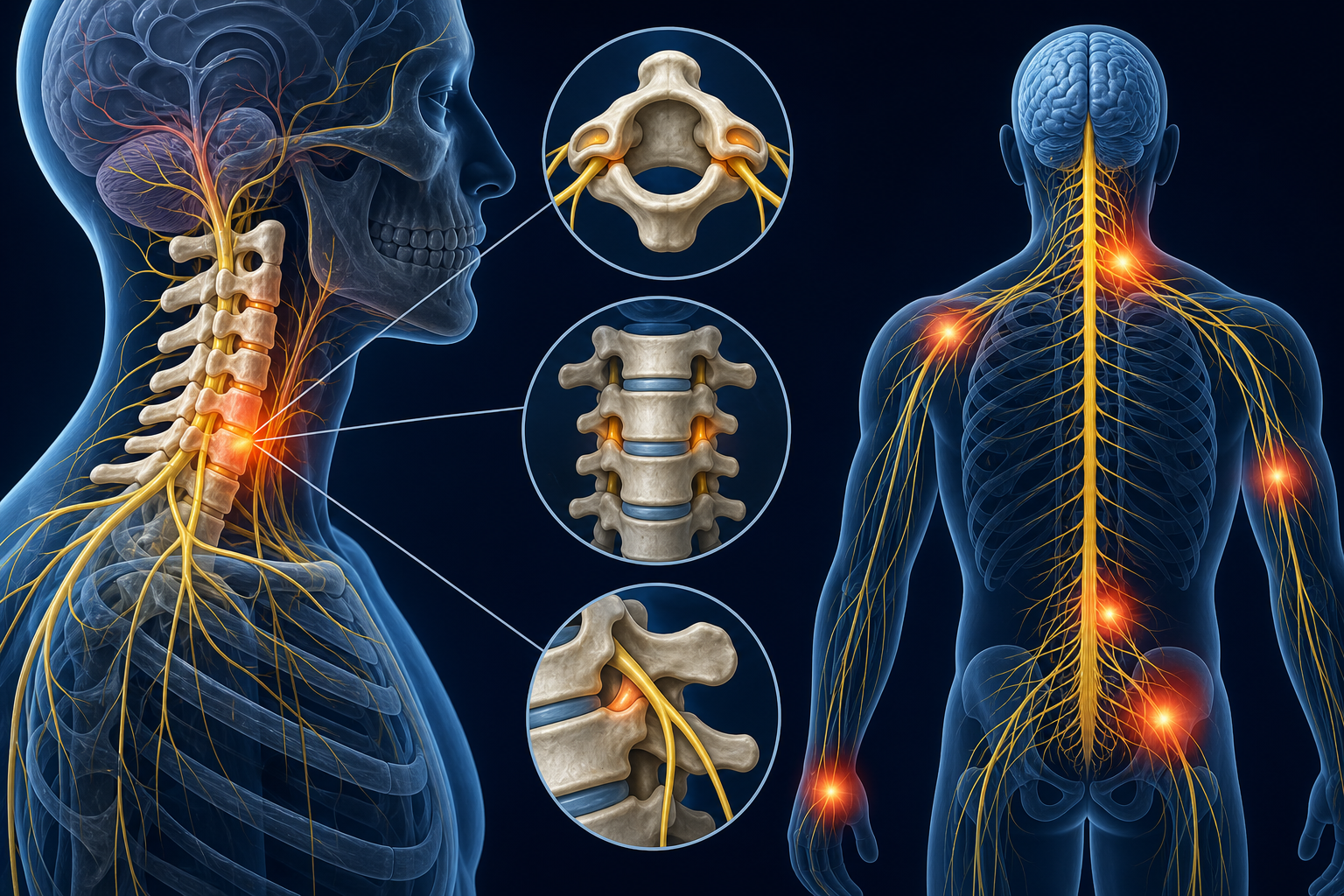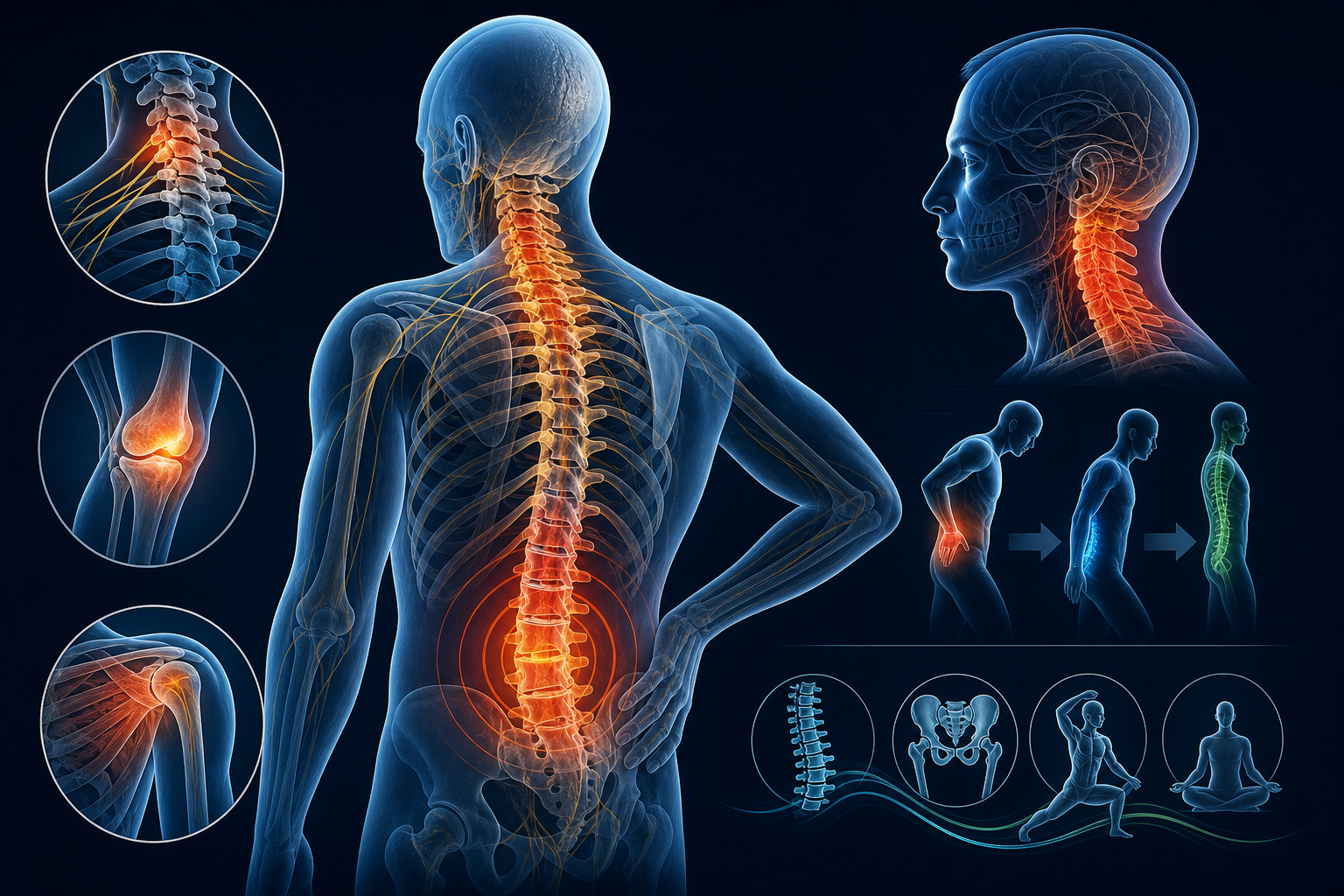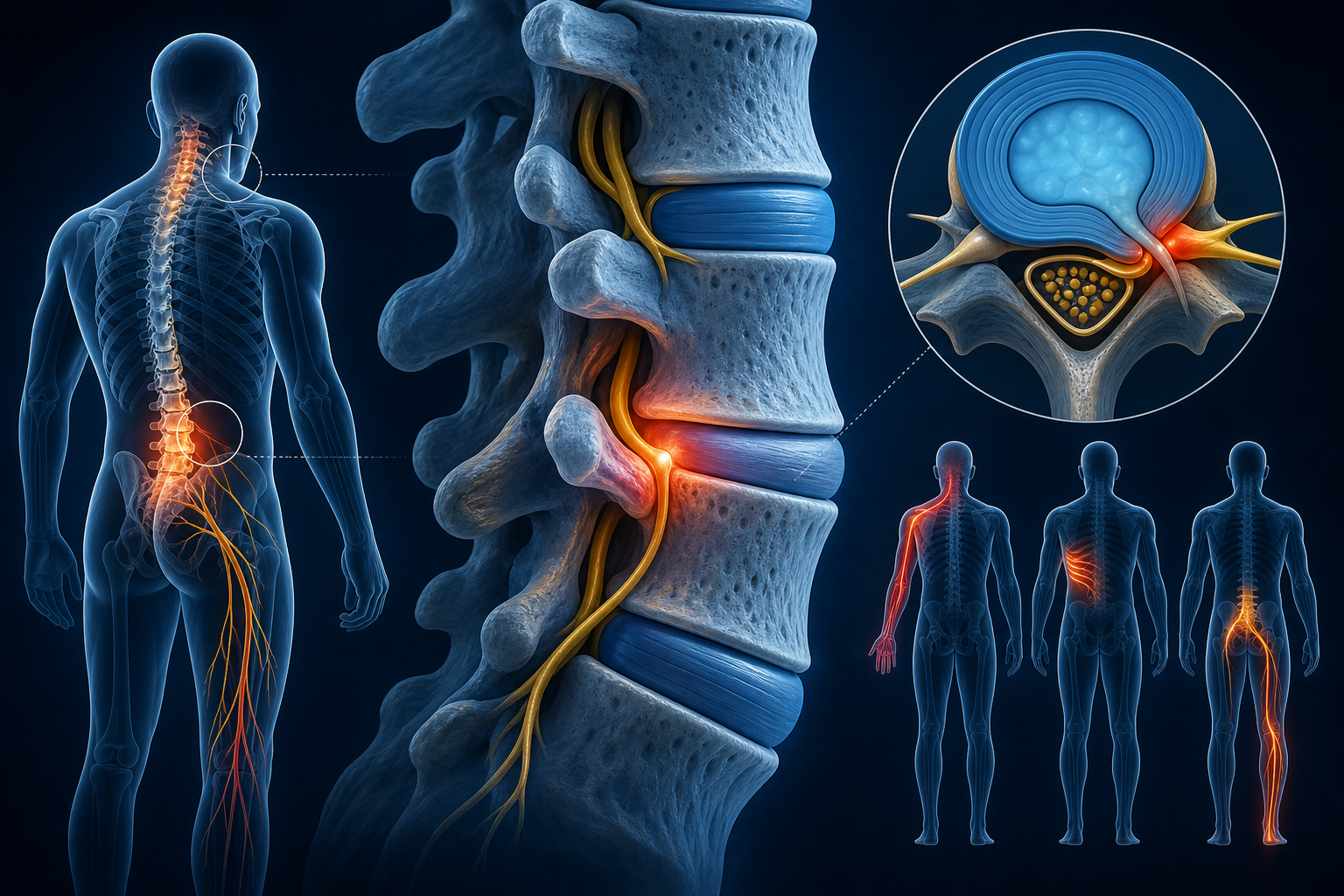
Understanding Pinched Nerve Pain (Radiculopathy): Symptoms, Causes, and Treatment starts with one key idea: the painful area is not always where the problem begins. Radiculopathy happens when a spinal nerve root becomes irritated, inflamed, compressed, or otherwise affected as it exits the spine. That irritation may cause pain, tingling, numbness, weakness, or changes in reflexes that travel into the arm, hand, ribs, hip, leg, or foot.
People often describe this as a “pinched nerve,” although not every case is caused by a nerve being physically pinched. Some symptoms may come from chemical inflammation around the nerve, swelling in nearby tissues, disc-related irritation, joint changes, or a combination of factors. Because nerve symptoms can have several causes, a qualified healthcare provider can help determine what may be contributing to your symptoms and whether conservative care is appropriate.
If you are searching for pinched nerve treatment near me or trying to find the best chiropractor for pinched nerve near me, it can help to understand what radiculopathy feels like, what warning signs deserve prompt care, and what to expect from chiropractic care, physical therapy, and rehabilitation-focused treatment.
What Is Radiculopathy?
Radiculopathy is a condition involving a spinal nerve root. Nerve roots branch off the spinal cord and exit through small openings between the bones of the spine. From there, they travel into the arms, chest wall, abdomen, hips, legs, and feet. When one of these nerve roots becomes irritated or compressed, symptoms may appear along the path of that nerve.
Radiculopathy can affect different parts of the spine:
- Cervical radiculopathy starts in the neck and may cause symptoms into the shoulder, arm, hand, or fingers.
- Thoracic radiculopathy starts in the middle back and may cause band-like pain around the ribs or chest wall.
- Lumbar radiculopathy starts in the low back and may cause symptoms into the buttock, thigh, calf, ankle, foot, or toes.
- Sacral nerve irritation may contribute to symptoms into the back of the leg, heel, or outer foot, depending on the nerve involved.
Radiculopathy is not the same thing as general back pain or neck pain. A person may have spinal pain without nerve root symptoms, and a person may have nerve symptoms with surprisingly little neck or back pain. That is one reason a careful history and physical exam matter.
What Does Radiculopathy Pain Feel Like?
Many patients ask, “What does radiculopathy pain feel like?” The answer varies, but nerve-related pain often has a distinct quality. It may feel sharp, electric, burning, zinging, stabbing, or shooting. Some people describe it as a line of pain that travels from the spine into the limb. Others notice numbness, pins and needles, or weakness more than pain.
Common descriptions include:
- Pain shooting from the neck into the shoulder blade, arm, wrist, or hand
- Pain shooting down the leg from the back, sometimes called sciatica when the sciatic nerve pathway is involved
- Burning or tingling in a specific part of the arm, hand, leg, or foot
- A feeling that the arm or leg is heavy, clumsy, or less coordinated
- Numbness in a stripe-like or patch-like pattern
- Symptoms that worsen with coughing, sneezing, sitting, bending, lifting, or certain neck positions
- Temporary relief when changing posture, lying down, walking, or supporting the affected arm
Because radiculopathy follows nerve pathways, symptoms may feel more specific than ordinary muscle soreness. For example, symptoms may travel into the thumb and index finger, the outside of the forearm, the front of the thigh, the big toe, or the outer edge of the foot. These patterns can help providers identify which nerve root may be irritated, but symptoms do not always follow textbook patterns exactly.
Nerve Irritation vs. Pinched Nerve: What Is the Difference?
The phrase “pinched nerve” is common and useful, but it can oversimplify what is happening. Nerve irritation vs pinched nerve symptoms can overlap, yet the underlying mechanism may differ.
Nerve irritation
Nerve irritation may occur when a nerve root becomes chemically inflamed or sensitized. For example, a disc injury may release inflammatory substances near the nerve root even if the nerve is not severely compressed. Swelling, repetitive strain, or joint inflammation may also make the nerve more sensitive. In these cases, symptoms may be intense even when imaging shows only mild structural changes.
Pinched or compressed nerve
A compressed nerve means nearby tissue is narrowing the space around the nerve root or placing mechanical pressure on it. Possible contributors include a herniated disc, degenerative disc changes, thickened ligaments, arthritic changes in spinal joints, or narrowing of the nerve opening, called foraminal stenosis.
Why the distinction matters
Both irritation and compression may cause pain, numbness, tingling, and weakness. Conservative care may help many people by reducing aggravating movements, improving spinal and joint mechanics, supporting better posture, and restoring strength and mobility. However, progressive weakness, severe numbness, or loss of bowel or bladder control requires urgent medical evaluation.
Common Pinched Nerve Symptoms by Body Region
Pinched nerve symptoms can look different depending on which part of the spine is involved. A provider may use your symptom location, reflexes, strength testing, sensation testing, and movement patterns to narrow down the likely source.
Cervical radiculopathy: neck, shoulder, arm, and hand symptoms
Pinched nerve symptoms in arm often begin in the neck or upper back and travel into the shoulder, arm, elbow, wrist, hand, or fingers. Some patients notice neck stiffness first. Others mainly feel arm pain or hand tingling.
Cervical radiculopathy may be associated with:
- Neck pain with pain radiating into the shoulder or arm
- Tingling or numbness in the fingers
- Weak grip or difficulty holding objects
- Pain that worsens when turning, extending, or tilting the neck
- Symptoms that improve when placing the hand on top of the head, in some cases
- Shoulder blade pain that feels deep or burning
Conservative care for cervical radiculopathy may include posture work, gentle mobility, nerve gliding exercises when appropriate, strengthening of the deep neck and shoulder stabilizers, and chiropractic or manual therapy techniques selected for the patient’s presentation. Learn more about related neck concerns in Medximity’s guide to neck pain and when to see a chiropractor.
Thoracic radiculopathy: middle back and rib symptoms
Middle back rib pain pinched nerve symptoms may feel like a band of pain wrapping from the spine around the ribs toward the chest or abdomen. Thoracic radiculopathy is less common than cervical or lumbar radiculopathy, but it can be uncomfortable and confusing because rib, chest wall, digestive, and cardiac conditions may sometimes create overlapping symptoms.
Possible thoracic radiculopathy symptoms include:
- Sharp, burning, or band-like pain around one side of the ribs
- Middle back pain that worsens with twisting, coughing, or deep breathing
- Tingling or sensitivity along a rib line
- Localized tenderness near the spine or rib joints
Because chest, rib, and upper abdominal pain can have causes unrelated to the spine, it is important to seek medical evaluation for new, severe, unexplained, or concerning symptoms, especially if pain is associated with shortness of breath, sweating, dizziness, pressure in the chest, or other systemic symptoms.
Lumbar radiculopathy: low back, hip, leg, and foot symptoms
Pain shooting down leg from back is one of the most familiar radiculopathy patterns. It may involve the buttock, back of the thigh, calf, ankle, foot, or toes. Some people call this sciatica, although true sciatica refers to symptoms along the sciatic nerve distribution and may have several contributing causes.
Lumbar radiculopathy may be associated with:
- Low back pain that travels into the buttock or leg
- Burning, electric, or shooting pain down the thigh or calf
- Numbness or tingling in the foot or toes
- Symptoms that worsen with sitting, bending, lifting, or coughing
- Symptoms that improve with walking, standing, or lying in certain positions
- Weakness when lifting the foot, pushing off the toes, or climbing stairs
If you are researching sciatica symptoms, causes, and treatment, it may help to know that not every leg symptom is caused by the same structure. A thorough exam can help distinguish lumbar radiculopathy from hip conditions, sacroiliac joint irritation, peripheral nerve entrapment, vascular problems, or muscle referral patterns.
When a Pinched Nerve May Need Prompt Medical Attention
Many cases of suspected radiculopathy can be evaluated in an outpatient setting. However, some symptoms should not be watched at home. Seek urgent medical care if you have any of the following:
- New loss of bowel or bladder control
- Numbness in the groin or saddle area
- Rapidly worsening weakness in an arm or leg
- Severe weakness after an injury or fall
- Fever, unexplained weight loss, or a history of cancer with new spine pain
- Severe, unrelenting pain that does not change with position
- Chest pain, shortness of breath, fainting, or symptoms that could suggest a non-spinal emergency
A specific symptom patients sometimes mention is, “I can’t lift my foot — could it be a pinched nerve?” Difficulty lifting the front of the foot, sometimes called foot drop, may occur when certain nerves are not functioning properly. It can be related to lumbar nerve root involvement or other nerve conditions. New or worsening foot drop deserves prompt medical evaluation because timing and cause matter.
What Causes Radiculopathy?
Radiculopathy can develop suddenly or gradually. In many cases, more than one factor contributes to nerve irritation. A provider will usually consider your age, activity level, injury history, posture, work demands, exercise habits, and symptom behavior.
Herniated or bulging disc
Spinal discs sit between the vertebrae and help absorb load. A disc can bulge or herniate, which means part of the disc moves beyond its usual boundary. If the disc material irritates or narrows the space around a nerve root, radiculopathy symptoms may occur. Disc-related symptoms often worsen with bending, sitting, lifting, coughing, or sneezing, although this is not universal.
Degenerative disc and joint changes
As people age, discs may lose height and spinal joints may develop arthritic changes. These changes are common and do not always cause pain. When they narrow the openings where nerve roots exit, they may contribute to foraminal stenosis and nerve root irritation.
Spinal stenosis
Stenosis means narrowing. In the spine, narrowing may affect the central spinal canal or the openings where nerve roots exit. Lumbar stenosis may be associated with leg symptoms that worsen with standing or walking and improve with sitting or leaning forward. Cervical stenosis can be more complex and should be evaluated carefully, especially if balance, hand coordination, or walking changes are present.
Posture, repetitive strain, and workload
Repetitive lifting, prolonged sitting, sustained forward-head posture, overhead work, vibration exposure, and poor recovery may contribute to spinal stress. These factors may not be the only cause, but they can aggravate symptoms or slow recovery if not addressed.
Trauma or sudden overload
A fall, sports injury, heavy lift, or motor vehicle collision may trigger nerve symptoms. After trauma, it is especially important to be evaluated by a qualified provider to determine whether imaging, referral, or a modified care plan is appropriate.
Medical conditions that affect nerves
Not all nerve symptoms come from the spine. Diabetes, vitamin deficiencies, peripheral nerve entrapments, inflammatory conditions, infections, and other medical issues may create numbness, tingling, burning, or weakness. This is why a provider should assess your full health history and symptom pattern instead of assuming every nerve symptom is a pinched spinal nerve.
How Long Does a Pinched Nerve Last?
How long does pinched nerve last? The timeline depends on the cause, severity, overall health, work demands, and whether there is ongoing nerve compression or progressive weakness. Some mild nerve irritation may improve over days to a few weeks with activity modification and appropriate conservative care. Other cases may take several weeks or months, especially when symptoms are related to disc herniation, stenosis, or repeated aggravation.
Recovery is not always a straight line. It is common for symptoms to fluctuate as activity levels change. A meaningful sign of improvement may be pain becoming less intense, symptoms moving out of the arm or leg, better sleep, improved walking tolerance, or improved strength. However, worsening numbness, spreading symptoms, or new weakness should be discussed with a healthcare provider promptly.
Because nerves recover more slowly than muscles in many cases, patience and consistency matter. A conservative plan may focus first on calming symptoms, then restoring movement, then building strength and resilience so the problem is less likely to return.
How Providers Evaluate Suspected Radiculopathy
A visit for suspected radiculopathy usually begins with a conversation about your symptoms. The provider may ask where the pain travels, what makes it better or worse, whether you have numbness or weakness, how symptoms affect sleep and daily activity, and whether there are red flags such as bowel or bladder changes.
Physical examination
The exam may include posture and movement assessment, range of motion testing, orthopedic tests, neurological screening, reflex checks, strength testing, sensation testing, gait evaluation, and functional movements such as bending, squatting, or heel and toe walking. These findings help determine whether symptoms are consistent with radiculopathy and whether conservative care is reasonable.
Imaging and referrals
Not every person with suspected radiculopathy needs imaging right away. In many cases, initial conservative care may be considered when there are no serious warning signs. Imaging or specialist referral may be recommended when symptoms are severe, progressive, associated with trauma, accompanied by significant weakness, or not improving as expected. Your provider can help determine what is appropriate based on your individual situation.
Why a precise diagnosis matters
Arm or leg pain can come from many sources. Shoulder conditions, carpal tunnel syndrome, hip problems, sacroiliac joint irritation, muscle trigger points, and peripheral neuropathy may mimic radiculopathy. A precise assessment helps avoid treating the wrong structure and supports a more targeted plan.
Pinched Nerve Treatment Without Surgery
Many people searching for pinched nerve treatment without surgery are looking for practical ways to reduce symptoms and return to normal activity. Conservative care may help many cases of radiculopathy, especially when there are no urgent neurological signs. The right plan depends on the suspected cause, symptom severity, irritability, and the patient’s goals.
Conservative treatment may include:
- Activity modification to reduce positions or movements that aggravate symptoms
- Education about posture, lifting, sleep positions, and work ergonomics
- Gentle mobility and range-of-motion exercises
- Targeted strengthening for the spine, hips, shoulders, or core
- Manual therapy, which may include joint or soft tissue techniques
- Chiropractic adjustments when appropriate for the patient’s exam findings
- Nerve gliding or nerve mobility exercises when tolerated
- Progressive return to walking, work tasks, exercise, and daily activity
The goal is not simply to “push through” nerve pain. Nerves can be sensitive, and overly aggressive stretching or strengthening may increase symptoms in some people. A measured plan usually starts with positions and movements that calm symptoms, then progresses as tolerance improves.
Chiropractic Care for Pinched Nerve Symptoms
Chiropractors commonly evaluate neck pain, back pain, and radiating arm or leg symptoms. Chiropractic care for suspected radiculopathy may include spinal and extremity assessment, movement testing, manual therapy, chiropractic adjustments, soft tissue techniques, exercise recommendations, and ergonomic guidance.
For some patients, chiropractic adjustments may help improve joint motion and reduce mechanical stress on irritated tissues. However, care should be individualized. High-force techniques may not be appropriate for every patient, especially when symptoms are highly irritable or neurological findings are concerning. A chiropractor should screen for red flags and refer when symptoms suggest a need for medical evaluation or imaging.
If you are looking for local options, Medximity can help you compare chiropractors who treat neck and back pain. You can also read more about chiropractic care for pinched nerve symptoms to understand how conservative care may fit into a broader treatment plan.
Physical Therapy for Lumbar Radiculopathy
Physical therapy for lumbar radiculopathy often focuses on reducing leg symptoms, improving movement tolerance, strengthening supportive muscles, and helping the patient return to walking, work, and daily activity. A physical therapist may assess spinal motion, hip mobility, nerve sensitivity, gait, strength, balance, and functional limitations.
A physical therapy plan may include:
- Directional preference exercises when certain movements centralize or reduce leg symptoms
- Core and hip strengthening to improve load management
- Gentle mobility work for the lumbar spine, hips, and lower limbs
- Nerve mobility exercises when appropriate and not overly provocative
- Walking or conditioning progressions
- Education on lifting, sitting, sleep positioning, and pacing
- Work-specific or sport-specific rehabilitation as symptoms improve
For patients with pain shooting down the leg from the back, the early goal is often to find positions and movements that reduce nerve sensitivity. Over time, the plan may progress toward strength, endurance, and confidence with daily movement. If symptoms worsen or strength declines, the therapist may recommend further evaluation.
Patients interested in rehabilitation can search Medximity for physical therapists near them or review this related article on physical therapy for back pain.
Natural Treatment for Cervical Radiculopathy
People often use the phrase natural treatment for cervical radiculopathy when they are seeking non-surgical, non-drug options. Conservative care may include education, posture changes, guided exercise, manual therapy, and lifestyle adjustments that reduce stress on the neck and upper back.
Natural or conservative strategies may include:
- Adjusting monitor height and workstation setup to reduce forward-head posture
- Taking brief movement breaks during long periods of sitting
- Using a pillow position that keeps the neck relatively neutral
- Building strength in the deep neck flexors, shoulder blade stabilizers, and upper back
- Avoiding repeated end-range neck positions that reproduce arm symptoms
- Practicing gentle range-of-motion exercises within a comfortable range
- Using provider-guided nerve glides only when they reduce or do not worsen symptoms
These strategies should be tailored to your presentation. For example, one person may feel better with gentle neck retraction, while another may feel worse. A provider can help identify which movements are helpful, which should be modified, and when additional evaluation is warranted.
What to Expect at Your First Visit
If you schedule an appointment for suspected pinched nerve pain, you can expect the provider to focus on understanding the pattern and safety of your symptoms. The visit is usually not just a quick look at the painful area. Because nerve symptoms can come from the spine or from other health conditions, a careful exam is important.
History and symptom review
Your provider may ask when symptoms began, whether there was an injury, where symptoms travel, whether there is numbness or weakness, what activities aggravate or ease symptoms, and what treatments you have already tried. Be specific about any changes in strength, walking, balance, hand coordination, or bladder and bowel function.
Movement and neurological testing
The provider may check spinal movement, limb movement, reflexes, muscle strength, sensation, and functional tasks. These tests help identify whether symptoms are consistent with a nerve root pattern and whether conservative care is a good fit.
Initial care plan
If conservative care is appropriate, the first visit may include education, symptom-relief strategies, gentle manual therapy, a small number of home exercises, and guidance on what to avoid temporarily. The provider may also discuss expected follow-up, signs that require prompt care, and how progress will be measured.
Referral when needed
A responsible conservative-care provider should refer you for additional medical evaluation when symptoms fall outside the expected pattern, when red flags are present, or when neurological signs are worsening. Referral does not mean something is automatically severe; it means the provider is making sure you receive the right level of care.
At-Home Strategies That May Help Between Visits
At-home care should be gentle and based on symptom response. These general strategies may help some people manage irritated nerve symptoms, but they are not a substitute for an individualized evaluation.
Change positions often
Long periods in one position may aggravate nerve symptoms. Short movement breaks, brief walks, or changing from sitting to standing may help reduce irritation for some patients.
Use comfortable, supported positions
For neck-related arm symptoms, supporting the arm on a pillow may reduce tension in some cases. For low back-related leg symptoms, some patients feel better lying on the back with knees supported or lying on the side with a pillow between the knees. Choose positions that reduce symptoms rather than forcing a posture that increases them.
Avoid aggressive stretching into nerve pain
Nerve symptoms are not always helped by stretching harder. If a stretch creates sharper burning, tingling, or shooting pain, it may be too provocative. A provider can help determine whether mobility work, nerve gliding, or strengthening is appropriate.
Keep walking if tolerated
Gentle walking may help some people with low back and leg symptoms, especially if it does not increase pain. Start with short, comfortable distances and avoid pushing through worsening neurological symptoms.
Track symptom patterns
Write down what improves or worsens symptoms, where the pain travels, and whether numbness or weakness changes. This information can help your provider adjust your care plan.
How to Find Pinched Nerve Treatment Near You
When searching for pinched nerve treatment near me, look for a provider who evaluates both the painful region and the nerve-related symptoms. A good visit should include a history, physical exam, neurological screening when appropriate, a clear explanation of findings, and a plan that fits your symptoms and goals.
Questions you may want to ask include:
- Do my symptoms appear consistent with radiculopathy or another condition?
- Are there any warning signs that suggest I need imaging or medical referral?
- Which activities should I modify temporarily?
- What should I expect over the next few visits?
- What changes would mean I should contact you sooner?
- How will we measure progress?
Medximity helps patients find conservative-care providers, including chiropractors and physical therapists, by location and specialty. You can start with a provider search for pinched nerve care near you and compare options that fit your needs.
Key Takeaways
- Radiculopathy is nerve root irritation or compression that may cause pain, tingling, numbness, or weakness into the arm, ribs, leg, or foot.
- A “pinched nerve” may involve mechanical compression, chemical inflammation, or both.
- Arm symptoms may start in the neck, while pain shooting down the leg from the back may involve lumbar nerve roots.
- New foot drop, progressive weakness, bowel or bladder changes, or saddle numbness should be evaluated urgently.
- Conservative care may include chiropractic care, physical therapy, rehabilitation exercises, posture changes, and activity modification.
- A qualified provider can help determine whether your symptoms are appropriate for conservative care or need further evaluation.
Frequently Asked Questions About Pinched Nerve Pain and Radiculopathy
What does radiculopathy pain feel like?
Radiculopathy pain often feels sharp, electric, burning, tingling, or shooting. It may travel from the neck into the arm or from the low back into the leg. Some people notice numbness or weakness more than pain. Because symptoms vary, a provider can help determine whether your pattern is consistent with radiculopathy.
Is nerve irritation the same as a pinched nerve?
Not always. A pinched nerve usually refers to mechanical compression of a nerve root, while nerve irritation may involve inflammation or sensitivity around the nerve without major compression. Both can cause similar symptoms, including pain, tingling, numbness, or weakness.
Can a pinched nerve cause pain shooting down the leg from the back?
Yes, lumbar nerve root irritation may cause pain that travels from the low back into the buttock, thigh, calf, or foot. This is sometimes called sciatica, depending on the pathway involved. Other conditions can also mimic this pattern, so an exam is helpful.
Can a pinched nerve cause symptoms in the arm?
Yes. Cervical radiculopathy may cause pain, tingling, numbness, or weakness that travels from the neck into the shoulder, arm, hand, or fingers. The specific location can give clues about which nerve root may be involved.
How long does a pinched nerve last?
The timeline varies. Mild nerve irritation may improve within days to weeks, while more significant radiculopathy may take several weeks or longer. Symptoms that worsen, spread, or include new weakness should be evaluated by a healthcare provider.
What if I can’t lift my foot?
New difficulty lifting the front of the foot, sometimes called foot drop, can be a sign of nerve involvement and should be evaluated promptly. It may come from a lumbar nerve root or another nerve problem, and the cause matters.
Can physical therapy help lumbar radiculopathy?
Physical therapy may help many people with lumbar radiculopathy by improving movement tolerance, reducing nerve sensitivity, building strength, and supporting a gradual return to activity. The plan should be tailored to your symptoms and adjusted if symptoms worsen.
Can chiropractic care help a pinched nerve?
Chiropractic care may help some patients with neck or back-related nerve symptoms through assessment, manual therapy, exercise guidance, posture education, and activity modification. Care should be individualized, and concerning neurological symptoms should be referred for medical evaluation.
What is a natural treatment for cervical radiculopathy?
Natural or conservative care for cervical radiculopathy may include posture changes, gentle mobility, strengthening of the neck and shoulder stabilizers, ergonomic adjustments, manual therapy, and provider-guided home exercises. The safest approach depends on your exam findings.
When should I see a provider for pinched nerve symptoms?
Consider seeing a provider if symptoms travel into an arm or leg, last more than a few days, interfere with sleep or daily activity, or include numbness, tingling, or weakness. Seek urgent care for bowel or bladder changes, saddle numbness, rapidly worsening weakness, or new foot drop.