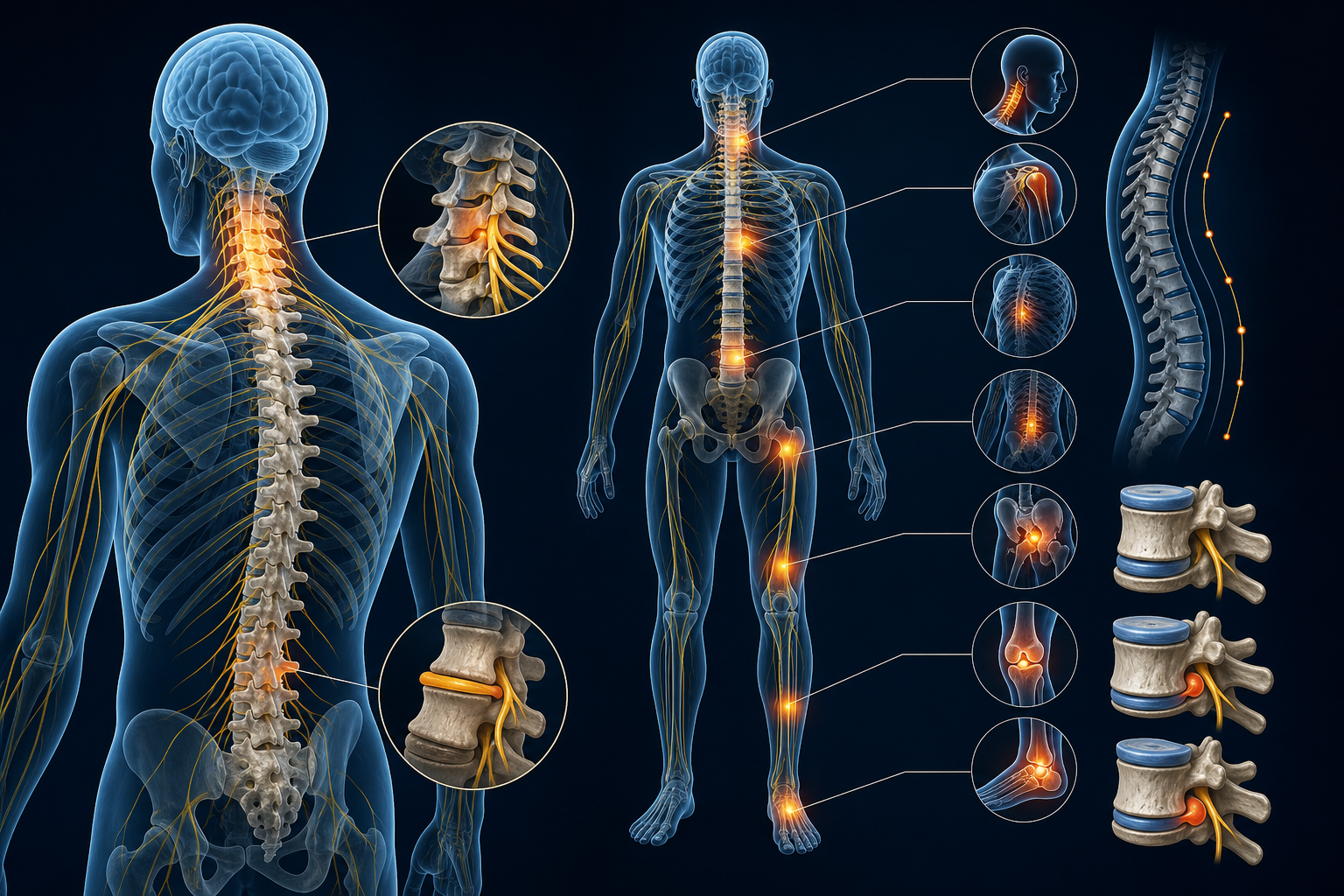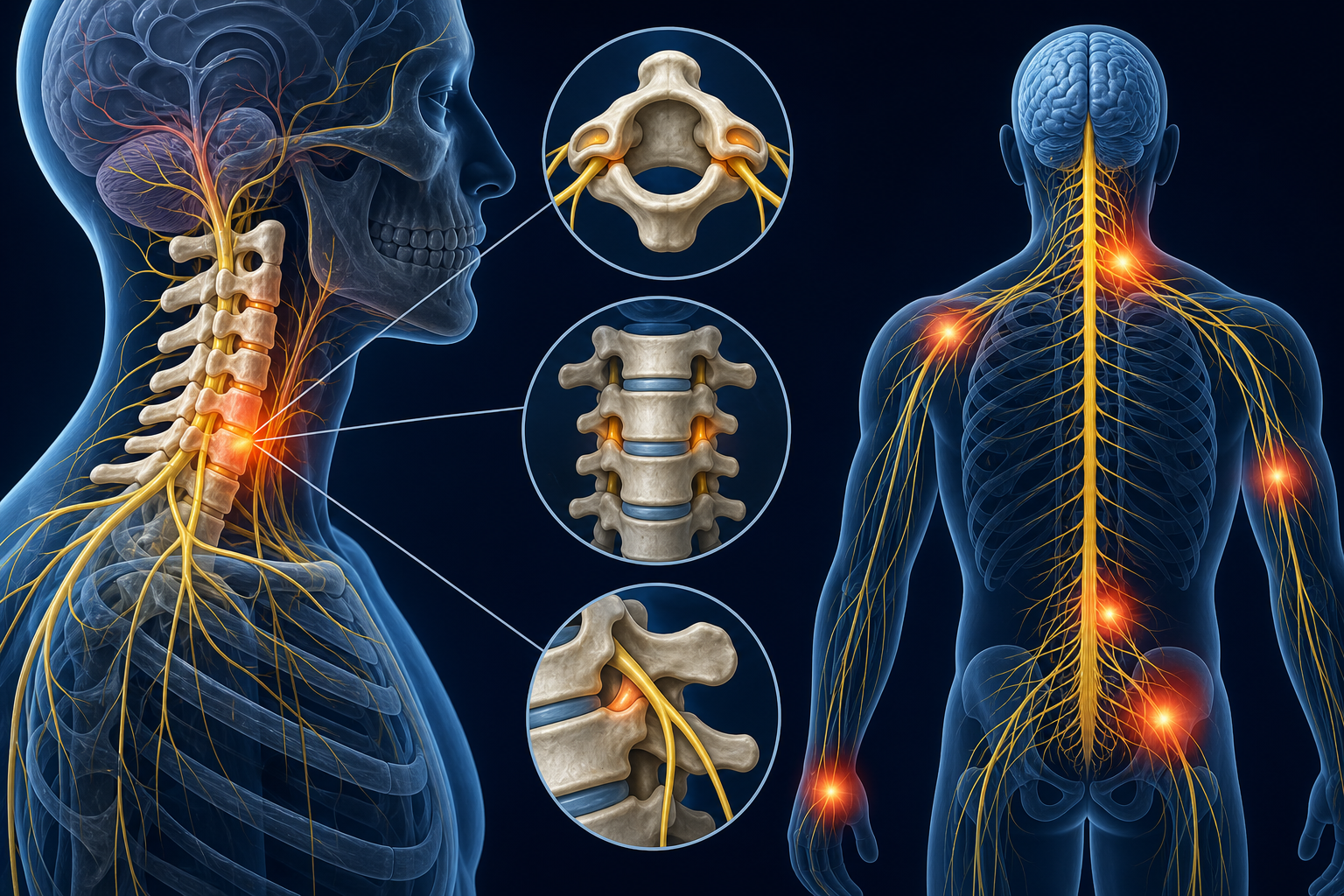
Chiropractic care for auto accident injuries focuses on evaluating how a crash may have affected the neck, back, joints, muscles, and nerves, then using conservative treatment to help restore movement and reduce irritation. If you have neck pain, back pain, stiffness, headaches, or dizziness after a collision, a qualified provider can help determine whether chiropractic care, physical therapy, or another type of medical evaluation may be appropriate.
Not every symptom after a crash is an emergency, but some are. Seek urgent medical care right away if you have severe or worsening headache, fainting, confusion, chest pain, shortness of breath, weakness, loss of bladder or bowel control, new numbness, trouble walking, or significant dizziness. Chiropractic care is not a substitute for emergency evaluation after a serious injury.
Why Pain May Start After a Car Accident
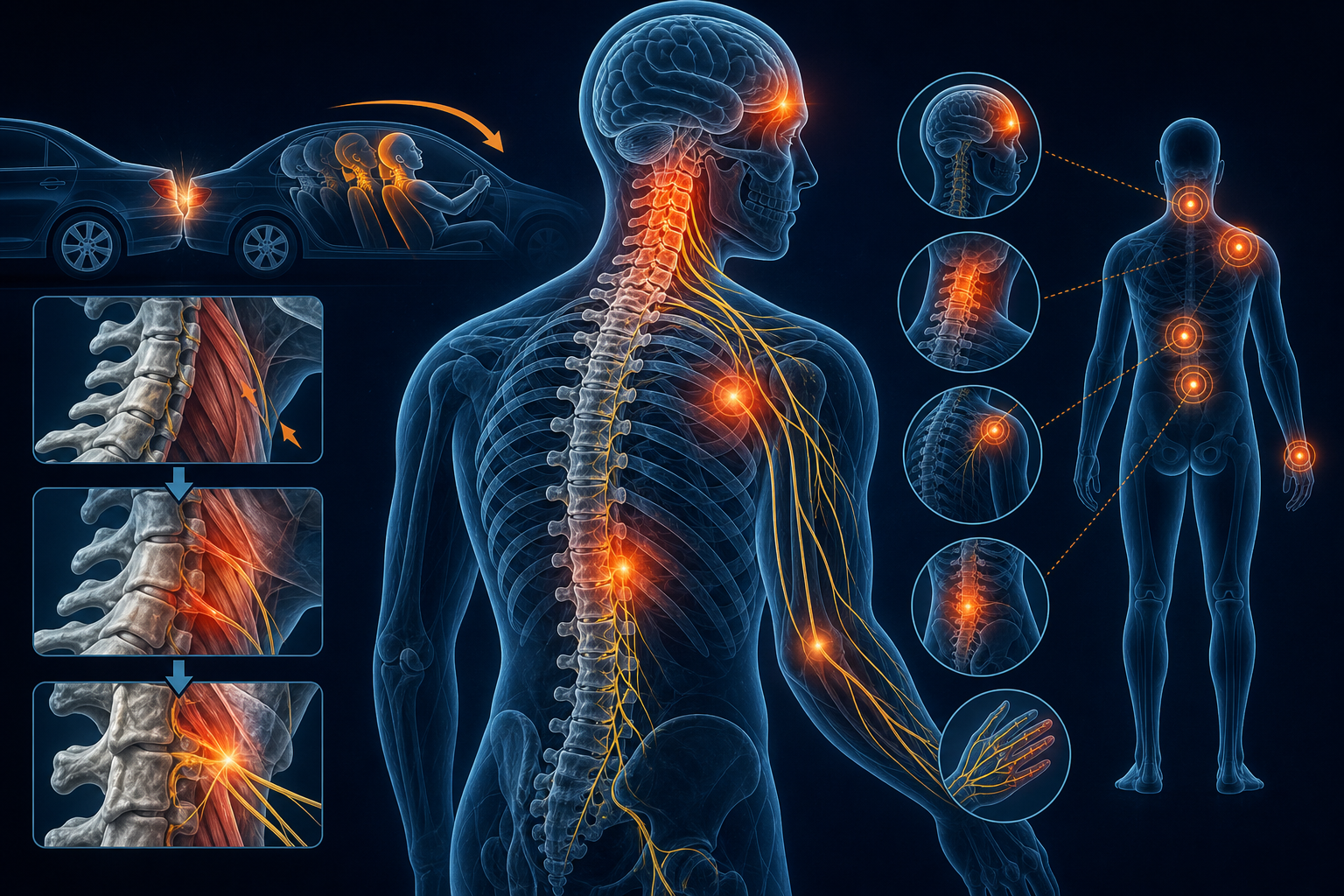
Many people wonder why neck pain starts after a car accident when they felt mostly fine at the scene. During a collision, the body can move faster than the muscles are prepared to control. The head, neck, shoulders, mid-back, and low back may be forced into quick acceleration and deceleration. This can irritate joints, strain muscles and ligaments, and contribute to protective muscle guarding.
Symptoms may show up immediately, but they can also become more noticeable over 24 to 72 hours as inflammation and stiffness develop. Common post-accident complaints include:
- Neck pain or a stiff neck after rear end collision
- Upper back, mid-back, or low back pain
- Headaches that start at the base of the skull or temples
- Shoulder tightness or pain between the shoulder blades
- Muscle spasms or limited range of motion
- Tingling, numbness, or radiating discomfort into an arm or leg
- Dizziness, light sensitivity, or difficulty concentrating
These symptoms can have different causes, so it is important not to self-diagnose. A chiropractor or other qualified provider can perform an exam and help decide what type of care is safest for your situation.
Common Auto Accident Injuries Chiropractors Evaluate
Whiplash-associated neck pain
Whiplash is a common term for neck injury caused by rapid back-and-forth motion, often during rear-end collisions. It may involve irritated joints, strained muscles, ligament sprain, or nerve sensitivity. If you are researching whiplash symptoms and care options, it is helpful to remember that severity varies. Some cases are mild and improve with conservative care, while others need additional medical evaluation.
Back pain after a car accident
If you are searching for a back pain after car accident chiropractor, you may be dealing with low back stiffness, pain with sitting, or discomfort when bending and lifting. A collision can aggravate spinal joints, discs, muscles, and supporting tissues. Chiropractic evaluation may help identify movement restrictions and muscle guarding that could be contributing to pain. You can also review Medximity’s guide to back pain after a car accident for additional patient-friendly information.
Headaches, dizziness, and nerve symptoms
Headaches after a crash may come from neck irritation, muscle tension, concussion, or other causes. Is dizziness normal after car accident? Dizziness can happen after a collision, but it should be taken seriously, especially if it is new, worsening, or associated with headache, vision changes, nausea, confusion, fainting, weakness, or trouble walking. A chiropractor may screen for concerning signs and refer you for medical evaluation when symptoms fall outside conservative care.
When to See a Chiropractor After an Accident
Many patients ask when to see chiropractor after accident. In general, it is reasonable to schedule an evaluation as soon as you notice neck pain, back pain, stiffness, headaches, or movement limitations, provided emergency symptoms have been ruled out. Early assessment may help document your baseline symptoms, identify areas of restricted motion, and guide safe activity modifications.
You do not need to wait until pain becomes severe. Mild symptoms can still affect sleep, driving, work, and daily movement. On the other hand, a chiropractor should not rush into treatment without a proper history and exam. A careful first visit is especially important after a crash because the provider needs to understand the collision, symptom timing, prior injuries, and any signs that imaging or medical referral may be needed.
If you are comparing options and typing auto accident chiropractor near me, you can use Medximity to find chiropractors near you and review provider profiles before scheduling.
What Happens at an Accident Chiropractic Visit?
If you are wondering what happens at accident chiropractic visit, the first appointment usually begins with a detailed history. The provider may ask how the crash happened, where you felt symptoms first, whether pain has changed, what activities make it worse, and whether you have symptoms such as numbness, weakness, dizziness, or headaches.
The exam may include posture and movement assessment, range-of-motion testing, orthopedic or neurologic screening, palpation of tender or restricted areas, and functional tests related to sitting, standing, turning, bending, or walking. If your symptoms suggest a possible fracture, concussion, significant neurologic issue, or another condition outside chiropractic care, the provider may recommend urgent medical evaluation or coordinate with another clinician.
When chiropractic care is appropriate, your treatment plan may include a combination of hands-on care, therapeutic exercise, soft tissue techniques, mobility work, posture coaching, and home-care guidance. Some patients also benefit from rehabilitation with a physical therapist, especially when strength, balance, endurance, or work-specific function needs to be rebuilt. Medximity can help you compare physical therapists near you when rehab is part of the plan.
Chiropractic Treatment Options After a Crash
Chiropractic care after an auto accident is usually tailored to the injury pattern, symptom irritability, and stage of healing. There is no single treatment that fits every patient.
Spinal and joint adjustments
Chiropractic adjustments are controlled techniques used to improve joint motion when a joint is restricted and the provider determines that adjustment is appropriate. After a crash, some patients may not be ready for manual adjustment right away, while others may tolerate gentle techniques. A chiropractor should adapt care based on pain level, exam findings, and safety considerations. Learn more about chiropractic adjustment as a treatment option.
Soft tissue therapy and mobility work
Muscle guarding is common after a collision. Soft tissue techniques, gentle stretching, and guided mobility work may help reduce stiffness and improve comfort in some patients. For a stiff neck after rear end collision, treatment may begin with smaller, controlled movements rather than aggressive stretching.
Rehabilitation exercises
Exercise is often an important part of recovery. Early exercises may focus on pain-free range of motion, breathing, posture, and gentle activation. As symptoms improve, the plan may progress toward strength, coordination, and return-to-activity goals. This is one reason many auto accident care plans include both chiropractic and rehab principles.
Natural Treatment for Whiplash After a Crash
Patients often look for natural treatment for whiplash after crash or whiplash treatment without surgery after accident. Conservative care may include education, gentle movement, ergonomic changes, manual therapy, and progressive exercise. These approaches are intended to support function and comfort without invasive procedures.
However, natural does not mean one-size-fits-all. Resting too much can contribute to stiffness, but doing too much too soon may flare symptoms. A provider can help you find the middle ground: staying active within tolerance, avoiding movements that sharply increase pain, and gradually rebuilding normal motion.
If you want more detail about neck symptoms after a collision, Medximity’s guide to neck pain after a car accident explains common patterns and when to seek care.
How Long Does Whiplash Stiffness Last?
How long does whiplash stiffness last? The answer varies. Some patients notice improvement within days or weeks, while others have symptoms that last longer, especially when pain is severe, sleep is disrupted, headaches are present, or there were previous neck or back problems. Research generally suggests that early, appropriate movement and patient education may be helpful for many people with whiplash-associated disorders, but recovery timelines are individual.
If stiffness is not improving, keeps returning, or is accompanied by radiating pain, numbness, weakness, dizziness, or significant headaches, schedule an evaluation. A chiropractor can reassess your progress and determine whether your care plan should change or whether another medical provider should be involved.
How to Choose the Best Chiropractor for Car Accident Injuries
The best chiropractor for car accident injuries is not necessarily the closest office or the one with the boldest claims. Look for a provider who takes a detailed history, screens for red flags, explains findings clearly, sets realistic expectations, and coordinates care when another specialist or therapist is needed.
Helpful questions to ask include:
- Do you commonly evaluate neck and back pain after auto accidents?
- How do you decide whether chiropractic treatment is appropriate after a crash?
- What symptoms would lead you to refer me for imaging or medical evaluation?
- Will my plan include home exercises or activity guidance?
- How will progress be measured?
You can start by searching Medximity for an auto accident chiropractor near you and reviewing provider information, specialties, and location details.
What to Expect During Recovery
Recovery after an auto accident is often not perfectly linear. Some days may feel better than others, especially when you return to driving, work, childcare, exercise, or prolonged sitting. Your provider may adjust treatment intensity based on how your body responds.
A typical plan may include periodic reassessment of pain, range of motion, sleep quality, activity tolerance, and functional goals. You may be given simple home strategies such as gentle neck rotations, shoulder blade movement, walking, posture breaks, or heat or ice guidance depending on your symptoms and provider recommendations. Always follow the plan given by your clinician rather than forcing exercises that increase pain sharply.
FAQ: Chiropractic Care for Auto Accident Injuries
Should I see a chiropractor if I feel sore after a minor crash?
If soreness, stiffness, headaches, or limited movement lasts beyond the initial shock of the collision, an evaluation may be helpful. Even low-speed crashes can irritate soft tissues. Seek emergency care first if you have severe symptoms or neurologic changes.
Can chiropractic care help whiplash?
Chiropractic care may help some patients with whiplash-associated neck pain by addressing joint motion, muscle guarding, posture, and gradual return to movement. The right approach depends on symptom severity and exam findings.
Is it safe to get adjusted right after an accident?
It depends. A chiropractor should examine you first and screen for red flags. Some patients may be appropriate for gentle care early, while others may need imaging, medical evaluation, or a modified plan before any adjustment is considered.
Why did my neck pain start the day after the accident?
Symptoms can become more noticeable as inflammation, stiffness, and muscle guarding develop. Delayed pain is common after collisions, but it should still be evaluated if it affects movement, sleep, work, or daily activity.
What if I have dizziness after a car accident?
Dizziness after a crash can have several causes, including neck irritation, concussion, vestibular issues, or other medical concerns. If dizziness is severe, worsening, or paired with confusion, headache, vision changes, weakness, or trouble walking, seek urgent medical care.
Find Chiropractic Care After an Auto Accident
If you are dealing with neck pain, back pain, whiplash stiffness, headaches, or reduced mobility after a crash, a qualified provider can help you understand your options. Use Medximity to compare chiropractors, physical therapists, and other conservative care providers in your area, then schedule an evaluation that fits your symptoms and goals.