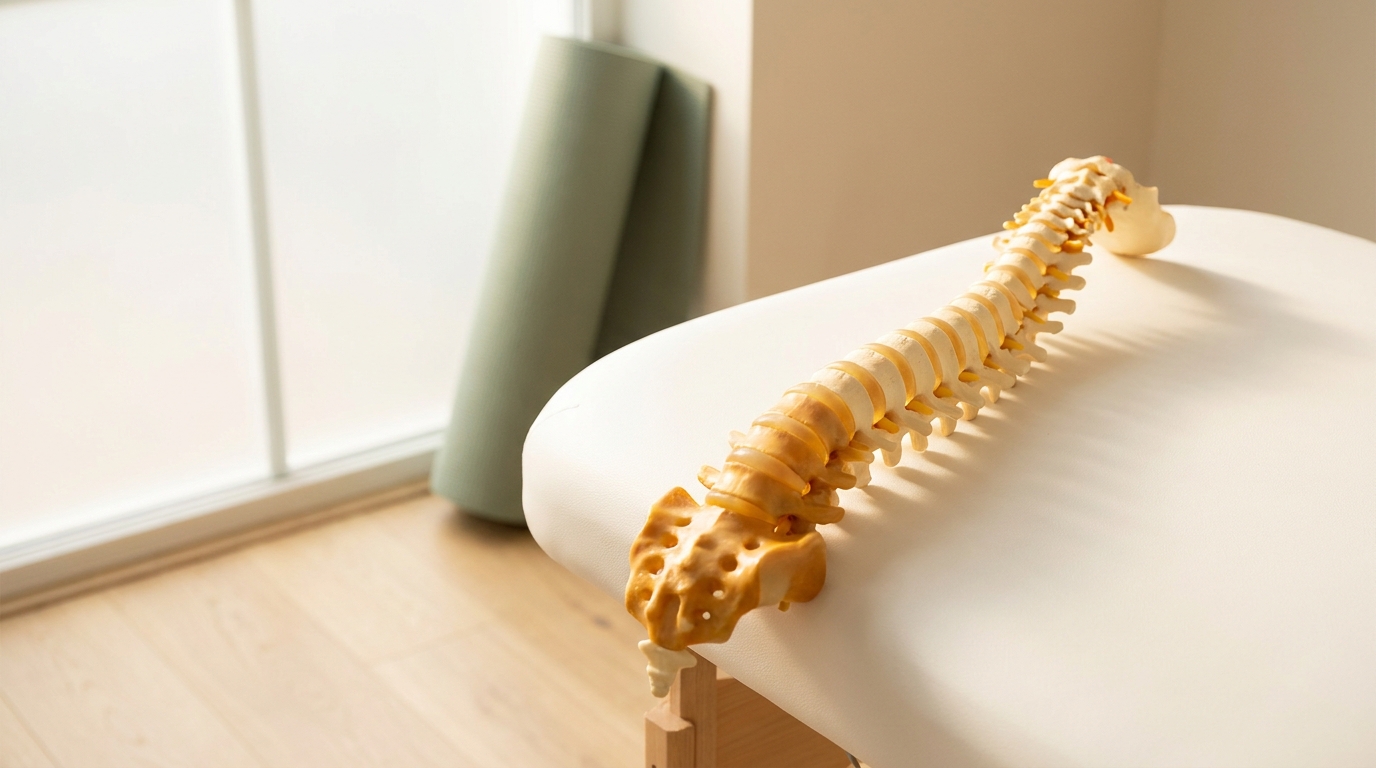
A sciatica chiropractor in Arlington Heights can help identify the root cause of shooting pain down your leg — whether it originates from a herniated disc, piriformis compression, or spinal stenosis — and apply targeted, non-invasive treatment to reduce nerve irritation. Most patients experience measurable relief within 4–6 visits over 2–3 weeks, though the timeline depends on cause and severity.
What Is Sciatica? Understanding the Sciatic Nerve
The sciatic nerve is the longest and thickest nerve in your body. It forms from nerve roots at lumbar vertebrae L4 and L5 and sacral segments S1 through S3, runs through the gluteal region, and extends down the back of each leg to the foot. When something compresses or irritates any of those nerve roots — or the nerve trunk itself — the result is sciatica: radiating pain, numbness, or tingling that follows the nerve's path.
What causes shooting pain down your left or right leg is almost always mechanical pressure on the nerve. The pain pattern tells your chiropractor which nerve root is involved:
- L4 nerve root: pain and weakness in the inner lower leg, diminished knee-jerk reflex
- L5 nerve root: pain across the top of the foot and big toe, difficulty with heel walking
- S1 nerve root: pain along the outer foot, reduced ankle-jerk reflex, difficulty with toe raises
Sciatica symptoms — numbness, tingling in the buttock and leg, burning sensations, or a deep ache behind the knee — typically affect one side only. Bilateral sciatica (both legs) is less common and warrants prompt evaluation. For a deeper look at nerve root patterns and red flags, read our guide on sciatica treatment and understanding the pain.
Common Causes of Sciatica
Roughly 90% of sciatica cases stem from a lumbar disc problem. But disc herniations are not the only culprit, and accurate diagnosis determines which chiropractic treatment options will work best for you.
Disc-Related Causes
- Herniated disc (L4-L5 or L5-S1): The inner nucleus pulposus pushes through the annulus and compresses an adjacent nerve root. This is the most common cause in adults 20–50.
- Degenerative disc disease: Gradual disc height loss narrows the foramen (the bony opening where the nerve exits), pinching the root. More typical after age 50.
- Disc bulge with annular tear: The disc wall weakens and bulges without full herniation, creating intermittent nerve contact.
Non-Disc Causes
- Piriformis syndrome: The piriformis muscle in the deep buttock spasms or hypertrophies, compressing the sciatic nerve trunk where it passes beneath (or sometimes through) the muscle.
- Spinal stenosis: Narrowing of the spinal canal itself, usually from bony overgrowth or ligamentum flavum thickening.
- Spondylolisthesis: One vertebra slips forward over the one below it, stretching or pinching the nerve root.
- Sacroiliac joint dysfunction: Altered SI joint mechanics can refer pain into the buttock and posterior thigh, mimicking sciatica.
Understanding the cause matters because herniated disc sciatica chiropractic treatment options differ significantly from piriformis-driven cases. A disc herniation responds well to flexion-distraction technique, while piriformis syndrome typically needs soft tissue work and specific stretching. If you've noticed leg numbness and are wondering whether to worry, the answer depends entirely on the underlying cause.
How Does a Chiropractor Evaluate Sciatica?
Your first visit focuses on pinpointing which structure is irritating the nerve. A thorough sciatica evaluation typically takes 30–45 minutes and includes:
- History: Onset, pain pattern, aggravating/relieving positions, bowel/bladder function (a critical safety screen)
- Orthopedic testing: Straight leg raise (Lasègue's test), slump test, crossed straight leg raise — each stresses the sciatic nerve in a slightly different way to confirm or rule out nerve root involvement
- Neurological exam: Dermatome sensation testing, myotome strength testing, and deep tendon reflexes at the knee (L4) and ankle (S1)
- Palpation and ROM: Lumbar range of motion, paraspinal muscle tone, piriformis tenderness, SI joint provocation tests
- Imaging review or referral: If you have existing X-rays or MRI, the chiropractor will review them. If red flags are present — progressive weakness, significant dermatomal numbness, or bowel/bladder changes — imaging will be ordered before treatment begins
Red flag — seek immediate care: If you experience sudden loss of bladder or bowel control combined with bilateral leg weakness and saddle-area numbness, this may indicate cauda equina syndrome, a rare but serious emergency requiring immediate hospital evaluation. Do not wait for a scheduled appointment.
Can Chiropractic Adjustments Relieve Sciatica Pain?
Yes — research supports chiropractic care for sciatica without surgery as an effective first-line approach for most cases. A 2010 study in the Journal of Manipulative and Physiological Therapeutics found that 60% of patients with sciatica from disc herniation who received spinal manipulation experienced the same degree of symptom relief as those who eventually underwent discectomy, with the advantage of no recovery downtime.
The specific techniques your chiropractor selects depend on the diagnosis:
Technique Best For What It Does Typical Timeline Flexion-distraction (Cox Technique) Disc herniations, bulges Gently stretches the lumbar spine on a segmented table, creating negative intradiscal pressure to draw herniated material away from the nerve 8–12 sessions over 4–6 weeks Spinal manipulation (diversified or Thompson drop) Facet-related sciatica, joint restriction High-velocity, low-amplitude thrust restores segmental motion and reduces local inflammation 6–10 sessions over 3–4 weeks Spinal decompression (motorized traction) Moderate to large disc herniations, stenosis Sustained or intermittent axial traction at specific poundage targets the affected disc level 15–20 sessions over 5–7 weeks Instrument-assisted (Activator) Acute flare-ups, older patients, post-injury Low-force, precise impulse to the joint without rotational stress 6–8 sessions over 2–3 weeksSciatica treatment — spinal decompression vs. chiropractic adjustment — is not an either/or decision. Many chiropractors in Arlington Heights combine decompression with manual adjustments in the same session for synergistic results. For conditions involving nerve irritation elsewhere in the body, chiropractic management of occipital neuralgia uses a parallel diagnostic logic.
What to Expect During Your First Visit for Sciatica
Knowing what to expect at your first chiropractic visit for sciatica removes uncertainty. Here is a realistic breakdown:
- Paperwork and intake (10 min): Health history forms, insurance information, pain diagrams
- Consultation (10–15 min): The chiropractor reviews your history, asks about prior imaging, and screens for red flags
- Examination (15–20 min): Orthopedic and neurological testing as described above
- Report of findings: Some providers deliver this same day, others schedule a follow-up visit. You should receive a clear diagnosis, treatment plan with estimated visit count, and a home care protocol
- First treatment (if appropriate): Many chiropractors begin conservative care on day one — light soft tissue work, gentle mobilization, or instrument-assisted adjustment. Aggressive manipulation is typically deferred until imaging confirms it is safe
Bring any existing MRI or X-ray reports, a list of relevant prior treatments, and comfortable clothing that allows movement. If you are not sure whether your symptoms are chiropractic-appropriate, our guide on the best time to see a chiropractor can help you decide.
Stretches and Exercises a Chiropractor Recommends for Sciatica
Home exercises accelerate recovery and reduce recurrence. Your chiropractor will tailor these to your specific diagnosis, but the following protocols are commonly prescribed.
Nerve Flossing (Sciatic Nerve Glide)
- Sit on a firm chair with both feet flat on the floor
- Straighten the affected leg while simultaneously looking up toward the ceiling
- Return your foot to the floor while tucking your chin to your chest
- Repeat 10–15 times, slowly and without forcing into sharp pain
- Perform 2–3 sets per day
This technique reduces nerve adhesions along the sciatic nerve's path without placing it under sustained stretch.
Piriformis Stretch (Figure-4)
- Lie on your back with both knees bent
- Place the ankle of the affected side on the opposite knee
- Pull the bottom knee toward your chest until you feel a deep stretch in the buttock
- Hold 30 seconds, repeat 3 times, perform twice daily
Press-Up (McKenzie Extension)
If your chiropractor identifies a posterior disc herniation, the McKenzie press-up can centralize radiating leg pain back toward the spine — a sign the disc is reducing. Lie prone, place palms under your shoulders, and press your upper body up while keeping your hips on the table. Hold 2–3 seconds, return, repeat 10 times every 2 hours during acute flare-ups.
Stop any exercise immediately if it increases leg pain below the knee. Increased centralized back pain with decreased leg pain is typically a positive sign. Chiropractors who work with athletes often prescribe progressive versions of these exercises — learn more about how sports therapy and chiropractic intersect.
When to See a Chiropractor for Sciatica in Arlington Heights
Seek evaluation promptly — not after weeks of "waiting it out." Acute sciatica (less than 4 weeks) responds faster to chiropractic intervention than chronic cases that have persisted 3+ months. The piriformis, gluteus medius, and deep lumbar multifidus muscles begin to atrophy and develop compensatory patterns within weeks of guarding, making treatment progressively more complex.
Schedule with a chiropractor if you experience:
- Leg pain that persists more than 48–72 hours without improvement
- Numbness or tingling in a consistent pattern (buttock, posterior thigh, calf, foot)
- Pain that worsens with sitting or bending forward (suggests disc involvement)
- Difficulty walking, standing from a chair, or climbing stairs due to leg weakness
- Recurrent episodes — even if each one resolves on its own, the underlying instability is worsening
If you are looking for the best chiropractor for sciatica in Arlington Heights, Illinois, focus on providers who perform a full neurological screening, use flexion-distraction or decompression tables, and prescribe active rehabilitation — not just passive adjustments. You can find a chiropractor near you through the Medximity directory, filtering by specialty and location. For general guidance on choosing the right provider, see our article on simple steps to find the right chiropractor.
What to Do Next
If you have radiating leg pain, numbness, or tingling — and especially if it has lasted more than a few days — book an evaluation with a chiropractor experienced in sciatica and disc conditions. Early intervention typically means fewer visits and faster recovery.
For your first appointment, expect a 30–45 minute evaluation including orthopedic tests, neurological screening, and a clear treatment plan with a specific session count. Most uncomplicated sciatica cases see significant improvement within 2–4 weeks of consistent chiropractic care.
Search for a sciatica chiropractor in Arlington Heights on Medximity, or explore more health topics to learn about related conditions and treatment options.
Frequently Asked Questions About Sciatica and Chiropractic Care
How long does sciatica take to heal with chiropractic?
Most patients with acute sciatica (onset within the past 4 weeks) experience significant relief within 4–6 weeks of chiropractic care, typically requiring 8–12 visits. Chronic sciatica lasting more than 3 months may require 12–20 sessions over 6–10 weeks. Piriformis-related sciatica often responds faster — within 2–3 weeks — since soft tissue releases take effect more quickly than disc-related changes.
Is it normal for sciatica to get worse before it gets better with chiropractic treatment?
Mild soreness in the low back for 24–48 hours after the first 1–2 treatments is common, similar to post-exercise soreness. However, increased radiating leg pain, new numbness, or worsening weakness after an adjustment is not normal and should be reported to your chiropractor immediately. A well-managed treatment plan should show steady, if sometimes nonlinear, improvement in leg symptoms by the third or fourth visit.
Can chiropractic adjustments relieve sciatica pain permanently?
Chiropractic care addresses the mechanical cause of nerve compression, and many patients achieve lasting relief — especially when they follow prescribed exercise programs and ergonomic modifications. Recurrence rates for sciatica are approximately 20–30% regardless of treatment method. Maintenance visits every 4–6 weeks and consistent core strengthening reduce recurrence significantly.
What is the difference between spinal decompression and chiropractic adjustment for sciatica?
Spinal decompression uses a motorized traction table to apply sustained or intermittent pulling force at a specific lumbar level, targeting disc herniations by creating negative intradiscal pressure. Chiropractic adjustments restore joint mobility through quick, controlled thrusts. Decompression works primarily on the disc; adjustments work primarily on the facet joints and segmental motion. Many providers combine both in a single treatment plan for comprehensive results.
Should I see a chiropractor or physical therapist for sciatica?
Both professions treat sciatica effectively, and the best approach often involves elements of each. Chiropractors typically focus on joint manipulation, spinal decompression, and structural correction. Physical therapists emphasize progressive exercise, neuromuscular retraining, and functional movement patterns. Many chiropractic practices in Arlington Heights incorporate rehabilitative exercise as part of their sciatica protocols, blending both disciplines.
What causes shooting pain down the left leg specifically?
Sciatica can affect either leg depending on which side of the spine the nerve root is compressed. Left-sided sciatica typically results from a left posterolateral disc herniation at L4-L5 or L5-S1, left-sided piriformis spasm, or left foraminal stenosis. The side affected has no bearing on severity or prognosis — treatment protocols are the same regardless of which leg is involved.


