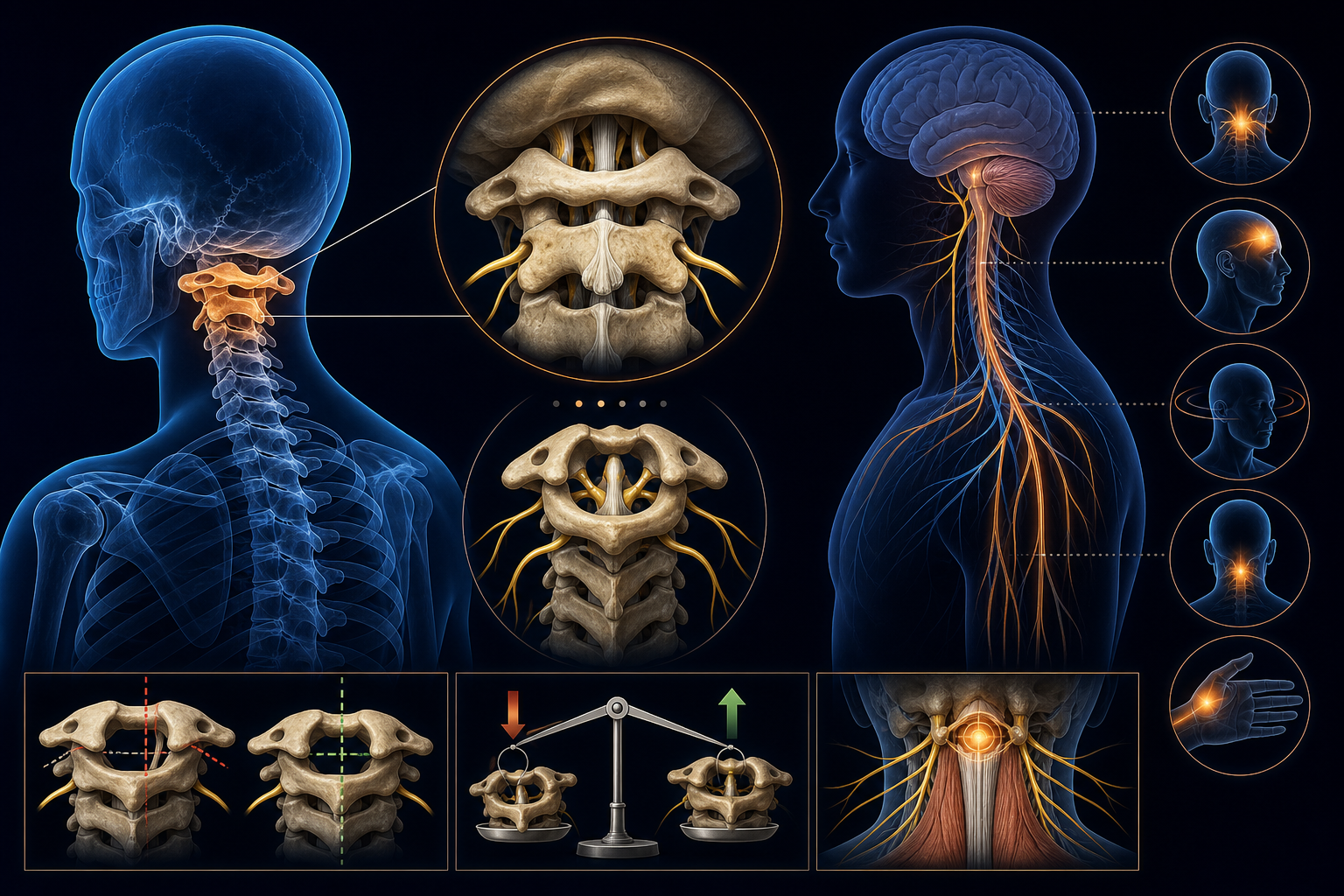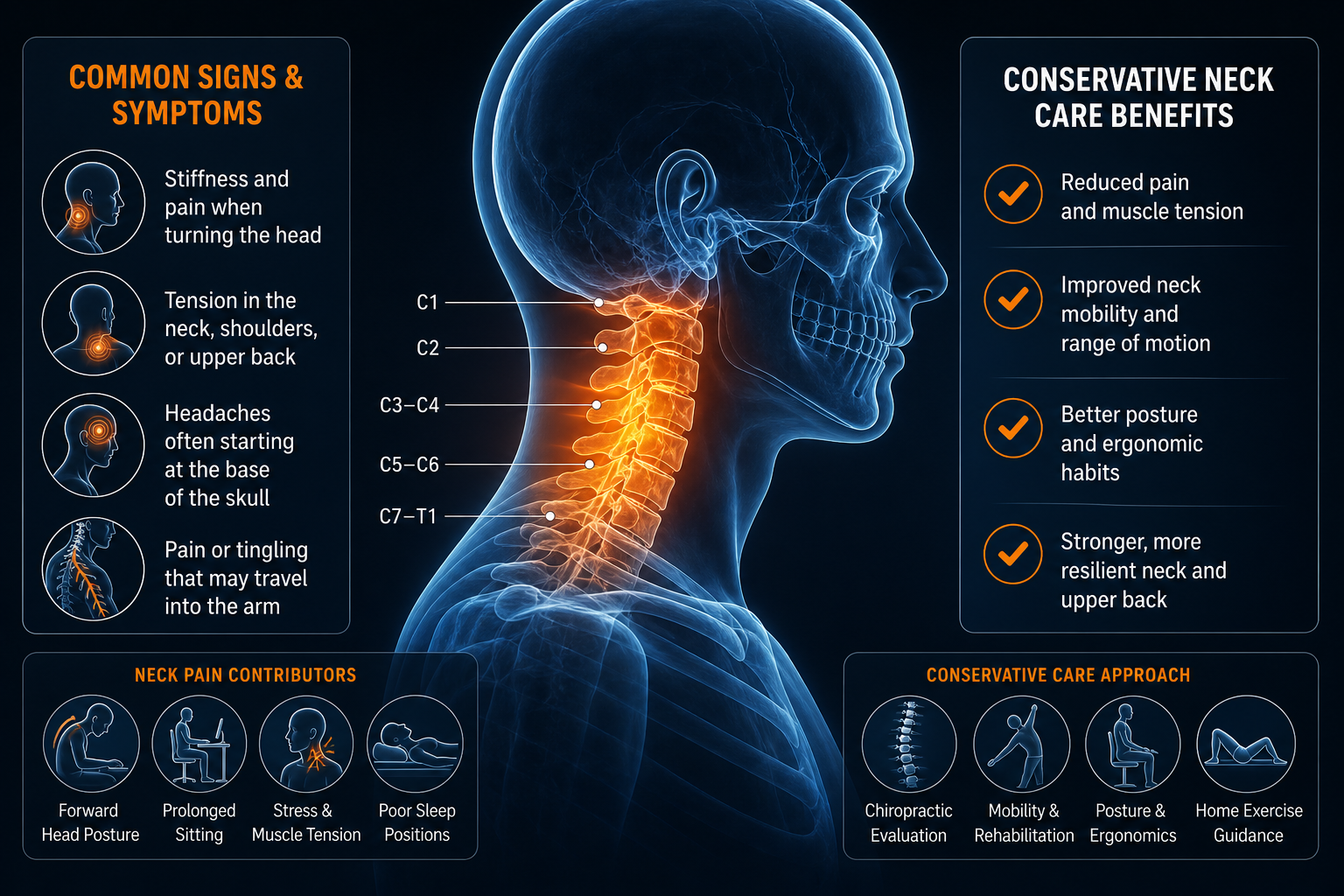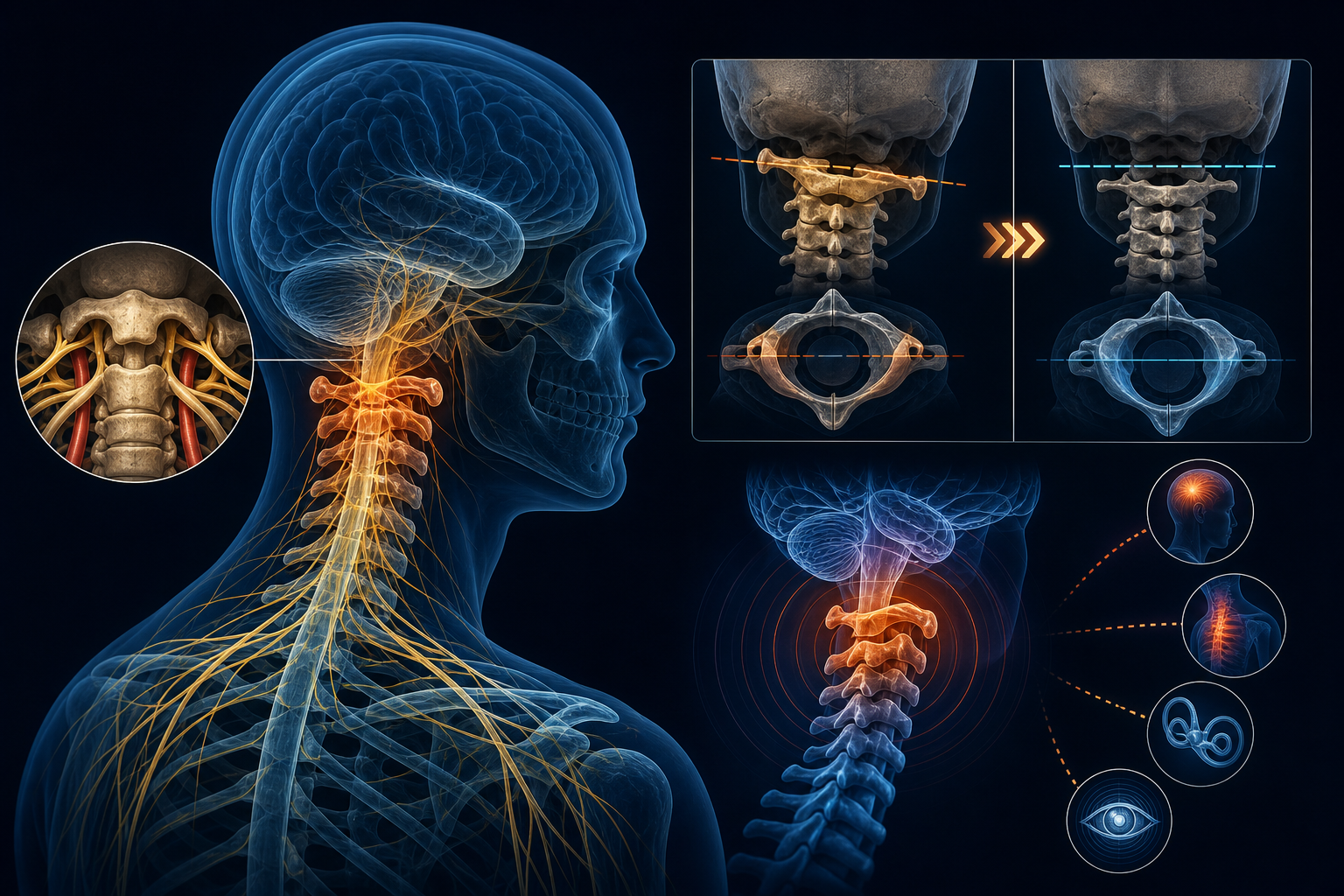
If you are searching for upper-cervical chiropractic care near me, you may be dealing with upper neck pain, headaches that seem to start at the base of the skull, stiffness when turning your head, or dizziness that feels connected to neck movement. Upper-cervical chiropractic care is a conservative approach focused on the top two bones of the neck: the atlas, also called C1, and the axis, also called C2.
Because this area is close to important nerves, joints, muscles, and blood vessels, upper-cervical care is typically more detailed and specific than a general neck adjustment. A qualified chiropractor may use a careful history, posture assessment, range-of-motion testing, neurological screening, imaging review when appropriate, and low-force correction methods to determine whether this type of care may be appropriate for you.
This article explains what upper cervical chiropractic care is, when to see a provider, what to expect at an appointment, and how to compare options when looking for the best upper cervical chiropractor near me.
What Is Upper Cervical Chiropractic Care?
Upper cervical chiropractic care is a type of chiropractic care that focuses on alignment, motion, and function at the top of the cervical spine. The upper cervical region includes the atlas and axis, which help support the head and allow much of the rotation used when you turn to look over your shoulder.
When joints, muscles, or surrounding soft tissues in this area become irritated, some people notice symptoms such as upper neck tightness, limited rotation, tension-type headache patterns, or pain near the base of the skull. Chiropractic care does not diagnose your symptoms based on a web article, but an in-person provider can evaluate whether your neck mechanics may be contributing to how you feel.
For patients comparing options, Medximity can help you search for chiropractors near you and review provider profiles before scheduling.
Upper Cervical Chiropractic vs Regular Chiropractic
Many patients ask about upper cervical chiropractic vs regular chiropractic. Both approaches fall under chiropractic care, but the emphasis may differ.
Upper cervical chiropractic
Upper cervical care is usually highly focused on the C1-C2 region. Some providers use gentle, low-force techniques and detailed measurements to guide care. The adjustment may not involve the twisting or popping that many people associate with chiropractic treatment. Depending on the technique and the provider’s training, the correction may be performed by hand or with an instrument.
Traditional chiropractic care
General chiropractic care may address the neck, mid-back, low back, pelvis, and extremities. A chiropractor may use spinal manipulation, mobilization, soft-tissue work, corrective exercise, posture education, and ergonomic advice. For many patients, a broader approach may be helpful, especially when neck symptoms are linked to shoulder mechanics, upper back stiffness, or desk posture.
Neither approach is automatically better for every patient. The right fit depends on your history, examination findings, comfort level, and goals. You can learn more about conservative spinal care on Medximity’s page for chiropractic adjustment.
Symptoms That May Lead Patients to Search for Upper-Cervical Care
People often look for upper cervical chiropractic care near me when symptoms feel concentrated at the top of the neck or where the head meets the spine. Common reasons include:
- Upper neck pain: Pain or tightness near the base of the skull may be associated with joint irritation, muscle tension, posture strain, or prior injury.
- Neck pain when turning head: Difficulty rotating the neck can occur when joints, muscles, or soft tissues are not moving comfortably.
- Headaches related to neck pain: Some headaches may be associated with cervical muscle tension or upper neck joint irritation, though headaches can have many causes and should be evaluated when new, severe, or changing.
- Dizziness with neck discomfort: Some patients report dizziness or imbalance along with neck pain. Because dizziness can come from many systems, including the inner ear, circulation, medication effects, and neurological conditions, it should be assessed carefully.
- Postural strain: Long hours at a computer, phone use, driving, or forward-head posture may contribute to upper neck tension in some patients.
For more information about related symptoms, explore Medximity resources on neck pain, headaches, and dizziness.
When to See a Provider
Consider seeing a qualified chiropractor or healthcare provider if your upper neck pain lasts more than a few days, keeps returning, limits your ability to turn your head, affects sleep, or is linked with headaches, arm symptoms, or dizziness. A provider can help determine whether conservative care may be appropriate or whether you need referral to another clinician.
Seek urgent medical evaluation if neck pain follows a significant injury, or if it is accompanied by symptoms such as sudden severe headache, fainting, chest pain, trouble speaking, vision changes, weakness, numbness, fever, unexplained weight loss, or loss of coordination. These symptoms do not mean a specific condition is present, but they warrant prompt assessment.
What to Expect at an Upper Cervical Chiropractor
If you are wondering what to expect at upper cervical chiropractor visits, the first appointment is usually more about evaluation than treatment. A careful provider will want to understand your symptoms, medical history, prior injuries, daily activities, and goals.
History and examination
Your chiropractor may ask when symptoms started, what makes them better or worse, whether pain travels into the shoulder or arm, and whether you have headaches, dizziness, or balance concerns. The exam may include posture observation, neck range-of-motion testing, orthopedic tests, muscle assessment, and a basic neurological screen.
Imaging review when appropriate
Some upper-cervical chiropractors use X-rays or review prior imaging to better understand spinal structure. Imaging is not necessary for every patient. A responsible provider should explain why imaging is or is not being recommended based on your presentation.
Treatment plan
If the chiropractor believes care may help, they may recommend a plan that includes gentle upper cervical adjustments, soft-tissue techniques, mobility work, posture coaching, home exercises, and follow-up checks. If your symptoms suggest another cause, the provider may refer you to a medical specialist or another appropriate clinician.
Is Upper Cervical Adjustment Safe?
Patients often ask, is upper cervical adjustment safe? For many people, conservative chiropractic care is well tolerated when performed by a properly trained and licensed provider after an appropriate evaluation. However, no healthcare intervention is risk-free, and neck symptoms deserve careful screening.
Potential temporary effects may include soreness, stiffness, fatigue, or mild headache after treatment. More serious complications are considered uncommon, but patients should be honest about medical history, vascular conditions, bone health, neurological symptoms, medications, prior trauma, and any new or unusual symptoms. A good chiropractor should explain the technique, discuss alternatives, and obtain your consent before treatment.
How Long Does Upper Cervical Care Take?
How long does upper cervical care take depends on the cause of your symptoms, how long they have been present, your health history, your daily posture and activity demands, and how your body responds. Some patients notice changes within a few visits, while others need a longer plan that includes rehabilitation and habit changes.
A reasonable care plan should include periodic reassessment. Your provider should be able to explain what they are measuring, how progress will be tracked, and when the plan may change. If symptoms are not improving as expected, further evaluation or a different treatment approach may be appropriate.
Natural Treatment for Upper Neck Pain
Many people looking for upper neck pain treatment without surgery are seeking conservative options first. Depending on the evaluation, a natural treatment plan for upper neck pain may include:
- Gentle cervical adjustments or mobilization
- Soft-tissue therapy for tight muscles around the neck, jaw, and shoulders
- Postural coaching for desk, phone, and sleep positions
- Range-of-motion and strengthening exercises
- Breathing and relaxation strategies for muscle guarding
- Ergonomic changes for workstations and driving
Some patients benefit from combining chiropractic care with rehabilitation or physical therapy, especially when symptoms involve weakness, movement habits, or recurring strain. You can compare conservative care options through Medximity’s physical therapy resources.
How to Find the Best Upper Cervical Chiropractor Near You
The best upper cervical chiropractor near me is not simply the closest office or the one with the boldest claims. Look for a licensed provider who evaluates carefully, explains findings clearly, uses techniques you are comfortable with, and refers out when symptoms fall outside their scope.
Questions to ask before scheduling
- Do you regularly treat upper cervical or C1-C2-related complaints?
- What techniques do you use, and are they low-force or manual?
- How do you decide whether imaging is needed?
- How do you screen for dizziness, headaches, or neurological symptoms?
- What should I expect during the first visit?
- How will progress be measured?
To start comparing options, use Medximity to find a chiropractor near you. If you are specifically dealing with pain while rotating your neck, you may also find Medximity’s guide to neck pain when turning your head helpful.
FAQ: Upper-Cervical Chiropractic Care Near Me
What is upper cervical chiropractic care?
Upper cervical chiropractic care focuses on the top of the neck, especially the atlas and axis vertebrae. Providers assess motion, alignment, posture, and related symptoms to determine whether conservative treatment may be appropriate.
Can upper cervical chiropractic help headaches from neck pain?
Some headaches may be associated with neck joint irritation or muscle tension. Chiropractic care may help some patients when the neck is a contributing factor, but headaches can have many causes and should be evaluated if they are severe, new, worsening, or unusual.
Can a chiropractor help dizziness and neck pain?
Some patients report dizziness along with neck pain, but dizziness has many possible causes. A chiropractor may assess neck-related factors and should refer you for medical evaluation when symptoms suggest another system may be involved.
Does an upper cervical adjustment hurt?
Many upper-cervical techniques are gentle and low-force. Some patients feel brief pressure or mild soreness afterward, but treatment should not feel unsafe or uncontrolled. Tell your provider immediately if anything feels uncomfortable.
Do I need surgery for upper neck pain?
Many cases of upper neck pain are managed conservatively, but the right care depends on the cause. Chiropractic care, physical therapy, exercise, and ergonomic changes may help some patients, while others may need additional medical evaluation.
Find Upper-Cervical Chiropractic Care Near You
If you are searching for upper-cervical chiropractic care near me, start with a provider who listens carefully, screens for red flags, and explains your options in plain language. Upper neck pain, headaches, limited rotation, and dizziness deserve a thoughtful evaluation rather than a one-size-fits-all approach.
Medximity helps patients compare conservative care providers and learn what to expect before scheduling. Search for chiropractors on Medximity to find a qualified provider near you.