If you searched for back in motion fountain inn neck pain, you may be trying to understand why your neck feels stiff, why it hurts to turn your head, or which local provider may be able to help. Neck pain is common, but that does not make it easy to live with. It can affect driving, sleeping, desk work, exercise, and even simple movements like looking over your shoulder.
This guide is written for patients in and around Fountain Inn, South Carolina who are comparing conservative care options such as chiropractic care, physical therapy, rehabilitation, posture coaching, and movement-based treatment. It explains what neck pain is, what causes neck pain and stiffness, when to see a provider, and what you can generally expect from a non-surgical treatment plan. It is educational only and is not a diagnosis. A qualified provider can evaluate your specific symptoms, health history, and goals.
To compare local options, you can start with Medximity provider search pages for neck pain providers near Fountain Inn, SC, chiropractors near Fountain Inn, or physical therapy near Fountain Inn.
What does back in motion fountain inn neck pain mean?
The phrase back in motion fountain inn neck pain can mean a few things. Some patients may be looking for a specific local clinic or provider. Others may be searching more generally for neck pain treatment in Fountain Inn, SC that can help them move more comfortably and return to daily activities. Either way, the underlying concern is usually the same: pain, stiffness, limited range of motion, or irritation that is interfering with normal life.
Neck pain can come from joints, muscles, discs, ligaments, nerves, posture-related strain, or irritation after a sudden event such as a car accident. In many cases, symptoms improve with time and conservative care, but the best next step depends on the pattern of symptoms and whether there are warning signs that need prompt medical attention.
A local provider may use an exam to understand whether your discomfort appears mechanical, meaning it changes with posture, movement, or loading, or whether it may involve nerve irritation, inflammation, or another medical concern. Conservative care may include hands-on treatment, therapeutic exercise, mobility work, ergonomic changes, education, and a gradual return to normal activity.
What neck pain is and why it can feel different from person to person
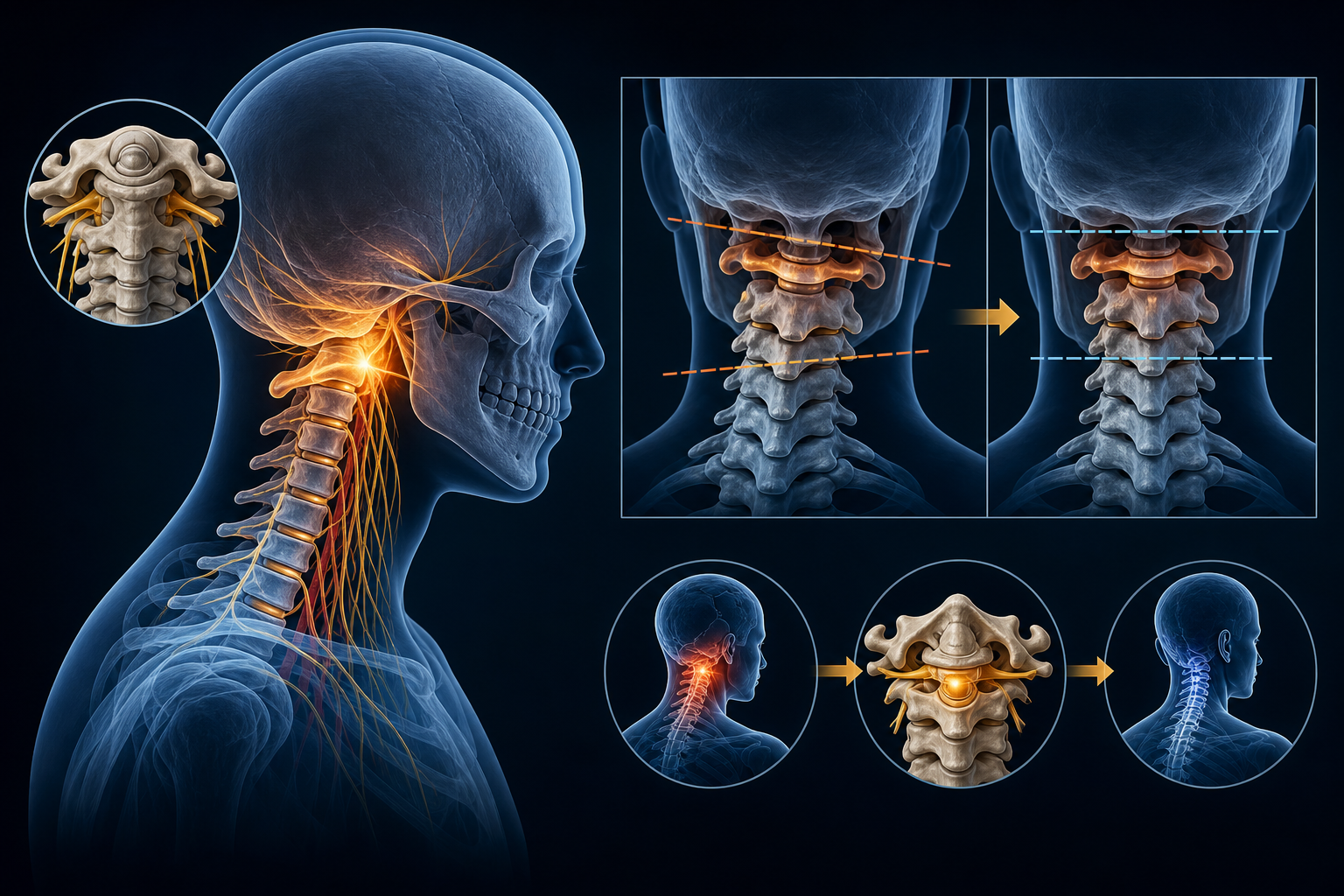
The neck, or cervical spine, is made up of seven vertebrae, discs, facet joints, ligaments, muscles, and nerves. It supports the head while allowing a wide range of motion. That mobility is useful, but it also means the neck can be sensitive to repetitive strain, poor positioning, sudden acceleration and deceleration, and muscle guarding.
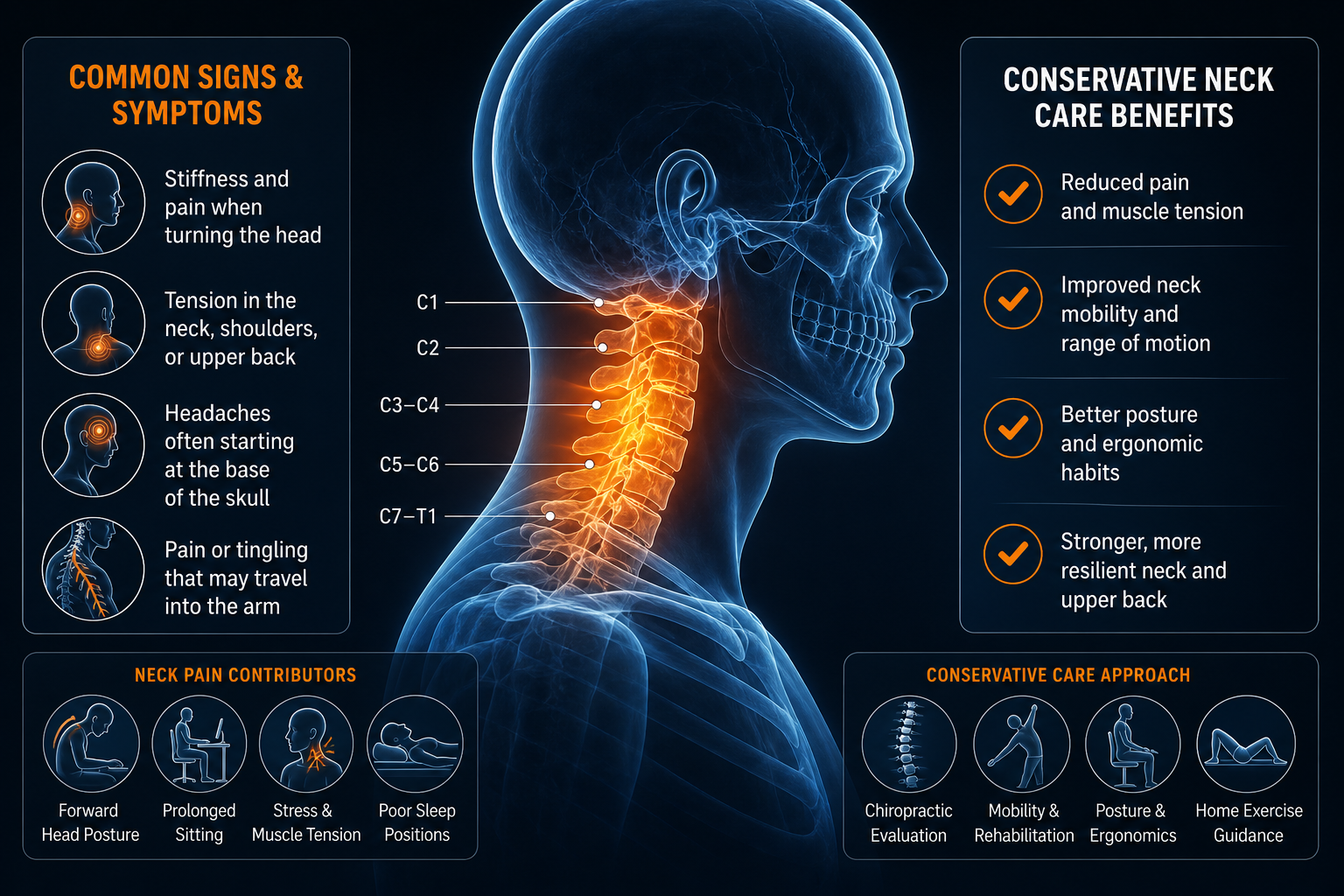
Neck pain does not always feel the same. Some people feel a dull ache across the base of the skull. Others feel a sharp pinch when rotating the head. Some notice tight upper shoulders, headaches, or pain that travels toward the shoulder blade. A smaller group may have tingling, numbness, or weakness into the arm or hand, which may suggest nerve involvement and should be assessed by a qualified clinician.
Because symptoms can overlap, it is not always possible to identify the cause based on pain location alone. A careful history and physical exam can help a provider decide whether chiropractic care, physical therapy, rehabilitation, referral, or a different pathway is most appropriate.
Common causes of neck pain and stiffness
Patients often ask what causes neck pain and stiffness. The answer can vary, but several patterns are common in conservative care settings.
Muscle strain and overuse
Neck muscles may become sore after long hours at a computer, repeated lifting, poor sleep positioning, stress-related tension, or an unfamiliar workout. Muscle strain can make the neck feel tight and guarded. Some patients notice pain when turning the head side to side, especially after waking or after a long workday.
Joint irritation in the cervical spine
The small joints in the neck help guide movement. If those joints become irritated or restricted, some patients report local stiffness, a catching sensation, or pain with extension and rotation. Conservative care may focus on mobility, gentle manual therapy, postural strategies, and strengthening to reduce repeated irritation.
Disc-related irritation
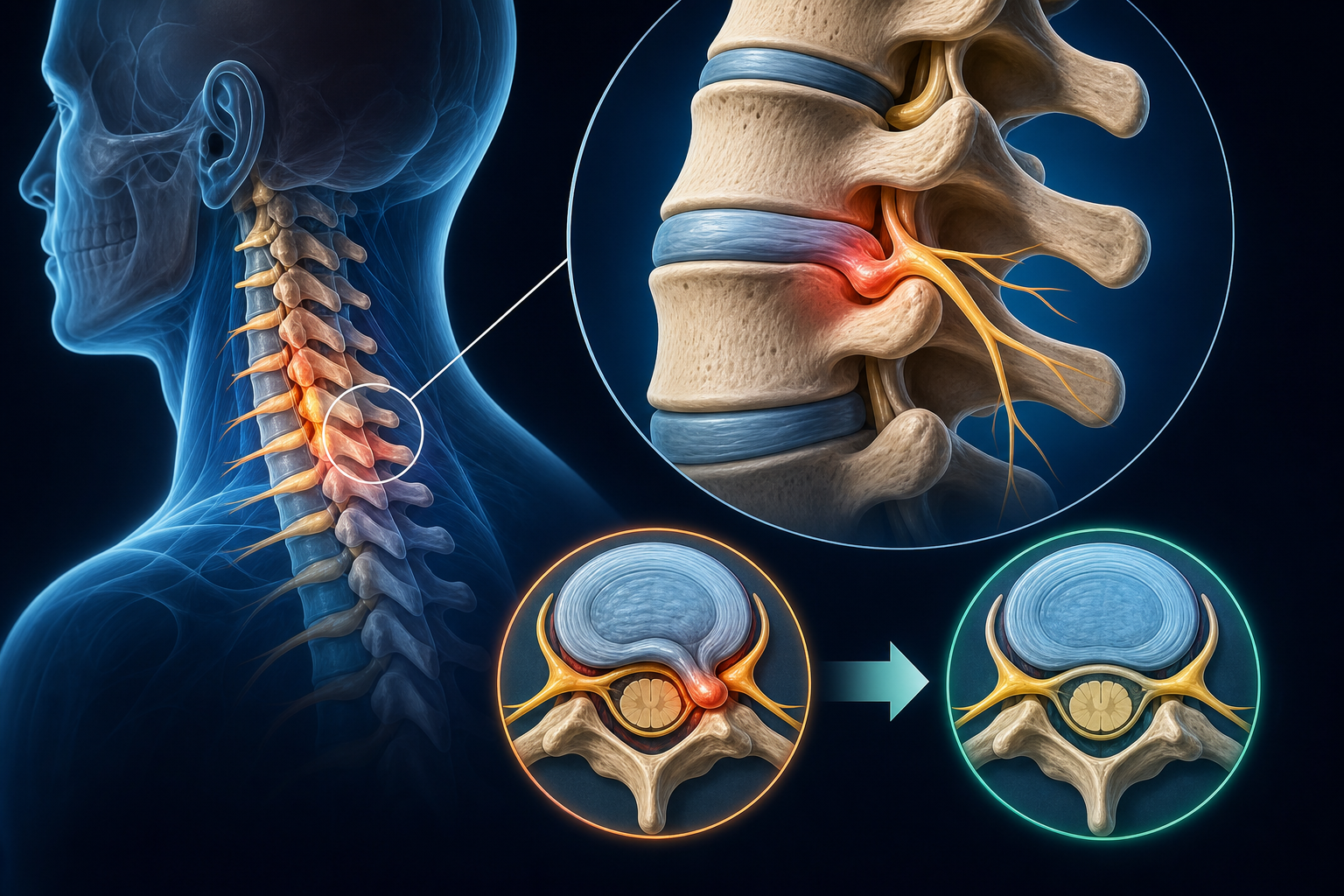
Cervical discs sit between the vertebrae and help absorb load. Disc irritation can be associated with neck pain and, in some cases, symptoms into the shoulder, arm, or hand. Not every disc finding on imaging causes pain, and not every painful neck needs imaging. A provider can help determine whether your symptoms suggest a need for further evaluation.
Nerve irritation
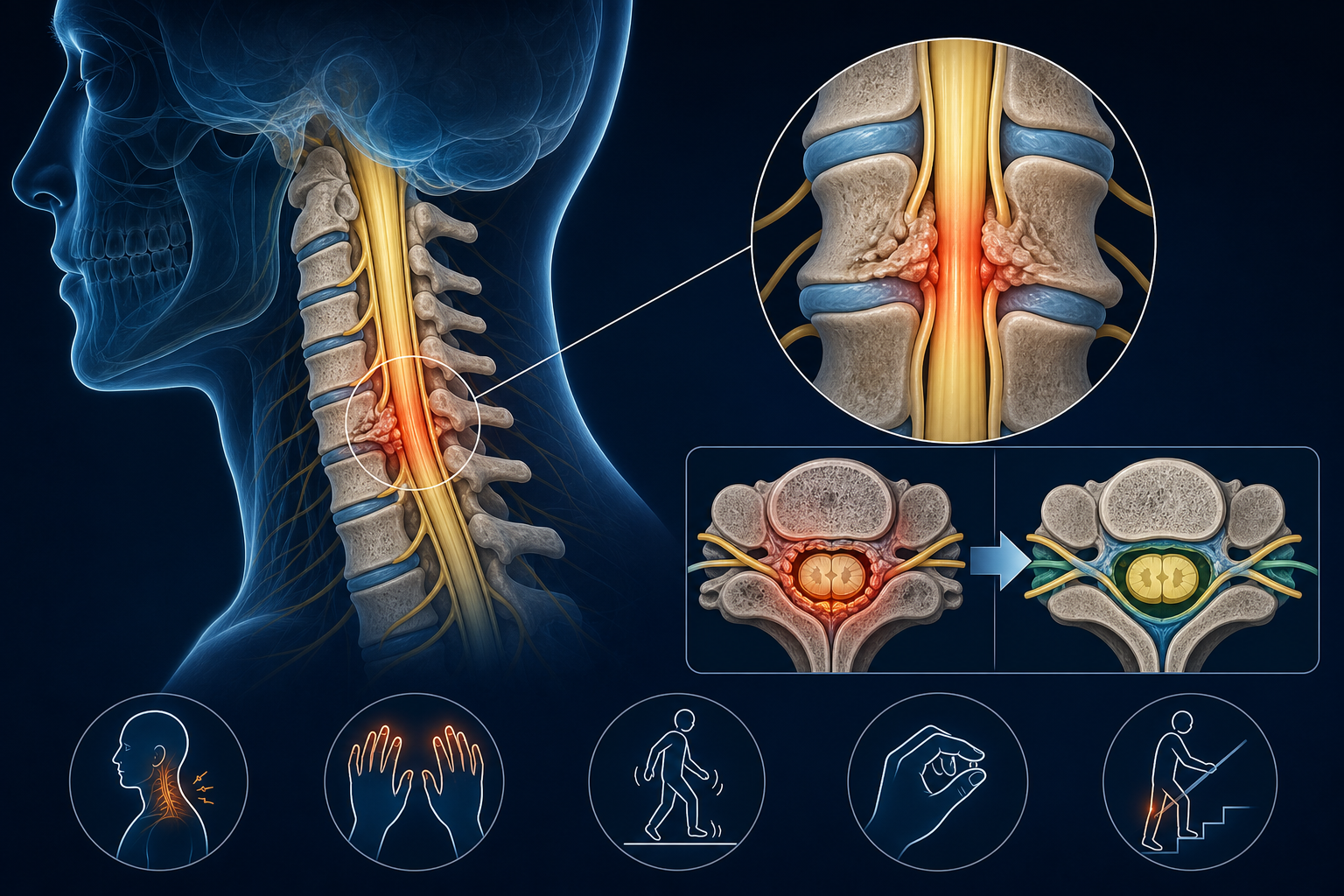
If a nerve root in the neck is irritated, symptoms may include radiating pain, tingling, numbness, or weakness into the arm. These symptoms deserve a thorough exam. Conservative treatment may help some patients, but care should be matched carefully to the severity and pattern of symptoms.
Posture and workstation strain
Posture is often oversimplified, but sustained positions can matter. Looking down at a phone, reaching forward for a keyboard, or holding the shoulders elevated for long periods may contribute to neck and upper back discomfort. The goal is not perfect posture all day. It is usually more realistic to change positions often, improve workstation setup, and build the strength and endurance needed for your activities.
Neck pain after a car accident
Neck pain after car accident events may appear right away or develop over the next day or two. A sudden acceleration and deceleration can strain muscles, ligaments, joints, and other tissues. Some people describe whiplash-associated symptoms such as stiffness, headaches, shoulder blade pain, dizziness, or sensitivity to movement. Because symptoms after a collision can vary widely, it is wise to be evaluated by an appropriate healthcare professional, especially if pain is significant, worsening, or accompanied by neurological symptoms. You can also read Medximitys related guide on neck pain after a car accident.
Pain when turning head side to side: what it may suggest
Pain when turning head side to side is one of the most common reasons patients look for neck pain treatment in Fountain Inn, SC. Rotation can be limited by muscle guarding, joint irritation, soft tissue strain, or fear of provoking pain. Sometimes the movement feels blocked. Other times it feels sharp on one side and tight on the other.
A provider may look at how far you can rotate, whether pain changes with posture, whether shoulder motion contributes, and whether symptoms travel into the arm. They may also check strength, reflexes, sensation, and movement patterns. This helps distinguish routine stiffness from symptoms that may need a different level of evaluation.
In many cases, treatment may include gentle mobility work, hands-on therapy when appropriate, strengthening for the deep neck flexors and upper back, breathing and relaxation strategies for muscle guarding, and advice on sleep or workstation positioning. The plan should be individualized rather than based on a single exercise or adjustment for everyone.
How long does neck pain last?
How long does neck pain last depends on the cause, severity, general health, activity demands, sleep, stress, and whether symptoms are improving or worsening. Mild neck soreness from a temporary strain may improve within days. More persistent mechanical neck pain can take several weeks to settle. Symptoms after a collision, symptoms with nerve irritation, or pain that has been present for months may need a more structured care plan.
Time alone is not the only measure that matters. Providers often track whether range of motion is improving, whether pain is less intense, whether daily activities are easier, and whether flare-ups are becoming less frequent. If symptoms are not improving as expected, a provider may modify the plan or recommend additional evaluation.
Seek prompt care if neck pain is severe, follows a significant injury, or is associated with fever, unexplained weight loss, severe headache, confusion, trouble walking, loss of coordination, chest pain, or new weakness, numbness, or bowel or bladder changes. These symptoms are not typical of simple stiffness and should not be ignored.
When to see a provider for neck pain
You do not need to wait until pain is unbearable to ask for help. A conservative care provider may be appropriate when neck pain is limiting sleep, work, driving, exercise, childcare, or normal movement. Evaluation is also reasonable when symptoms keep returning, when you cannot comfortably turn your head, or when self-care has not helped after a short period.
Consider scheduling an appointment if:
- Your neck pain has lasted more than a few days and is not improving.
- You have pain when turning your head side to side while driving or working.
- Stiffness returns frequently or affects sleep.
- You have headaches that seem related to neck tension or posture.
- Pain spreads toward the shoulder blade, shoulder, arm, or hand.
- You developed neck pain after a car accident, fall, sports injury, or sudden strain.
- You want guidance on natural treatment for neck pain and neck pain relief without surgery.
Seek urgent medical attention if:
- You have new or worsening arm or hand weakness.
- You have numbness, tingling, or coordination problems that are progressing.
- Neck pain is associated with fever, severe headache, confusion, fainting, or recent serious trauma.
- You have difficulty walking, loss of balance, or changes in bowel or bladder control.
- Pain is severe and different from anything you have experienced before.
These warning signs do not mean the worst is happening, but they do mean a higher level of evaluation may be needed.
Conservative neck pain treatment in Fountain Inn, SC
Many patients searching for neck pain treatment Fountain Inn SC are looking for options that do not start with surgery or medication. Conservative care focuses on improving movement, reducing irritation, restoring function, and helping the patient understand how to manage symptoms safely. It may involve chiropractic care, physical therapy, rehabilitation, or a coordinated approach.
Conservative treatment cannot guarantee a specific result, and it is not appropriate for every condition. However, for many mechanical neck pain patterns, non-surgical care may help improve comfort, range of motion, and confidence with daily activity. The right plan should be based on an exam, not on a one-size-fits-all template.
For a general overview of neck pain, you can visit Medximitys neck pain condition resource.
Chiropractic care for neck pain
If you are searching for a chiropractor for neck pain near me, you may be wondering what chiropractic care involves. Chiropractors commonly evaluate spinal and musculoskeletal conditions, including neck pain, headaches associated with neck tension, limited range of motion, and some types of radiating symptoms.
Chiropractic care may include spinal manipulation or mobilization, soft tissue techniques, stretching, exercise instruction, posture and ergonomic guidance, and education about activity modification. Not every patient receives the same type of treatment. Some people may be better suited for gentle mobilization, instrument-assisted techniques, or exercise-focused care rather than high-velocity manipulation.
During a chiropractic visit, the provider should review your history, ask about injury or trauma, screen for symptoms that may require referral, and explain the reasoning behind any recommended treatment. You should have an opportunity to ask questions and discuss comfort level before hands-on care is performed. Learn more about this type of care in Medximitys overview of chiropractic adjustment.
Physical therapy for neck stiffness
Physical therapy for neck stiffness often focuses on restoring comfortable movement, improving strength and endurance, and helping patients return to activities with less fear of flare-ups. A physical therapist may assess neck mobility, shoulder and upper back function, strength, coordination, posture, work tasks, and movement habits.
Treatment may include therapeutic exercise, manual therapy, neuromuscular re-education, stretching, strengthening, balance or coordination work when relevant, and a home exercise program. For neck pain, exercises may target the deep neck flexors, scapular stabilizers, thoracic mobility, and shoulder mechanics. The goal is usually to build capacity gradually rather than force painful movement.
Physical therapy can be especially helpful when symptoms are linked to deconditioning, recurring stiffness, postural tolerance, sports demands, workplace tasks, or recovery after an injury. You can learn more about the broader role of physical therapy on Medximity.
Chiropractic care vs physical therapy for neck pain
Patients often compare chiropractic care vs physical therapy neck pain options. Both can be part of conservative care, but their emphasis may differ depending on the provider, clinic, and patient needs.
Care optionCommon focusWhat patients may experienceChiropractic careSpinal and joint mobility, musculoskeletal assessment, hands-on care, movement educationEvaluation, manual therapy or adjustment when appropriate, soft tissue work, posture and activity guidance, basic exercisesPhysical therapyRehabilitation, therapeutic exercise, strength, mobility, function, return to activityMovement assessment, progressive exercise plan, manual therapy when appropriate, home program, functional retrainingIntegrated conservative careCombining hands-on treatment with exercise-based rehabilitationA plan that may address pain sensitivity, mobility, strength, ergonomics, and gradual return to normal tasksOne approach is not automatically better for every person. Some patients prefer chiropractic care for hands-on mobility work. Others prefer physical therapy for structured strengthening and rehabilitation. Many benefit from a combination of education, manual therapy, and progressive exercise. The best neck pain provider in Fountain Inn for you is the one who performs a careful assessment, explains options clearly, respects your goals, and adjusts the plan based on your response.
If you are not sure where to start, Medximity can help you compare providers who treat neck pain near Fountain Inn.
Natural treatment for neck pain and relief without surgery
Many patients want natural treatment for neck pain or neck pain relief without surgery. In a conservative care setting, natural usually means movement-based, hands-on, educational, and lifestyle-oriented strategies rather than invasive procedures. These strategies may help some patients manage symptoms, improve mobility, and reduce repeated flare-ups.
Movement and mobility
Gentle movement is often better tolerated than complete rest, although the right amount depends on the individual. A provider may suggest controlled range-of-motion exercises, chin tucks, thoracic mobility drills, shoulder blade exercises, or breathing strategies. Exercises should be matched to your symptoms and should not be forced through severe pain.
Strength and endurance
Neck pain often involves more than tight muscles. Some patients need better endurance in the neck, upper back, and shoulder muscles to tolerate desk work, lifting, driving, or exercise. Progressive strengthening may help reduce the load on irritated tissues over time.
Ergonomics and daily habits
Small changes can make a meaningful difference for some patients. A provider may review monitor height, chair support, keyboard position, phone habits, pillow setup, and how often you change positions during the day. The goal is not to avoid every awkward position. It is to reduce repeated strain and give your body more opportunities to move.
Manual therapy
Manual therapy may include mobilization, manipulation, soft tissue work, stretching, or guided movement. Some patients report short-term relief and improved motion after hands-on care. Manual therapy is often most useful when paired with exercise and self-management strategies.
Education and pacing
Understanding pain can reduce fear and help patients return to activity more confidently. Pacing means doing enough to build tolerance without repeatedly provoking large flare-ups. A provider can help you identify reasonable activity levels and progress them gradually.
What to expect at your first neck pain visit
Whether you choose chiropractic care, physical therapy, or another conservative provider, the first visit should be structured around understanding your symptoms and identifying safe next steps.
Health history
The provider will typically ask when symptoms started, what makes them better or worse, whether there was an injury, what treatments you have tried, and whether you have symptoms such as numbness, tingling, weakness, dizziness, headaches, or pain into the arm. They may ask about sleep, work duties, exercise, previous injuries, and medical history.
Physical examination
The exam may include posture and movement assessment, range of motion testing, strength testing, reflexes, sensation, orthopedic tests, palpation, and functional movements. The goal is to understand how your neck and surrounding areas are moving and whether any signs suggest referral or additional testing.
Explanation of findings
A good provider should explain findings in clear language. You should understand the likely contributing factors, what the plan is designed to address, and how progress will be measured. If the provider believes your symptoms require urgent or specialized medical evaluation, they should tell you.
Treatment plan
Treatment may begin on the first visit if appropriate. Depending on the exam, this may include manual therapy, gentle mobility work, therapeutic exercise, education, posture or workstation suggestions, or a home program. The plan may include visit frequency, short-term goals, and signs that the approach should be modified.
Home care guidance
You may receive simple movements, positioning advice, heat or ice guidance, sleep suggestions, and activity modifications. Home care should be practical and specific. If an exercise increases symptoms significantly, contact your provider rather than pushing through it.
Questions to ask when choosing the best neck pain provider in Fountain Inn
The phrase best neck pain provider Fountain Inn is subjective. The best fit depends on your condition, preferences, schedule, insurance or payment needs, and treatment goals. When comparing providers, consider asking:
- Do you commonly evaluate and treat neck pain and stiffness?
- How do you screen for symptoms that may need referral?
- Will my treatment plan include exercise or home care?
- Do you offer chiropractic care, physical therapy, rehabilitation, or a combination?
- How will we measure progress?
- What should I do if symptoms flare after a visit or exercise?
- Do you treat neck pain after car accidents or work-related strain?
- How do you tailor care if I am uncomfortable with certain techniques?
These questions can help you find a provider who communicates clearly and offers care that fits your comfort level. You can also review Medximitys guide on when to see a chiropractor for neck pain.
Neck pain after a car accident in Fountain Inn
After a car accident, neck pain can be confusing. Some people feel pain immediately. Others feel stiff later that day or the next morning. Symptoms may include neck soreness, headaches, shoulder or upper back pain, reduced motion, or discomfort with driving. While many soft tissue injuries improve with appropriate care and time, it is important to be evaluated if pain is significant, persistent, or associated with neurological symptoms.
A conservative provider may document range of motion, pain patterns, functional limitations, and progress over time. They may also coordinate referrals when symptoms fall outside the scope of conservative care. If your symptoms followed a collision, be clear about when the accident happened, how symptoms developed, and what activities are limited now.
This article does not provide legal advice or make any statement about injury claims. If you have legal questions after a collision, laws and deadlines vary by jurisdiction, and you should speak with a licensed attorney about your specific situation.
Self-care steps that may help mild neck stiffness
For mild stiffness without warning signs, some patients find short-term relief with simple self-care. These steps are not a substitute for evaluation when symptoms are severe, worsening, or persistent.
- Keep moving gently. Small, comfortable neck motions may help reduce guarding. Avoid forcing your neck into painful ranges.
- Change positions often. If desk work aggravates symptoms, try brief movement breaks every 30 to 60 minutes.
- Check your screen height. A screen that is too low may encourage prolonged neck flexion.
- Support sleep positioning. A pillow that keeps the neck relatively neutral may be more comfortable than one that bends the neck sharply.
- Use heat or cold based on preference. Some patients prefer warmth for muscle tension, while others prefer cold after a recent strain. Avoid extremes and protect the skin.
- Reduce repeated aggravators. Temporarily modify heavy lifting, overhead work, or long phone sessions if they clearly worsen symptoms.
If self-care is not helping or pain keeps returning, a provider can help identify what may be contributing and build a more specific plan.
How Medximity helps patients find neck pain care near Fountain Inn
Medximity is designed to help patients compare healthcare providers by location, specialty, and condition. If you are searching for back in motion fountain inn neck pain, you may be ready to move from general research to finding a local clinician. Provider profiles can help you review services, specialties, and contact options so you can choose a practice that fits your needs.
Use these Medximity searches to get started:
- Search for neck pain providers in Fountain Inn, SC
- Find a chiropractor for neck pain near Fountain Inn
- Find physical therapy for neck stiffness near Fountain Inn
When you review providers, look for clear descriptions of services, experience with neck pain, conservative treatment options, and an approach that matches your preferences. If you are unsure whether a provider is appropriate for your symptoms, call the office and ask what types of neck pain they commonly evaluate.
Frequently asked questions
What causes neck pain and stiffness?
Neck pain and stiffness may be associated with muscle strain, joint irritation, disc-related irritation, nerve sensitivity, posture-related stress, poor sleep positioning, repetitive work, or injury such as a car accident. A provider can help evaluate which factors may be contributing in your situation.
When should I see a provider for neck pain?
Consider seeing a provider if neck pain lasts more than a few days, limits driving or sleep, keeps returning, follows an accident, or includes symptoms into the shoulder, arm, or hand. Seek urgent care for severe trauma, new weakness, progressive numbness, fever, severe headache, confusion, balance problems, or bowel or bladder changes.
Is chiropractic care helpful for neck pain?
Chiropractic care may help some patients with mechanical neck pain, stiffness, and limited range of motion. Treatment may include manual therapy, adjustment or mobilization when appropriate, soft tissue work, exercise, and posture guidance. A chiropractor should evaluate you first and explain whether care is appropriate for your symptoms.
Can physical therapy help neck stiffness?
Physical therapy may help improve neck mobility, strength, endurance, posture tolerance, and daily function. A physical therapist may use therapeutic exercise, manual therapy, movement retraining, and a home program tailored to your symptoms and goals.
How long does neck pain last?
Mild neck pain may improve within days, while more persistent or injury-related neck pain may take weeks or longer. The timeline depends on the cause, severity, activity demands, sleep, stress, and how symptoms respond to care. If pain is not improving, an evaluation may be useful.
What is the difference between chiropractic care and physical therapy for neck pain?
Chiropractic care often emphasizes spinal and joint mobility, hands-on treatment, and musculoskeletal assessment. Physical therapy often emphasizes rehabilitation, progressive exercise, strength, and function. Many patients benefit from elements of both, depending on their condition and goals.
Can I get neck pain relief without surgery?
Many people with mechanical neck pain start with conservative options such as movement, exercise, manual therapy, ergonomic changes, and education. These approaches may help some patients improve symptoms and function without surgery, but a provider should evaluate your specific symptoms.
What should I expect at a first neck pain appointment?
You can usually expect a health history, movement and range-of-motion assessment, strength and nerve screening when appropriate, an explanation of findings, and a recommended care plan. Treatment may include hands-on care, therapeutic exercise, home guidance, or referral if symptoms suggest a need for additional evaluation.
Getting back in motion with the right local care
Neck pain can be frustrating, especially when it interferes with work, driving, sleep, or exercise. The good news is that many patients have conservative options to explore before considering more invasive care. If you are searching for back in motion fountain inn neck pain, focus on finding a provider who listens, evaluates carefully, explains choices clearly, and builds a plan around your daily life.
Start by comparing neck pain care options near Fountain Inn through Medximity, and reach out to a qualified provider if your symptoms are persistent, worsening, injury-related, or limiting the activities that matter to you.
This article is for educational purposes only and is not a substitute for professional medical advice, diagnosis, or treatment. Always consult a qualified healthcare provider about your specific condition. If you may be experiencing a medical emergency, call 911 or seek emergency care immediately.