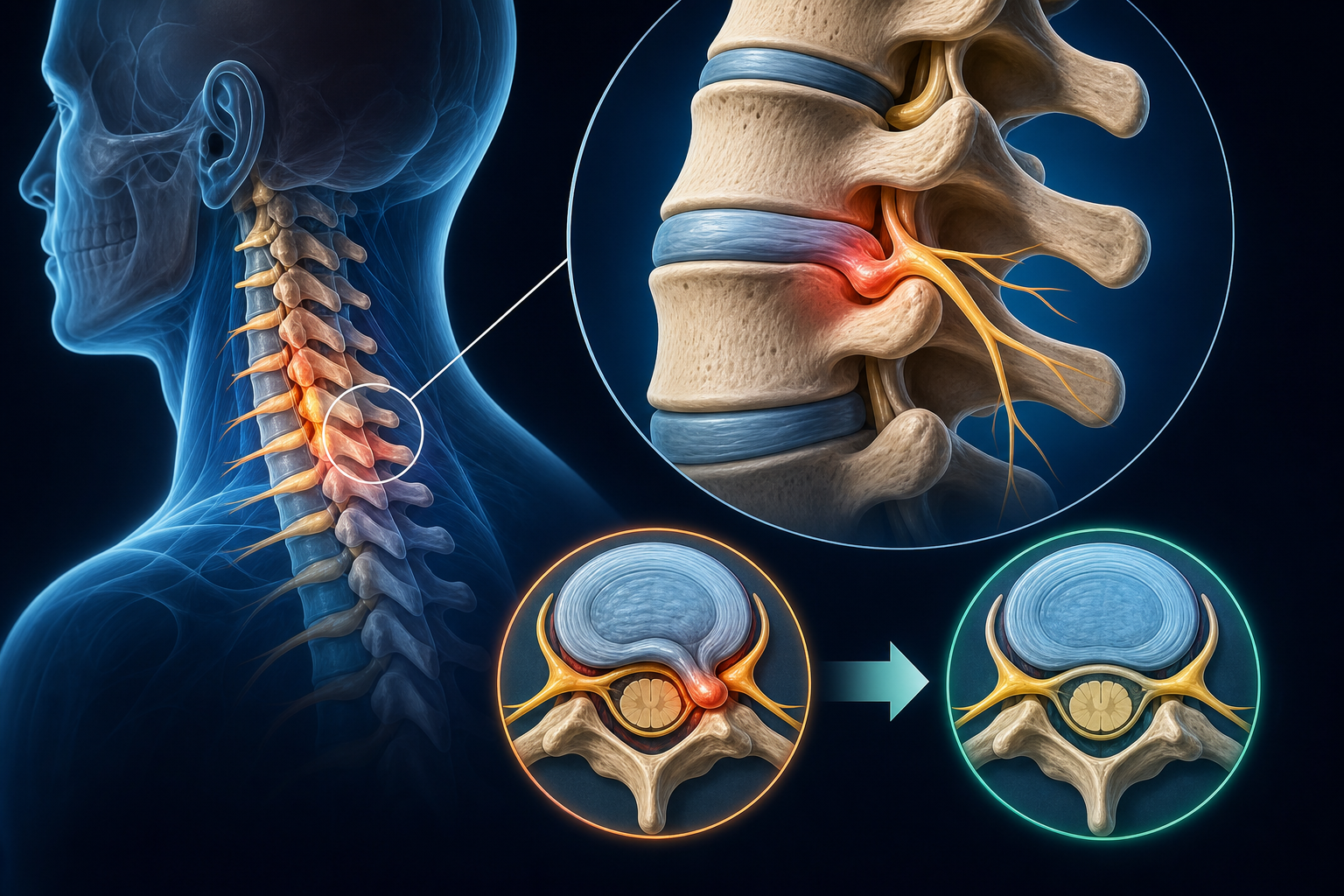
Cervical disc problems are a common reason people seek care for neck pain, stiffness, and symptoms that travel into the shoulder, arm, or hand. Understanding Cervical Disc Problems: Symptoms, Causes, and Treatment can help you recognize when discomfort may be related to the discs in your neck and when it is time to see a qualified provider.
The cervical spine is the neck portion of the spine. Between most of the neck bones, called vertebrae, are small shock-absorbing structures called discs. When a cervical disc becomes irritated, degenerative, bulging, or herniated, it may contribute to local neck pain or affect nearby nerves. Not every disc change causes symptoms, and many people have age-related disc findings on imaging without pain. The goal of evaluation is to understand whether your symptoms, exam findings, and any imaging results fit together.
If you are looking for conservative care, Medximity can help you find chiropractors near you, physical therapists near you, and other medical specialists who evaluate neck and spine concerns.
What Are Cervical Disc Problems?
Cervical disc problems refer to changes or injuries involving the discs in the neck. A disc has a tougher outer layer and a softer inner center. It helps absorb load, supports motion, and helps maintain space for the nerves that exit the spine.
Common cervical disc problems include:
- Disc degeneration: Age-related or stress-related changes in disc height, hydration, and flexibility.
- Bulging disc: A broad outward extension of the disc that may or may not touch nearby nerve tissue.
- Herniated disc: A more focal disc injury where inner disc material pushes through or beyond the outer layer.
- Disc-related inflammation: Irritation around a disc or nerve root that may contribute to pain even when compression is not severe.
- Reduced disc space: Loss of disc height that may narrow the openings where nerves exit, sometimes called foraminal narrowing.
These problems can occur alone or with other neck conditions, such as joint arthritis, muscle guarding, posture-related strain, or spinal stenosis. Because several tissues can refer pain to similar areas, a provider may use your history, movement testing, neurological screening, and imaging when appropriate to narrow the likely cause.
How Cervical Discs Affect Neck Nerves
The spinal cord travels through the spinal canal, and nerve roots branch out from the neck to the shoulders, arms, and hands. Cervical discs sit close to these nerve roots. If a disc bulge, herniation, or degenerative change irritates a nerve root, symptoms may travel along the path of that nerve.
This is why a neck problem can sometimes feel like an arm problem. A person may notice neck pain radiating down the arm, tingling in the fingers, shoulder blade pain, or grip changes. Providers may describe this pattern as cervical radiculopathy when a nerve root in the neck appears to be involved.
Arm tingling from the neck is not unusual in cervical nerve irritation, but it should not be ignored, especially if it is worsening, associated with weakness, or affecting coordination. If you are researching neck pain and related symptoms, a professional evaluation can help determine whether symptoms are disc-related, muscle-related, joint-related, or due to another condition.
Common Symptoms of Cervical Disc Problems
Cervical disc symptoms vary widely. Some people have mild stiffness. Others have pain that interferes with sleep, driving, desk work, lifting, or exercise. Symptoms may come on gradually or after a specific incident.
Neck and upper back symptoms
- Neck pain that may be sharp, aching, or burning
- Stiffness or reduced range of motion
- Pain that worsens with looking down, turning the head, or sitting for long periods
- Muscle tightness in the upper trapezius, shoulder blades, or base of the skull
- Headache patterns that may be associated with neck tension or joint irritation
Arm and hand symptoms
- Neck pain radiating down the arm
- Numbness or tingling into the shoulder, forearm, thumb, or fingers
- Burning or electric-like discomfort
- Weakness with gripping, pushing, pulling, or lifting
- Symptoms that change with neck position
Symptoms that need prompt attention
Seek urgent medical evaluation if you develop significant or progressive arm or hand weakness, loss of balance, trouble walking, loss of bowel or bladder control, numbness in multiple areas, fever with severe neck pain, unexplained weight loss, severe trauma, or symptoms that feel sudden and unusual. These signs do not always mean a serious condition is present, but they deserve timely assessment.
Cervical Disc Herniation vs Bulging Disc
People often use the terms herniated disc and bulging disc interchangeably, but they are not exactly the same.
A bulging disc usually describes a broader outward contour of the disc. It may be related to wear, posture, repetitive stress, or disc dehydration. Many bulging discs are found on imaging in people who have no symptoms.
A cervical disc herniation is typically more focal. It means disc material has pushed outward in a more concentrated area. Depending on the size and location, a herniation may irritate a nearby nerve root and contribute to arm pain, tingling, numbness, or weakness.
The key point is that the imaging term alone does not determine how much pain someone will have. A small herniation in a sensitive location may be very symptomatic, while a larger bulge in another location may cause little discomfort. Providers interpret imaging alongside the physical exam and symptom pattern.
Causes of Cervical Disc Degeneration and Injury
Cervical disc changes can develop for many reasons. In many cases, there is not one single cause. Disc tissue changes over time, and symptoms may appear when the neck is exposed to load, inflammation, repetitive stress, or injury.
Age-related disc changes
Discs tend to lose water content and elasticity with age. This can reduce disc height and flexibility. These changes are common and do not always cause pain, but they may increase the chance of stiffness or nerve space narrowing in some people.
Repetitive posture and work demands
Long periods of looking down at a phone, working at a laptop, driving, or performing overhead tasks may place sustained load on the neck. Posture alone is rarely the whole story, but repeated positions can contribute to muscle fatigue, joint irritation, and disc stress for some people.
Trauma or sudden loading
Falls, sports injuries, lifting incidents, or motor vehicle collisions may irritate cervical discs and surrounding soft tissues. Symptoms may appear immediately or develop over the next several days as inflammation and muscle guarding increase.
Genetics and lifestyle factors
Some people appear more prone to disc degeneration due to family history, tissue characteristics, smoking history, general conditioning, sleep quality, or other health factors. A provider can help identify modifiable contributors without assuming that one factor explains everything.
How Are Neck Disc Problems Diagnosed?
Diagnosis starts with a detailed history and physical examination. A provider will ask about where symptoms are located, what makes them better or worse, whether symptoms travel into the arm, and whether there are signs of nerve involvement.
A typical evaluation may include:
- Range-of-motion testing: Checking how the neck moves and which directions reproduce symptoms.
- Neurological screening: Assessing sensation, reflexes, and muscle strength in the arms and hands.
- Postural and movement assessment: Looking at how the neck, shoulders, and upper back move together.
- Orthopedic tests: Using specific positions or movements that may help identify nerve root irritation or other pain sources.
- Imaging when appropriate: X-rays may show alignment or degenerative changes. MRI may be considered when symptoms suggest significant nerve involvement, when symptoms persist despite care, or when red flags are present.
Imaging is not always needed right away. Many neck pain episodes improve with conservative care, and imaging findings can be present even in people without symptoms. The decision depends on your history, exam findings, symptom severity, and clinical judgment.
Cervical Disc Treatment Without Surgery
Many cervical disc problems are managed without surgery, especially when symptoms are stable and there are no serious neurological signs. Conservative care focuses on reducing irritation, restoring comfortable movement, improving strength and endurance, and helping you return to daily activity safely.
Treatment may include education, activity modification, manual therapy, therapeutic exercise, ergonomic changes, and a gradual return to work, sport, or fitness. The right plan depends on the suspected pain generator, the irritability of symptoms, and the presence or absence of nerve involvement.
Physical therapy for cervical disc pain
Physical therapy for cervical disc pain often begins with symptom calming and controlled movement. A physical therapist may use mobility work, deep neck flexor training, scapular strengthening, nerve gliding when appropriate, and progressive loading for the neck and upper back.
Therapy may also address how you sit, lift, sleep, drive, or work at a computer. These adjustments are not one-size-fits-all. The goal is to identify positions and activities that reduce symptoms while building capacity over time. If you are looking for guided rehab, you can search Medximity for physical therapy providers in your area.
Chiropractic care for cervical disc problems
Chiropractic care may help some patients with neck pain by addressing joint mobility, muscle tension, and movement mechanics. A chiropractor may use gentle mobilization, soft tissue techniques, exercise instruction, posture coaching, and, when appropriate, spinal manipulation. For disc-related arm symptoms, a careful neurological exam and conservative technique selection are especially important.
If you are searching for a chiropractor for cervical disc problems near me, choose a provider who evaluates nerve symptoms carefully, explains the plan clearly, and refers for imaging or medical evaluation when indicated. You can explore chiropractic care options or compare local chiropractors through Medximity.
Rehabilitation and home exercise
The best rehab for neck disc pain is usually progressive and individualized. Early exercises may focus on gentle range of motion, breathing, and reducing protective muscle tension. As symptoms improve, rehab may progress to strengthening the neck, shoulders, and upper back, then to task-specific work such as lifting, carrying, or sport movements.
Home exercises are often a key part of recovery, but they should match your presentation. Exercises that help one person may aggravate another, especially when nerve irritation is present. A provider can help you understand which movements are appropriate and which signs mean you should pause and reassess.
What to Expect at Your First Appointment
At your first visit, the provider will usually review your health history, symptom timeline, daily activities, work demands, and prior episodes of neck or arm pain. Be prepared to describe where symptoms travel, whether tingling or numbness is present, and whether you have noticed weakness or coordination changes.
The examination may include neck and shoulder movement testing, strength testing, sensation checks, reflex testing, and hands-on assessment of the cervical and upper thoracic regions. Your provider should explain what findings suggest, what cannot be confirmed without further testing, and what conservative options may be reasonable.
If care begins that day, it may include gentle manual therapy, movement coaching, symptom-relief strategies, and a short home plan. For more complex symptoms, the provider may coordinate with another clinician or recommend imaging before certain treatments. Medximity can help you locate physical therapy services and other conservative care options based on your needs.
How Long Does Cervical Disc Pain Last?
The duration of cervical disc pain varies. Some mild episodes improve within days to a few weeks. Disc-related nerve irritation may take longer, sometimes several weeks or months, depending on the severity of inflammation, the degree of nerve involvement, overall health, and how well aggravating factors are managed.
Improvement is not always linear. Many people have better and worse days, especially as activity increases. Positive signs may include less frequent arm symptoms, improved sleep, greater neck motion, better grip tolerance, and the ability to sit, drive, or work longer with fewer symptoms.
If symptoms are not improving, are spreading, or are associated with progressive weakness or numbness, it is reasonable to seek re-evaluation. A change in symptoms may mean the care plan needs to be adjusted or that additional medical assessment is needed.
When to See a Provider for Neck Disc Symptoms
Consider seeing a qualified provider if neck pain lasts more than a few days, keeps returning, limits normal activity, or radiates into the shoulder, arm, or hand. You should also seek care if tingling, numbness, or weakness is present, even if the pain itself is manageable.
Prompt evaluation is especially important when symptoms interfere with sleep, work, driving, balance, or hand function. Early conservative care may help identify aggravating factors, calm symptoms, and reduce the chance of prolonged limitation, though outcomes vary by person.
If you are unsure where to begin, Medximity can help you compare conservative spine care options, including chiropractors, physical therapists, and medical specialists who evaluate neck and nerve-related symptoms.
Practical Steps That May Help Protect Your Neck
While you should not try to self-diagnose a cervical disc problem, a few general habits may reduce unnecessary neck stress for some people:
- Change positions regularly instead of holding one posture for hours.
- Bring screens closer to eye level when possible.
- Support your arms during computer work to reduce shoulder and neck load.
- Use a pillow that keeps your neck in a comfortable, neutral position.
- Ease back into exercise gradually after a flare-up.
- Avoid pushing through worsening arm tingling, numbness, or weakness.
These strategies are general and may not fit every condition. If an activity consistently worsens arm symptoms or causes weakness, stop and consult a provider.
Frequently Asked Questions
What are cervical disc problems?
Cervical disc problems are changes or injuries affecting the discs between the bones of the neck. They may include disc degeneration, bulging discs, herniated discs, or disc-related inflammation. Some disc changes cause no symptoms, while others may contribute to neck pain or nerve irritation.
Is arm tingling from the neck normal?
Arm tingling can occur when a nerve in the neck is irritated, but it is not something to dismiss. If tingling is persistent, worsening, or linked with weakness, numbness, balance problems, or coordination changes, seek professional evaluation.
Can cervical disc problems be treated without surgery?
Many cervical disc problems are managed with conservative care such as physical therapy, chiropractic care, rehabilitation exercise, ergonomic changes, and activity modification. The right approach depends on your symptoms, examination findings, and whether nerve function is affected.
How are neck disc problems diagnosed?
Providers usually begin with a history and physical exam, including neck movement, strength, sensation, and reflex testing. Imaging may be recommended when symptoms are severe, persistent, worsening, or suggest significant nerve involvement.
How long does cervical disc pain last?
Recovery time varies. Mild neck pain may improve within days or weeks, while nerve-related symptoms may take longer. If symptoms are not improving or neurological signs are progressing, a provider should reassess your condition and care plan.
Finding Care for Cervical Disc Symptoms
Cervical disc problems can be frustrating, especially when pain travels into the arm or interferes with daily routines. A careful evaluation can help clarify whether your symptoms may be disc-related and what conservative treatment options fit your situation.
Medximity makes it easier to find local providers who focus on neck pain, movement, rehabilitation, and conservative spine care. Start by comparing providers in your area and scheduling an evaluation with a qualified clinician who can guide your next steps.
This article is for educational purposes only and is not a substitute for professional medical advice, diagnosis, or treatment. Always consult a qualified healthcare provider about your specific condition. If you may be experiencing a medical emergency, call 911 or seek emergency care immediately.


