Understanding Neck Arthritis with Spinal Cord Symptoms: Symptoms, Causes, and Treatment starts with one key point: ordinary neck arthritis can cause stiffness and pain, but symptoms involving balance, walking, hand coordination, or numbness in both hands deserve prompt medical attention. These symptoms may be associated with cervical spinal stenosis, a narrowing of the spinal canal in the neck that can affect the spinal cord in some people.
Many people have age-related arthritis changes in the neck and never develop serious neurologic symptoms. Others may notice neck pain with numb hands, clumsy fingers, weakness, or trouble walking with neck pain. Those changes do not prove that the spinal cord is involved, but they are important enough to discuss with a qualified healthcare provider.
This article explains what neck arthritis is, how it may affect the spinal cord, how neck arthritis spinal cord symptoms differ from a pinched nerve, and what to expect from conservative care such as physical therapy, rehabilitation, posture training, and carefully selected chiropractic care. If you are actively looking for care, you can also search Medximity for a chiropractor for neck arthritis near you or a physical therapist near you.
What Is Neck Arthritis?
Neck arthritis usually refers to degenerative changes in the cervical spine, the seven vertebrae that support the head and protect the spinal cord in the neck. Clinicians may use terms such as cervical spondylosis, degenerative disc disease, facet joint arthritis, or cervical osteoarthritis depending on which structures are involved.
Over time, the discs between the vertebrae can lose height and hydration. The facet joints, which guide motion in the back of the spine, may develop irritation and bony overgrowth. Ligaments can thicken. Bone spurs may form near joints or around the edges of the vertebrae. These changes are common with aging and do not always cause symptoms.
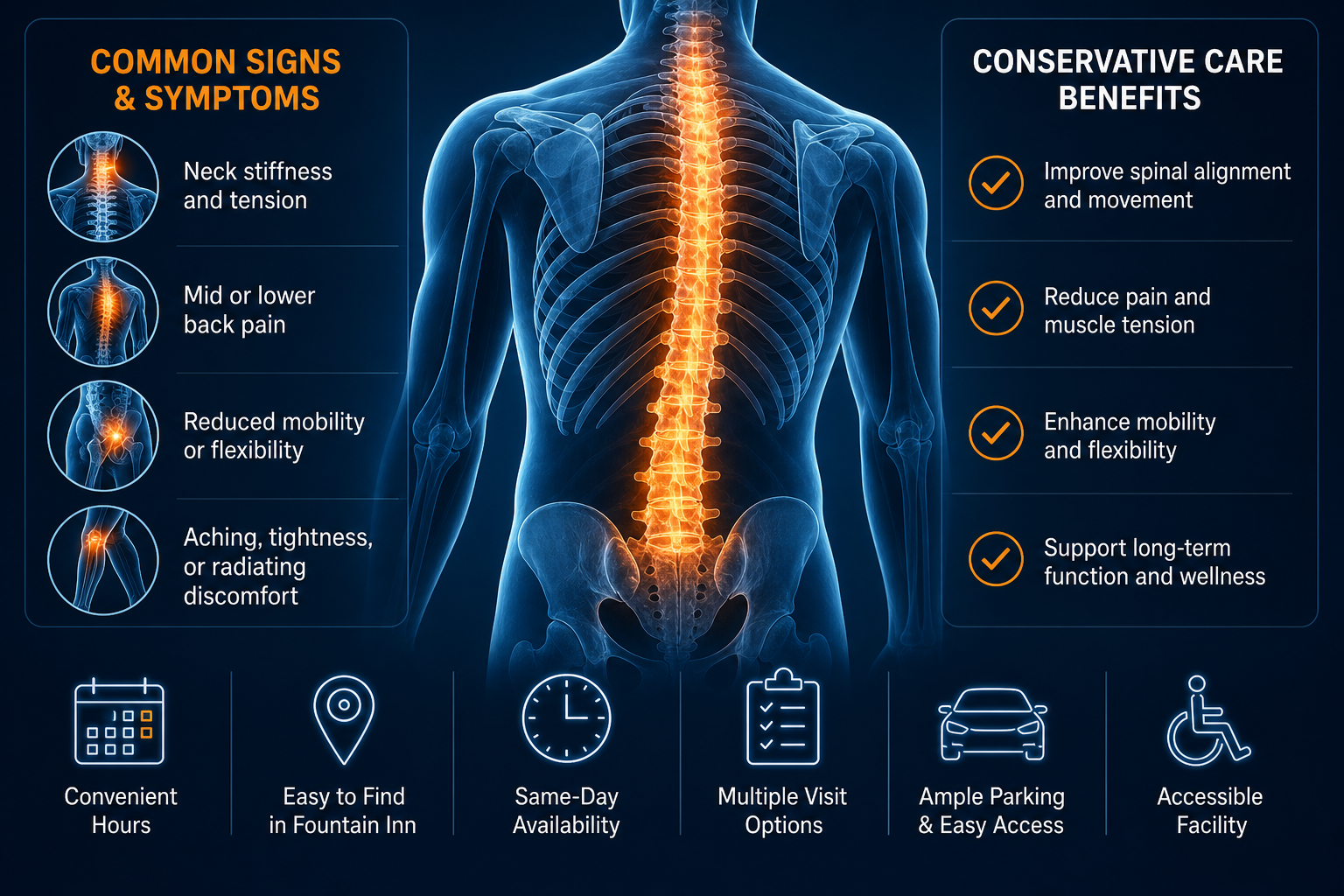
When neck arthritis becomes symptomatic, people may notice stiffness, aching, reduced range of motion, headaches that seem to start near the base of the skull, or pain that worsens after prolonged sitting, driving, device use, or overhead activity. For general information about common neck pain patterns, Medximity also offers a related guide to neck pain causes and care options.
How Neck Arthritis Can Affect the Spinal Cord
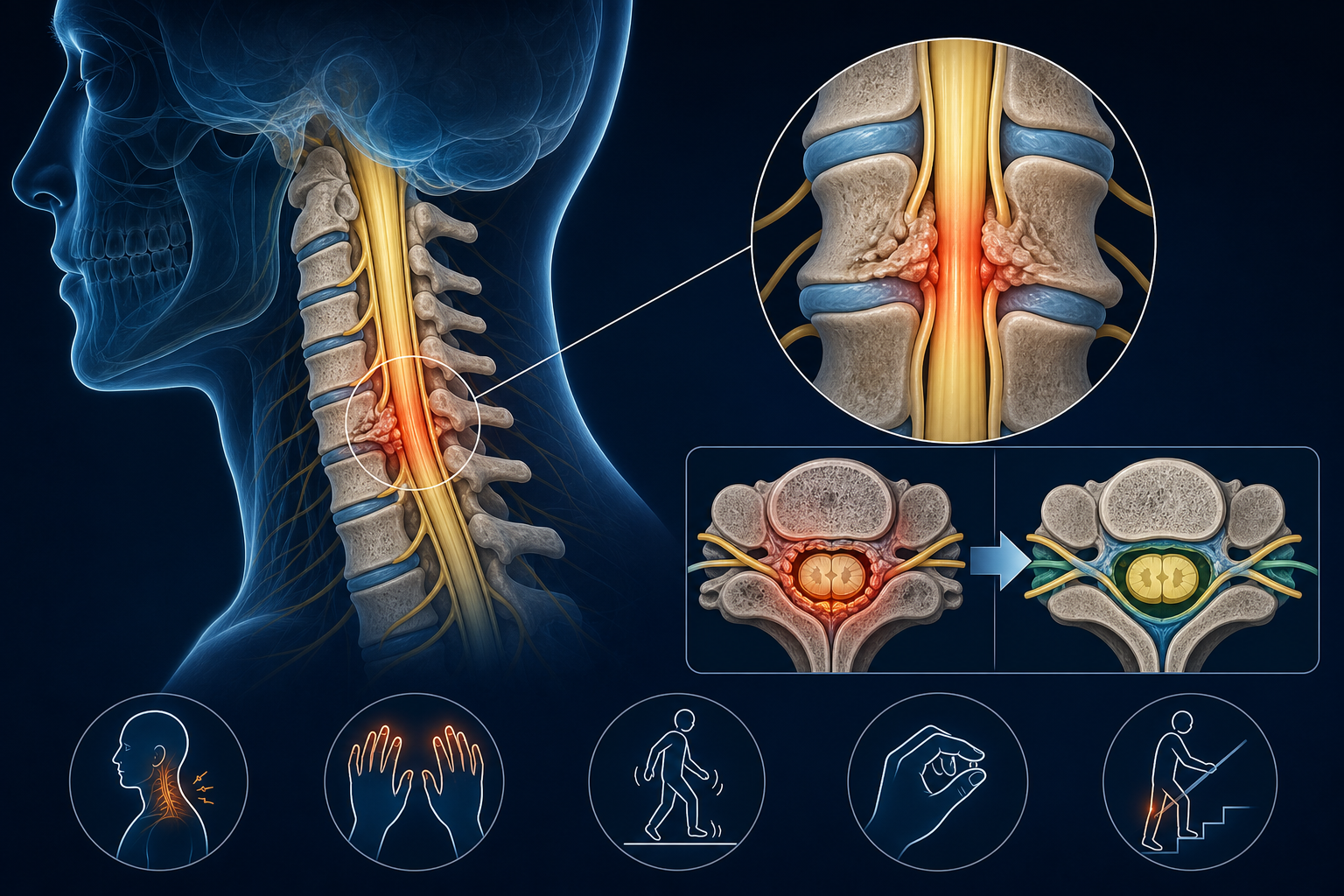
The spinal cord runs through a central tunnel called the spinal canal. Nerve roots branch away from the spinal cord and travel through smaller openings to the shoulders, arms, and hands. Arthritis-related changes can narrow these spaces.
When narrowing affects a nerve root, symptoms may follow a more specific arm pattern. This is often called cervical radiculopathy, or a pinched nerve in the neck. When narrowing affects the central spinal canal and places pressure on the spinal cord, providers may use terms such as cervical spinal stenosis or cervical myelopathy. Myelopathy means the spinal cord is not functioning normally.
Not every person with cervical spinal stenosis has myelopathy, and not every person with neck arthritis has spinal cord symptoms. However, when spinal cord involvement is suspected, timely evaluation matters because the spinal cord coordinates movement, balance, sensation, and reflexes throughout much of the body.
Common Neck Arthritis Spinal Cord Symptoms
Neck arthritis spinal cord symptoms can be subtle at first. They may not feel like typical neck pain. Some people report only mild neck discomfort but significant changes in walking, hand function, or balance. Symptoms can vary depending on the degree and location of narrowing, other health conditions, and activity level.
Balance Changes and Unsteady Walking
A common question is, can neck arthritis cause balance problems? In some cases, yes. If arthritis-related narrowing affects the spinal cord, a person may feel unsteady, have trouble walking in a straight line, feel less confident on stairs, or notice more frequent stumbling. These symptoms can also come from inner ear issues, medication effects, neuropathy, vision changes, or other neurologic conditions, so a provider evaluation is important.
Trouble Walking With Neck Pain
Trouble walking with neck pain is not something to ignore. Some people describe heavy legs, stiffness, a wide-based gait, or the feeling that their feet do not respond normally. Others may notice that they need to hold a railing more often or avoid uneven ground. These changes may be associated with spinal cord irritation, but only an exam can help clarify the cause.
Neck Pain With Numb Hands
Neck pain with numb hands may come from several sources. A pinched nerve can cause numbness or tingling in one arm or hand. Carpal tunnel syndrome, peripheral neuropathy, and shoulder-related conditions can also create hand symptoms. When both hands feel numb, clumsy, weak, or less coordinated, spinal cord involvement may be one possibility your provider considers.
Hand Clumsiness or Loss of Fine Motor Control
Some people with suspected cervical myelopathy notice they are dropping objects, struggling to button clothing, having trouble writing, or feeling less precise when using utensils or tools. These changes are especially important when they are new, worsening, or present with balance changes.
Weakness, Heaviness, or Changes in Coordination
Spinal cord symptoms may include weakness, heaviness, stiffness, or changes in coordination in the arms or legs. A person may not describe sharp pain. Instead, they may say their legs feel awkward, their hands feel slow, or their movements feel less reliable.
Changes in Bladder or Bowel Control
New loss of bladder or bowel control, especially with weakness, numbness, or trouble walking, should be treated as urgent. These symptoms can have multiple causes, but they require prompt medical assessment.
Neck Arthritis vs Pinched Nerve Symptoms
Patients often search for neck arthritis vs pinched nerve symptoms because the terms overlap. Neck arthritis describes degenerative changes in the cervical spine. A pinched nerve describes pressure or irritation affecting a nerve root. Cervical spinal stenosis describes narrowing around the spinal cord or nerve structures.
A pinched nerve in the neck often causes pain, numbness, tingling, or weakness that travels from the neck into one shoulder, arm, or hand. The pattern may follow a nerve distribution. For example, symptoms may travel toward the thumb, middle finger, or small finger depending on the level involved. Medximity has more information on pinched nerve symptoms and conservative care.
Spinal cord symptoms may be broader. They may include balance problems, trouble walking, hand clumsiness, symptoms in both hands, leg stiffness, or changes in reflexes. A person can have both nerve root symptoms and spinal cord symptoms at the same time. Because the difference matters, providers often perform a neurologic exam rather than relying on pain location alone.
What Causes Neck Arthritis With Spinal Cord Symptoms?
Neck arthritis with spinal cord symptoms usually develops from a combination of structural changes rather than one single issue. The cervical spinal canal has limited space. When several age-related changes occur together, the room available for the spinal cord may become smaller.
Degenerative Disc Changes
Cervical discs act as cushions and spacers between the vertebrae. As discs lose height, the alignment and mechanics of the neck can change. Disc bulging or disc collapse may contribute to narrowing around nerve roots or the spinal canal.
Facet Joint Arthritis and Bone Spurs
Facet joints help control movement in the neck. With arthritis, these joints can become irritated and enlarged. Bone spurs may form as the body adapts to stress and instability. In some people, these bony changes contribute to stenosis.
Thickened Ligaments
Ligaments help stabilize the spine. Over time, certain ligaments may thicken or buckle into the spinal canal, especially when disc height is reduced. This can further decrease the space around the spinal cord.
Posture, Repetitive Strain, and Prior Injury
Forward-head posture, prolonged screen use, repetitive work positions, prior trauma, and physically demanding jobs may aggravate neck symptoms in some people. These factors do not necessarily cause arthritis by themselves, but they can influence pain, mobility, muscle tension, and function.
Congenital Canal Size
Some people are born with a narrower cervical spinal canal. If arthritis changes develop later in life, symptoms may appear sooner because there was less extra space to begin with.
When to See a Doctor for Neck Arthritis
If you are wondering when to see doctor neck arthritis symptoms, the safest answer is to seek evaluation when symptoms are new, worsening, spreading, or affecting function. Neck stiffness alone is common, but neurologic changes should not be brushed aside.
Consider prompt medical evaluation if you notice balance problems, trouble walking, weakness in the arms or legs, numbness in both hands, worsening coordination, repeated falls, or changes in bladder or bowel control. You should also seek care if neck pain follows a significant injury, is associated with fever or unexplained weight loss, or does not improve with reasonable self-care.
A chiropractor, physical therapist, primary care clinician, neurologist, orthopedic spine specialist, or other qualified provider may be involved depending on the symptoms. If spinal cord compression is suspected, conservative providers should screen carefully and refer for medical evaluation when appropriate.
What to Expect During an Evaluation
A provider visit for neck arthritis and possible spinal cord symptoms typically begins with a detailed history. The provider may ask when symptoms started, whether they are changing, what activities aggravate them, whether symptoms affect one side or both sides, and whether walking, hand coordination, or balance has changed.
Physical and Neurologic Exam
The exam may include checking neck range of motion, posture, muscle tenderness, strength, sensation, reflexes, coordination, and walking pattern. Providers may also screen shoulder, elbow, wrist, and hand function because symptoms can overlap with other conditions.
Imaging and Diagnostic Testing
Depending on findings, a medical provider may order imaging such as X-rays or MRI. X-rays can show alignment, arthritis changes, and disc height. MRI is commonly used when providers need to evaluate discs, nerves, the spinal canal, and the spinal cord. Other testing may be considered when symptoms could involve peripheral nerves or other conditions.
Imaging results must be interpreted in context. Many adults have arthritis changes on imaging even when they have little or no pain. The goal is to match imaging findings with symptoms and exam results rather than treating a scan alone.
Cervical Spinal Stenosis Symptoms and Treatment Options
People searching for cervical spinal stenosis symptoms treatment are often trying to understand whether conservative care can help. In many cases, non-surgical management may help reduce pain, improve mobility, build strength, and support safer movement. However, when spinal cord symptoms are significant or progressive, a timely medical assessment is essential to determine what level of care is appropriate.
Conservative treatment does not remove bone spurs or reverse advanced narrowing. Instead, it aims to improve the factors that can be modified: movement control, muscle support, posture, activity tolerance, balance, pain sensitivity, and daily ergonomics. For some patients, this may improve function and comfort. For others, especially those with worsening neurologic signs, conservative care alone may not be enough and further specialist evaluation may be needed.
Physical Therapy for Cervical Spinal Stenosis
Physical therapy for cervical spinal stenosis is often focused on safety, symptom control, and function. A physical therapist can assess posture, range of motion, strength, balance, gait, and activity tolerance. The plan should be individualized because aggressive stretching or unsupervised neck loading may not be appropriate for every person.
Mobility and Range-of-Motion Work
Gentle mobility exercises may help reduce stiffness and improve comfort. These movements are usually controlled and symptom-guided. The goal is not to force the neck into painful end ranges but to restore usable motion where appropriate.
Deep Neck Flexor and Postural Strengthening
The deep neck flexor muscles help support the cervical spine. Physical therapy may include low-load strengthening, scapular stabilization, and upper-back endurance work. Better support from the neck and shoulder girdle may reduce strain during daily activities.
Balance and Gait Training
If a patient reports balance concerns, therapy may include carefully supervised balance and walking exercises. These exercises should be selected with fall risk in mind. The therapist may also discuss home safety strategies and activity modifications.
Education and Activity Modification
Education is a major part of care. Patients may learn how to adjust screen height, take movement breaks, avoid sustained awkward positions, and pace activities. A therapist may also help identify movements that repeatedly aggravate symptoms.
For a broader overview of rehabilitation approaches, visit Medximity's page on physical therapy treatment options.
Chiropractic Care and Neck Arthritis
Many patients search for a chiropractor for neck arthritis near me when neck stiffness, headaches, or mechanical neck pain interfere with daily life. Chiropractic care may help some people with neck arthritis-related pain through conservative methods such as gentle mobilization, soft tissue therapy, exercise guidance, posture coaching, and lifestyle education.
When spinal cord symptoms are present or suspected, the approach should be more cautious. High-velocity neck manipulation may not be appropriate for some patients with significant stenosis, neurologic deficits, instability, or other risk factors. A qualified chiropractor should perform a careful screening exam and refer for medical evaluation when symptoms suggest possible spinal cord involvement.
Chiropractic care for neck arthritis should be individualized and should not be presented as a cure for stenosis or spinal cord compression. In appropriate cases, conservative chiropractic care may be one part of a broader plan to improve comfort and movement. You can learn more about chiropractic care for musculoskeletal pain on Medximity.
Neck Arthritis Treatment Without Surgery
People often want neck arthritis treatment without surgery, especially when symptoms are mild to moderate or primarily mechanical. Conservative care may include physical therapy, carefully selected chiropractic care, therapeutic exercise, ergonomic changes, heat or cold, stress management, sleep positioning, and ongoing monitoring.
The right plan depends on the symptoms. A person with stiffness and localized neck pain may need a different approach than someone with numb hands and balance changes. When neurologic symptoms are present, the first priority is appropriate evaluation and safety.
Therapeutic Exercise
Exercise can be an important part of conservative neck arthritis care. A plan may include gentle range-of-motion work, postural strengthening, shoulder blade strengthening, walking, and low-impact conditioning. Exercise should be progressed gradually and adjusted if symptoms worsen.
Ergonomics and Daily Positioning
Small changes in daily setup may reduce irritation. Raising a monitor, supporting the arms while typing, using voice-to-text for long phone sessions, changing pillow height, and taking movement breaks may help some patients. The goal is to reduce sustained positions that keep the neck flexed or rotated for long periods.
Heat, Cold, and Self-Care
Some patients report temporary relief from heat for stiffness or cold for soreness after activity. These approaches do not treat stenosis itself, but they may help manage discomfort. People with reduced sensation, circulation problems, or other medical concerns should ask a provider how to use temperature-based self-care safely.
Traction and Manual Therapy
Some conservative providers use gentle traction or manual therapy for selected neck conditions. These techniques are not appropriate for everyone and should be guided by a provider who understands the patient's neurologic status, imaging when available, and risk factors. If symptoms increase, treatment should be reassessed.
Natural Treatment for Neck Arthritis Pain
Natural treatment for neck arthritis pain usually means non-drug, non-invasive strategies that support movement and reduce irritation. These may include guided exercise, posture changes, breathing and relaxation strategies for muscle tension, sleep support, hydration, and pacing of activity.
Natural does not automatically mean safe for every situation. If neck pain is paired with trouble walking, hand clumsiness, progressive weakness, or bladder or bowel changes, home care should not delay professional evaluation. Conservative strategies work best when they are matched to the correct diagnosis and monitored over time.
How to Choose the Best Provider for Neck Arthritis Symptoms
The best provider for neck arthritis symptoms depends on what you are experiencing. For localized neck stiffness or posture-related pain, a chiropractor or physical therapist may be a reasonable starting point. For numbness, weakness, balance changes, trouble walking, or symptoms affecting both hands, a medical provider or spine-focused clinician may need to evaluate for neurologic involvement.
Look for a provider who performs a thorough exam, explains findings clearly, screens for red flags, and individualizes care rather than using the same treatment for every neck pain patient. If a provider suspects cervical myelopathy or significant stenosis, appropriate referral is part of good conservative care.
Medximity helps patients compare conservative care options and find local providers. You can search for chiropractors who treat neck pain, browse physical therapists for cervical spine rehabilitation, or explore information about cervical spinal stenosis.
What to Expect From Conservative Care
At the first visit, your provider should ask about your symptoms, health history, work demands, hobbies, and goals. They may examine neck motion, strength, sensation, reflexes, posture, balance, and walking. If your symptoms suggest possible spinal cord involvement, they may recommend medical evaluation or imaging before beginning certain treatments.
When conservative care is appropriate, the first phase often focuses on calming symptoms and improving confidence with movement. Treatment may include education, gentle mobility, soft tissue work, low-load strengthening, and ergonomic changes. As symptoms allow, therapy may progress toward endurance, balance, coordination, and return to meaningful activities.
Progress can vary. Some people feel better within a few visits, while others need a longer plan. Improvement may mean less pain, better sleep, easier driving, steadier walking, fewer flare-ups, or improved ability to work at a computer. If symptoms worsen or new neurologic signs appear, the plan should be reassessed.
Questions to Ask at Your Appointment
Preparing questions can help you make the most of your visit. Consider asking what findings suggest arthritis, whether your symptoms appear more consistent with a pinched nerve or possible spinal cord involvement, what activities you should temporarily modify, which exercises are safe for your situation, and what changes should prompt urgent follow-up.
You can also ask how your provider will measure progress. Good conservative care should include functional goals, not just temporary pain relief. Examples include walking more confidently, using the hands with less clumsiness, improving range of motion, or tolerating work tasks with fewer flare-ups.
Frequently Asked Questions
Can neck arthritis cause balance problems?
Neck arthritis may be associated with balance problems when degenerative changes narrow the spinal canal and affect the spinal cord. Balance symptoms can also come from many other causes, so new or worsening unsteadiness should be evaluated by a qualified provider.
Is neck pain with numb hands serious?
Neck pain with numb hands can come from a pinched nerve, peripheral nerve irritation, or other conditions. Numbness in both hands, hand clumsiness, weakness, or symptoms combined with trouble walking may be more concerning and should be assessed promptly.
What is the difference between neck arthritis and a pinched nerve?
Neck arthritis describes degenerative changes in the cervical spine. A pinched nerve means a nerve root is irritated or compressed, often causing arm pain, tingling, numbness, or weakness. Arthritis can contribute to a pinched nerve, but they are not the same thing.
Can physical therapy help cervical spinal stenosis?
Physical therapy may help some people with cervical spinal stenosis improve strength, posture, balance, mobility, and daily function. It does not reverse bony narrowing, and people with progressive neurologic symptoms need timely medical evaluation.
Is chiropractic care safe for neck arthritis with spinal cord symptoms?
Chiropractic care may help some neck arthritis symptoms, but suspected spinal cord involvement requires careful screening. High-velocity neck manipulation may not be appropriate for certain patients with significant stenosis or neurologic signs. A qualified chiropractor should refer for medical evaluation when needed.
What are warning signs that neck arthritis needs medical attention?
Warning signs include trouble walking, balance changes, progressive weakness, numbness in both hands, hand clumsiness, repeated falls, or changes in bladder or bowel control. These symptoms should be evaluated promptly.
What can I do at home for neck arthritis pain?
Gentle movement, posture changes, supportive sleep positioning, heat or cold, and activity pacing may help some people manage neck arthritis discomfort. Home care should not replace evaluation when neurologic symptoms are present.
Finding Care Through Medximity
Neck arthritis is common, but neck arthritis with possible spinal cord symptoms deserves careful attention. If you are experiencing balance changes, trouble walking, hand numbness, or worsening coordination, consider scheduling an evaluation with a qualified provider. The right clinician can help determine whether symptoms appear mechanical, nerve-related, or concerning for spinal cord involvement.
Medximity makes it easier to compare providers and find conservative care options near you. Start by searching for a chiropractor for neck arthritis symptoms or a physical therapist for cervical spinal stenosis rehabilitation. If your symptoms suggest a more urgent neurologic concern, seek prompt medical care rather than waiting for symptoms to progress.
This article is for educational purposes only and is not a substitute for professional medical advice, diagnosis, or treatment. Always consult a qualified healthcare provider about your specific condition. If you may be experiencing a medical emergency, call 911 or seek emergency care immediately.