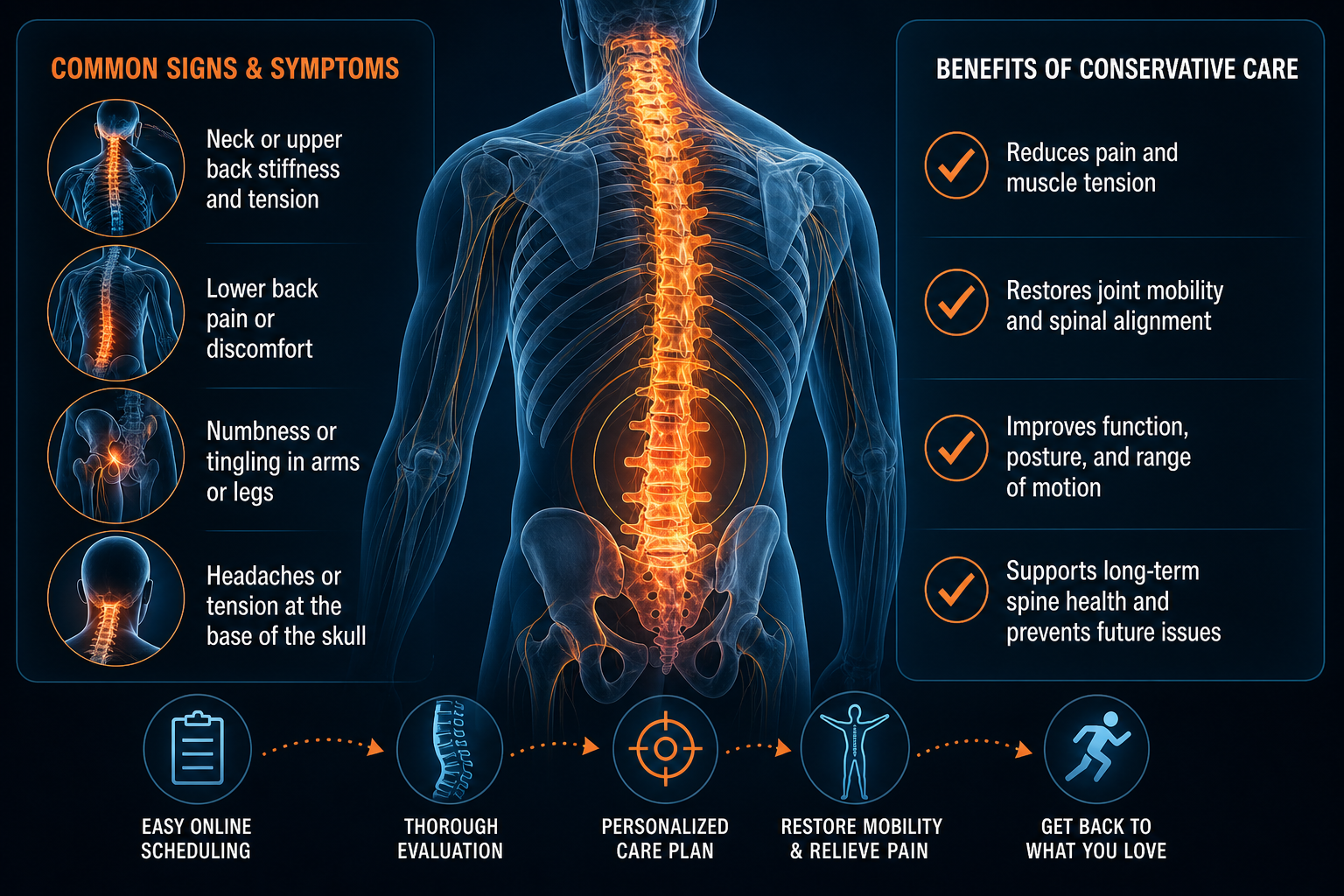
Does TRICARE Cover Chiropractic Care? What Patients Need to Know is one of the most common questions military families ask when back pain, neck stiffness, or a new injury makes daily life harder. The short answer is that TRICARE generally does not cover private-sector chiropractic visits for most beneficiaries, including many dependents and retirees. Active duty service members may have access to chiropractic services in certain military hospitals or clinics when available and when the care is authorized through the appropriate military medical process.
That answer can feel frustrating, especially if you are looking for non-surgical, conservative care. The good news is that TRICARE may cover other forms of conservative treatment for back pain, neck pain, mobility limitations, and rehabilitation when the services are medically necessary and meet plan requirements. Physical therapy, provider-directed rehabilitation, imaging when appropriate, and evaluation by a qualified clinician may be part of a covered care pathway, depending on your plan, referral rules, and authorization requirements.
This article explains how TRICARE chiropractic coverage usually works, what may be different for active duty service members, dependents, TRICARE Prime, and TRICARE Select, and what to ask before scheduling a chiropractor. It is informational only. Coverage rules can change, and individual benefits vary, so patients should confirm details with TRICARE, their regional contractor, their primary care manager, or a licensed provider before making care decisions.
If you are looking for conservative care in your area, you can use Medximity to explore chiropractors near you and physical therapists near you. Before scheduling, ask the office and TRICARE whether the specific service is covered, whether a referral is needed, and whether prior authorization applies.
Quick Answer: Does TRICARE Cover Chiropractic Visits?
In most cases, TRICARE does not cover chiropractic visits in the private sector for routine chiropractic adjustments, spinal manipulation, or ongoing chiropractic care. This commonly applies to active duty family members, retirees, retiree family members, and other non-active-duty beneficiaries seeking care from a civilian chiropractor.
There is an important distinction for active duty service members. Some active duty service members may receive chiropractic care through military treatment facilities that offer the service. Availability may depend on the location, the military medical system, a provider referral, and whether the service is considered appropriate for the service member's condition. This is not the same as a general private-sector chiropractic benefit.
Because coverage language can be plan-specific and can change over time, patients should avoid assuming that a chiropractor near me that accepts TRICARE can bill TRICARE for chiropractic adjustments. A provider may be familiar with military families, may accept other insurance plans, or may offer self-pay options, but that does not automatically mean TRICARE covers the visit.
Why TRICARE Chiropractic Coverage Is Confusing
TRICARE can be difficult to understand because different groups of beneficiaries follow different rules. Active duty service members, active duty family members, National Guard and Reserve members, retirees, and dependents may not have the same benefits. TRICARE Prime and TRICARE Select also use different referral and network structures.
The phrase TRICARE chiropractic coverage can mean several different things in everyday conversation:
- Coverage for chiropractic manipulation in a civilian office
- Access to chiropractic care at a military hospital or clinic
- Coverage for back pain treatment that is not chiropractic, such as physical therapy
- A provider office that works with military families but does not bill TRICARE for chiropractic care
- A referral from a primary care manager for evaluation of pain, mobility issues, or rehabilitation needs
Those are not interchangeable. A referral for back pain does not necessarily mean chiropractic adjustments are covered. A clinic that treats military families may not be able to bill TRICARE for a chiropractic visit. A covered physical therapy plan of care is not the same as chiropractic coverage.
TRICARE Chiropractic Coverage for Dependents
For many families, the most direct question is: Is there TRICARE chiropractic coverage for dependents? In general, TRICARE does not cover private-sector chiropractic care for dependents. This often includes spouses and children of active duty service members, as well as dependents of retirees.
That does not mean a dependent has no options for back pain, neck pain, headaches associated with musculoskeletal tension, or movement limitations. A dependent may be able to see a primary care provider, pediatrician, physical therapist, or other covered clinician depending on the plan and medical necessity. The correct pathway depends on the symptoms, age of the patient, plan type, and whether referral or authorization is required.
For example, a spouse with low back pain after lifting a child may be evaluated by a primary care provider and may be referred to physical therapy if appropriate. A teenager with sports-related neck stiffness may need evaluation to rule out more serious injury before starting rehabilitation. A child with pain after a fall should be assessed by a qualified provider before any manual treatment is considered.
If you are researching care for a family member, it may help to read more about when to see a chiropractor for neck pain and chiropractic care for back pain. These resources can help you understand common conservative care approaches, but they do not determine TRICARE coverage.
Active Duty Service Members and Chiropractic Care
Active duty service members may have access to chiropractic care through certain military treatment facilities. This access is usually tied to military medical readiness, clinical need, facility availability, and referral processes. It is not the same as being able to schedule any civilian chiropractor and have TRICARE pay for the visit.
If you are active duty and dealing with back pain, neck pain, reduced range of motion, or a service-related musculoskeletal concern, start with the process required by your command, primary care manager, or military treatment facility. The provider may determine whether chiropractic care, physical therapy, rehabilitation, activity modification, or another evaluation is appropriate.
Active duty service members should also be cautious about self-referring to private-sector care without confirming authorization. Depending on the circumstances, unauthorized care may not be covered and may create administrative complications. If symptoms are severe, worsening, associated with neurological signs, or related to trauma, prompt medical evaluation is important.
TRICARE Prime vs Select Chiropractic Coverage
TRICARE Prime vs Select chiropractic coverage is another common point of confusion. The key issue is that the basic chiropractic exclusion for most private-sector care generally applies regardless of whether a beneficiary has Prime or Select. The difference between Prime and Select matters more for covered services such as primary care, specialty referrals, physical therapy, and certain diagnostic or rehabilitative services.
TRICARE Prime
TRICARE Prime typically uses a primary care manager, often called a PCM, to coordinate care. For many specialty services, Prime beneficiaries may need a referral and sometimes prior authorization. If you have Prime and you develop back pain or neck pain, your PCM is usually the starting point for covered evaluation and treatment planning.
If chiropractic care is not a covered private-sector benefit for your beneficiary category, a Prime referral alone may not make civilian chiropractic adjustments covered. However, your PCM may be able to evaluate your condition, recommend conservative care options, and refer you to covered services such as physical therapy when medically appropriate.
TRICARE Select
TRICARE Select generally gives beneficiaries more flexibility in choosing TRICARE-authorized providers for covered services. Even so, flexibility does not turn a non-covered service into a covered benefit. If civilian chiropractic adjustments are excluded for your beneficiary category, Select usually does not cover them simply because you choose a provider independently.
For covered conservative care services, Select beneficiaries should still verify network status, cost-shares, referral rules if applicable, and whether prior authorization is required. Some services may be covered only when medically necessary and documented appropriately.
Can You Find a Chiropractor Near Me That Accepts TRICARE?
Patients often search for a chiropractor near me that accepts TRICARE. This phrase can be misleading. A chiropractic office may serve military families, be located near a base, understand deployment-related stressors, or offer documentation for patients who need records for work or school. But that does not necessarily mean TRICARE will pay for chiropractic care.
When a clinic says it accepts TRICARE, ask exactly what that means. The office may be referring to covered services provided by a different clinician, such as physical therapy or medical evaluation. It may also mean the office can help you understand superbills or self-pay options, not that TRICARE reimburses chiropractic adjustments.
Before scheduling, ask the clinic:
- Do you bill TRICARE directly for the specific service I am scheduling?
- Is the service chiropractic manipulation, physical therapy, rehabilitation, or another type of care?
- Do you have TRICARE-authorized providers in this office?
- Will you verify benefits before the appointment?
- If TRICARE does not cover the visit, what are the self-pay fees?
- Will I receive a written estimate of costs?
You can use Medximity's chiropractor directory to compare local providers and then contact offices directly about insurance, services, and scheduling. If you are specifically looking for covered rehabilitation, it may also be appropriate to search for physical therapy providers in your area.
Do You Need a TRICARE Referral for Chiropractic Care?
A TRICARE referral for chiropractic care depends on the beneficiary category, care setting, and service requested. For most beneficiaries seeking private-sector chiropractic treatment, a referral may not result in coverage because the service itself is generally not covered. For active duty service members seeking care through a military treatment facility, referral requirements may apply and should be confirmed through the military medical system.
For covered care related to back or neck pain, referral rules depend on the plan. TRICARE Prime patients often need to work through their PCM. TRICARE Select patients may have more self-directed access for some covered services, but authorization requirements can still apply for certain types of care.
It is helpful to separate three questions:
- Is this type of service covered? Chiropractic manipulation may not be covered for many beneficiaries, while physical therapy may be covered when medically necessary.
- Is this provider authorized or in network? Coverage may depend on the clinician's status and the setting.
- Do I need referral or prior authorization? This depends on plan type, service type, and regional contractor rules.
Asking only one of these questions can lead to surprise bills. A service can be clinically reasonable but not covered. A provider can be skilled but out of network. A service can be covered in general but denied if authorization requirements are not met.
Back Pain Treatment Covered by TRICARE: What May Be Available?
If private-sector chiropractic care is not covered, patients naturally ask what kind of back pain treatment covered by TRICARE may be available. Coverage depends on medical necessity, the treating provider's findings, plan rules, and authorization requirements. In many cases, conservative care options may be considered before more invasive care is discussed.
Covered care pathways for back pain may include evaluation by a primary care provider, physical therapy, rehabilitation exercises, posture and movement education, and diagnostic testing when clinically appropriate. TRICARE may also cover certain specialist evaluations when referred or authorized according to plan rules.
Physical therapy is often used for low back pain, neck pain, post-injury stiffness, strength deficits, and movement limitations. A physical therapist may assess range of motion, strength, gait, posture, functional limitations, and pain triggers. Treatment may include therapeutic exercise, manual therapy within the therapist's scope of practice, neuromuscular re-education, balance work, and home exercise instruction.
For a deeper patient-friendly overview, Medximity offers a guide to physical therapy for back pain. Patients interested in non-surgical options can also review conservative care for back and neck pain.
Is Chiropractic Covered Without Surgery by TRICARE?
Patients sometimes ask, is chiropractic covered without surgery TRICARE? The wording makes sense because many people seek chiropractic care specifically to avoid or delay more invasive options when appropriate. However, TRICARE coverage is not usually based on whether the patient is trying to avoid surgery. It is based on the covered benefit, medical necessity, provider status, referral rules, and authorization requirements.
In other words, a non-surgical approach may be clinically appropriate in many cases, but that does not automatically mean every conservative service is covered. Private-sector chiropractic care is generally not covered for most TRICARE beneficiaries, even when the goal is conservative management. Other non-surgical services, such as physical therapy or rehabilitation, may be covered when plan requirements are met.
For many patients, conservative care focuses on improving movement, reducing irritability, restoring strength, and helping the person return to daily activities. It may include education about lifting mechanics, sleep position, workstation setup, gradual exercise, and strategies to reduce repeated strain. Outcomes vary, and the right plan should be based on an individual evaluation.
Neck Pain When Turning Your Head: Could a Chiropractor Help?
Neck pain when turning head chiropractor searches often happen after a patient wakes up stiff, turns too quickly, drives for a long time, or feels a sharp catch in the neck. Neck pain can come from many sources, including muscle strain, joint irritation, disc-related issues, nerve irritation, headache-related tension, or an injury that needs medical evaluation.
Chiropractors often evaluate spinal movement, muscle guarding, posture, and joint mobility. Some patients report improvement with conservative chiropractic care, including mobilization, manipulation, soft tissue work, stretching, and exercise guidance. However, chiropractic care is not appropriate for every neck pain situation, and TRICARE coverage limitations still apply.
You should seek prompt medical evaluation if neck pain follows trauma, is severe or worsening, or occurs with symptoms such as arm weakness, numbness, loss of coordination, fever, unexplained weight loss, severe headache, dizziness, vision changes, difficulty speaking, or problems with bowel or bladder control. These symptoms do not always mean something dangerous is present, but they deserve timely assessment.
If symptoms are mild and not related to trauma, a provider may recommend conservative steps such as gentle movement, posture changes, activity modification, or therapeutic exercise. Avoid forcing the neck through painful ranges or trying aggressive self-manipulation. A qualified clinician can help determine what is appropriate for your specific situation.
Can't Move Your Neck After Sleeping: Should You See a Chiropractor?
Many patients search can't move neck after sleeping chiropractor because they wake up with a stiff, painful neck and limited range of motion. This may be related to muscle spasm, sleeping position, pillow height, joint irritation, or a pre-existing neck condition that became more noticeable overnight. In many cases, symptoms improve with time and conservative care, but not all neck stiffness should be treated the same way.
If you cannot move your neck after sleeping, consider the severity and associated symptoms. Mild stiffness without red flags may be evaluated by a conservative care provider, such as a chiropractor or physical therapist, depending on your preferences and coverage. A provider may assess your range of motion, neurological signs, posture, muscle tenderness, and functional limitations.
More urgent evaluation may be needed if the stiffness is severe, follows a fall or collision, includes fever or severe headache, or is accompanied by neurological symptoms. If you are unsure, contact a qualified healthcare professional for guidance.
From a TRICARE standpoint, the question is not only whether a chiropractor may help. The question is whether the visit is covered. For most non-active-duty beneficiaries, private-sector chiropractic care is generally not covered. A covered pathway may begin with your PCM, primary care provider, urgent care when appropriate, or a physical therapist if your plan allows and requirements are met.
What to Expect at a Conservative Care Visit
Whether you see a chiropractor, physical therapist, or another conservative care provider, the first visit should begin with an evaluation rather than a one-size-fits-all treatment. The provider should ask about your symptoms, how they started, what makes them better or worse, your medical history, prior injuries, activity demands, and goals.
History and symptom review
The provider may ask when the pain began, whether it came on gradually or after an injury, whether it travels into the arm or leg, and whether you have numbness, tingling, weakness, headaches, dizziness, or balance issues. These questions help determine whether conservative care is appropriate or whether referral to another clinician is needed.
Movement and functional testing
You may be asked to bend, turn, walk, squat, raise an arm, or perform other movements. The provider may check range of motion, muscle strength, reflexes, sensation, posture, joint mobility, and functional tasks. The goal is not just to label the pain but to understand how it affects daily life.
Treatment plan
A conservative plan may include therapeutic exercise, manual therapy, mobility work, strengthening, balance training, ergonomic education, and a home program. Chiropractors may use spinal manipulation or mobilization when appropriate. Physical therapists may use exercise progression, manual therapy, neuromuscular training, and functional rehabilitation. The exact plan should be tailored to the evaluation findings.
Documentation and follow-up
Good documentation matters for continuity of care and insurance review. Your provider should document the diagnosis or clinical impression, functional limitations, objective findings, treatment provided, response to care, and plan for follow-up. If TRICARE authorization is involved for a covered service, documentation may help support medical necessity, though it does not guarantee approval.
How Long Does TRICARE Authorization Take?
How long does TRICARE authorization take depends on the type of service, regional contractor, completeness of the request, urgency, and whether additional information is needed. Because private-sector chiropractic care is generally not covered for many beneficiaries, authorization may not be available for routine chiropractic manipulation. For covered services such as physical therapy or specialty evaluation, authorization timing can vary.
Some authorization requests are processed quickly, while others take longer if records are incomplete or if medical necessity review is required. Patients can reduce delays by confirming that the referring provider sent the correct documentation, the receiving clinic has the authorization before the visit, and the requested service matches the approved service.
Before attending an appointment, ask:
- Has the referral or authorization been approved?
- What dates of service are covered?
- How many visits are authorized, if applicable?
- Which provider or facility is listed on the authorization?
- What diagnosis or service category was approved?
- Will I owe a copay, cost-share, or deductible?
If you schedule before authorization is complete, you may be responsible for costs if the service is not approved or not covered. The clinic's billing team and TRICARE representative can help clarify, but the final coverage determination depends on plan rules and the specific claim.
Best Conservative Care for Military Families
The best conservative care for military families is not the same for every person. A service member with load-carriage-related low back pain, a spouse lifting young children, a retiree with chronic stiffness, and a teenager with sports-related pain may need different care plans. The most appropriate approach depends on the diagnosis, goals, irritability of symptoms, prior history, and coverage rules.
Military families often face unique challenges: relocations, deployments, long drives, physically demanding jobs, limited appointment availability, and changing provider networks. Conservative care can be helpful when it is coordinated, practical, and focused on function. A good plan should consider what the patient actually needs to do each day, whether that means lifting gear, sitting at a desk, caring for children, passing a fitness test, or returning to recreational activity.
Chiropractic care
Chiropractic care may include spinal manipulation, mobilization, soft tissue techniques, exercise instruction, and education about posture or movement. Some patients seek chiropractic care for back pain, neck pain, headaches related to musculoskeletal tension, or stiffness. Coverage under TRICARE is limited for most private-sector chiropractic visits, so patients should verify costs in advance.
Physical therapy
Physical therapy is commonly used for rehabilitation after injury, surgery, immobilization, overuse, or persistent pain. It may help patients improve strength, flexibility, coordination, balance, and tolerance for daily activities. PT may be covered by TRICARE when medically necessary and when referral or authorization requirements are met.
Rehabilitation and exercise-based care
Rehabilitation often focuses on graded activity, movement control, strength, endurance, and return-to-function goals. A provider may build a home program that fits the patient's schedule and equipment access. For military families, this can be especially useful during moves or when regular in-office visits are difficult.
Ergonomics and self-management education
Education can make conservative care more practical. Patients may benefit from guidance on sleep position, workstation setup, lifting mechanics, pacing, warm-ups, and symptom monitoring. These strategies may help reduce repeated irritation, but they should be individualized and should not replace evaluation when symptoms are significant.
What to Ask TRICARE Before Seeing a Chiropractor
Before scheduling a chiropractic appointment, it is wise to make a short list of what to ask TRICARE before chiropractor visits. This can help you avoid confusion and unexpected bills.
Coverage questions
- Does my specific TRICARE plan cover private-sector chiropractic care?
- Does coverage differ for active duty service members, dependents, retirees, or other beneficiary categories?
- Are chiropractic adjustments, spinal manipulation, exams, or therapy services covered?
- If chiropractic is not covered, are related conservative services such as physical therapy covered?
Referral and authorization questions
- Do I need a referral from my PCM or another provider?
- Do I need prior authorization before the first visit?
- How long does authorization usually take for this type of service?
- How will I know when authorization is approved?
- What happens if I am seen before authorization is complete?
Provider and billing questions
- Does the provider need to be in network or TRICARE-authorized?
- Is the clinic listed on the authorization?
- What copay, cost-share, or deductible may apply?
- Will I receive a bill if the claim is denied?
- Can I get the coverage information in writing or through the patient portal?
When you call a provider office, ask similar questions. Make sure the office is discussing the exact service you plan to receive. An initial evaluation, chiropractic adjustment, physical therapy visit, massage service, wellness visit, or rehabilitation session may be treated differently for coverage purposes.
How to Prepare for Your First Appointment
Once you have confirmed coverage or decided to self-pay, preparation can make the first visit more useful. Bring your insurance information, referral or authorization details if applicable, a list of current symptoms, prior imaging reports if you have them, and any relevant medical history. You do not need to have imaging before conservative care unless a qualified provider recommends it based on your situation.
Be ready to explain what you want to get back to. For some patients, the goal is sleeping through the night with less pain. For others, it is lifting a child, returning to work, driving without neck stiffness, or passing a fitness assessment. Functional goals help the provider build a plan that is more specific than simply reducing pain.
Ask the provider what they think is contributing to your symptoms, what treatment options may help, how progress will be measured, and what you can do at home. Conservative care works best when patients understand the plan and when the plan can be adjusted based on response.
When to See a Provider for Back or Neck Pain
Back and neck pain are common, and many mild episodes improve with time. However, it is reasonable to see a provider when pain is severe, persistent, recurrent, or limiting normal activity. You should also seek evaluation if symptoms follow a fall, vehicle collision, training injury, or lifting incident.
Consider contacting a qualified provider if you have:
- Pain that lasts more than a few days without improvement
- Pain that interferes with sleep, work, caregiving, or exercise
- Limited range of motion, such as difficulty turning your head
- Pain traveling into an arm or leg
- Numbness, tingling, or weakness
- Recurring episodes of back or neck pain
- Difficulty returning to normal activity after an injury
Seek urgent medical care for symptoms such as significant trauma, progressive weakness, loss of bowel or bladder control, fever with spinal pain, severe headache with neck stiffness, chest pain, unexplained weight loss, or other concerning symptoms. These situations require medical assessment and may not be appropriate for routine conservative care as a first step.
How Medximity Can Help You Compare Conservative Care Providers
Medximity helps patients find local providers for chiropractic, physical therapy, rehabilitation, and related conservative care. Because insurance coverage can vary, Medximity is not a substitute for TRICARE benefit verification. Instead, it can help you identify providers to contact, compare services, and ask better questions before scheduling.
You can start with the Medximity provider search, browse chiropractic providers, or look for physical therapy clinics. If you are dealing with a specific problem, condition-focused articles can help you understand common care options before you call.
When contacting a provider, be clear that you have TRICARE and ask whether the specific service is covered, whether the office bills TRICARE, and whether you need a referral or authorization. If chiropractic care is not covered, ask whether the clinic offers self-pay pricing or whether another covered service may be appropriate after evaluation.
Bottom Line: Verify Before You Schedule
For most patients, the practical answer to Does TRICARE Cover Chiropractic Care? What Patients Need to Know is this: private-sector chiropractic care is generally not covered for many TRICARE beneficiaries, including many dependents and retirees. Active duty service members may have access through certain military treatment facilities, but that access depends on military medical processes and local availability.
If you are seeking conservative care for back pain, neck pain, or stiffness, you may still have covered options. Physical therapy, rehabilitation, primary care evaluation, and medically necessary specialty care may be available depending on your plan and authorization requirements. Before scheduling a chiropractor, confirm the benefit, provider status, referral rules, authorization requirements, and expected out-of-pocket costs.
Coverage questions can be frustrating, especially when you are in pain. Taking a few minutes to verify details before the first visit can help you choose the right care pathway and avoid surprise bills.
Frequently Asked Questions
Does TRICARE cover chiropractic care?
TRICARE generally does not cover private-sector chiropractic care for most beneficiaries. Some active duty service members may have access to chiropractic services at certain military treatment facilities when available and authorized through the military medical system.
Does TRICARE cover chiropractic visits for dependents?
In general, TRICARE does not cover civilian chiropractic visits for dependents. Dependents with back or neck pain may have other covered care options, such as primary care evaluation or physical therapy, depending on medical necessity and plan rules.
Can I see a chiropractor near me that accepts TRICARE?
You can contact local chiropractors to ask whether they work with TRICARE patients, but private-sector chiropractic care is generally not covered for many beneficiaries. Always ask whether the specific service is billable to TRICARE or whether it would be self-pay.
Do I need a TRICARE referral for chiropractic care?
A referral may be required for some military treatment facility services or covered conservative care, but a referral does not guarantee coverage for civilian chiropractic manipulation. Prime beneficiaries should usually start with their primary care manager. Select beneficiaries should still verify coverage and authorization rules.
What back pain treatment is covered by TRICARE?
TRICARE may cover evaluation, physical therapy, rehabilitation, and other medically necessary services for back pain when plan requirements are met. Coverage depends on the service, provider status, referral rules, authorization, and documentation.
How long does TRICARE authorization take?
Authorization timing varies by service type, regional contractor, urgency, and completeness of documentation. For covered services, confirm approval before the appointment whenever possible. Chiropractic care may not be eligible for authorization if it is not a covered benefit for your category.
What should I ask TRICARE before scheduling a chiropractor?
Ask whether your plan covers private-sector chiropractic care, whether you need a referral or prior authorization, whether the provider must be in network, what costs may apply, and whether related conservative care such as physical therapy may be covered.