The deep neck flexor chin tuck exercise is the single most effective movement for retraining the longus colli and longus capitis — the two deep cervical stabilizers that weaken from prolonged sitting, screen use, and forward head posture. Below you'll find chin tuck exercise step-by-step instructions, progressions from supine to seated, dosing protocols, and clear guidance on when this exercise helps versus when you need professional evaluation.
What Is the Deep Neck Flexor Chin Tuck Exercise?
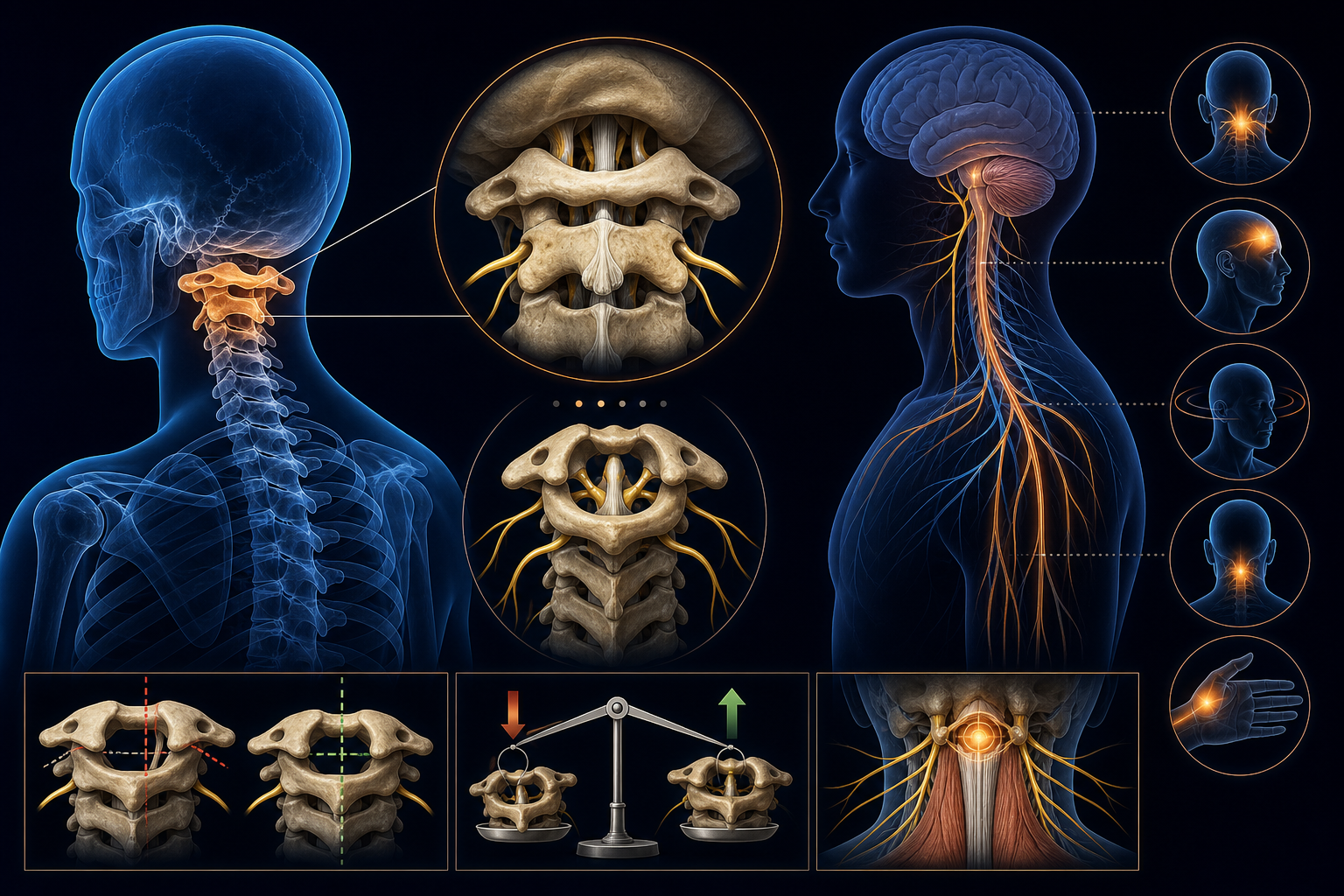
The chin tuck is a cervical retraction exercise that activates your deep neck flexors — specifically the longus colli, longus capitis, and rectus capitis anterior — while simultaneously stretching the shortened suboccipital muscles at the base of your skull. Unlike a neck stretch that targets surface muscles (upper trapezius, levator scapulae, sternocleidomastoid), the chin tuck retrains the stabilizers that hold your cervical spine in neutral alignment.
Think of it this way: your deep neck flexors are to your cervical spine what your transverse abdominis is to your lumbar spine. When they're weak, the superficial muscles compensate, leading to tension, stiffness, and pain patterns including cervicogenic headaches and upper back tightness.
Research from the Journal of Orthopaedic and Sports Physical Therapy shows that patients with chronic neck pain demonstrate measurably reduced deep neck flexor endurance — often holding less than 20 seconds on the craniocervical flexion test versus 40+ seconds in pain-free controls. Deep neck flexor exercises for cervical pain directly address this deficit.
Why Deep Neck Flexors Weaken — and Why It Matters
For every inch your head sits forward of your shoulders, the load on your cervical spine increases by roughly 10 pounds. At a typical 2-3 inch forward displacement — common in desk workers and phone users — your neck muscles support 30-40 pounds instead of the head's natural 10-12 pounds.
The Weakening Cascade
This excess load doesn't distribute evenly. The superficial muscles (upper trapezius, SCM) take over, while the deep stabilizers progressively shut down. If you've wondered why your deep neck muscles feel weak or why your neck aches despite stretching, this is the mechanism:
- Sustained forward head posture lengthens the longus colli beyond its optimal tension range
- The muscle loses its ability to fire at the right timing and intensity
- Superficial muscles compensate, becoming hypertonic and painful
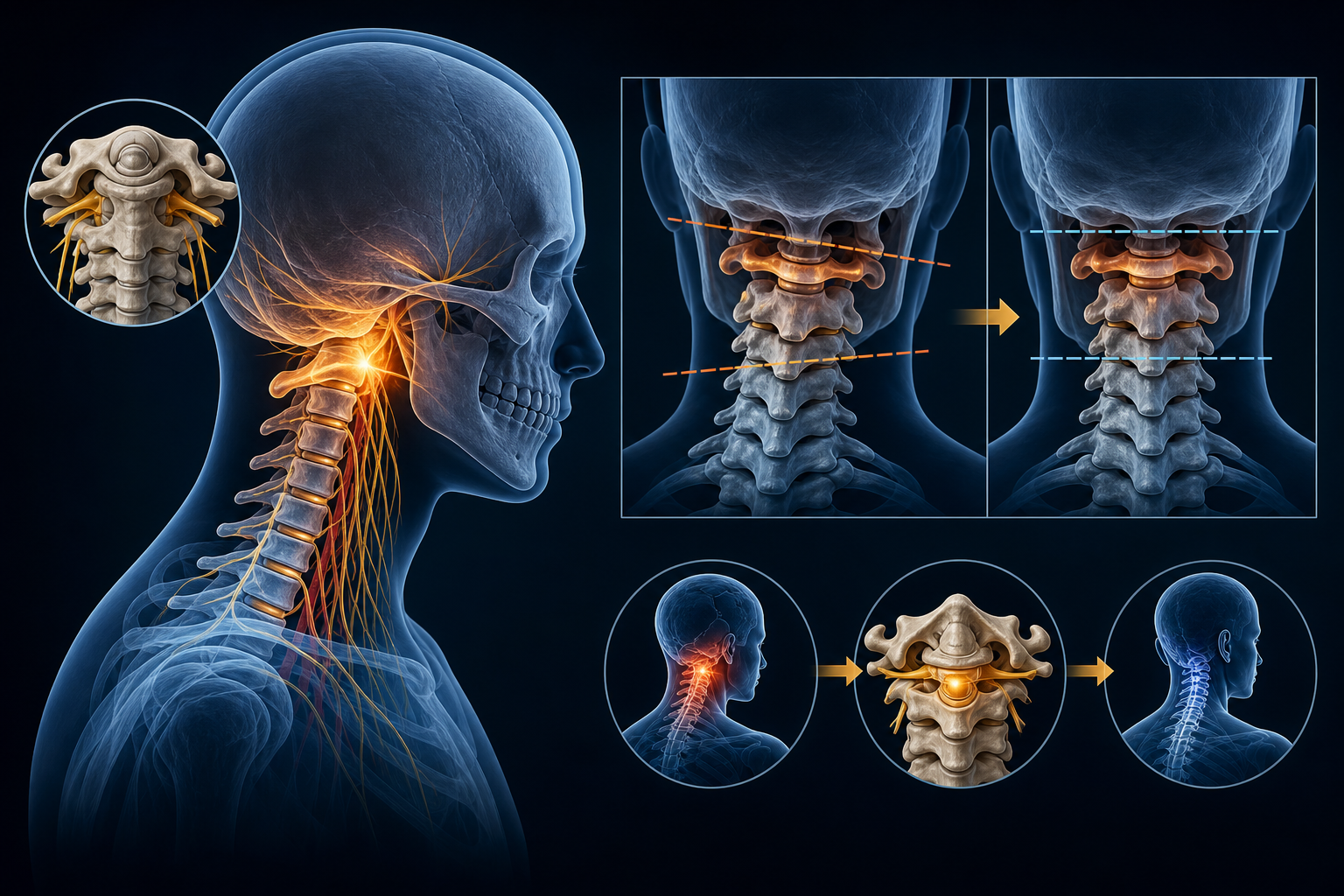
- The suboccipital triangle muscles shorten, compressing the greater occipital nerve — a primary driver of tension headaches and migraines
- The cervical lordosis flattens, increasing disc loading at C5-C6 and C6-C7
The chin tuck directly reverses steps 1 through 4. It's the entry point for any serious neck rehabilitation program.
How to Perform the Chin Tuck: Step-by-Step
Supine Version (Start Here)
Lying down removes gravity from the equation and lets you isolate the deep flexors without compensation.
- Lie face-up on a firm surface — floor or treatment table, no pillow
- Relax your jaw. Your teeth should be slightly apart, tongue resting on the roof of your mouth
- Without lifting your head, draw your chin straight back toward the surface beneath you — imagine making a "double chin"
- The motion is small: roughly 1-2 centimeters of movement. You should feel a gentle deep contraction in the front of your throat, not strain in the front of your neck
- Hold for 5 seconds. Breathe normally throughout — do not hold your breath
- Release slowly. Rest 5 seconds
- Perform 10 repetitions. That's one set
Target: the contraction should feel like a 20-30% effort — similar to gently nodding "yes" in slow motion. If you feel strong tension in the front of your neck or your SCM muscles popping out, you're pushing too hard.
Wall-Supported Version (Intermediate)
- Stand with your back flat against a wall, feet 3-4 inches from the baseboard
- Keep your shoulder blades and the back of your head touching the wall
- Perform the same retraction — chin back, not down — pressing the back of your skull gently into the wall
- Hold 5-10 seconds, 10 repetitions
Seated Version (Daily Maintenance)
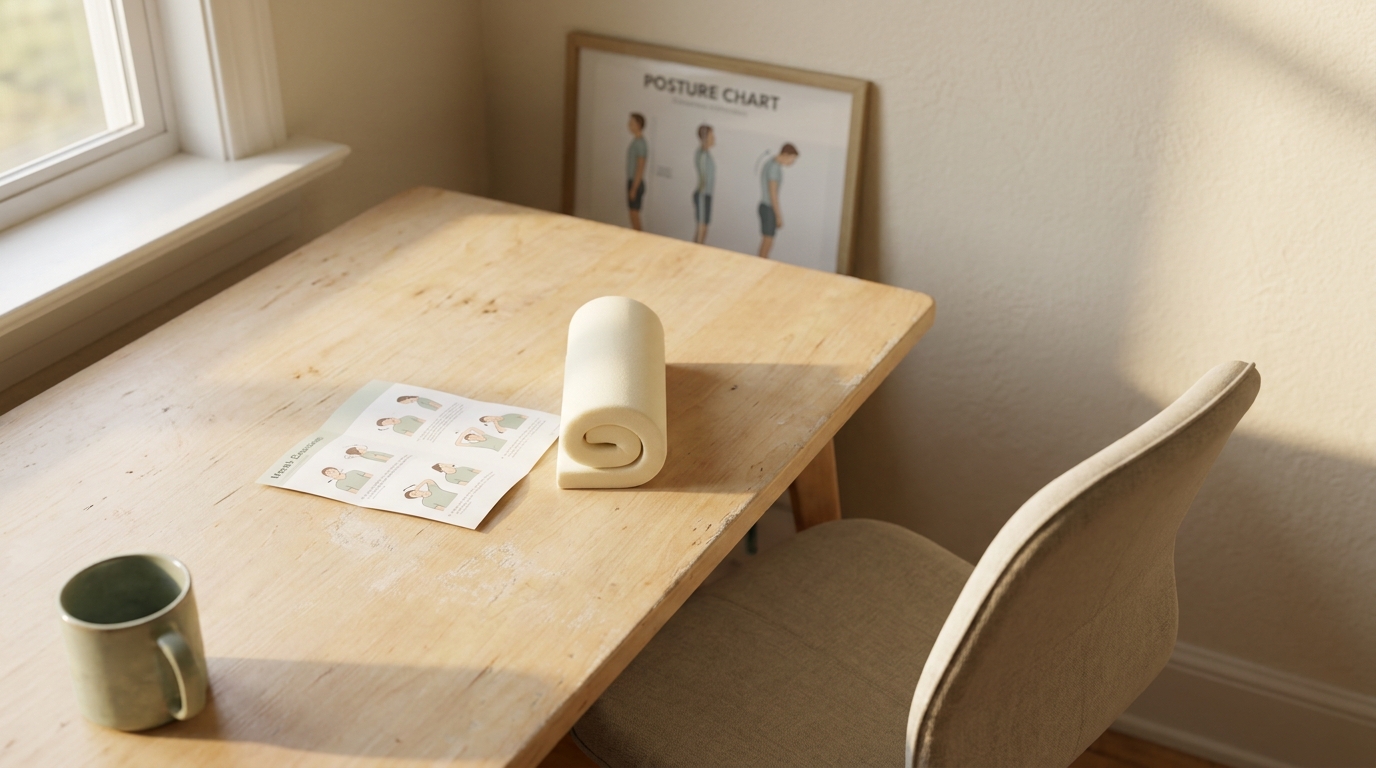
Once you can perform 3 sets of 10 against the wall without compensating, transition to seated chin tucks at your desk. Same mechanics — retract the chin horizontally, hold 5 seconds, release. This becomes your posture reset throughout the workday and is one of the most practical exercises for preventing pain at work.
Common Form Mistakes to Avoid
Most people who report that the chin tuck exercise is making their neck pain worse are making one of these errors:
- Tucking the chin DOWN instead of BACK. The motion is horizontal retraction, not flexion. Nodding your chin toward your chest loads the discs and misses the deep flexors entirely
- Over-tucking. Jamming your chin as far back as possible recruits superficial muscles. Aim for 20-30% max effort
- Clenching the jaw. Jaw tension activates the masseter and pterygoid muscles, which refer pain to the temples and ear. Keep teeth apart
- Holding your breath. Breath-holding increases intra-thoracic pressure and spikes neck muscle tension. Breathe normally throughout every rep
- Lifting the head off the surface (supine). This turns a deep flexor exercise into a neck crunch — completely different muscles, wrong goal
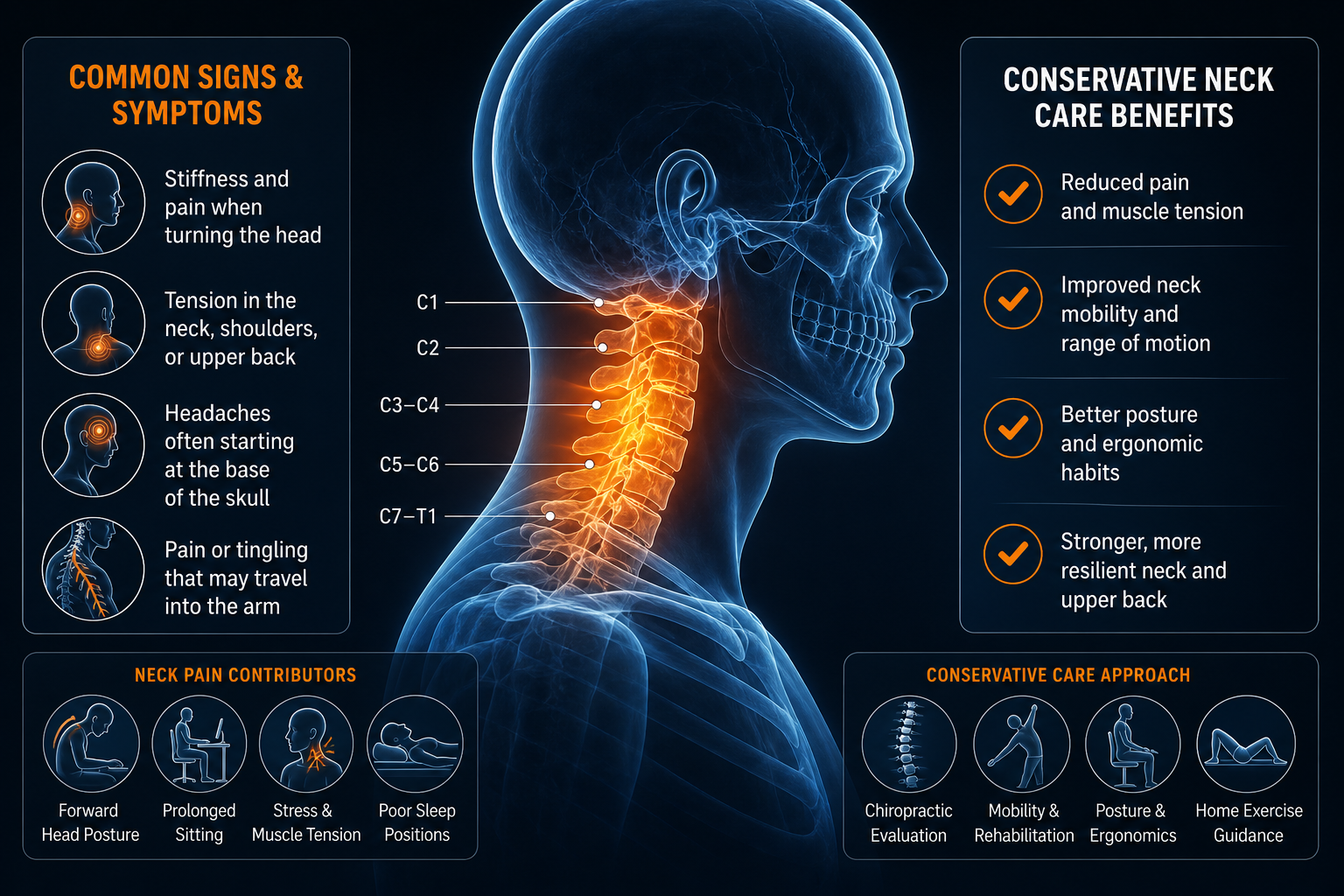
Mild tightness or a gentle stretch sensation at the back of your neck is normal. Sharp pain, radiating symptoms into the arm, or dizziness are not — stop and consult a provider.
How Often Should You Do Chin Tucks?
Dosing matters. Too little and the motor pattern never develops. Too much and you fatigue already-compromised muscles.
PhaseFrequencySets × RepsHold TimeDuration Week 1-2 (Supine)2× daily2 × 105 sec~4 minutes/session Week 3-4 (Wall)2× daily3 × 1010 sec~6 minutes/session Week 5+ (Seated)3-5× daily1-2 × 10⁵-10 sec~2-3 minutes/session Maintenance (ongoing)Hourly during desk work5-10 reps3-5 sec~30 secondsHow many chin tucks should you do per day? During the initial retraining phase, 40-60 total repetitions spread across two sessions. By week five, frequency matters more than volume — brief hourly resets retrain posture better than one long session.
Chin Tucks for Posture vs. Cervical Radiculopathy: What's the Difference?
This distinction matters. The chin tuck serves two very different clinical purposes, and confusing them can either limit your results or aggravate a nerve root.
For Forward Head Posture Correction
If your primary issue is postural — stiffness, tension headaches, upper back aching — chin tucks are used as a motor retraining exercise. The goal is activating the longus colli to restore neutral cervical alignment over weeks to months. This is how to fix forward head posture at home, and it works: a 2019 study in the Journal of Physical Therapy Science showed significant improvements in craniovertebral angle after 6 weeks of daily deep neck flexor training.
For Cervical Radiculopathy or Disc Pathology
If you have a pinched nerve in the neck — symptoms include arm pain, numbness, tingling following a dermatomal pattern (C5, C6, C7) — chin tucks serve a different purpose. Cervical retraction can temporarily centralize disc material, reducing nerve compression. However, the exercise must be prescribed and monitored by a provider who has evaluated your imaging and neurological status. Cervical radiculopathy exercises vs. posture correction require different dosing, different positioning, and different progression criteria.
Do not self-treat radiating arm symptoms with chin tucks alone. Get evaluated by a chiropractor or physical therapist first.
When to Stop, Modify, or See a Provider
Stop immediately if you experience any of these during chin tucks:
- Dizziness, lightheadedness, or visual changes (possible vertebral artery involvement)
- Pain radiating into one or both arms
- Numbness or tingling in the hands or fingers
- Worsening headache that doesn't resolve within 30 minutes
- Difficulty swallowing after the exercise
Modify the exercise if you experience neck tightness that exceeds mild discomfort, or if you cannot perform the supine version without your SCM muscles visibly activating. A provider can use pressure biofeedback (the Chattanooga Stabilizer) to help you isolate the correct activation pattern.
If you've been performing chin tucks consistently for 4 weeks without improvement, the exercise alone isn't enough. Neck rehabilitation programs typically combine deep flexor retraining with manual therapy — chiropractic adjustments or mobilizations targeting the upper cervical and cervicothoracic junctions — along with provider-guided corrective exercise. These are chiropractor-recommended exercises for neck pain, but they work best when prescribed as part of a structured plan rather than performed in isolation.
What to Do Next
Start with the supine chin tuck today using the protocol above. Perform 2 sets of 10 with a 5-second hold, twice daily. Progress to the wall version in week three if you can complete all reps without superficial muscle compensation.
If you have radiating arm symptoms, a history of cervical disc problems, or neck pain that has persisted beyond 4 weeks, get evaluated before starting. A chiropractor or physical therapist can assess your deep neck flexor endurance, screen for nerve involvement, and build a program that includes the chin tuck alongside manual therapy, thoracic mobility work, and cervical-related symptom management.
Find a neck pain specialist near you through the Medximity provider directory. Look for practitioners who list cervical rehabilitation, postural correction, or spinal stabilization among their services. At your first visit, expect a postural assessment, range-of-motion testing, and likely a craniocervical flexion test to measure your current deep flexor endurance.
Frequently Asked Questions
How many chin tucks should I do per day?
During weeks 1-4, aim for 40-60 total repetitions split across 2 sessions (morning and evening). After that, shift to brief 5-10 rep resets every hour during desk work. Total daily volume matters less than consistency and correct form.
Is it normal to feel neck tightness during chin tucks?
Mild tightness or a gentle stretch at the back of your neck (suboccipital region) is normal and expected. You should also feel a subtle deep contraction at the front of your throat. Sharp pain, SCM popping, jaw tension, or radiating symptoms are not normal — reduce your effort to 20% or stop and consult a provider.
Can chin tucks help with a pinched nerve in the neck?
Cervical retraction can centralize disc material and temporarily reduce nerve compression in some presentations. However, chin tucks for cervical radiculopathy must be prescribed after clinical evaluation. Self-treating radiating arm pain, numbness, or weakness with unsupervised chin tucks risks worsening the nerve irritation.
Why is the chin tuck exercise making my neck pain worse?
The most common cause is incorrect form — tucking the chin downward (flexion) instead of straight back (retraction), over-exerting past 30% effort, or clenching the jaw. Less commonly, worsening pain indicates an underlying disc or joint pathology that needs provider assessment before continuing.
How long does it take to fix forward head posture with chin tucks?
Research shows measurable improvements in head position (craniovertebral angle) after 6 weeks of daily training. Most patients notice reduced neck stiffness and headache frequency within 2-3 weeks. Full postural correction typically takes 8-12 weeks and often requires complementary thoracic mobility and scapular stability work.
Should I do chin tucks sitting or lying down?
Start lying down (supine). Gravity is eliminated, making it easier to isolate the deep flexors without superficial muscle compensation. Progress to wall-supported standing at week 3, then seated at week 5. Skipping the supine phase is the most common reason people fail to activate the correct muscles.