The deep neck flexor chin tuck exercise is one of the most effective movements for reducing neck pain, correcting forward head posture, and strengthening the muscles that stabilize your cervical spine. It takes less than two minutes, requires zero equipment, and research suggests it can produce measurable improvements in neck pain and posture within 2-4 weeks of consistent practice. Here is exactly how to perform it correctly, which variation suits your situation, and when you need professional guidance.
What Is the Chin Tuck Exercise?
A chin tuck is a controlled retraction of the head straight backward — as if you are making a "double chin" — that activates the deep cervical flexor muscles running along the front of your cervical spine. These include the longus colli and longus capitis, two muscles that act like a natural neck brace, holding your head directly over your shoulders rather than letting it drift forward.
The chin tuck is not a stretch. It is a motor control exercise — it retrains your brain to recruit the right muscles for cervical stability. This distinction matters because a standard neck stretch targets tissue length, while the chin tuck targets neuromuscular activation patterns that have gone dormant from prolonged sitting, screen use, or injury.
- Primary muscles targeted: longus colli, longus capitis
- Secondary muscles involved: anterior scalenes, hyoid muscles
- Muscles you should NOT feel working hard: sternocleidomastoid (SCM), upper trapezius
- Equipment needed: none
Why Deep Neck Flexors Matter — And Why Most People Ignore Them
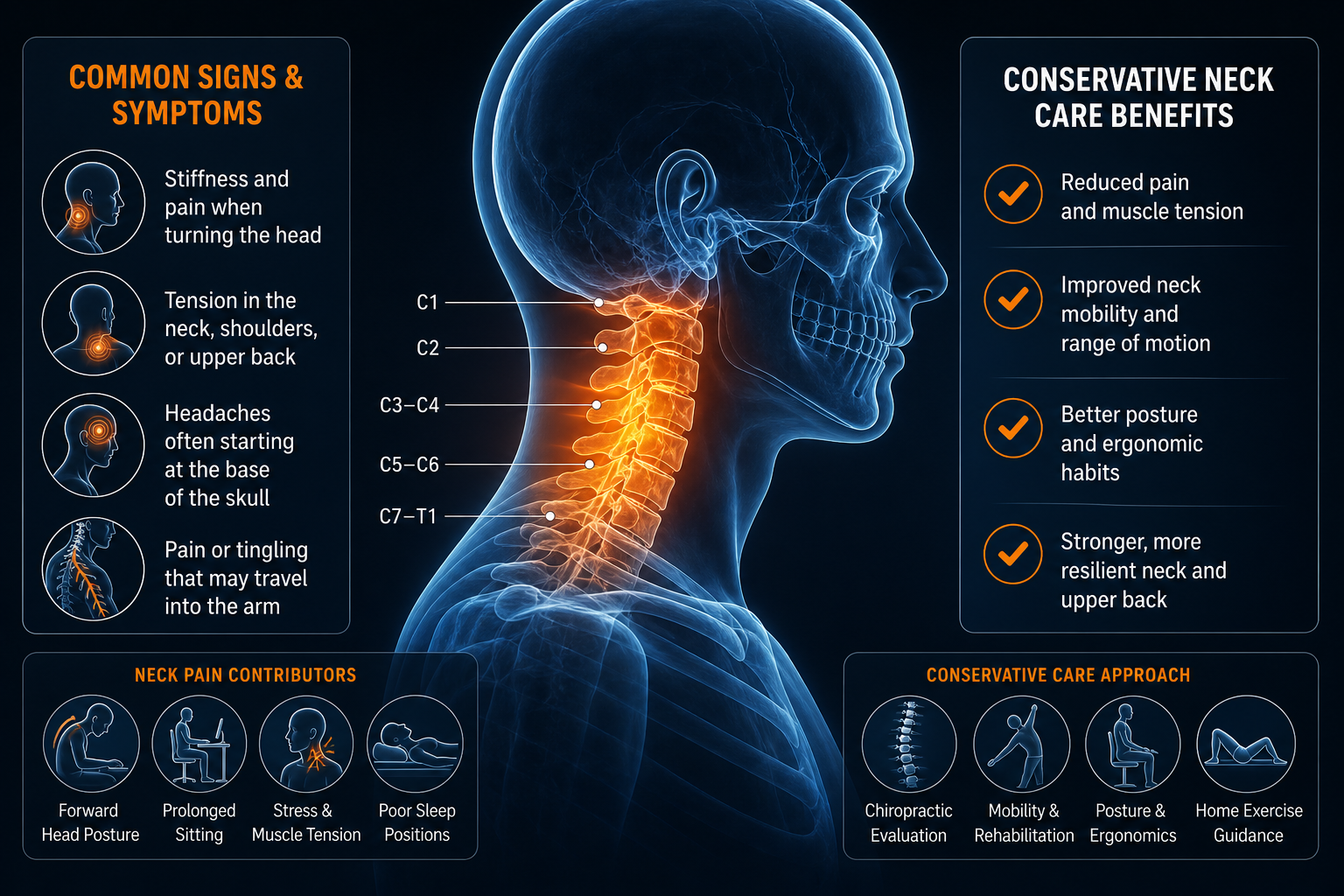
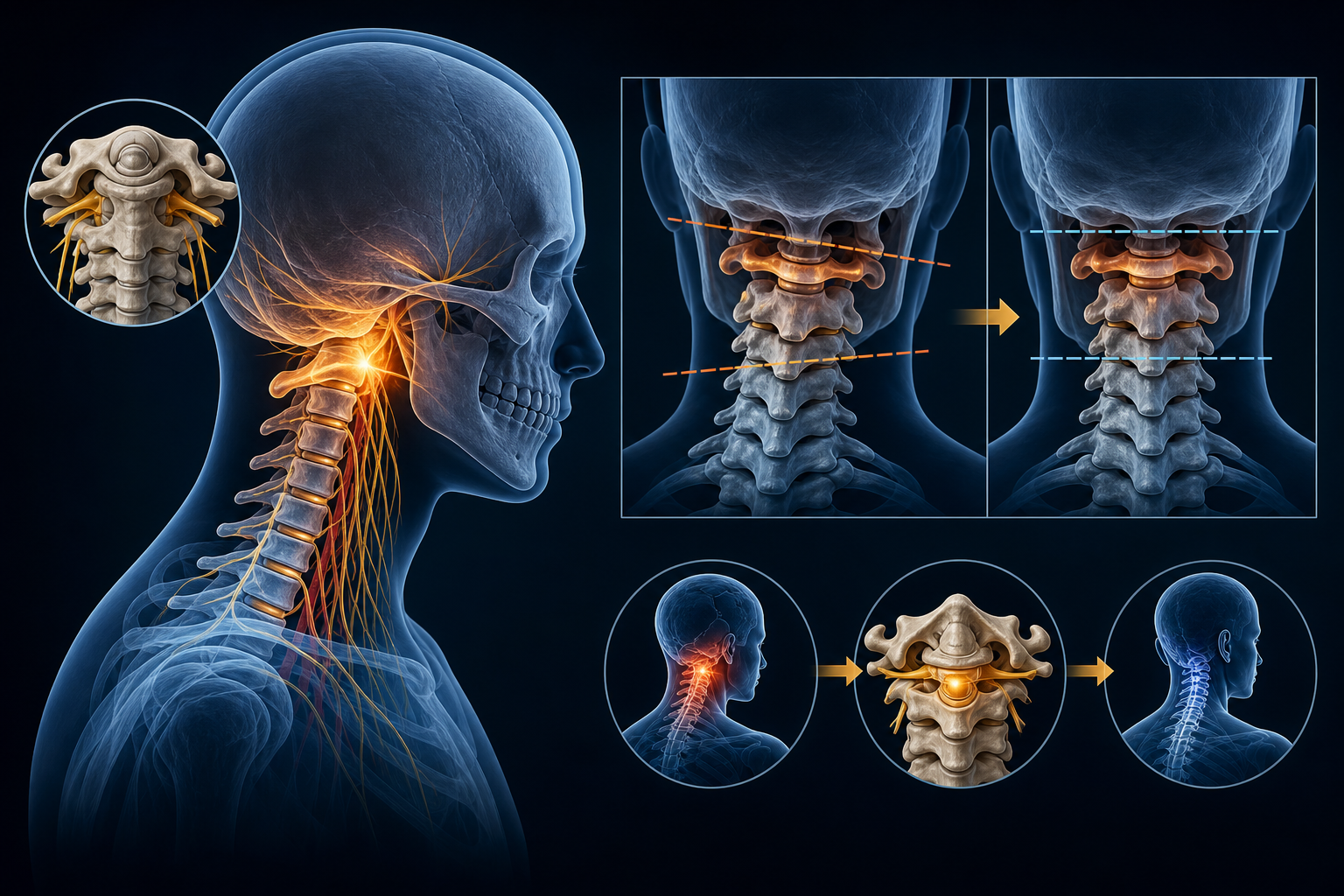
Your deep neck flexors are small, endurance-type stabilizers buried beneath larger, more powerful muscles like the sternocleidomastoid (SCM) and upper trapezius. When the deep flexors are weak or inhibited — which happens after whiplash, prolonged desk work, or cervical strain — those superficial muscles compensate. The result: tension headaches, jaw tightness, and a forward head posture that loads your cervical discs with up to 60 pounds of force instead of the normal 10-12.
Weak deep neck flexors causing headaches and neck pain is a pattern clinicians see constantly. A 2012 study in the Journal of Orthopaedic & Sports Physical Therapy found that patients with chronic neck pain had measurably lower deep cervical flexor endurance compared to pain-free controls. Retraining these muscles reduced pain intensity by 50% or more over 6-12 weeks.
Chin Tuck vs. Neck Stretch for Forward Head Posture
A neck stretch (tilting your ear toward your shoulder, for example) lengthens the upper trapezius and levator scapulae. Useful, but it does nothing to fix the activation deficit in your deep flexors. The chin tuck addresses the root cause — motor control — while stretches address the symptom — tightness. You likely need both, but if you only do one, the chin tuck delivers more lasting correction.
How to Perform the Chin Tuck: Step-by-Step
Learning how to do the chin tuck exercise correctly for neck pain requires attention to two things: the direction of movement and which muscles you feel working. Get those right, and the rest follows.
- Sit or stand tall. Shoulders relaxed, eyes forward. Do not shrug.
- Place two fingers on your chin. This provides a tactile cue for the direction of movement.
- Glide your head straight backward — not down, not up — as if sliding on a horizontal rail. Your fingers push gently to guide the retraction. You will feel a slight "double chin" forming.
- Hold for 5-10 seconds. Focus on feeling mild contraction deep in the front of your neck, behind your throat. If your SCM (the thick muscle on the side of your neck) is bulging, you are pushing too hard.
- Release slowly. Let your head glide forward to neutral — not into a forward head slouch.
- Repeat 10 times.
The movement is subtle. You are retracting roughly 1-2 centimeters. If it looks dramatic, you are overdoing it.
Chin Tuck Variations: Supine, Seated, and Wall-Supported
Not everyone should start in the same position. If you have acute neck pain or are recovering from a whiplash injury, gravity matters.
Supine (Lying Down)
The easiest variation. Performing the chin tuck exercise lying down step by step removes gravity from the equation and lets you focus purely on muscle activation.
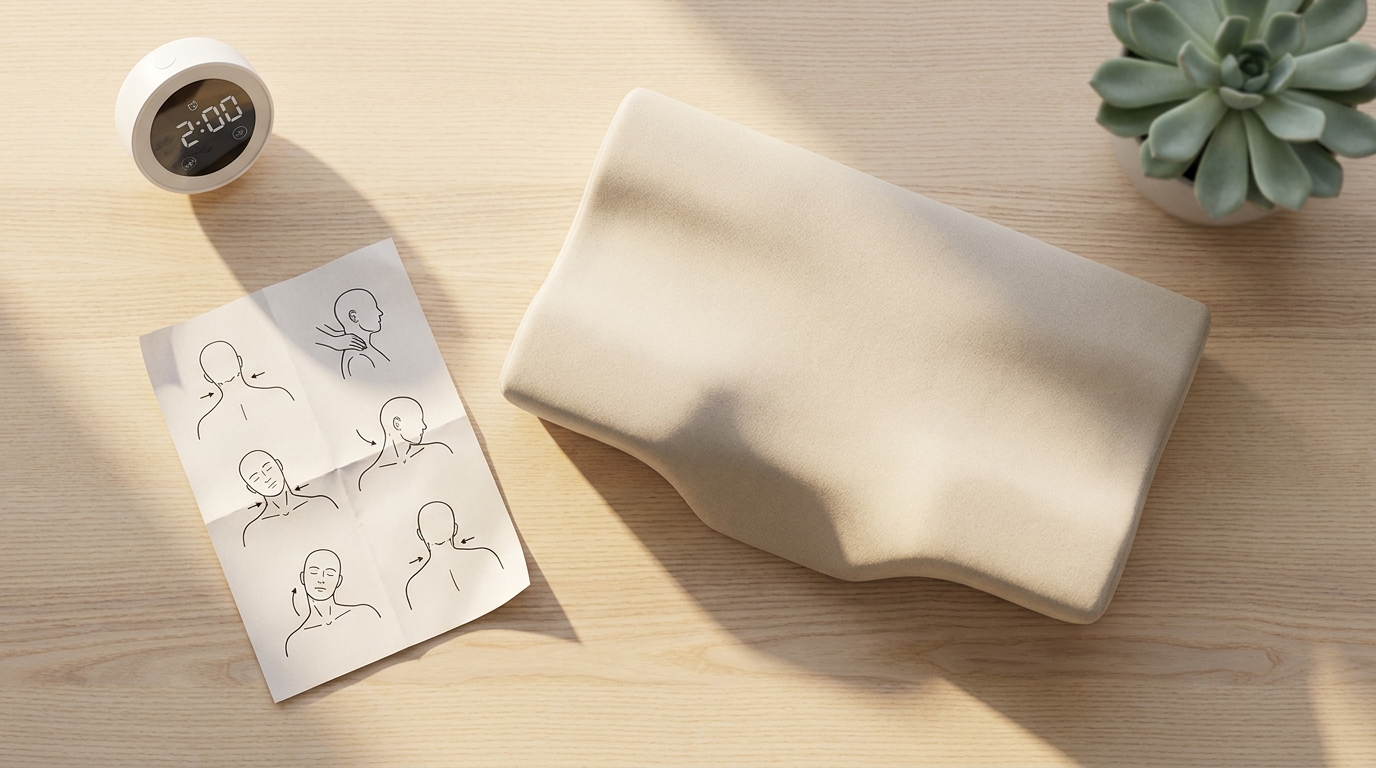
- Lie on your back on a firm surface — no pillow, or a thin folded towel under your head.
- Gently press the back of your head into the surface while tucking your chin toward your throat.
- Hold 5-10 seconds. You should feel light pressure into the surface, not a hard press.
- Repeat 10 times.
Best for: acute cervical strain, whiplash recovery (after initial inflammation has resolved), and anyone who finds the seated version too uncomfortable initially.
Seated
The standard version described above. Best for desk workers who can perform it as a break every 30-60 minutes during the workday. If you sit at a desk for 8+ hours, this is your primary variation. Pair it with ergonomic adjustments at your workstation for the best results.
Wall-Supported
The wall chin tuck exercise for posture correction at home adds external feedback so you know you are retracting far enough.
- Stand with your back flat against a wall. Heels, hips, shoulder blades touching the wall.
- Retract your chin to bring the back of your head toward (or gently against) the wall.
- Hold 5-10 seconds. Do not force your head to the wall if it does not reach — that gap IS the postural deficit you are working to close over time.
- Repeat 10 times.
Why Does My Neck Hurt When Doing Chin Tucks?
Mild deep-front-of-neck fatigue is normal — that is the target muscle working. Pain is not normal. If your neck hurts during chin tucks, one of these form mistakes is almost always the cause:
- Jutting the chin forward first, then tucking. This creates a whip-like motion through the cervical spine. The movement should be purely backward — horizontal retraction, no forward component.
- Tucking too aggressively. Cranking your chin to your chest loads the C5-C6 and C6-C7 disc segments excessively. The motion is gentle. Think 20% effort, not 80%.
- Engaging the SCM and upper traps. If you see ropy muscles popping on the sides of your neck, you are substituting superficial muscles for deep ones. Reduce the range of motion and effort until you feel only a subtle, deep contraction.
- Holding your breath. Breathe normally throughout. Holding breath increases global muscle tension and triggers the wrong firing patterns.
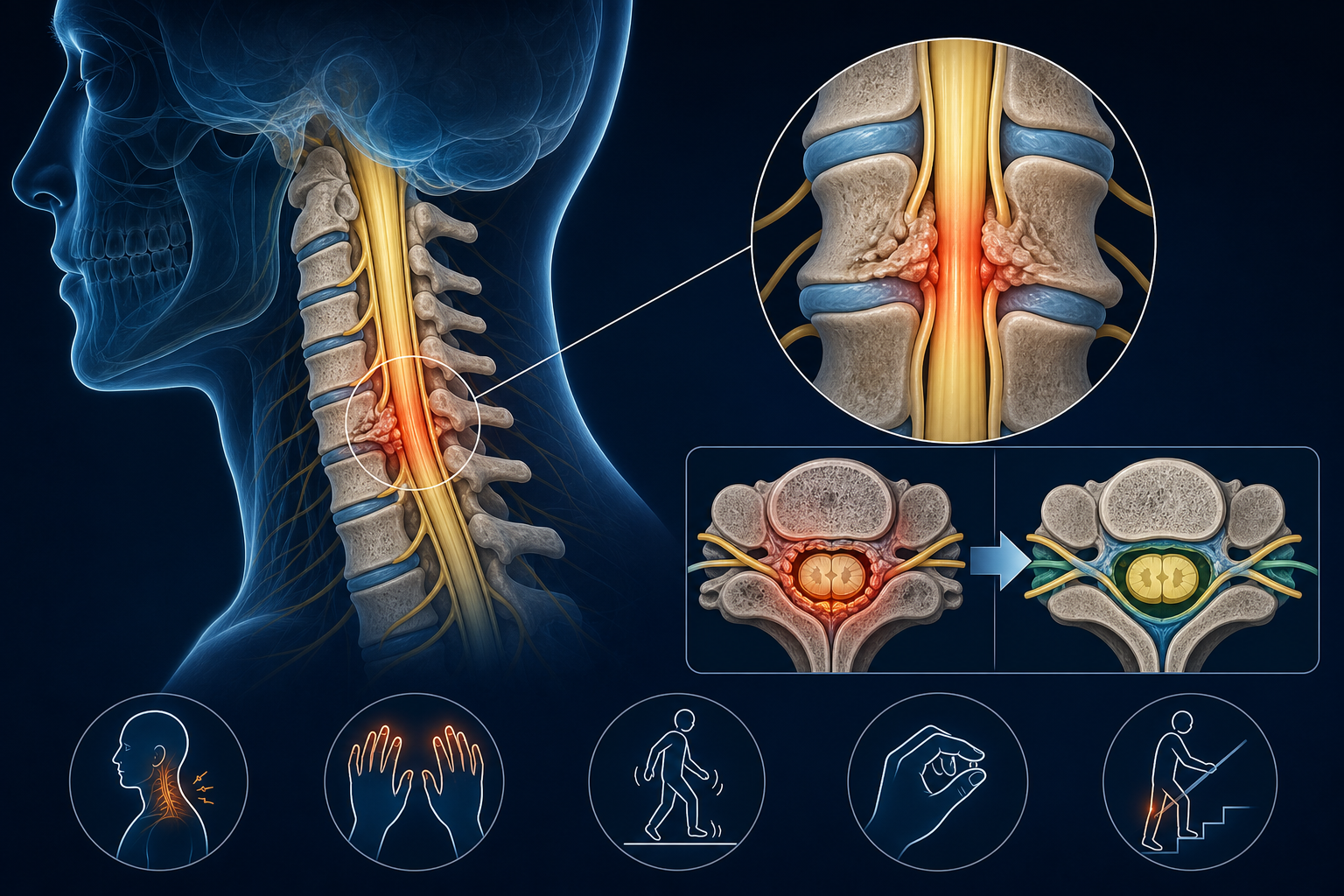
Red flag: if you experience sharp radiating pain into your arm, numbness or tingling in your fingers, dizziness, or visual disturbances during chin tucks, stop immediately and consult a provider. These symptoms can indicate cervical radiculopathy, vertebral artery involvement, or a disc issue requiring clinical evaluation.
Who Benefits Most from This Exercise?
The chin tuck is broadly safe, but certain populations see the most dramatic results:
- Forward head posture / text neck: the single most targeted exercise for this condition. It is the foundation of conservative cervical rehabilitation programs used by chiropractors and PTs.
- Whiplash recovery: deep neck flexor weakness is nearly universal after cervical acceleration-deceleration injury. Chin tucks are typically introduced 1-3 weeks post-injury once acute inflammation subsides.
- Cervicogenic headache sufferers: weak deep neck flexors causing headaches is a well-documented pattern. Retraining these muscles reduces headache frequency in many patients. If your headaches originate at the base of your skull, read more about common causes of head pain and the migraine-spine connection.
- Desk workers and commuters: anyone spending 4+ hours daily in a seated, forward-leaning posture.
Is the Chin Tuck Exercise Safe for a Herniated Disc in the Neck?
In most cases, a gentle chin tuck performed with minimal force is safe and even beneficial for mild cervical disc herniations — it decompresses the posterior disc by restoring neutral cervical alignment. However, if you have a confirmed disc herniation with radiculopathy (arm pain, numbness, weakness), get clearance from your chiropractor or PT before starting. They can modify the exercise intensity and determine whether you start supine or seated.
Sets, Reps, and Frequency: General Guidelines
How many chin tucks should you do per day? Most providers recommend starting conservatively and increasing based on tolerance:
PhaseSets × RepsHold TimeFrequencyDuration Beginner (weeks 1-2)2 × 10⁵ seconds2-3 times/day2 weeks Intermediate (weeks 3-4)3 × 10¹⁰ seconds3-4 times/day2 weeks Maintenance (ongoing)1-2 × 10⁵-10 seconds1-2 times/dayOngoingHow long until chin tuck exercises improve neck pain? Most patients report noticeable improvement in 2-4 weeks of consistent daily practice. Full postural correction — the point where your head naturally rests over your shoulders without conscious effort — typically takes 6-12 weeks. Consistency matters more than volume. Ten reps three times a day outperforms 50 reps once a week.
What to Do Next
The chin tuck is a starting point, not a complete rehabilitation program. If you have been dealing with persistent neck pain, forward head posture, or are recovering from a whiplash or auto-accident cervical strain, a chiropractor or physical therapist can assess your deep neck flexor endurance, identify compensatory patterns, and build a progressive exercise plan specific to your condition.
At your first visit, expect a postural assessment, cervical ROM testing, and possibly palpation of the deep cervical flexors and suboccipital muscles. Typical treatment plans run 6-12 sessions over 4-8 weeks, combining manual therapy (spinal adjustments, soft tissue mobilization) with progressive home exercise prescription.
- Find a chiropractor near you for cervical assessment and manual treatment
- Find a physical therapist near you for deep neck flexor retraining
- Explore more health topics on the Medximity blog
Start with the supine chin tuck today. Do 2 sets of 10 with a 5-second hold. Reassess your pain and posture in two weeks. If you are not improving — or if any red-flag symptoms appear — get evaluated before continuing on your own.