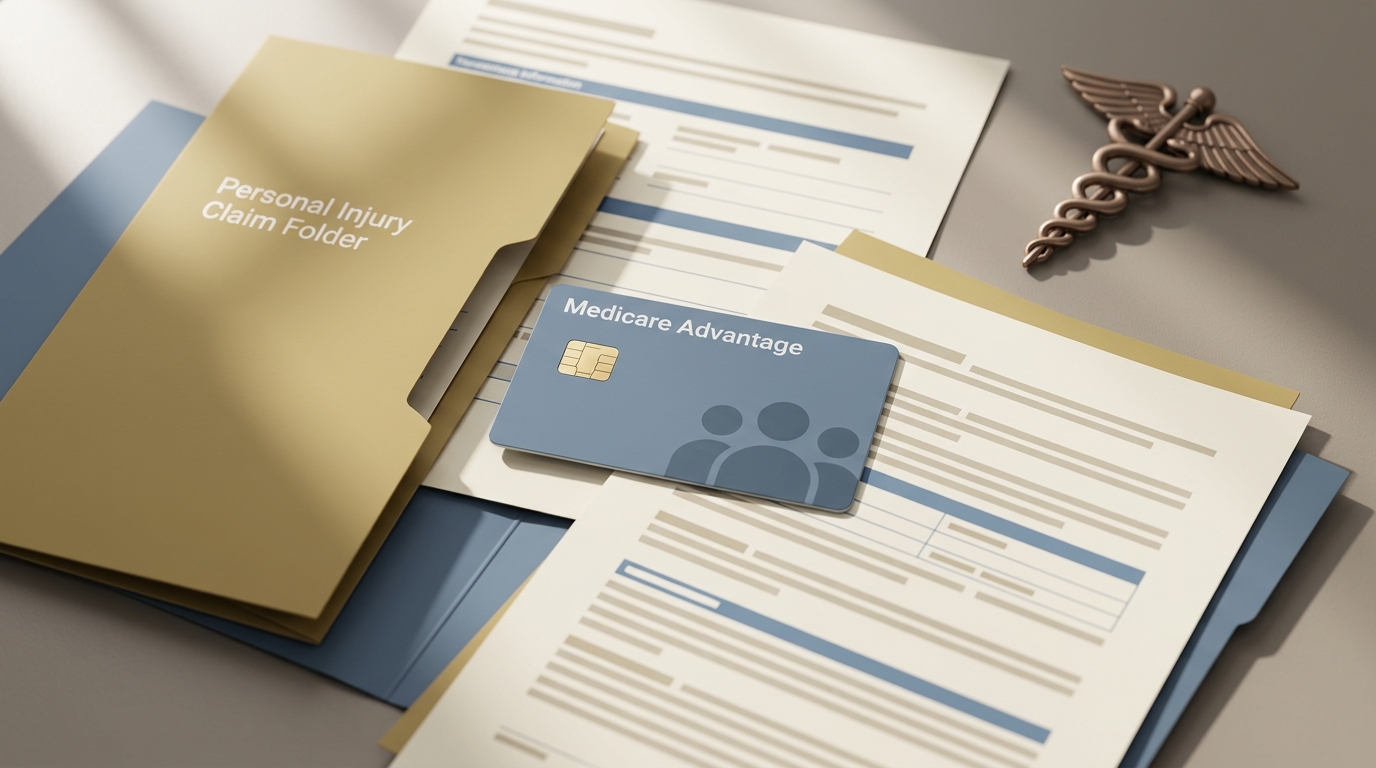
Care Improvement Plus (CIP), also known as XL Health, is a Medicare Advantage plan — and if you've been injured in a car accident, slip and fall, or other personal injury event, it almost certainly will not be the plan that pays for your treatment first. Understanding who actually covers your care after a personal injury is critical to getting treated without unexpected bills or denied claims.
What Is Care Improvement Plus (CIP) / XL Health?
Care Improvement Plus and XL Health are names associated with Medicare Advantage plans that have been administered under various parent companies over the years, including Univera and later UnitedHealthcare. They function as Part C Medicare plans — meaning enrollees receive their Medicare benefits through a private insurer rather than through Original Medicare directly.
Like all Medicare Advantage plans, CIP/XL Health covers standard Medicare Part A and Part B services: hospital stays, provider visits, rehabilitation, and in many cases supplemental benefits like dental or vision. Some plans include chiropractic and physical therapy coverage for routine musculoskeletal conditions.
But personal injury is not a routine condition. And that distinction changes everything about how your care gets paid for.
Does CIP / XL Health Cover Personal Injury Treatment?
In most personal injury cases, no — CIP/XL Health will not serve as the primary payer for your treatment. This applies whether you're filing a Care Improvement Plus insurance car accident claim or seeking XL Health coverage for personal injury chiropractic care after a slip and fall.
The Short Answer
When a third party is liable for your injury, Medicare Secondary Payer (MSP) rules require that the liable party's insurance pay first. Your Medicare Advantage plan — including CIP/XL Health — is legally secondary. It may eventually pick up some costs if no other coverage exists and the claim is resolved, but it will not be the first source of payment.
What CIP/XL Health May Still Cover
- Routine chiropractic visits unrelated to the injury
- Pre-existing condition management that continues during your PI claim
- Emergency stabilization services immediately after the accident (though they may seek reimbursement later from the liable party's insurer)
If you're wondering whether you can use Medicare Advantage after a car accident for your ongoing injury-related treatment — the practical answer is that your provider will typically need to bill a different source first.
Why Medicare Advantage Plans Generally Don't Pay First in PI Cases
Federal law governs this. The Medicare Secondary Payer Act (42 U.S.C. § 1395y(b)) establishes that Medicare — including all Medicare Advantage plans — is a secondary payer whenever another insurance source is responsible for the injury.
This means if someone else caused your injury, their liability insurance is the primary payer. If you were in a car accident, your auto insurance (MedPay or PIP) typically pays first. Medicare Advantage, including CIP/XL Health, sits behind all of these in the payment hierarchy.
According to CMS guidelines, Medicare Advantage plans must comply with the same MSP rules as Original Medicare. The liable party's insurer or the enrollee's auto coverage must be exhausted or adjudicated before the MA plan has any payment obligation.
This applies regardless of whether you're comparing personal injury protection vs. Medicare Advantage plan coverage, or asking whether Medicare Advantage is a primary vs. secondary payer in an accident. The answer is consistent: Medicare Advantage pays last.
What Actually Covers Your Treatment After a Personal Injury?
So who pays for treatment after a personal injury accident? Several pathways exist, and which applies depends on your state and the specifics of your case.
Payment Source What It Covers When It Applies MedPay (Medical Payments Coverage) Medical expenses regardless of fault — chiropractic, PT, rehab Auto accidents in at-fault states; typically $1,000–$25,000 limits PIP (Personal Injury Protection) Medical bills, lost wages, sometimes rehab Required in no-fault states (FL, MI, NY, NJ, etc.) At-Fault Party's Liability Insurance All injury-related treatment costs When liability is established; often paid at settlement Letter of Protection (LOP) Provider agrees to defer payment until case settles When no insurance pays upfront; common with attorneys Medical Lien Provider places lien on future settlement proceeds Varies by state; provider bills settlement directly CIP / XL Health (Medicare Advantage) Remaining covered services after all primary sources exhausted Secondary payer only — pays last, if at allUnderstanding how liability insurance works with Medicare Advantage is straightforward once you see the hierarchy: auto insurance or the at-fault party's insurer pays first, and your MA plan fills gaps only after those sources are resolved.
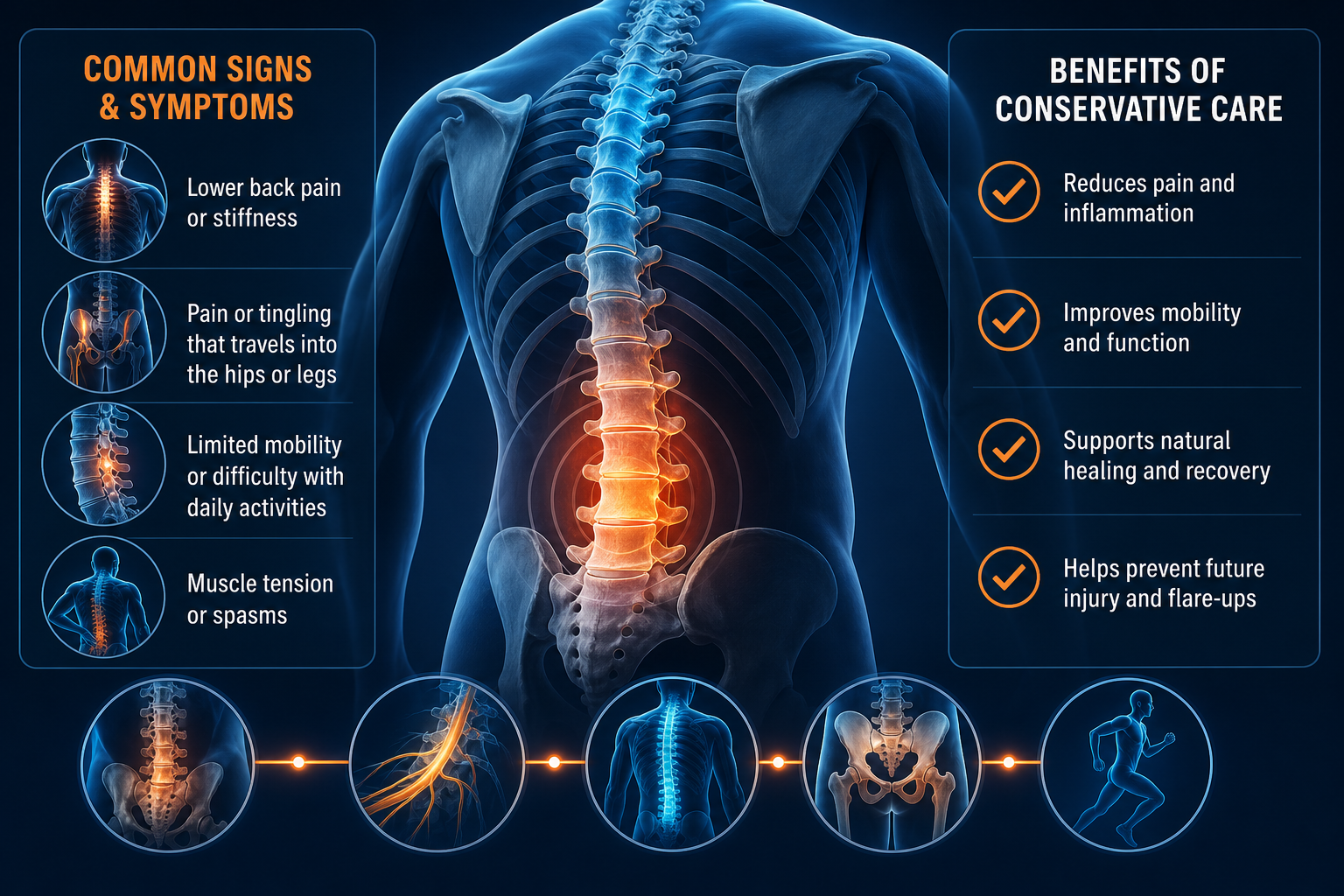
Personal injuries often affect the cervical spine — the C1 and C2 vertebrae, the suboccipital muscles, and the cervical facet joints are frequently involved in whiplash from auto accidents. If you've sustained a cervical subluxation or are experiencing post-injury headaches, a provider experienced in personal injury cases can treat these conditions under the correct billing pathway — not through your Medicare Advantage plan.
What Happens If You Have CIP / XL Health and You're Injured in an Accident?
If you're wondering what happens to your insurance after a slip and fall injury or auto accident, here's the sequence you should follow:
- Notify CIP/XL Health immediately. Report the accident and that a third party may be liable. The plan needs this to properly coordinate benefits and comply with MSP reporting requirements.
- File a claim with the appropriate auto or liability insurer. In PIP/no-fault states (Florida, Michigan, New York, etc.), file with your own auto insurer first. In at-fault states (Texas, California, Georgia, etc.), the at-fault driver's liability carrier is primary.
- Document everything. Keep all accident reports, provider visit records, imaging results, and correspondence. CIP/XL Health may request proof that they are not the primary payer.
- Consult a personal injury attorney if liability is disputed. An attorney can negotiate letters of protection with your providers and ensure Medicare's interests are protected at settlement — a requirement under MSP conditional payment rules.
- Seek treatment promptly. Delayed care weakens both your health and your claim. Many chiropractors and physical therapists work on an LOP or lien basis, meaning you pay nothing upfront.
Post-accident injuries to the cervical spine, thoracolumbar junction, and sciatic nerve often respond well to conservative care. Treatment plans typically run 8–12 weeks with 2–3 visits per week initially, tapering as symptoms resolve. If your injury involves radiating leg pain, a provider experienced in sciatic pain treatment can help determine the right rehabilitation approach.
State-by-State Variation Matters
- No-fault / PIP states: Your own auto PIP coverage pays first, regardless of who caused the accident. CIP/XL Health remains secondary.
- At-fault / tort states: The liable party's insurer is primary. You may need an LOP to bridge treatment costs until settlement.
- States with mandatory MedPay: Some states (e.g., Maine, Oregon) require MedPay on all auto policies — another layer that pays before Medicare Advantage.
What Providers Need to Know When a CIP / XL Health Patient Has a PI Claim
Provider billing for personal injury with a Medicare Advantage patient requires careful documentation and compliance awareness.
- Do not bill CIP/XL Health as the primary payer for injury-related treatment when a liable third party exists. Doing so can trigger MSP recovery actions and penalties.
- Verify auto insurance and PIP/MedPay coverage at intake. Ask the patient for their auto policy declarations page.
- Consider an LOP or lien arrangement if the patient has no upfront coverage. Document the arrangement with the patient's attorney.
- Separate PI-related and non-PI billing. If the patient has an existing condition managed under CIP/XL Health (e.g., ongoing care for chronic migraines), continue billing the MA plan for that — but keep injury-related services on a separate claim track.
- Report conditional payments. If CIP/XL Health does make conditional payments, the plan has the right to recover those funds from the settlement. Coordinate with the patient's attorney on Medicare Set-Aside requirements if the case involves future medical expenses.
Recovery from personal injury — especially whiplash affecting the atlas (C1), axis (C2), and associated soft tissues — typically shows measurable improvement within 4–6 weeks of consistent chiropractic and physical therapy care. Most patients reach maximum medical improvement in 12–16 weeks, though cases involving nerve impingement at the brachial plexus or lumbar nerve roots may require longer treatment windows of 16–24 weeks.
Red flag: If a patient presents with progressive weakness in the extremities, loss of bowel or bladder control, or severe unrelenting headache after trauma, refer immediately for emergency imaging. These symptoms suggest possible spinal cord compromise or intracranial pathology that requires urgent evaluation beyond conservative care.
What to Do Next
If you have Care Improvement Plus or XL Health and you've been injured in an accident, your first step is finding a provider who understands personal injury billing — not every practice does. You need a chiropractor or physical therapist who works with LOP arrangements, coordinates with attorneys, and knows not to bill your Medicare Advantage plan as primary.
Find a chiropractor near you that accepts personal injury cases through the Medximity provider directory. You can also search for physical therapists experienced in auto accident rehabilitation.
At your first visit, bring:
- Your CIP/XL Health member ID card
- Auto insurance declarations page
- Accident report or police report number
- Contact information for your attorney (if you have one)
- Any imaging (X-ray, MRI) already completed at the ER
The right provider will handle the billing complexity so you can focus on recovery. Explore more health topics on Medximity for additional guidance on post-injury care and treatment options.
Frequently Asked Questions
Does Care Improvement Plus (CIP) / XL Health cover personal injury treatment?
CIP/XL Health is a Medicare Advantage plan and is classified as a secondary payer under federal Medicare Secondary Payer rules. In personal injury cases where a third party is liable, CIP/XL Health does not pay first. The at-fault party's liability insurance, your auto MedPay, or PIP coverage pays before Medicare Advantage has any obligation.
Can I use Medicare Advantage after a car accident?
You can, but only as a secondary payer after all primary sources — auto insurance MedPay, PIP, and the at-fault party's liability coverage — have been billed or exhausted. Most providers treating car accident injuries will bill your auto insurance or work under a letter of protection rather than submitting claims to your MA plan.
Who pays for treatment after a personal injury accident if I have CIP/XL Health?
The primary payer depends on your state. In no-fault/PIP states, your own auto PIP coverage pays first. In at-fault states, the liable party's insurer is primary. Letters of protection and medical liens allow you to receive treatment while the claim is being resolved. CIP/XL Health pays only after all other sources are exhausted.
Do I need to notify CIP/XL Health about my personal injury?
Yes. Federal MSP rules require you to report the accident to your Medicare Advantage plan. This allows CIP/XL Health to properly coordinate benefits and exercise its right to recover any conditional payments from your eventual settlement.
What is a letter of protection (LOP) and how does it work with Medicare Advantage?
An LOP is an agreement between your provider and your attorney where the provider treats you now and receives payment from your settlement later. This is the most common payment arrangement for personal injury patients whose Medicare Advantage plan is secondary. The LOP keeps your care on track without requiring upfront out-of-pocket payment.
Should I see a chiropractor or physical therapist after a personal injury if I have CIP/XL Health?
Yes — but choose a provider experienced in personal injury billing. These providers understand MSP compliance, work with attorneys, and typically accept LOP arrangements. Treatment for whiplash, cervical subluxations, and soft tissue injuries typically spans 8–12 weeks with measurable improvement beginning within the first 4–6 weeks of consistent care.