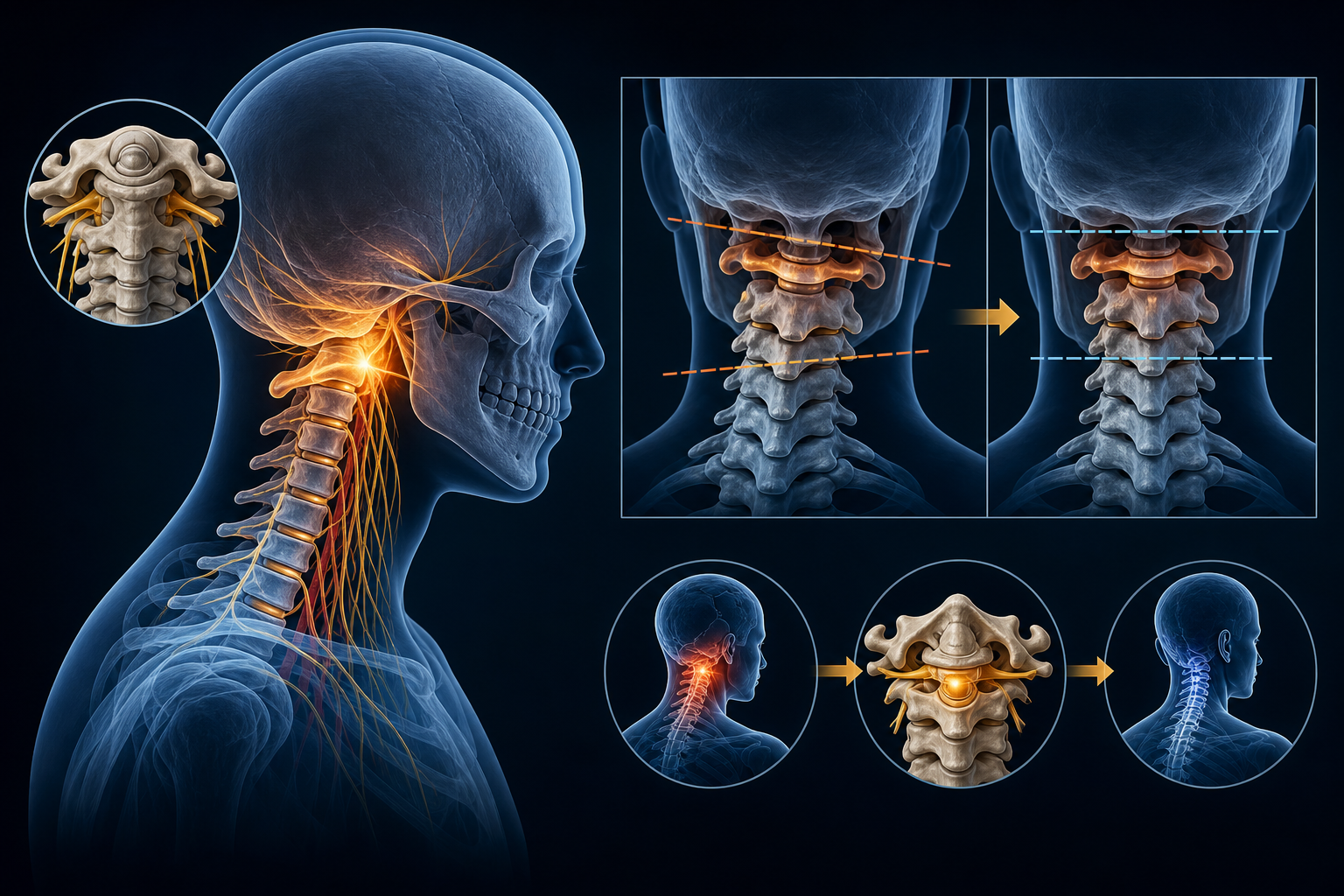
Chiropractor for neck and shoulder pain near me searches usually come from one problem pattern: the cervical spine, upper thoracic spine, shoulder blade, and shoulder joint are not moving well together. A chiropractor evaluates the neck and shoulder as one connected system, then uses adjustments, soft tissue work, posture correction, and home exercises to reduce mechanical stress on the joints, nerves, and muscles involved.
Neck-and-shoulder pain often improves when the source is identified early. If pain travels into the arm, causes numbness or weakness, follows a crash or fall, or comes with chest pressure, dizziness, trouble speaking, or shortness of breath, seek urgent medical care first.
Why Neck and Shoulder Pain Often Come Together
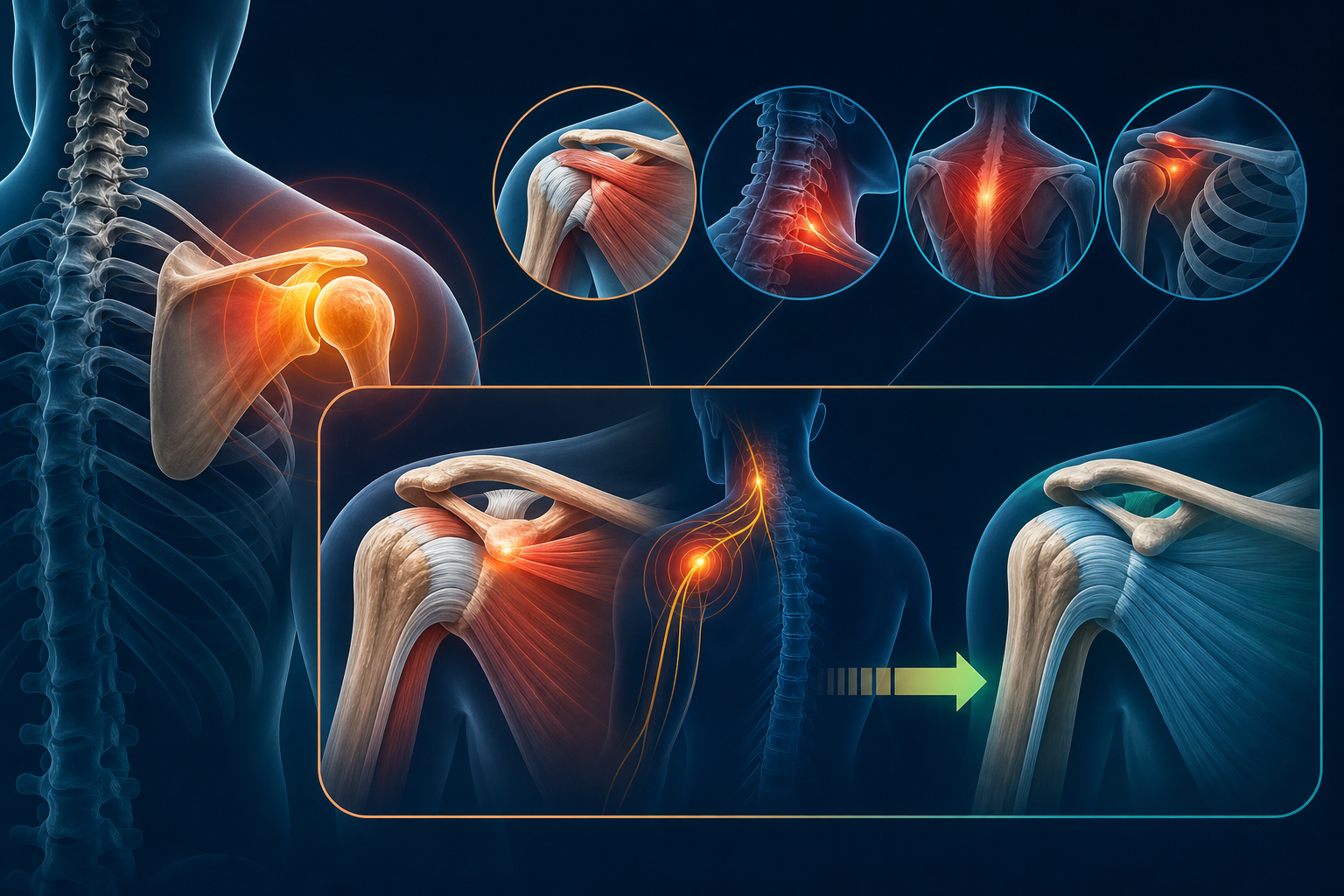
Neck and shoulder pain often occur together because the same nerves, joints, and muscles control both regions. The lower cervical spine, especially C5-C7, supplies nerve signals to the shoulder, upper arm, and shoulder blade. The upper trapezius, levator scapulae, scalenes, rotator cuff, and rhomboids also cross or influence both areas.
The common search question, “why does my neck and shoulder hurt together,” usually has one of three answers: referred pain from the neck, local shoulder irritation, or a mixed pattern. Mixed patterns are common after long desk hours, phone use, overhead work, lifting, or a sudden awkward movement.
- Cervical joints: Restricted motion at C4-C7 can refer pain toward the shoulder blade or outer shoulder.
- Thoracic spine: Stiffness between T1-T6 limits shoulder blade motion and overloads the neck.
- Scapula mechanics: Poor upward rotation of the shoulder blade can irritate the rotator cuff and tighten the neck.
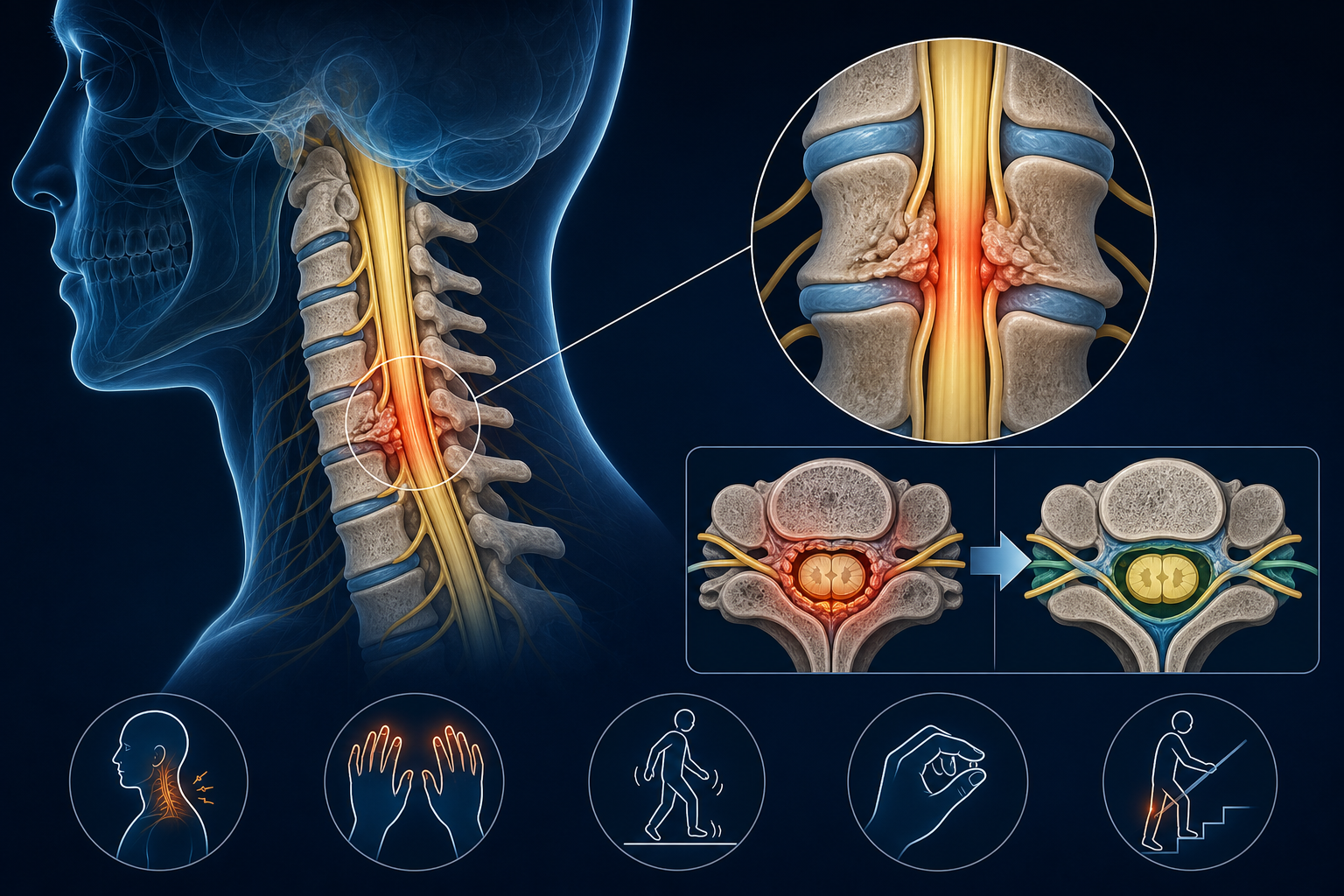
- Nerve sensitivity: A cervical nerve root can create pain, tingling, or weakness into the shoulder and arm.
Clinical guidelines for neck pain commonly classify symptoms by mobility deficits, radiating pain, headache-related neck pain, or movement coordination problems. That classification helps determine whether adjustment, exercise, soft tissue care, or referral is the right starting point.
If neck symptoms also come with headaches, see what commonly causes head pain and how neck mechanics may contribute.
What Causes Neck and Shoulder Pain on the Same Side?
Neck and shoulder pain same side causes include facet joint irritation, muscle trigger points, disc-related nerve irritation, rib restriction, thoracic outlet involvement, and shoulder tendon overload. Same-side pain matters because it often follows a predictable anatomical pathway.
Common mechanical causes
Pain radiating from neck into shoulder blade often starts in the lower cervical joints or upper thoracic joints. A restricted first rib can also tighten the scalenes and compress sensitive tissue near the collarbone. When the shoulder blade does not glide smoothly on the rib cage, the neck muscles compensate during reaching, driving, typing, and lifting.
- Facet irritation: Local neck pain that may spread toward the shoulder blade, usually worse with extension or rotation.
- Trigger points: Tight bands in the upper trapezius, levator scapulae, or infraspinatus that refer pain to the neck or shoulder.
- Cervical radiculopathy: Nerve root irritation that may cause arm pain, tingling, numbness, or grip weakness.
- Thoracic outlet pattern: Symptoms may increase with overhead positions, carrying bags, or rounded shoulders.
- Rotator cuff strain: Shoulder pain worsens with reaching, lifting, or sleeping on that side.
Acute versus chronic patterns
Acute pain starts suddenly and lasts less than 6 weeks. It often follows a strain, impact, awkward sleep position, or sharp movement. Chronic tension-related pain lasts longer than 12 weeks and usually involves repeated load: laptop posture, forward head position, poor shoulder blade control, or limited thoracic mobility.
Work posture is a major contributor. For desk setup and lifting habits, review how to prevent pain at work.
How Can You Tell if Neck Pain Is Causing Shoulder Pain?
You can suspect the neck is driving the shoulder pain when neck movement changes the shoulder symptom. If turning, looking up, looking down, or side-bending the neck reproduces shoulder blade pain, the cervical spine is likely involved. If raising the arm is the only painful motion and neck movement does not affect symptoms, the shoulder joint or rotator cuff may be the main source.
Pattern More Likely Source Clues You May Notice Typical Care Focus Pain changes when you turn your head Cervical joints or nerve root Shoulder blade pain, arm tingling, neck stiffness Cervical assessment, nerve testing, mobility work Pain increases with reaching overhead Rotator cuff or shoulder blade mechanics Outer shoulder ache, pinching with elevation Scapular control, rotator cuff loading, thoracic mobility Pain worsens after desk work Postural overload Forward head posture, upper trap tightness, mid-back stiffness Ergonomics, strengthening, soft tissue care Numbness or weakness travels below the elbow Nerve involvement Grip changes, pins and needles, radiating arm pain Neurologic screen, careful neck loading, referral if progressiveA simple self-check can guide your next step, but it does not replace an exam.
- Sit tall with both feet flat and shoulders relaxed.
- Turn your head slowly right and left. Stop if symptoms travel sharply down the arm.
- Raise the painful arm overhead, then lower it slowly.
- Pull the shoulder blades gently back and down, then repeat the arm raise.
- Write down which motion changes the pain: neck motion, arm motion, or both.
Neck-related symptoms can also overlap with head, jaw, ear, or balance complaints. For a related neck-driven symptom pattern, read how neck dysfunction may contribute to tinnitus symptoms.
How Chiropractic Care Treats Neck and Shoulder Pain
A chiropractor treats neck and shoulder pain by restoring motion, reducing excessive muscle guarding, improving shoulder blade mechanics, and teaching load management. A chiropractic adjustment for neck and shoulder pain may target the cervical spine, upper thoracic spine, ribs, or shoulder girdle depending on the exam findings.
Techniques commonly used
- Cervical manipulation: A precise, controlled thrust to improve joint motion when appropriate.
- Thoracic manipulation: Mid-back adjustment to improve posture, shoulder elevation, and rib cage mobility.
- Instrument-assisted adjustment: Low-force technique used when a gentler option fits the case.
- Soft tissue therapy: Hands-on work for upper trapezius, levator scapulae, scalenes, pec minor, and rotator cuff muscles.
- Trigger point therapy: Sustained pressure to reduce referred pain from tight muscle bands.
- Exercise therapy: Specific strengthening for deep neck flexors, lower trapezius, serratus anterior, and rotator cuff.
Natural treatment for chronic neck and shoulder tension usually requires more than an adjustment. Chronic cases need repeated mobility work, strength progression, workstation changes, and sleep-position changes over 4-8 weeks. Acute stiffness may respond faster, often within 2-4 visits if no nerve signs are present.
Treatment Best Fit Expected Outcome Typical Timeline Cervical adjustment Restricted neck joints, pain with rotation Improved ROM, less joint-related pain Often reassessed after 2-4 visits Thoracic adjustment Rounded posture, shoulder blade stiffness Better upright posture and shoulder mechanics Usually 2-6 visits with exercises Soft tissue and trigger point therapy Upper trap, levator scapulae, or pec minor tightness Less muscle guarding, easier movement Often noticeable within 1-3 weeks Corrective exercise Chronic tension, weak scapular stabilizers Improved endurance and fewer flare-ups Typically 4-8 weeks Ergonomic coaching Desk, driving, phone, or laptop-related symptoms Reduced daily tissue load Changes start same day; habits take 2-3 weeksWhat Should You Expect at the First Chiropractic Visit?
The first visit for neck and shoulder pain should identify whether the source is joint, muscle, nerve, shoulder tendon, posture, or a mixed pattern. If you searched “what to expect first chiropractic visit neck pain,” expect an exam before any treatment decision.
First-visit exam components
- History: Onset, location, aggravating movements, prior injuries, work setup, sleep position, and activity demands.
- ROM testing: Neck rotation, flexion, extension, side-bending, shoulder elevation, and behind-the-back reach.
- Neurologic screen: Reflexes, sensation, grip strength, and arm strength when nerve symptoms are present.
- Orthopedic tests: Spurling’s test, distraction, shoulder impingement tests, rotator cuff loading, and thoracic mobility checks.
- Posture and movement review: Forward head posture, rounded shoulders, scapular winging, and rib cage position.
X-ray or MRI is not needed for every case. Imaging is more likely when symptoms follow significant trauma, show progressive neurologic loss, fail to improve with appropriate care, or include red flags.
An adjustment should feel controlled, specific, and brief. Some people hear a release sound; the sound is not the goal. The goal is improved joint motion and better tolerance to movement. Mild soreness for 24-48 hours can occur, especially when soft tissue work or new exercises are added.
Most care plans should include a measurable baseline, such as neck rotation degrees, pain-free shoulder elevation, grip strength, or a functional goal like driving 30 minutes without increased symptoms.
If headaches or migraines are part of your symptom pattern, review chiropractic and conservative care options for migraine-related pain.
How Long Does Chiropractic Take to Relieve Neck Pain?
How long chiropractic takes to relieve neck pain depends on whether the problem is acute, chronic, nerve-related, or driven by repeated daily load. Simple joint stiffness may improve in 1-3 weeks. Chronic neck and shoulder tension usually needs 4-8 weeks of care with exercise progression. Nerve-related symptoms often require a slower plan and closer monitoring.
Condition Pattern Common Visit Frequency Recheck Point Expected Progress Marker Acute neck strain with shoulder tightness 1-2 visits weekly 2 weeks Less pain with turning and improved sleep position tolerance Desk-related chronic tension 1-2 visits weekly plus daily exercise 4 weeks Improved posture endurance and fewer end-of-day symptoms Shoulder blade pain from cervical referral 1-2 visits weekly 3-4 weeks Less radiating pain and better neck ROM Nerve irritation into arm Varies by severity 2-3 weeks Reduced arm symptoms, stable or improved strengthHome protocol: 6-minute neck and shoulder reset
Use this once or twice daily if it does not increase arm numbness, dizziness, or sharp pain.
- Chin tuck: Sit tall. Glide your head straight back without looking down. Hold 3 seconds. Repeat 10 times.
- Thoracic extension: Place a rolled towel across the mid-back while seated. Lean back gently over it for 5 slow breaths. Repeat 3 positions.
- Doorway pec stretch: Place forearms on a doorway at shoulder height. Step forward until the front chest stretches. Hold 20 seconds, 2 rounds.
- Scapular set: Pull shoulder blades slightly back and down, not hard. Hold 5 seconds. Repeat 10 times.
- Levator scapulae stretch: Turn your nose toward the opposite armpit. Gently lower the head. Hold 15-20 seconds each side.
For athletic shoulder and neck loading, see how sports therapy and chiropractic care support performance.
Frequently Asked Questions About Chiropractic for Neck and Shoulder Pain
These answers cover the questions patients most often ask before choosing a provider.
Can a chiropractor help with neck and shoulder pain?
Yes, a chiropractor can help when neck and shoulder pain comes from joint restriction, muscle guarding, posture overload, shoulder blade mechanics, or some nerve irritation patterns. Care usually combines adjustments, soft tissue therapy, exercise, and ergonomic changes.
How many visits will I need?
Acute stiffness often needs 2-6 visits over 2-3 weeks. Chronic neck and shoulder tension often needs 6-12 visits over 4-8 weeks, especially when strength, posture, and work habits need retraining.
Is chiropractic safe for shoulder pain?
Chiropractic care is typically safe when the provider performs an exam, screens for red flags, and chooses techniques that match the condition. Shoulder pain with chest pressure, shortness of breath, sudden weakness, severe trauma, or stroke-like symptoms needs emergency evaluation first.
What does a chiropractor do for neck pain?
A chiropractor checks neck ROM, joint mobility, nerve function, muscle tone, posture, and shoulder mechanics. Treatment may include cervical adjustment, thoracic adjustment, soft tissue therapy, trigger point work, stretching, strengthening, and workstation changes.
Can a chiropractor fix a pinched nerve in the neck and shoulder?
A chiropractor may help reduce mechanical irritation around a sensitive cervical nerve root, but not every pinched nerve is appropriate for adjustment. Progressive weakness, worsening numbness, balance changes, or loss of coordination requires prompt medical evaluation.
Is neck and shoulder pain serious enough for a chiropractor?
Yes, if symptoms last more than a few days, limit turning, interfere with work or training, or keep returning. Routine chiropractic care is appropriate for mechanical pain; urgent care is needed for red flags, major trauma, or neurologic changes.
- Choose routine care for stiffness, muscle tightness, posture-related pain, and recurring flare-ups.
- Choose urgent evaluation for chest symptoms, severe trauma, sudden neurologic signs, or rapidly worsening weakness.
- Track pain location, arm symptoms, and which movements worsen symptoms before your visit.
What to Do Next
Search for the best chiropractor for neck and shoulder pain near me when pain limits neck motion, spreads into the shoulder blade, returns after desk work, or does not improve after 3-7 days of basic self-care. A chiropractor, physical therapist, or rehabilitation-focused provider can assess whether the pain is mainly cervical, shoulder-related, nerve-related, or posture-driven.
At your first visit, expect a focused exam, a working diagnosis, a treatment plan, and 1-3 home exercises that match your findings. Ask the provider which structure is most likely involved: cervical joint, nerve root, upper trapezius, levator scapulae, rotator cuff, thoracic spine, or first rib. Clear answers make the plan easier to follow.
- Seek emergency care now for chest pressure, shortness of breath, sudden face or arm weakness, trouble speaking, fainting, severe trauma, or loss of coordination.
- Schedule routine chiropractic care for stiffness, posture-related pain, shoulder blade pain, mild radiating symptoms, or recurring tension.
- Prepare for the visit by noting symptom location, duration, arm symptoms, work setup, sleep position, and activities that trigger pain.
- Ask about cost and insurance before treatment starts so the care plan fits your budget and schedule.
Use Medximity to find a chiropractor near you, browse providers, or explore more health topics. Choose a provider who lists neck pain, shoulder pain, posture correction, sports rehabilitation, soft tissue therapy, or spinal adjustment as treatment areas.