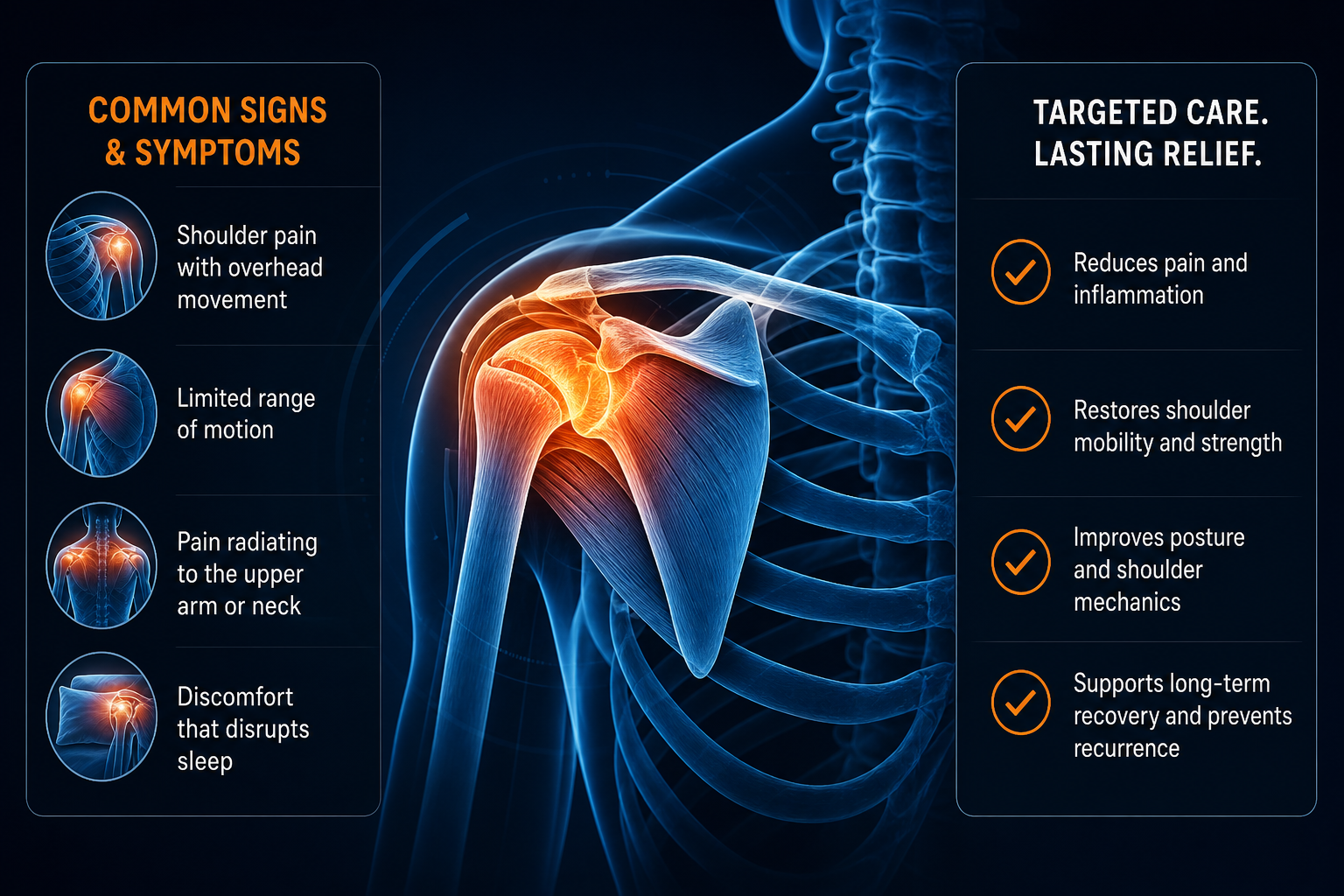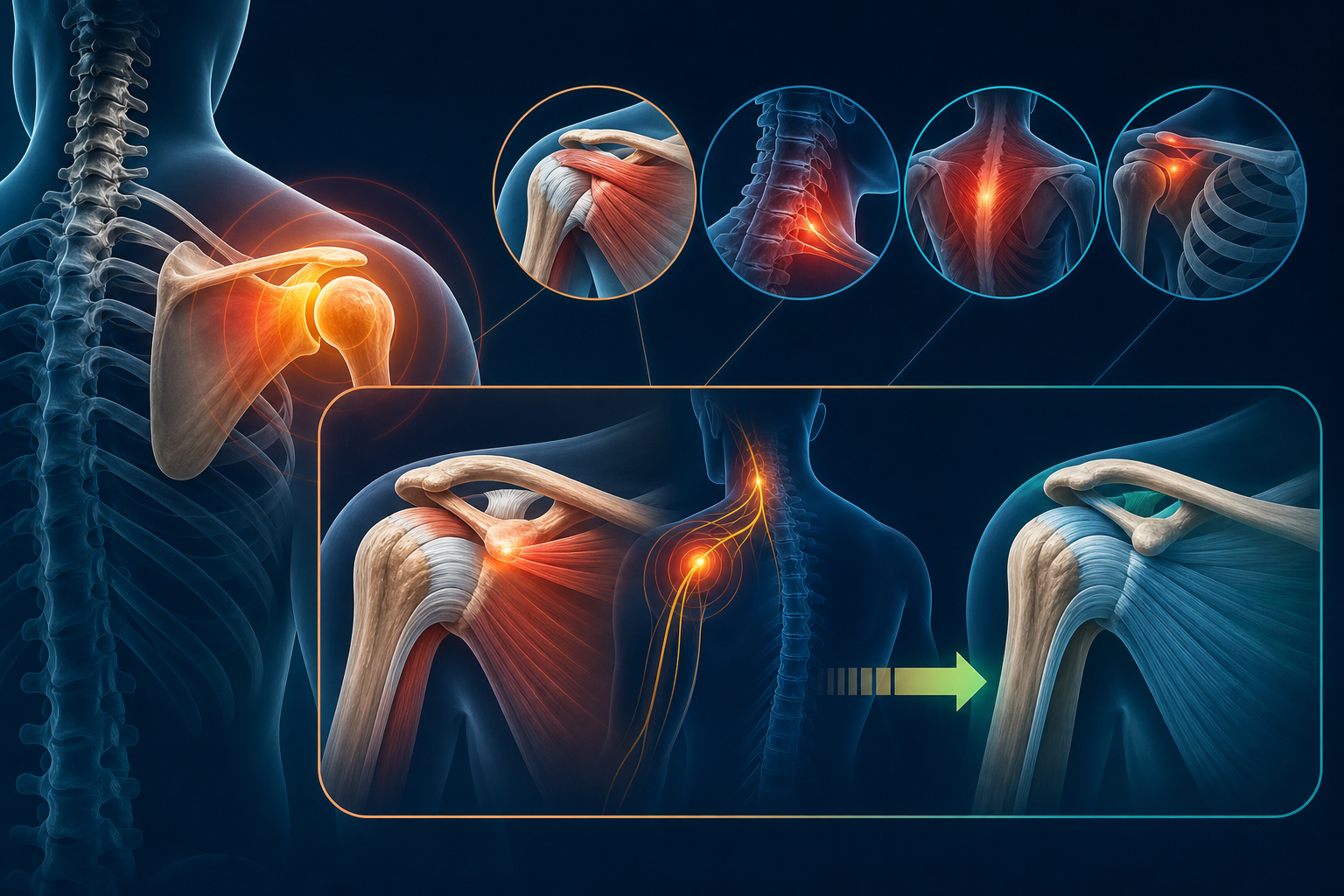
Your right shoulder is one of the most mobile joints in your body, which makes it remarkably useful and, unfortunately, remarkably vulnerable. Whether the pain crept in after weeks of desk work, appeared suddenly after lifting something overhead, or followed a car accident, understanding what is happening inside that joint is the foundation of getting it better. This guide walks through the anatomy, the most common causes, the symptoms worth paying attention to, and the conservative treatment options — chiropractic care, physical therapy, and rehabilitation — that help many people recover without surgery.
If you are already looking for a provider, you can search for a chiropractor near you or find a physical therapist in your area through the Medximity directory.
Why the Right Shoulder Deserves Its Own Conversation
A reasonable question is whether right shoulder pain is meaningfully different from left shoulder pain. Structurally, the two joints are nearly identical — the same bones, muscles, tendons, and bursae doing the same jobs on opposite sides of the body. But a few practical differences are worth knowing.
First, dominance matters. For the roughly 90 percent of people who are right-handed, the right shoulder does more repetitive work — typing, driving, reaching, lifting, throwing. That sustained load can contribute to overuse injuries that simply accumulate more on the dominant side over time.
Second, referred pain from internal organs can sometimes present in the right shoulder region. Pain in the right shoulder that is not clearly connected to movement, position, or a physical event — particularly when it accompanies abdominal discomfort, fever, or nausea — warrants prompt evaluation by a physician who can rule out liver, gallbladder, or diaphragm involvement. This article focuses on musculoskeletal causes, but knowing when a symptom falls outside that category is part of understanding it fully.
Third, occupational and postural patterns often load the right side differently than the left. A right-handed desk worker typically reaches with the right arm, holds a mouse on the right side, and rotates slightly rightward to face a monitor — patterns that can strain the shoulder girdle asymmetrically over months or years.
Anatomy of the Shoulder: What Can Go Wrong and Where
The shoulder is technically a complex of three joints — the glenohumeral joint (the ball-and-socket most people picture), the acromioclavicular joint (where the collarbone meets the shoulder blade), and the sternoclavicular joint (where the collarbone meets the sternum) — along with the scapulothoracic glide surface where the shoulder blade moves against the rib cage. All of these structures work together every time you raise your arm.
The Rotator Cuff
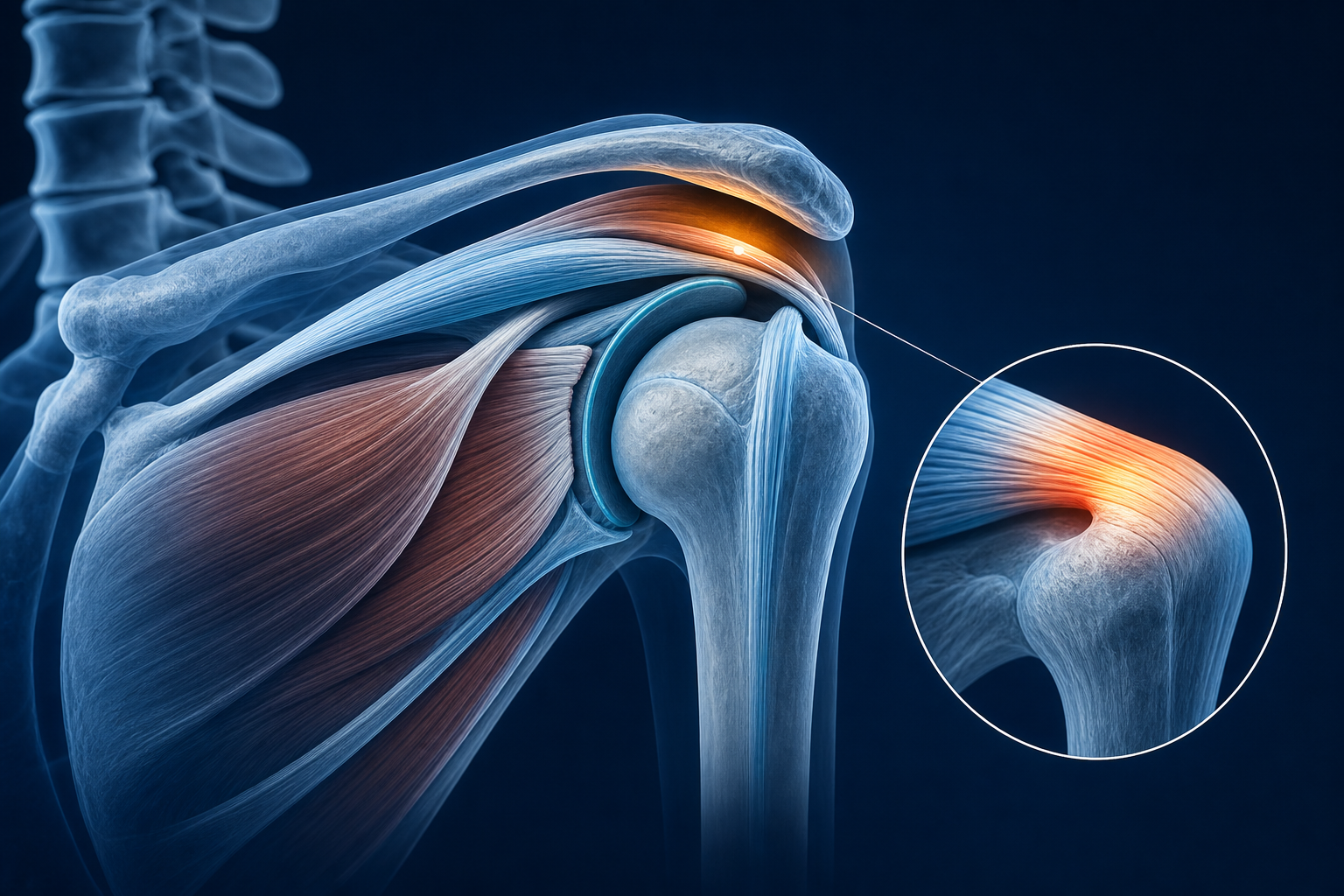
Four muscles — the supraspinatus, infraspinatus, teres minor, and subscapularis — form the rotator cuff. Together they stabilize the humeral head (the ball) within the glenoid socket (the shallow cup) while the larger deltoid and pectoral muscles produce gross arm movement. Because the supraspinatus tendon passes through a narrow bony channel called the subacromial space, it is particularly susceptible to pinching, inflammation, and over time, tearing.
Bursae and Tendons
Several fluid-filled sacs called bursae cushion the shoulder's moving parts. The subacromial bursa is the most commonly inflamed one, and when it swells, it can make lifting the arm overhead feel sharp and blocked. Tendons attaching the biceps and rotator cuff muscles to bone can also become irritated, a condition broadly called tendinopathy.
The Cervical Spine Connection
The nerves that supply sensation and motor control to the shoulder and arm exit the spinal cord between the vertebrae of the lower neck (primarily C4 through C6). When those vertebral levels are compressed, stiff, or inflamed — from a disc bulge, degenerative changes, or soft-tissue injury — the pain and other symptoms can travel down the nerve path and register in the shoulder, the upper arm, or further into the hand. This is why many providers evaluate the neck as part of any thorough shoulder assessment.
Common Causes of Right Shoulder Pain
Rotator Cuff Strain or Tear
Rotator cuff injuries are among the most frequently seen shoulder problems in clinical practice. A strain involves overstretching or micro-tearing the muscle fibers, while a full tear means the tendon has separated partially or completely from its attachment. Strains often respond well to conservative care. Partial tears can also improve significantly with rehabilitation in many cases, though the path depends on the severity, the patient's age and activity demands, and the clinical findings of a thorough evaluation.
Typical symptoms include pain in the right shoulder when lifting the arm overhead, weakness when reaching behind the back, a dull ache at rest that worsens at night, and sometimes a catching or clicking sensation.
Shoulder Impingement Syndrome
Impingement describes what happens when the soft tissues inside the subacromial space get compressed between the humeral head and the acromion (the bony roof of the shoulder) during arm movement. It is often associated with a rounded-forward posture, scapular positioning, and rotator cuff weakness — all of which are addressable through targeted exercise and manual therapy.
Adhesive Capsulitis (Frozen Shoulder)
When the joint capsule surrounding the glenohumeral joint becomes thickened and inflamed, range of motion gradually decreases — sometimes dramatically. Frozen shoulder tends to progress through phases: a painful, freezing phase; a stiff, frozen phase; and an eventual thawing phase. It is more common in people over 40, in those with diabetes, and following a period of shoulder immobility. Recovery can be slow, often measured in months, but physical therapy and gentle mobilization are central to most treatment plans.
Acromioclavicular (AC) Joint Sprain
The AC joint is often injured in falls — onto an outstretched hand or directly onto the shoulder — and is a common finding after sports collisions and car accidents. Pain is typically well-localized to the top of the shoulder and worsens when reaching across the body. Most low-to-moderate grade AC sprains are managed conservatively.
Biceps Tendinopathy
The long head of the biceps tendon runs through the shoulder joint itself, making it vulnerable to repetitive loading. Pain is usually felt at the front of the shoulder and may radiate down the arm. Provocative tests during a clinical exam can help distinguish this from other sources.
Cervical Radiculopathy (Pinched Nerve in the Neck)
As noted above, nerve compression at the cervical spine can produce pain, numbness, or tingling that the brain interprets as coming from the shoulder or arm. If your right shoulder pain is accompanied by neck stiffness, radiating sensations into the arm or hand, or symptoms that change based on head position, a cervical component is worth evaluating. Chiropractors and physical therapists are both trained to assess and address cervical contributions to shoulder symptoms.
For more on how neck problems contribute to upper-body pain, see our related article: Neck Pain: Causes, Symptoms, and Conservative Treatment Options.
Postural and Desk-Related Shoulder Pain
Right shoulder pain from sitting at a desk all day is one of the most common complaints in outpatient chiropractic and physical therapy practices. Sustained forward-head posture, a rounded upper back, and a shoulder that creeps upward toward the ear in response to keyboard and mouse use create a chronic low-grade loading pattern that the tissues eventually protest. This is almost always addressable with a combination of ergonomic adjustments, targeted strengthening, and manual therapy.
Right Shoulder Pain After a Car Accident
Motor vehicle collisions can injure the shoulder in several ways: the seatbelt crossing the shoulder during a sudden stop, the arm bracing against the steering wheel or door, direct impact in a side collision, or the whipping force of a rear-end crash transmitting through the neck and shoulder girdle. Soft-tissue injuries — sprains, strains, and contusions — may not be immediately painful due to adrenaline, so symptoms sometimes peak 24 to 72 hours after the event. If you sustained a shoulder injury in an accident, prompt evaluation creates an important clinical record of your condition.
For more guidance on what to expect after a collision, visit our resource on car accident injury treatment and chiropractic care.
Right Shoulder Pain Symptoms and When to Worry
Most right shoulder pain is musculoskeletal in origin and responds to conservative care. However, certain features suggest you should seek medical evaluation promptly rather than waiting to see whether things settle on their own.
Symptoms That Warrant Prompt Evaluation
- Sudden, severe pain following a fall, impact, or forceful movement — possible fracture or significant tear
- Visible deformity or asymmetry of the shoulder after an injury
- Complete inability to raise the arm
- Rapid swelling, heat, and redness without a clear mechanical cause — possible inflammatory or infectious process
- Right shoulder pain accompanied by abdominal pain, nausea, fever, or pain that worsens with deep breathing — these patterns can indicate referred pain from internal structures and require medical evaluation
- Numbness, weakness, or tingling that extends into the hand and is progressive or constant
- Shoulder pain following chest pain or shortness of breath — seek emergency care
Symptoms That Typically Respond to Conservative Care
- Gradual onset of aching or stiffness related to activity or posture
- Pain that is worse with specific movements and better at rest
- Morning stiffness that loosens up during the day
- Tenderness over a specific muscle, tendon, or joint that you can locate with a finger
- Recurring discomfort linked to a particular activity — overhead work, sleeping on that side, reaching behind
When in doubt, a clinical evaluation by a chiropractor or physical therapist can help determine whether your case is appropriate for conservative management or whether imaging and medical co-management are warranted first.
Right Shoulder Pain Treatment Without Surgery
The majority of people with right shoulder pain — even those with confirmed rotator cuff pathology on imaging — do not ultimately require surgery. Conservative care, delivered consistently and appropriately matched to the underlying diagnosis, resolves or substantially reduces symptoms in many cases. Here is what the common approaches involve.
Chiropractic Care for Right Shoulder Pain
Chiropractors assess the shoulder as part of a kinetic chain that includes the neck, thoracic spine, and ribcage. Treatment may include:
- Joint mobilization or manipulation: Directed at the glenohumeral joint, AC joint, or restricted segments of the cervical or thoracic spine that are contributing to abnormal shoulder mechanics.
- Soft-tissue therapy: Techniques such as myofascial release, instrument-assisted soft-tissue mobilization, or trigger point therapy to reduce muscle guarding and improve tissue quality.
- Functional assessment and corrective exercise: Identifying movement faults — scapular dyskinesis, rotator cuff inhibition, poor hip-shoulder dissociation — and prescribing targeted exercises to correct them.
- Postural coaching and ergonomic guidance: Particularly relevant for patients whose shoulder pain is driven by desk posture or occupational loading patterns.
To find a chiropractor experienced with shoulder complaints, use the Medximity chiropractor search.
Physical Therapy for Right Shoulder Pain
Physical therapists bring a strong exercise-rehabilitation framework to shoulder pain. A skilled PT will perform a movement assessment, identify which structures are irritated and why, and design a progressive program that may include:
- Range-of-motion restoration: Gentle stretching and mobilization to recover movement lost to guarding, swelling, or capsular tightness.
- Rotator cuff strengthening: Targeted, load-appropriate exercises that rebuild the dynamic stabilizers of the shoulder without re-aggravating irritated tissues.
- Scapular stabilization: The shoulder blade must move correctly for the shoulder joint to function properly. Many shoulder problems have a scapular component that responds well to neuromuscular training.
- Manual therapy: Joint mobilization, soft-tissue work, and neural mobilization techniques that complement the exercise program.
- Modalities: Ice, heat, ultrasound, TENS, and dry needling are used by some PTs as adjuncts, though the exercise and manual therapy components carry most of the evidence for lasting benefit.
Wondering whether to choose a chiropractor or physical therapist for shoulder pain? Many patients benefit from both, and in some cases the two providers co-manage a case. The decision often comes down to the primary driver of the pain — if cervical or thoracic spine involvement is prominent, chiropractic may lead; if the primary need is progressive exercise rehabilitation, PT may be the right starting point. A consultation with either provider will clarify which path fits your situation.
Search for a physical therapist near you through the Medximity directory.
Natural and Supportive Approaches
Alongside formal care, several self-management strategies can support recovery. These are not substitutes for professional evaluation but are reasonable complements:
- Activity modification: Reducing or temporarily avoiding movements that provoke pain (particularly painful overhead reaching) while maintaining general movement to prevent deconditioning.
- Ice and heat: Ice applied for 15 to 20 minutes may help manage acute inflammation; gentle heat can reduce muscle stiffness in more chronic presentations. Preferences vary between individuals.
- Sleep position adjustment: Sleeping on the affected shoulder typically worsens pain. Many patients find relief by sleeping on the opposite side with a pillow supporting the arm, or on the back with a pillow under the affected arm.
- Ergonomic changes: Raising a monitor to eye level, positioning the mouse closer to the body, and taking regular breaks from sustained postures address the mechanical inputs that often perpetuate desk-related shoulder pain.
- Gentle range-of-motion exercises: Simple pendulum exercises, shoulder circles, and doorway stretches can help maintain mobility during a pain flare, but these should be guided by a provider once a diagnosis is established, since some exercises are appropriate for impingement and harmful for an acute rotator cuff tear.
How Long Does Right Shoulder Pain Take to Heal?
Healing timelines vary significantly depending on what is injured, how it was injured, how long the problem has been present, and how consistently treatment is applied. Some general patterns:
- Mild muscle strain or overuse: Many patients notice meaningful improvement within two to four weeks of appropriate care and activity modification.
- Shoulder impingement or tendinopathy: Six to twelve weeks of consistent conservative care is a common treatment horizon, with gradual improvement throughout. Some patients continue to improve beyond that window.
- AC joint sprain (low-to-moderate grade): Often resolves in four to eight weeks, depending on severity.
- Partial rotator cuff tear: Recovery timelines are wider — often three to six months — and depend heavily on the tear's characteristics and the patient's response to rehabilitation.
- Frozen shoulder: Can take one to three years to resolve fully without intervention; with physical therapy, the recovery window often shortens considerably, though it remains measured in months rather than weeks.
- Post-accident soft-tissue injuries: Whiplash-associated shoulder pain and soft-tissue injuries from car accidents often show significant improvement within six to twelve weeks, but some patients experience a longer recovery, particularly if there were pre-existing degenerative changes.
Chronic pain — defined loosely as pain persisting beyond three months — may require a broader evaluation to identify perpetuating factors, including central sensitization, sleep disruption, psychological stress, and lifestyle variables that influence the healing environment.
Finding Conservative Care for Right Shoulder Pain Near You
If you have been living with right shoulder pain — whether it developed gradually from desk work, appeared after a fall or car accident, or has simply persisted longer than it should — a structured evaluation with a qualified conservative care provider is a practical first step. Chiropractors and physical therapists are trained to assess the full shoulder complex, identify contributing factors in the spine and adjacent regions, and build a treatment plan proportionate to your actual findings.
Medximity's provider directory makes it straightforward to find experienced practitioners in your area. You can filter by specialty, location, and accepted insurance to identify providers who are a fit for your situation.
For related reading, you may also find these Medximity articles helpful:
- Rotator Cuff Injuries: What They Are and How Conservative Care Helps
- Whiplash and Soft-Tissue Injuries After a Car Accident
- Neck Pain: Causes, Symptoms, and Conservative Treatment Options
Frequently Asked Questions About Right Shoulder Pain
What causes sharp pain in the right shoulder?
Sharp pain in the right shoulder — especially with specific movements — often points to impingement, a rotator cuff strain or tear, a biceps tendon problem, or an AC joint injury. Sharp pain that is not movement-related or that accompanies systemic symptoms (fever, nausea, abdominal discomfort) should be evaluated medically to rule out non-musculoskeletal causes.
Can neck problems cause right shoulder pain?
Yes, this is a well-recognized clinical pattern. The nerves supplying the shoulder exit the spinal cord through the lower cervical spine, so compression or irritation at those levels can produce pain, numbness, or weakness that is felt in the shoulder and arm. This is called cervical radiculopathy, and it is one reason a thorough shoulder evaluation often includes an assessment of the neck.
Is right shoulder pain different from left shoulder pain?
The joint structure is essentially the same on both sides. The practical differences relate to hand dominance — the dominant shoulder typically sustains more repetitive load — and to referred pain patterns from internal organs, which occasionally present in the right shoulder region (gallbladder, liver, diaphragm) and more rarely in the left (heart). Any shoulder pain that is not clearly mechanical in origin and is accompanied by systemic symptoms deserves medical evaluation.
What is the best treatment for right shoulder pain without surgery?
Conservative care — including chiropractic, physical therapy, and guided rehabilitation — is the recommended first approach for the majority of musculoskeletal shoulder conditions. Research consistently suggests that structured exercise, manual therapy, and activity modification can resolve or substantially reduce symptoms in many patients, including those with confirmed rotator cuff pathology on imaging. The best approach for any individual depends on the specific diagnosis, which is why an in-person evaluation matters.
Should I see a chiropractor or physical therapist for right shoulder pain?
Both professions are trained to evaluate and treat shoulder pain, and many patients benefit from either or both. Chiropractors often place emphasis on spinal and joint mechanics as contributing factors, while physical therapists typically lead with progressive exercise rehabilitation. In practice, the two approaches overlap considerably and frequently complement each other. Your initial presentation — the history of how the pain developed, what provokes it, and what else is involved — will guide the best starting point. A consultation with either provider will clarify the right path.
How long does right shoulder pain from a car accident take to heal?
Post-accident shoulder pain involving soft-tissue injuries often improves meaningfully within six to twelve weeks with consistent conservative care. More significant injuries — a rotator cuff tear, a labral injury, or a fracture — take longer and may require imaging to characterize properly. Starting care promptly after an accident both supports recovery and establishes a clinical record of your injury and symptoms.
Why does my right shoulder hurt when I sit at my desk all day?
Sustained desk posture — forward head, rounded shoulders, elevated or protracted right shoulder from mouse use — loads the shoulder's soft tissues in a position they were not designed to hold for hours at a time. Over days and weeks, this contributes to muscle fatigue, joint stiffness, and eventually pain. Ergonomic adjustments, regular movement breaks, and targeted shoulder and neck exercises are the primary interventions, and both chiropractors and physical therapists regularly address this pattern.
Are there natural remedies for right shoulder and neck pain?
Several self-care measures may provide relief alongside professional treatment: ice or heat application, gentle range-of-motion exercises, sleep position adjustments, and ergonomic corrections. These are reasonable supportive steps, but they are not substitutes for identifying the underlying cause. What helps a frozen shoulder differs considerably from what helps a nerve root irritation or a tendon tear, which is why professional evaluation comes first.