Understanding Left Shoulder Pain: Symptoms, Causes, and Treatment starts with one important point: shoulder pain is a symptom, not a diagnosis. Pain on the left side may come from the shoulder joint itself, nearby muscles and tendons, the neck, the upper back, or irritation after an injury such as a fall or car accident. In less common situations, left shoulder pain may be associated with a medical issue that needs urgent attention.
For many people, left shoulder pain improves with time, activity modification, targeted exercise, and conservative care. However, pain that is severe, worsening, linked with chest pressure, associated with weakness or numbness, or caused by trauma should be evaluated by a qualified healthcare provider. A careful exam can help identify whether the pain is likely coming from the shoulder, the cervical spine, the nerves, or another source.
This guide explains what causes left shoulder pain, why you may feel left shoulder pain when lifting your arm, whether left shoulder pain is serious, and what to expect from treatment for left shoulder pain without surgery. If you are looking for care, Medximity can help you compare conservative care options and find providers near you, including physical therapists near you and chiropractors near you.
What Is Left Shoulder Pain?
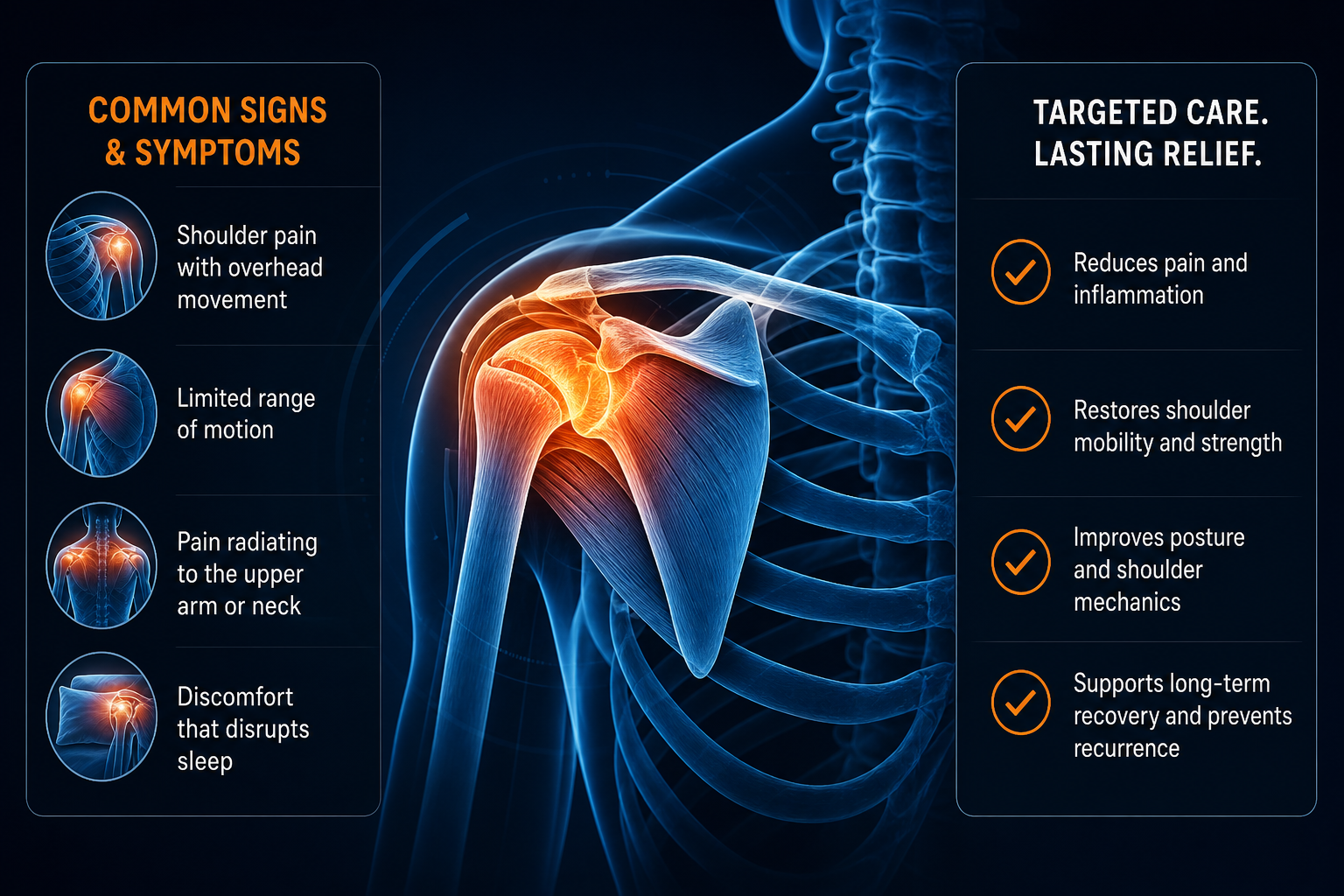
Left shoulder pain refers to discomfort felt in or around the left shoulder region. That can include the front of the shoulder, the side of the upper arm, the shoulder blade area, the collarbone region, or the upper back near the neck. Some people describe a deep ache. Others feel sharp pain, burning, catching, stiffness, weakness, or pain that travels down the arm.
The shoulder is a highly mobile joint. Its wide range of motion allows you to reach overhead, rotate your arm, lift, push, pull, and carry. That mobility also means the shoulder depends on coordinated support from muscles, tendons, ligaments, the shoulder blade, the collarbone, and the cervical spine. When one part is irritated or not moving well, pain may show up during everyday tasks such as putting on a jacket, reaching into a cabinet, lifting a bag, sleeping on the left side, or turning the steering wheel.
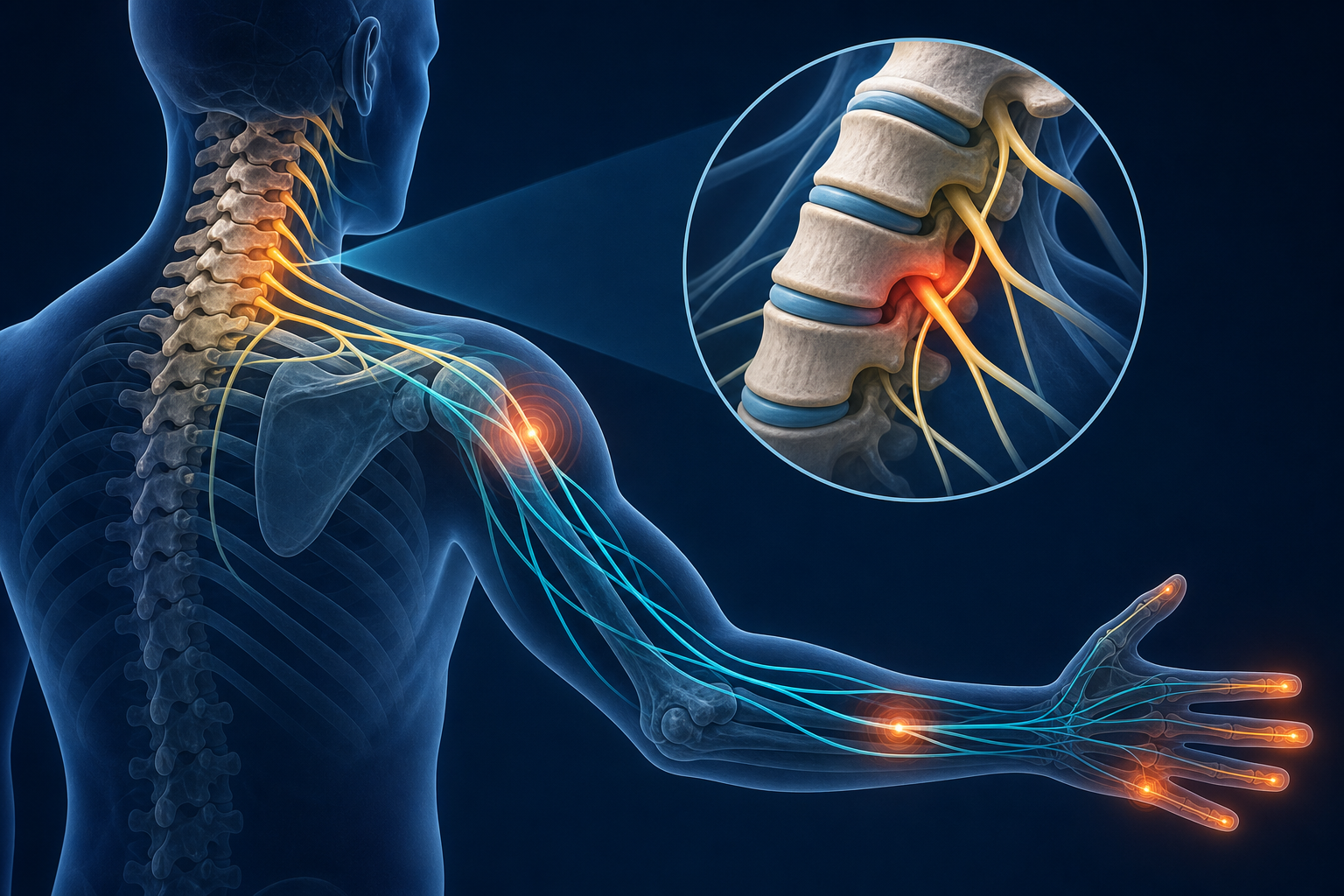
Because the shoulder and neck share nerve pathways and muscle connections, the exact source of pain is not always obvious. For example, a person may feel pain in the left shoulder even when the primary problem is coming from the neck. A provider can use movement testing, strength testing, nerve screening, posture assessment, and injury history to narrow down the likely cause.
Common Symptoms of Left Shoulder Pain
Symptoms can vary depending on the tissues involved and whether the pain began suddenly or developed gradually. Common symptoms include:
- A dull ache in the front, side, or back of the left shoulder
- Sharp pain with reaching, lifting, pushing, or pulling
- Left shoulder pain when lifting the arm overhead
- Stiffness or reduced range of motion
- Pain when sleeping on the left side
- Clicking, catching, or grinding sensations
- Weakness when lifting or rotating the arm
- Pain that spreads into the upper arm, neck, or shoulder blade
- Tingling, numbness, or burning that may suggest nerve irritation
- Swelling, bruising, or tenderness after an injury
Some symptoms are more mechanical, meaning they change with movement or position. Others may be more concerning, especially when pain is not affected by shoulder movement or is accompanied by symptoms elsewhere in the body. If you are unsure whether your symptoms are musculoskeletal, it is safer to be evaluated.
Is Left Shoulder Pain Serious?
Many cases of left shoulder pain are related to muscles, joints, tendons, posture, or overuse and may improve with conservative treatment. However, left shoulder pain can sometimes be serious, particularly when it appears with symptoms that may suggest a heart, lung, neurologic, or significant traumatic condition.
Seek emergency care right away if left shoulder pain occurs with:
- Chest pain, chest pressure, or tightness
- Shortness of breath
- Sweating, nausea, dizziness, or fainting
- Pain spreading to the jaw, chest, back, or left arm
- Sudden weakness, facial drooping, confusion, or trouble speaking
- Severe pain after a fall, collision, or car accident
- Visible deformity, major swelling, or inability to move the arm
These symptoms do not always mean a life-threatening condition is present, but they should not be ignored. If left shoulder pain might be related to a medical emergency, call emergency services or seek urgent medical care.
When left shoulder pain is less urgent but still worth evaluating
You should consider seeing a provider if pain lasts more than a few days, limits your normal activities, keeps you from sleeping, returns repeatedly, or is associated with weakness, numbness, tingling, or loss of motion. A conservative care provider such as a physical therapist or chiropractor may help assess movement-related shoulder pain, while a medical provider may be needed when symptoms suggest infection, fracture, systemic illness, or another non-musculoskeletal cause.
What Causes Left Shoulder Pain?
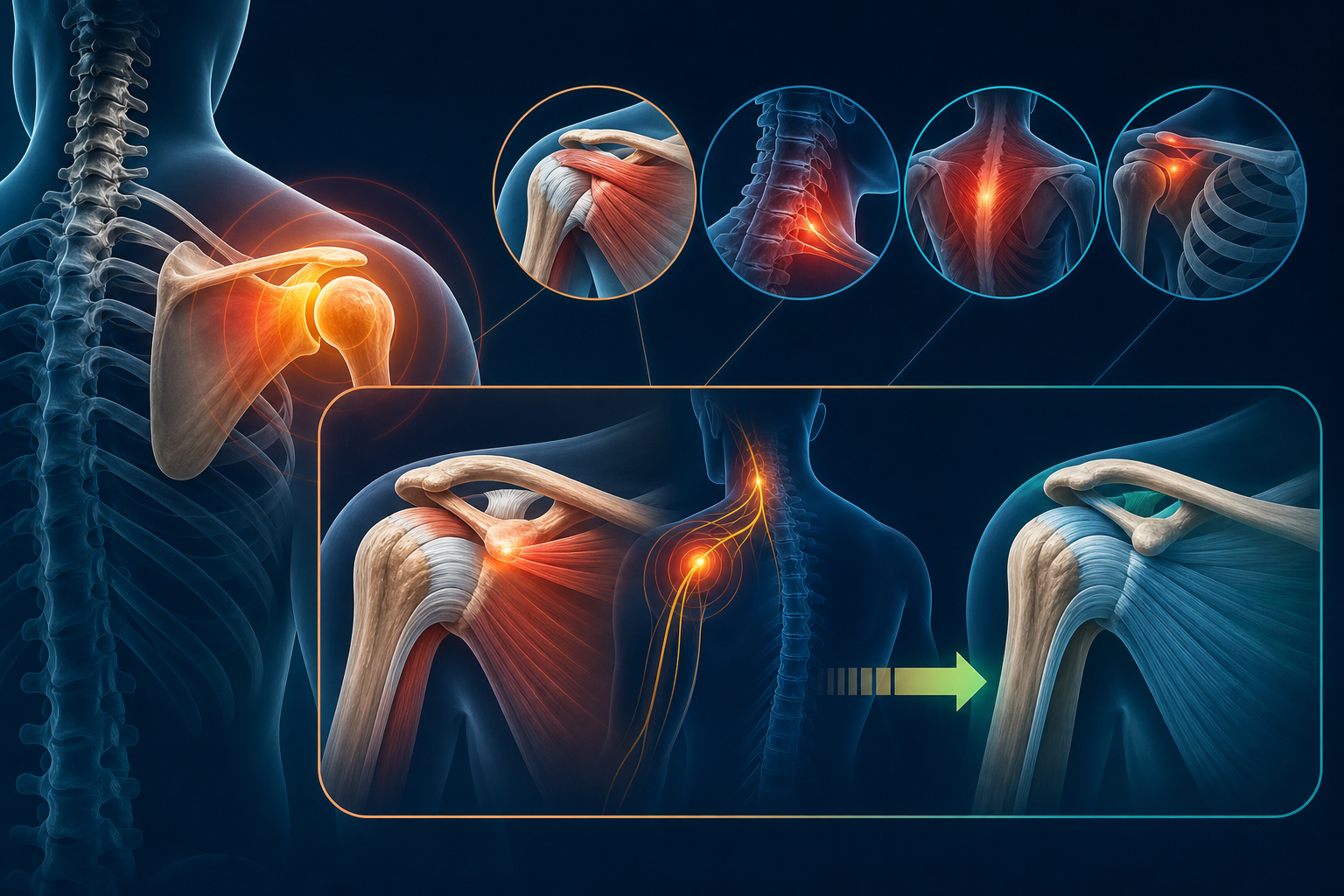
If you are asking, what causes left shoulder pain, the answer can include several different categories. The most common causes involve the shoulder joint, rotator cuff, tendons, muscles, neck, upper back, or a recent injury. Less commonly, pain may be referred from organs or other medical conditions.
Rotator cuff irritation or tendinopathy
The rotator cuff is a group of muscles and tendons that helps stabilize and move the shoulder. Repetitive overhead activity, heavy lifting, poor shoulder blade control, age-related tendon changes, or a sudden strain may irritate these tissues. Rotator cuff-related pain is often felt on the outside of the shoulder or upper arm and may worsen with reaching overhead, lifting away from the body, or lying on the affected side.
Rotator cuff irritation does not always mean a major tear is present. In many cases, symptoms are associated with tendon overload, weakness, stiffness, or movement mechanics. Physical therapy for left shoulder pain often focuses on restoring comfortable range of motion, improving rotator cuff strength, and training the shoulder blade muscles to support smoother movement.
Shoulder impingement-type symptoms
Some people develop pain when the tendons and soft tissues around the shoulder become irritated during lifting or reaching. The term shoulder impingement has been used to describe this pattern, although providers increasingly look at the broader picture: shoulder blade mechanics, rotator cuff capacity, posture, mobility, workload, and training habits.
Symptoms may include pain in an arc of motion as you raise the arm, discomfort reaching behind the back, or pain with overhead tasks. Conservative care may help by improving strength, mobility, and movement control rather than simply avoiding all activity.
Bursitis
A bursa is a small fluid-filled structure that helps reduce friction around joints. When the bursa around the shoulder becomes irritated, pain may occur with lifting, reaching, or lying on the shoulder. Bursitis can overlap with rotator cuff irritation, making a hands-on exam useful for identifying the most likely contributors.
Frozen shoulder
Frozen shoulder, also called adhesive capsulitis, is associated with progressive stiffness and pain. People often notice difficulty reaching overhead, behind the back, or out to the side. It may develop after a period of reduced shoulder use, after an injury, or in association with certain health conditions. Frozen shoulder can take time to improve, and treatment often focuses on gentle mobility work, symptom management, and gradual restoration of function.
Arthritis or joint irritation
Arthritis may affect the glenohumeral joint, where the upper arm meets the shoulder socket, or the acromioclavicular joint, where the collarbone meets the shoulder blade. Symptoms may include aching, stiffness, grinding, swelling, and pain with certain arm positions. Conservative care may help some patients maintain mobility, build supportive strength, and modify activities that aggravate symptoms.
Labral or instability-related shoulder pain
The labrum is a ring of cartilage that helps deepen the shoulder socket. Labral irritation or injury may be associated with clicking, catching, deep pain, or a sense that the shoulder is unstable. This type of problem may happen after a fall, sports injury, lifting incident, or dislocation. Evaluation is important because treatment depends on the severity of symptoms, activity demands, and whether instability is present.
Muscle strain
A strain can affect the deltoid, pectoral muscles, upper trapezius, rhomboids, latissimus dorsi, or smaller shoulder stabilizers. Strains may happen during lifting, sudden pulling, exercise, yard work, or a motor vehicle collision. Mild strains often improve with relative rest and gradual loading, while more severe pain, bruising, or weakness should be assessed.
Neck-related referred pain
Can neck problems cause shoulder pain? Yes, in some cases. The nerves that travel from the neck into the shoulder and arm can become irritated by cervical joint dysfunction, muscle tension, disc-related changes, or narrowing around nerve pathways. Neck-related shoulder pain may include burning, tingling, numbness, radiating pain, or symptoms that change when you move your neck.
If your shoulder pain is accompanied by neck stiffness, headaches, numbness, or pain that travels below the elbow, a provider may assess both the neck and shoulder. You can learn more about related symptoms in Medximity resources on neck pain and shoulder pain.
Posture, workstation strain, and repetitive activity
Long hours at a desk, frequent phone use, prolonged driving, and repetitive work can contribute to shoulder and upper back discomfort. The issue is usually not posture alone, but sustained positions combined with low movement variety, muscle fatigue, and limited strength in the shoulder blade and upper back muscles. Small ergonomic changes, movement breaks, and strengthening exercises may help some patients reduce recurring symptoms.
Left shoulder pain after car accident
Left shoulder pain after a car accident may come from seat belt force, bracing against the steering wheel, impact with the door, whiplash-related neck irritation, muscle strain, joint sprain, or direct trauma. Symptoms may begin immediately or become more noticeable over the next day or two as inflammation and muscle guarding develop.
Because collisions can involve the neck, shoulder, ribs, and nervous system, it is wise to seek an evaluation if pain persists, worsens, limits motion, or includes numbness, tingling, headaches, dizziness, chest symptoms, or significant bruising. Conservative care may include gentle mobility, manual therapy, progressive rehabilitation, and guidance on returning to daily activities when appropriate. If you need help finding care after an injury, Medximity offers provider search options for finding a healthcare provider near you.
Referred pain from non-shoulder conditions
Sometimes pain felt near the left shoulder is not primarily a shoulder problem. Heart, lung, abdominal, or neurologic conditions can refer pain to the shoulder region. This is one reason severe, unusual, unexplained, or systemic symptoms should be evaluated promptly. Conservative shoulder treatment is appropriate only after more urgent medical concerns have been considered when red flags are present.
Why Do I Have Left Shoulder Pain When Lifting My Arm?
Left shoulder pain when lifting the arm often suggests that the pain is related to movement of the shoulder joint, rotator cuff, shoulder blade, or nearby soft tissues. Common patterns include pain with overhead reaching, pain in the middle of the lifting motion, pain when lifting weight away from the body, or pain when lowering the arm.
Possible contributors include rotator cuff irritation, bursitis, shoulder stiffness, poor shoulder blade coordination, arthritis, muscle strain, or neck-related nerve irritation. The exact pattern matters. For example, pain at the top of the shoulder with cross-body reaching may involve the acromioclavicular joint, while pain on the outside of the upper arm during overhead lifting may point toward rotator cuff-related irritation. A provider can compare active motion, passive motion, strength, and neck movement to better understand the source.
Do not force painful overhead motion
If lifting the arm causes sharp pain, catching, or weakness, forcing through it may aggravate irritated tissues. That does not mean you need complete rest. In many cases, providers recommend staying active within a comfortable range, modifying activities temporarily, and gradually rebuilding strength. The right plan depends on the cause, severity, and your health history.
When Should You See a Provider for Left Shoulder Pain?
Consider scheduling an evaluation if your shoulder pain:
- Lasts longer than several days without improvement
- Limits work, sleep, exercise, driving, or daily activities
- Started after a fall, sports injury, or car accident
- Causes noticeable weakness or loss of motion
- Includes numbness, tingling, burning, or pain below the elbow
- Returns repeatedly despite rest
- Feels different from your usual aches and pains
- Is associated with neck pain, headaches, or upper back pain
You do not need to wait until pain is severe to ask for guidance. Early assessment may help identify modifiable factors, reduce unnecessary fear, and create a plan for safe movement. If you are searching for left shoulder pain treatment near me, Medximity can help you find local conservative care options, including physical therapy services and chiropractic care.
How Providers Evaluate Left Shoulder Pain
A good shoulder evaluation usually starts with a detailed history. Your provider may ask when the pain began, what activities make it better or worse, whether there was an injury, where the pain travels, and whether you have numbness, tingling, chest symptoms, fever, unexplained weight loss, or other red flags.
Movement and strength testing
Your provider may observe how you raise, rotate, and reach with your arm. They may compare your left and right shoulders, check shoulder blade motion, test rotator cuff strength, and assess whether the neck changes your shoulder symptoms. This helps distinguish shoulder-driven pain from referred pain.
Palpation and joint assessment
Gentle hands-on assessment may identify tenderness, muscle guarding, joint stiffness, or areas that reproduce symptoms. In chiropractic and physical therapy settings, the exam may also include the neck, upper back, ribs, and posture because these areas can influence shoulder mechanics.
Neurologic screening
If symptoms include tingling, numbness, burning, weakness, or pain traveling down the arm, a provider may screen reflexes, sensation, and muscle strength. Findings may suggest nerve irritation in the neck or arm and may influence referral decisions.
When imaging may be considered
X-rays, ultrasound, or MRI may be considered when symptoms suggest fracture, dislocation, significant tear, persistent unexplained pain, or when the results would change management. Imaging is not always needed for shoulder pain, and many age-related findings can appear even in people without symptoms. A qualified provider can help determine whether imaging is appropriate based on your specific presentation.
Treatment for Left Shoulder Pain
Treatment for left shoulder pain depends on the cause, severity, irritability, and your daily demands. Many patients begin with conservative care, which may include activity modification, therapeutic exercise, manual therapy, mobility work, posture and ergonomic changes, and gradual return to normal activity. The goal is not only to reduce pain, but also to improve the shoulder capacity needed for work, home tasks, recreation, and sleep.
Physical therapy for left shoulder pain
Physical therapy for left shoulder pain may help patients improve mobility, rebuild strength, and restore movement patterns. A physical therapist may design a plan that includes gentle range-of-motion exercises, rotator cuff strengthening, shoulder blade control, thoracic mobility, stretching when appropriate, and progressive loading.
Early care may focus on calming irritated tissues and finding movements you can do without flaring symptoms. As symptoms improve, therapy often progresses toward functional tasks such as reaching, lifting, carrying, pushing, pulling, or sport-specific movement. If you are comparing options, Medximity can help you search for physical therapy for shoulder pain near you.
Chiropractic care for left shoulder pain
A chiropractor for left shoulder pain may evaluate the shoulder, neck, upper back, ribs, and shoulder blade mechanics. Chiropractic treatment may include joint mobilization or manipulation where appropriate, soft tissue techniques, corrective exercise, mobility work, and ergonomic guidance. For some patients, addressing neck or upper back stiffness may help reduce shoulder-region discomfort, especially when symptoms are influenced by posture, desk work, or cervical movement.
Chiropractic care is not a replacement for emergency medical evaluation when red flags are present. However, for movement-related shoulder pain without urgent warning signs, a chiropractor may be part of a conservative care plan. If you are looking for a chiropractor for left shoulder pain near me, you can use Medximity to explore local chiropractic providers.
Manual therapy and soft tissue treatment
Manual therapy may include joint mobilization, soft tissue techniques, stretching, or guided movement. These approaches may help reduce muscle guarding, improve short-term motion, and make exercise more comfortable for some patients. The strongest conservative plans usually combine hands-on care with active rehabilitation rather than relying on passive treatment alone.
Exercise-based rehabilitation
Exercise is often central to left shoulder pain treatment without surgery. Depending on the condition, a provider may use isometric exercises, band strengthening, scapular stabilization, thoracic mobility drills, rotator cuff loading, or gradual overhead strengthening. The dose matters. Too much too soon may flare symptoms, while too little may not build capacity. A provider can help adjust exercises based on your response.
Activity modification
Activity modification does not mean avoiding all movement. It means temporarily changing the activities that irritate the shoulder while maintaining safe motion and general activity. Examples may include reducing overhead lifting, keeping loads close to the body, changing sleep position, using a step stool to avoid repeated high reaching, or breaking up repetitive tasks.
Ergonomics and daily movement habits
If your pain is linked to desk work, driving, or repetitive tasks, small changes may help. These may include adjusting monitor height, keeping frequently used items closer, supporting the forearm when using a mouse, taking movement breaks, and varying posture throughout the day. No single posture is perfect; the goal is to reduce sustained strain and increase movement variety.
How to Fix Shoulder Pain Naturally
Many people search for how to fix shoulder pain naturally. A safer way to think about it is: how can you support healing, reduce irritation, and rebuild function without invasive treatment? Natural or conservative approaches may help many musculoskeletal shoulder problems, but the right strategy depends on the cause.
Start with relative rest, not complete rest
Complete rest can lead to stiffness and deconditioning if it continues too long. Relative rest means avoiding the specific movements that sharply increase pain while continuing gentle, comfortable activity. For example, you may avoid heavy overhead lifting temporarily while still walking, moving the arm within a tolerable range, and doing provider-approved exercises.
Use gentle mobility within a comfortable range
Gentle pendulum movements, supported table slides, or assisted range-of-motion exercises may be appropriate for some people, especially when stiffness is present. These should not cause sharp or lingering pain. If movement makes symptoms significantly worse, stop and seek professional guidance.
Build strength gradually
Shoulders often feel better when the rotator cuff, shoulder blade muscles, and upper back have enough strength to handle daily demands. Strengthening should be gradual and symptom-guided. Early exercises may be simple and low-load, progressing toward lifting and reaching as tolerated.
Improve sleep position
Sleeping on the painful shoulder can aggravate symptoms. Some people feel better sleeping on the opposite side with a pillow supporting the left arm, or on the back with the arm supported. If night pain is severe, persistent, or worsening, it is worth discussing with a provider.
Address the neck and upper back when needed
If neck stiffness or upper back tightness contributes to shoulder pain, treatment may include mobility drills, postural endurance work, and manual therapy. This is especially relevant when shoulder pain changes with neck movement or is accompanied by headaches, tingling, or radiating arm symptoms.
Left Shoulder Pain Treatment Without Surgery
Many patients prefer left shoulder pain treatment without surgery, and conservative care is often a reasonable first step for many non-emergency musculoskeletal shoulder conditions. Nonsurgical care may be considered for rotator cuff tendinopathy, mild strains, many stiffness-related problems, posture-related discomfort, and some neck-related shoulder pain.
That said, not every shoulder condition is the same. Severe trauma, suspected fracture, dislocation, progressive neurologic symptoms, or significant functional loss should be evaluated promptly. A conservative provider may also refer you to another medical specialist if your symptoms suggest a condition outside their scope or if you are not progressing as expected.
How Long Does Shoulder Pain Last?
How long does shoulder pain last depends on the cause, your age and general health, the severity of irritation or injury, your activity demands, and how early you address aggravating factors. A mild strain may improve over days to a few weeks. Tendon irritation can take several weeks or longer, especially if the shoulder is repeatedly overloaded. Frozen shoulder may take months and often requires patience and consistent management.
Progress is not always perfectly linear. It is common for symptoms to fluctuate as activity increases. A helpful sign is that flare-ups become less intense, recover faster, and interfere less with daily life. If pain is not improving, is worsening, or keeps returning, an evaluation can help identify missed contributors such as neck involvement, weakness, stiffness, workload, or technique issues.
What to Expect at Your First Visit
If you visit a chiropractor, physical therapist, or rehabilitation provider for left shoulder pain, your first appointment will usually include a history, physical exam, explanation of likely contributing factors, and an initial care plan. You should have time to describe your symptoms, goals, work demands, and concerns.
Your provider may ask about:
- How and when the pain started
- Whether there was a fall, collision, lifting incident, or repetitive activity
- What movements make pain better or worse
- Whether pain affects sleep
- Whether you have neck pain, headaches, numbness, or tingling
- Your job duties, sports, hobbies, and exercise routine
- Your medical history and prior shoulder injuries
Your care plan may include:
- Education about what may be contributing to symptoms
- Temporary activity modifications
- Home exercises matched to your current tolerance
- Hands-on treatment when appropriate
- Progressive strengthening and mobility work
- Guidance on sleep, ergonomics, lifting, or return to activity
- Referral for additional medical evaluation if red flags are present
A good provider should explain the plan clearly and adjust it based on how your shoulder responds. You should not feel pressured into a one-size-fits-all program. Conservative care works best when it is specific to your symptoms, exam findings, goals, and daily activities.
How to Choose a Provider for Left Shoulder Pain
When searching for left shoulder pain treatment near me, look for a provider who evaluates both the shoulder and related regions such as the neck, upper back, and shoulder blade. The provider should listen to your history, screen for red flags, explain findings in plain language, and give you an active plan that includes self-management strategies.
Physical therapists may be a strong fit when you need structured rehabilitation, strength progression, and return-to-activity planning. Chiropractors may be a strong fit when shoulder pain is linked with neck or upper back mobility, joint mechanics, muscle tension, or posture-related strain. Some patients benefit from coordinated care depending on the condition and goals.
Medximity makes it easier to compare providers and care options. Start with the shoulder pain condition page, explore physical therapy treatment options, or search for conservative care providers near you.
Key Takeaway
Left shoulder pain can come from many sources, including the rotator cuff, joint irritation, muscle strain, frozen shoulder, arthritis, neck-related nerve irritation, or trauma such as a car accident. Many musculoskeletal causes may respond to conservative care, including physical therapy, chiropractic care, exercise-based rehabilitation, activity modification, and ergonomic changes. However, left shoulder pain with chest symptoms, shortness of breath, severe trauma, neurologic symptoms, or sudden unexplained pain should be evaluated urgently.
If pain is limiting your sleep, work, lifting, or daily activities, consider scheduling an evaluation with a qualified provider. The right assessment can help you understand what may be contributing to your symptoms and what treatment options may fit your situation.
Frequently Asked Questions
What causes left shoulder pain?
Left shoulder pain may be caused by rotator cuff irritation, bursitis, muscle strain, frozen shoulder, arthritis, shoulder instability, neck-related nerve irritation, posture-related strain, or injury. Less commonly, pain in the left shoulder region may be referred from a medical condition outside the shoulder, which is why red flags should be taken seriously.
Is left shoulder pain serious?
It can be. Many cases are musculoskeletal and may improve with conservative care, but left shoulder pain with chest pressure, shortness of breath, sweating, nausea, dizziness, fainting, sudden weakness, or severe trauma should be treated as urgent. If you are unsure, seek medical evaluation.
Why do I have left shoulder pain when lifting my arm?
Pain when lifting the arm may be associated with rotator cuff irritation, bursitis, shoulder stiffness, shoulder blade mechanics, arthritis, muscle strain, or neck-related symptoms. A provider can test motion, strength, and nerve function to help identify the most likely source.
Can neck problems cause shoulder pain?
Yes. Neck joints, muscles, and nerves can refer pain into the shoulder and upper arm. Neck-related shoulder pain may include tingling, numbness, burning, headaches, or symptoms that change when you move your neck.
What is the best treatment for left shoulder pain?
The best treatment depends on the cause. Many people begin with conservative care such as physical therapy, chiropractic care, activity modification, mobility work, and progressive strengthening. Severe injuries, neurologic symptoms, or non-musculoskeletal warning signs may require medical evaluation.
How long does shoulder pain last?
Duration varies. Mild strains may improve within days to weeks, while tendon irritation, frozen shoulder, or pain after trauma may take longer. If pain persists, worsens, or keeps returning, a professional evaluation may help guide treatment.
Can shoulder pain be treated without surgery?
Many musculoskeletal shoulder problems can be managed without surgery, especially when addressed with exercise-based rehabilitation, manual therapy when appropriate, and activity modifications. A provider can help determine whether conservative care is appropriate for your symptoms.
When should I see a provider after a car accident?
Consider evaluation after a car accident if shoulder pain persists, worsens, limits motion, affects sleep, or comes with neck pain, headaches, numbness, tingling, dizziness, chest symptoms, or significant bruising. Some injury-related symptoms may become more noticeable after the first day or two.