If you've been waking up with neck stiffness and headaches every morning, or noticing pain and tingling running down your arm from your neck, cervical spondylosis may be at the root of it. It's a condition many people haven't heard of — yet it affects the majority of adults over the age of 60, and a significant portion of people in their 40s and 50s as well. Understanding what cervical spondylosis is, what drives it, and what you can realistically do about it is the first step toward managing it well.
What Is Cervical Spondylosis?
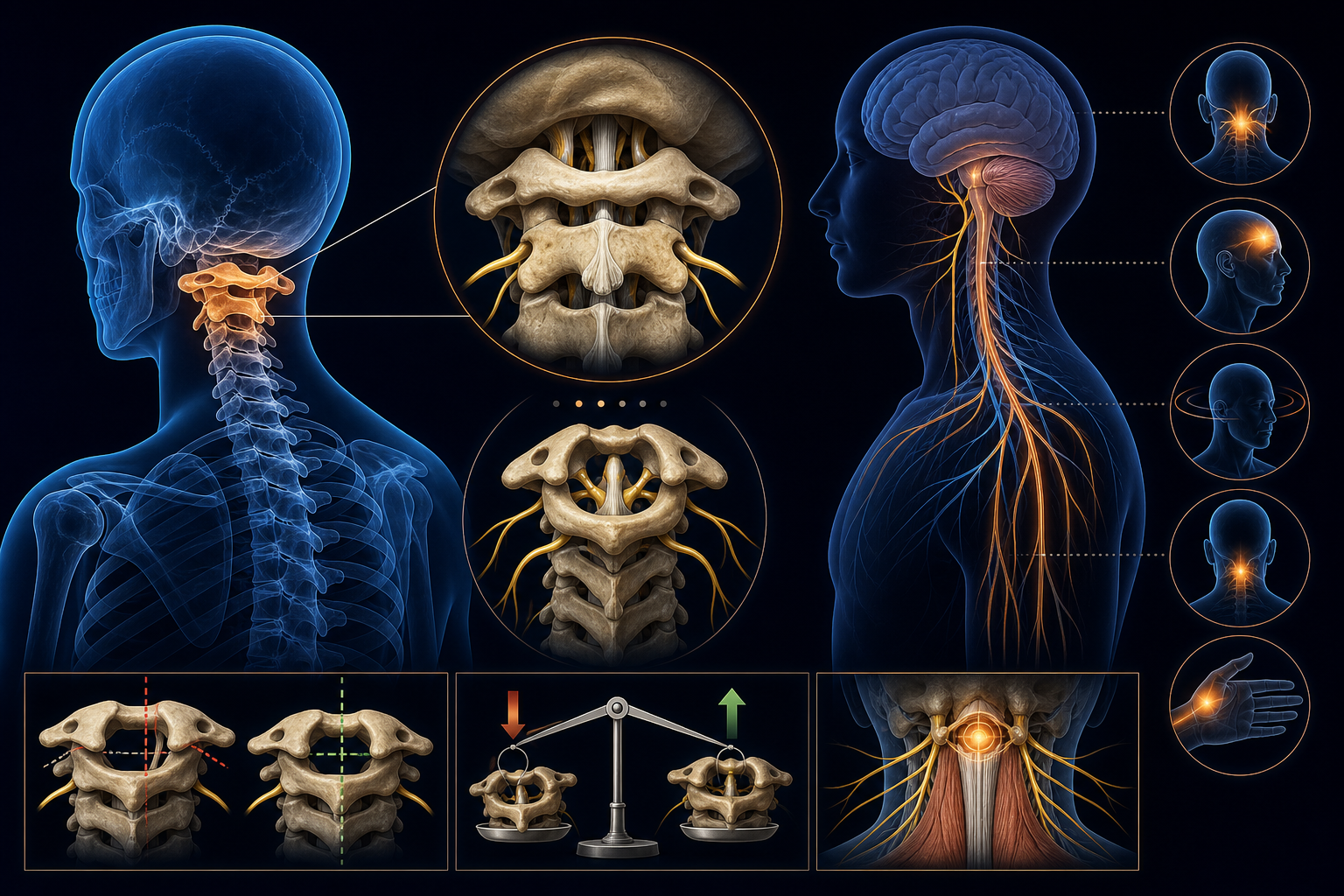
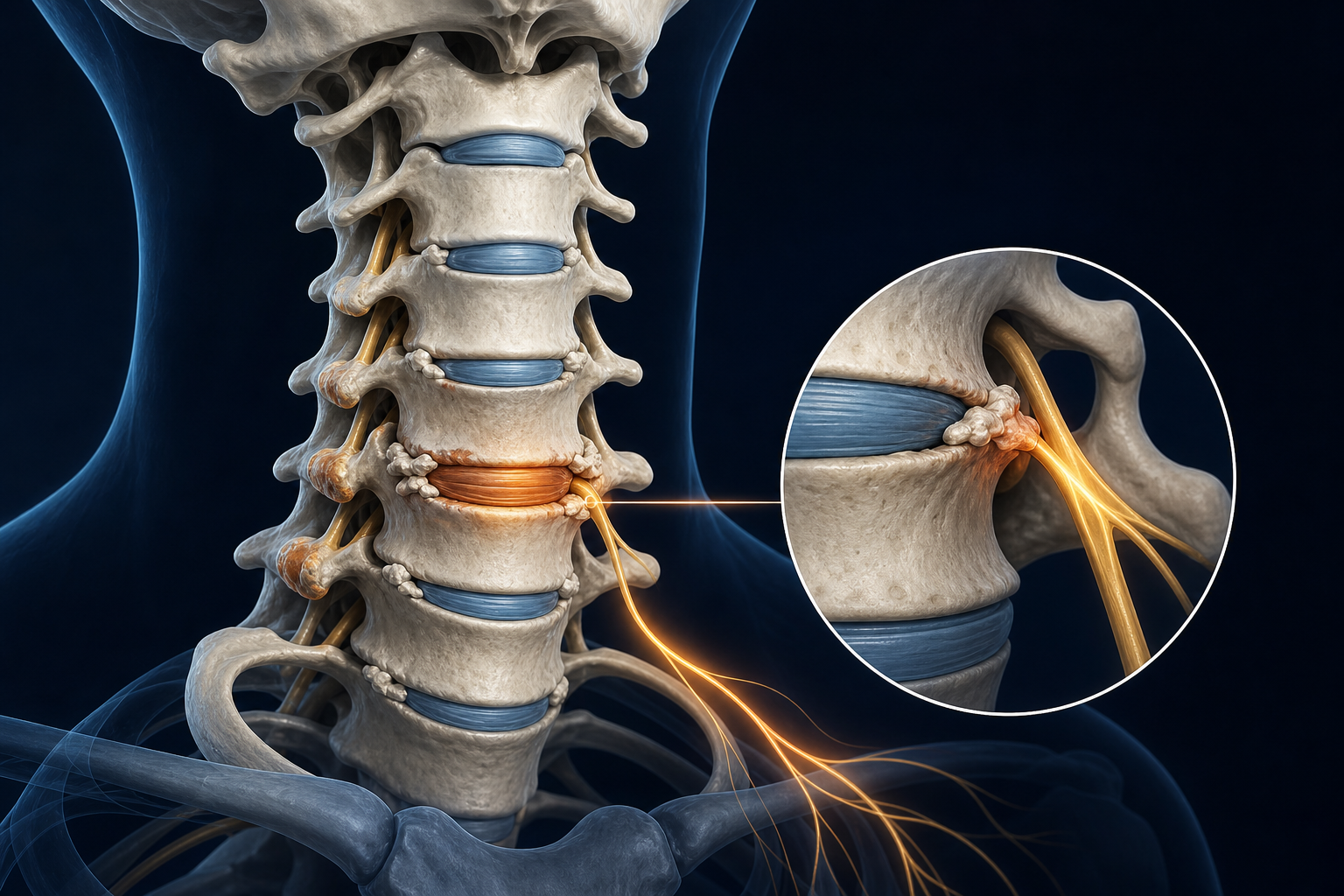
Cervical spondylosis is a broad term for age-related wear and degeneration of the bones, discs, and joints in the cervical spine — the seven vertebrae that make up your neck. Over time, the intervertebral discs between those vertebrae gradually lose height and moisture content, the cartilage that cushions the facet joints thins out, and the body sometimes responds by forming extra bony growths called osteophytes, more commonly known as bone spurs in the neck.
These structural changes can narrow the spaces where nerve roots exit the spinal column, and in some cases the spinal canal itself, putting pressure on nerves or the spinal cord. That pressure is what produces most of the recognizable symptoms of the condition.
Explore neck pain conditions and find providers on Medximity
Is Cervical Spondylosis a Normal Part of Aging?
In a structural sense, yes — the degenerative changes associated with cervical spondylosis are extremely common and are considered a normal aspect of spinal aging. Imaging studies suggest that by age 60, the majority of adults show some radiographic evidence of cervical disc degeneration or osteophyte formation, even many who have no symptoms at all.
That said, "common" does not mean "inevitable suffering." Whether those structural changes produce significant pain, stiffness, or neurological symptoms varies considerably from person to person, and many factors — posture, activity level, occupational demands, and prior injury history — can influence both the pace of degeneration and how symptomatic someone becomes. The presence of cervical spondylosis on an imaging report does not automatically mean a person will be disabled by it.
What Causes Bone Spurs in the Neck?
Bone spurs form as a response to instability or excess mechanical stress. When a disc loses height and the joint surfaces experience more direct loading, the body deposits extra bone in an attempt to stabilize the affected area. This process is driven by:
- Disc dehydration and height loss — discs naturally lose water content with age, reducing their ability to absorb shock
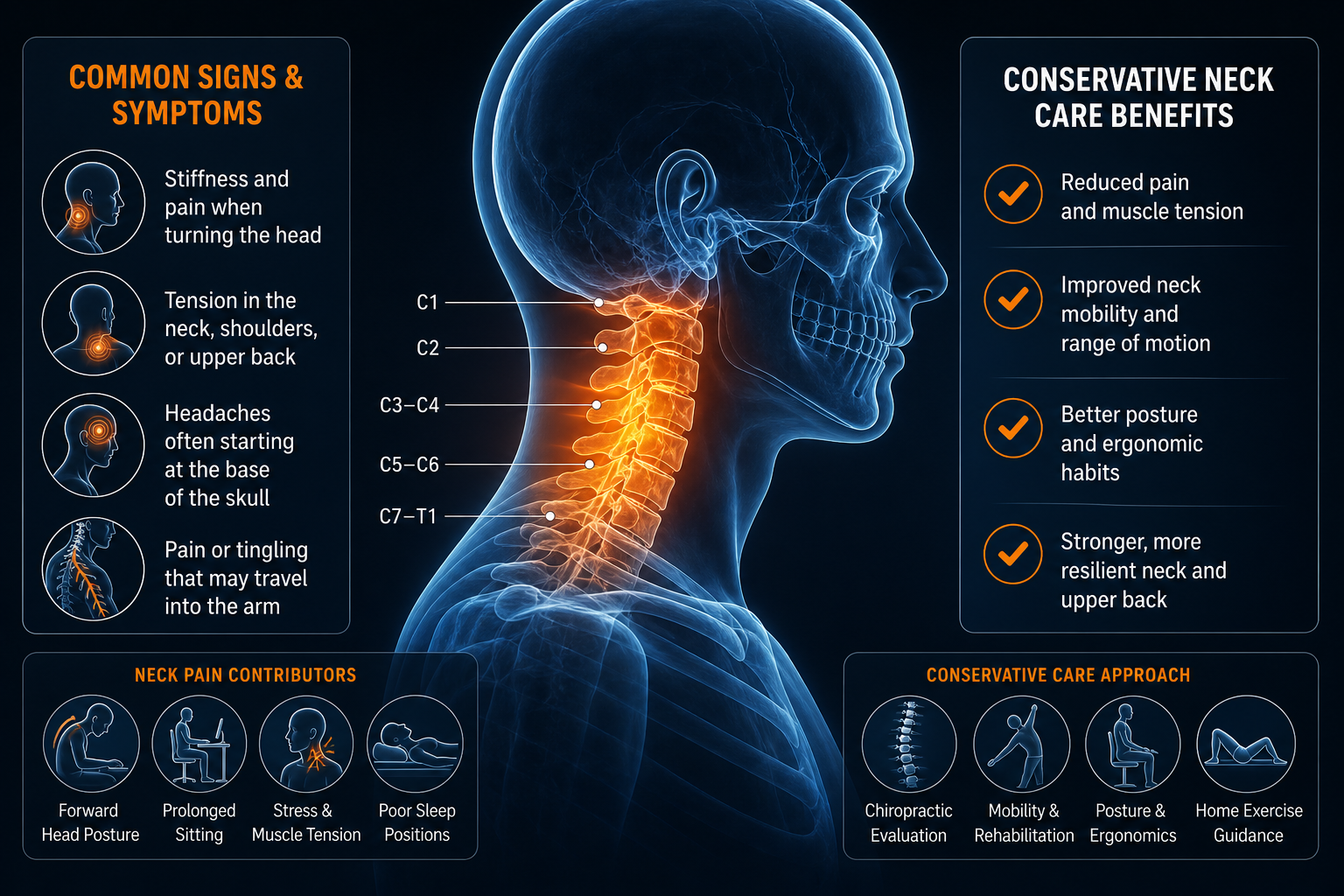
- Repetitive stress and poor posture — prolonged forward head posture, common with desk work and device use, increases compressive load on the lower cervical segments
- Prior neck injury — a history of whiplash or other cervical trauma is associated with earlier or more pronounced degenerative change
- Genetics — some individuals appear predisposed to faster disc degeneration regardless of lifestyle
- Occupational factors — jobs involving heavy lifting, vibration, or sustained awkward neck positions may accelerate wear
Cervical Spondylosis Symptoms: What It Actually Feels Like
Symptoms can range from mild and intermittent to persistent and functionally limiting. The most common presentation includes:
Neck Pain and Stiffness
A dull, aching pain centered in the neck — often worse in the morning or after prolonged sitting — is the hallmark complaint. Many patients describe difficulty turning their head fully to one side, particularly upon waking. This pattern of neck stiffness and morning headaches frequently leads people to wonder whether something more serious is happening.
Pain and Tingling Down the Arm from the Neck
When osteophytes or a degenerating disc compress a nerve root in the cervical spine, symptoms can radiate outward from the neck into the shoulder, arm, forearm, and even the fingers. This is called cervical radiculopathy. The sensation is often described as a burning, electric, or pins-and-needles feeling that travels along a specific pathway depending on which nerve root is affected. Some people experience this alongside or instead of local neck pain.
Can Cervical Spondylosis Cause Weakness in the Hands?
Yes, it can. When nerve root compression is significant, it may produce not just pain and tingling but measurable weakness in the muscles supplied by that nerve — including the muscles controlling grip strength and fine hand movements. Weakness that is progressive, accompanied by coordination problems, or paired with balance difficulties should prompt evaluation by a provider promptly, as these signs may indicate involvement of the spinal cord itself (cervical myelopathy), which warrants more urgent attention.
Headaches
Tension-type headaches originating at the base of the skull (cervicogenic headaches) are commonly associated with cervical spondylosis. The suboccipital muscles and upper cervical joints are close in proximity to structures that refer pain into the head, so joint irritation or muscle guarding in the upper neck frequently produces headache patterns that patients may not initially connect to their spine.
Read more: Cervicogenic Headaches and Neck-Related Head Pain
Cervical Spondylosis vs. Herniated Disc: What's the Difference?
This is a question that comes up often, and the distinction matters. A herniated cervical disc occurs when the soft inner material of a disc (the nucleus pulposus) pushes through the tougher outer layer and presses on a nearby nerve root — typically as a more acute event, sometimes following an injury or sudden strain. Symptoms can be severe and come on relatively quickly.
Cervical spondylosis, by contrast, describes the broader degenerative process — disc height loss, bone spur formation, facet joint arthritis — that develops gradually over years. The two conditions can and frequently do coexist: a spine affected by chronic spondylosis is also more vulnerable to disc herniation. Both can produce radicular symptoms (pain and tingling down the arm), which is why a clinical examination and appropriate imaging are needed to clarify what's actually driving a patient's particular symptom pattern.
Learn more about herniated disc conditions and conservative care options
Cervical Spondylosis Neck Pain Treatment Without Surgery
For the vast majority of patients, cervical spondylosis is managed conservatively — meaning without surgical intervention. Research and clinical experience consistently support conservative care as the appropriate first-line approach for most presentations of cervical spondylosis, with surgery generally reserved for cases involving progressive neurological deficits or spinal cord compression that has not responded to non-surgical management.
Chiropractic Care for Cervical Spondylosis
Chiropractors who work with cervical spondylosis patients typically focus on restoring joint mobility, reducing muscle guarding, and improving the functional mechanics of the cervical and upper thoracic spine. Depending on the degree of degeneration present, a chiropractor may use gentle mobilization techniques rather than high-velocity manipulation, and will often incorporate soft tissue work, postural rehabilitation, and ergonomic guidance into the treatment plan. Many patients report meaningful improvements in stiffness, range of motion, and pain levels with consistent chiropractic care.
Find a chiropractor for cervical spondylosis near you on Medximity
Physical Therapy Exercises for Neck Degeneration
Physical therapy plays a central role in cervical spondylosis management. A physical therapist will typically assess the patient's movement patterns, strength deficits, and postural habits before designing an individualized program. Common elements include:
- Cervical range-of-motion exercises — gentle, controlled movements to maintain and gradually restore flexibility in the neck
- Deep cervical flexor strengthening — targeting the small stabilizing muscles at the front of the neck that are often weak in people with chronic cervical pain
- Scapular stabilization — addressing the shoulder girdle muscles that support proper cervical mechanics
- Postural correction — retraining head position and thoracic spine extension to reduce the compressive loads that accelerate degeneration
- Manual therapy — hands-on joint mobilization and soft tissue techniques to complement the exercise component
Search for physical therapists specializing in neck rehabilitation near you
Is It Safe to Exercise With Cervical Spondylosis?
For most people, yes — carefully chosen exercise is not only safe but actively beneficial. Movement helps maintain disc nutrition, reduces inflammation, prevents muscle deconditioning, and supports the postural changes that can take pressure off affected cervical structures. The important caveat is that exercise for cervical spondylosis should be guided by a knowledgeable provider, particularly if radicular symptoms (arm pain, tingling, or weakness) are present. High-impact activities, exercises that involve loading the neck in compression or extreme range of motion, and certain gym movements may need to be modified. Starting with guidance from a physical therapist is the most reliable way to exercise safely and effectively.
How Long Does Cervical Spondylosis Treatment Take?
There is no single timeline that applies to everyone, and it's important to set realistic expectations. Cervical spondylosis reflects structural changes that have accumulated over years — those changes don't reverse, but their functional impact can often be substantially reduced. Many patients begin to notice improvements in pain and stiffness within four to eight weeks of consistent conservative care, though some take longer depending on symptom severity, how long the condition has been present, and individual factors like overall health and adherence to a home exercise program.
Cervical spondylosis is typically managed as an ongoing condition rather than something that is "fixed" with a defined course of treatment. Periodic maintenance care, a home exercise routine, and lifestyle adjustments — particularly around posture and ergonomics — tend to produce the best long-term outcomes. Your provider can give you a more individualized sense of what to expect once they've assessed your specific situation.
When Should You See a Provider?
If you are experiencing any of the following, scheduling an evaluation with a chiropractor or physical therapist is a reasonable and proactive step:
- Persistent neck pain or stiffness lasting more than a few weeks
- Morning headaches that seem to start at the base of the skull
- Pain, numbness, or tingling running from the neck into the shoulder, arm, or hand
- Reduced range of motion that is interfering with daily activities
Seek more urgent evaluation — from a physician or emergency provider — if you experience sudden severe neck pain following a fall or impact, progressive weakness in the arms or legs, loss of coordination or balance, or any change in bladder or bowel function, as these symptoms require prompt assessment.
Read: Neck Pain — When to See a Provider and What to Expect
Finding the Right Provider
Conservative care for cervical spondylosis works best when it's delivered by a provider who has experience evaluating and managing spinal degenerative conditions and who will take the time to understand your specific symptom pattern, activity level, and goals. Medximity's provider directory makes it straightforward to search for chiropractors and physical therapists in your area who work with cervical and spinal conditions.
Find a chiropractor for cervical spondylosis near you
Frequently Asked Questions
What is cervical spondylosis and its symptoms?
Cervical spondylosis is age-related degeneration of the cervical spine's discs, joints, and bones, sometimes accompanied by bone spur formation. Common symptoms include neck pain, morning stiffness, reduced range of motion, headaches originating at the base of the skull, and — when nerve roots are compressed — pain, tingling, or weakness that travels down the arm.
What causes bone spurs in the neck?
Bone spurs (osteophytes) form as a response to instability and increased mechanical load on cervical joints — most often when intervertebral discs lose height and the vertebrae experience more direct contact. Contributing factors include normal aging, poor posture, prior neck injury, repetitive occupational stress, and genetic predisposition.
Can cervical spondylosis cause weakness in the hands?
Yes. When a nerve root is significantly compressed by a bone spur or degenerating disc, it can cause not only pain and tingling but also weakness in the arm or hand muscles that nerve supplies. Progressive or rapidly worsening weakness warrants prompt medical evaluation.
What is the difference between cervical spondylosis and a herniated disc?
A herniated disc involves the inner disc material pushing through the outer disc wall and pressing on a nerve — often more acute in onset. Cervical spondylosis describes the broader, gradual degenerative process affecting discs, vertebral bones, and facet joints over time. Both can produce similar symptoms and often coexist in the same spine.
Is it safe to exercise with cervical spondylosis?
For most people, yes — guided, appropriate exercise is beneficial and recommended. It helps maintain mobility, supports spinal stability, and can reduce pain over time. Exercise should be tailored to your condition, ideally with input from a physical therapist, particularly if you have radicular (arm) symptoms.
How long does cervical spondylosis treatment take?
Many patients notice meaningful improvement within four to eight weeks of consistent conservative care, but individual timelines vary. Because cervical spondylosis involves structural changes rather than a simple injury, long-term management — including home exercise and periodic provider check-ins — tends to produce better outcomes than short-term treatment alone.
Is cervical spondylosis a normal part of aging?
The underlying structural changes are extremely common and are considered a normal aspect of spinal aging — most adults over 60 show some imaging evidence of cervical degeneration. However, significant pain or neurological symptoms are not inevitable, and conservative treatment can substantially reduce their impact for many people.