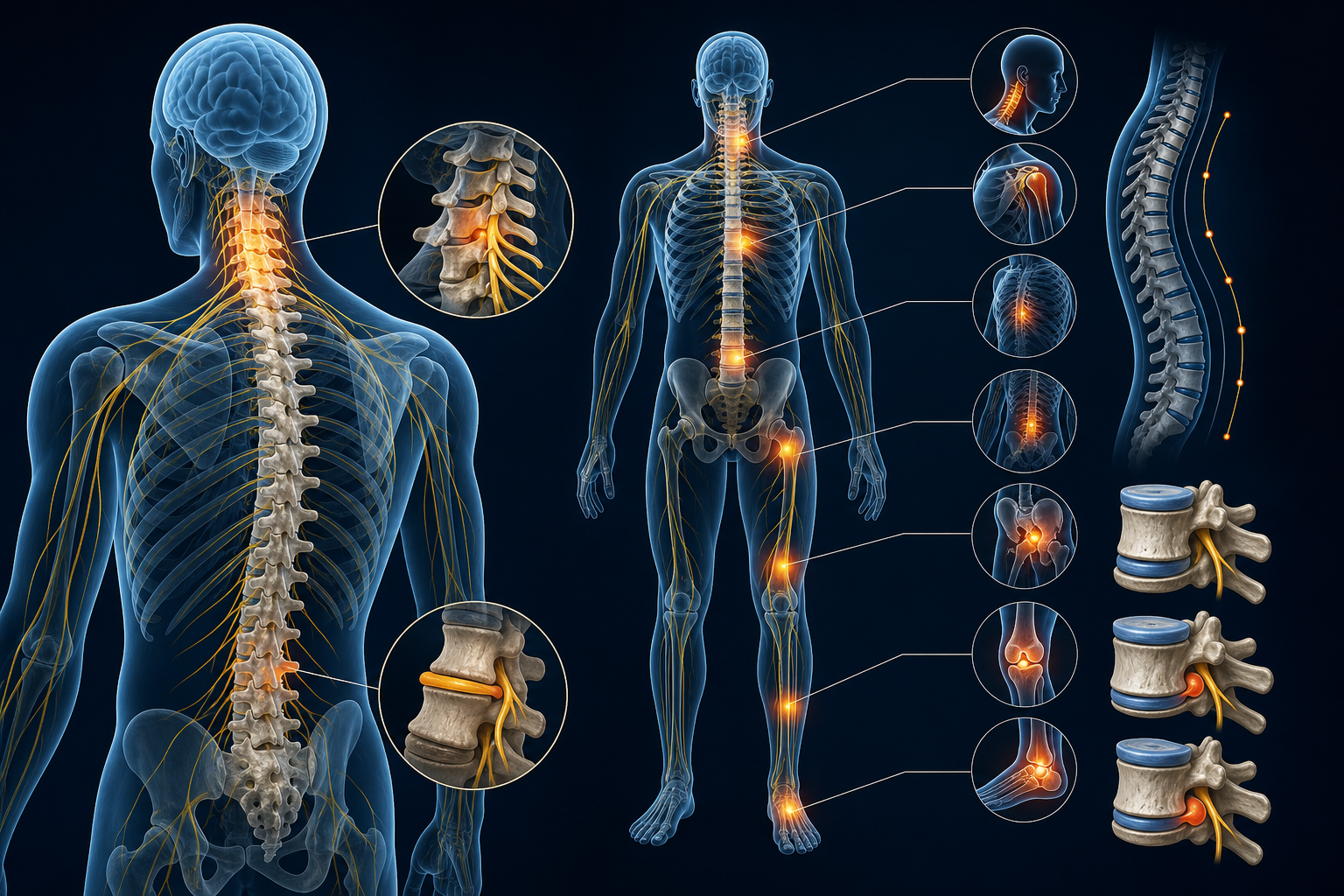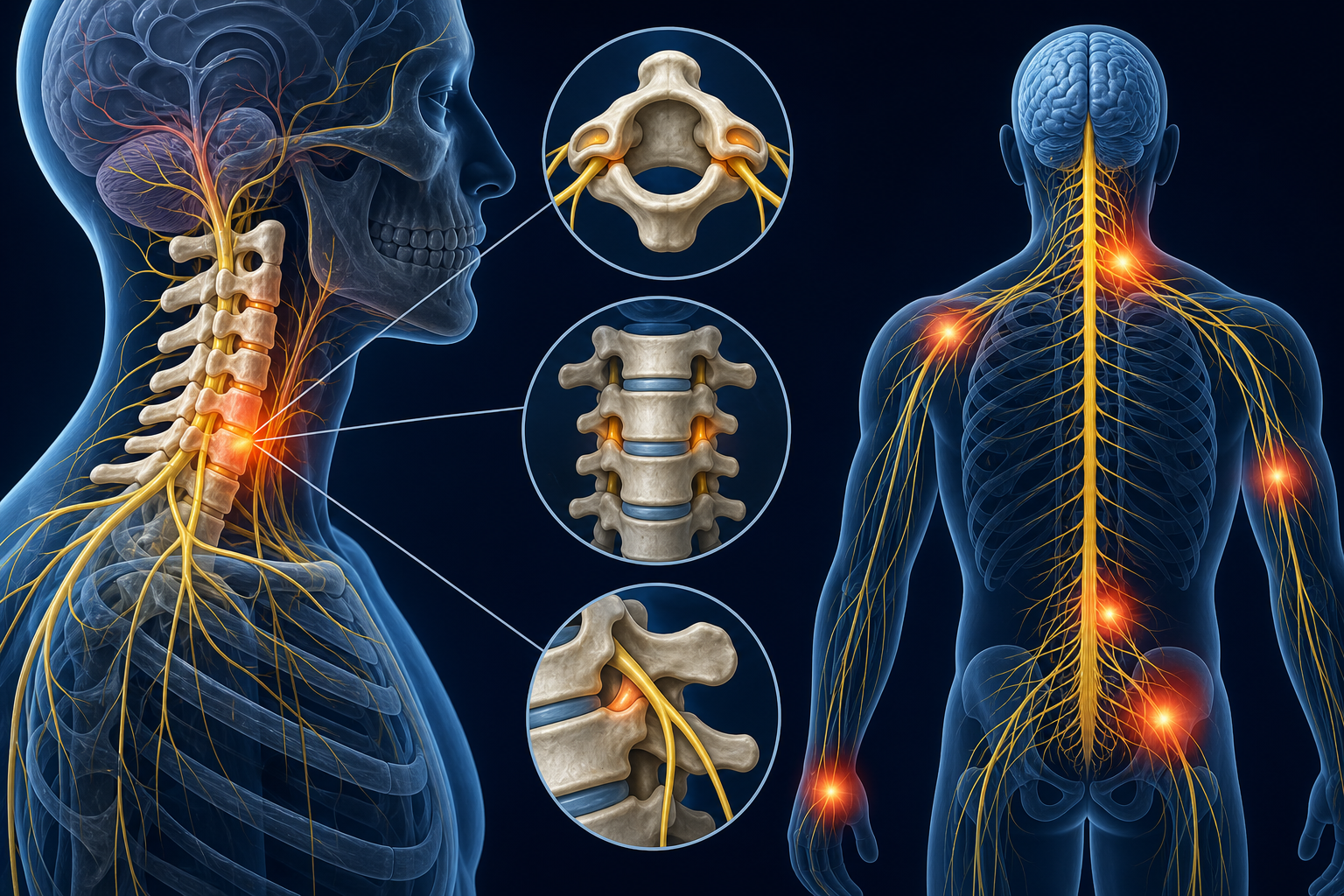
Back pain is the leading reason adults in Sioux Falls visit a chiropractor — and for most cases of acute or chronic lower back pain, chiropractic care is one of the most evidence-supported conservative treatments available. Whether you're dealing with a sharp lumbar strain from a weekend project or persistent stiffness that's been building for months, a back pain chiropractor in Sioux Falls can assess the structural cause and begin targeted treatment, often within the first visit.
What Causes Back Pain — and Why It's So Common
Understanding what causes lower back pain in adults starts with the anatomy. The lumbar spine — specifically the L4, L5, and S1 vertebral segments — carries the majority of your body weight and is the most frequently injured region of the spine. Most adult back pain originates from one of three sources: intervertebral disc dysfunction, facet joint irritation, or paraspinal muscle strain involving muscles like the quadratus lumborum and erector spinae group.
Sioux Falls residents face specific risk factors. The region's workforce is heavily concentrated in agriculture, healthcare, and manufacturing — all high-repetition, physically demanding fields. Add South Dakota's seasonal extremes (shoveling, prolonged indoor sedentary work in winter) and you have conditions that compound spinal loading over time.
Pain when sitting too long is one of the most common lower back complaints — and it has a direct mechanical fix. Sustained lumbar flexion increases intradiscal pressure and progressively loads the posterior annulus fibrosus. If your pain reliably worsens after 20-30 minutes of sitting and improves when you stand or walk, that pattern strongly suggests a disc-related component at L4-L5 or L5-S1.
- Lumbar muscle strain: Most common; typically resolves within 2-6 weeks with appropriate care
- Disc herniation: Can produce local pain or radiating leg symptoms (sciatica) down the sciatic nerve
- Facet syndrome: Stiff, localized pain that worsens with extension and rotation
- Sacroiliac joint dysfunction: Often misidentified as lumbar pain; creates pain at the belt line, sometimes unilateral
- Spinal stenosis: More common after age 50; produces leg symptoms that worsen with walking and improve with sitting
For a detailed look at natural recovery strategies alongside chiropractic, see Low Back Pain – How to Heal Naturally on the Medximity blog. If your back pain is accompanied by leg pain traveling below the knee, Sciatica Treatment – Understanding the Pain covers that presentation specifically.
How Does a Chiropractor Help with Back Pain?
Chiropractic care addresses back pain through spinal manipulation, mobilization, and associated soft-tissue techniques that restore joint motion, reduce nerve irritation, and normalize muscle function. The mechanism isn't simply "cracking your back." Controlled high-velocity, low-amplitude (HVLA) thrust techniques restore segmental motion at hypomobile vertebral joints, which reduces the reflexive paraspinal muscle guarding that sustains pain cycles.
Back pain treatment without surgery is the primary goal for most patients — and chiropractic achieves that for the majority of musculoskeletal cases. Research published in the Journal of Manipulative and Physiological Therapeutics consistently shows spinal manipulation produces outcomes comparable to or exceeding those of general practitioner care for acute and subacute low back pain, with faster return-to-function timelines.
Acute Back Pain vs. Chronic Back Pain: Different Approaches
Acute back pain (under 12 weeks) typically responds to 4-8 chiropractic sessions focused on reducing inflammation, restoring segmental mobility, and reactivating inhibited core musculature. Treatment is more frequent early — often 2-3 visits per week — then tapers as symptoms resolve.
Chronic back pain (over 12 weeks) requires a different emphasis. Structural adaptation, movement compensation patterns, and central sensitization all become factors. Treatment typically extends to 12-20 sessions spread over 6-10 weeks, with more integration of rehabilitation exercise targeting the multifidus and transversus abdominis muscles. Progress is measured in function — how far you can walk, how long you can sit, whether you can return to work activities — not just pain scores.
What to Expect at Your First Chiropractic Appointment
What happens at your first chiropractic appointment in Sioux Falls follows a consistent clinical structure, regardless of which practice you visit. Plan for 45-60 minutes.
- Health history intake: Onset, mechanism of injury, symptom behavior (better with movement or rest?), prior episodes, and relevant medical history
- Postural and spinal assessment: Observation of standing posture, spinal curvature, and any lateral shift
- Range of motion testing: Lumbar flexion, extension, lateral bending, and rotation measured in degrees — your baseline ROM is documented for progress tracking
- Orthopedic and neurological tests: Straight leg raise (tests sciatic nerve tension), Kemp's test (screens facet joints), and deep tendon reflexes if leg symptoms are present
- Palpation: Motion palpation of individual lumbar and sacral segments to identify restricted or hypermobile joints
- X-ray (if indicated): Many Sioux Falls chiropractic practices have on-site digital X-ray. Films are typically taken in standing position to assess load-bearing alignment
- Report of findings and treatment plan: The chiropractor explains what they found and recommends a specific care schedule with measurable goals
First-visit treatment varies by chiropractor and by case severity. Some providers begin hands-on treatment during the first appointment; others present findings and begin care at the second visit. Either approach is standard.
Common Chiropractic Techniques Used for Back Pain
Chiropractic adjustment for lower back pain relief is not one-size-fits-all. Technique selection depends on your diagnosis, age, pain level, and how acute the injury is.
Spinal Manipulation and Mobilization
HVLA (High-Velocity Low-Amplitude) manipulation is the classic chiropractic adjustment — a precise thrust that produces the audible cavitation sound. It's most effective for facet joint dysfunction and segmental hypomobility. Contraindicated in cases of moderate-to-severe disc herniation with neurological compromise, severe osteoporosis, or fracture.
Flexion-distraction technique uses a specialized table that cycles the lumbar spine through a gentle pumping motion in flexion. It's the preferred approach for disc herniation and stenosis because it reduces intradiscal pressure and creates a pumping effect that improves disc nutrition. Typically performed with zero audible adjustment.
Activator method uses a hand-held spring-loaded instrument to deliver precise, low-force impulses. Common for patients who are post-injury, elderly, or prefer a gentler approach.
Chiropractic vs. Physical Therapy for Back Pain
When comparing chiropractic vs. physical therapy for back pain, the distinction isn't either/or — it's which is the right starting point for your specific presentation. Chiropractic prioritizes joint mobility restoration first; PT prioritizes neuromuscular re-education and strength. In practice, many Sioux Falls providers integrate both, and research suggests the combination produces better long-term outcomes than either alone for chronic cases.
Approach Best For Typical Frequency Expected Timeline Chiropractic adjustment (HVLA) Acute facet dysfunction, segmental stiffness 2-3x/week initially 4-8 sessions for acute cases Flexion-distraction Disc herniation, stenosis 2-3x/week 8-16 sessions Physical therapy (rehab) Chronic pain, post-injury stabilization 2x/week 6-12 weeks Combined chiro + rehab Chronic or recurrent back pain 2-3x/week 8-12 weeks Soft-tissue therapy (massage, IASTM) Paraspinal muscle hypertonicity 1-2x/week as adjunct Adjunct to primary careIf back pain is affecting your work posture or ergonomic setup, Ensuring Safety and Preventing Back Pain at Work offers specific prevention strategies alongside treatment.
How Long Does Chiropractic Care for Back Pain Take?
How long until chiropractic helps back pain depends on three variables: how long you've had the pain, the structural diagnosis, and how consistently you attend the recommended schedule.
Most acute patients notice measurable improvement within 2-4 visits. Significant relief — 50% or greater reduction in pain — typically occurs by visits 6-8 when the treatment plan is followed. That's roughly 2-3 weeks of care if you're attending 2-3x per week.
Chronic cases take longer by definition. If you've had back pain for over a year, expect 6-10 weeks before you achieve stable, lasting improvement. The first 2-3 weeks are primarily about reducing pain and restoring range of motion; weeks 4-10 focus on functional restoration and preventing recurrence.
How many chiropractic visits for back pain are typical? A reasonable benchmark:
- Acute strain (under 4 weeks old): 6-10 visits over 3-5 weeks
- Subacute or recurrent pain: 10-16 visits over 6-8 weeks
- Chronic back pain (over 12 weeks): 16-24 visits over 8-12 weeks, often transitioning to monthly maintenance care
If you're not seeing meaningful improvement by visit 6-8, that's a signal to reassess — either the diagnosis needs revision, imaging should be ordered, or a different treatment approach is warranted. A competent chiropractor will initiate that conversation proactively.
When Should You See a Chiropractor for Back Pain — and When Is It Urgent?
Is chiropractic care safe for back pain? For the vast majority of musculoskeletal back pain presentations, yes — it is among the safest conservative treatments available. Serious adverse events from lumbar spinal manipulation are rare, estimated at fewer than 1 per 3.7 million treatments in the published literature.
That said, certain presentations require urgent medical evaluation before chiropractic care begins — or instead of it entirely.
Seek emergency care immediately if back pain is accompanied by:
- Loss of bladder or bowel control (possible cauda equina syndrome — a surgical emergency)
- Progressive leg weakness or numbness spreading bilaterally
- Back pain following significant trauma (fall from height, motor vehicle accident with high impact)
- Fever, unexplained weight loss, or history of cancer alongside new back pain
- Night pain that wakes you from sleep and is not positionally relieved
Routine chiropractic care is appropriate when back pain is mechanical — meaning it changes with position, movement, or activity. If you're unsure which category your pain falls into, find a chiropractor near you in Sioux Falls for an initial evaluation. A thorough intake exam will identify whether chiropractic is appropriate or whether referral is needed first.
Back pain sometimes co-presents with headaches, particularly when upper lumbar and thoracic segments are involved. If that's your pattern, see Link Between Migraine Headaches and Back Pain for a clinical explanation of the connection.
Finding the Right Back Pain Chiropractor in Sioux Falls
When searching for a back pain chiropractor near you in Sioux Falls, the most important factor isn't proximity — it's clinical specificity. Look for a provider who takes X-rays or reviews existing imaging, performs orthopedic testing, and gives you a diagnosis with a defined treatment plan and measurable goals.
Sioux Falls has a robust chiropractic community, with practices distributed across the east side along Kiwanis Avenue, the downtown core, and the rapidly growing south side near 85th Street. Most are in-network with major South Dakota insurers including Sanford Health Plan, Wellmark Blue Cross Blue Shield, and Avera Health Plans. Verify coverage before your first visit.
When evaluating the best chiropractor for back pain in Sioux Falls SD, ask these questions at your first call:
- Do you specialize in spinal conditions or musculoskeletal care?
- Do you have X-ray on-site or access to imaging reports?
- What treatment techniques do you use for disc-related vs. joint-related back pain?
- Do you integrate rehabilitation exercise into your care plans?
- What does a typical care plan look like for someone with my type of pain?
Browse chiropractors in Sioux Falls on Medximity to compare providers, read patient reviews, and confirm insurance before booking.
What to Do Next
If your back pain has lasted more than 3 days, is limiting your daily activity, or keeps returning after short periods of relief — that's enough reason to schedule a chiropractic evaluation. You don't need a referral in South Dakota; chiropractors are primary-contact providers and can see you directly.
At your first visit, expect: a 45-60 minute exam covering your health history, postural and motion assessment, orthopedic testing, and a clear explanation of what is causing your pain and what can be done about it. Many practices begin hands-on treatment at the first appointment.
If your back pain involves leg pain or sciatica: See What Can Be Done for Sciatic Pain? before your visit so you can describe your symptoms accurately to your provider.
If it's urgent: Loss of bowel or bladder control, bilateral leg weakness, or back pain following trauma — go to an emergency department, not a chiropractic office.
For everything else, find a back pain chiropractor in Sioux Falls on Medximity and book your evaluation today.
Frequently Asked Questions
How many chiropractic visits does it take to fix back pain?
Most patients with acute lower back pain see significant improvement within 6-10 visits over 3-5 weeks. Chronic back pain — lasting more than 12 weeks — typically requires 16-24 visits over 8-12 weeks. The severity of the structural diagnosis and consistency of attendance are the two biggest factors in how quickly you respond.
Is a chiropractor better than a physical therapist for back pain?
For acute back pain with joint restriction as the primary finding, chiropractic manipulation typically produces faster initial pain relief. For chronic back pain requiring muscular re-education and long-term stability, physical therapy tends to produce better sustained outcomes. Many Sioux Falls providers offer both under one roof, and the combination is supported by the best available evidence for chronic cases.
What type of back pain does chiropractic NOT help?
Chiropractic is not appropriate as a primary treatment for back pain caused by fracture, infection, active cancer, or cauda equina syndrome. It is also less effective when significant disc herniation has caused progressive neurological deficits (worsening foot drop or loss of reflexes). These cases require imaging and medical evaluation before any manual therapy.
Can a chiropractor help with back pain from sitting all day?
Yes. Back pain from prolonged sitting typically involves posterior disc loading at L4-L5 and L5-S1, combined with hip flexor tightening and gluteal inhibition. Chiropractic treatment addresses the restricted lumbar segments directly. Most chiropractors will also prescribe a standing or movement protocol — typically a 2-minute standing break every 30 minutes — and assess your workstation ergonomics as part of care.
Do I need an X-ray before seeing a chiropractor for back pain?
Not necessarily. Most chiropractors can perform their own X-rays on-site if clinically indicated. Imaging is typically ordered when pain has lasted more than 6 weeks without improvement, when trauma is involved, for patients over 50 with new-onset back pain, or when the clinical exam suggests a structural finding that requires imaging confirmation. Routine acute back pain does not require imaging before beginning care.
Does chiropractic care for back pain hurt?
During the adjustment itself, most patients feel immediate relief or mild pressure — not pain. It is common to feel some muscle soreness for 12-24 hours after the first 2-3 adjustments, similar to post-exercise soreness, as the joints and surrounding muscles adapt to restored motion. This typically resolves quickly and diminishes after the first week of care.