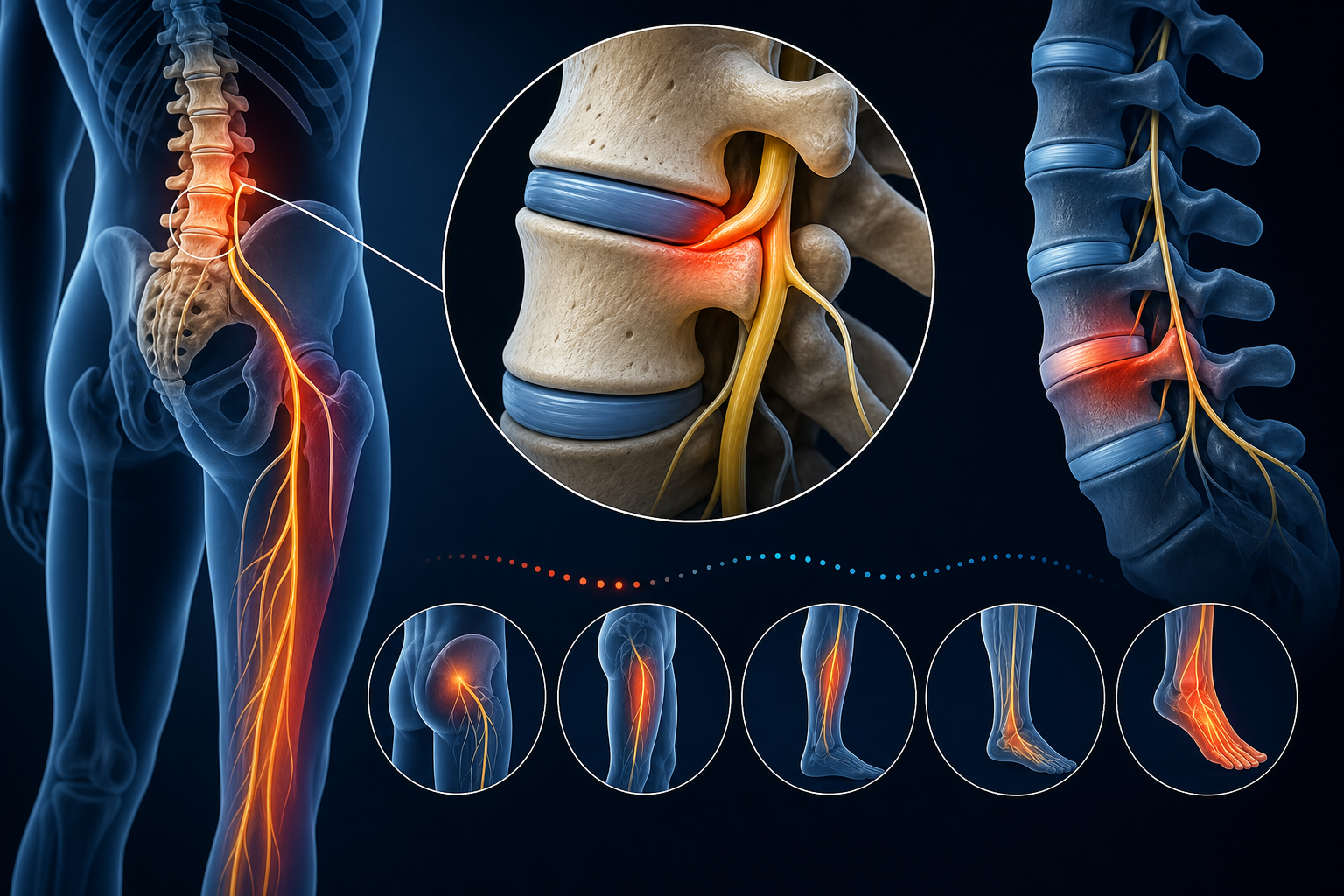
Understanding Lumbar Radiculopathy (Pinched Nerve in the Lower Back): Symptoms, Causes, and Treatment begins with a simple idea: symptoms in the leg can sometimes start in the spine. Lumbar radiculopathy occurs when a nerve root in the lower back becomes irritated, inflamed, or compressed. Because those nerves travel from the spine into the hips, legs, and feet, a problem in the lumbar spine may cause pain, numbness, tingling, or weakness far from the back itself.
Many people describe this as a pinched nerve in the lower back with leg pain. Others search for answers because they feel pain from the lower back to the foot, wonder why their leg feels numb, or ask whether a herniated disc can cause leg tingling. The answer is that lumbar nerve irritation may produce all of these symptoms, but the exact cause and best treatment plan can vary from person to person.
This article explains what lumbar radiculopathy is, how it compares with sciatica, common causes, warning signs, and what to expect from conservative care such as physical therapy, chiropractic evaluation, rehabilitation exercises, posture changes, and activity modification. It is educational only and should not replace a diagnosis or treatment plan from a qualified healthcare provider.
If you are looking for care now, Medximity can help you compare local options for physical therapy for lower back and leg symptoms or find a chiropractor for lower back nerve pain in your area.
What Is Lumbar Radiculopathy?
Lumbar radiculopathy is a condition involving irritation, inflammation, or compression of one or more nerve roots in the lumbar spine. The lumbar spine is the lower portion of the back, made up of five vertebrae labeled L1 through L5, with discs, joints, ligaments, muscles, and nerves working together to support movement and stability.
Nerve roots branch off from the spinal cord and exit through small openings between the vertebrae. These nerves carry signals that help control sensation and muscle activity in the lower body. When one of these nerve roots becomes irritated, symptoms may travel along the path of that nerve. This is why a problem in the back may feel like burning in the calf, tingling in the foot, or weakness when lifting the toes.
Lumbar radiculopathy is often called a pinched nerve in the lower back, although the word pinched is a simplified term. In some cases, the nerve is mechanically compressed by a herniated disc, bone spur, or narrowed space in the spine. In other cases, inflammation around the nerve may be a major contributor. Many people have a combination of mechanical pressure, tissue irritation, and movement-related sensitivity.
For broader information on back-related symptoms, you may also find Medximity's overview of lower back pain helpful.
What Are Lumbar Radiculopathy Symptoms?
When people search for what is lumbar radiculopathy symptoms, they are often trying to connect several confusing sensations. Symptoms may be felt in the low back, buttock, hip, thigh, calf, ankle, or foot. The pattern depends partly on which nerve root is involved and how sensitive the surrounding tissues have become.
Common Symptoms
Lumbar radiculopathy may cause:
- Sharp, shooting, burning, or electric-like pain that travels from the lower back into the leg
- Pinched nerve lower back leg pain that worsens with sitting, bending, lifting, coughing, or certain movements
- Pain from lower back to foot, sometimes following a specific line down the leg
- Numbness, tingling, pins-and-needles, or a crawling sensation in the thigh, calf, or foot
- Muscle weakness, heaviness, or fatigue in the leg
- Difficulty standing, walking, climbing stairs, or rising from a chair
- Symptoms that feel better with certain positions and worse with others
- Low back stiffness, guarding, or reduced range of motion
Not everyone has severe back pain. Some patients have mostly leg symptoms, which can make the source of the problem less obvious. Others may have intense back pain at first, followed by leg symptoms as nerve irritation develops.
Why Does My Leg Feel Numb?
Leg numbness can have many possible causes, and lumbar radiculopathy is one of them. When a lumbar nerve root is irritated, the brain may receive altered sensory signals from the area that nerve supplies. This may feel like numbness, tingling, burning, or reduced sensitivity to touch.
Numbness should be evaluated when it is new, persistent, worsening, or associated with weakness, changes in walking, or loss of coordination. A provider can help determine whether the symptoms appear consistent with a lumbar nerve pattern or whether another source should be considered.
Can a Herniated Disc Cause Leg Tingling?
Yes, a herniated disc can be associated with leg tingling in some patients. Spinal discs sit between the vertebrae and act as cushions. If the inner disc material pushes outward, it may irritate or compress a nearby nerve root. When this happens in the lumbar spine, symptoms may travel into the buttock, thigh, calf, or foot.
However, not every disc herniation causes symptoms, and not every case of leg tingling comes from a disc. Imaging findings and symptoms do not always match perfectly. A clinical examination is often important because it connects the imaging, symptom pattern, movement response, strength, reflexes, and sensation into a more complete picture.
Lumbar Radiculopathy vs Sciatica: What Is the Difference?
The terms lumbar radiculopathy and sciatica are often used together, but they are not exactly the same. Understanding lumbar radiculopathy vs sciatica differences can help you describe your symptoms more clearly to a provider.
Lumbar radiculopathy is the broader clinical term for irritation or dysfunction of a lumbar nerve root. It can involve different nerve roots and may cause pain, numbness, tingling, or weakness in different parts of the leg.
Sciatica usually refers to pain that travels along the sciatic nerve pathway, often from the lower back or buttock down the back of the leg. Sciatica is commonly associated with irritation of the lower lumbar or sacral nerve roots that contribute to the sciatic nerve.
In practical terms, many cases described as sciatica are a type of lumbar radiculopathy. But leg pain can also come from the hip, sacroiliac joint, peripheral nerves, muscles, vascular conditions, or other sources. That is why an examination matters. If you want a patient-friendly explanation of sciatic-type pain, see Medximity's page on sciatica symptoms and conservative care.
Common Causes of a Pinched Nerve in the Lower Back
Lumbar radiculopathy can develop for several reasons. Sometimes symptoms begin after a specific event, such as lifting, twisting, a fall, or a collision. In other cases, symptoms build gradually because of age-related spinal changes, repeated stress, or prolonged positions.
Herniated or Bulging Disc
A herniated or bulging disc is a common reason a lumbar nerve root becomes irritated. The disc may protrude toward the spinal canal or nerve opening, creating pressure or inflammation near the nerve. Symptoms may worsen with sitting, bending forward, or lifting, although patterns vary.
Degenerative Disc Changes
Over time, discs may lose hydration and height. This can change how load is distributed through the spine and may contribute to narrowing around the nerve roots. Degenerative changes are common with aging and do not always cause pain, but in some people they may be associated with nerve irritation.
Spinal Stenosis
Spinal stenosis means narrowing of the spinal canal or nerve passageways. In the lumbar spine, stenosis may be associated with leg pain, numbness, heaviness, or cramping that worsens with standing or walking and improves with sitting or bending forward. This pattern is not universal, but it is a common clue providers consider.
Bone Spurs and Arthritic Joint Changes
The small joints in the spine, called facet joints, can develop arthritic changes. Bone spurs may form as the body adapts to stress and degeneration. If these changes reduce space around a nerve root, radicular symptoms may occur.
Spondylolisthesis
Spondylolisthesis occurs when one vertebra shifts forward in relation to the one below it. This may affect spinal alignment and reduce space for the nerves. Some people have no symptoms, while others develop back pain, leg pain, or nerve-related changes.
Inflammation After Injury
Following a fall, sports injury, work injury, or motor vehicle collision, soft tissues around the spine can become irritated. Swelling, muscle guarding, and altered movement may increase sensitivity around a nerve root. Symptoms after trauma should be assessed by a qualified provider, especially when pain travels into the leg or is accompanied by numbness or weakness.
When Should You See a Provider?
You should consider seeing a healthcare provider when lower back and leg symptoms are new, worsening, persistent, or interfering with walking, sleep, work, exercise, or normal daily activities. Early evaluation may help identify the likely source of symptoms and guide a plan that is appropriate for your situation.
Schedule an Evaluation If You Notice
- Pain traveling below the knee, especially if it reaches the foot
- Leg numbness, tingling, burning, or pins-and-needles that does not quickly improve
- Weakness in the leg, ankle, or foot
- Symptoms that worsen with sitting, standing, walking, bending, or lifting
- Repeated flare-ups of lower back and leg pain
- Difficulty working, driving, sleeping, or caring for your family because of symptoms
- Uncertainty about whether your pain is coming from your back, hip, or another area
If you are searching for pinched nerve lower back treatment near me, look for a provider who takes time to assess both the spine and the leg symptoms. A careful history and exam can help determine whether conservative care is reasonable and what type of care may fit your presentation.
Symptoms That Need Urgent Medical Attention
Some symptoms may signal a more serious problem and should be evaluated urgently. Seek immediate medical care if you experience loss of bladder or bowel control, numbness in the groin or saddle area, rapidly worsening leg weakness, major trauma, fever with severe back pain, unexplained weight loss, or pain that is severe and unrelenting. These symptoms do not automatically mean a serious condition is present, but they should not be ignored.
For more guidance on deciding when symptoms need evaluation, you can read Medximity's article on when to see a provider for back pain.
How Providers Evaluate Lumbar Radiculopathy
A provider does not usually rely on one finding alone. Lumbar radiculopathy is typically evaluated by combining your symptom history, movement testing, neurological screening, and, when appropriate, imaging or additional medical evaluation.
Health History
Your provider may ask when symptoms began, where the pain travels, what makes it better or worse, whether numbness or weakness is present, and whether you have had previous episodes. They may also ask about work demands, exercise habits, recent injuries, medical history, and daily positions such as prolonged sitting or lifting.
Movement and Orthopedic Testing
A physical exam may include checking spinal range of motion, hip mobility, posture, gait, and symptom response to different movements. Some tests are designed to place gentle tension on the nerves to see whether symptoms are reproduced. These tests do not diagnose everything by themselves, but they can help guide clinical reasoning.
Neurological Screening
Because lumbar radiculopathy involves nerve function, a provider may assess reflexes, sensation, and strength. They may compare one side to the other. Changes in ankle reflex, great toe strength, calf strength, or sensation in part of the foot may provide clues about which nerve root is involved.
Imaging and Referrals
X-rays, MRI, or other tests are not always needed right away, especially when symptoms are mild and improving. Imaging may be considered when symptoms are severe, persistent, worsening, associated with neurological deficits, or linked to trauma or other concerning features. A provider can explain whether imaging is appropriate based on your situation.
How Long Does Lumbar Radiculopathy Last?
How long lumbar radiculopathy lasts varies. Some mild cases improve over days to weeks with activity modification and conservative care. Other cases may take several weeks or months, especially when symptoms are intense, nerve sensitivity is high, or spinal narrowing is involved. A small number of people experience recurrent or persistent symptoms that require more involved medical evaluation.
Recovery is not always a straight line. It is common for symptoms to fluctuate based on sitting time, sleep, stress, lifting, travel, and activity levels. Many providers track progress by looking at several signs together: less leg pain, reduced numbness or tingling, improved walking tolerance, better strength, improved sleep, and a gradual return to normal activities.
One useful clinical concept is centralization. Some patients notice that pain begins to move out of the foot or calf and closer to the back as symptoms improve. This can be a positive sign in certain mechanical back pain patterns, but it should be interpreted by a provider who understands your full presentation.
Lumbar Radiculopathy Treatment Without Surgery
Many people want to know whether lumbar radiculopathy treatment without surgery is possible. In many cases, conservative care is considered first when there are no urgent red flags or rapidly worsening neurological deficits. Conservative care focuses on reducing irritation, improving movement, restoring strength, and helping you return to daily activities safely.
Conservative treatment may include physical therapy, chiropractic care, guided exercise, education, ergonomic changes, activity pacing, and home strategies. The right mix depends on the suspected cause, severity of symptoms, medical history, and how your body responds to movement.
Education and Activity Modification
Education is often one of the first steps. Understanding which positions increase nerve symptoms and which positions reduce them can help you make better choices during the day. For example, some patients are sensitive to prolonged sitting, while others feel worse after standing or walking for long periods. Your provider may recommend temporary changes to lifting, bending, driving, or exercise while symptoms calm down.
Complete bed rest is rarely the goal for uncomplicated back pain. Many patients are encouraged to keep moving within tolerable limits, using short walks, position changes, and gentle mobility as symptoms allow. The goal is not to push through severe nerve pain, but also not to become unnecessarily inactive.
Physical Therapy for Pinched Nerve Lower Back
Physical therapy for pinched nerve lower back symptoms may help by addressing mobility, strength, nerve sensitivity, posture, and movement habits. A physical therapist may assess how your symptoms respond to repeated movements, positions, core activation, hip mobility, and functional tasks.
Depending on your presentation, physical therapy may include:
- Directional preference exercises, when a certain movement direction reduces leg symptoms
- Gentle nerve mobility techniques, sometimes called nerve glides, when appropriate
- Core and trunk stabilization exercises
- Hip and glute strengthening
- Manual therapy for joint or soft tissue mobility
- Walking or conditioning progression
- Education on lifting, sitting, sleeping positions, and work setup
- A graded return-to-activity plan
Physical therapy is not one-size-fits-all. Exercises that help one person may aggravate another, especially when nerve symptoms are active. That is why an individualized evaluation is important. You can learn more about conservative rehabilitation on Medximity's physical therapy treatment page.
Chiropractic Care for Lower Back Nerve Pain
Some patients seek the best chiropractor for lower back nerve pain because they want a conservative evaluation of spinal movement, joint function, and mechanics. Chiropractic care may include spinal manipulation or mobilization, soft tissue techniques, rehabilitation exercises, posture guidance, and coordination with other healthcare professionals when needed.
For lumbar radiculopathy, a chiropractor should screen for red flags, neurological changes, and signs that referral or imaging may be appropriate. Not every patient with nerve symptoms is a candidate for the same type of manual therapy. A careful provider will modify techniques based on your symptoms, comfort level, and exam findings.
To explore this type of conservative care, visit Medximity's chiropractic care overview or search for a local chiropractor near you.
Home Care and Ergonomic Changes
Home strategies may support recovery, but they should be matched to your symptoms. Helpful changes may include alternating sitting and standing, using a lumbar roll if it feels supportive, taking short walking breaks, avoiding repeated heavy bending during a flare, and adjusting workstation height. Some patients benefit from side sleeping with a pillow between the knees; others prefer lying on the back with support under the knees.
Heat or cold may provide short-term comfort for some people. Use these approaches cautiously and avoid direct skin injury. If any home strategy increases leg pain, numbness, or weakness, stop and discuss it with a provider.
Exercises for Lumbar Radiculopathy at Home
Exercises for lumbar radiculopathy at home should be gentle, symptom-guided, and ideally recommended by a provider after an evaluation. The goal is usually to reduce nerve irritation, improve tolerance to movement, and rebuild strength. Exercises should not cause worsening pain down the leg, increasing numbness, or new weakness.
The following examples are commonly used in conservative back care, but they are not right for everyone. Use them as discussion points with your provider rather than a personalized prescription.
Walking in Short Intervals
Short, frequent walks may help some patients maintain mobility without overloading the spine. Start with a distance that feels manageable. If leg pain increases as you walk, stop and rest. If symptoms settle quickly, your provider may suggest gradually building tolerance over time.
Prone Lying or Press-Up Progressions
Some people with disc-related symptoms feel better with extension-based positions, such as lying on the stomach or gently propping on the elbows. Others feel worse. If extension causes pain to travel farther down the leg, it may not be appropriate. A provider can help determine whether this type of directional exercise fits your presentation.
Pelvic Tilts
Pelvic tilts involve gently rocking the pelvis while lying on the back with knees bent. This may help improve awareness of low back position and reduce guarding. The movement should be small and comfortable.
Nerve Glides
Nerve glides are gentle movements intended to help a sensitive nerve move through surrounding tissues. They should not be aggressive stretching. If tingling or leg pain increases and lingers after the exercise, it may be too much or not appropriate at that stage.
Core and Hip Strengthening
As symptoms calm down, strengthening may focus on the abdominal wall, deep trunk stabilizers, glutes, and hips. Exercises may include bridges, modified dead bugs, side-lying hip work, or supported squats. The exact choice should depend on your pain level, movement control, and goals.
What to Expect at Your First Appointment
If you schedule care for suspected lumbar radiculopathy, your first visit will usually focus on understanding the pattern of symptoms and identifying whether conservative treatment is appropriate. You do not need to know the exact diagnosis before seeking help. Your job is to describe what you feel, where it travels, and what activities change it.
Before the Visit
It may help to write down when symptoms began, whether they started suddenly or gradually, where the pain travels, what makes symptoms better or worse, and whether you have numbness, tingling, or weakness. Bring any prior imaging reports or medical notes if you have them.
During the Visit
The provider may ask about your medical history and perform movement, strength, sensation, and reflex checks. They may observe how you walk, bend, sit, stand, and transition between positions. If your symptoms suggest a condition outside their scope or require additional testing, they may recommend referral to another healthcare professional.
After the Evaluation
You should leave with a clearer explanation of what may be contributing to your symptoms, what signs to monitor, and what the next steps may be. A conservative care plan may include in-office treatment, a home exercise program, activity guidance, and a schedule for reassessment. The plan should change if your symptoms change.
If you prefer rehabilitation-based care, Medximity can help you find physical therapists near you who treat lower back and leg symptoms.
How to Choose a Provider for Lumbar Radiculopathy
When comparing providers, look for someone who listens carefully, screens for neurological changes, explains findings in plain language, and creates a plan that fits your goals. Lumbar radiculopathy can be frustrating because symptoms may be intense and unpredictable. A good provider should help you understand what to expect, how progress will be measured, and when the plan should be adjusted.
Questions you may want to ask include:
- Do my symptoms appear consistent with lumbar nerve root irritation?
- Are there any signs that suggest I need imaging or referral?
- Which activities should I temporarily modify?
- What symptoms should prompt me to contact you sooner?
- Which exercises are appropriate for me right now?
- How will we track progress over the next few visits?
A provider should not promise a cure or guarantee a timeline. Instead, they should give you a reasonable plan based on your examination and update it as your symptoms respond.
Living With and Preventing Flare-Ups
After symptoms improve, the next goal is often reducing the chance of flare-ups. Prevention does not mean avoiding all activity. In many cases, it means building capacity gradually so your back and legs can tolerate the demands of work, exercise, caregiving, and daily life.
Build Strength Gradually
Core, hip, and leg strength may help improve spinal support and movement efficiency. Strengthening should be progressed slowly and should match your current level. Sudden jumps in load, volume, or intensity can irritate symptoms in some people.
Change Positions Often
Prolonged sitting or standing can aggravate symptoms for some patients. Microbreaks, short walks, and position changes may reduce cumulative stress. The best posture is often the next posture, meaning your body usually prefers variety over staying still for hours.
Use Better Lifting Mechanics
Lifting with the load close to your body, avoiding awkward twisting, and preparing the trunk before heavier tasks may reduce strain. If your job requires lifting, a physical therapist or chiropractor may help you practice task-specific strategies.
Return to Exercise Thoughtfully
Running, cycling, weight training, sports, yoga, and fitness classes may all be possible for many people after symptoms improve, but returning too quickly can trigger setbacks. A graded plan may help you rebuild confidence and tolerance.
Frequently Asked Questions
Is lumbar radiculopathy the same as a pinched nerve?
Lumbar radiculopathy is often described as a pinched nerve in the lower back, but the clinical picture may involve compression, inflammation, or irritation of a lumbar nerve root. A provider can help determine what appears to be driving your symptoms.
Can lumbar radiculopathy cause pain all the way to the foot?
Yes, lumbar nerve irritation may cause pain from the lower back to the foot in some cases. The exact path of pain, numbness, or tingling can provide clues about which nerve root may be involved.
Does leg numbness always mean a back problem?
No. Leg numbness can come from several sources, including lumbar nerve irritation, peripheral nerve problems, circulation issues, or other medical conditions. New, persistent, or worsening numbness should be evaluated by a qualified provider.
Can lumbar radiculopathy improve without surgery?
Many cases are managed first with conservative care when there are no urgent red flags or progressive neurological deficits. Physical therapy, chiropractic care, guided exercise, education, and activity modification may help some patients improve, but outcomes vary.
What should I avoid with lumbar radiculopathy?
During a flare, it may help to avoid movements or positions that clearly worsen leg symptoms, such as prolonged sitting, repeated bending, or heavy lifting. The right restrictions depend on your symptoms, so ask your provider for individualized guidance.
How do I find pinched nerve lower back treatment near me?
You can use Medximity to compare conservative care providers, including physical therapists and chiropractors, in your area. Start with a provider who evaluates back and leg symptoms, screens nerve function, and explains a clear plan for care.
Key Takeaway
Lumbar radiculopathy is a common explanation for lower back pain that travels into the leg, but it is not the only possibility. Symptoms such as shooting pain, tingling, numbness, or weakness deserve a careful evaluation, especially when they persist or interfere with daily life. Conservative care may help many patients, and the best plan is the one matched to your symptoms, exam findings, and goals.
If you are ready to take the next step, search Medximity for physical therapy for a pinched nerve in the lower back or a chiropractor for lower back nerve pain near you.


