Does Workers' Compensation Cover Spinal Decompression? What Injured Workers Need to Know is a common question after a back or neck injury on the job. In many cases, workers’ compensation may cover spinal decompression when the treatment is related to a covered work injury, documented as medically necessary, and approved under the rules of the workers’ compensation system in your state.
Coverage is not automatic. Workers’ compensation laws vary by jurisdiction, and insurers often review whether a treatment is reasonable, necessary, and connected to the workplace injury. If you are dealing with back pain after a work injury, pain down the leg after a work injury, or a diagnosed disc problem, the most important first step is a qualified medical evaluation and clear documentation.
This article is educational only and is not legal or medical advice. A licensed healthcare provider can evaluate your symptoms and treatment options, and a workers’ compensation attorney or claims professional can explain how the rules may apply to your specific claim.
What Is Spinal Decompression?
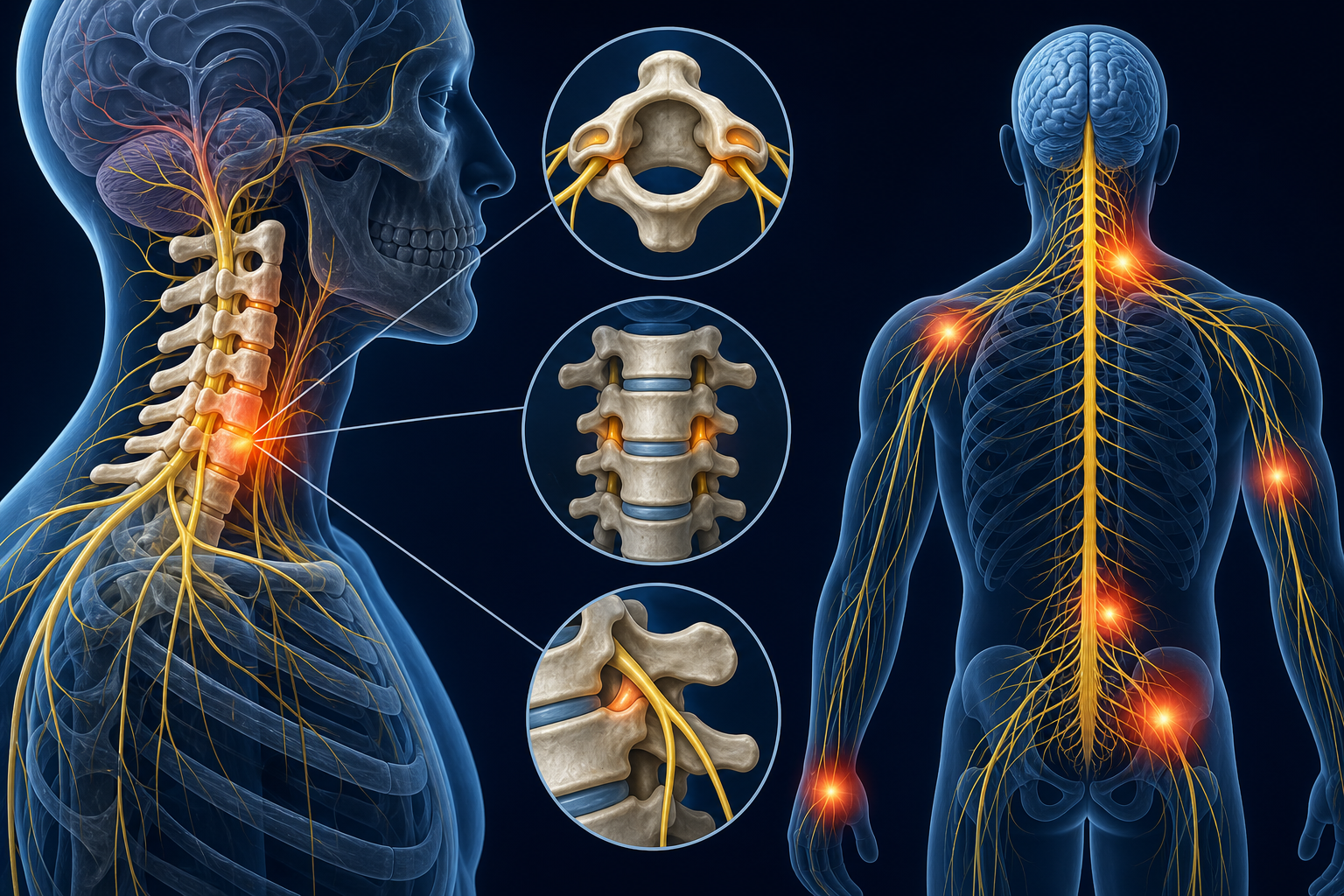
Spinal decompression is a conservative treatment approach intended to reduce pressure on structures in the spine. In most outpatient conservative-care settings, the term refers to non-surgical spinal decompression, a form of computer-guided or table-based traction that gently stretches the spine in a controlled way.
The goal is not to “force” the spine back into place. Instead, decompression may help reduce mechanical stress around irritated discs, joints, or nerve roots. Some patients report relief when disc-related back or neck pain is associated with nerve irritation, although results vary and not every condition is appropriate for decompression.
Non-surgical spinal decompression is different from surgical decompression. Surgical decompression is an invasive procedure performed by a surgeon. This article focuses on conservative spinal decompression without surgery in a workers’ comp context.
If you are searching for general information about this type of care, Medximity’s resource on spinal decompression treatment explains how conservative decompression is commonly used in outpatient settings.
When Might Workers’ Comp Cover Spinal Decompression?
Workers’ compensation may cover spinal decompression when several conditions are met. Exact standards vary by state and claim, but reviewers often look at whether the injury is accepted as work-related, whether the diagnosis supports the treatment, whether conservative care is appropriate, and whether the provider has documented medical necessity.
The injury must usually be connected to work
For workers’ compensation to consider payment, the back or neck condition generally must be connected to a work-related incident or occupational exposure. Examples may include lifting injuries, slips and falls, repetitive bending, forceful twisting, motor vehicle crashes during job duties, or cumulative strain from physically demanding work.
Connection to work can be straightforward in some claims and disputed in others, especially if the worker has a prior history of back pain or degenerative disc findings. A prior condition does not always end the conversation, but it can make documentation more important. The treating provider may need to explain whether the work event caused, aggravated, or temporarily worsened the condition.
The diagnosis should support the treatment plan
Spinal decompression is most often discussed for disc-related pain, such as a herniated disc, bulging disc, or symptoms consistent with nerve root irritation. A common example is low back pain with pain traveling into the buttock, thigh, calf, or foot. Patients often describe this as sciatica, though a provider must evaluate the actual cause.
If you are researching herniated disc treatment workers comp options, it may help to review Medximity’s overview of herniated disc symptoms and conservative care. A disc diagnosis may come from clinical examination, imaging, or both, depending on the case.
The treatment must generally be medically necessary
Medical necessity for spinal decompression workers comp claims usually depends on whether the provider can explain why decompression is appropriate for the diagnosis, symptoms, functional limitations, and stage of care. Documentation may include pain location, neurological findings, range-of-motion limitations, work restrictions, prior treatment response, and specific functional goals.
For example, a provider may document that a worker has low back pain with leg symptoms, difficulty standing or lifting, and findings consistent with disc-related nerve irritation. The provider may then recommend a conservative care plan that includes decompression, therapeutic exercise, activity modification, and reassessment after a defined number of visits.
Non-Surgical Spinal Decompression for a Work Injury
Non surgical spinal decompression work injury care is typically delivered in a clinic by a chiropractor, physical therapist, or another trained provider depending on state scope-of-practice rules and the clinic’s services. The worker lies on a specialized table while a harness or positioning system applies controlled traction to the cervical or lumbar spine.
Sessions are usually time-limited. Many providers combine decompression with other conservative treatments, such as mobility work, stabilization exercises, postural training, manual therapy, heat or ice, and education about safe movement. The broader plan matters because decompression alone may not address the strength, endurance, movement habits, or job demands that contribute to ongoing symptoms.
Workers often search for spinal decompression without surgery workers comp because they want to avoid invasive treatment when possible. Conservative care may be appropriate in many cases, but a provider should screen for conditions that require urgent or different medical attention.
When to See a Provider After a Work-Related Back or Neck Injury
You should consider seeing a qualified provider promptly after a work-related back or neck injury, especially if pain is limiting your work duties, sleep, walking, lifting, or normal daily activities. Early evaluation may help identify whether symptoms appear consistent with a strain, joint irritation, disc injury, or nerve involvement.
Seek urgent medical care right away if you have severe or worsening weakness, loss of bowel or bladder control, numbness in the groin or saddle area, fever with severe spine pain, major trauma, unexplained weight loss, or pain that is rapidly worsening. These symptoms can have serious causes and should not be managed with routine decompression visits alone.
If you need to compare conservative-care options, you can use Medximity to search for a chiropractor near you or a physical therapist near you. If your symptoms are complex or not improving, you may also want to search for a spine specialist near you.
What to Expect at a Spinal Decompression Evaluation
A workers’ compensation spinal decompression evaluation usually begins with a detailed history. The provider may ask how the injury happened, what job duties are affected, where the pain travels, what makes symptoms better or worse, and what treatment you have already tried.
Clinical examination
The exam may include posture and movement assessment, range of motion, strength testing, reflexes, sensation testing, orthopedic tests, and functional tasks such as bending, walking, or lifting patterns. If you have pain down the leg after a work injury, the provider may screen for signs of nerve root irritation.
Imaging and records review
Not every back injury requires imaging immediately. However, if MRI, X-ray, or other records already exist, the provider may review them. Imaging findings should be interpreted carefully because many adults have disc bulges or degenerative changes that may or may not match their symptoms. A strong treatment plan connects imaging, exam findings, symptoms, and functional limitations.
Treatment plan and goals
If spinal decompression appears appropriate, the provider may recommend a trial of care with measurable goals. Goals might include improved walking tolerance, reduced leg symptoms, improved range of motion, better sleep, or safer performance of modified work tasks. Workers’ compensation reviewers often prefer plans that define visit frequency, duration, expected response, and criteria for continuing or changing care.
Prior Authorization for Spinal Decompression in Workers’ Comp
Prior authorization for spinal decompression workers comp claims is common in many systems. This means the provider may need to request approval before treatment begins or before additional visits are added. The request may include diagnosis codes, examination findings, work status, prior care, and a rationale for why decompression is medically necessary.
Prior authorization does not guarantee payment, and lack of authorization may create billing problems depending on the jurisdiction and claim rules. Injured workers should ask the clinic how workers’ compensation authorization is handled, whether the claim has been accepted, and whether the provider participates in the relevant workers’ compensation network if one applies.
Because procedures and deadlines vary by state, questions about claim rights, disputes, or legal strategy should be directed to a licensed attorney or appropriate workers’ compensation representative in your jurisdiction.
What If Spinal Decompression Is Denied by Workers’ Comp?
Spinal decompression denied by workers comp does not always mean the treatment is clinically inappropriate. Denials can happen for many reasons, including missing records, lack of prior authorization, disputed work-relatedness, insufficient documentation of medical necessity, treatment outside a guideline, or disagreement about whether decompression is appropriate for the diagnosis.
If a denial occurs, the treating provider may be able to clarify the clinical rationale, submit additional documentation, or recommend a different conservative-care plan. In some cases, an independent medical examination or utilization review may be involved. The process depends on state law and claim rules.
From a healthcare standpoint, helpful documentation often includes a clear diagnosis, objective exam findings, symptom pattern, functional limitations, prior treatments attempted, response to care, and a specific reason decompression is being recommended. From a legal standpoint, injured workers should avoid relying on general internet information to make claim decisions because procedures and appeal rights vary widely.
Spinal Decompression vs Physical Therapy
Many injured workers compare spinal decompression vs physical therapy, but the two are not always competing choices. Physical therapy focuses on movement, strength, mobility, function, and return-to-activity planning. Spinal decompression focuses more specifically on traction-based unloading of the spine. Some care plans may include both, while others may emphasize one approach based on the patient’s diagnosis and tolerance.
For a work injury, a physical therapist may address lifting mechanics, core endurance, hip mobility, work simulation, and graded activity. A chiropractor may use spinal decompression along with manual therapy, exercise instruction, and ergonomic counseling. The best workers comp spine doctor near me is not necessarily the one offering the most services; it is the provider who performs a careful evaluation, documents clearly, coordinates appropriately, and adjusts the plan based on response.
If your main concern is back pain after work injury treatment, Medximity’s condition guide on back pain and conservative care can help you understand common non-surgical options. You can also search Medximity for workers’ compensation back pain providers near you.
How Providers Document Medical Necessity
Workers’ compensation coverage decisions often depend heavily on documentation. A provider’s notes should do more than state that the patient has pain. They should connect the work injury, diagnosis, symptoms, exam findings, functional limitations, treatment plan, and progress over time.
Examples of useful clinical details
- How the work injury occurred and when symptoms began
- Whether pain travels into the arm or leg
- Neurological findings such as strength, reflexes, or sensation when clinically relevant
- Functional problems such as sitting, standing, lifting, bending, walking, or sleeping
- Work restrictions or modified duty limitations when appropriate
- Prior treatments tried and the worker’s response
- Specific goals for decompression and criteria for continuing care
Good documentation protects clinical clarity. It also helps claims reviewers understand why a treatment is being requested. If symptoms are not improving, documentation should reflect reassessment and any changes to the plan.
Questions to Ask Before Starting Spinal Decompression
Before beginning spinal decompression for a work injury, consider asking practical questions at the clinic. These questions can help you understand both the care plan and the workers’ compensation process.
- Is spinal decompression appropriate for my diagnosis and exam findings?
- What are the goals of treatment, and how will progress be measured?
- How many visits are being requested initially?
- Will decompression be combined with exercise or physical rehabilitation?
- Does this require prior authorization from workers’ compensation?
- What happens if authorization is delayed or denied?
- Will the clinic communicate with the claims adjuster or case manager?
- Are there symptoms that should prompt urgent medical evaluation?
These questions do not replace professional advice, but they may help you have a clearer conversation with your provider.
Finding Workers’ Comp Spinal Decompression Near You
If you are searching for workers comp spinal decompression near me, look for a provider experienced in conservative spine care and familiar with workers’ compensation documentation. The right clinic should be able to explain the evaluation process, discuss whether decompression is clinically appropriate, and help clarify authorization requirements before treatment begins when possible.
Medximity helps patients compare local providers by specialty and care focus. You can start with workers’ compensation doctors near you, or search for clinics that offer spinal decompression near you. Availability, accepted insurance, and workers’ compensation participation can vary, so contact the clinic directly to confirm details.
Key Takeaway
Workers’ compensation may cover non-surgical spinal decompression when it is tied to an accepted work injury, supported by a relevant diagnosis, documented as medically necessary, and authorized according to state and claim requirements. If you have back or neck pain after a workplace injury, a qualified provider can evaluate whether spinal decompression, physical therapy, chiropractic care, or another conservative option may fit your situation.
Because both medical and workers’ compensation rules are fact-specific, use this information as a starting point—not a substitute for individualized care or jurisdiction-specific guidance.
FAQs About Workers’ Comp and Spinal Decompression
Does workers comp cover spinal decompression?
Workers’ comp may cover spinal decompression if it is related to an accepted work injury, medically necessary, properly documented, and authorized under the applicable state rules. Coverage depends on the claim, diagnosis, provider documentation, and workers’ compensation requirements.
Is non-surgical spinal decompression used for work-related herniated discs?
It may be considered for some patients with disc-related back or neck pain, including certain herniated disc symptoms. A provider should evaluate whether the symptoms, exam findings, imaging if available, and functional limitations support decompression as part of a conservative care plan.
What symptoms may lead a provider to consider spinal decompression?
Providers may consider decompression when back or neck pain appears related to disc irritation or nerve root pressure. Symptoms may include pain traveling into the leg or arm, numbness, tingling, or pain that worsens with certain positions. These symptoms should be evaluated because several conditions can cause similar complaints.
Can workers’ comp deny spinal decompression?
Yes. A denial may occur if the claim is disputed, prior authorization was not obtained, documentation is incomplete, the treatment is considered outside applicable guidelines, or the reviewer does not agree that decompression is medically necessary. Appeal and review procedures vary by state.
Is spinal decompression better than physical therapy?
Not necessarily. Spinal decompression and physical therapy serve different purposes and may be used separately or together. Physical therapy emphasizes movement, strength, function, and return-to-activity planning, while decompression focuses on traction-based unloading of the spine. The right approach depends on the individual evaluation.
How many spinal decompression visits will workers’ comp approve?
There is no universal number. Approval may depend on the diagnosis, clinical findings, treatment guidelines, prior response to care, and the provider’s documentation. Many reviewers expect measurable progress and periodic reassessment.
Do I need prior authorization before spinal decompression?
In many workers’ compensation systems, prior authorization may be required before spinal decompression starts or before additional visits are approved. Ask the provider’s office how authorization is handled and whether the treatment has been approved for your claim.
When should I seek urgent care instead of routine decompression?
Seek urgent medical attention if you have severe or worsening weakness, loss of bowel or bladder control, numbness in the groin or saddle area, fever with severe spine pain, major trauma, or rapidly worsening symptoms. These signs may require immediate evaluation.