Understanding Sacral Joint Dysfunction: Symptoms, Causes, and Treatment starts with knowing where the pain is coming from. The sacral joints, more commonly called the sacroiliac joints or SI joints, connect the sacrum at the base of the spine to the pelvic bones. When one or both of these joints are irritated, moving too much, moving too little, or being stressed unevenly, some people experience pain in the lower back, buttock, hip, groin, or upper leg.
Sacroiliac joint dysfunction can be frustrating because it often feels like general low back pain, hip pain, or even sciatica. Symptoms may change with walking, standing, climbing stairs, rolling in bed, or sitting for long periods. In many cases, conservative care such as chiropractic treatment, physical therapy, targeted rehabilitation, and activity modification may help reduce irritation and improve movement. A qualified provider can evaluate your symptoms, screen for other possible causes, and help you decide what type of care may be appropriate for your situation.
If you are comparing options for chiropractic care for SI joint pain or looking for physical therapy for sacroiliac joint dysfunction, Medximity can help you find conservative care providers near you.
What Is Sacral Joint Dysfunction?
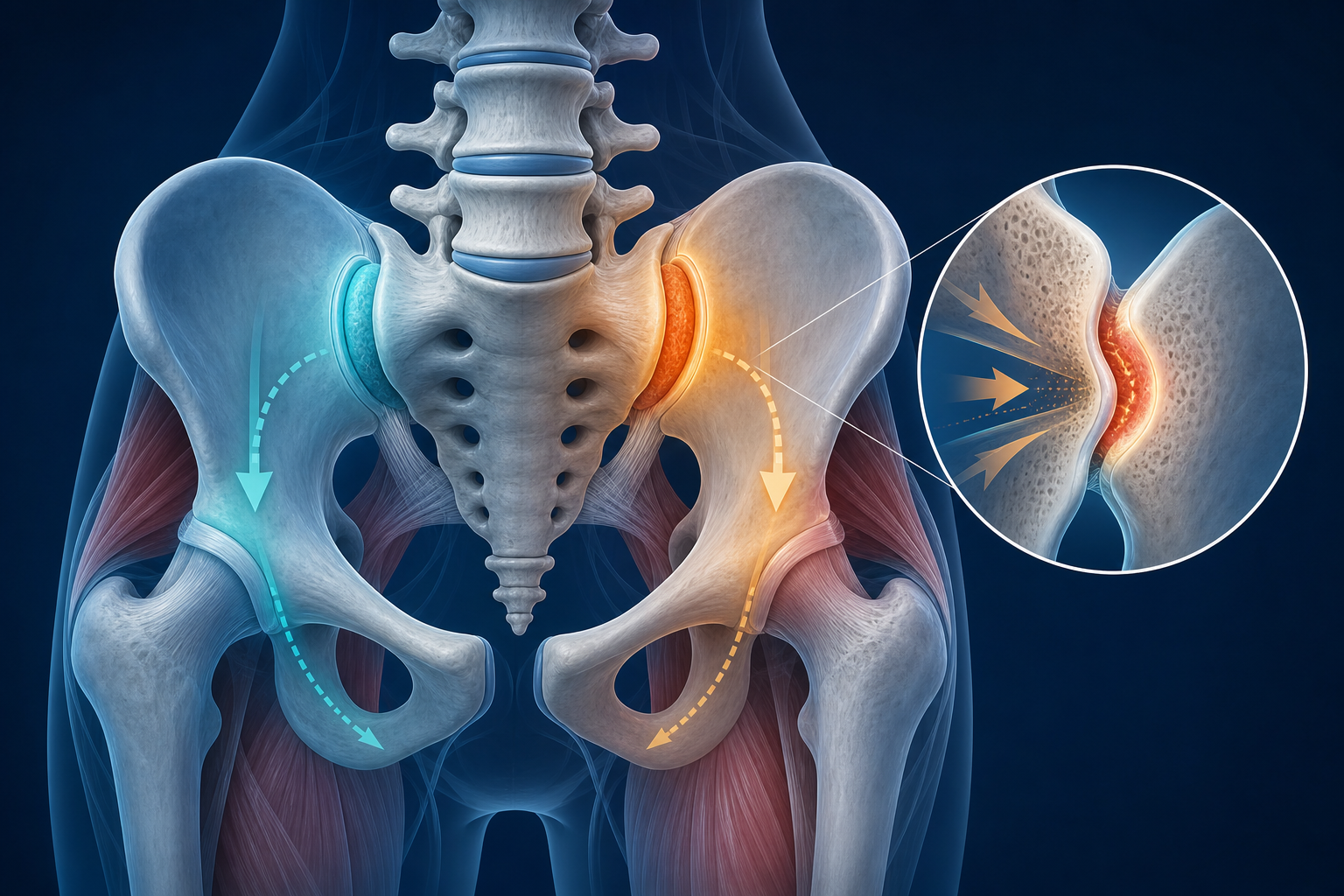
Sacral joint dysfunction usually refers to a problem involving the sacroiliac joint. The sacrum is the triangular bone at the bottom of the spine. It sits between the two pelvic bones, called the ilia. The right and left sacroiliac joints are the strong joints where the sacrum and pelvis meet.
These joints are designed for stability. They do not move as freely as the shoulder or knee. Instead, the SI joints provide small but important motion that helps transfer forces between the upper body and the legs. Each step, squat, bend, and stair climb sends load through the pelvis and SI joints.
When people ask, “what is sacral joint dysfunction,” they are often describing pain or movement problems related to this region. Sacral joint dysfunction may involve joint irritation, ligament strain, muscle guarding, altered pelvic mechanics, or changes in how the spine, hips, and pelvis share load. Some providers may describe the joint as hypomobile, meaning it is not moving enough, or hypermobile, meaning it may be moving more than the surrounding tissues can comfortably control.
Because symptoms can overlap with other conditions, sacral joint dysfunction should not be self-diagnosed. Low back disc irritation, lumbar facet joint pain, hip joint conditions, muscle strains, and nerve-related pain can feel similar. A careful examination can help narrow the source and guide treatment.
Where Is SI Joint Pain Usually Felt?
SI joint pain is commonly felt on one side of the lower back, just below the belt line. Many people point to a small dimple-like area near the back of the pelvis. Pain may also spread into the buttock, outer hip, groin, or the back of the thigh. It usually does not follow one perfect pattern for every patient.
Some people describe a deep ache. Others notice sharp pain during a specific movement, such as standing up from a chair or stepping into a car. The area may feel stiff in the morning or after sitting. It may also flare after walking, lifting, running, or spending a long time on one leg.
Because SI joint pain can overlap with other causes of lower back pain, the location alone is not enough to confirm the diagnosis. However, the pattern of pain and the movements that worsen or ease it can give a provider useful clues.
Sacral Joint Dysfunction Symptoms Lower Back Pain Patients Often Notice
The phrase “sacral joint dysfunction symptoms lower back pain” is common because lower back discomfort is often the main complaint. Symptoms vary, but several patterns are frequently associated with SI joint irritation.
Common symptoms
- Pain on one side of the lower back or pelvis
- Buttock pain that may feel deep, achy, or sharp
- Pain near the back of the hip or along the pelvic rim
- Discomfort that worsens when standing from a seated position
- Pain with walking, especially longer distances or uneven ground
- Pain when climbing stairs, stepping up, or getting in and out of a car
- Difficulty rolling over in bed or lying on one side
- A feeling that the pelvis is uneven, unstable, stuck, or “out of place”
- Muscle tightness in the low back, glutes, hip flexors, or hamstrings
Some patients report symptoms on both sides, but one-sided pain is common. Symptoms may come and go depending on activity level, posture, sleep position, training volume, pregnancy or postpartum changes, or previous injuries.
Symptoms that may suggest another problem
Not every pain near the sacrum is SI joint dysfunction. Seek prompt medical evaluation if pain follows a major fall or accident, is associated with fever, unexplained weight loss, cancer history, loss of bowel or bladder control, progressive leg weakness, numbness in the groin or saddle area, or severe pain that does not change with position. These signs may point to a more serious condition that needs timely medical attention.
Why Does My Sacrum Hurt Sitting?
Many people first search for help after wondering, “why does my sacrum hurt sitting?” Sitting places pressure through the pelvis and lower spine. Depending on posture, chair shape, hip mobility, and tissue sensitivity, this position may increase stress around the sacrum, tailbone, SI joints, or lumbar spine.
With SI joint irritation, sitting may become uncomfortable when the pelvis tilts backward, when one hip is higher than the other, or when body weight is shifted more to one side. Crossing the legs, sitting on a wallet, working from a soft couch, or driving for long periods may also aggravate symptoms in some people.
However, pain with sitting can also be related to tailbone pain, lumbar disc irritation, hip problems, pelvic floor tension, or muscle strain. A provider may ask whether sitting pain improves when you stand, worsens when you lean forward, or changes with different chair surfaces. These details can help guide the evaluation.
Simple sitting adjustments that may help some people
General comfort strategies may include sitting with both feet supported, keeping weight evenly distributed, using a chair that supports the low back, taking short movement breaks, and avoiding prolonged positions that clearly aggravate symptoms. These changes are not a cure, and they may not be enough for persistent pain, but they can reduce repeated stress while you arrange an evaluation.
SI Joint Pain When Walking
SI joint pain when walking can happen because each step requires the pelvis, hips, spine, and core muscles to work together. The SI joints help transfer force from the legs into the trunk. If the joint or surrounding ligaments are irritated, walking may create a repeated stress that feels painful or unstable.
Some people notice pain at heel strike, when the foot first contacts the ground. Others feel pain when pushing off, climbing hills, taking long strides, or walking on uneven surfaces. Pain may also appear after a certain distance rather than immediately.
A conservative care provider may look at hip range of motion, stride length, pelvic control, foot mechanics, leg strength, and trunk stability. Treatment may include mobility work, strengthening, gait retraining, manual therapy, and advice about pacing activity while symptoms calm down.
Sacroiliac Joint Dysfunction vs Sciatica
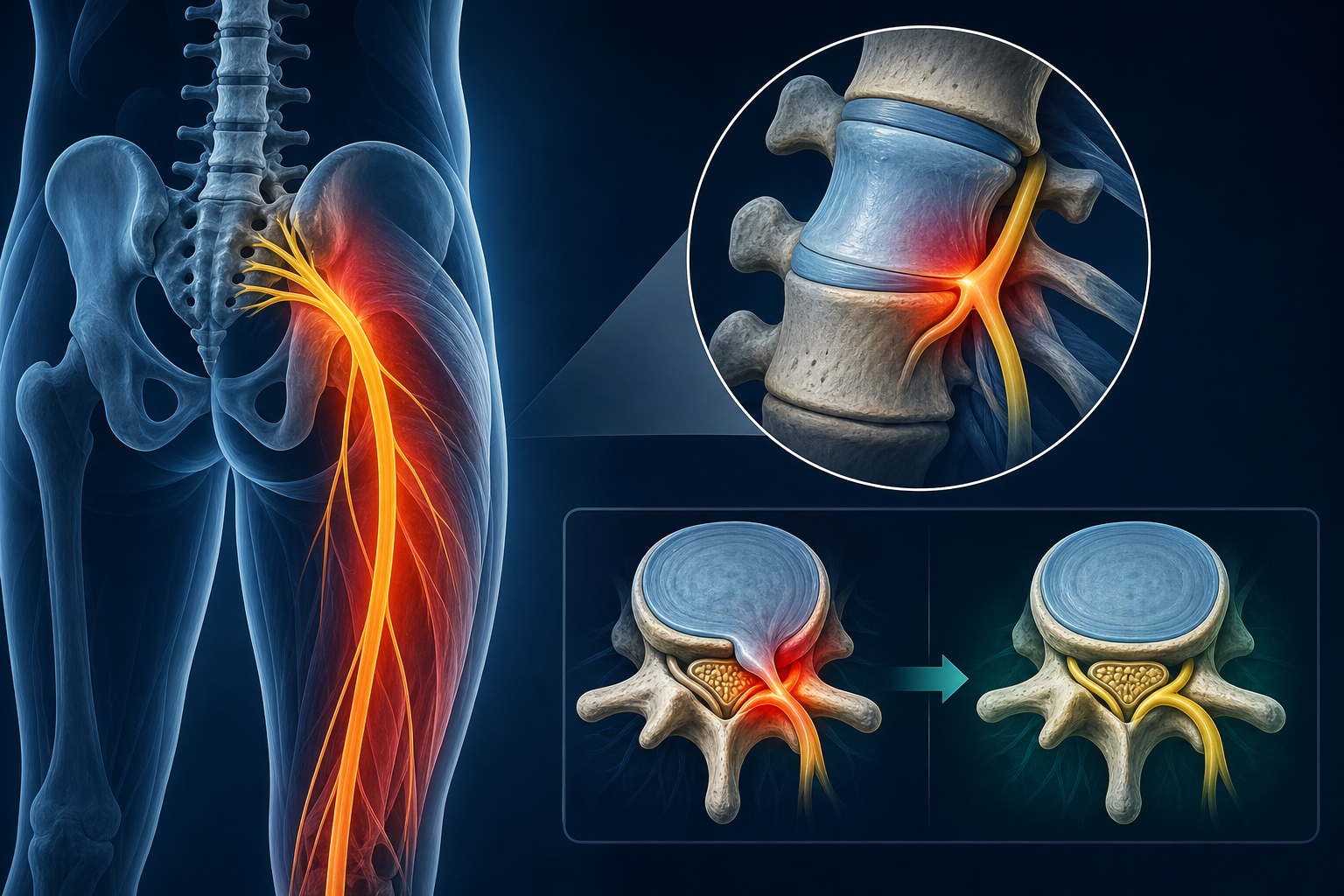
One of the most common questions is the difference between sacroiliac joint dysfunction vs sciatica. These conditions can feel similar because both may cause buttock or leg symptoms. The difference is usually the source of the symptoms.
Sacroiliac joint dysfunction involves irritation or altered mechanics around the SI joint. Pain often sits near the low back, pelvis, buttock, or back of the hip. It may travel into the thigh, but it often does not extend below the knee. Some patients describe aching, stabbing, or pressure-like pain.
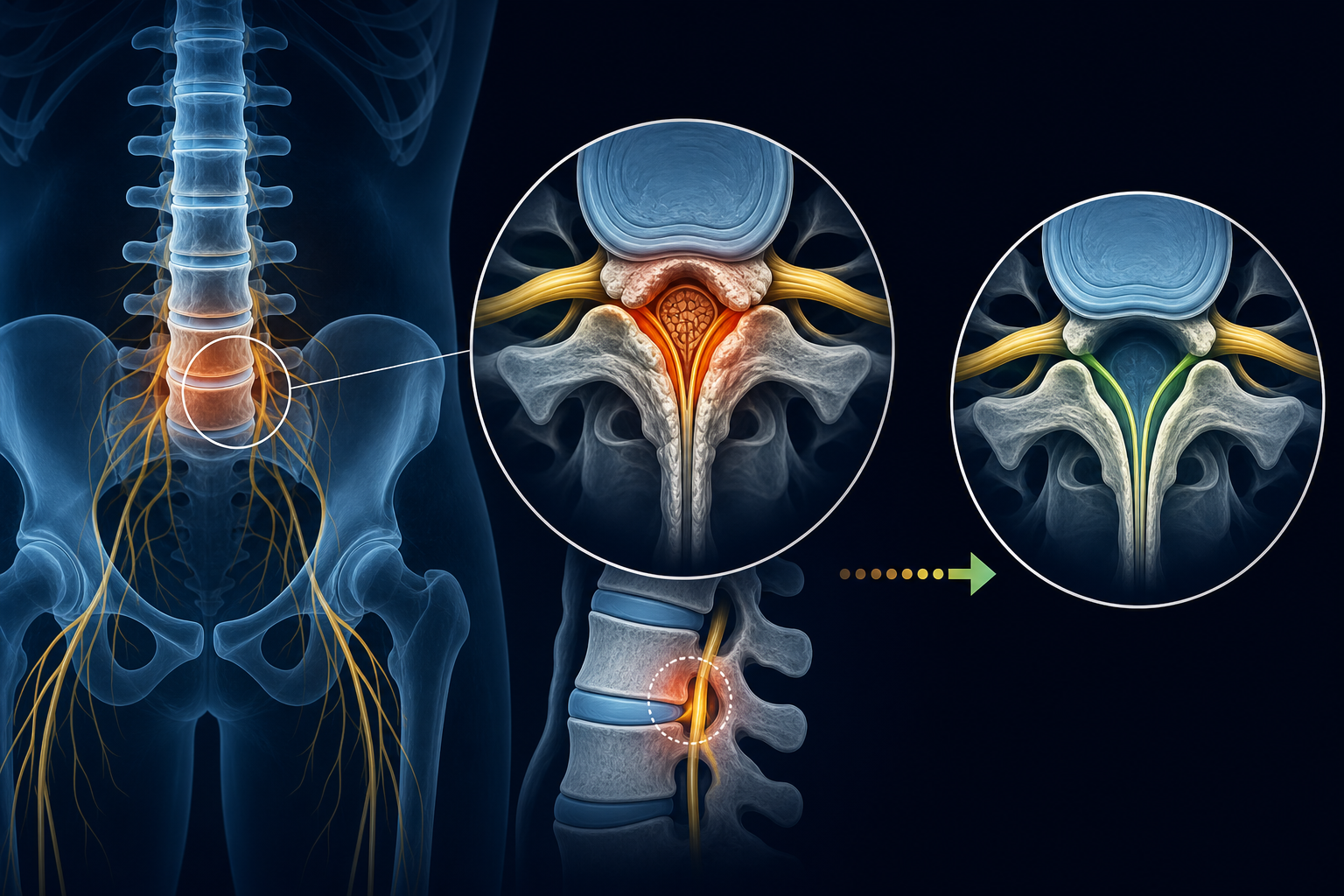
Sciatica is a term often used for pain related to irritation of the sciatic nerve or nerve roots in the lower spine. Sciatic symptoms may travel from the low back or buttock down the leg and sometimes into the calf or foot. Numbness, tingling, burning, or electric sensations may be more common with nerve involvement.
Even these descriptions are not absolute. Some SI joint pain can refer into the leg, and some nerve-related pain can be felt mostly in the buttock. If you are unsure, a provider can perform movement testing, neurologic screening, strength testing, and orthopedic tests to help determine whether your symptoms are more consistent with SI joint dysfunction, sciatic nerve pain, hip pain, or another condition.
Common Causes of Sacral Joint Dysfunction
Sacral joint dysfunction can have several contributing factors. Often, there is not one single cause. Instead, pain develops when load, movement, strength, tissue tolerance, and previous injury history combine in a way the body has trouble handling.
Trauma or sudden injury
A fall onto the hip or buttock, a motor vehicle collision, a sports impact, or a sudden twist can strain the ligaments and muscles around the SI joint. Some people notice symptoms right away. Others develop discomfort over the next few days as tissues become irritated.
Repetitive stress
Jobs, sports, or daily routines that involve repeated bending, lifting, twisting, running, or prolonged standing may contribute to SI joint irritation in some people. Repetitive stress does not always mean something is damaged. It may mean the area is being asked to do more than it can comfortably tolerate at that moment.
Pregnancy and postpartum changes
During pregnancy, hormonal and mechanical changes can affect the pelvis. As the body prepares for delivery, ligaments may become more flexible, and the growing abdomen changes posture and load distribution. After delivery, lifting, feeding positions, interrupted sleep, and deconditioning may continue to stress the low back and pelvis. Conservative care may help some pregnant or postpartum patients, but treatment should be tailored by a provider familiar with prenatal or postpartum needs.
Hip mobility limitations
When the hips do not move well, the pelvis and low back may compensate. Limited hip rotation, tight hip flexors, weak glute muscles, or poor single-leg control may increase stress near the SI joints. This is one reason treatment often includes hip assessment, not just work directly over the painful area.
Leg length differences or gait changes
Some people have structural leg length differences. Others temporarily walk differently because of an ankle sprain, knee pain, foot pain, or hip irritation. These changes can alter pelvic loading. A provider may assess gait and lower-extremity mechanics when symptoms are provoked by walking.
Prior low back or pelvic pain
Previous episodes of low back pain, pelvic injury, or hip pain may influence how the body moves. Muscles may guard, certain movements may be avoided, and strength can become uneven over time. Rehabilitation often focuses on restoring confidence and control, not only reducing pain.
How Providers Evaluate Sacral Joint Dysfunction
A provider evaluation usually starts with a history. You may be asked where the pain is, what movements aggravate it, how long it has been present, whether there was an injury, and whether symptoms travel into the leg. You may also be asked about work demands, exercise habits, pregnancy or postpartum history, sleep position, and prior back or hip conditions.
Physical examination
The exam may include posture and gait observation, lumbar spine range of motion, hip mobility testing, strength testing, palpation, and SI joint provocation tests. Provocation tests are movements or positions designed to reproduce pain in a controlled way. No single test is perfect, so clinicians often look for a cluster of findings rather than relying on one result.
Neurologic screening may be performed if symptoms travel down the leg or include numbness, tingling, or weakness. This may include reflexes, sensation, and muscle strength. The goal is to help distinguish SI joint dysfunction from nerve-related symptoms, disc irritation, or other causes.
Imaging and referrals
X-rays, MRI, or other imaging are not always necessary for uncomplicated SI joint pain, but they may be considered when symptoms are severe, persistent, related to trauma, or accompanied by concerning signs. Your provider may refer you to another clinician if your symptoms suggest a condition outside the scope of conservative care.
Sacral Joint Dysfunction Treatment Near Me: Conservative Options
If you are searching for “sacral joint dysfunction treatment near me,” you are likely looking for practical relief and a plan that does not jump straight to invasive care. In many cases, conservative treatment is the first approach for SI joint pain, especially when there are no red flags or serious neurologic signs.
Conservative treatment may include chiropractic care, physical therapy, rehabilitation exercises, mobility work, core and hip strengthening, ergonomic changes, and gradual return to activity. The right plan depends on your exam findings, symptoms, goals, and medical history.
Chiropractic care for SI joint pain
Chiropractors commonly evaluate the spine, pelvis, and hips when SI joint dysfunction is suspected. Treatment may include manual adjustments or mobilization, soft tissue techniques, movement coaching, and home exercises. The goal is often to improve joint motion, reduce muscle guarding, and support better load sharing across the low back and pelvis.
The “best chiropractor for SI joint pain” is not necessarily the one who promises quick fixes. Look for a provider who performs a thorough exam, explains what they are finding, screens for symptoms that may need medical referral, and pairs hands-on care with active rehabilitation when appropriate. You can explore chiropractic treatment options on Medximity or search for chiropractors near you.
Physical therapy for sacroiliac joint dysfunction
Physical therapy for sacroiliac joint dysfunction often focuses on strength, mobility, and movement control. A physical therapist may assess how your hips, trunk, pelvis, knees, and feet work together. Treatment may include therapeutic exercise, manual therapy, neuromuscular re-education, stretching, gait training, and education about activity modification.
Common goals include improving hip and core strength, restoring comfortable movement, reducing repeated irritation, and helping you return to walking, lifting, work, or exercise with better control. Learn more about physical therapy services or search for physical therapists near you through Medximity.
Rehabilitation exercise
Exercise is often part of SI joint pain care, but the best exercises depend on what a provider finds. Some patients need mobility. Others need stability. Many need both, introduced gradually.
Commonly used exercises may include gentle pelvic tilts, glute bridges, side-lying hip strengthening, bird dogs, dead bugs, hip flexor stretching, hamstring mobility work, and controlled walking progressions. These exercises are not right for everyone. If a movement sharply increases pain, causes leg symptoms, or feels unsafe, it should be reviewed with a provider.
Activity modification
Activity modification does not mean complete rest. For many musculoskeletal conditions, prolonged inactivity can contribute to stiffness and deconditioning. Instead, a provider may help you identify the movements, positions, or volumes that flare symptoms and then adjust them temporarily.
For example, you may be guided to shorten walking distances, reduce hill walking, avoid carrying heavy loads on one side, change lifting mechanics, use shorter strides, vary sitting positions, or take movement breaks during long drives. As symptoms improve, activity is usually progressed gradually.
Natural Treatment for SI Joint Pain
Many patients search for natural treatment for SI joint pain because they want options that support healing without surgery or medication. Conservative care may include movement-based and hands-on approaches designed to reduce stress around the SI joint and improve function.
Natural or noninvasive approaches may include chiropractic care, physical therapy, stretching, strengthening, heat or ice for temporary comfort, posture and workstation changes, supportive sleep positioning, walking modification, and gradual return to exercise. Some people also benefit from improving general habits that affect musculoskeletal health, such as sleep consistency, hydration, and balanced activity levels.
Natural does not always mean risk-free, and not every home remedy is appropriate for every person. If your pain is new, worsening, related to trauma, or associated with nerve symptoms, it is safer to be evaluated before trying aggressive stretching, self-adjusting, or intense exercise.
How to Fix SI Joint Pain: What a Realistic Plan Looks Like
It is understandable to search “how to fix SI joint pain,” especially when the pain interferes with sitting, walking, or sleep. Still, SI joint pain usually does not have one universal fix. A better goal is to identify what is irritating the joint, reduce repeated stress, restore comfortable movement, and build strength and control so the area can tolerate daily activity.
Step 1: Confirm the likely source
Because SI joint dysfunction can mimic other conditions, evaluation matters. A provider can assess whether symptoms fit SI joint irritation or whether another source, such as lumbar disc irritation, hip joint involvement, or nerve-related pain, may be contributing.
Step 2: Calm the flare
During a painful flare, treatment may focus on reducing irritation. This may include gentle movement, hands-on care, temporary changes to sitting or walking, and avoiding repeated movements that sharply increase symptoms. The goal is not to fear movement, but to dose it wisely.
Step 3: Restore mobility where it is limited
Restrictions in the hips, lower back, or thoracic spine may increase pelvic stress. Manual therapy and targeted mobility exercises may help some patients move more comfortably. Mobility work should be specific and controlled rather than forceful.
Step 4: Build strength and stability
Many SI joint rehab plans include strengthening the glute muscles, deep core muscles, hip stabilizers, and lower back endurance. Stronger support around the pelvis may help distribute forces more evenly during walking, lifting, and stairs.
Step 5: Return to normal activity gradually
Once symptoms are improving, your provider may help you reintroduce longer walks, workouts, lifting, running, or job tasks. Progression is usually based on response. A small increase that feels fine during activity but causes a flare the next day may need to be adjusted.
SI Joint Pain Without Surgery Treatment
Many people with suspected SI joint dysfunction start with non-surgical care. SI joint pain without surgery treatment may include chiropractic care, physical therapy, exercise therapy, manual therapy, bracing in select cases, and lifestyle or ergonomic changes. These approaches aim to improve movement and function while avoiding unnecessary invasive steps.
Not everyone responds the same way. Some patients improve quickly, while others need a longer rehabilitation plan, especially if symptoms have been present for months or involve multiple areas such as the low back, hip, and pelvic floor. A conservative provider can help determine whether continued non-surgical care is reasonable or whether referral for additional medical evaluation is appropriate.
How Long Does SI Joint Pain Last?
How long SI joint pain lasts depends on the cause, severity, overall health, activity demands, and how long symptoms have been present. Mild irritation may improve over days to a few weeks with appropriate movement changes and conservative care. More persistent SI joint dysfunction may take several weeks or months to improve, especially if it is linked to pregnancy, repetitive work demands, gait changes, or long-standing strength and mobility limitations.
Pain duration is also affected by whether the aggravating factor continues. For example, a patient who sits for long drives every day, lifts repeatedly at work, or keeps training through sharp pain may need more time and a more structured plan. If symptoms are not improving, are worsening, or are disrupting normal activities, it is reasonable to seek an evaluation rather than waiting indefinitely.
When to See a Provider for Sacral Joint Pain
You may want to see a chiropractor, physical therapist, or other qualified healthcare provider if sacral or SI joint pain lasts more than a few days, keeps returning, limits walking or sitting, affects sleep, or prevents normal work or exercise. You should also seek evaluation if pain began after a fall, collision, or sudden injury.
Prompt medical care is especially important if you have progressive leg weakness, numbness in the groin or saddle area, loss of bowel or bladder control, fever, unexplained weight loss, history of cancer, severe night pain, or symptoms that feel unusual or rapidly worsening. These symptoms are not typical of simple SI joint irritation and should be assessed by a medical professional.
For non-emergency symptoms, Medximity can help you compare conservative care providers who treat low back, pelvic, and hip-related pain. If your symptoms also involve the hip, you may find it helpful to review information about hip pain, since hip mechanics can influence SI joint stress.
What to Expect at Your First Visit
Your first visit for suspected sacral joint dysfunction usually includes a conversation, exam, explanation of findings, and a care plan. The provider should ask about your symptoms, what makes them better or worse, your activity level, previous injuries, and any health history that may affect treatment.
History and symptom review
You may be asked to point to the painful area, describe the pain quality, and explain whether symptoms travel into the leg. The provider may ask about sitting tolerance, walking distance, stair climbing, sleep positions, lifting, exercise, pregnancy or postpartum status, and any recent accidents.
Movement and orthopedic testing
The exam may include bending, walking, hip motion, strength tests, and SI joint provocation tests. If leg symptoms are present, neurologic screening may be included. The purpose is to understand how your body is moving and whether the SI joint appears to be the main pain generator.
Treatment plan
If conservative care is appropriate, your plan may include hands-on treatment, therapeutic exercises, home care instructions, activity changes, and follow-up visits. A good plan should be understandable. You should know what the provider thinks is contributing to your pain, what treatment is intended to do, what you can do at home, and when your progress will be reassessed.
Questions to Ask Before Choosing a Provider
Choosing the right provider can make the care process clearer and more comfortable. Consider asking:
- Do you commonly evaluate SI joint dysfunction and related low back or hip pain?
- How do you distinguish SI joint pain from sciatica or hip problems?
- Will my plan include exercises or movement strategies I can use at home?
- How will we measure progress?
- What symptoms would make you refer me to another provider?
- What should I avoid temporarily, and what activity is safe to continue?
These questions can help you find a provider who takes a thorough, conservative, patient-centered approach. Whether you choose chiropractic care, physical therapy, or another conservative option, the plan should be based on your exam and goals rather than a one-size-fits-all protocol.
Preventing SI Joint Pain Flares
Prevention usually focuses on load management and movement quality. While no strategy can guarantee that pain will not return, certain habits may reduce repeated irritation for some people.
Build hip and core capacity
Strong glutes, hip stabilizers, and trunk muscles help the pelvis manage load during walking, lifting, and stairs. A provider can help choose exercises that match your current level and avoid movements that flare symptoms.
Vary positions during the day
Long periods in one position may aggravate the low back or pelvis. Alternating sitting, standing, and short walking breaks may help reduce stiffness. If sitting is a major trigger, workstation setup and chair support may be worth reviewing.
Use gradual training progressions
Sudden increases in running mileage, hiking distance, lifting volume, or new exercise intensity can overwhelm tissues. Gradual progressions allow the hips, pelvis, and spine to adapt.
Pay attention to asymmetrical loading
Carrying a heavy bag on one side, standing with weight shifted to one hip, or repeatedly lifting and twisting in the same direction can increase uneven stress. Small adjustments may help distribute load more evenly.
Finding Sacral Joint Dysfunction Treatment Near You
If sacral joint pain is affecting your daily life, you do not have to guess your way through it. A conservative care provider can help identify likely contributors, explain whether SI joint dysfunction fits your symptoms, and build a plan that may include hands-on care, physical therapy, strengthening, mobility work, and practical activity modifications.
Medximity makes it easier to search for providers who help patients with lower back, hip, pelvic, and SI joint pain. Start by exploring chiropractors near you or physical therapists near you. If you are still learning about related conditions, Medximity’s resources on low back pain and sciatica-like symptoms can help you prepare for a more informed visit.
Frequently Asked Questions
What is sacral joint dysfunction?
Sacral joint dysfunction usually refers to irritation or altered movement of the sacroiliac joint, where the sacrum meets the pelvis. It may cause lower back, buttock, hip, groin, or upper thigh pain. Because symptoms can overlap with other conditions, an evaluation is the best way to understand the likely source.
What are common sacral joint dysfunction symptoms?
Common symptoms may include one-sided low back or buttock pain, pain near the back of the hip, discomfort when standing from a chair, pain with walking or stairs, and stiffness after sitting. Some people feel unstable or uneven through the pelvis.
Why does my sacrum hurt when sitting?
Sitting can increase pressure through the pelvis and lower spine. Sacral pain while sitting may be related to SI joint irritation, tailbone pain, lumbar disc irritation, hip mechanics, or muscle tension. If sitting pain persists or worsens, a provider can help identify the likely cause.
Is sacroiliac joint dysfunction the same as sciatica?
No. Sacroiliac joint dysfunction involves the SI joint and nearby pelvic structures. Sciatica usually involves irritation of the sciatic nerve or lower spinal nerve roots. They can feel similar, so a clinical exam is often needed to distinguish them.
Can chiropractic care help SI joint pain?
Chiropractic care may help some patients with SI joint pain by addressing joint motion, muscle tension, movement patterns, and home exercise needs. Results vary, and care should be based on a thorough exam and appropriate screening.
Can physical therapy help sacroiliac joint dysfunction?
Physical therapy may help by improving hip and core strength, mobility, gait mechanics, and movement control. A physical therapist can also guide activity modification and progressive return to walking, lifting, or exercise.
How long does SI joint pain last?
SI joint pain may last days to weeks in mild cases, while more persistent symptoms can take several weeks or months to improve. Duration depends on the cause, severity, activity demands, and whether contributing factors are addressed.
Is SI joint pain treatable without surgery?
Many people begin with non-surgical treatment such as chiropractic care, physical therapy, exercise rehabilitation, manual therapy, and activity changes. If symptoms are severe, worsening, or not improving, a provider may recommend additional evaluation.