Bay Bridge Administrators, LLC Coverage for Spinal Decompression: Benefits, Limits, and Tips usually depends on how the plan defines medical necessity, which services are billed, and whether the visit is part of a broader conservative care plan. In many cases, the evaluation for low back pain, neck pain, lumbar disc symptoms, or radicular pain may be covered differently than the actual spinal decompression sessions, so you need a benefit check before starting care.
That distinction matters. A covered exam of the lumbar spine, cervical spine, and sacroiliac joint does not automatically mean traction-based decompression sessions are covered under the same benefit category.
What Spinal Decompression Means in an Insurance Context
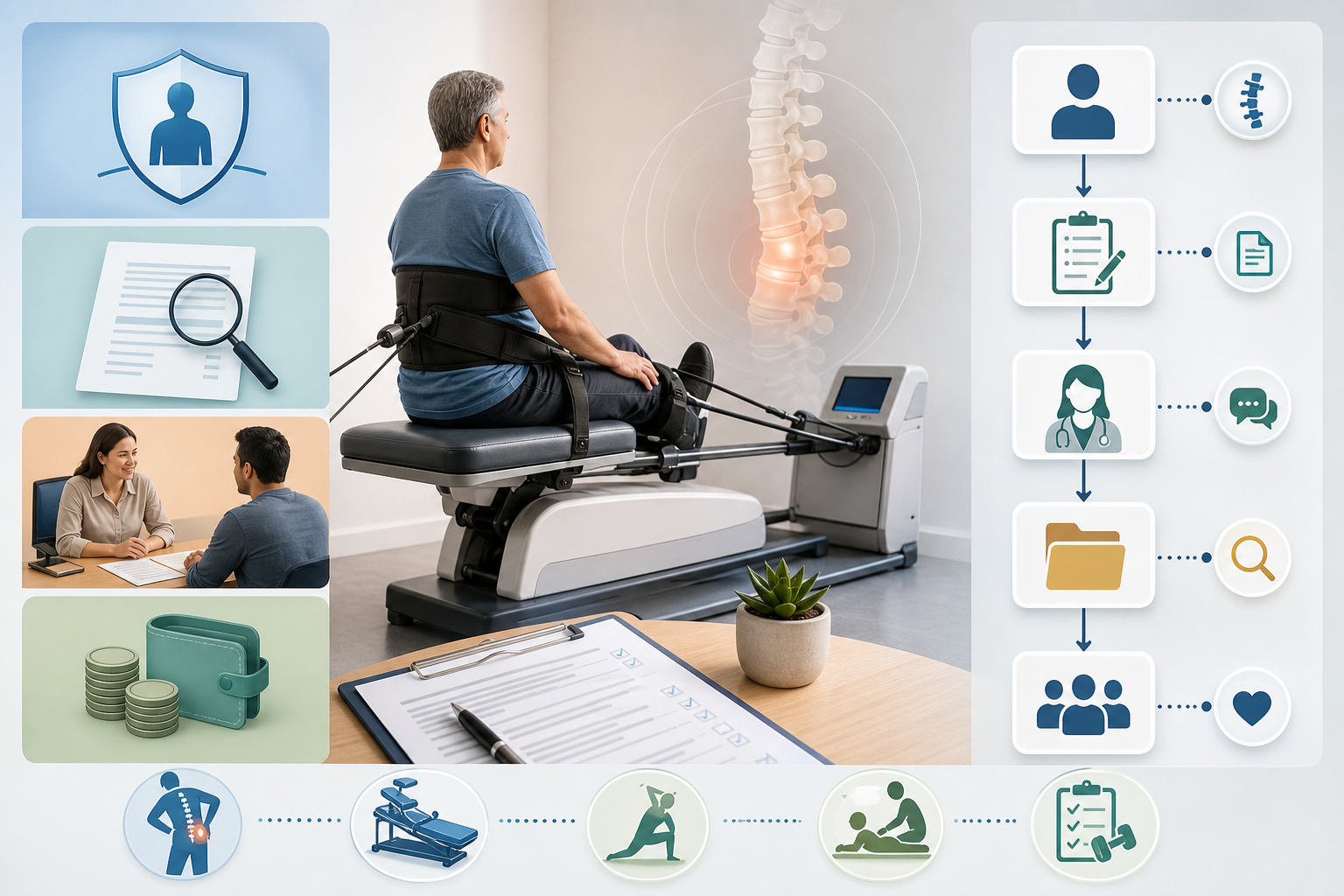
Spinal decompression in an insurance context usually refers to a form of mechanical traction intended to reduce pressure across spinal structures such as the intervertebral disc, nerve root, and facet joint. For patients asking what is spinal decompression therapy coverage, the first issue is not the machine name. The first issue is how the practice documents the service and how your plan classifies it.
Covered evaluation vs. decompression session
Insurers often separate the initial assessment from the treatment itself. Your first visit may include a history, orthopedic testing, ROM testing, posture analysis, and a plan of care. That can fall under a covered office evaluation even when decompression is reviewed more narrowly.
- Evaluation visit: May include intake, exam, functional testing, and care planning.
- Therapy visit: May include supervised exercise, manual therapy, and traction-type services.
- Decompression session: May be reviewed as mechanical traction, a non-covered device-based service, or part of a bundled rehab visit depending on the plan language.
Research on conservative spine care suggests patients commonly undergo a trial of care over 2 to 6 weeks before response is reassessed, rather than committing to a long block of visits on day one.
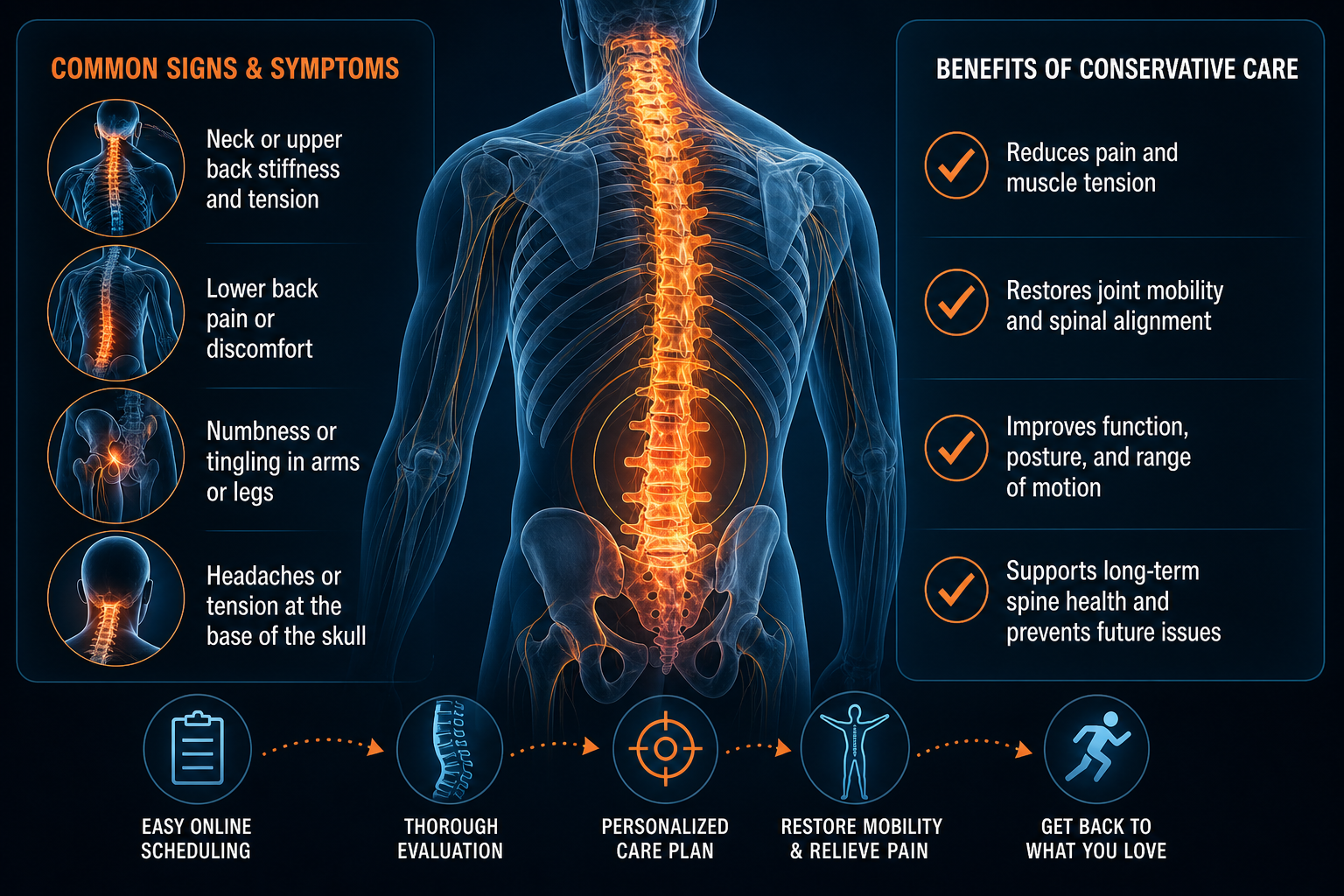
If you also have symptoms like leg pain, numbness, or walking intolerance, related reading may help you understand the condition side of the problem, including how dangerous spinal stenosis can be and when pressure on spinal structures needs prompt evaluation.
When does insurance cover spinal decompression treatment?
Does insurance cover spinal decompression treatment? Sometimes, but not uniformly. Coverage is more likely when decompression is part of documented conservative care for functional limits such as reduced sitting tolerance, decreased lifting capacity, positive nerve tension signs, or restricted lumbar ROM. Coverage is less likely when it is presented as a stand-alone wellness service without objective findings.
When patients commonly ask about coverage
Most people ask after they have persistent low back pain, neck pain, sciatica-type symptoms, or MRI findings such as disc bulge or degeneration. Plans may look at symptoms and function more than imaging alone.
- You have back or neck pain lasting 2 to 6 weeks despite home care.
- You have radiating pain into the arm or leg that limits walking, standing, or sleep position.
- You were told to try conservative care before more invasive interventions are considered.
- You want to know whether back pain treatment covered by insurance includes traction or decompression.
That is also where spinal degeneration and chiropractic help becomes relevant. Disc wear, facet irritation, and loss of segmental motion can affect what a provider documents and which conservative services are reasonable first-line options.
What Bay Bridge Administrators, LLC plans may cover
Bay Bridge Administrators spinal decompression benefits can vary by employer group, network rules, and benefit design. Bay Bridge Administrators, LLC may administer claims, but the specific plan document still controls covered services, exclusions, deductibles, and referral rules. You need the exact plan, not only the administrator name.
Service How it is commonly reviewed Possible coverage result Typical timeline Initial evaluation Office or rehab assessment with documented findings Often covered subject to plan cost share 1 visit, 30-60 minutes Mechanical traction / decompression Reviewed by code, plan language, and medical necessity May be covered, limited, bundled, or excluded Often 10-20 minutes per session Exercise therapy Active rehab with functional goals Often more consistently covered than device-based care Typically 2-3 visits weekly for 3-6 weeks Chiropractic or PT follow-up Based on network status and visit limits Commonly covered with copay, coinsurance, or visit cap Reassess after 6-8 visitsAsk whether the service is processed under chiropractic benefits, PT benefits, rehab benefits, or a separate exclusion list. That single question often explains why one part of care is covered and another is not.
What limits, exclusions, and review factors should you expect?
The main review factors are medical necessity, visit limits, coding, network status, and documentation of measurable progress. Plans may ask whether your provider recorded pain pattern, ROM loss, weakness, sensory change, straight-leg raise findings, or functional restrictions involving the paraspinal muscles, hamstrings, and gluteal muscles.
- Visit limits: Some plans cap chiropractic or rehab visits per year.
- Exclusions: Certain device-based decompression services may be excluded even when exams are covered.
- Network rules: Out-of-network care can shift a large share of cost to you.
- Progress review: Ongoing visits may require proof that pain, ROM, or function improved.
- Bundling: The plan may treat decompression as included in a broader therapy visit rather than paying separately.
A common timeline is a trial of 6 to 8 visits over 2 to 4 weeks, followed by reassessment. If there is no measurable improvement in walking tolerance, sitting time, lumbar flexion, or leg symptoms, additional visits may be harder to support.
If your symptoms involve the mid-back or rib cage region, managing thoracic spine pain can help you understand adjacent issues that may change the treatment plan.
Is preauthorization needed for spinal decompression?
Is preauthorization needed for spinal decompression? Sometimes. Some plans require preauthorization for repeated traction-type services, out-of-network care, or treatment after the first few visits. Others do not require formal approval but still deny claims later if the documentation is thin.
What the practice may need to document
- Diagnosis code and symptom duration
- Objective findings such as ROM limits, neurologic signs, or orthopedic test results
- Functional deficits: sitting, lifting, walking, driving, sleep position tolerance
- Prior self-care or conservative care attempted
- Planned frequency, duration, and re-evaluation date
Ask the billing team whether they are checking benefits only or obtaining actual authorization. Those are not the same step.
A plan can verify that a benefit category exists and still deny the claim later if referral, network, or documentation requirements were not met.
Neck-driven symptoms can add complexity. If upper cervical and shoulder girdle issues are part of your complaint, review tips to heal cervical spine pain before your first visit so you can describe your symptoms clearly.
Your potential out-of-pocket costs
How much does spinal decompression cost depends on whether the session is covered, whether your deductible has been met, and whether the provider is in network. Even when some care is covered, you may still owe for non-covered decompression time, specialty equipment charges, or missed-visit fees.
- Deductible: You pay the allowed amount first until the deductible is met.
- Copay: A fixed amount due each covered visit.
- Coinsurance: A percentage of the allowed amount after deductible.
- Non-covered service: You may owe the full fee if decompression is excluded.
- Out-of-network balance: Charges can be higher if the practice is not contracted.
Ask for three numbers before starting:
- The estimated cost of the initial evaluation
- The estimated cost per follow-up visit
- The estimated cost per decompression session if not covered separately
That gives you a realistic range for the first 2 weeks and the first 4 weeks of care instead of a vague quote.
How to verify benefits before you schedule treatment
If you are searching for spinal decompression therapy near me insurance, verify the benefit before you book a treatment block. Do not rely on a front-desk estimate alone. Ask for the exact benefit category, the service code if available, and whether decompression is treated differently from the exam.
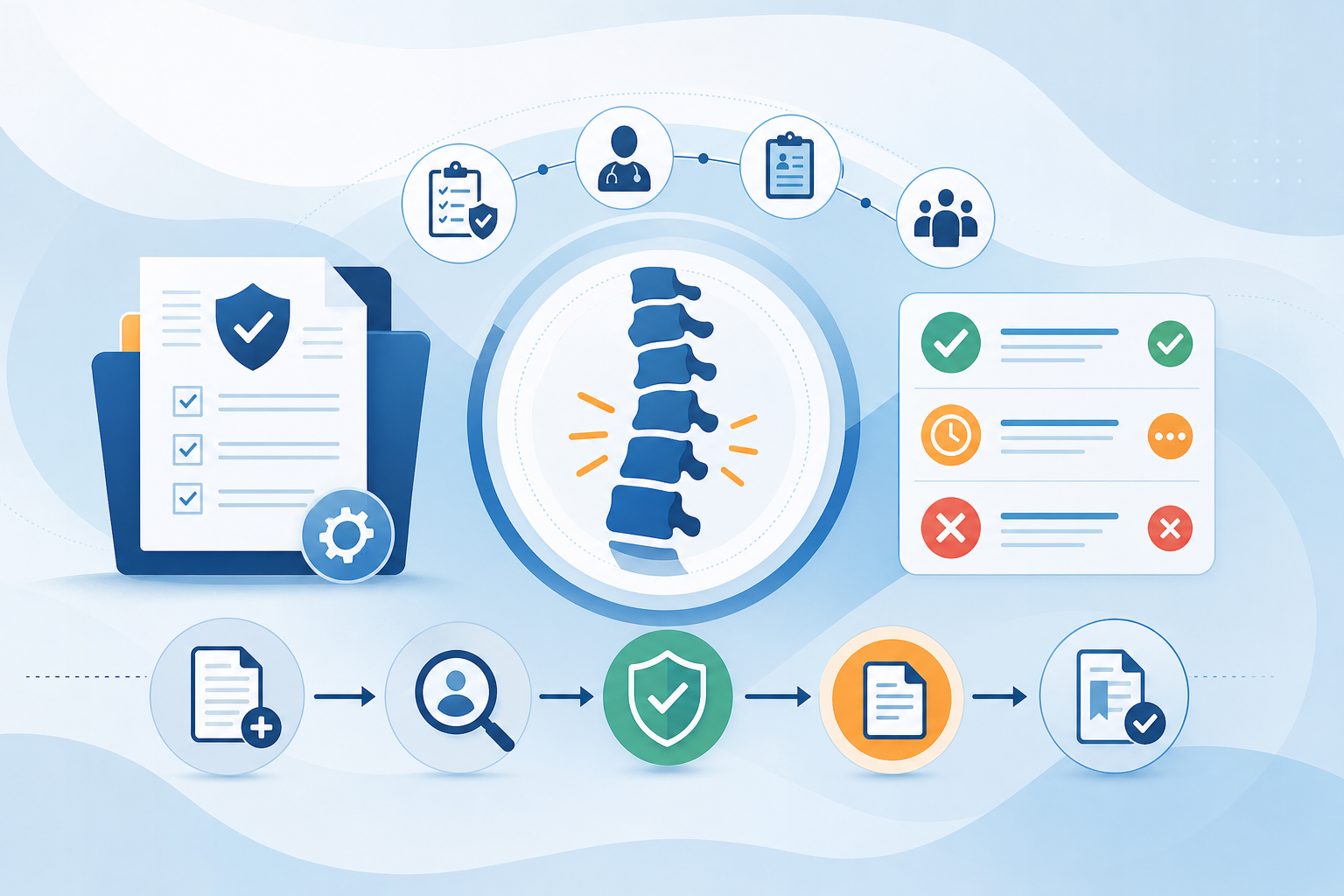
Step-by-step benefit verification checklist
- Confirm the provider is in network for your specific plan.
- Ask whether the evaluation visit is covered.
- Ask whether mechanical traction or spinal decompression is covered, limited, bundled, or excluded.
- Ask if you need a referral or preauthorization.
- Ask how many visits are allowed and whether there is a yearly cap.
- Ask what your deductible, copay, and coinsurance are for this category.
- Request the reference number for the call.
- Ask the practice to document the verification in writing.
If you still need a provider, you can find a chiropractor near you, find a physical therapist near you, or browse providers on Medximity.
What should you ask the billing team and what if coverage is denied?
The best questions to ask billing about decompression are direct and specific. Ask how the practice bills the service, whether they expect coverage, and what portion may be patient responsibility if the claim is denied.
- Which code or billing category is typically used for decompression?
- Is the estimate based on verified benefits or only on typical plan behavior?
- Will you submit notes showing objective findings and progress?
- Do you obtain preauthorization when required?
- If the claim is denied, will you help with records for an appeal?
Why was spinal decompression claim denied? Common reasons include no preauthorization, benefit exclusion, insufficient documentation, no measurable progress, out-of-network status, or the plan considering decompression not separately payable.
If that happens, take these steps:
- Request the denial in writing with the exact reason.
- Ask whether the denial applies to the exam, the decompression sessions, or both.
- Ask your provider for chart notes, functional findings, and the treatment plan.
- Ask whether a modified conservative plan using covered services makes more sense.
Supportive self-care matters here. For broader spine habits, see caring for your spinal cord and fitness tips and tricks.
How spinal decompression fits into conservative care
Spinal decompression vs physical therapy coverage is a practical question because active rehab is often covered more consistently than passive or device-based care. In many plans, decompression works best as one part of conservative care rather than the entire plan. The goal is to improve movement at the lumbar vertebrae, reduce stress around the sciatic nerve, and restore hip and trunk control.
How long does spinal decompression take? A single session is often 10 to 20 minutes. A short trial may run 2 to 3 visits per week for 2 to 4 weeks, then the provider reassesses function.
Simple home protocol often paired with decompression
- Walk for 5 to 10 minutes on flat ground.
- Do pelvic tilts: 10 slow reps while lying on your back with knees bent.
- Perform prone press-ups: 8 to 10 reps if extension reduces leg symptoms.
- Stretch the hamstrings gently for 20 to 30 seconds each side.
- Finish with supported diaphragmatic breathing for 2 minutes to reduce bracing.
Stop and seek urgent evaluation if you develop new bowel or bladder changes, rapidly increasing leg weakness, saddle numbness, major balance loss, or severe pain after trauma. Those are red flags.
What to Do Next
Start with a provider who manages conservative spine care every day: a chiropractor, physical therapist, or rehabilitation-focused practice. At the first visit, expect an exam of ROM, neurologic signs, posture, lifting tolerance, and symptom pattern involving the neck, mid-back, or low back.
- Seek routine care for persistent back or neck pain lasting more than 1 to 2 weeks, recurring leg pain, stiffness, or reduced function.
- Seek urgent care for new weakness, bowel or bladder change, saddle numbness, or pain after a major accident.
- Bring your insurance card, referral if required, imaging reports if you have them, and a list of questions about coverage.
Use Medximity to find a spinal decompression provider near you or explore more health topics before you schedule. If you want a better screening process, review how to find the best chiropractor near you. The right next step is not guessing whether Bay Bridge Administrators, LLC will cover care. It is verifying the exact benefit, asking how the service will be billed, and starting with a short, measurable trial of treatment.