Chiropractor for neck pain near me is a local search for providers who evaluate cervical joint motion, muscle tension, posture, and nerve irritation before recommending conservative care. Use Medximity to compare nearby chiropractors by location, hours, verified profile details, neck-pain services, reviews, insurance information, and appointment access.
Neck pain that comes from the cervical spine, facet joints, upper trapezius, levator scapulae, or irritated cervical nerve roots often improves with hands-on care, exercise therapy, posture changes, and better workstation setup. Severe symptoms such as sudden arm weakness, loss of balance, fever with neck stiffness, fainting, or neck pain after a major crash need urgent evaluation before routine chiropractic care.
Find a Chiropractor for Neck Pain Near Me
A neck-pain-specific search should show more than a list of nearby names. The right result helps you compare providers who commonly treat stiff neck, neck pain when turning the head, cervicogenic headache, whiplash-related discomfort, and posture-related neck strain.
Medximity is built for condition-focused search, not only generic “chiropractor near me” listings. When you search for a find a chiropractor near you, look for profile details that match your specific problem: neck pain, limited ROM, headaches, upper back tension, or arm symptoms that may point to nerve irritation.
What to check on a local provider profile
- Distance and city: A provider 1–5 miles away may be easier for early care when neck rotation is limited.
- Hours: Early morning, evening, or same-week scheduling matters if pain limits driving, sleep, or desk work.
- Neck-pain services: Look for spinal manipulation, cervical mobilization, soft tissue therapy, corrective exercises, posture coaching, and ergonomic guidance.
- Verified profile status: Verified details reduce guesswork about practice location, services, and appointment access.
- Reviews and review count: Read aggregate themes such as communication, scheduling, and care planning. Avoid relying on one review.
- Insurance information: Confirm coverage before the visit if your plan requires provider participation or referral rules.
If you are searching “chiropractor for stiff neck near me,” prioritize providers who describe evaluation before treatment. A stiff neck after sleep may come from joint irritation or muscle guarding, but similar stiffness with fever, severe headache, or neurologic changes needs urgent care first.
Neck pain is common across working adults, drivers, athletes, and people with high screen time. Clinical guidelines consistently recommend conservative care, active exercise, and education as first-line management for most non-emergency neck pain.
How Do You Compare Nearby Chiropractors for Neck Pain?
The best chiropractor for neck pain nearby is the provider whose experience, services, access, and communication match your diagnosis and schedule. Ratings help, but they do not replace a neck-specific comparison.
Start with the condition, then compare logistics. A provider may have excellent general reviews but limited information about cervical care. Another may show detailed services for neck pain, whiplash, headaches, and postural strain, plus appointment openings that fit your week.
Use this comparison framework
Comparison Point What to Look For Why It Matters for Neck Pain Neck pain experience Provider profile mentions cervical spine care, stiff neck, headache patterns, whiplash, or posture-related strain. Neck pain requires careful screening of joints, nerves, muscles, and movement tolerance. Services offered Cervical manipulation, mobilization, soft tissue work, exercise therapy, posture coaching, and ergonomic guidance. Most cases respond best to combined care rather than one technique alone. Scheduling access Same-week visits, clear hours, phone number, and online appointment link. Acute stiff neck often improves faster when care starts within the first few days. Location Close to home, work, school, or regular commute route. Early care may require 2–3 visits per week for 1–3 weeks, depending on severity. Insurance and cost clarity Accepted plans, payment options, and verification instructions. Cost clarity helps you complete the full care plan instead of stopping early.Local examples matter. If you work in downtown Dallas but live in Plano, the best match may be a provider near your workplace for weekday care. If you live outside Chicago and commute by train, a practice near your station may improve consistency. If you drive in Los Angeles traffic, a closer provider with evening hours may beat a higher-rated provider across town.
Use Medximity to browse providers and compare profiles side by side. Look for neck-pain language, not just a broad wellness description. A strong profile should make it easy to confirm services, hours, city, distance, contact options, and next appointment steps.
What Causes Neck Pain and Stiffness?
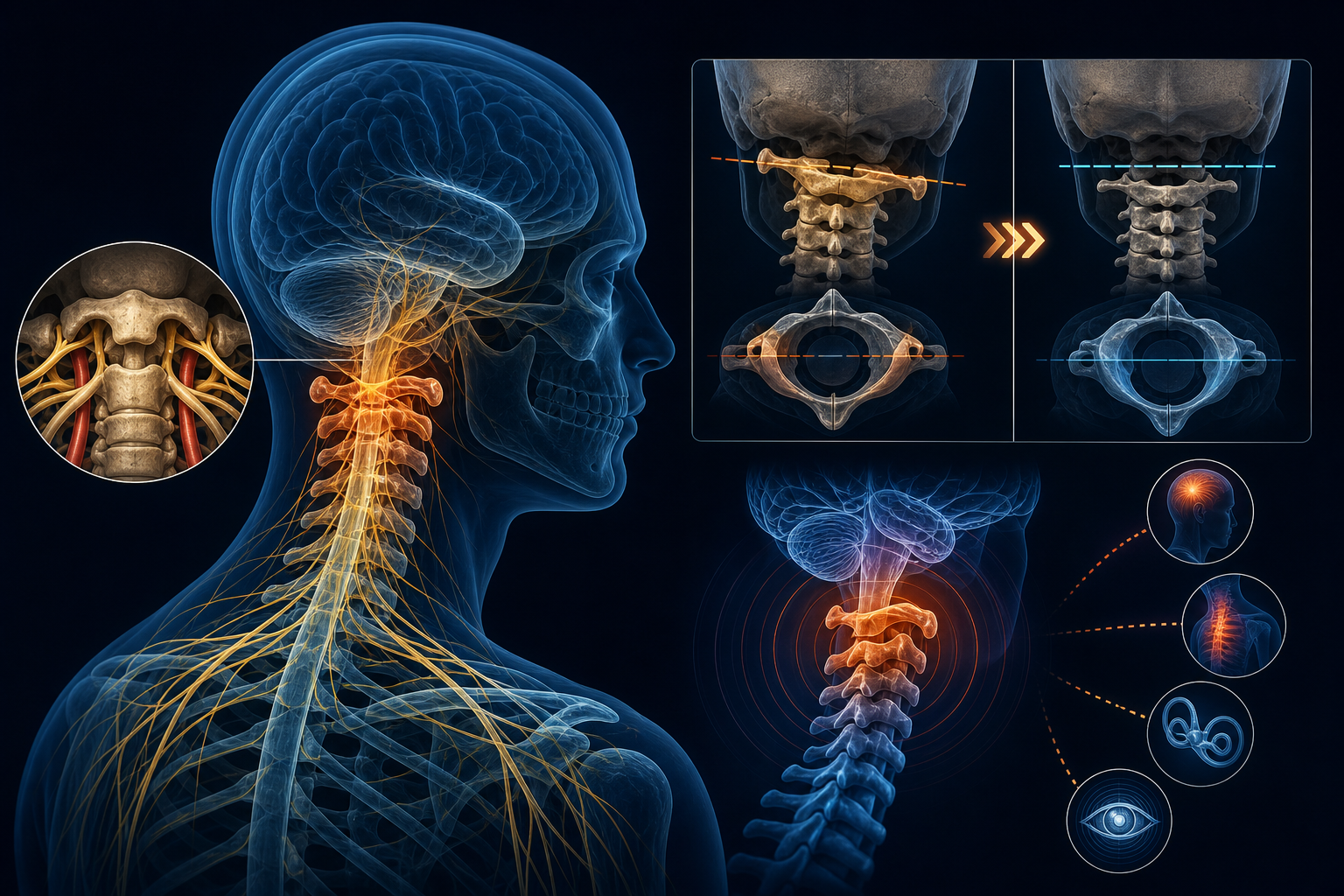
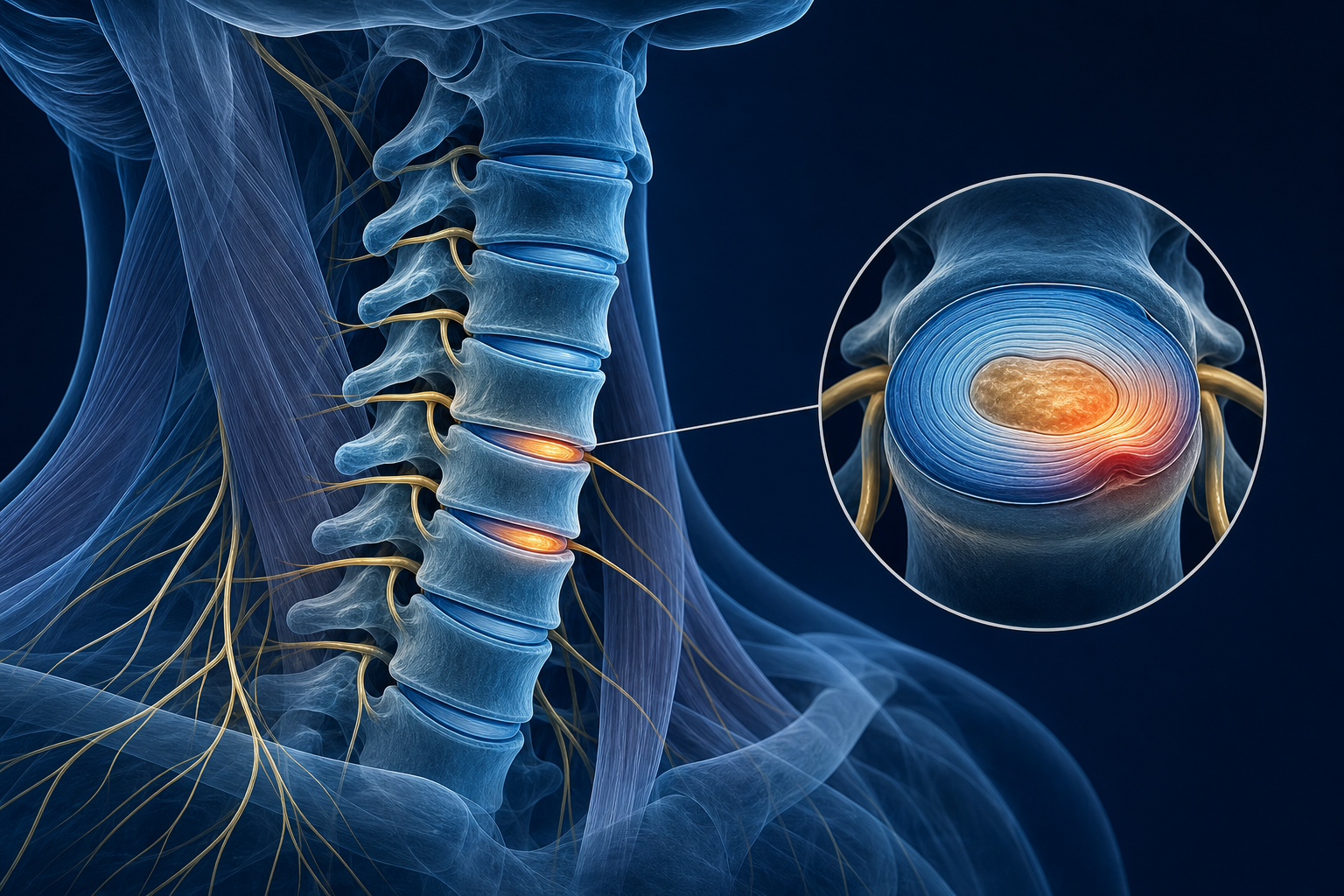
Neck pain and stiffness usually come from irritated cervical joints, overworked muscles, limited thoracic spine mobility, disc-related irritation, or nerve sensitivity. A chiropractor evaluates which tissues are contributing before choosing a treatment plan.
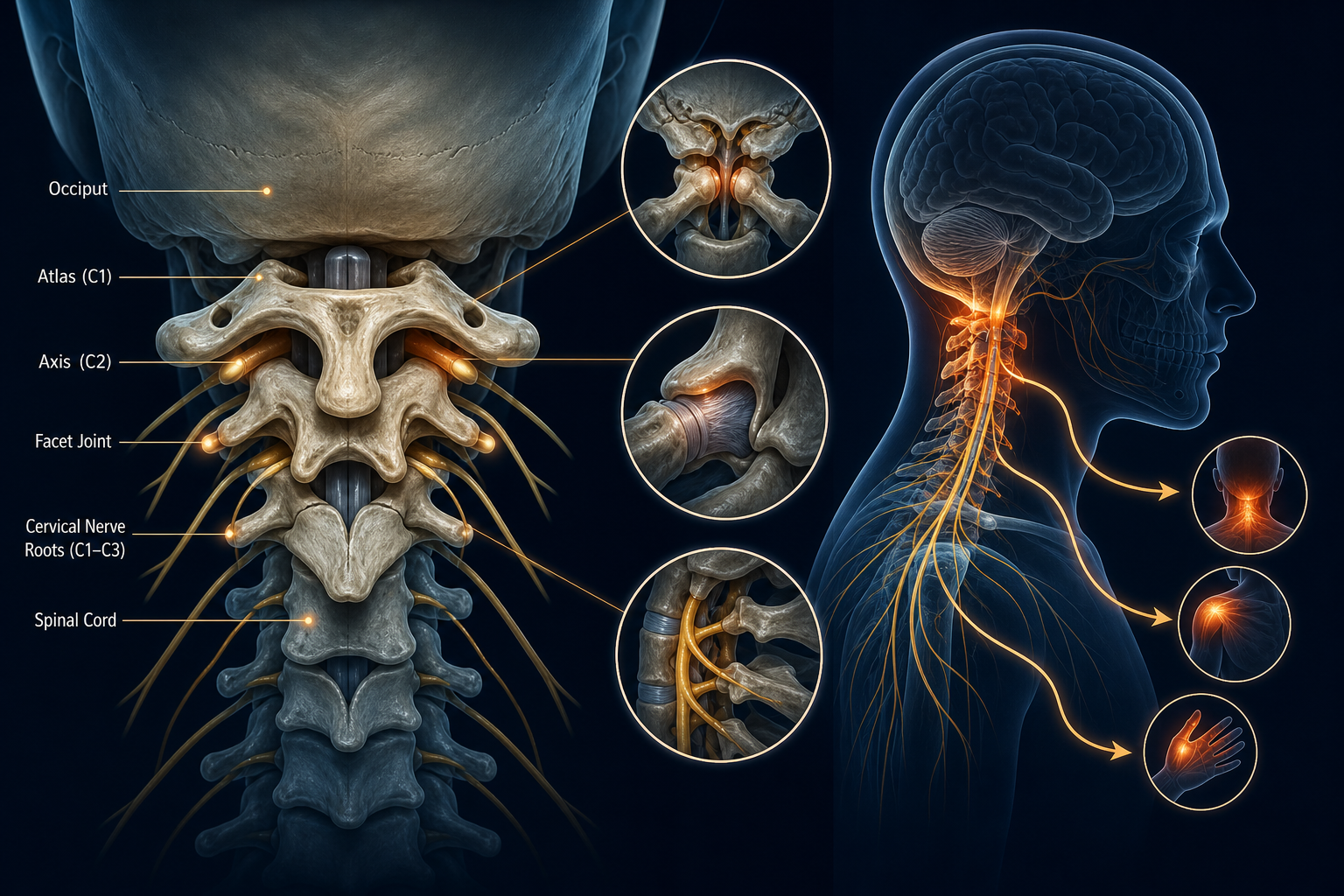
The neck has seven cervical vertebrae, small facet joints that guide motion, discs between vertebrae that absorb load, and muscles that stabilize the head. The sternocleidomastoid rotates the head, the upper trapezius elevates the shoulder girdle, and the levator scapulae often becomes tender with prolonged screen posture. Nerve roots exit between vertebrae and can refer symptoms into the shoulder blade, arm, hand, or fingers.
Common neck pain patterns
- Posture strain: Forward-head posture increases load on the lower cervical spine and upper thoracic spine. Symptoms often build during desk work or phone use.
- Joint stiffness: Restricted motion at C2-C3, C5-C6, or the upper thoracic joints may cause neck pain when turning head to back out of a driveway.
- Muscle guarding: The upper trapezius, levator scapulae, suboccipitals, and scalenes tighten to protect irritated joints.
- Whiplash-related discomfort: A rapid acceleration-deceleration event may strain cervical ligaments, muscles, and joints. Symptoms may peak 24–72 hours after impact.
- Nerve irritation: A cervical nerve root may become sensitive from disc or joint irritation, causing arm tingling, numbness, or weakness.
- Cervicogenic headache: Irritation from upper cervical joints and suboccipital muscles may refer pain toward the back of the head, temple, or eye region.
If headache is part of your neck pattern, compare your symptoms with common head pain patterns. Neck-related headaches often worsen with sustained posture or limited neck rotation, while other headache types may follow different triggers.
Most mechanical neck pain improves over days to weeks. Mild stiffness after sleep may improve within 2–7 days with movement, heat, and gentle exercise. Moderate neck pain with limited ROM often takes 2–6 weeks, especially if symptoms have lasted longer than 10–14 days before care begins.
What Conservative Chiropractic Care Options Help Neck Pain?
Conservative chiropractic care for neck pain usually combines manual therapy, exercise therapy, soft tissue care, posture coaching, and activity changes. The goal is better cervical ROM, lower pain sensitivity, stronger support from deep neck flexors and scapular muscles, and safer return to work, driving, training, and sleep positions.
Chiropractic care is not one technique. Your provider may use low-force mobilization instead of high-velocity manipulation if your neck is highly sensitive, if you prefer gentler care, or if your exam suggests a cautious approach. Treatment should match exam findings, not a preset routine.
Treatment Option Expected Outcome Typical Timeline Cervical spinal manipulation Improved joint motion and reduced mechanical stiffness in selected patients. Often assessed over 2–4 visits; full plan commonly spans 2–6 weeks. Cervical mobilization Gradual ROM improvement using controlled, lower-force joint movement. Commonly 1–3 sessions per week for 2–4 weeks. Soft tissue therapy Reduced guarding in upper trapezius, levator scapulae, scalenes, and suboccipitals. Often paired with exercise during the first 1–3 weeks. Corrective exercise Better endurance of deep neck flexors, lower trapezius, serratus anterior, and thoracic extensors. Noticeable control gains often take 3–6 weeks with daily practice. Ergonomic coaching Less repeated loading from screens, driving, sleep posture, and workstation setup. Changes can help within days; habits require 2–4 weeks of repetition. Acupuncture or massage therapy Short-term reduction in muscle tone and pain sensitivity when paired with active care. Often used weekly for 2–4 weeks, then adjusted based on response.Home exercise: chin tuck plus scapular set
This drill trains deep neck flexors and shoulder blade control without forcing painful motion.
- Sit tall with your feet flat and your eyes level. Do not look down.
- Gently glide your head straight backward as if making a double chin. Keep your jaw relaxed.
- Hold 5 seconds. You should feel mild effort in the front of the neck, not sharp pain.
- Relax for 5 seconds. Repeat 8–10 times.
- Add a scapular set: pull both shoulder blades slightly back and down, then hold 5 seconds.
- Perform 2 sets daily for 7 days. Stop if symptoms travel farther into the arm or if dizziness occurs.
Natural treatment for neck pain relief works best when you combine hands-on care with movement. Passive care may reduce pain temporarily, but long-term improvement usually requires better muscle endurance, sleep positioning, workstation changes, and steady ROM practice.
If your symptoms include headaches or sound-related symptoms near the ear, read about neck-related tinnitus and migraine care options. Neck structures can refer symptoms to the head, but proper screening matters because not every headache or ear symptom comes from the cervical spine.
Chiropractor vs Physical Therapy for Neck Pain: Which Fits?
Chiropractic care and physical therapy overlap for neck pain, but the emphasis may differ. Chiropractors often focus on spinal joint motion, manual therapy, and neuromusculoskeletal assessment; physical therapists often focus on exercise progression, movement retraining, and functional recovery. Many patients benefit from elements of both.
The better choice depends on exam findings, symptom irritability, your goals, and provider training. A stiff cervical facet joint with short-term ROM loss may respond well to chiropractic mobilization or manipulation plus home exercise. A chronic pattern with poor endurance, scapular weakness, and repeated flare-ups may need a heavier exercise progression similar to PT programming.
When chiropractic care may be a good starting point
- You have neck pain when turning head, especially with local stiffness and no severe neurologic signs.
- You wake up and can’t move neck after sleeping, and symptoms feel mechanical rather than systemic.
- You have upper back tightness with posture strain from desk work, driving, or phone use.
- You have cervicogenic headache patterns that worsen with neck position.
- You want provider-guided manual care plus a focused home program.
When PT-style rehab may be emphasized
- You need a structured strength plan for deep neck flexors, lower trapezius, serratus anterior, and thoracic extensors.
- You are returning to sport, lifting, cycling, swimming, or overhead activity.
- You have recurring flare-ups every few weeks and need load management.
- You have balance, coordination, or endurance deficits after a neck injury.
The phrase “treatment for pinched nerve in neck” usually refers to cervical radiculopathy, where a nerve root becomes irritated. Conservative care may include gentle traction, nerve glides, thoracic mobility, cervical stabilization, and activity modification. Arm weakness, worsening numbness, or loss of hand coordination needs prompt evaluation.
Athletes with neck pain should consider sport demands, impact exposure, training load, and shoulder mechanics. Medximity’s guide to sports therapy and chiropractic care explains how performance goals affect care planning.
What Happens at First Chiropractic Visit for Neck Pain?
Your first chiropractic visit for neck pain should include a history, red-flag screen, posture and movement assessment, orthopedic and neurologic testing when indicated, treatment discussion, and a clear care plan. A provider should explain what they found before starting care.
The visit usually starts with symptom mapping. You should be asked where symptoms start, whether they travel into the shoulder blade or arm, what movements worsen them, what helps, how long symptoms have been present, whether there was a crash or fall, and whether you have dizziness, fainting, fever, unexplained weight loss, trouble walking, or new weakness.
Common exam components
- ROM testing: The provider checks flexion, extension, rotation, and side bending. Normal cervical rotation is often about 70–90 degrees per side, but pain and stiffness can limit this sharply.
- Posture review: Forward-head position, rounded shoulders, thoracic kyphosis, and scapular control are assessed because they change cervical load.
- Palpation: The provider checks tenderness and tone in the suboccipitals, upper trapezius, levator scapulae, scalenes, and cervical paraspinals.
- Joint motion testing: Cervical and upper thoracic segments are assessed for stiffness, pain, or excessive sensitivity.
- Neurologic screen: Reflexes, sensation, grip strength, and key muscle strength may be tested if arm symptoms are present.
- Functional testing: Driving rotation, desk posture, lifting tolerance, or sport-specific positions may be reviewed.
Imaging is not automatic for routine mechanical neck pain. X-ray or MRI may be considered if there was significant trauma, progressive neurologic deficit, suspected fracture, infection signs, cancer history, or symptoms that do not match a typical mechanical pattern. Your provider should explain why imaging is or is not appropriate.
A first visit may include treatment if the provider determines conservative care is appropriate that day. Care may start with gentle mobilization, soft tissue therapy, thoracic mobility, heat, exercise instruction, or ergonomic changes. High-force cervical techniques should be discussed first, including why they fit your exam and what alternatives are available.
How to prepare before you schedule
- Write down when symptoms started and whether they followed sleep position, lifting, desk work, training, or a crash.
- Note arm symptoms, including which fingers tingle or feel numb.
- Bring relevant imaging reports if you already have them.
- List current activity limits: driving, sleep, work, exercise, lifting, or looking down.
- Confirm insurance details, appointment length, and whether online forms are available.
Work setup often contributes to recurring neck pain. If your symptoms build during laptop use, driving, or prolonged sitting, review workplace safety and back pain prevention; many of the same ergonomic principles apply to the neck and upper back.
When Should You See a Provider for Neck Pain?
You should see a provider for neck pain when symptoms last more than a few days, limit driving or sleep, return repeatedly, follow a crash, or travel into the arm. Seek emergency care for severe or unusual symptoms that may signal a non-mechanical problem.
How long does neck pain last? Mild stiffness after sleep often improves within 2–7 days. Moderate mechanical neck pain commonly improves over 2–6 weeks with appropriate care and daily movement. Whiplash-related symptoms may take 6–12 weeks or longer, especially when pain is intense early, ROM is very limited, or headaches and arm symptoms are present.
Seek emergency care now if you have any of these signs
- Sudden severe headache unlike your usual pattern.
- Neck pain with fainting, confusion, trouble speaking, facial droop, or loss of coordination.
- New arm or leg weakness, trouble walking, or loss of balance.
- Fever with severe neck stiffness.
- Neck pain after a major fall, crash, or direct blow.
- Loss of bladder or bowel control with spine symptoms.
- Progressive numbness, hand clumsiness, or worsening grip strength.
Schedule a routine visit when symptoms fit these patterns
- You woke up and can’t move neck after sleeping, but you have no fever, trauma, weakness, or balance changes.
- You have neck pain when turning head that limits driving or checking blind spots.
- You have recurring stiffness after laptop use, phone use, or long commutes.
- You have headaches that appear linked to neck position or upper cervical tightness.
- You have shoulder blade pain with neck stiffness but no progressive neurologic symptoms.
- You tried home care for 3–7 days and ROM is not improving.
Do not force stretching if pain shoots down the arm, symptoms spread farther from the neck, or dizziness appears. Reduce intensity, return to neutral posture, and schedule an evaluation. Gentle movement should feel relieving or mildly tight, not sharp, electric, or worsening.
If headaches are frequent or severe, compare neck-related features with migraine and spine pain patterns. Head pain has several causes, and cervical treatment should follow a careful exam.
What to Do Next
Search for a chiropractor who evaluates neck pain specifically, confirms whether conservative care is appropriate, and gives you a plan that includes hands-on care, exercise, and self-management. Start with a local search, compare verified profiles, then schedule with the provider whose services and access match your symptoms.
Your next steps
- Use Medximity to find a chiropractor near you and filter by location, provider details, and appointment access.
- Choose 2–3 providers with neck-pain services listed, not only general chiropractic care.
- Check hours, city, distance, verified profile status, phone number, appointment link, and insurance details.
- Call or request an appointment. Ask whether the provider commonly evaluates stiff neck, cervicogenic headache, whiplash-related discomfort, or arm symptoms.
- Bring symptom notes, prior imaging reports if available, and a list of movements that worsen or relieve symptoms.
- Seek emergency care first if you have severe headache, fever with neck stiffness, new weakness, fainting, trouble walking, or neck pain after major trauma.
Questions to ask before scheduling
- Do you commonly treat neck pain and stiffness? Look for a clear answer about cervical assessment, ROM testing, neurologic screening, and care options.
- Is chiropractic care safe for neck pain? In properly screened mechanical cases, chiropractic care is generally considered a conservative option. Safety depends on history, exam findings, technique selection, and whether red flags are present.
- What techniques do you use for stiff neck? Ask about manipulation, mobilization, soft tissue therapy, exercise therapy, posture coaching, and lower-force options.
- How many visits will I need? Many acute cases are reassessed after 2–4 visits, while moderate cases may need 4–8 visits over 2–6 weeks plus home exercise.
- Do you coordinate with other providers? Neck pain with neurologic signs, complex headaches, or trauma history may require coordinated evaluation.
Quick FAQ
What should I search if I need neck care today?
Search “chiropractor for neck pain near me” or “chiropractor for stiff neck near me,” then compare providers by neck-pain services, distance, hours, verified profile status, and appointment access.
Can a chiropractor help neck pain when turning head?
A chiropractor may help if the cause is mechanical stiffness, muscle guarding, or irritated cervical facet joints. The provider should check ROM, neurologic signs, posture, and symptom behavior before treatment.
How long before neck pain improves with conservative care?
Mild stiffness may improve in 2–7 days. Moderate mechanical neck pain often improves over 2–6 weeks with consistent care, home exercise, posture changes, and activity modification.
What if my neck pain travels into my arm?
Arm tingling, numbness, or weakness may suggest cervical nerve root irritation. Schedule an evaluation promptly, and seek urgent care if weakness progresses, grip worsens, balance changes, or symptoms follow major trauma.
Should I choose chiropractic care or physical therapy first?
Choose based on symptoms and provider access. Chiropractic care may fit joint stiffness and neck-related headache patterns; PT-style rehab may fit chronic weakness, recurring flare-ups, or return-to-sport goals. Many plans combine manual care and exercise.
Where can I learn more before booking?
You can explore more health topics on Medximity, then compare local provider profiles when you are ready to schedule.