Understanding Vascular Headaches: Symptoms, Causes, and Treatment starts with an important point: “vascular headache” is a broad, older term rather than a single diagnosis. Many people use it to describe a headache that throbs, pulses, or feels related to changes in blood flow. In clinical settings, a provider may instead classify the headache more specifically, such as migraine, cluster headache, tension-type headache with throbbing features, or another primary or secondary headache pattern.
If you are searching for what is a vascular headache, you are likely trying to make sense of symptoms such as a throbbing headache on one side, light sensitivity, nausea, neck tightness, or recurring pain that interferes with work, driving, sleep, or daily life. This article explains common vascular headache symptoms in adults, possible causes and triggers, how vascular headache and migraine symptoms may overlap, and what conservative care may include.
Headaches can have many causes. Some are related to muscle tension, joint irritation, sleep disruption, dehydration, vision strain, stress, or nervous system sensitivity. Others may require prompt medical attention. Because headache patterns can be complex, the safest next step is to discuss recurring, severe, or changing symptoms with a qualified healthcare provider. If you need help finding conservative care, Medximity can help you search for a chiropractor near you, a physical therapist near you, or a medical specialist near you.
What Is a Vascular Headache?
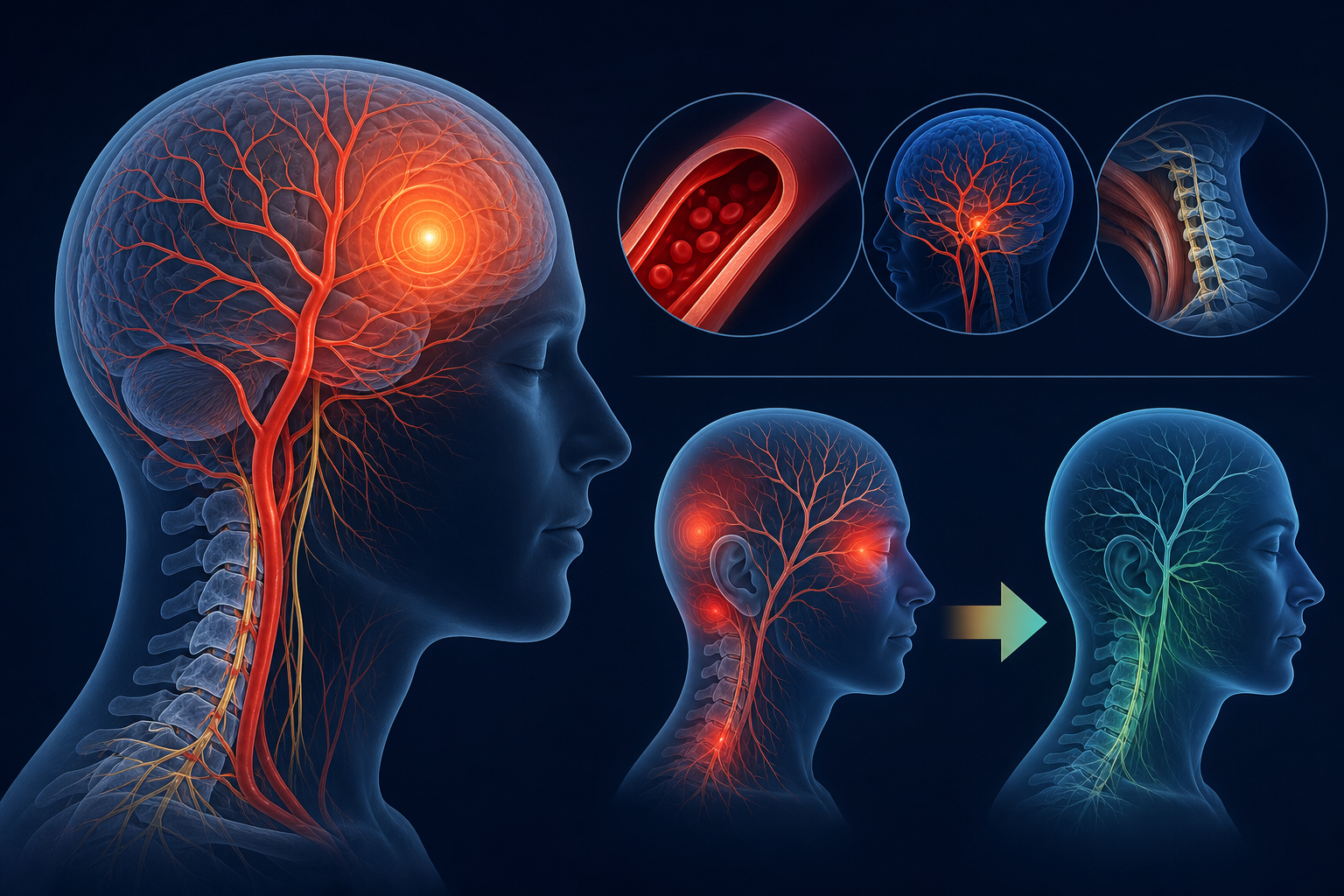
A vascular headache is a term historically used for headaches thought to involve changes in blood vessel size, blood flow, and nerve signaling in and around the head. Today, many headache specialists use more specific classifications because headache science has advanced. For example, migraine is no longer viewed as only a blood vessel problem. Research suggests migraine involves the nervous system, inflammatory signaling, pain-processing pathways, genetics, and environmental triggers, with blood vessel changes being only one part of the picture for some patients.
That said, patients still commonly use the phrase “vascular headache” to describe a pounding or pulsing headache. A person may feel pressure behind one eye, pain at the temple, throbbing on one side of the head, sensitivity to light or sound, or discomfort that worsens with exertion. These symptoms can overlap with migraine, cluster headache, cervicogenic headache, sinus-related pain, or other conditions.
Why the Term Can Be Confusing
The phrase vascular headache can be confusing because it does not identify one clear cause. Two people may both describe a “vascular” headache but have very different patterns. One may have migraine-like episodes with nausea and light sensitivity. Another may have severe one-sided pain around the eye. Another may have neck-related headache that feels like a pulse at the temple. Treatment planning depends on the pattern, contributing factors, medical history, and exam findings.
For that reason, it is helpful to think of “vascular headache” as a starting description, not a final answer. A provider may ask when the headache began, where it hurts, how long it lasts, what triggers it, what improves it, whether neurologic symptoms occur, and whether your neck, jaw, posture, sleep, or activity patterns may be involved.
Common Vascular Headache Symptoms in Adults
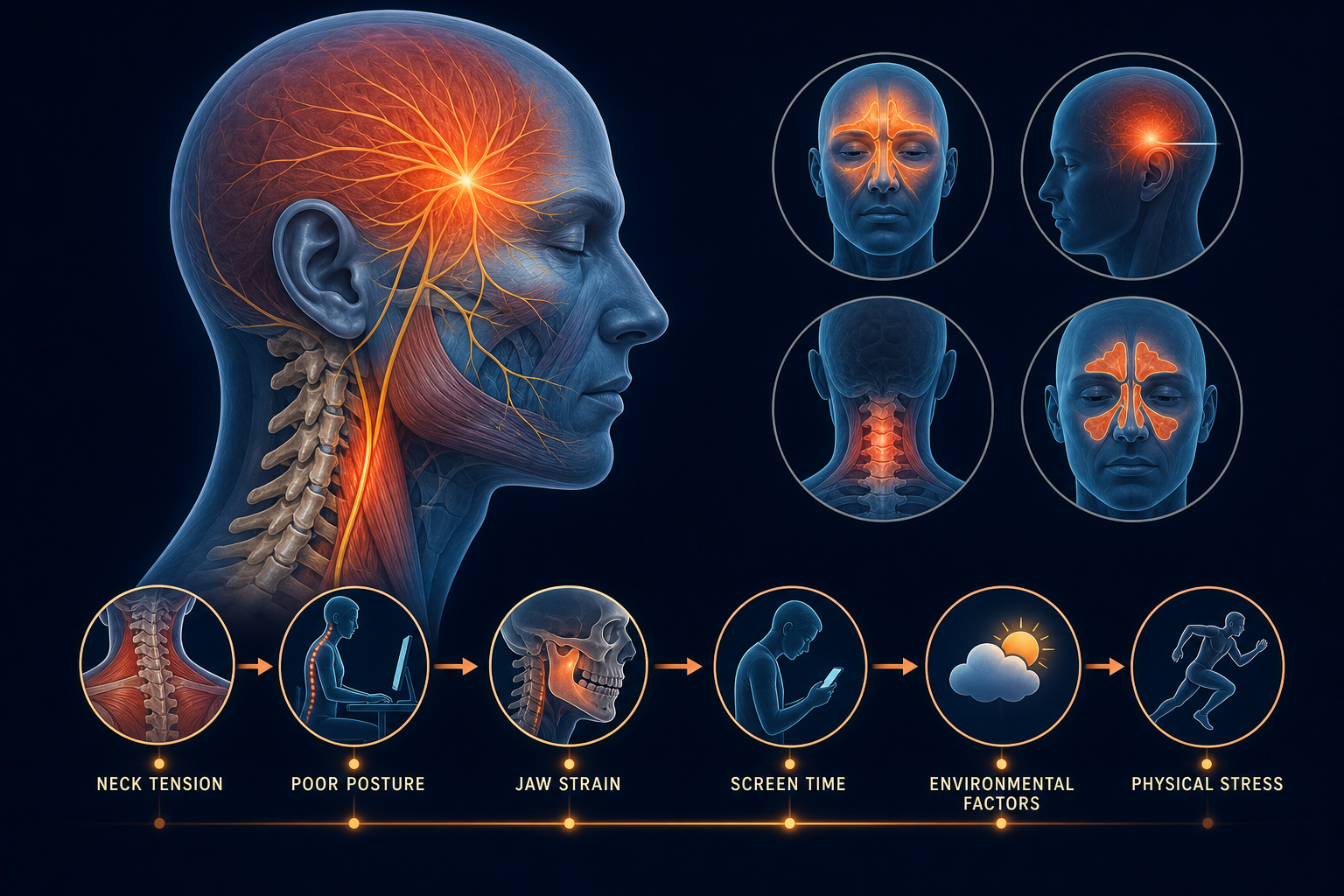
Vascular headache symptoms in adults often include throbbing, pulsing, or pounding pain. The pain may be on one side or both sides of the head. It may build gradually or come in episodes. Some people notice that pain is worse with movement, bending, coughing, bright light, strong smells, or stress. Others notice that headache discomfort increases when neck tension builds during computer work, driving, lifting, or poor sleep.
Common symptoms may include:
- Throbbing, pulsing, or pounding head pain
- A throbbing headache on one side, often near the temple, forehead, or behind the eye
- Pain that may worsen with physical activity or exertion
- Light sensitivity, sound sensitivity, or smell sensitivity
- Nausea or reduced appetite during an episode
- Neck tightness, upper back tension, or jaw tightness
- Pressure behind one eye or around the temples
- Fatigue, irritability, brain fog, or difficulty concentrating
- Visual symptoms such as flickering lights or spots in some migraine patterns
Not every person has every symptom. Some headaches are mild but frequent. Others are intense but occasional. Some people feel pain mostly in the head, while others feel a clear connection between the neck and the headache. If a headache is new, severe, recurring, or different from your usual pattern, it is reasonable to seek professional evaluation.
Headache Worse With Neck Tension
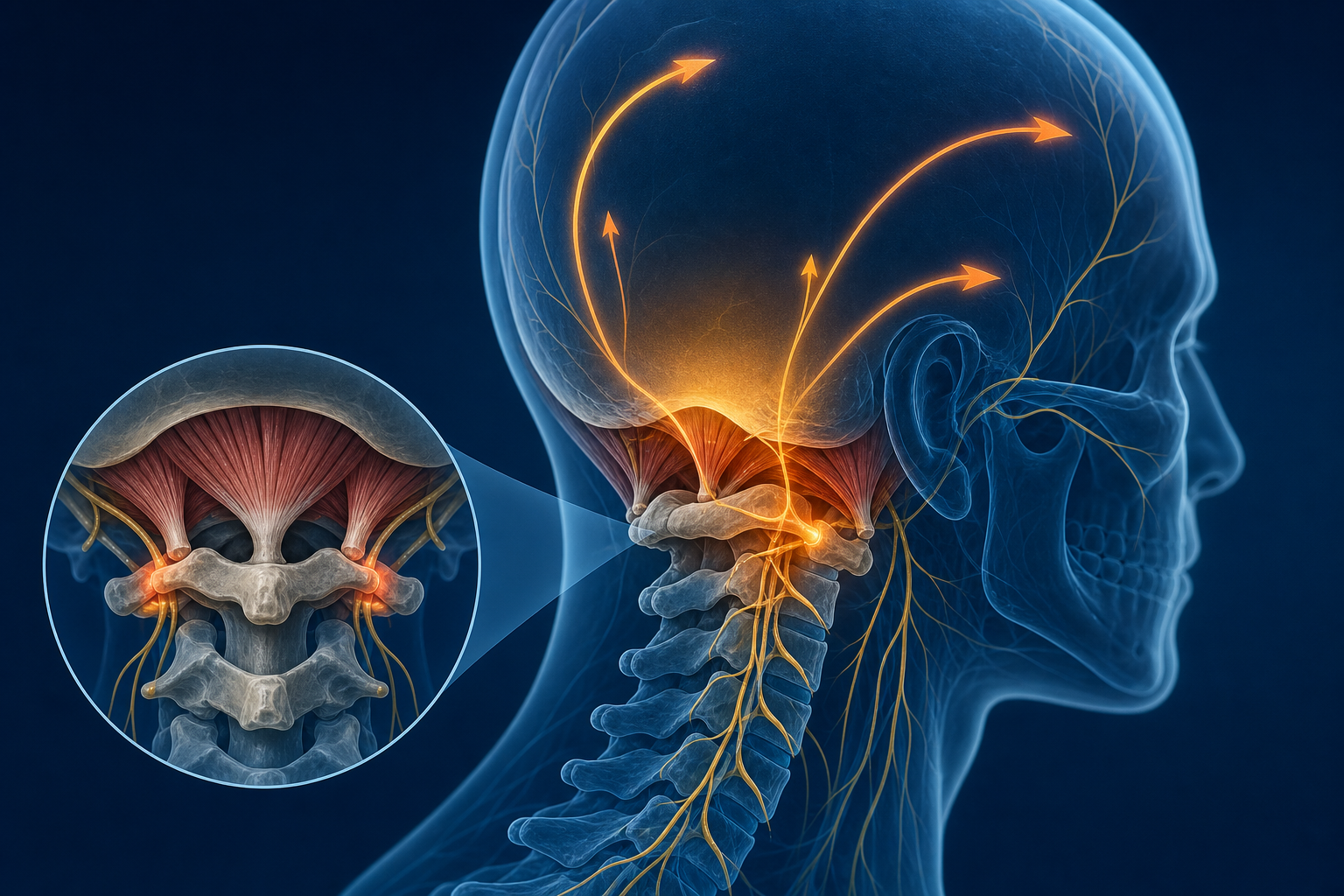
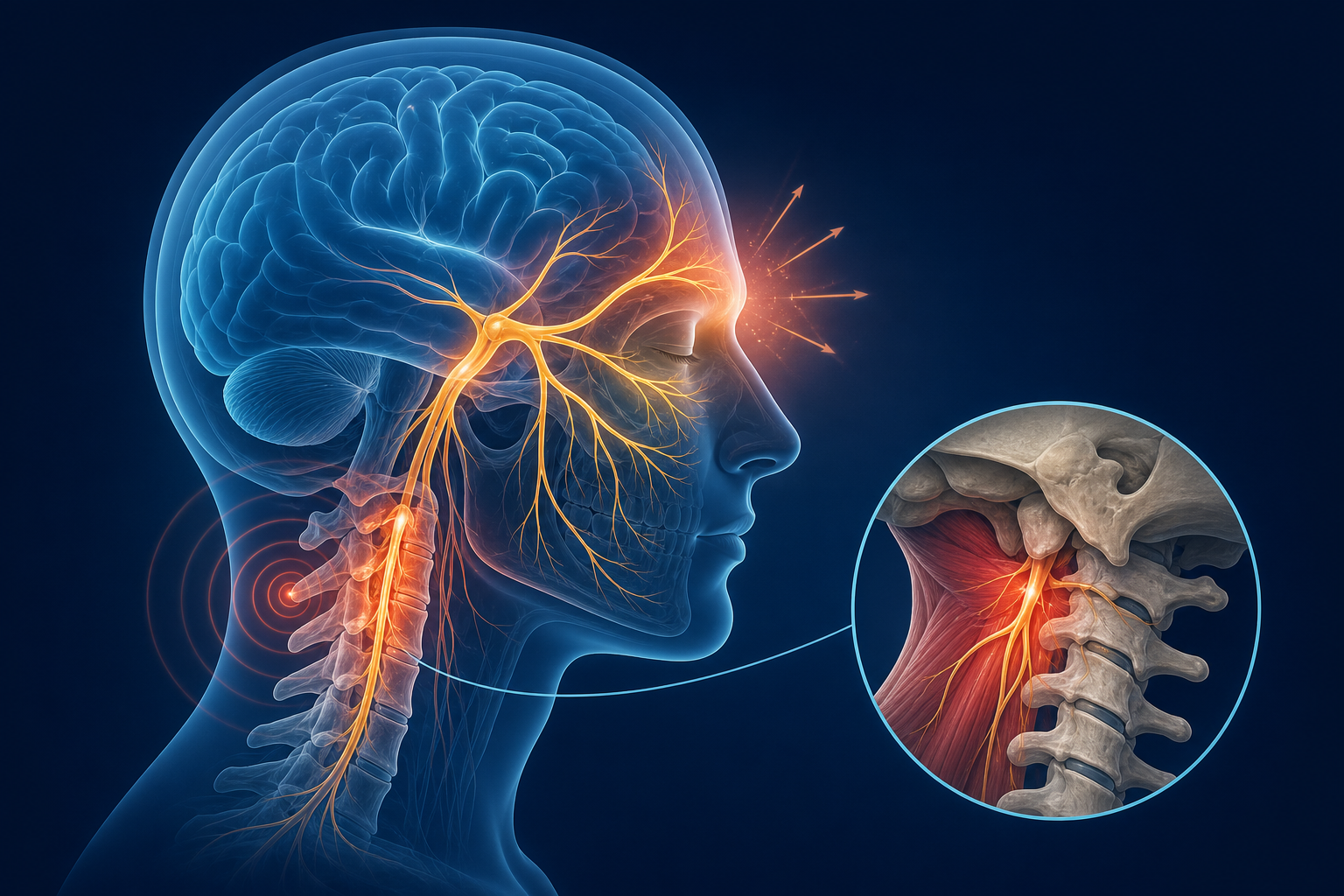
A headache worse with neck tension may involve more than one factor. Muscles, joints, nerves, and posture can all influence pain signals from the upper neck into the head. The upper cervical spine shares nerve pathways with parts of the head and face, which may explain why irritation in the neck can be associated with pain around the temples, forehead, or base of the skull in some people.
This does not mean every throbbing headache comes from the neck. Migraine and other headache disorders can also cause neck pain before, during, or after an episode. Still, when headaches regularly appear after long desk work, prolonged driving, poor sleep posture, or increased shoulder tightness, a conservative musculoskeletal evaluation may help identify treatable contributors.
Medximity’s resource on headache conditions and conservative care can help you learn more about headache patterns that may involve the neck, posture, and movement habits.
Vascular Headache vs Migraine Symptoms
Many patients search for vascular headache vs migraine symptoms because the two terms are often used together. In everyday language, a “vascular headache” may sound like a migraine because migraine often feels throbbing and may affect one side of the head. Clinically, however, migraine is a specific headache disorder with recognized symptom patterns, while vascular headache is a less precise umbrella term.
Migraine may include moderate to severe head pain, nausea, sensitivity to light or sound, and pain that worsens with routine activity. Some people experience aura, which can involve temporary visual, sensory, or speech-related symptoms. Others have migraine without aura. Neck pain can also occur with migraine, sometimes before the head pain becomes intense.
A vascular-type headache description may also be used by patients who have cluster-like headaches, exertional headaches, hormone-related headaches, or headaches that feel strongly pulsing but do not meet migraine criteria. Because symptoms can overlap, a provider’s assessment is important.
Key Differences Patients May Notice
While only a qualified provider can classify your headache pattern, these general differences may help you describe symptoms more clearly during an appointment:
- Migraine-like pattern: Often lasts hours to days, may include nausea, light sensitivity, sound sensitivity, and one-sided throbbing pain.
- Cluster-like pattern: Often causes severe one-sided pain around the eye or temple, sometimes with tearing, nasal congestion, eyelid changes, or restlessness. Episodes may occur in clusters over days or weeks.
- Tension-type pattern: Often feels like pressure, tightness, or a band around the head, though some patients may still describe pulsing when symptoms intensify.
- Cervicogenic pattern: Often begins in the neck or base of the skull and may be associated with reduced neck mobility, postural strain, or pain triggered by certain neck positions.
Many people have mixed features. For example, a person with migraine may also have neck stiffness that contributes to symptom severity. A person with desk-related tension may occasionally develop a throbbing pattern. This is why a thoughtful history and exam matter.
What Causes Vascular-Type Headaches?
There is rarely one single cause for recurring headaches. Vascular-type symptoms may be associated with nervous system sensitivity, blood vessel changes, inflammation, muscle tension, sleep quality, hormones, stress physiology, diet patterns, hydration, and environmental triggers. In some cases, headaches may be secondary to another medical issue that needs evaluation.
Possible contributors may include:
- Genetic susceptibility: Migraine and some recurring headache patterns can run in families.
- Sleep disruption: Too little sleep, irregular sleep, or poor sleep quality may be associated with more frequent headaches in some patients.
- Stress and nervous system arousal: Stress may increase muscle tension, affect sleep, and influence pain sensitivity.
- Neck and upper back strain: Poor workstation setup, prolonged phone use, driving posture, or repetitive lifting may contribute to headache frequency for some people.
- Hormonal changes: Some adults notice headache patterns around menstrual cycles, pregnancy, perimenopause, or other hormonal shifts.
- Food and beverage triggers: Alcohol, skipped meals, dehydration, caffeine changes, or certain foods may be associated with headaches for some individuals.
- Environmental exposure: Bright lights, strong odors, weather changes, noise, and screen glare may trigger symptoms in sensitive patients.
- Jaw tension: Clenching, grinding, or temporomandibular joint irritation may contribute to head and face pain in some cases.
Tracking symptoms can help reveal patterns. A simple headache log may include the date, time, location of pain, intensity, duration, sleep quality, meals, hydration, stress level, neck tension, screen time, and what helped. This information can make a provider visit more productive.
How Long Does a Vascular Headache Last?
How long does a vascular headache last? The answer depends on the type of headache and the factors involved. Migraine-like headaches may last several hours and, in some cases, up to a few days. Cluster-like headaches may be shorter but very intense, often recurring in repeated episodes. Neck-related headaches may last as long as the underlying muscle or joint irritation remains active, and they may fluctuate with posture, movement, stress, or sleep.
If your headaches are lasting longer than usual, becoming more frequent, or changing in character, it is a good idea to seek evaluation. A provider can help determine whether your symptoms fit a primary headache pattern, a musculoskeletal contributor, or something that requires further medical workup.
Is It Normal to Have Daily Headaches?
Many people ask, is it normal to have daily headaches? Daily headaches are common enough that many providers evaluate them regularly, but they should not be ignored. A headache that occurs every day or nearly every day may be associated with sleep issues, stress, neck dysfunction, medication overuse, vision strain, jaw tension, dehydration, or a chronic headache disorder. It may also signal a condition that needs medical attention.
Daily headaches deserve a careful evaluation, especially if they are new, worsening, associated with neurologic symptoms, or interfering with daily activities. Conservative providers such as chiropractors and physical therapists may help identify musculoskeletal contributors, while medical specialists may evaluate for neurologic or systemic causes when appropriate.
When to See a Provider for Headache Pain
You should consider seeing a healthcare provider when headaches are recurring, worsening, limiting your activities, or not responding to your usual self-care strategies. You should also seek evaluation when headaches are linked with neck pain, dizziness, visual symptoms, nausea, jaw pain, sleep disruption, or difficulty concentrating.
Prompt medical evaluation is especially important for a sudden severe headache, a headache after head trauma, a new headache with fever or stiff neck, weakness, numbness, confusion, fainting, vision loss, seizure, or a headache that is very different from your usual pattern. This article is educational and cannot determine whether your symptoms are urgent. If you are concerned about severe or unusual symptoms, seek immediate medical care.
Signs a Conservative Care Evaluation May Be Helpful
Conservative care may be worth exploring when your headache pattern appears connected to neck tension, posture, movement, muscle tightness, or recurring mechanical strain. Examples include headaches that develop after computer work, long drives, overhead work, exercise form changes, or sleeping in an awkward position. A chiropractor or physical therapist may assess joint mobility, muscle tone, posture, range of motion, strength, breathing mechanics, and daily movement habits.
If you are searching for a headache specialist near me conservative care, Medximity can help you compare providers who focus on non-surgical, movement-based, and rehabilitation-oriented approaches. You can start by browsing Medximity headache care providers.
What to Expect During a Headache Evaluation
A headache evaluation should begin with a detailed conversation. Your provider may ask when the headaches began, how often they occur, where the pain is located, what the pain feels like, how long it lasts, what triggers it, and what symptoms come with it. They may ask about sleep, hydration, caffeine, stress, screen use, work posture, exercise, prior injuries, jaw clenching, vision changes, and medical history.
For conservative care, the physical exam may include neck range of motion, posture assessment, muscle tenderness, joint mobility testing, neurologic screening, balance or coordination checks when appropriate, shoulder and upper back movement, and functional tasks that reproduce or relieve symptoms. A provider may also screen for red flags that suggest referral to another medical professional.
Questions to Bring to Your Appointment
To make the visit more useful, consider asking:
- What headache patterns could fit my symptoms?
- Do my neck, posture, jaw, or movement habits appear to be contributing?
- Are there any findings that suggest I should see a medical specialist?
- What conservative care options may be appropriate for my situation?
- What should I track between visits?
- Which symptoms would require urgent evaluation?
- How will we measure progress over time?
A clear plan should include realistic goals. For example, a provider may track headache frequency, intensity, duration, neck mobility, sleep quality, activity tolerance, and use of self-care strategies. Improvement may be gradual and varies by person.
Natural Treatment for Vascular Headaches: Conservative Options
Patients often search for natural treatment for vascular headaches because they want headache treatment without medication or surgery. Conservative care does not replace medical evaluation when symptoms are severe, unusual, or progressive. However, for many patients, non-invasive strategies may help reduce contributing factors and improve day-to-day function.
Natural or conservative approaches may include movement therapy, posture changes, hydration routines, sleep consistency, stress-management strategies, manual therapy, ergonomic adjustments, breathing exercises, and strengthening. The right combination depends on the headache pattern and the person’s overall health.
Movement and Mobility
Gentle mobility work may help some people whose headaches are associated with neck stiffness or upper back tension. A provider may recommend controlled neck range-of-motion exercises, thoracic mobility drills, shoulder blade movement, or breathing-based relaxation. These exercises should be selected for the individual and should not worsen symptoms.
It is usually best to avoid aggressive stretching or self-manipulation of the neck, especially if headaches are severe, new, or accompanied by dizziness, visual changes, numbness, or other neurologic symptoms. A qualified provider can help determine what movements are appropriate.
Ergonomics and Posture
Posture does not need to be perfect, and no single posture is ideal all day. The goal is to reduce sustained strain. A provider may suggest raising a monitor to eye level, using a chair that supports the lower back, keeping frequently used items close, taking short movement breaks, reducing phone-cradling, and alternating positions during long workdays.
People who notice headaches after screen time may also benefit from adjusting brightness, reducing glare, taking visual breaks, and checking whether vision correction is current. These changes may not eliminate headaches, but they may reduce avoidable triggers for some patients.
Sleep and Recovery Habits
Irregular sleep can make headaches more likely in some people. A consistent bedtime, regular wake time, dark sleep environment, and reduced late-night screen exposure may support recovery. Pillow position may also matter when headaches are associated with neck stiffness. A provider may help you find a sleeping posture that keeps the neck in a more neutral position.
Hydration, Meals, and Caffeine Patterns
Skipped meals, dehydration, and sudden caffeine changes may be associated with headache symptoms for some adults. Rather than following extreme plans, many patients do better with steady routines: regular meals, water intake throughout the day, and consistent caffeine habits if they use caffeine. If you suspect food triggers, a symptom log can help you discuss patterns with a provider.
Chiropractic Care for Headache Pain
Chiropractic care for headache pain focuses on the relationship between the spine, joints, muscles, and nervous system. For patients whose headaches are associated with neck dysfunction, posture, or muscle tension, chiropractic care may include spinal manipulation or mobilization, soft tissue techniques, exercise instruction, ergonomic coaching, and lifestyle guidance.
Chiropractic care is not a cure for all headache types, and not every headache is appropriate for spinal manipulation. A responsible chiropractor should take a thorough history, screen for red flags, explain risks and benefits, and refer to another provider when symptoms suggest a need for medical evaluation. Some patients report fewer or less intense headaches when neck-related contributors are addressed, but results vary.
If you want to explore conservative options, you can review Medximity’s guide to chiropractic care or search for a local chiropractor who treats headache-related neck pain.
What a Chiropractic Visit May Include
A chiropractic visit for headaches may include a consultation, physical exam, range-of-motion testing, palpation of the neck and upper back, postural assessment, and discussion of triggers. If care is appropriate, treatment may involve gentle joint mobilization, spinal adjustment, muscle release techniques, stretching, strengthening, or home-care recommendations.
The provider should explain what they are doing and why. They should also discuss what changes to monitor after treatment, such as soreness, symptom relief, headache frequency, or any unusual reaction. If symptoms worsen or new neurologic symptoms appear, you should contact a healthcare professional promptly.
Physical Therapy for Recurring Headaches
Physical therapy for recurring headaches may be helpful when headaches are associated with neck pain, muscle imbalance, posture, movement control, jaw tension, or previous injury. Physical therapists use evaluation-based exercise and rehabilitation strategies to address strength, mobility, endurance, and mechanics.
Physical therapy may include cervical and thoracic mobility work, deep neck flexor training, shoulder and scapular strengthening, manual therapy, headache education, graded activity, vestibular screening when dizziness is present, and home exercise planning. The goal is typically to reduce contributing strain, improve tolerance for daily activities, and give patients tools to manage symptoms more confidently.
To learn more about rehabilitation-focused care, visit Medximity’s page on physical therapy or search for a physical therapist near you.
What a Physical Therapy Plan May Look Like
A physical therapy plan may begin with education and symptom tracking. Your therapist may teach you how to identify early signs of tension, adjust work positions, use breathing strategies, and perform specific exercises. As symptoms allow, the plan may progress toward strengthening the neck, shoulders, and upper back, improving endurance for sitting or activity, and building confidence with movement.
Progress is usually measured by more than pain intensity. Your therapist may track how often headaches occur, how long they last, how quickly symptoms calm down, how well you tolerate work or exercise, and whether you feel more in control of flare-ups.
Headache Treatment Without Medication or Surgery
Many people prefer to begin with headache treatment without medication or surgery when it is safe and appropriate. Conservative care may be part of a broader plan that includes medical evaluation, especially for persistent or complex headache patterns. Non-medication strategies may help address modifiable triggers, but they should be tailored to the individual.
Conservative options may include:
- Manual therapy for neck and upper back mobility when appropriate
- Targeted strengthening for the neck, shoulders, and postural muscles
- Stretching and mobility exercises selected for your symptoms
- Workstation and driving posture adjustments
- Stress-reduction and breathing techniques
- Sleep routine support
- Hydration and meal consistency
- Education on pacing, flare-up management, and trigger tracking
Some patients benefit from combining chiropractic care and physical therapy, while others need one approach or a referral to a medical specialist. The best plan depends on the headache type, exam findings, health history, and personal goals.
How Providers Identify Red Flags
Most headaches are not caused by dangerous conditions, but providers take red flags seriously because some headache symptoms require urgent assessment. During an evaluation, a provider may ask about sudden onset, trauma, fever, neurologic symptoms, cancer history, immune system concerns, pregnancy or postpartum status, age at onset, and changes in pattern.
Red flag screening does not mean something serious is present. It is a safety step. If a conservative provider finds symptoms outside their scope, they may recommend prompt medical evaluation. This is part of responsible headache care.
Symptoms That Should Not Be Ignored
Seek urgent medical attention for a sudden “worst headache,” headache with weakness or numbness, confusion, fainting, seizure, new vision loss, severe headache after injury, headache with fever and stiff neck, or a new headache that is dramatically different from your usual pattern. If you are unsure whether symptoms are urgent, it is safer to seek medical guidance.
Self-Care Strategies That May Help Between Visits
Self-care is not a substitute for evaluation, but it may help you understand your pattern and reduce avoidable triggers. Keep your approach gentle and consistent. If a strategy worsens symptoms, stop and discuss it with a provider.
Try a Headache Log
Track the time of day, pain location, intensity, duration, sleep, meals, hydration, stress, menstrual cycle if relevant, weather changes, screen time, neck tension, exercise, and what helped. Patterns often become clearer after two to four weeks of tracking.
Use Movement Breaks
If headaches build during desk work, try brief movement breaks. Stand up, relax the shoulders, gently turn the head within a comfortable range, and take a few slow breaths. Small breaks may reduce sustained muscle loading for some people.
Reduce Neck and Jaw Clenching
Many people hold tension in the jaw, temples, and shoulders without noticing. Periodically check whether your teeth are touching, your shoulders are elevated, or your forehead is tight. Gentle relaxation cues may help reduce background tension.
Support Regular Recovery
Sleep, hydration, regular meals, and manageable activity levels may support the nervous system. These habits may not prevent every headache, but they can create a more stable baseline for many adults.
How to Find a Headache Specialist Near You for Conservative Care
When searching for a headache specialist near me conservative care, look for providers who take time to understand your symptoms, screen for red flags, explain the reasoning behind their plan, and coordinate referrals when needed. For headache patterns linked with neck pain or movement, a chiropractor or physical therapist may be a good place to start. For complex symptoms, neurologic signs, or headaches that are new and severe, a medical specialist may be appropriate.
Medximity helps patients compare conservative care providers and medical specialists in one place. You can search by specialty, location, and condition focus to find a provider who fits your needs. Start with Medximity’s headache provider search, browse chiropractors, or compare physical therapists in your area.
What to Expect From Ongoing Care
Ongoing care should be individualized. A provider may begin with short-term symptom reduction, then shift toward prevention strategies, improved movement tolerance, and self-management. You may be asked to perform home exercises, adjust work habits, track triggers, or return for follow-up visits to reassess progress.
A reasonable care plan should include checkpoints. If headaches are not improving as expected, if symptoms change, or if red flags appear, the plan should be reconsidered. Sometimes that means changing conservative strategies. Sometimes it means involving a medical specialist. Good care adapts to the patient rather than forcing every headache into the same treatment model.
Frequently Asked Questions About Vascular Headaches
What is a vascular headache?
A vascular headache is an older, broad term often used to describe throbbing or pulsing headaches that may involve blood vessel changes and nerve signaling. Today, providers usually classify headaches more specifically, such as migraine, cluster headache, tension-type headache, or cervicogenic headache.
What are common vascular headache symptoms in adults?
Common symptoms may include throbbing or pounding pain, one-sided head pain, light or sound sensitivity, nausea, pressure behind the eye, neck tension, and symptoms that worsen with activity. Symptoms vary, so recurring or changing headaches should be evaluated by a qualified provider.
How are vascular headache and migraine symptoms different?
Migraine is a specific headache disorder that may include one-sided throbbing pain, nausea, light sensitivity, sound sensitivity, and sometimes aura. “Vascular headache” is less specific and may describe several headache patterns with throbbing features.
Can neck tension make a vascular-type headache worse?
Neck tension may contribute to headache symptoms in some people, and migraine can also cause neck pain as part of the episode. A conservative evaluation can help determine whether neck mobility, muscle tension, posture, or movement habits may be contributing factors.
How long does a vascular headache last?
Duration depends on the headache type. Migraine-like headaches may last hours to days, cluster-like episodes may be shorter but intense, and neck-related headaches may fluctuate with mechanical strain. New, prolonged, or worsening headaches should be discussed with a provider.
Is it normal to have daily headaches?
Daily headaches should not be ignored. They may be associated with several factors, including sleep issues, stress, neck dysfunction, vision strain, medication overuse, or chronic headache disorders. A provider can help identify likely contributors and appropriate next steps.
Can chiropractic care help headache pain?
Chiropractic care may help some patients whose headaches are associated with neck dysfunction, joint restriction, or muscle tension. It is not appropriate for every headache type, so a chiropractor should perform an evaluation and refer out when symptoms suggest another medical concern.
Can physical therapy help recurring headaches?
Physical therapy may help recurring headaches when posture, neck mobility, muscle endurance, jaw tension, or movement control are contributing factors. Treatment may include exercise, manual therapy, education, and ergonomic strategies tailored to the patient.
Key Takeaway
Vascular headache is a broad term that often overlaps with migraine-like, cluster-like, or neck-related headache patterns. Because the same symptom can have different causes, the most useful step is a careful evaluation. Conservative care, including chiropractic care, physical therapy, movement changes, ergonomics, sleep support, and trigger tracking, may help some patients manage headache contributors without medication or surgery. If your headaches are severe, new, worsening, daily, or associated with neurologic symptoms, seek medical evaluation promptly.
This article is for educational purposes only and is not a substitute for professional medical advice, diagnosis, or treatment. Always consult a qualified healthcare provider about your specific condition. If you may be experiencing a medical emergency, call 911 or seek emergency care immediately.