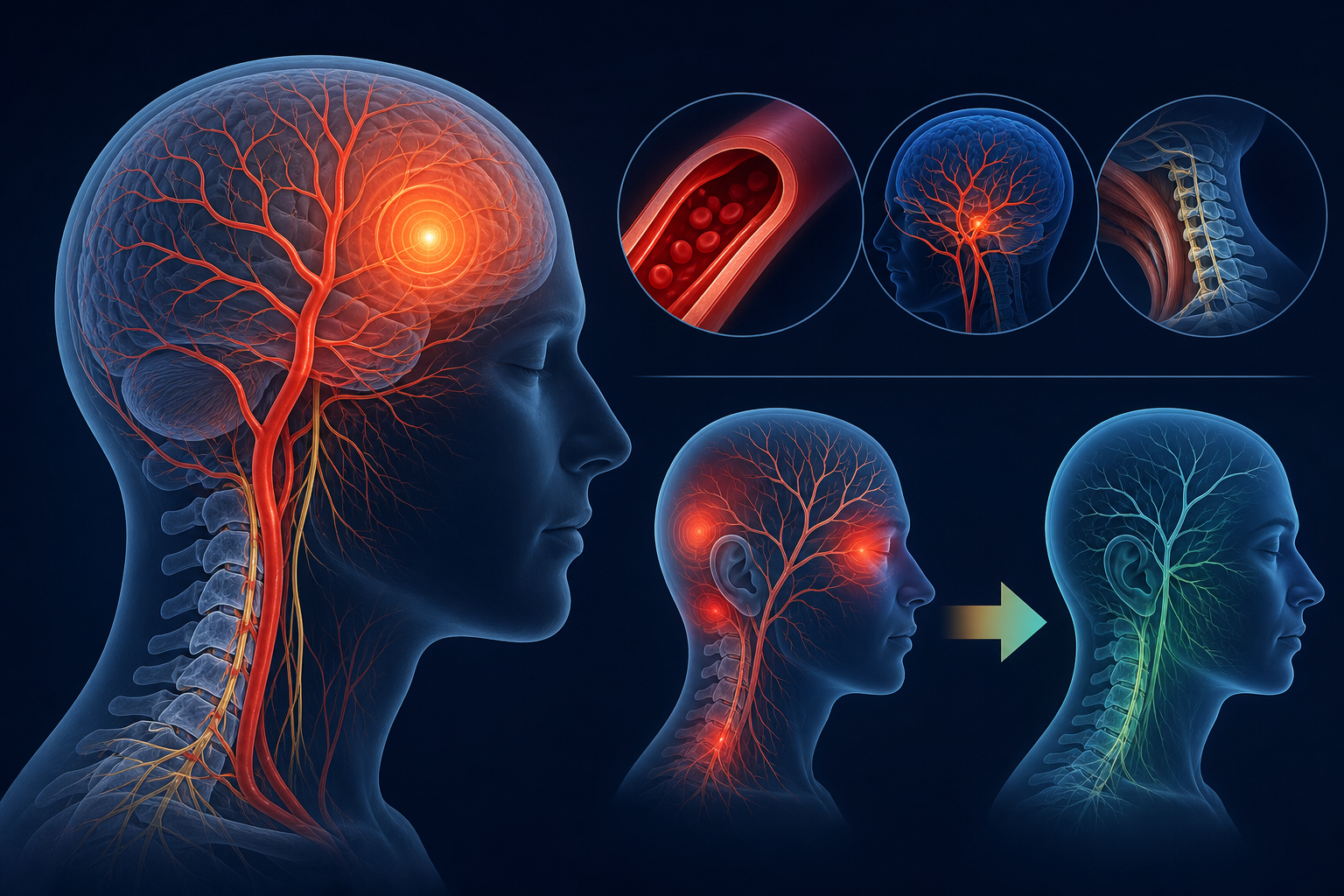
Understanding Migraine: Symptoms, Causes, and Treatment starts with an important point: migraine is more than a bad headache. It is a neurological condition that can affect pain processing, vision, balance, digestion, energy, sleep, and sensitivity to light, sound, or movement. Some people have occasional migraine attacks that pass within a day. Others experience symptoms that interfere with work, parenting, driving, exercise, and daily routines.
If you are searching for what is migraine and symptoms, migraine vs regular headache differences, migraine symptoms with neck pain, or natural treatment for migraine headaches, this guide can help you understand the basics and know when it may be time to see a provider. It is not a diagnosis, and it cannot replace care from a qualified clinician. Migraine symptoms can overlap with other headache disorders and, in rare cases, more urgent medical problems. A trained provider can evaluate your history, exam findings, and risk factors.
For patients looking for conservative care, Medximity can help you explore providers who work with headaches, neck pain, posture, movement, and rehabilitation. You can search for a chiropractor for migraines near me, compare physical therapy providers near you, or learn more about related topics such as headaches and neck pain.
Key Takeaways About Migraine
- Migraine is commonly described as a neurological disorder, not simply a regular headache.
- Symptoms may include throbbing or pulsing head pain, nausea, light sensitivity, sound sensitivity, visual aura, dizziness, fatigue, and neck pain.
- Migraine attacks may last several hours to several days, and symptoms may appear before, during, and after head pain.
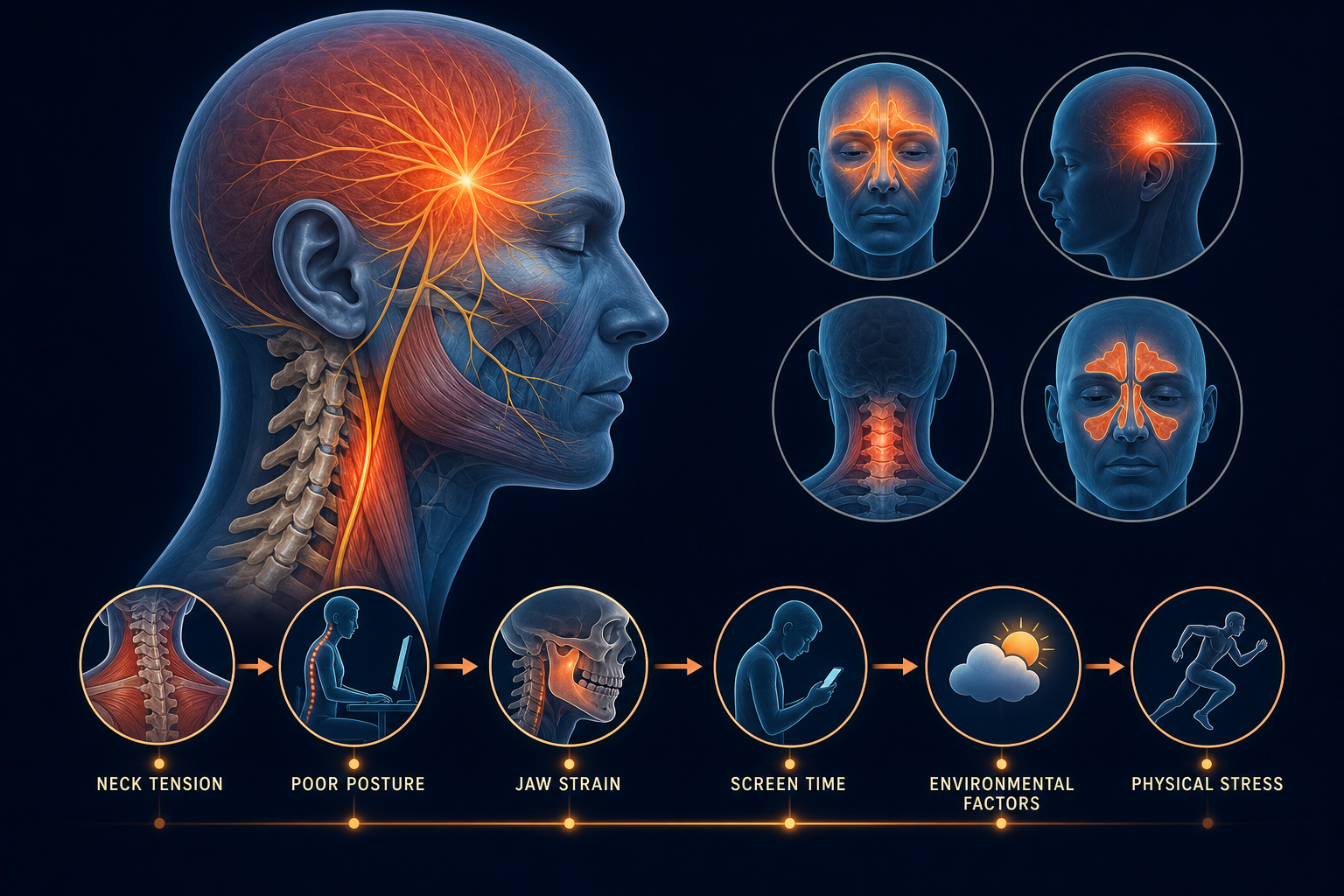
- Common adult migraine triggers can include sleep changes, stress, dehydration, skipped meals, hormones, alcohol, certain foods, weather shifts, screen strain, and neck or posture-related stress.
- Poor posture does not cause every migraine, but neck tension, joint irritation, muscle overuse, and prolonged sitting may contribute to headache patterns in some people.
- Conservative care may include chiropractic care, physical therapy, posture changes, trigger tracking, stress management, hydration, sleep routines, and guided exercise.
- Sudden severe headache, neurological changes, fever, head injury, or a new headache pattern should be evaluated promptly.
What Is Migraine?
Migraine is a recurring neurological condition associated with episodes of head pain and sensory sensitivity. During a migraine attack, the nervous system may become more reactive to light, sound, smell, motion, pressure, and normal body signals. This is why a migraine can make a bright room feel unbearable, a mild odor feel overwhelming, or ordinary movement feel painful.
Many migraine attacks involve one-sided head pain, but migraine can also affect both sides of the head, the forehead, temples, eyes, jaw area, or base of the skull. Some patients report pain that starts in the neck and spreads upward. Others describe pressure behind the eye, scalp tenderness, nausea, brain fog, or a heavy feeling that worsens with activity.
Migraine is different from a single headache after dehydration or a stressful day. It tends to follow patterns over time. The pattern may involve warning symptoms, a pain phase, and a recovery phase. Some people can identify predictable triggers, while others cannot. Because migraine is complex, a careful evaluation often looks at the neck, nervous system, sleep, stress, medications, vision, nutrition, hormones, injury history, and family history.
Migraine vs Regular Headache Differences
Patients often ask about migraine vs regular headache differences. A regular tension-type headache may feel like mild to moderate pressure around the forehead, temples, or back of the head. It may be uncomfortable but often allows a person to keep functioning. Migraine is more likely to be associated with moderate to severe pain, nausea, sensitivity to light or sound, visual symptoms, dizziness, worsening with movement, and the need to rest in a dark or quiet room.
That said, headache categories can overlap. Some people with migraine also have tension-type headaches. Others have cervicogenic headaches, which are headaches associated with the neck. Some patients have more than one headache pattern at the same time. This is one reason an evaluation matters, especially if symptoms are new, changing, frequent, or disabling.
A practical way to think about the difference is this: a regular headache may be mainly a pain problem, while migraine often behaves like a nervous system sensitivity event. The head pain is important, but it is not the only symptom.
Common Migraine Symptoms
Migraine symptoms vary from person to person and even from one attack to the next. Some people have head pain every time. Others have vestibular symptoms, aura, or nausea with little or no head pain. Symptoms may also change with age, hormones, stress, injury history, and other health conditions.
Head Pain
Migraine head pain is often described as throbbing, pulsing, pounding, stabbing, or pressure-like. It may affect one side of the head, both sides, the temples, the forehead, the eye area, the jaw region, or the back of the head. Some people notice that coughing, bending forward, climbing stairs, or turning the neck increases discomfort. If you experience head pain when moving neck, a provider may evaluate whether the neck joints, muscles, posture, or nerves are contributing to the headache pattern.
Light, Sound, and Smell Sensitivity
During a migraine, normal sensory input may feel amplified. Bright light, computer screens, fluorescent lighting, loud sound, strong perfume, gasoline odor, cleaning products, or busy visual environments may worsen symptoms. Some people find relief by resting in a dark, quiet room, though relief strategies vary.
Nausea, Appetite Changes, and Digestive Symptoms
Nausea is common during migraine, and some people may vomit. Others notice food cravings, loss of appetite, bloating, or abdominal discomfort before or during an attack. Digestive changes may be part of the migraine process rather than a separate stomach problem.
Aura and Visual Changes
Many patients ask, is it normal to see aura? Some people with migraine do experience aura. Aura may include flashing lights, zigzag lines, shimmering spots, blind spots, tingling, speech difficulty, or other temporary neurological symptoms. Visual aura often develops gradually and may last less than an hour, but patterns vary.
Even when aura is related to migraine, new or unusual neurological symptoms should be taken seriously. If you have sudden weakness, facial drooping, trouble speaking, severe confusion, vision loss, or symptoms that feel different from your usual pattern, seek urgent medical evaluation. A provider can help distinguish migraine aura from other conditions that may require immediate care.
Migraine Symptoms With Neck Pain
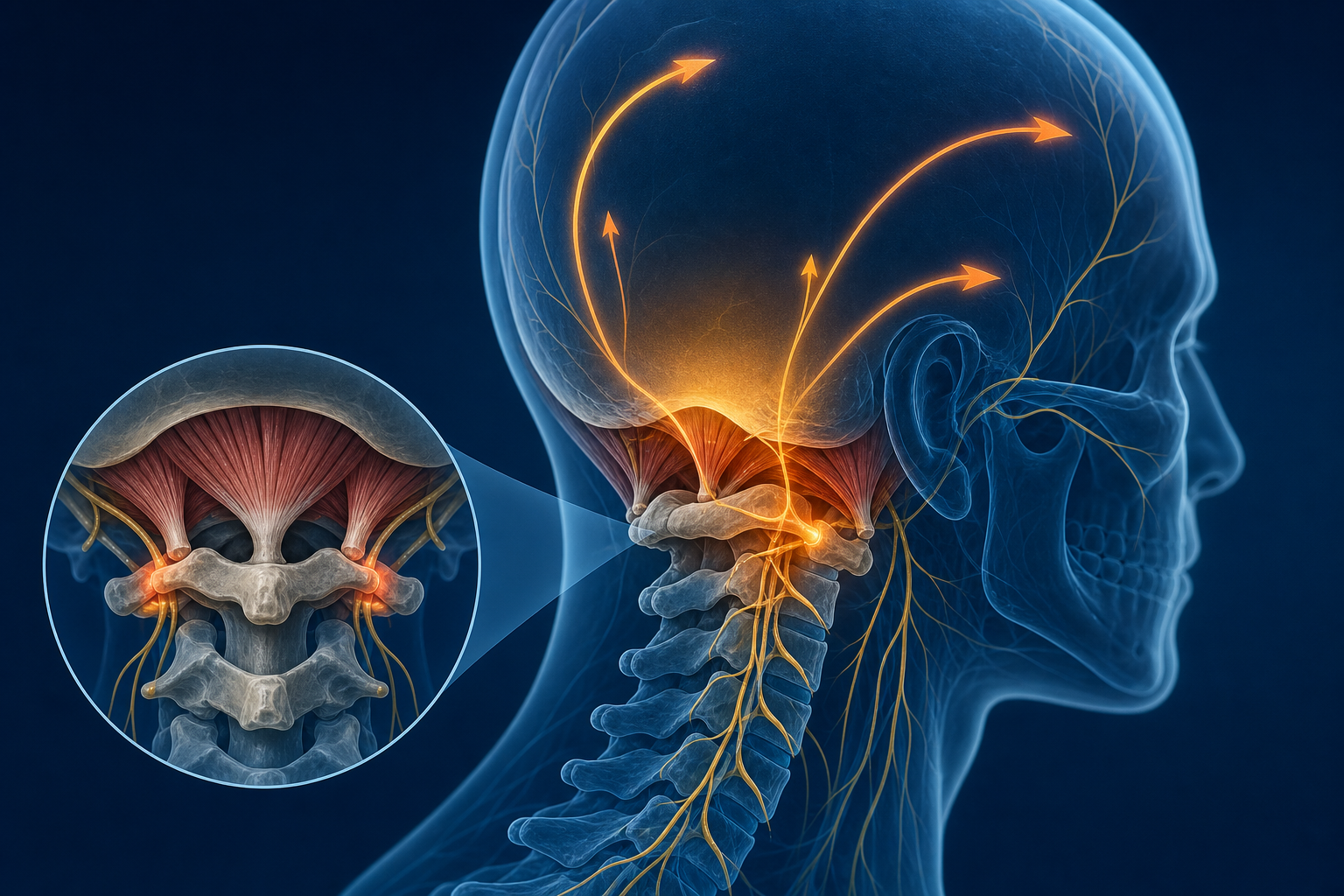
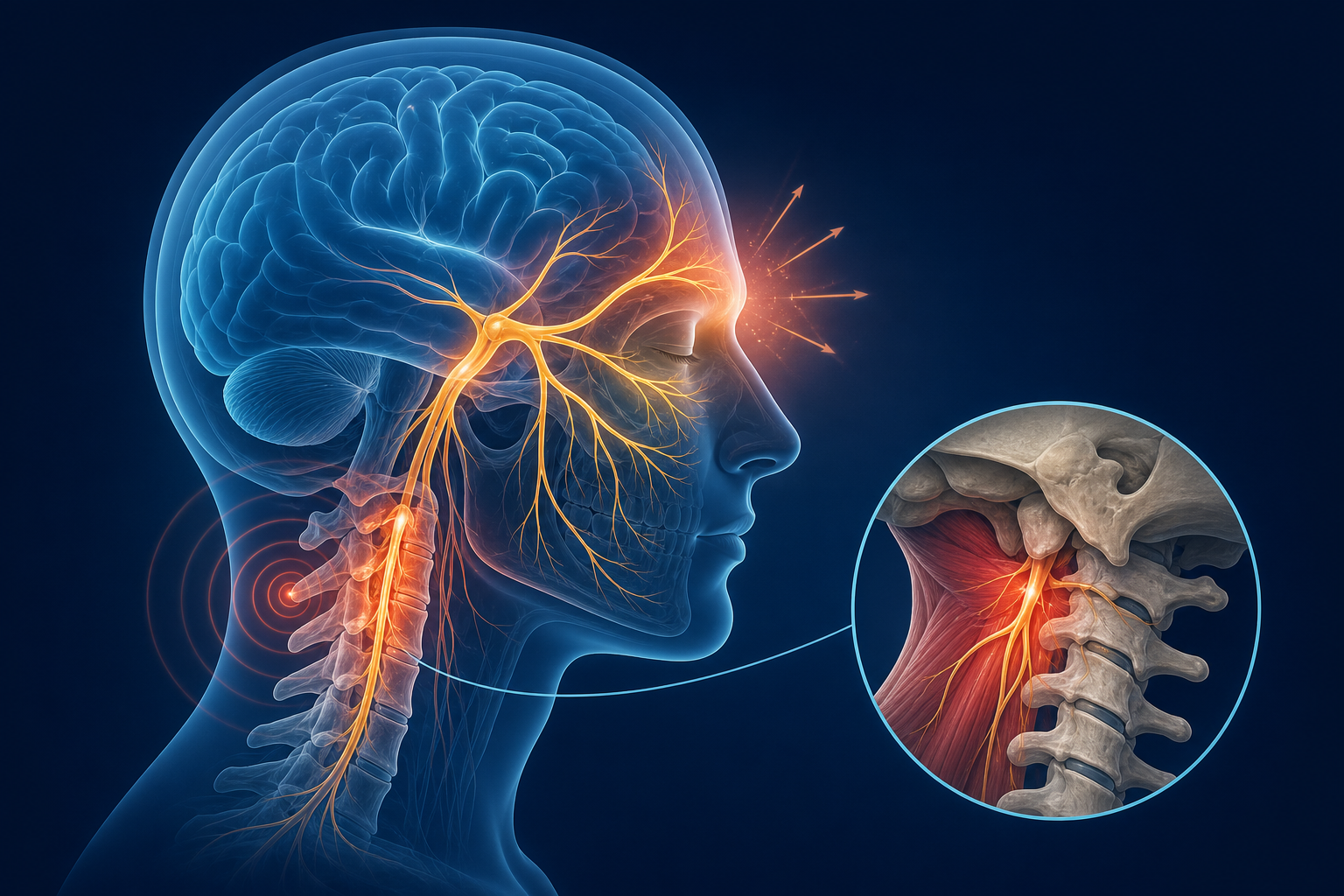
Migraine symptoms with neck pain are common. Some people feel tightness at the base of the skull before head pain begins. Others notice neck stiffness during the attack or soreness afterward. Neck pain may be part of the migraine process, a trigger for headache symptoms, or a separate musculoskeletal issue that overlaps with migraine.
The upper cervical spine, suboccipital muscles, jaw, shoulders, and posture can influence how the head and neck feel. Irritation in these areas may contribute to tension, limited range of motion, and referred pain into the head in some patients. Conservative providers such as chiropractors and physical therapists may assess neck mobility, muscle tone, posture, strength, ergonomics, and movement habits to understand whether mechanical factors are part of your pattern.
Dizziness, Brain Fog, Fatigue, and Mood Changes
Migraine can affect more than pain. Some patients report dizziness, balance changes, blurred concentration, fatigue, irritability, low mood, yawning, or difficulty finding words. These symptoms may appear before the headache, during the attack, or as part of the recovery phase. Because dizziness and neurological symptoms can have many causes, it is wise to discuss them with a qualified provider.
How Long Does Migraine Last?
How long does migraine last? Many migraine attacks last from several hours to a few days. Some people notice a shorter pattern, while others have symptoms that linger. Migraine is often described in phases, although not everyone experiences every phase.
Prodrome: The Early Warning Phase
The prodrome may begin hours or even a day before head pain. Possible signs include yawning, food cravings, mood changes, neck stiffness, increased urination, fatigue, or light sensitivity. Recognizing prodrome symptoms may help some patients modify triggers early, such as hydrating, eating regularly, reducing screen exposure, or resting when possible.
Aura: Temporary Neurological Symptoms
Aura can occur before or during the headache phase. Visual aura is the best known, but aura can also involve sensory changes, speech disturbance, or other symptoms. New aura symptoms, prolonged aura, or symptoms that resemble stroke warning signs should be evaluated promptly.
Headache Phase
The headache phase may involve head pain, nausea, light sensitivity, sound sensitivity, neck pain, and worsening with movement. Many patients reduce activity during this phase because normal tasks feel harder.
Postdrome: The Recovery Phase
After the head pain improves, some people feel drained, sore, foggy, or emotionally sensitive. This postdrome phase is sometimes called a migraine hangover. Gentle hydration, regular meals, and a gradual return to activity may help some patients, but each person responds differently.
What Causes Migraines in Adults?
Patients often ask what causes migraines in adults. There is rarely one single cause. Migraine is usually influenced by a combination of nervous system sensitivity, genetics, environmental triggers, hormones, sleep patterns, stress load, musculoskeletal strain, and general health factors. A person may have an underlying migraine tendency, while certain triggers increase the chance of an attack.
Common Migraine Triggers
Common triggers reported by adults include disrupted sleep, oversleeping, skipped meals, dehydration, stress, stress letdown after a busy period, alcohol, some foods, bright light, strong smells, weather changes, hormonal changes, prolonged screen use, jaw clenching, and neck tension. Not every trigger applies to every person. In some cases, what looks like a trigger may actually be an early migraine symptom. For example, craving chocolate before a migraine does not always mean chocolate caused the migraine.
Stress and Nervous System Load
Stress may contribute to migraine frequency for some patients. This does not mean migraine is psychological or imagined. Stress can change sleep, muscle tension, breathing patterns, hormone levels, pain sensitivity, and daily routines. A conservative care plan may include relaxation strategies, paced exercise, breathing work, and practical changes to reduce physical and mental load.
Hormonal Patterns
Some adults notice migraine attacks around menstruation, pregnancy, postpartum changes, perimenopause, or other hormonal shifts. These patterns should be discussed with a medical provider, especially if symptoms change or become more frequent. Conservative strategies may still play a supportive role, but hormone-related migraine often benefits from coordinated care.
Sleep, Meals, and Hydration
Irregular sleep and skipped meals are common migraine contributors. The nervous system often prefers consistency. A regular sleep schedule, balanced meals, and hydration may help reduce migraine triggers for some people. These habits are not a cure, but they are often part of a broader prevention plan.
Can Poor Posture Trigger Migraines?
Can poor posture trigger migraines? Poor posture does not explain every migraine, and it should not be treated as the only cause. However, prolonged forward-head posture, rounded shoulders, sustained computer work, phone use, weak deep neck flexors, tight suboccipital muscles, jaw tension, and limited upper back mobility may contribute to neck strain and headache patterns in some patients.
The neck and head share nerve pathways that can refer pain into the skull. When the upper cervical joints or surrounding muscles become irritated, some people feel pain at the base of the skull, behind the eyes, or across the temples. This can overlap with migraine symptoms or make a migraine-prone nervous system more reactive.
If you have migraine symptoms with neck pain, head pain when moving neck, or headaches that worsen after long hours at a desk, a conservative provider may assess posture and movement. This might include checking neck range of motion, shoulder strength, breathing mechanics, workstation setup, jaw habits, and exercise tolerance. You can also read more about how neck pain and headaches may be connected.
When to See a Provider for Migraine or Headache Symptoms
You should consider seeing a qualified provider if headaches are new, frequent, worsening, interfering with daily life, associated with neck pain, or not responding to your usual self-care strategies. A provider can help identify the headache type, screen for warning signs, and recommend a plan that fits your health history.
Seek urgent medical care if you experience a sudden severe headache that feels like the worst headache of your life, headache after a significant head injury, fever with stiff neck, confusion, fainting, seizure, new weakness, numbness, facial drooping, trouble speaking, new vision loss, or a headache that is very different from your usual pattern. New headache after age 50, headache during pregnancy, headache with cancer history, or headache with immune system concerns also deserves prompt medical attention.
These warning signs do not mean something serious is always present, but they are important to evaluate. Migraine is common, yet not every severe headache is migraine. Getting the right assessment can help you avoid guessing.
How Migraine Is Evaluated
A migraine evaluation typically starts with a detailed history. A provider may ask when symptoms began, where pain is located, how long attacks last, what symptoms occur before or during the attack, whether aura is present, what seems to trigger symptoms, what improves them, and how often headaches happen. You may be asked about sleep, hydration, stress, caffeine, hormones, injuries, medications, vision, jaw symptoms, family history, and work habits.
A physical exam may include neurological screening, blood pressure, vision-related questions, neck range of motion, posture, muscle tenderness, strength, reflexes, balance, and coordination. If the provider sees concerning signs, they may refer you for medical evaluation or imaging when appropriate. Not every migraine requires imaging, but new or unusual symptoms should be assessed carefully.
For conservative care, the evaluation may also look at how your body moves. A chiropractor or physical therapist may assess upper cervical mobility, thoracic spine movement, shoulder mechanics, deep neck flexor endurance, scapular control, breathing, and workstation demands. This helps determine whether neck and posture factors may be contributing to your migraine pattern.
Migraine Treatment Without Medication Near Me: Conservative Options
Many patients search for migraine treatment without medication near me because they want non-drug strategies, fewer attacks, better neck comfort, or support alongside medical care. Conservative treatment does not replace emergency care or medical management when those are needed. It may, however, help some patients reduce contributing factors and improve function.
Natural treatment for migraine headaches usually means a combination of lifestyle changes, trigger management, movement therapy, posture support, manual therapy, and education. Results vary. The goal is not to promise that migraine will disappear, but to identify modifiable factors and build a plan that may reduce irritation on the nervous system.
Chiropractic Care for Migraine and Neck-Related Headache Patterns
Chiropractic care may be considered when migraine symptoms are associated with neck stiffness, upper back tension, posture strain, or reduced range of motion. A chiropractor may use spinal adjustments, mobilization, soft tissue work, stretching, exercise guidance, and ergonomic coaching. Some patients report fewer headache episodes or improved neck mobility with this type of care, but individual results vary.
If you are searching for a chiropractor for migraines near me, look for a provider who takes a detailed headache history, screens for red flags, explains findings clearly, and coordinates with medical professionals when symptoms fall outside conservative care. You can learn more about chiropractic care and compare local options through Medximity.
Physical Therapy and Rehabilitation
Physical therapy may help when migraine overlaps with neck pain, poor posture, muscle imbalance, jaw tension, vestibular symptoms, or reduced activity tolerance. A physical therapist may use targeted exercise, manual therapy, posture training, balance work, graded activity, breathing mechanics, and home exercises.
Rehabilitation often focuses on building capacity. If your neck and upper back become irritated after screen work, driving, lifting, or exercise, therapy may help improve endurance and movement control. You can read more about physical therapy and explore providers who offer conservative headache-related care.
Posture and Ergonomic Changes
Small environment changes may reduce neck strain for some patients. Helpful adjustments may include raising the monitor to eye level, bringing the keyboard and mouse closer, using a chair that supports the low back, taking microbreaks, avoiding long periods of looking down at a phone, and changing positions throughout the day. The best posture is often the next posture; staying rigid in one perfect position can still create fatigue.
If you work at a desk, consider brief movement breaks every 30 to 60 minutes when possible. Gentle neck range of motion, shoulder blade squeezes, walking, or standing for a few minutes may reduce sustained muscle load. A provider can help tailor these movements if certain motions worsen symptoms.
Trigger Tracking
One of the most practical ways to learn how to reduce migraine triggers is to track patterns. A headache diary may include sleep time, meals, hydration, caffeine, stress, menstrual cycle, weather changes, screen time, exercise, neck pain, aura, symptoms, and duration. Over time, patterns may become clearer.
Trigger tracking should not become a source of anxiety or unnecessary restriction. The goal is to identify realistic patterns, not to blame yourself for every attack. Migraine can happen even when you do everything right.
Sleep and Recovery Habits
Consistent sleep may help some people reduce migraine frequency. Going to bed and waking up at similar times, limiting late caffeine, reducing bright screens before bed, and creating a calm sleep environment may support nervous system regulation. If snoring, insomnia, or poor sleep quality is present, discuss it with a provider.
Hydration, Meals, and Caffeine Awareness
Dehydration and skipped meals may be migraine contributors for some patients. Regular meals with protein, steady hydration, and awareness of caffeine patterns may help. Caffeine can be complicated: some people find it helps during an attack, while others find that too much caffeine or caffeine withdrawal contributes to headaches. A provider can help you review your pattern safely.
Movement and Exercise
Regular physical activity is associated with general health and may support migraine management for some people. However, intense exercise can trigger symptoms in certain patients, especially when hydration, sleep, or nutrition is poor. A gradual plan may be better than sudden high-intensity changes. Physical therapists and rehabilitation providers can help build a safe progression based on your tolerance.
What to Expect at a Conservative Care Visit
If you schedule a visit for migraine symptoms, neck pain, or headaches, expect the provider to ask detailed questions. They may want to know how long does migraine last for you, whether you see aura, whether pain changes with neck movement, and what you have tried. Bring a list of symptoms, triggers, medications or supplements you currently use, prior diagnoses, imaging reports if available, and any red flags you have noticed.
The exam may include checking posture, neck motion, muscle tenderness, joint mobility, shoulder strength, reflexes, sensation, coordination, and functional movement. The provider should explain whether your symptoms appear appropriate for conservative care or whether medical referral is recommended. A thoughtful provider will not promise a cure. Instead, they should discuss reasonable goals, such as improving neck mobility, reducing mechanical irritation, building exercise tolerance, improving ergonomics, and helping you recognize triggers.
Treatment may begin with gentle hands-on care, education, home exercises, or modifications to daily activities. Some patients need only a few visits to learn strategies. Others with long-standing symptoms may need a more structured plan. Your provider should adjust care based on how you respond.
How to Reduce Migraine Triggers in Daily Life
Learning how to reduce migraine triggers is often a process of small, consistent changes. Because migraine has many contributors, broad lifestyle overhauls can feel overwhelming. Start with the factors that are most realistic and most likely to apply to your pattern.
Create a Consistent Daily Rhythm
Regular sleep, meals, hydration, and movement can help reduce nervous system volatility for some people. You do not need a perfect routine. Aim for consistency where possible, especially during busy weeks.
Support Your Neck During Screen Work
If head pain when moving neck or neck stiffness is part of your migraine pattern, review your screen setup. Keep the monitor near eye level, avoid cradling the phone between your ear and shoulder, bring reading material up rather than bending your head down, and take brief movement breaks. Consider an ergonomic assessment if work demands are a major trigger.
Manage Light and Visual Strain
Bright light and screen glare may worsen migraine for some patients. Adjust screen brightness, reduce glare, use softer lighting, and take breaks from visually intense tasks. If vision strain is suspected, an eye exam may be appropriate.
Build a Migraine Response Plan
A response plan may include recognizing prodrome symptoms, reducing sensory input, hydrating, eating if you have skipped a meal, using relaxation breathing, adjusting your environment, and contacting a provider when symptoms are unusual or severe. Your plan should be individualized. What helps one person may not help another.
Finding Migraine and Headache Care Through Medximity
If you are looking for conservative migraine support, Medximity can help you compare providers by specialty and location. Patients often search for migraine treatment without medication near me when they want options such as chiropractic care, physical therapy, rehabilitation, posture assessment, and movement-based care. These services may be useful when migraine overlaps with neck pain, muscle tension, work posture, or activity limitations.
You can start by browsing chiropractors near you or physical therapists near you. You may also find it helpful to review Medximity resources on headache conditions and neck pain before scheduling. When comparing providers, look for clear explanations, careful screening, conservative treatment options, and willingness to coordinate care when needed.
Frequently Asked Questions
What is migraine and symptoms patients should know?
Migraine is a neurological condition associated with recurring attacks of head pain and sensory sensitivity. Symptoms may include throbbing head pain, nausea, light sensitivity, sound sensitivity, aura, dizziness, fatigue, brain fog, and neck pain. Not every person has every symptom.
What are the main migraine vs regular headache differences?
A regular headache may feel like mild pressure or tension and may not disrupt activity as much. Migraine is more likely to cause moderate to severe pain, nausea, light or sound sensitivity, aura, and worsening with movement. Because headache types can overlap, a provider can help clarify your pattern.
Is it normal to see aura with migraine?
Some people with migraine experience aura, such as flashing lights, zigzag lines, blind spots, tingling, or temporary speech changes. New, sudden, prolonged, or unusual neurological symptoms should be evaluated promptly to rule out other causes.
Can poor posture trigger migraines?
Poor posture does not cause every migraine, but sustained forward-head posture, neck muscle tension, jaw clenching, and upper back stiffness may contribute to headache symptoms in some people. A chiropractor or physical therapist may assess whether mechanical factors are part of your migraine pattern.
How long does migraine last?
Migraine attacks may last several hours to several days. Some people also experience warning symptoms before the headache and fatigue or brain fog afterward. If your headaches are changing, unusually long, or severe, consult a qualified provider.
What causes migraines in adults?
Migraine in adults is usually linked to multiple factors, including nervous system sensitivity, genetics, sleep changes, stress, hormones, dehydration, skipped meals, alcohol, sensory triggers, weather changes, neck tension, and posture strain. Triggers vary by person.
What should I expect from natural treatment for migraine headaches?
Natural or conservative care may include trigger tracking, sleep and hydration habits, posture changes, chiropractic care, physical therapy, manual therapy, guided exercise, and stress management. These strategies may help some patients, but they do not guarantee that migraine will stop.
When should I seek urgent care for a headache?
Seek urgent medical care for sudden severe headache, headache after head injury, fever with stiff neck, confusion, fainting, seizure, weakness, facial drooping, trouble speaking, new vision loss, or a headache that is very different from your usual pattern.
A Practical Next Step
Migraine can feel unpredictable, but understanding your symptoms and triggers may help you take more informed next steps. If neck pain, posture strain, movement, or daily activity seems connected to your headaches, conservative care may be worth discussing with a qualified provider. If symptoms are sudden, severe, new, or unusual, seek prompt medical evaluation.
Medximity makes it easier to find providers who can evaluate headaches, neck pain, posture, and movement-related concerns. A careful assessment can help you understand whether chiropractic care, physical therapy, rehabilitation, or coordinated medical care may fit your situation.