Understanding Neck-Related Headaches (Cervicocranial Syndrome): Symptoms, Causes, and Treatment starts with a simple idea: the neck and head are closely connected. In some people, irritation or dysfunction in the cervical spine, upper neck muscles, joints, or related nerves may contribute to headache pain. These headaches are often described as cervicogenic headaches, neck-related headaches, or cervicocranial syndrome.
If you have a headache with neck pain and stiffness, pain at the base of the skull, or a headache when you move your neck, it can be frustrating to know where to start. Not every headache that occurs with neck discomfort comes from the neck, and not every stiff neck is a sign of a serious problem. Still, persistent or recurring symptoms are worth discussing with a qualified healthcare provider who can evaluate your specific situation.
This article explains what neck-related headaches are, common symptoms and causes, the difference between cervicogenic headache vs tension headache, and conservative care options such as chiropractic care, physical therapy, rehabilitation, posture training, and movement-based treatment. If you are ready to compare providers, Medximity can help you search for chiropractors near you and physical therapists near you.
What Are Neck-Related Headaches?
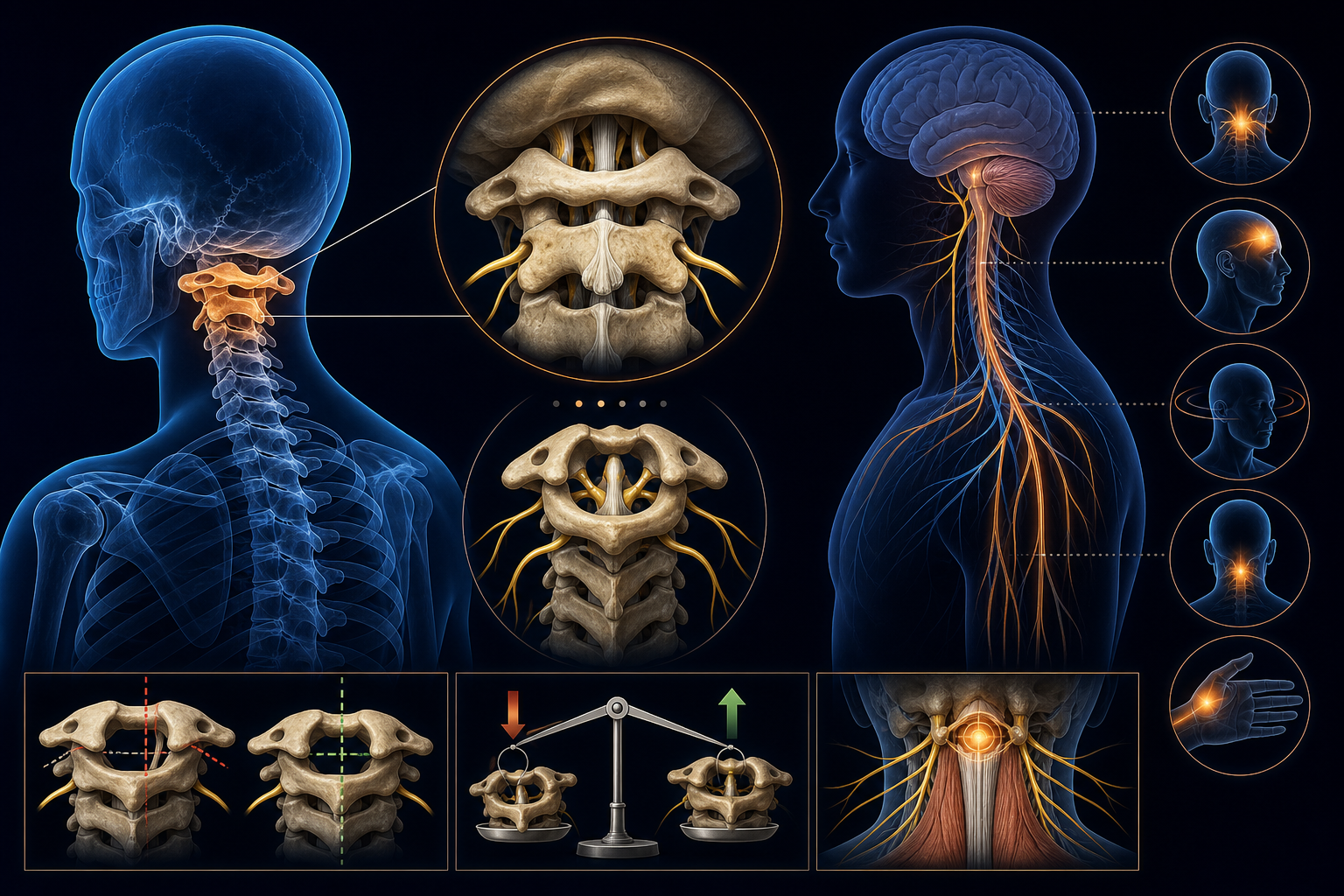
Neck-related headaches are headaches that may be associated with structures in the cervical spine, which is the medical term for the neck region of the spine. The cervical spine includes seven vertebrae, small joints between the bones, discs, ligaments, muscles, tendons, and nerves. The upper cervical region, especially the area near the base of the skull, has close connections with pain pathways that can refer discomfort into the head.
Cervicogenic headache is one common term used when a headache is thought to arise from the neck. Cervicocranial syndrome is a broader phrase sometimes used to describe symptoms involving the neck and head together, including headache, neck stiffness, restricted motion, and discomfort that may travel toward the scalp, temples, forehead, or behind the eyes.
These symptoms can overlap with other headache types. For that reason, a provider typically looks at the full pattern: where the pain begins, what makes it worse, how the neck moves, whether the headache changes with posture, and whether there are any neurological or medical warning signs. For general headache information, you may also find Medximity’s resource on headache symptoms and care options helpful.
Can Neck Problems Cause Headaches?
Yes, neck problems can be associated with headaches in some patients. The relationship is not always straightforward, and a headache should not be assumed to be neck-related without an appropriate evaluation. However, research and clinical experience suggest that irritation in the upper cervical joints, muscle tension, restricted neck mobility, poor movement coordination, or nerve sensitivity may contribute to headache symptoms in certain cases.
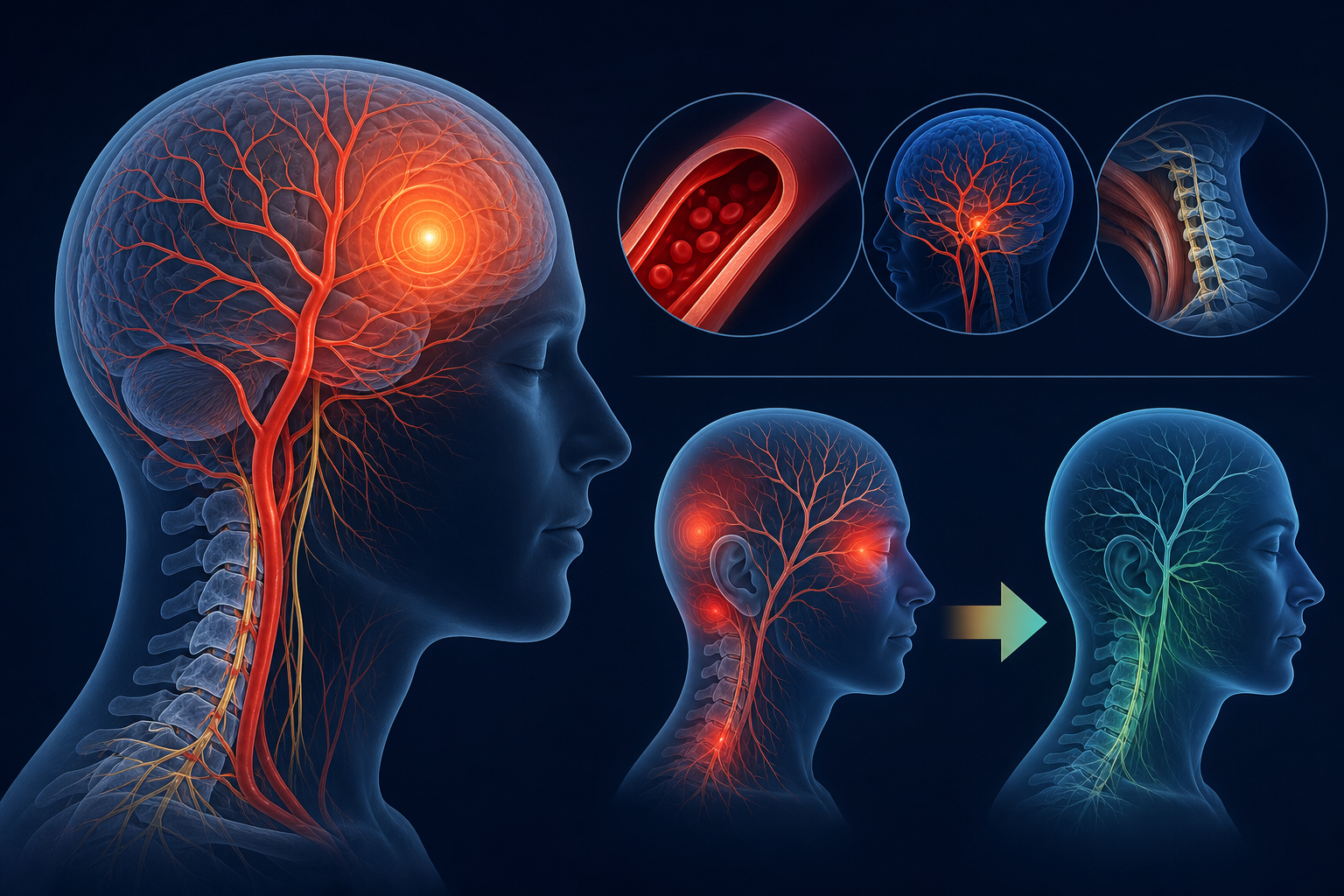
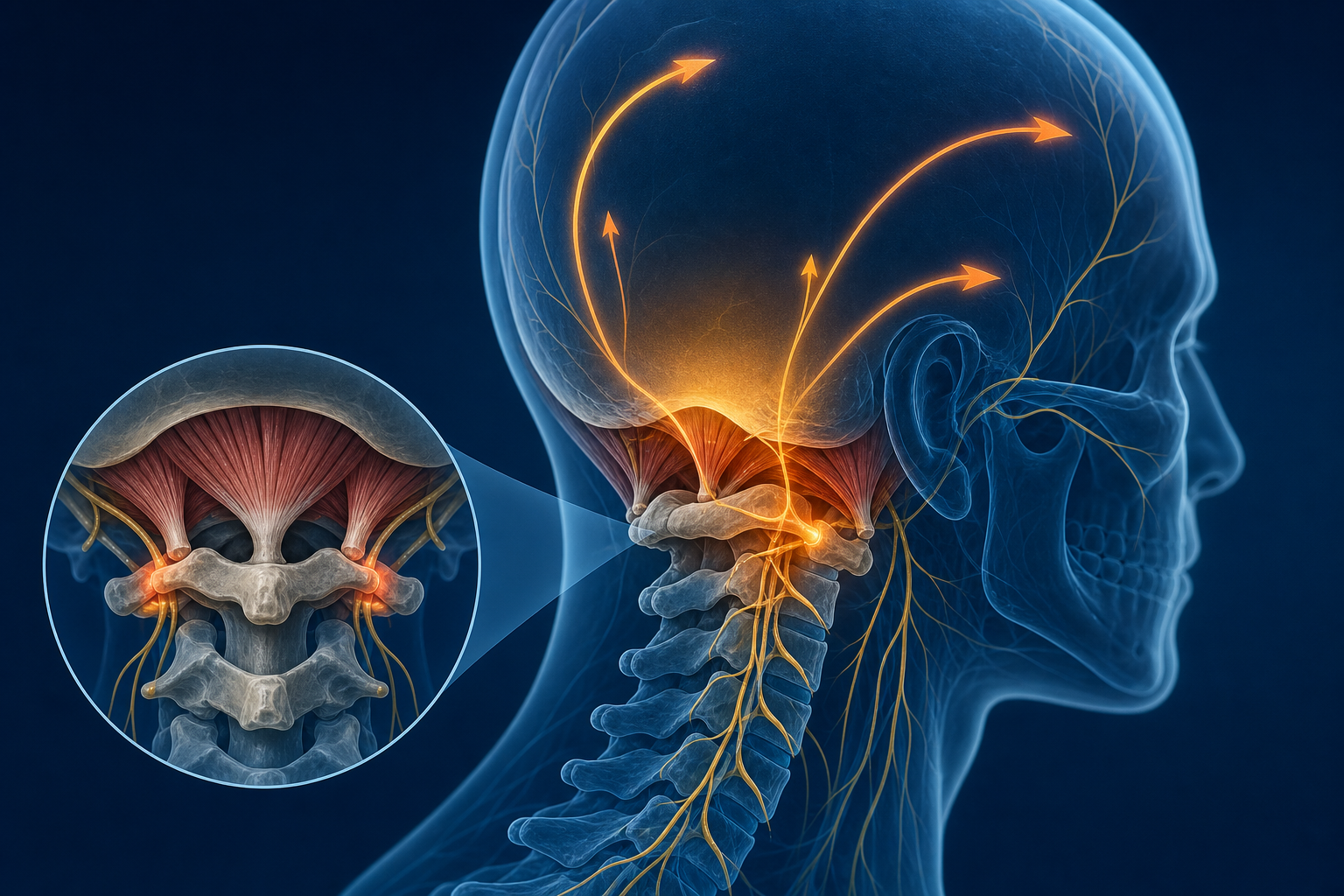
The upper neck shares nerve pathways with parts of the head and face. When tissues in the neck become irritated, the brain may interpret some of that input as pain in the head. This is called referred pain. Referred pain helps explain why a problem near the upper cervical spine may be felt as pain at the base of the skull, pain behind one eye, discomfort around the temple, or a headache that worsens when the neck moves.
Common neck-related contributors may include joint irritation, muscle trigger points, whiplash-type injury, prolonged desk posture, repetitive strain, limited mobility, or reduced strength and endurance in the neck and upper back muscles. These issues may not be the only factor. Sleep, stress, vision strain, hydration, jaw tension, and general health can also influence headache patterns.
Common Symptoms of Cervicocranial Syndrome and Cervicogenic Headache
Neck-related headaches do not feel the same for everyone. Some people describe a deep ache at the base of the skull. Others notice a one-sided headache that begins in the neck and travels toward the temple, forehead, or eye. Some people feel stiffness first and headache later, while others mainly notice head pain that becomes worse with certain neck positions.
Headache With Neck Pain and Stiffness
A headache with neck pain and stiffness is one of the most common reasons patients look for neck headache treatment without surgery. The neck may feel tight, guarded, or difficult to move. Turning the head while driving, looking down at a phone, working at a computer, or sleeping in an awkward position may aggravate symptoms.
Stiffness may come from irritated joints, protective muscle guarding, or reduced movement in the upper back and shoulders. In many cases, a provider will assess the neck, upper back, shoulder blades, posture, and movement habits rather than focusing only on the painful spot.
Headache When I Move My Neck
If you notice a headache when you move your neck, the symptom pattern may suggest that cervical movement is involved. For example, turning the head to one side, looking up, or bending the neck forward may reproduce pain. This does not automatically confirm a cervicogenic headache, but it is useful information to share during an evaluation.
A provider may check active range of motion, joint mobility, muscle tenderness, and whether certain movements reproduce or relieve symptoms. This helps guide a treatment plan that may include manual therapy, therapeutic exercise, posture changes, and gradual return to normal activity.
Can’t Turn Neck: Headache Causes to Consider
When someone says, “I can’t turn my neck and I have a headache,” possible causes may include muscle spasm, joint irritation, acute strain, a flare of a chronic neck condition, or symptoms following a fall or motor vehicle collision. In some cases, pain can make the neck feel locked even when there is no structural emergency.
However, a severe sudden headache, fever, confusion, fainting, weakness, numbness, trouble speaking, vision changes, severe dizziness, or headache after significant trauma should be evaluated urgently. These warning signs can be associated with conditions that need prompt medical attention. If symptoms are severe, unusual, or rapidly worsening, it is safest to seek immediate medical care.
Pain at Base of Skull With Headache
Pain at the base of the skull with headache often points attention toward the upper cervical spine and the suboccipital muscles, which are small muscles located just beneath the back of the skull. These muscles help control fine head and neck movements. They can become sensitive with prolonged forward-head posture, stress-related tension, repetitive screen use, or after a neck injury.
Some patients also describe scalp tenderness, pressure behind the head, or pain that wraps upward from the neck. Conservative care may focus on reducing irritation, improving mobility, strengthening the deep neck flexor and upper back muscles, and teaching strategies that reduce repeated strain.
Cervicogenic Headache vs Tension Headache
Many patients search for cervicogenic headache vs tension headache because the symptoms can overlap. Both can involve head pain and muscle tightness. The difference is often based on the pattern of symptoms, triggers, physical exam findings, and how the headache behaves over time.
How Cervicogenic Headaches Often Present
A cervicogenic headache is commonly associated with neck movement, neck posture, or tenderness in the upper cervical region. It may be one-sided, although it can affect both sides. The pain may begin in the neck or base of the skull and travel toward the head. Restricted neck motion is common. Some patients report that certain positions, such as looking down for long periods or rotating the neck, increase the headache.
Cervicogenic headaches may occur after a neck injury, including whiplash, or they may develop gradually with repetitive strain, mobility limitations, or muscle imbalance. A healthcare provider may look for whether the headache can be reproduced by neck movement or pressure over certain cervical structures.
How Tension Headaches Often Present
Tension-type headaches are often described as pressure, tightness, or a band-like sensation around the head. They may be associated with stress, fatigue, jaw clenching, prolonged concentration, or muscle tension in the neck and shoulders. Neck soreness can be present, but the headache may not be as clearly linked to neck movement or restricted cervical range of motion.
Because tension headaches and neck-related headaches can overlap, self-diagnosis is unreliable. A provider can help identify contributing factors and decide whether conservative neck care, stress-management strategies, exercise, ergonomic changes, or other medical evaluation may be appropriate.
Common Causes and Risk Factors for Neck-Related Headaches
Neck-related headaches are often multifactorial. That means more than one issue may contribute to symptoms. A single posture, muscle, or joint is rarely the whole story. The most useful treatment plans usually address the combined factors that fit the patient’s history and examination.
Upper Cervical Joint Irritation
The small joints in the upper neck help guide head rotation and nodding motions. If these joints become irritated or move poorly, they may contribute to pain near the base of the skull and referred headache symptoms. Joint irritation can occur after a sudden strain, repetitive loading, sustained posture, or changes in movement patterns.
Manual therapy, including chiropractic adjustment or mobilization, may help some patients when joint mobility is part of the problem. Care should be individualized, and providers typically consider your medical history, comfort level, and exam findings before selecting any technique. To learn more about conservative neck care, visit Medximity’s page on neck pain conditions and treatment options.
Muscle Tension and Trigger Points
Muscles in the neck, shoulders, and upper back can refer pain into the head. The suboccipital muscles, upper trapezius, levator scapulae, sternocleidomastoid, and cervical paraspinal muscles are commonly assessed in patients with headache and neck pain. Sensitive bands of muscle, sometimes called trigger points, may reproduce familiar pain patterns when pressed.
Muscle tension may be influenced by prolonged sitting, stress, poor sleep, limited physical activity, or overuse. Treatment may include soft tissue therapy, stretching, strengthening, breathing mechanics, and education on pacing activities that aggravate symptoms.
Posture, Screens, and Ergonomics
Forward-head posture does not automatically cause headaches, and posture is not about being perfectly upright all day. The body is built to move. Problems can arise when one position is held for too long without variation, especially if the neck and upper back lack strength or endurance.
People who spend many hours looking down at a laptop, phone, microscope, charting station, or workstation may develop neck fatigue. This can contribute to a headache pattern in some patients. Ergonomic changes may include raising a monitor, bringing work closer to eye level, using a chair that supports frequent position changes, and taking short movement breaks before symptoms build.
Whiplash and Neck Trauma
After a motor vehicle collision, fall, sports injury, or sudden jolt, the neck can experience a rapid acceleration-deceleration motion often called whiplash. Some people develop headache, neck stiffness, dizziness, shoulder pain, or jaw discomfort after this type of injury. Symptoms may begin right away or appear over the next several days.
New or worsening headache after trauma deserves professional evaluation, especially if symptoms are severe, progressive, or accompanied by neurological changes. Conservative care may be appropriate for some whiplash-related neck headaches after serious injury has been ruled out.
Reduced Strength and Endurance
The deep neck flexor muscles and the stabilizing muscles around the shoulder blades help support head and neck movement. If these muscles fatigue quickly, other tissues may compensate. Over time, this can contribute to stiffness, overactivity in the upper neck muscles, and headache sensitivity in some people.
Physical therapy for neck headaches often includes graded strengthening, motor-control exercises, and endurance training. These exercises are usually gentle at first and progress as symptoms allow. The goal is not simply to stretch what feels tight, but to improve how the neck and upper back share movement and load.
When to See a Provider for Headache With Neck Pain
Consider scheduling an evaluation if your headache with neck pain and stiffness is recurring, lasts more than a few days, limits your ability to work or sleep, worsens with neck movement, or follows an injury. You may also want to see a provider if you have pain at the base of the skull that keeps returning, trouble turning your head, or headaches that seem connected to desk work, driving, exercise, or sleep position.
A chiropractor, physical therapist, rehabilitation provider, or medical clinician may evaluate neck-related headache symptoms depending on your needs and local availability. Medximity can help you find providers who focus on conservative care, including chiropractic care for neck pain and headaches and physical therapy for neck headaches.
Symptoms That Need Prompt Medical Attention
Most headaches are not emergencies, but some symptoms should be taken seriously. Seek urgent medical evaluation if you have a sudden, severe headache unlike your usual pattern; headache with fever, stiff neck, rash, confusion, fainting, seizure, new weakness or numbness, trouble speaking, or vision loss; headache after significant trauma; headache with severe dizziness or loss of coordination; or a rapidly worsening headache. This list is not complete, and a qualified medical professional can advise based on your specific situation.
If you are unsure whether symptoms are urgent, it is generally safer to contact a medical professional or emergency service rather than waiting.
How Providers Evaluate Neck-Related Headaches
A good evaluation starts with your history. Your provider may ask where the headache begins, how it spreads, how often it happens, what movements or positions make it worse, what helps, whether there was an injury, and whether you have symptoms such as dizziness, numbness, visual changes, jaw pain, or sleep disruption.
History and Symptom Pattern
The timing and behavior of the headache matter. A headache that appears after long computer sessions may suggest different contributors than a headache that began after a collision. A headache that is triggered by neck rotation may be assessed differently from a headache that appears with skipped meals, poor sleep, or bright light sensitivity.
Your provider may also ask about previous headaches, medical conditions, medications, occupation, exercise habits, and daily activities. This information helps determine whether conservative care is appropriate or whether referral for additional medical evaluation may be needed.
Physical Examination
The physical exam may include checking neck range of motion, upper back mobility, posture, shoulder movement, muscle tenderness, joint mobility, strength, reflexes, sensation, and coordination. Some providers use specific tests to assess whether the cervical spine may be contributing to headache symptoms.
Testing should be explained clearly and adjusted to your comfort. If a movement worsens symptoms sharply, tell your provider. The exam is meant to guide safe, individualized care, not to push through pain unnecessarily.
Imaging and Referrals
Many neck-related headaches can be evaluated without immediate imaging, especially when symptoms and exam findings are consistent with a musculoskeletal pattern and no red flags are present. However, imaging or referral may be appropriate in certain cases, such as significant trauma, progressive neurological symptoms, unexplained severe pain, or concern for a non-musculoskeletal cause.
Your provider can discuss whether additional evaluation is appropriate for your situation. Conservative care providers often coordinate with medical clinicians when symptoms fall outside their scope or require further assessment.
Neck-Related Headache Treatment Without Surgery
Many people searching for neck headache treatment without surgery are looking for ways to reduce pain, improve movement, and prevent frequent flare-ups using conservative care. Treatment should be based on the suspected contributors to your symptoms. A plan may include manual therapy, therapeutic exercise, posture and ergonomic coaching, activity modification, and home strategies.
Chiropractic Care for Cervicogenic Headaches
Chiropractic care may help some patients with cervicogenic headache or neck-related headache patterns, particularly when restricted cervical or upper thoracic mobility appears to be a contributor. A chiropractor may use spinal manipulation, joint mobilization, soft tissue techniques, stretching, exercise instruction, and education on posture and activity habits.
Not every patient needs or wants the same technique. Some prefer low-force mobilization rather than high-velocity adjustment. Others benefit most from exercise and soft tissue work. A thoughtful chiropractor should review your history, screen for warning signs, explain options, and adapt care to your comfort and goals. If you are searching for the best chiropractor for cervicogenic headaches, look for a provider who regularly evaluates headache and neck pain patterns, communicates clearly, and includes active rehabilitation when appropriate.
Physical Therapy for Neck Headaches
Physical therapy for neck headaches often focuses on movement quality, strength, endurance, and symptom control. A physical therapist may assess how your neck, upper back, shoulder blades, and breathing mechanics work together. Treatment may include hands-on mobilization, soft tissue care, deep neck flexor training, scapular strengthening, thoracic mobility exercises, and gradual return to activity.
Physical therapy is often active and educational. You may learn how to adjust your workstation, pace aggravating tasks, use targeted exercises during the day, and build tolerance for normal movement. For some patients, these changes may reduce the frequency or intensity of neck-related headache episodes over time.
Rehabilitation and Exercise-Based Care
Rehabilitation is especially helpful when headaches are connected to recurring neck strain, deconditioning, sports demands, or work-related postures. A rehab plan may start with gentle mobility and progress toward strength, coordination, and endurance. This progression helps the neck become more resilient rather than simply less painful for a short period.
Medximity’s rehabilitation provider directory can help you compare conservative care options if you are looking for a clinic that emphasizes exercise-based recovery.
Manual Therapy and Soft Tissue Techniques
Manual therapy may include joint mobilization, manipulation, myofascial release, trigger point work, stretching, or instrument-assisted soft tissue techniques. These approaches may help reduce sensitivity and improve motion in some patients, especially when combined with exercise and self-management strategies.
Manual therapy is usually most useful as part of a broader plan. If symptoms return every time you go back to your usual work or sleep setup, the plan may need to address strength, ergonomics, stress, or activity habits as well.
Ergonomic and Lifestyle Strategies
Small changes can make a meaningful difference for some patients. Your provider may suggest adjusting monitor height, alternating sitting and standing, using a headset instead of holding a phone between the ear and shoulder, changing pillow support, or taking brief movement breaks. These strategies are not one-size-fits-all, and they work best when matched to the specific activities that trigger your symptoms.
General wellness factors may also influence headache patterns. Sleep quality, hydration, regular meals, stress, and physical activity can affect pain sensitivity. These habits do not replace professional care when symptoms are persistent, but they may support recovery.
What to Expect at Your First Visit
If you schedule care for neck-related headaches, your first visit will usually include a detailed history, an exam, a discussion of possible contributing factors, and a treatment plan. The provider should ask about the headache pattern, neck pain, previous injuries, medical history, and any warning signs. They may also ask about your work setup, sleep position, exercise, and daily activities.
During the exam, you may be asked to turn, bend, or extend your neck; move your shoulders; resist gentle pressure; or describe where you feel symptoms. The provider may palpate muscles and joints around the neck, base of the skull, upper back, and shoulders. If findings suggest that conservative care is appropriate, treatment may begin the same day or at a follow-up visit.
Your plan may include in-office care and home exercises. A provider should explain what each part of treatment is intended to do, what symptoms to monitor, and when to follow up. If your symptoms do not fit a conservative care pattern, the provider may refer you for medical evaluation or imaging.
How Long Do Cervicogenic Headaches Last?
How long cervicogenic headaches last varies. Some episodes improve over hours or days, especially when related to a temporary strain or posture-related flare. Other cases may recur for weeks or months, particularly when underlying movement, strength, ergonomic, or injury-related factors remain unaddressed.
The duration also depends on the cause, overall health, sleep, stress, work demands, and how consistently contributing factors are managed. Some patients notice early improvement with conservative care, while others need a longer plan focused on mobility, strength, and gradual exposure to normal activities. A provider can give a more individualized expectation after evaluating your symptoms and exam findings.
If headaches are becoming more frequent, more intense, or less responsive to strategies that used to help, it is reasonable to seek a professional evaluation rather than continuing to guess.
At-Home Strategies That May Help Between Visits
At-home care should be gentle and symptom-guided. These ideas are general and may not be appropriate for everyone, especially after trauma or when symptoms are severe. Ask your provider which strategies fit your situation.
Gentle Mobility
Slow neck rotations, chin nods, shoulder blade squeezes, and upper back mobility drills may help some people reduce stiffness. Movements should stay comfortable. Sharp pain, dizziness, visual changes, numbness, or worsening headache are reasons to stop and seek guidance.
Frequent Position Changes
If symptoms build during desk work, short movement breaks may be more helpful than trying to hold perfect posture. Standing, walking, changing monitor height, or gently moving the neck and shoulders for one to two minutes can reduce sustained loading.
Heat, Cold, and Relaxation
Some patients report temporary relief from heat, cold packs, breathing exercises, or relaxation techniques. These approaches may help calm muscle tension or pain sensitivity, but they do not replace evaluation when headaches are persistent or concerning.
Finding Neck Related Headache Treatment Near Me
When searching for neck related headache treatment near me, consider whether the provider evaluates both headache and neck function. Useful questions include: Do they treat cervicogenic headache or cervicocranial syndrome? Do they screen for red flags? Do they offer exercise-based rehabilitation? Do they explain what to expect and how progress will be measured? Do they coordinate with other medical professionals when needed?
You can use Medximity to compare conservative care providers and review options in your area. Start with Medximity’s chiropractor search if you are interested in chiropractic evaluation, or use the physical therapist search if you want an exercise and rehabilitation-focused approach. Many patients benefit from a coordinated plan that includes education, hands-on care, and active movement strategies.
Key Takeaways
- Neck-related headaches may be associated with the cervical joints, muscles, nerves, posture, injury, or movement patterns.
- Cervicogenic headache often worsens with neck movement or posture and may begin at the base of the skull.
- Tension headaches and neck-related headaches can overlap, so a professional evaluation is useful when symptoms persist or recur.
- Conservative care may include chiropractic care, physical therapy, rehabilitation exercises, manual therapy, and ergonomic changes.
- Seek urgent medical evaluation for sudden severe headache, neurological symptoms, fever, confusion, significant trauma, or rapidly worsening symptoms.
Frequently Asked Questions
What are neck related headaches?
Neck related headaches are headaches that may be associated with structures in the cervical spine, including joints, muscles, ligaments, and nerves. They are sometimes called cervicogenic headaches or cervicocranial syndrome. A provider can help determine whether your neck is likely contributing to your headache pattern.
Can neck problems cause headaches?
Neck problems can be associated with headaches in some people. Irritation in the upper cervical spine, muscle tension, restricted motion, or nerve sensitivity may refer pain into the head. Other headache causes are also possible, so evaluation is important if symptoms persist, worsen, or feel unusual.
What does a cervicogenic headache feel like?
A cervicogenic headache may feel like pain that starts in the neck or base of the skull and travels toward the head, temple, forehead, or behind the eye. It may worsen with neck movement or sustained posture. Symptoms vary, and a qualified provider can assess your specific pattern.
How is cervicogenic headache different from a tension headache?
Cervicogenic headaches are often more clearly linked to neck movement, restricted neck motion, or pain at the base of the skull. Tension headaches often feel like pressure or tightness around the head and may be associated with stress or fatigue. The two can overlap, so diagnosis should be made by a healthcare professional.
Is chiropractic care helpful for cervicogenic headaches?
Chiropractic care may help some patients with neck-related headache patterns, especially when joint mobility, muscle tension, or movement habits are contributing factors. Treatment may include adjustment, mobilization, soft tissue care, exercise, and education. Outcomes vary, and care should be individualized.
Can physical therapy help neck headaches?
Physical therapy may help some people with neck headaches by improving mobility, strength, endurance, posture tolerance, and movement control. A plan may include manual therapy, therapeutic exercise, ergonomic coaching, and home exercises tailored to your symptoms.
How long do cervicogenic headaches last?
Duration varies. Some episodes improve within hours or days, while recurring or injury-related cases may last longer. The timeline depends on the cause, symptom severity, contributing factors, and how the condition responds to conservative care.
When should I seek urgent care for a headache with neck pain?
Seek urgent medical evaluation for a sudden severe headache, headache with fever or confusion, new weakness or numbness, trouble speaking, vision changes, fainting, seizure, severe dizziness, significant trauma, or rapidly worsening symptoms. When in doubt, contact a medical professional promptly.