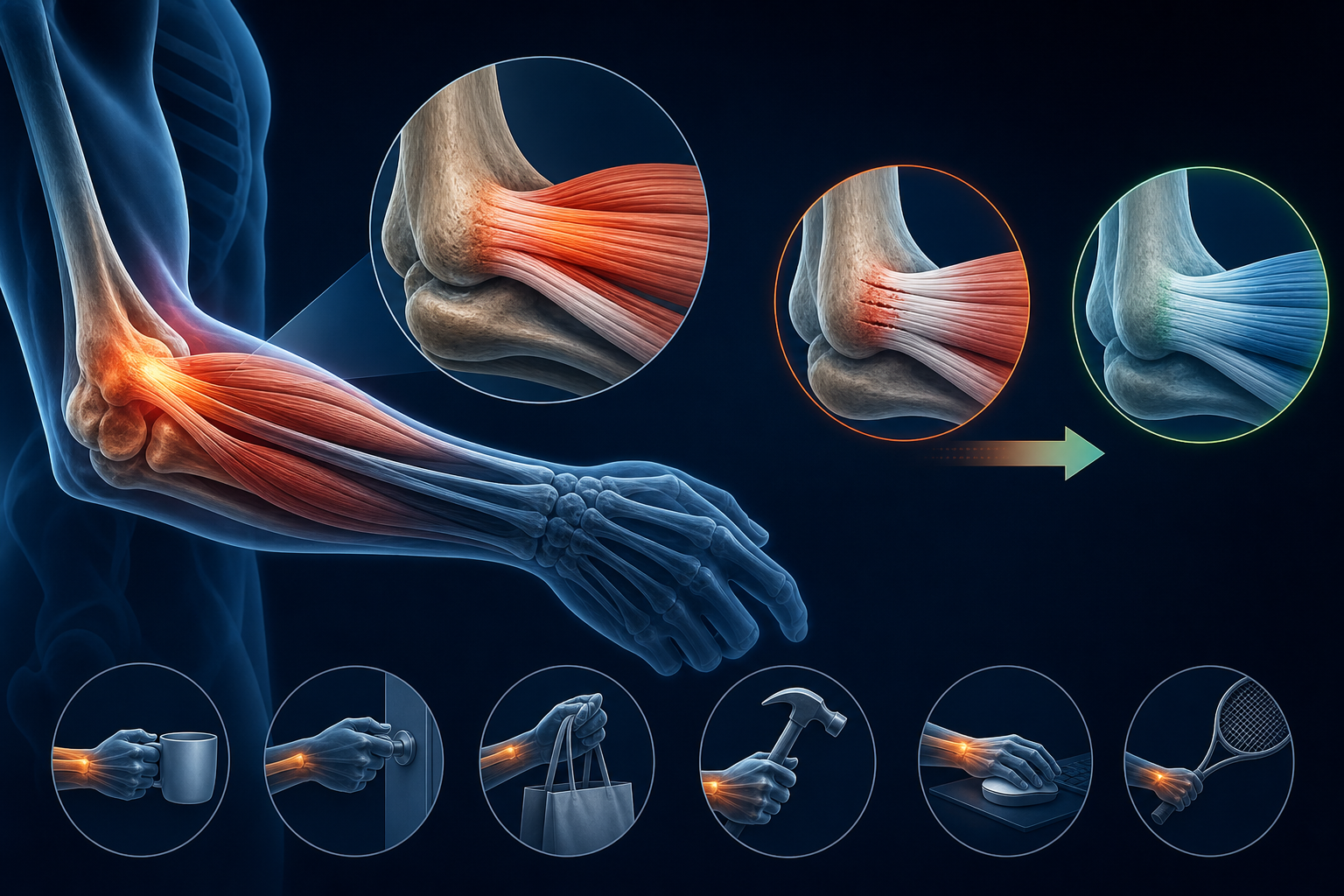
Understanding Tennis Elbow (Lateral Epicondylitis): Symptoms, Causes, and Treatment can help you make sense of a frustrating type of elbow pain that often shows up during ordinary activities: lifting a coffee mug, turning a doorknob, carrying groceries, using tools, or typing at work. Despite the name, tennis elbow does not only affect tennis players. It can develop in anyone whose forearm muscles and tendons are repeatedly loaded through gripping, wrist extension, or repetitive hand use.
Tennis elbow is usually associated with irritation or degenerative change near the tendons that attach to the outside of the elbow. In many cases, symptoms improve with conservative care such as activity modification, bracing, physical therapy, progressive strengthening, ergonomic changes, and hands-on treatment. Recovery can take time, and the right plan depends on the person, the job or sport demands, and whether other conditions are contributing to the pain.
If you are comparing care options, Medximity can help you find providers who evaluate elbow, wrist, and arm pain. You can explore physical therapists near you, search for a chiropractor near you, or learn more about related concerns such as elbow pain and wrist pain.
What Is Tennis Elbow Pain?
Tennis elbow is the common name for lateral epicondylitis, a condition involving pain around the lateral epicondyle, the bony area on the outside of the elbow. This is where several forearm muscles attach through a shared tendon. One muscle in particular, the extensor carpi radialis brevis, is often discussed because it helps extend and stabilize the wrist during gripping tasks.
The term lateral epicondylitis can be a little misleading. The ending “-itis” suggests inflammation, but many persistent cases appear to involve tendon irritation, overload, and tissue changes rather than simple inflammation alone. For that reason, some clinicians use terms such as lateral elbow tendinopathy or lateral epicondylalgia. Patients do not need to memorize those labels, but the distinction matters because treatment often focuses on gradually improving tendon load tolerance rather than only “calming inflammation.”
In plain language, what is tennis elbow pain? It is typically pain on the outside of the elbow that is provoked by gripping, lifting, pulling, twisting, or extending the wrist. Some people notice pain when shaking hands, opening jars, picking up a pan, using a screwdriver, holding a phone, or lifting a child. The pain may stay near the outside elbow, or it may travel into the forearm. Numbness and tingling are less typical for tennis elbow and may point to nerve involvement or another condition.
Common Symptoms of Tennis Elbow
Tennis elbow symptoms can range from a mild ache to sharp pain that limits work, sports, and household tasks. The pattern is often more helpful than one single symptom. A qualified provider can assess where the pain is coming from and whether it matches tennis elbow or another diagnosis.
Pain on the Outside of the Elbow
The hallmark symptom is pain on outside of elbow, especially around the bony bump that can be felt on the outer side of the joint. The area may feel tender when pressed. Pain may be mild at rest and more noticeable with use, or it may ache after activity.
Pain With Gripping or Lifting
Many patients describe pain when gripping objects, lifting with the palm facing down, carrying bags, or picking up items away from the body. This happens because the wrist extensor muscles help stabilize the wrist while the fingers grip. When the tendon attachment is irritated, even normal gripping can increase load through the outside elbow.
Forearm Tightness or Fatigue
The forearm may feel tight, tired, or overworked. Some people notice that their grip strength feels reduced, not necessarily because the hand is weak, but because pain limits how strongly they can squeeze.
Pain During Computer or Tool Use
Tennis elbow from typing at work can occur when the forearm, wrist, and hand are held in sustained positions for long periods, especially if workstation setup, mouse placement, keyboard height, or workload contributes to repeated strain. Tool use, assembly work, hairstyling, cooking, dental work, massage work, and childcare tasks can also place repeated demands on the same tendon group.
Morning Stiffness or Activity-Related Aching
Some patients report stiffness when first using the arm in the morning or aching after a busy day. Symptoms may warm up temporarily during activity and then return later. This pattern can occur with tendon-related conditions, although a provider should evaluate persistent or worsening pain.
Why Does Tennis Elbow Affect the Wrist?
A common question is: why does tennis elbow affect wrist movement if the pain is at the elbow? The answer is anatomy. The muscles that extend the wrist and help stabilize the hand begin near the outside of the elbow. When you grip, type, swing a racquet, use a mouse, or lift an object, those muscles help position the wrist so the fingers can work efficiently.
If the tendon attachment near the elbow becomes overloaded or sensitive, wrist movements can reproduce elbow pain. For example, lifting a water bottle with the palm down requires the wrist extensors to work against gravity. Even though the task seems simple, it can increase tension through the tendon at the outside elbow.
This connection is also why treatment may include wrist and hand exercises, grip training, forearm mobility, shoulder strengthening, and ergonomic changes. Treating only the sore spot at the elbow may not be enough if the wrist, hand, shoulder, or work setup continues to overload the tendon.
Tennis Elbow vs Elbow Tendonitis: Are They the Same?
Patients often search for tennis elbow vs elbow tendonitis because the terms are used inconsistently. Tennis elbow is one type of elbow tendinopathy affecting the outside of the elbow. “Elbow tendonitis” is a broader phrase that may refer to irritation of different tendons around the elbow, including the outside elbow, inside elbow, or triceps tendon at the back of the elbow.
Medial elbow pain, sometimes called golfer’s elbow, affects the tendon attachment on the inside of the elbow and is usually aggravated by different movement patterns. Triceps tendon pain tends to occur at the back of the elbow and may be provoked by pushing or straightening the arm against resistance. Because these conditions can overlap or mimic each other, location and activity triggers matter.
A clinician may use the term tendinitis for short-term irritation or tendinopathy for a longer-lasting tendon problem. Regardless of the word used, the treatment plan should match the tissue involved, symptom behavior, and the patient’s goals.
What Causes Tennis Elbow?
Tennis elbow is usually associated with repeated or excessive loading of the wrist extensor tendons. That load can come from sports, work, hobbies, or sudden changes in activity. It does not always begin with one obvious injury. In many cases, symptoms build gradually when the tendon is asked to handle more than it is prepared for.
Repetitive Gripping and Wrist Extension
Tasks that combine gripping with wrist extension can increase strain at the outside elbow. Examples include racquet sports, hammering, painting, pruning, carrying heavy handles, weight training, cooking prep, and prolonged mouse use. The tendon may be more likely to become painful if workload increases quickly, recovery time is limited, or technique places extra stress on the forearm.
Sudden Activity Changes
Starting a new sport, increasing gym volume, changing equipment, taking on a home renovation project, or returning to work after time away may overload the tendon. Tendons often respond best to gradual increases in demand rather than sudden spikes.
Workstation and Ergonomic Factors
For people concerned about tennis elbow from typing at work, the issue is rarely typing alone. Mouse reach, keyboard height, chair position, arm support, laptop use, sustained tension, and lack of movement breaks may all contribute. A workstation that keeps the wrist extended or the forearm unsupported can add low-level strain throughout the day.
Shoulder, Neck, and Upper-Back Mechanics
The elbow does not work in isolation. Limited shoulder strength, poor endurance in the upper back, or neck-related nerve irritation may change how the forearm is used. Some patients with lateral elbow pain also have neck, shoulder, or wrist symptoms. A provider may screen the entire upper limb to understand the full movement pattern. If symptoms include neck pain or radiating symptoms, reading about neck pain may help you understand why a broader evaluation can be useful.
Age and Tendon Capacity
Tendon capacity can change over time. Adults in midlife commonly report tendon-related pain, but tennis elbow can affect younger and older adults as well. General health, sleep, training load, job demands, and recovery habits may influence how well tendons adapt.
Conditions That Feel Like Tennis Elbow
Not every case of outside elbow pain is tennis elbow. Several conditions that feel like tennis elbow can create similar symptoms, which is why an evaluation matters if pain persists, worsens, or does not respond as expected.
Radial Tunnel Syndrome
Radial tunnel syndrome involves irritation of the radial nerve as it travels through the forearm. It can cause aching pain along the outside forearm and may be confused with tennis elbow. Tenderness may be located slightly farther down the forearm rather than directly on the lateral epicondyle. Nerve-related symptoms can require a different treatment focus.
Cervical Radiculopathy or Referred Neck Pain
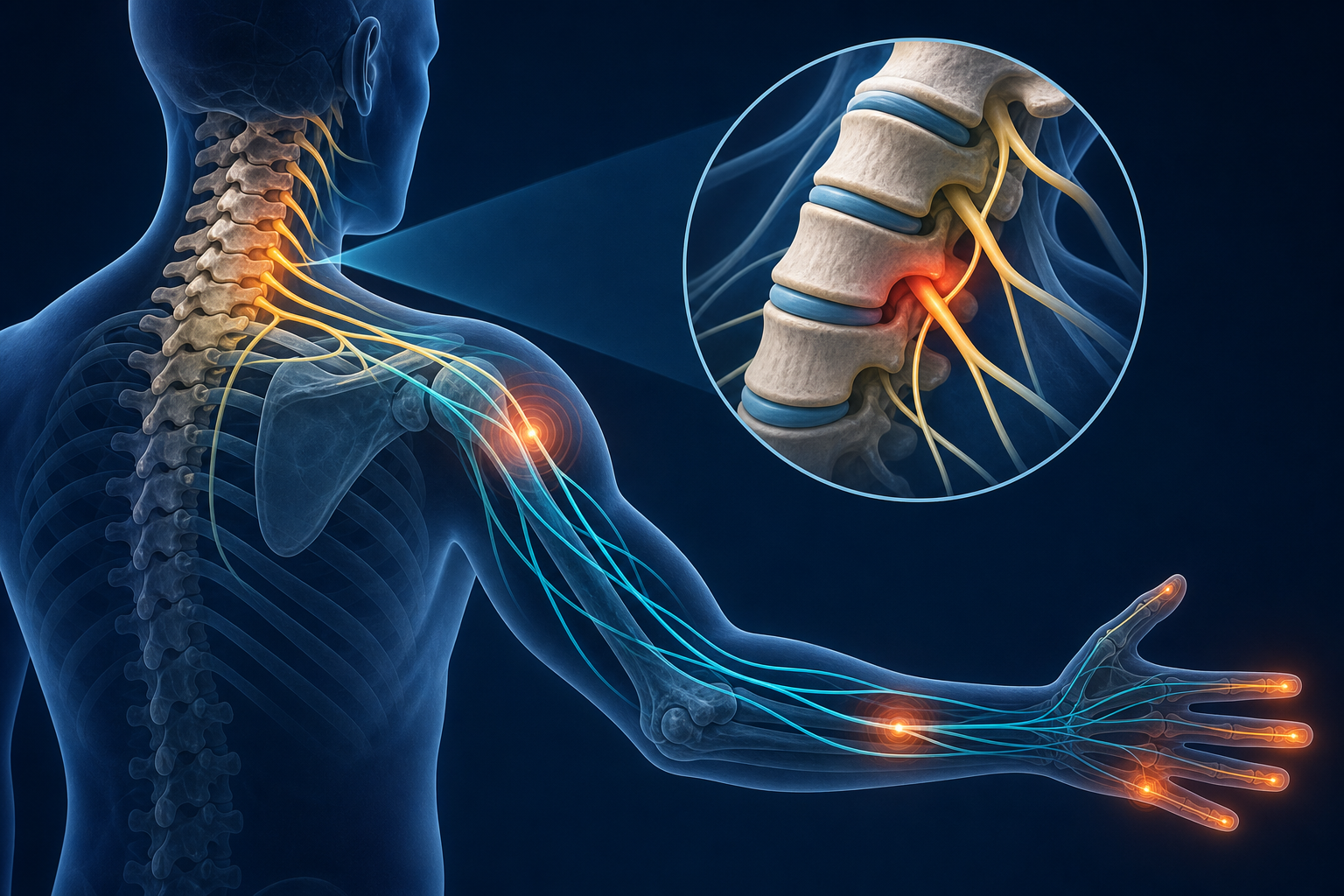
Nerve irritation in the neck can sometimes refer pain, tingling, weakness, or altered sensation into the arm. This does not mean every person with elbow pain has a neck problem, but symptoms such as numbness, tingling, arm heaviness, or pain that changes with neck movement deserve attention.
Elbow Joint Irritation or Arthritis
Joint-related elbow problems can cause stiffness, swelling, catching, or reduced range of motion. These symptoms are not classic for uncomplicated tennis elbow and should be assessed by a qualified provider.
Ligament Sprain or Traumatic Injury
A fall, direct blow, sudden pull, or sports injury can strain ligaments or other structures around the elbow. Traumatic pain should be evaluated, especially if there is swelling, bruising, deformity, significant weakness, or inability to use the arm.
Wrist or Shoulder Conditions
Sometimes the elbow becomes painful because it is compensating for limited wrist or shoulder function. A treatment plan may need to address mobility and strength above and below the elbow, not just the painful point.
When to See a Provider for Tennis Elbow Symptoms
Mild elbow discomfort after an unusual activity may settle with rest, modified activity, and gentle movement. However, it is reasonable to see a healthcare provider if pain lasts more than a short period, interferes with work or sleep, limits gripping, or keeps returning with routine tasks.
Seek prompt evaluation if elbow pain follows a fall or injury, if you cannot move the elbow normally, if there is significant swelling or bruising, or if the arm feels weak, numb, cold, or unusually painful. These symptoms may suggest something beyond a typical tendon irritation.
You should also consider care if you have tried to rest but pain returns as soon as you resume activity. Tendon problems often need a guided progression rather than rest alone. A provider can help identify aggravating movements, adjust activities temporarily, and build a plan to restore strength safely.
How Tennis Elbow Is Evaluated
A provider will usually begin with a history of your symptoms: where the pain is located, how it started, what activities aggravate it, what helps, and whether you have neck, shoulder, wrist, numbness, or tingling symptoms. They may ask about work tasks, sports, hobbies, equipment changes, training volume, and your goals.
The physical exam may include palpation around the lateral epicondyle, grip testing, resisted wrist extension, range-of-motion checks, and screening of the wrist, shoulder, and neck. Some tests attempt to reproduce the familiar pain in a controlled way. This helps the provider determine whether the pattern fits tennis elbow or another condition.
Imaging is not always needed for straightforward cases, but a clinician may recommend further evaluation when symptoms are severe, traumatic, unusual, or not improving as expected. Decisions about imaging or referral depend on the individual situation.
Tennis Elbow Treatment Without Surgery
Many people search for tennis elbow treatment without surgery because they want to keep working, exercising, and using their arm without invasive care. Conservative management is often the first approach for lateral elbow tendinopathy. Treatment may include education, activity modification, bracing, manual therapy, exercise, ergonomic changes, and gradual return to activity.
The best plan is not simply “rest until it stops hurting.” Complete rest may reduce symptoms temporarily, but the tendon often needs a carefully progressed loading program to tolerate real-life demands again. The goal is to reduce irritation while improving capacity.
Activity Modification
Activity modification means changing how you load the tendon while symptoms calm down. This may include reducing heavy gripping, avoiding repeated palm-down lifting, using two hands for heavier objects, changing tool handles, taking breaks from repetitive tasks, or adjusting sport technique. The goal is not permanent avoidance; it is temporary load management while the tendon adapts.
Physical Therapy
Physical therapy for tennis elbow may include pain-guided strengthening, stretching when appropriate, soft tissue techniques, joint mobility work, grip retraining, shoulder and scapular strengthening, and education about pacing. A physical therapist can also help you return to sport, work, or exercise with a step-by-step progression. You can learn more about physical therapy or search for physical therapy for tennis elbow near me through Medximity.
Chiropractic and Conservative Musculoskeletal Care
A chiropractor who treats extremity conditions may evaluate elbow mechanics, wrist and shoulder mobility, soft tissue sensitivity, and related neck or upper-back factors. Care may include manual therapy, mobilization, therapeutic exercise, ergonomic guidance, and coordination with other providers when appropriate. If you are searching for a chiropractor for tennis elbow near me, look for a provider who explains the diagnosis clearly and includes active rehabilitation rather than relying only on passive care.
Bracing and Supports
Patients often ask about the best brace for tennis elbow pain. A common option is a counterforce strap worn around the upper forearm below the elbow. It may help reduce strain at the tendon attachment during gripping tasks for some people. Another option is a wrist brace that limits wrist extension during specific activities. Bracing is not a cure, but it may be useful as part of a broader plan.
The best brace depends on your symptoms, activity, arm size, and comfort. A brace should not cause numbness, tingling, increased pain, or skin irritation. A provider can help you decide whether a brace makes sense and how to use it without becoming dependent on it.
Manual Therapy and Soft Tissue Techniques
Hands-on treatment may help reduce sensitivity, improve motion, and make exercise more tolerable for some patients. Techniques may target the forearm muscles, wrist joints, elbow joint, shoulder, or upper back depending on the exam. Manual therapy is usually most helpful when paired with active exercise and load management.
Ergonomic Changes for Work
For desk-based workers, ergonomic changes may include bringing the mouse closer, using a neutral wrist position, adjusting chair and desk height, using forearm support, alternating input devices, and taking movement breaks. Laptop users may benefit from a separate keyboard and mouse so the shoulders, elbows, and wrists can be positioned more comfortably. Small changes can reduce repeated strain across a long workday.
How to Strengthen Tennis Elbow Safely
Learning how to strengthen tennis elbow safely is one of the most important parts of recovery. Tendons generally respond to progressive loading, but too much too soon can flare symptoms. Exercises should be matched to your current tolerance and progressed gradually. If an exercise causes sharp pain, worsening symptoms, or pain that lingers significantly into the next day, it may need to be modified.
Start With Isometric Wrist Extension
Isometric exercises involve contracting the muscle without moving the joint. For tennis elbow, a provider may recommend pressing the back of the hand gently into resistance while keeping the wrist still. This can introduce load without repeated motion. Some patients find isometrics more tolerable early in rehab.
Progress to Eccentric and Concentric Loading
Once symptoms allow, exercises may progress to controlled wrist extension using a light dumbbell, resistance band, or household object. Eccentric loading emphasizes the lowering phase; concentric loading emphasizes lifting. Many rehab plans use both over time. The key is gradual progression, not forcing through pain.
Train Grip Without Overloading the Tendon
Grip work may begin with gentle squeezes using a soft ball or putty, then progress as tolerated. Because gripping can provoke symptoms, volume and intensity matter. A therapist can help set the right dosage.
Include Shoulder and Scapular Strength
The shoulder blade and rotator cuff help position the arm during reaching, lifting, racquet sports, and tool use. Improving shoulder endurance may reduce unnecessary strain on the forearm during repeated tasks.
Return to Sport and Work Gradually
Returning to tennis, pickleball, weight training, manual labor, or long computer sessions should usually be gradual. Changes in racquet grip size, string tension, lifting technique, tool handle size, or work pacing may help. A provider can help you test activities in stages rather than guessing.
How Long Does Tennis Elbow Last?
How long does tennis elbow last? The answer varies. Mild cases may improve over several weeks with appropriate load management. More persistent tendon-related pain can take several months to improve, especially if the activity demands remain high or symptoms have been present for a long time.
It is common for progress to be uneven. A good day may be followed by soreness after a new activity. That does not always mean damage has occurred, but it may mean the tendon was loaded beyond its current tolerance. Tracking symptoms, activity levels, and response over the next 24 hours can help guide progression.
Factors that may influence recovery include symptom duration, work demands, sport demands, sleep, general health, consistency with exercises, ergonomic setup, and whether another condition is contributing. If symptoms are not improving with a reasonable conservative plan, a provider may reassess the diagnosis and adjust care.
What to Expect at Your First Visit
At your first visit for suspected tennis elbow, expect a conversation about your symptoms and goals. A provider may ask what you need to get back to, such as computer work, childcare, weightlifting, tennis, pickleball, golf, cooking, or manual work. Be ready to describe which movements reproduce your pain and whether symptoms have changed over time.
The exam may include checking elbow tenderness, wrist and grip strength, forearm flexibility, joint motion, shoulder control, and possibly neck movement. Your provider may compare both sides and may test movements that load the wrist extensors. The goal is to confirm the likely pain source and identify contributing factors.
Treatment may begin the same day depending on the findings. You might receive education about activity modification, a home exercise plan, advice about bracing, ergonomic suggestions, and hands-on care if appropriate. A good plan should explain what to do, what to avoid temporarily, how to progress, and when to follow up.
Questions to Ask Your Provider
Clear communication can make conservative care more effective. Consider asking:
- Does my symptom pattern fit tennis elbow, or could another condition be involved?
- Which activities should I modify temporarily, and which are safe to continue?
- What level of discomfort is acceptable during exercise?
- Should I use a counterforce strap, wrist brace, or no brace?
- How often should I perform my exercises?
- What signs would mean I need a reassessment?
- How should I return to work, sport, or lifting?
These questions help ensure the plan is specific to your daily demands rather than a generic elbow routine.
Preventing Recurrence
Preventing tennis elbow from returning often depends on matching tendon capacity to the demands placed on it. That may include continuing strength exercises after pain improves, taking breaks from repetitive gripping, improving workstation setup, changing sport technique, and building activity volume gradually.
For racquet sports, grip size, stroke mechanics, training load, and equipment may matter. For manual work, tool handle size, task rotation, and lifting mechanics may help. For office work, mouse position, keyboard height, and forearm support can reduce sustained strain.
Prevention does not require avoiding every aggravating activity forever. It usually means building the arm’s tolerance while reducing unnecessary overload. If pain begins to return, early adjustments may prevent a minor flare from becoming a longer setback.
Finding Care for Tennis Elbow
If outside elbow pain is limiting your grip, work, exercise, or daily activities, a conservative musculoskeletal provider can help evaluate the cause and create a treatment plan. Physical therapists and chiropractors commonly help patients with elbow pain through movement assessment, exercise progression, ergonomic guidance, manual therapy, and education.
Medximity makes it easier to compare providers and find care that fits your needs. Start with physical therapists near you if you want a rehabilitation-focused plan, or search for chiropractors near you if you are looking for conservative musculoskeletal evaluation and care. You can also explore related Medximity resources on chiropractic care and elbow pain.
Key Takeaway
Tennis elbow is a common cause of pain on the outside of the elbow, but it is not always caused by tennis and it is not always solved by rest alone. In many cases, improvement comes from identifying the movements that overload the tendon, modifying activity temporarily, and gradually rebuilding strength. If symptoms persist, worsen, or interfere with your daily life, consult a qualified provider for an evaluation and a plan tailored to your situation.
Frequently Asked Questions
What is tennis elbow pain?
Tennis elbow pain is usually felt on the outside of the elbow near the tendon attachment for the wrist extensor muscles. It is often aggravated by gripping, lifting, twisting, typing, or extending the wrist.
Can tennis elbow come from typing at work?
Typing, mouse use, and sustained desk posture may contribute to tennis elbow symptoms in some people, especially when combined with poor workstation setup, limited breaks, or other repetitive hand tasks. A provider can help assess ergonomic and movement factors.
What is the best brace for tennis elbow pain?
Some people benefit from a counterforce strap worn on the upper forearm or a wrist brace used during specific aggravating tasks. The best brace depends on your symptoms and activities. A brace should feel supportive, not painful or restrictive.
How long does tennis elbow last?
Recovery varies. Mild symptoms may improve over several weeks, while more persistent tendon-related pain can take several months. A guided strengthening and activity-modification plan may help reduce the chance of repeated flare-ups.
Can physical therapy help tennis elbow?
Physical therapy may help by improving tendon load tolerance, grip strength, wrist and shoulder mechanics, and work or sport habits. Treatment is usually individualized based on symptom behavior and goals.
Should I see a chiropractor for tennis elbow?
A chiropractor who treats extremity and musculoskeletal conditions may help evaluate elbow, wrist, shoulder, and neck factors and provide conservative care. Look for a provider who includes active exercise and clear self-care guidance.
What conditions can feel like tennis elbow?
Radial tunnel syndrome, referred neck pain, elbow joint irritation, ligament injury, wrist conditions, and shoulder-related problems can sometimes resemble tennis elbow. Persistent or unusual symptoms should be evaluated by a qualified provider.