Straight Neck Syndrome Symptoms, Causes, and Treatment
Straight neck syndrome symptoms are ubiquitous in today's society. The overuse of mobile devices and computers is contributing to straight neck problems. Forward head posture is the result of doing activities that encourage this bad posture combined with a prior neck injury.
In this article, we will discuss how upper cervical spine injury like whiplash and sports injuries can be a precipitating cause of straight neck syndrome symptoms. WE will get into the neurological mechanisms that lead to straight neck syndrome and then offer up some ergonomic advice and a little-known treatment called upper cervical chiropractic that can help your body recover its lost neck curve.
Straight Neck Syndrome Symptoms
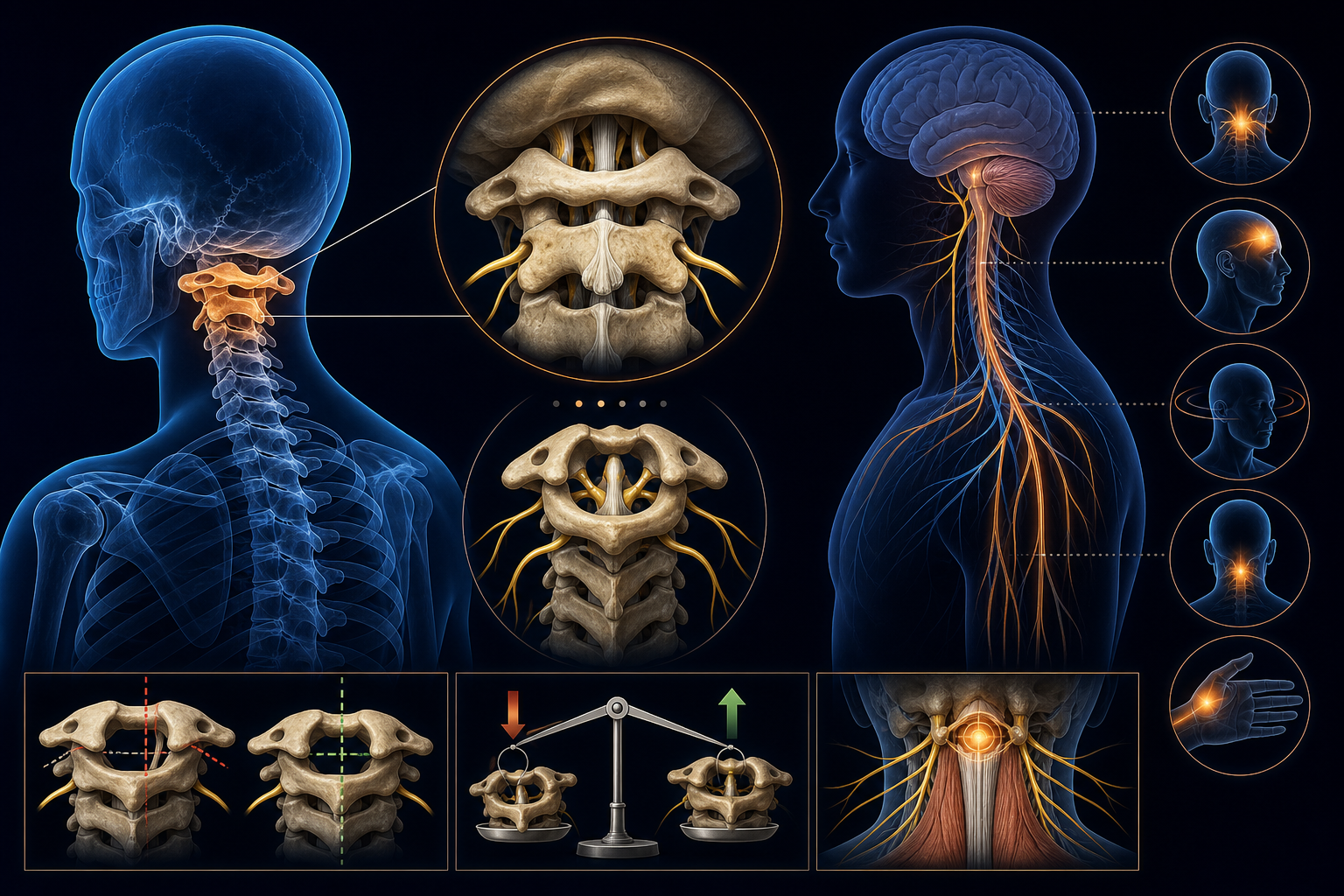
The anatomy of the neck and head relationship is in part responsible for the symptoms that arise out of straight neck syndrome. The head weighs 10-12 pounds and rests on the top bone in the neck called the atlas, weighing 2 ounces.
This anatomical weakness predisposes the head-neck junction to injury. Whiplash, sports trauma and another injury can displace the atlas underneath the skull. In response to this injury, brain stem irritation results in postural imbalance.
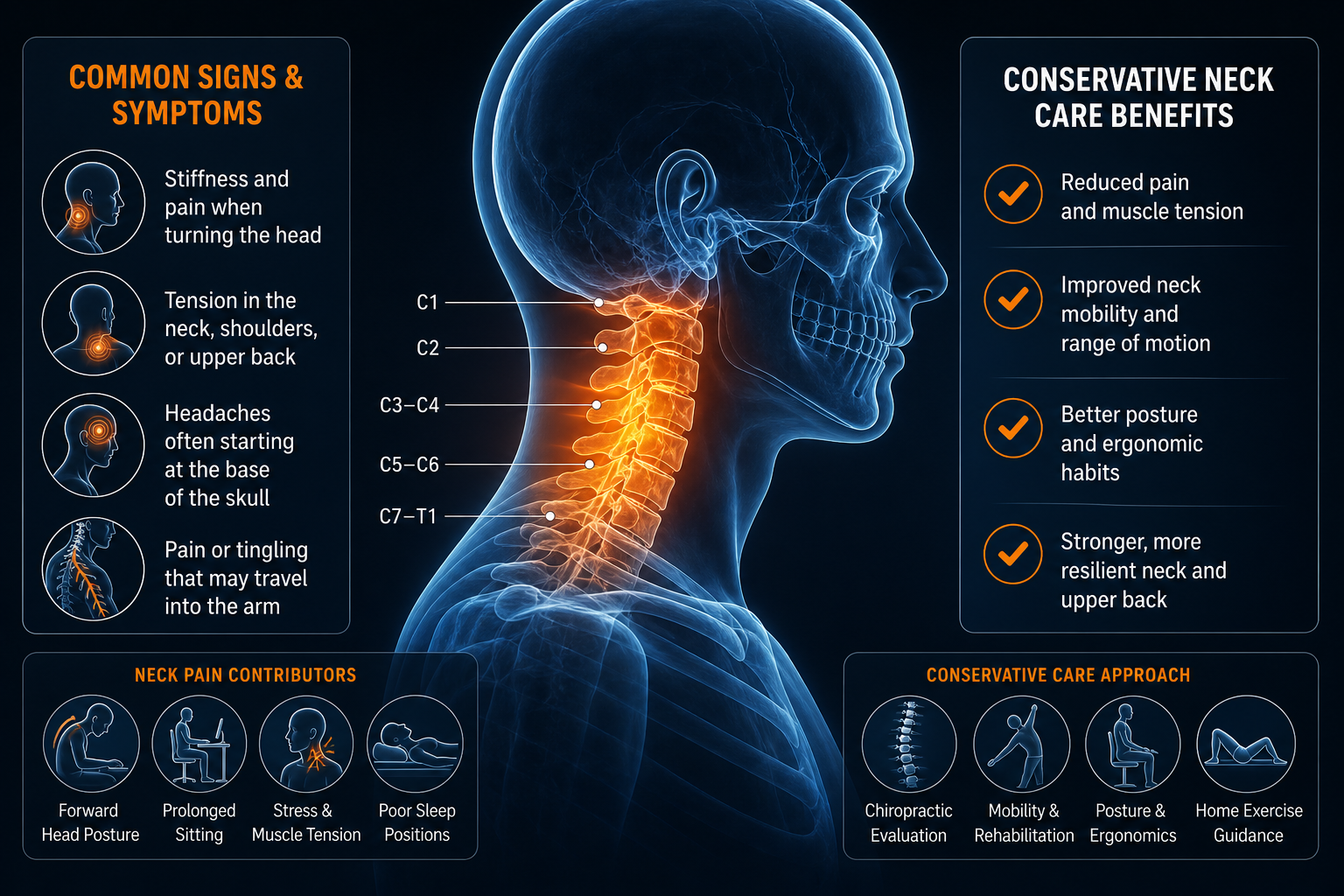
The scalene muscles which flank both sides of the neck, into the shoulders, increase in a tone which results in a “pulling” forward of the neck. Forward head posture then leads to a host of straight neck symptoms:
- Neck pain
- Abnormal posture
- Lower neck pain
- Upper shoulder pain
- Mid-back pain
- Headaches
- Cognitive deficits
- Emotional imbalance
Because the brain stem, located inside of the atlas (c-1) and axis (c-2), controls most of the body's function, a straight neck can cause irritation and therefore decreased brain stem function. “Tethering” of the spinal cord results from straight neck syndrome.
Adding insult to injury, the modern lifestyle then encourages forward head posture. It is estimated that the average teenager is spending nearly 1/3 of their life on mobile devices or 9 hours! This has been labeled a text neck.
This growing syndrome is leading to serious chronic health problems. In our household we have a rule: If you are caught with your head flexed down on your device you lose it for a week. This simple rule will correct most of the damage done to a child’s posture due to repetitive mobile phone use in the incorrect posture.
Straight Neck Syndrome Treatment- What You Can Do About It
We have already alluded to one rule that can help reduce activities that encourage forward head posture. There are others. Make sure that your desk at work or at home is ergonomically correct. Having your computer screen to high or low, to the right or left, can all contribute to faulty posture and straight neck syndrome. Make sure you sit erect at your chair. If you are a sloucher buy lumbar support that forces you to sit in an upright position.
Towel roll exercise- Straight Neck Syndrome Treatment
Do this simple exercise 7 minutes a day. Roll a bath towel up in a cylinder. Place the cylinder directly underneath the neck while lying on your back. Make sure that the towel is big enough so the head, while at full rest, is just off the ground. If it is touching roll the towel up a little bigger.
This simple exercise can help encourage normal cervical lordosis (neck curve). It also can help relieve tension in the muscles of the neck. In our office, we give this simple exercise to our patients on the third visit. We find that it helps combat all of the daily activities we do that promote forward head carriage.
Straight Neck Syndrome Treatment- Getting at the Root
Blair Upper Cervical Care is a little-known procedure that helps restore normal nervous system function by correcting structural misalignments in the upper cervical spine. Life has a way of injuring the neck. Car accidents slip and falls, sports injuries, snowboard accidents, and many more are responsible for injuring the joints and soft tissue of the neck.
When an injury occurs, the atlas and axis vertebrae in the neck can misalign at the joint level. This structural misalignment can irritate the brain stem, cause abnormal proprioceptive input from the joint level, and cause a host of problems throughout the body. One of the things it predisposes the individual towards is straight neck syndrome.
The upper cervical doctor is specially trained to locate, analyze and correct these spinal misalignments. They are discovered through neurological tests and then imaged with cone beam computerized tomography(CBCT)or digital x-ray.
Precise imaging of the joints of the neck allows the doctor to see which joints are misaligned, the magnitude, and the direction. Once this is determined a precise spinal correction is made to restore normal joint motion and therefore over time this allows the body to heal itself.
Because the postural centers of the body are in the brainstem, correcting upper cervical misalignments can have profound beneficial effects on posture and function of the body.
We hope that this blog has helped educate those that are looking for natural health solutions and will lead to a better quality of life for those who act!