Find a Provider Community Forum
For Providers For Attorneys
Sign In Attorneys

Understanding Cervical Segmental Dysfunction: Symptoms, Causes, and Treatment

Understanding Cervical Segmental Dysfunction: Symptoms, Causes, and Treatment

Key Takeaways

  • Cervical segmental dysfunction describes a loss of normal intersegmental motion at one or more cervical vertebral levels — distinct from generalized muscle soreness or diffuse neck pain — and involves the facet joints, intervertebral discs, and associated soft tissues.
  • Common contributing factors include forward head posture, prolonged sedentary positioning, repetitive occupational strain, degenerative joint changes, and trauma such as whiplash-type injury mechanisms.
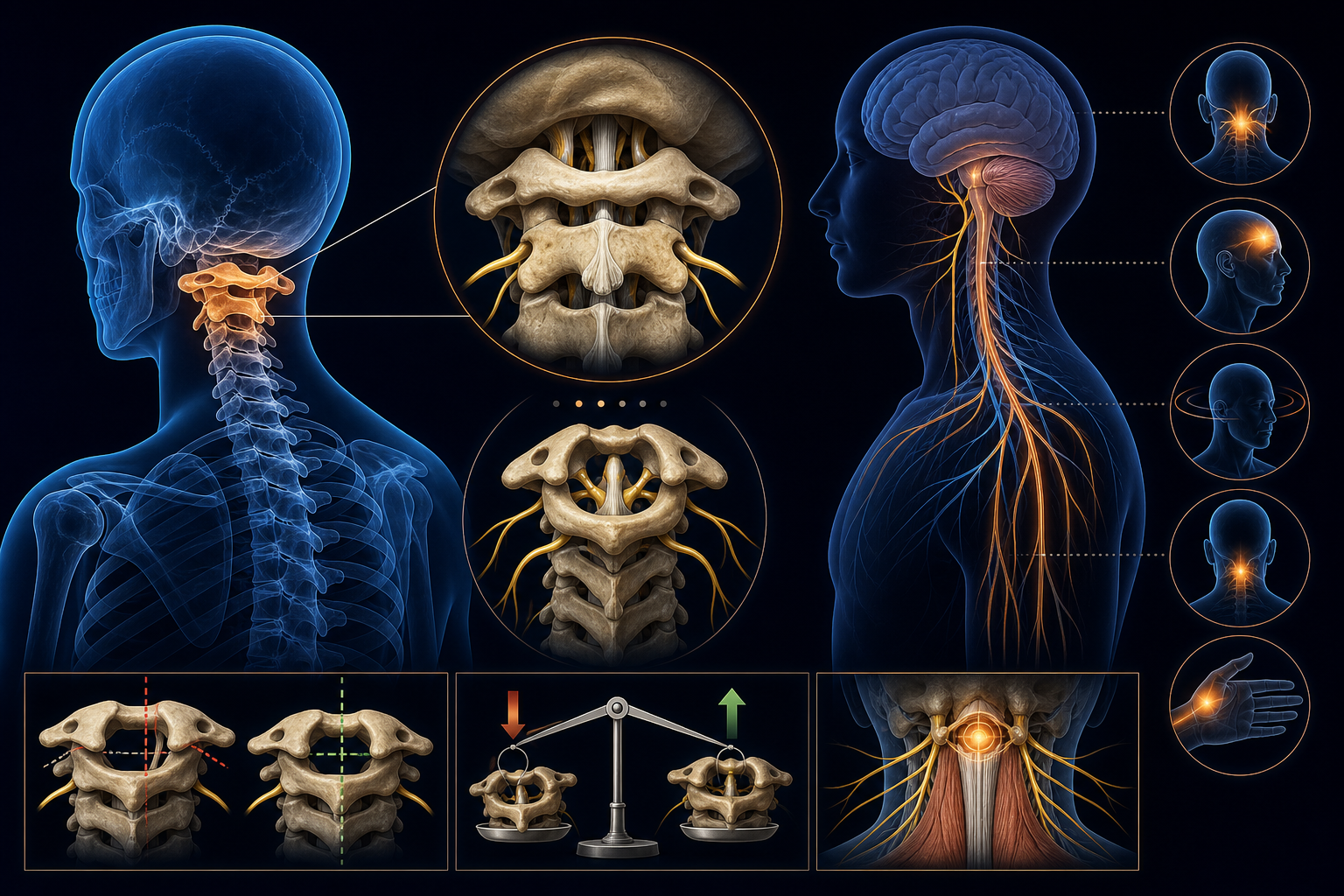
  • Symptom patterns vary by cervical level: upper cervical restriction (C0–C2) is commonly associated with cervicogenic headache and cranial referral, while mid-to-lower cervical dysfunction (C3–C7) may produce arm, shoulder, and scapular pain patterns.
  • Conservative care — including chiropractic cervical manipulation, physical therapy, soft tissue therapy, deep neck flexor rehabilitation, and complementary modalities such as acupuncture — represents the primary treatment pathway and may help restore intersegmental motion and reduce associated symptoms.
  • Accurate clinical documentation of motion palpation findings, orthopedic test results, and functional limitations is particularly relevant for patients whose cervical segmental dysfunction arises in the context of a personal injury event; readers with legal questions should consult a qualified attorney.
```json { "title": "Understanding Cervical Segmental Dysfunction: Symptoms, Causes, and Treatment", "slug": "cervical-segmental-dysfunction-symptoms-causes-treatment", "meta_title": "Cervical Segmental Dysfunction: Symptoms & Treatment | Medximity", "meta_description": "Learn what cervical segmental dysfunction is, why it causes neck pain and stiffness, and how chiropractic care and physical therapy may help you recover.", "excerpt": "Cervical segmental dysfunction refers to restricted or altered movement in one or more joints of the neck, and it is a surprisingly common source of daily neck pain, morning stiffness, and limited range of motion. Understanding what drives this condition — and what conservative care options exist — can help you take meaningful steps toward relief. This guide walks through the symptoms, causes, and treatment approaches most relevant to people dealing with cervical spine joint dysfunction.", "content_html": "\n\n

If you wake up most mornings with a stiff neck, or you notice you can't turn your head to check a blind spot without discomfort, you may be experiencing more than ordinary muscle tightness. Cervical segmental dysfunction — restricted, altered, or painful movement at one or more joints of the cervical spine — is a recognized clinical finding that chiropractors and physical therapists evaluate and treat every day. It is not the same as a slipped disc, and it is not something you simply have to live with.

\n\n

This article explains what cervical segmental dysfunction is, what tends to cause it, how it presents, and what evidence-informed conservative care may look like for people dealing with it.

\n\n

What Is Cervical Segmental Dysfunction?

\n\n

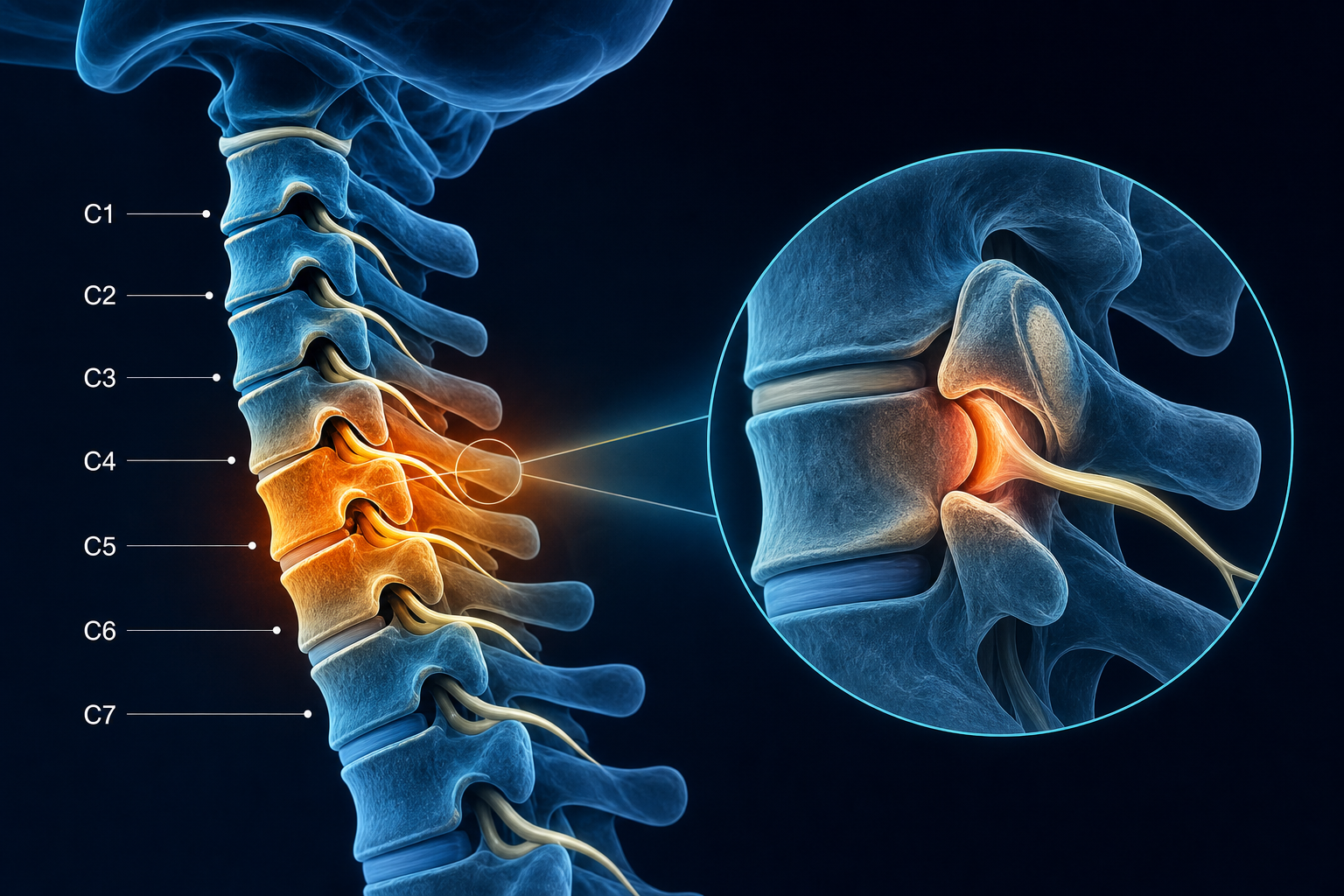
The cervical spine is made up of seven vertebrae (C1 through C7), and between each pair of adjacent vertebrae sits a functional unit — a spinal segment — that includes a disc, paired facet joints, surrounding ligaments, and nerve roots. When one of these segments loses its normal mobility or alignment, clinicians refer to this as segmental dysfunction. You may also hear it called a cervical joint restriction, a somatic dysfunction of the cervical spine, or, in chiropractic terminology, a subluxation.

\n\n

The key distinction: segmental dysfunction is primarily a mobility and movement-quality problem, not necessarily a structural damage problem. That is one of the core differences between cervical dysfunction and a herniated disc — although both can cause overlapping symptoms and can coexist.

\n\n

Common Symptoms of Cervical Segmental Dysfunction

\n\n

Neck Pain and Stiffness

\n

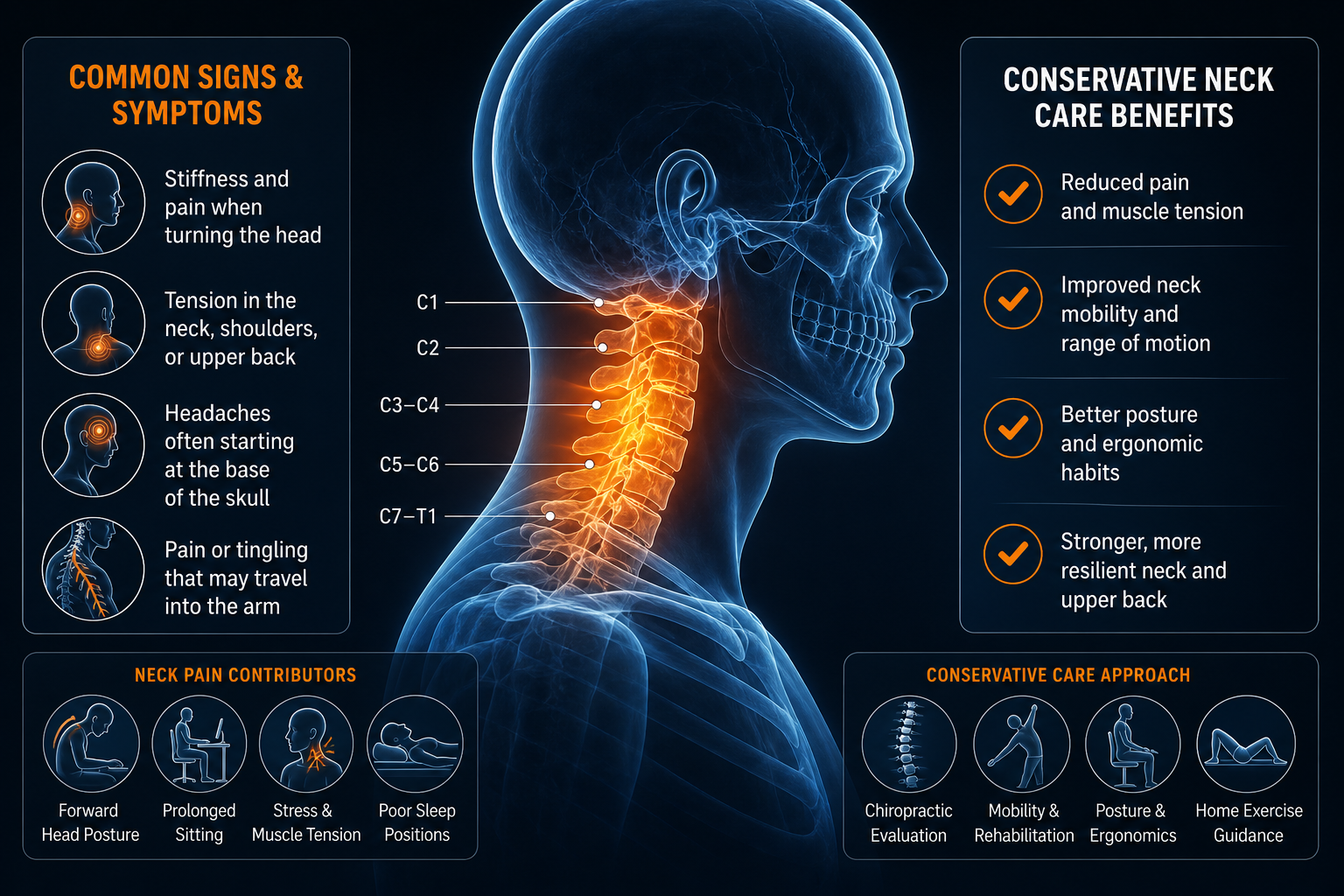
Pain that is localized to one side of the neck or concentrated near the base of the skull is a frequent presentation. Many patients describe it as a dull ache that sharpens when they rotate or flex the head. Morning stiffness that gradually loosens through the day is also a common pattern — though persistent morning stiffness that does not improve warrants evaluation by a provider.

\n\n

Restricted Range of Motion

\n

Difficulty turning the head fully to one side, or noticing that rotation feels "blocked" in one direction, often points to a segmental restriction at C1–C2 or lower cervical levels. This is a measurable clinical finding, not just a subjective feeling.

\n\n

Headaches Originating at the Base of the Skull

\n

Cervicogenic headache — pain that originates in the neck structures and refers into the head — is strongly associated with upper cervical segmental dysfunction. These headaches often begin at the back of the head and may radiate behind one eye.

\n\n

Referred Pain Into the Shoulder or Arm

\n

When dysfunction irritates adjacent nerve roots or produces muscular referral patterns, pain, tingling, or heaviness may travel into the shoulder, upper arm, or hand. This symptom pattern deserves prompt professional evaluation to determine its source.

\n\n

What Causes Cervical Spine Joint Dysfunction?

\n\n

Causes are varied and often cumulative rather than the result of a single dramatic event:

\n\n
  • \n
  • Repetitive posture strain — sustained forward-head posture from screens, desks, or driving places asymmetrical load on cervical facet joints over time.\n
  • Acute trauma — whiplash-type injuries from motor vehicle accidents, sports contact, or falls can produce segmental restrictions alongside soft-tissue damage.\n
  • Sedentary lifestyle — reduced movement variety leads to deconditioning of the deep cervical stabilizers and gradual stiffening of joint capsules.\n
  • Degenerative joint changes — age-related changes in the facet joints and discs can reduce segmental mobility, though dysfunction and degeneration do not always correlate directly with symptoms.\n
  • Sleep position and pillow support — prolonged poor cervical alignment during sleep is a frequently overlooked contributor to morning stiffness and restricted movement.\n
\n\n

Cervical Segmental Dysfunction vs. Herniated Disc: Understanding the Difference

\n\n

These two conditions are related but distinct. A herniated cervical disc involves displacement of disc material that can compress nerve roots or the spinal cord, producing specific dermatomal patterns of pain, numbness, or weakness. Segmental dysfunction is primarily a joint mobility problem — the disc may be intact, but the facet joint and surrounding structures are not moving correctly.

\n\n

In practice, both conditions can produce neck pain and referred arm symptoms, which is why imaging and clinical examination are important. A qualified provider can help distinguish between them. You can read more about how providers approach this distinction on our neck pain causes guide.

\n\n

Treatment Options: Conservative Care That May Help

\n\n

Chiropractic Adjustment

\n

Chiropractic manipulation — specifically high-velocity low-amplitude (HVLA) thrust techniques and gentler mobilization techniques — is one of the most studied conservative interventions for cervical segmental dysfunction. The goal is to restore normal joint motion, reduce local inflammation, and relieve associated muscle guarding. Research in this area suggests that spinal manipulation may be associated with meaningful short-term reductions in neck pain and improved range of motion in many patients, though individual responses vary. If you are looking for a provider, you can search for chiropractors near you on Medximity.

\n\n

Physical Therapy

\n

Physical therapy for cervical segmental dysfunction typically combines manual therapy techniques with a structured exercise program. Deep cervical flexor strengthening, mobility exercises, postural retraining, and neuromuscular coordination work are all commonly incorporated. Exercise-based care is particularly important for long-term outcomes because it addresses the muscular control deficits that often accompany and perpetuate joint restrictions. Find a physical therapist near you to discuss an individualized program.

\n\n

Soft-Tissue Therapy

\n

Myofascial release, trigger point therapy, and instrument-assisted soft-tissue mobilization may help relieve the muscle hypertonicity that commonly accompanies cervical joint restrictions, making joint-level treatment more effective.

\n\n

Ergonomic and Lifestyle Modification

\n

Adjusting workstation height, monitor position, and sleep posture removes the mechanical load that may be maintaining the dysfunction. These changes are rarely sufficient alone but are often essential for preventing recurrence.

\n\n

How Long Does Cervical Segmental Dysfunction Take to Heal?

\n\n

This varies considerably depending on how long the dysfunction has been present, the patient's overall health and activity level, whether there are coexisting conditions, and how consistently they engage with treatment. Acute cases — those arising from a recent incident with no underlying degenerative changes — may respond within a few weeks of consistent care. Chronic or recurrent dysfunction often requires a longer course of treatment focused on both restoring mobility and rebuilding muscular support. Your provider can give you a more specific timeline after evaluation.

\n\n

For additional context on what recovery timelines look like for neck conditions, see our guide to neck pain recovery.

\n\n

When to See a Provider

\n\n

Routine neck stiffness that resolves quickly is common and often benign. However, the following symptoms warrant prompt professional evaluation:

\n\n
  • \n
  • Neck pain following a car accident, fall, or sports injury\n
  • Numbness, tingling, or weakness in the arms or hands\n
  • Headaches that are new, severe, or worsening\n
  • Neck pain accompanied by dizziness or balance problems\n
  • Stiffness that is not improving after several days of rest\n
\n\n

A chiropractor, physical therapist, or spine-focused provider can perform the appropriate examination, recommend imaging if needed, and design a care plan suited to your specific situation. Find a cervical spine specialist near you through the Medximity directory.

\n\n

Frequently Asked Questions

\n\n\n\n

Is it normal to have neck stiffness every morning?

\n

Occasional morning neck stiffness that resolves within 30 minutes is common and often related to sleep position or pillow support. However, stiffness that is persistent, worsening, or accompanied by pain, headache, or arm symptoms is worth discussing with a provider — it may indicate an underlying joint or soft-tissue issue that responds well to conservative care.

\n\n

What is the difference between cervical segmental dysfunction and a herniated disc?

\n

Cervical segmental dysfunction is primarily a joint mobility problem — one or more spinal segments are not moving correctly, which irritates surrounding structures. A herniated disc involves displacement of disc material, which may compress nerve roots. Both can cause overlapping symptoms, and they can coexist, but they are distinct diagnoses that may require different treatment approaches. Clinical examination and imaging help distinguish them.

\n\n

Can I treat cervical segmental dysfunction without surgery?

\n

In many cases, yes. Cervical segmental dysfunction is generally considered a condition that responds well to conservative, non-surgical care — including chiropractic manipulation, physical therapy, and soft-tissue work. Surgery is not typically indicated for segmental dysfunction alone. However, if dysfunction is accompanied by significant nerve compression or structural instability, a spine specialist should evaluate whether additional intervention is appropriate.

\n\n

How do I find a chiropractor who treats cervical dysfunction?

\n

You can search the Medximity directory by specialty and location to find chiropractors and physical therapists who have experience with cervical spine conditions. Reading provider profiles and looking at their listed areas of focus can help you identify practitioners suited to your needs.

\n\n

What exercises help with cervical segmental dysfunction?

\n

Physical therapists commonly recommend deep cervical flexor exercises (such as chin tucks), gentle cervical rotation and lateral flexion mobility work, and scapular stabilization exercises. However, exercises should be guided by a provider who has assessed your specific mobility restrictions — unsupervised exercises performed incorrectly can occasionally aggravate symptoms.

\n\n\n\n

Key Takeaways

\n
  • \n
  • Cervical segmental dysfunction is restricted or altered movement at one or more joints of the neck — a mobility problem, not necessarily structural damage.\n
  • Common symptoms include neck pain, morning stiffness, limited rotation, cervicogenic headache, and sometimes referred arm discomfort.\n
  • Causes range from posture and repetitive strain to acute trauma and age-related joint changes.\n
  • Chiropractic care and physical therapy are the primary evidence-informed conservative treatment options.\n
  • Recovery timelines vary; many patients see meaningful improvement within weeks of consistent care, though chronic cases may take longer.\n
  • Symptoms such as arm weakness, numbness, or severe or worsening headache warrant prompt professional evaluation.\n
\n\n", "faq_data": [ { "q": "Is it normal to have neck stiffness every morning?", "a": "Occasional morning neck stiffness that resolves within 30 minutes is common and often related to sleep position or pillow support. Persistent, worsening, or symptomatic stiffness — especially with headache or arm involvement — is worth discussing with a provider, as it may reflect an underlying joint restriction that responds well to conservative care." }, { "q": "What is the difference between cervical segmental dysfunction and a herniated disc?", "a": "Cervical segmental dysfunction is primarily a joint mobility problem — one or more segments of the neck are not moving correctly. A herniated disc involves displacement of disc material that may compress nerve roots. Both can cause neck pain and referred arm symptoms, and they can coexist, but they are distinct clinical findings requiring different evaluation and treatment approaches." }, { "q": "Can cervical segmental dysfunction be treated without surgery?", "a": "In many cases, yes. Segmental dysfunction typically responds to conservative, non-surgical care such as chiropractic manipulation and physical therapy. Surgery is not generally indicated for this condition alone, though coexisting structural problems may require additional evaluation." }, { "q": "How long does cervical segmental dysfunction take to heal?", "a": "Recovery depends on the duration of the dysfunction, underlying health factors, and treatment consistency. Acute cases may improve within a few weeks; chronic or recurrent cases often require a longer, more structured program. Your provider can offer a more specific timeline after examining you." }, { "q": "What exercises help cervical segmental dysfunction?", "a": "Deep cervical flexor strengthening (such as chin tucks), gentle rotation and lateral flexion mobility work, and scapular stabilization exercises are commonly used. These should be guided by a physical therapist who has assessed your specific restrictions to ensure they are performed safely and appropriately." }, { "q": "Can't turn my head without neck pain — what could be causing it?", "a": "Difficulty rotating the head, especially if it feels blocked in one direction, is a classic sign of cervical segmental restriction. Other possible causes include muscle strain, degenerative changes, or disc involvement. A chiropractic or physical therapy evaluation can help identify the specific source and guide appropriate treatment." } ], "key_takeaways": [ "Cervical segmental dysfunction refers to restricted or altered movement at one or more neck joints — it is primarily a mobility problem, not necessarily structural damage.", "Symptoms commonly include localized neck pain, morning stiffness, limited head rotation, cervicogenic headaches, and occasionally referred pain or tingling into the arm.", "Common causes include sustained poor posture, acute trauma such as whiplash, sedentary habits, and age-related joint changes.", "Chiropractic manipulation and physical therapy — including targeted exercises — are the primary evidence-informed conservative treatment options.", "Many patients experience meaningful improvement within weeks of consistent care, though chronic cases typically require longer treatment and rehabilitation.", "Symptoms such as arm weakness, numbness, balance problems, or severe worsening headache warrant prompt professional evaluation." ], "tags": [ "cervical segmental dysfunction", "neck pain", "cervical spine", "chiropractic care", "physical therapy", "neck stiffness", "cervicogenic headache", "spinal joint dysfunction", "conservative care", "neck pain treatment" ], "schema_markup": { "@context": "https://schema.org", "@type": "Article", "headline": "Understanding Cervical Segmental Dysfunction: Symptoms, Causes, and Treatment", "description": "Learn what cervical segmental dysfunction is, why it causes neck pain and stiffness, and how chiropractic care and physical therapy may help you recover.", "publisher": { "@type": "Organization", "name": "Medximity", "url": "https://medximity.com" }, "mainEntityOfPage": { "@type": "WebPage", "@id": "https://medximity.com/blog/cervical-segmental-dysfunction-symptoms-causes-treatment" }, "about": { "@type": "MedicalCondition", "name": "Cervical Segmental Dysfunction", "associatedAnatomy": { "@type": "AnatomicalStructure", "name": "Cervical Spine" } }, "FAQPage": { "@type": "FAQPage", "mainEntity": [ { "@type": "Question", "name": "Is it normal to have neck stiffness every morning?", "acceptedAnswer": { "@type": "Answer", "text": "Occasional morning neck stiffness is common and often related to sleep position. Persistent or worsening stiffness with accompanying symptoms warrants evaluation by a qualified provider." } }, { "@type": "Question", "name": "Can cervical segmental dysfunction be treated without surgery?", "acceptedAnswer": { "@type": "Answer", "text": "In many cases, yes. Cervical segmental dysfunction often responds well to conservative care such as chiropractic manipulation and physical therapy without requiring surgical intervention." } } ] } } }

Medical Disclaimer: This article is for informational purposes only and does not constitute medical advice, diagnosis, or treatment. Always consult a qualified healthcare provider for personalized medical guidance. If you are experiencing a medical emergency, call 911 or your local emergency number immediately.

Frequently Asked Questions

What is cervical segmental dysfunction?
Cervical segmental dysfunction refers to restricted or altered intersegmental motion at one or more levels of the cervical spine. It is not the same as generalized neck soreness or muscle tightness. The restriction typically involves the zygapophyseal (facet) joints and surrounding structures, and may produce local pain, stiffness, or referred symptoms into the head, arm, or shoulder. A qualified chiropractor or physical therapist can evaluate whether this condition is present.
How is cervical segmental dysfunction different from a herniated disc?
Cervical segmental dysfunction primarily describes altered joint motion at a spinal segment, whereas a herniated disc involves displacement of disc material that may compress adjacent nerves. The two conditions can coexist, and some symptom patterns overlap, including arm paresthesia and neck pain. Clinical assessment — including orthopedic testing, motion palpation, and when appropriate, imaging — helps a provider distinguish between them. Only a qualified clinician can determine which condition applies to a specific patient.
Will cervical segmental dysfunction show up on an X-ray or MRI?
Standard imaging such as X-ray or MRI may not directly capture intersegmental motion restriction, since the restriction is functional rather than purely structural. Imaging can, however, rule out fracture, instability, or significant disc pathology, and may reveal degenerative joint changes that contribute to dysfunction. Motion palpation and manual assessment by a trained provider remain important tools for identifying segmental restriction that imaging alone may not detect.
Can cervical segmental dysfunction resolve on its own?
Some patients experience improvement in mild cases with rest, posture modification, and activity changes, but persistent or recurring restriction often benefits from professional evaluation and directed care. Compensatory muscle guarding and altered movement patterns that develop around a restricted segment may sustain the problem if left unaddressed. Consulting a chiropractor or physical therapist allows for an accurate assessment and a care plan tailored to the individual's presentation and recovery goals.
Are cervicogenic headaches related to cervical segmental dysfunction?
Research suggests a clinical relationship between upper cervical segmental restriction — particularly at the C0–C2 levels — and cervicogenic headache. The proposed mechanism involves altered proprioceptive signaling and referred pain pathways from the upper cervical joints and associated soft tissues. Not all neck-related headaches originate from segmental dysfunction, and accurate differentiation requires professional evaluation. Conservative care directed at upper cervical restriction may help reduce cervicogenic headache frequency in some patients.
Is conservative care appropriate for cervical segmental dysfunction after a car accident?
Cervical segmental dysfunction is a documented post-trauma clinical finding commonly associated with whiplash-type injury mechanisms. Chiropractic care, physical therapy, and soft tissue approaches are frequently used in the management of post-trauma cervical dysfunction. The appropriateness of any specific care approach depends on the individual's clinical presentation, which a qualified provider should evaluate. Patients with questions about the legal aspects of a post-accident injury should speak with a licensed attorney, as legal matters are separate from clinical care decisions.

Sources

  1. Spinal Manipulation for Neck Pain: An Individual Participant Data Meta-Analysis — The Spine Journal (2017)
  2. Clinical Practice Guideline: Chiropractic Management of Acute and Chronic Neck Pain — Journal of Manipulative and Physiological Therapeutics (2020)
  3. Whiplash-Associated Disorders: Redefining Whiplash and Its Management — Spine (Quebec Task Force Report) (1995)
  4. Cervicogenic Headache: Pathophysiology, Diagnosis, and Treatment — Current Pain and Headache Reports (2018)

We use first-party cookies to run this site and understand how patients find us. Privacy