If you are searching for knee pain remedies, you may be dealing with pain while walking, stiffness after sitting, discomfort on stairs, or pain when bending the knee. Mild knee soreness may improve with rest, gentle movement, and better support, but persistent or worsening symptoms should be evaluated by a qualified provider.
This guide explains what may help knee pain naturally, when to seek care, and what to expect from conservative treatment such as physical therapy, rehabilitation, movement coaching, bracing guidance, and chiropractic evaluation of lower-body mechanics.
What Is Knee Pain?
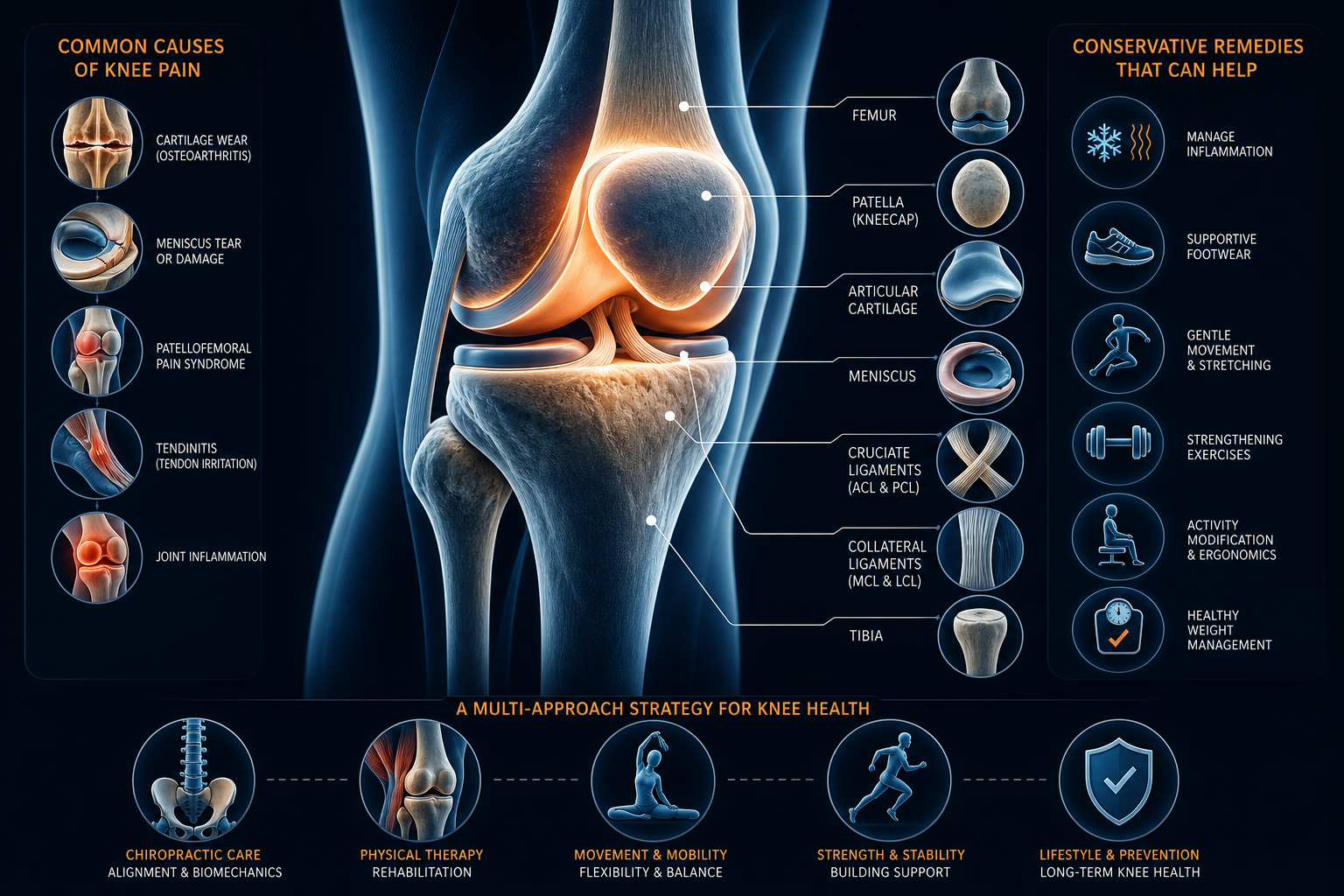
Knee pain is a symptom, not a diagnosis. The knee is a weight-bearing joint that depends on bones, cartilage, ligaments, tendons, muscles, and the kneecap moving together. Pain may be associated with overuse, a fall, a twist, training changes, arthritis-related irritation, tendon sensitivity, muscle weakness, poor hip or ankle mechanics, or swelling inside the joint.
If you are asking, “why does my knee hurt walking?” the answer can vary. Walking pain may come from irritated joint surfaces, reduced shock absorption, stiffness, altered gait, weak hip muscles, or a recent strain. A provider can help identify the likely contributors and determine whether conservative care is appropriate.
For a broader overview of symptoms and causes, visit Medximity’s knee pain condition page.
Knee Pain Remedies That May Help at Home
Home care may be reasonable for mild soreness that started after a known activity and is improving. These options are not a substitute for diagnosis, but they may help reduce irritation and keep the knee moving safely.
Relative Rest and Activity Modification
Rest does not always mean doing nothing. In many cases, the goal is to reduce activities that aggravate pain while keeping the joint gently active. You may need to temporarily limit deep squats, running hills, kneeling, jumping, or long stair sessions if they increase symptoms.
Low-impact movement such as short walks on level ground, gentle cycling, or pool walking may be better tolerated by some people. If pain increases during or after activity, scale back and consider seeing a provider.
Ice, Heat, and Compression
Cold packs may help after a flare-up or activity-related soreness, especially when the knee feels warm or irritated. Heat may feel better for stiffness, particularly before gentle stretching. Compression sleeves may provide a sense of support, though they do not correct the underlying cause of knee pain.
Supportive Footwear and Simple Ergonomic Changes
Shoes with stable cushioning may reduce stress through the knee for some people. At work or home, changing how often you squat, kneel, or stand in one position may also help. If symptoms are linked to your job, sport, or exercise routine, a physical therapist can assess movement patterns and recommend safer modifications.
Stretches for Stiff Painful Knees
Stretches for stiff painful knees should be gentle. Stretching should not cause sharp pain, catching, or a feeling that the knee may give way. If it does, stop and get assessed.
Gentle Heel Slides
Lie on your back or sit with your leg extended. Slowly slide your heel toward your body as far as comfortable, then return to the starting position. This may help maintain knee motion without loading the joint heavily.
Calf and Hamstring Stretching
Tight calves and hamstrings can affect knee mechanics. A gentle calf stretch against a wall or a seated hamstring stretch may be useful when performed without forcing the joint. Hold a mild stretch and breathe normally.
Quad Mobility Without Forcing the Knee
The quadriceps help control the kneecap. If bending the knee deeply is painful, avoid aggressive quad stretches. A provider can show modified positions that protect the joint while improving flexibility.
Exercises to Strengthen Knees Safely
Many knee pain programs focus on controlled strengthening of the quadriceps, hips, glutes, calves, and core. Stronger surrounding muscles may reduce excess stress on the knee and improve walking, stair climbing, and balance.
Quad Sets
Sit or lie with the leg straight. Gently tighten the thigh muscle by pressing the back of the knee toward the floor or bed. Hold briefly, then relax. This is often used early because it activates the quadriceps with minimal joint movement.
Straight Leg Raises
If you can tighten the thigh without pain, a straight leg raise may help build control. Keep the knee straight, lift the leg slowly, and lower with control. Stop if you feel sharp pain or significant strain.
Glute Bridges
Lie on your back with knees bent and feet flat. Lift the hips slightly while keeping the movement controlled. Glute strength can influence how the knee tracks during walking, squatting, and stairs.
Small-Range Sit-to-Stand
Using a chair, practice standing and sitting with a comfortable range of motion. Keep your knees aligned with your feet. This may help rebuild everyday strength, but it should be modified if pain increases.
For guided rehabilitation, see Medximity’s page on physical therapy treatment or browse physical therapy providers.
Pain When Bending Knee: Remedies and Warning Signs
Pain when bending knee remedies depend on the cause. If bending hurts because of stiffness, gentle range-of-motion work may help. If bending causes sharp pain, locking, swelling, or instability, the knee should be evaluated before you push through exercise.
If you can’t straighten knee without pain, notice the knee is locked, or cannot bear weight comfortably, seek professional evaluation promptly. These symptoms can occur with several types of knee problems and should not be self-diagnosed.
Knee Brace vs Physical Therapy
The question of knee brace vs physical therapy is common. A brace may provide short-term support, warmth, or confidence during certain activities. However, a brace does not strengthen muscles, improve balance, restore mobility, or address movement patterns that may contribute to knee pain.
Physical therapy is more active. A therapist may assess range of motion, strength, gait, balance, swelling, and functional tasks such as squatting or stairs. Treatment may include therapeutic exercise, hands-on mobility work, neuromuscular training, and a home program. In many cases, bracing and therapy can be used together when appropriate.
Treatment for Knee Pain Without Surgery
Many people look for treatment for knee pain without surgery. Conservative care may include physical therapy, progressive strengthening, mobility work, balance training, activity modification, ergonomic changes, supportive footwear recommendations, and education on pacing activity.
Chiropractic care may also be considered when knee pain is related to lower-body mechanics, hip mobility, ankle function, gait, or compensations from the low back or pelvis. A chiropractor may evaluate joint motion and movement patterns and may use conservative techniques such as soft tissue work, mobilization, exercise instruction, and coordination with other providers when needed. Learn more about chiropractic care and chiropractic adjustment on Medximity.
When to See a Provider for Knee Pain
Consider scheduling an evaluation if knee pain lasts more than a few days without improvement, returns repeatedly, limits walking or stairs, interferes with sleep, or prevents normal activities. You should also seek prompt care if you have significant swelling, deformity, fever, redness, a recent fall or twist, inability to bear weight, locking, or the feeling that the knee is giving way.
If you are searching for knee pain remedies near me, Medximity can help you compare local conservative care options. You can search for a physical therapist near you or find a chiropractor for knee pain near me.
What to Expect at a Knee Pain Appointment
A provider will usually ask when symptoms started, what movements aggravate pain, whether swelling or instability is present, and what activities matter most to you. The exam may include checking knee range of motion, strength, tenderness, balance, gait, hip and ankle mobility, and functional movement.
Your care plan may include education, hands-on treatment when appropriate, a home exercise program, activity adjustments, and a gradual return-to-activity plan. If your symptoms suggest a condition outside the provider’s scope or require further medical evaluation, they may recommend referral to an appropriate clinician.
How Long Does Knee Pain Last?
How long does knee pain last depends on the cause, severity, your activity level, and how well the knee responds to modified movement and care. Mild irritation may improve within days to a couple of weeks. More persistent pain, recurring flare-ups, or symptoms related to strength and movement deficits may take longer and often benefit from guided rehabilitation.
If your knee pain is not clearly improving, do not keep guessing. An individualized exam is the safest way to understand what may be contributing to your symptoms and which remedies are appropriate for you.
FAQ: Knee Pain Remedies
What helps knee pain naturally?
Gentle movement, relative rest, ice or heat, supportive footwear, mobility work, and strengthening may help some types of knee pain. The best approach depends on the cause, so persistent symptoms should be evaluated.
What is the best physical therapy for knee pain?
The best physical therapy for knee pain is individualized. It may include strengthening, range-of-motion work, gait training, balance exercises, hands-on mobility techniques, and a home program based on your exam.
Should I exercise if my knee hurts?
Light, pain-free movement may be helpful for some people, but sharp pain, swelling, locking, instability, or worsening symptoms are signs to stop and seek evaluation.
Can a chiropractor help with knee pain?
A chiropractor may help assess lower-body mechanics, joint mobility, and movement patterns that can contribute to knee stress. Care should be conservative and tailored to your symptoms.
When is knee pain serious?
Knee pain may need prompt evaluation if you cannot bear weight, cannot straighten the knee, have major swelling, notice deformity, develop fever or redness, or feel the knee giving way.