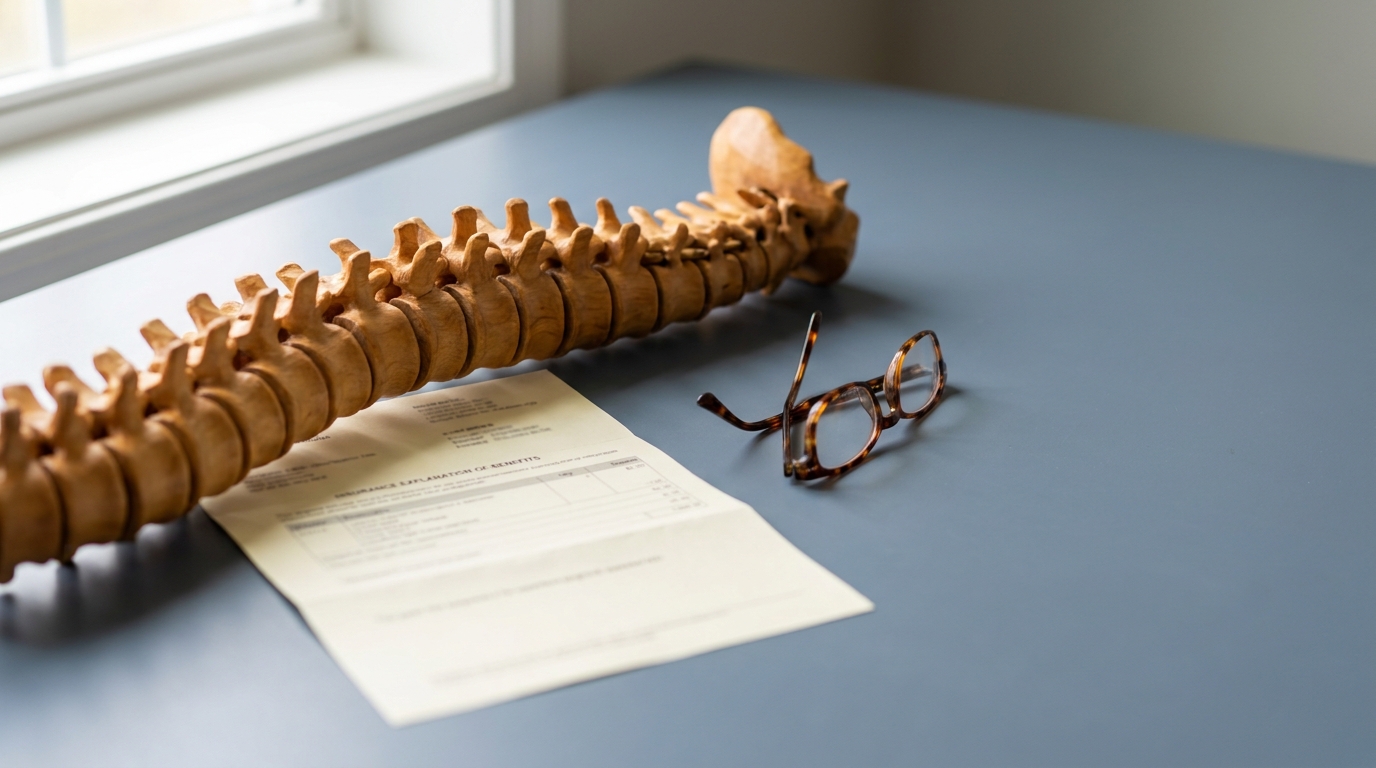
Blue Cross Blue Shield of Arizona Advantage — a Medicare Advantage (Part C) plan — does not typically cover non-surgical spinal decompression therapy as a standard benefit. Most Medicare Advantage plans, including BCBS Arizona Advantage, classify motorized spinal decompression as investigational or experimental, which places it outside the scope of routine coverage. That said, coverage decisions can vary by specific plan tier, and there are documented pathways — prior authorization, letters of medical necessity, and appeals — that may change the outcome for individual patients.
Does BCBS Arizona Advantage Cover Spinal Decompression?
The short answer: in most cases, no. BCBS Arizona Advantage follows Medicare coverage determinations as its baseline, and Original Medicare does not have a National Coverage Determination (NCD) that includes non-surgical spinal decompression as a covered service. Because Medicare Advantage plans must cover at least what Original Medicare covers — but are not required to cover more — spinal decompression without surgery typically falls outside the benefit structure.
Some patients confuse non-surgical spinal decompression with manual spinal traction, which is a different clinical service. Manual or mechanical traction performed by a physical therapist or chiropractor may be covered under certain conditions. The distinction matters because the CPT code your provider uses determines how the insurer classifies the treatment.
If you're dealing with lumbar disc herniation, degenerative disc disease, or chronic low back pain and considering decompression therapy, call the member services number on the back of your BCBS Arizona Advantage card before scheduling. Ask specifically whether your plan covers the CPT code your provider intends to bill — not just "spinal decompression" in general terms.
Medicare Advantage vs. Standard BCBS Coverage: What's the Difference?
This is where many Arizona patients get confused. BCBS Arizona Advantage is not the same as a standard commercial Blue Cross Blue Shield PPO or HMO plan purchased through an employer or the marketplace. Medicare Advantage is a government-funded program administered by a private insurer. The rules are different.
Key Distinctions
- Medicare Advantage plans must cover everything Original Medicare covers but may add supplemental benefits (vision, dental, fitness). They do not typically add coverage for services Medicare considers experimental.
- Commercial BCBS plans set their own medical policies. Some commercial plans have covered spinal decompression on a case-by-case basis, depending on the state and the policy's evidence review.
- Prior authorization requirements differ. Medicare Advantage plans often require pre-approval for services that fall outside standard benefit categories, while commercial plans may handle this differently.
When you ask "is spinal decompression covered by Medicare Advantage," the answer depends on whether Medicare itself recognizes the specific service and code. For motorized decompression tables (brand names like DRX9000, VAX-D), the answer has historically been no. For standard mechanical traction (CPT 97012), there may be limited coverage when medically justified.
Why Insurers Often Classify Spinal Decompression as Investigational
Insurance companies base coverage decisions on clinical evidence reviews. The reason spinal decompression often receives an investigational status insurance denial comes down to how insurers evaluate the published research.
The Evidence Gap
Multiple systematic reviews — including those referenced by Medicare's own advisory committees — have concluded that while non-surgical spinal decompression shows promise for conditions like lumbar radiculopathy and disc bulging at L4-L5 or L5-S1, the existing randomized controlled trials are limited in sample size and follow-up duration. Insurers typically require Level I evidence (large, multi-center RCTs) before reclassifying a treatment from experimental to covered.
- The distinction between "investigational" and "not effective" is significant. Investigational means the insurer considers the evidence insufficient to determine medical necessity at a population level — not that the treatment doesn't work for individual patients.
- Many providers report clinically meaningful outcomes with decompression therapy: reduced Visual Analog Scale (VAS) pain scores, improved range of motion in the lumbar spine, and decreased reliance on other interventions within 12-20 sessions over 4-6 weeks.
- Is non-surgical spinal decompression experimental insurance-wise? Technically, most plans label it investigational, which carries the same practical consequence: no coverage.
This classification affects patients directly. If your BCBS Arizona Advantage plan classifies the service as investigational, you bear 100% of the cost — typically $75-$150 per session, with protocols often calling for 15-24 sessions.
What CPT Codes Are Used for Spinal Decompression — and Why It Matters
CPT codes for spinal decompression insurance billing determine whether your claim gets paid, denied, or never processed at all. There is no dedicated CPT code for "non-surgical spinal decompression" as a distinct service. Providers typically bill under one of several codes:
CPT Code Description Medicare Advantage Coverage Likelihood 97012 Mechanical traction (supervised) Possible with documentation — most likely to be recognized S9090 Vertebral axial decompression (VAX-D) Rarely covered — S-codes are not recognized by Medicare 97140 Manual therapy techniques Covered when performed by eligible provider for approved diagnosis 98943 Chiropractic manipulative treatment, extraspinal Limited coverage for specific conditionsThe critical point: if your provider bills Blue Cross Blue Shield Arizona spinal decompression prior authorization under an S-code, Medicare Advantage plans will almost certainly deny it. S-codes are temporary codes not recognized under the Medicare fee schedule. CPT 97012 has a better chance of processing, but coverage still depends on diagnosis codes, treatment frequency, and plan-specific medical policy.
Ask your provider which code they intend to use before starting treatment. This single question can save you thousands of dollars.
How a Letter of Medical Necessity May Support Your Coverage Request
A Letter of Medical Necessity (LOMN) is a formal document your provider writes to the insurer explaining why a specific treatment is medically appropriate for your condition. It does not guarantee coverage, but it creates a documented clinical argument that the insurer must evaluate — and it becomes essential if you need to appeal a denial.
A strong letter of medical necessity for spinal decompression typically includes:
- Diagnosis and clinical history — specific disc levels affected (e.g., L4-L5 posterior disc bulge with left-sided radiculopathy), duration of symptoms, and prior treatments attempted.
- Imaging findings — MRI or X-ray results confirming structural pathology at the intervertebral disc, neural foramen, or spinal canal.
- Failed conservative care documentation — evidence that you've already tried chiropractic manipulation, physical therapy, or other approaches to lower back pain for a minimum of 4-6 weeks without adequate improvement.
- Treatment plan with measurable goals — specific session count, frequency, and functional outcome targets (e.g., "reduce VAS pain from 7/10 to 3/10 within 20 sessions").
- Clinical rationale — why decompression therapy is the appropriate next step given the patient's anatomy and response to prior care.
Your provider should be willing to write this letter. If they aren't familiar with the process, that's a signal to look for a provider who routinely works with insurance authorization.
What Documentation Your Provider Can Supply for Prior Authorization
Beyond the LOMN, a complete prior authorization package for Blue Cross Blue Shield Arizona spinal decompression typically requires:
- Copies of relevant MRI or CT imaging reports
- Office visit notes from the past 90 days showing clinical examination findings — straight leg raise test results, dermatomal sensory changes, motor strength grading
- Treatment logs from prior conservative care (dates, interventions, and documented outcomes)
- The specific CPT and ICD-10 codes the provider plans to bill
- Provider credentials and NPI number
If your provider treats conditions like sciatic pain regularly, they likely have experience assembling this documentation. Practices that specialize in spinal conditions tend to have staff dedicated to insurance verification and prior authorization — a significant advantage when navigating Medicare Advantage requirements.
Questions to Ask BCBS Arizona Advantage Before Scheduling Treatment
Before you commit to a treatment plan, call your insurer and ask these specific questions. Write down the representative's name, the date, and a reference number for the call.
- Is CPT code 97012 (mechanical traction) covered under my specific BCBS Arizona Advantage plan for ICD-10 code [your diagnosis]?
- Does my plan classify non-surgical spinal decompression as investigational, experimental, or excluded?
- Is prior authorization required? If yes, what documentation is needed and what is the turnaround time?
- Is there a visit limit per calendar year for traction or manual therapy services?
- Does my plan require a referral from my primary care provider before seeing a chiropractor or physical therapist?
- If the claim is denied, what is the formal appeals process and deadline for filing?
These questions to ask insurance before spinal decompression treatment protect you from surprise bills. A verbal confirmation is not a guarantee of payment, but it gives you a documented baseline if a dispute arises later.
Conservative Alternatives That May Have Stronger Coverage Under Medicare Advantage
If your BCBS Arizona Advantage plan denies decompression therapy, several Medicare Advantage covered alternatives to spinal decompression may address similar conditions — and carry stronger coverage:
Treatment Typical Coverage Under Medicare Advantage Common Duration Chiropractic spinal manipulation Covered for manual manipulation of the spine (limited to subluxation correction) 8-12 sessions over 4-6 weeks Physical therapy Covered with annual cap (currently therapy cap exceptions process applies) 12-20 sessions over 6-8 weeks Acupuncture for chronic low back pain Covered — Medicare added coverage in 2020 for cLBP specifically Up to 12 sessions in 90 days, extendable to 20 Manual traction (CPT 97012) May be covered as part of a PT or chiropractic treatment plan Included within therapy sessionsChiropractic manipulation targeting the lumbar facet joints, sacroiliac joint, and associated paraspinal musculature can reduce compression on affected nerve roots through restored segmental mobility. For patients with spinal subluxations contributing to their symptoms, manipulation may address the underlying biomechanical dysfunction.
Many patients with disc-related low back pain also experience referred head pain or cervicogenic symptoms that respond well to conservative spinal care.
A Home Protocol While You Navigate Coverage
While sorting out insurance, you can perform a basic decompression stretch at home. Lie face-up on the floor with your calves resting on the seat of a chair, hips and knees both at 90 degrees. Hold for 10-15 minutes, once or twice daily. This 90/90 position reduces intradiscal pressure in the lumbar spine by approximately 25% compared to standing. It is not a replacement for clinical decompression, but it provides temporary relief for most patients with L4-L5 or L5-S1 disc involvement.
Red flag: If you experience sudden loss of bladder or bowel control, progressive weakness in both legs, or numbness in the perineal region (saddle anesthesia), seek emergency medical care immediately. These are signs of cauda equina syndrome, which requires urgent intervention.
If Your Coverage Request Is Denied: Understanding the Appeals Process
A denial is not the final word. Medicare Advantage plans are required by federal law to offer a structured appeals process. Here is how to appeal an insurance denial for spinal decompression under BCBS Arizona Advantage:
- Level 1 — Plan Reconsideration: File within 60 days of the denial. Submit your LOMN, imaging, and treatment records. The plan must respond within 30 days (72 hours for expedited requests).
- Level 2 — Independent Review Entity (IRE): If the plan upholds the denial, the case automatically goes to an independent reviewer not affiliated with BCBS. Response within 30 days.
- Level 3 — Office of Medicare Hearings and Appeals (OMHA): Available if the amount in dispute meets the threshold (currently around $180). You may present your case before an Administrative Law Judge.
- Levels 4-5: Medicare Appeals Council review and federal district court, respectively — rarely needed for individual treatment denials.
Most patients who appeal with strong documentation resolve the issue at Level 1 or Level 2. Your provider's office should assist with compiling the appeal package. If they have experience with complex conditions like fibromyalgia and similar chronic pain presentations, they likely understand the documentation standards insurers expect.
What to Do Next
Start by calling your BCBS Arizona Advantage plan with the questions listed above. Get a clear answer — in writing if possible — about whether your specific plan covers the CPT code your provider intends to use.
If decompression isn't covered, ask your provider about chiropractic manipulation, physical therapy, or acupuncture as alternatives with established Medicare Advantage coverage. These aren't inferior treatments — they target the same spinal structures through different mechanisms, and many patients with disc herniation and radiculopathy respond well to a 6-8 week course of conservative care.
If you need a chiropractor or rehabilitation provider in Arizona who accepts BCBS Arizona Advantage and has experience navigating prior authorization, find a chiropractor near you through the Medximity directory. You can also browse providers by specialty and location to find a practice equipped to handle insurance documentation from day one.
Coverage questions shouldn't keep you from getting care. The right provider will help you build a treatment plan — and a documentation trail — that gives you the best chance of getting your insurer to participate in covering it.


