Posture correction is a conservative approach to improving body alignment, movement habits, strength, flexibility, and ergonomics. For many people, poor posture is not simply a matter of “standing up straight.” It can involve muscle endurance, joint mobility, work setup, stress, vision habits, breathing patterns, old injuries, and the amount of time spent sitting or looking down at a screen.
If you are searching for posture correction because of neck pain, back discomfort, rounded shoulders, or fatigue while sitting upright, a qualified provider can help identify what may be contributing to your posture and build a plan that fits your body. Care may include chiropractic assessment, physical therapy, posture correction exercises at home, ergonomic changes, and education about movement throughout the day.
You can use Medximity to find a posture correction chiropractor near you or compare physical therapists for posture correction who focus on conservative care.
What Is Posture Correction Therapy?
Posture correction therapy is a non-surgical, movement-based approach that helps patients understand and improve the way they hold, move, and support their body. The goal is not to force everyone into one “perfect” position. Healthy posture usually means being able to move comfortably between positions while keeping the spine, shoulders, hips, and head supported.
Depending on the provider and your symptoms, posture correction may include:
- Postural assessment while standing, sitting, walking, or performing work-related movements
- Mobility work for the neck, upper back, shoulders, hips, or ankles
- Strengthening for the deep neck flexors, shoulder blade muscles, core, glutes, and postural stabilizers
- Stretching for tight areas such as the chest, hip flexors, hamstrings, or upper trapezius
- Manual therapy, chiropractic adjustment, or soft-tissue techniques when appropriate
- Ergonomic coaching for desk, car, phone, or sleep positions
- Home exercises designed to reinforce better movement habits
Some patients seek care because of appearance, such as rounded shoulders or a forward head position. Others come in because of symptoms like neck pain from bad posture, headaches, stiffness, shoulder tension, or back pain when sitting upright. A provider can help determine whether posture is likely contributing to symptoms or whether another issue may need evaluation.
Why Is My Posture Getting Worse?
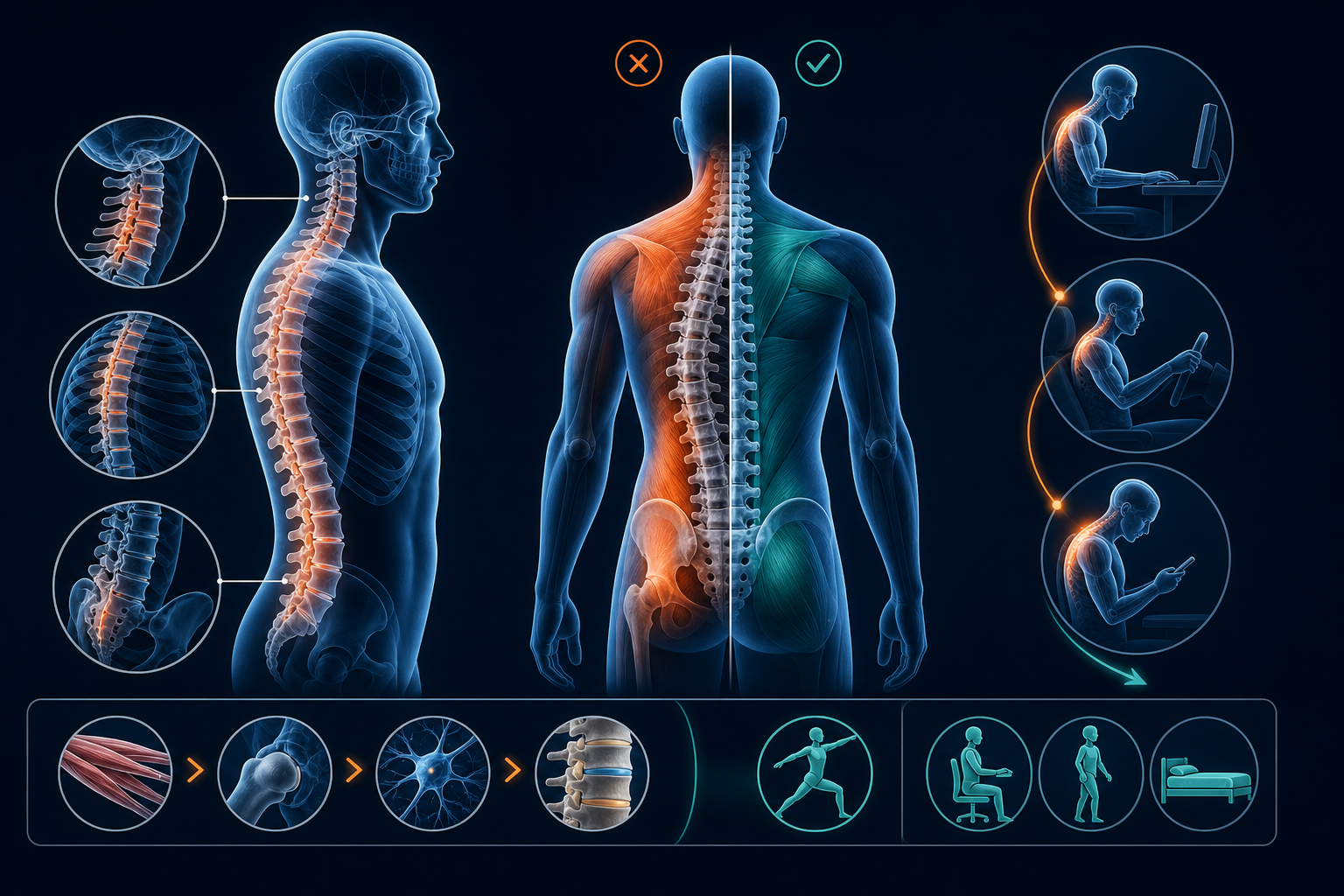
Posture can change gradually. Many people notice it after months or years of desk work, phone use, commuting, caregiving, lifting, studying, or recovering from an injury. In many cases, posture gets worse because the body adapts to the positions it uses most often.
Common reasons posture may change
- Prolonged sitting: Sitting for long periods can reduce hip mobility and challenge the endurance of the back and core muscles.
- Screen and phone habits: Looking down frequently may contribute to forward head posture and upper back rounding.
- Weak postural muscles: The muscles that support the neck, shoulder blades, spine, and pelvis may fatigue if they are not trained regularly.
- Muscle tightness: Tight chest muscles, hip flexors, or upper back muscles can influence how the body rests and moves.
- Pain avoidance: If you had an injury, your body may adopt guarded movement patterns that persist after the initial pain improves.
- Stress and breathing patterns: Stress may increase shoulder elevation, jaw tension, shallow breathing, and neck muscle overuse.
- Poor ergonomic setup: A monitor that is too low, a chair without support, or a keyboard placed too far away can encourage slouching.
Posture is also affected by sleep quality, activity level, footwear, vision, and overall health. If your posture is changing quickly, is associated with weakness or numbness, or is accompanied by significant pain, it is wise to consult a qualified healthcare provider.
Neck Pain From Bad Posture: What May Be Happening?
Neck pain from bad posture is often linked to sustained positions rather than one single movement. For example, when the head rests forward for long periods, the muscles at the back of the neck and upper shoulders may work harder to support it. Over time, some patients report soreness, stiffness, headaches, or a heavy feeling through the upper back.
This does not mean posture is always the only cause of neck pain. Disc irritation, joint sensitivity, muscle strain, nerve involvement, stress, and other factors may also contribute. A clinician can evaluate your symptoms and help decide whether conservative care is appropriate.
Posture-focused care may include neck mobility exercises, strengthening of the deep neck flexor muscles, upper back strengthening, shoulder blade control, and changes to screen height or work habits. For some patients, chiropractic adjustment or manual therapy may help improve comfort and mobility as part of a broader care plan.
Back Pain When Sitting Upright: Why It Can Happen
Some people are surprised that sitting “upright” makes their back hurt. This can happen when the body is not used to sustaining that position, when the chair does not support the spine, or when someone overcorrects into a stiff, braced posture. Good posture should not feel like holding a military pose all day.
Back pain when sitting upright may be associated with limited hip mobility, weak trunk endurance, sensitive spinal joints, muscle fatigue, or a chair setup that does not fit your body. A provider may look at how your pelvis, lumbar spine, ribs, shoulders, and head position interact while you sit.
Often, the solution is not to sit perfectly still. Many patients do better with a supportive setup plus frequent position changes. Standing, walking briefly, changing chair height, using lumbar support, or alternating tasks may reduce strain for some people.
How Do Chiropractors Check Posture?
If you are wondering how chiropractors check posture, the process typically starts with a history and physical assessment. Your chiropractor may ask about your symptoms, work habits, sleep position, exercise routine, prior injuries, and what activities make discomfort better or worse.
A posture assessment may include:
- Observing head, shoulder, rib, pelvis, knee, and foot position
- Checking spinal and extremity range of motion
- Assessing muscle strength, balance, and movement control
- Looking at gait, squat mechanics, or work-specific movements
- Palpating joints and soft tissues for tenderness or restriction
- Screening for signs that may require referral or additional evaluation
Some offices use photos, posture grids, or digital tools to track changes. These can be helpful for education, but posture findings should be interpreted in context. A visible asymmetry does not always mean there is a problem, and symptoms do not always match posture perfectly.
Physical Therapy for Posture Correction
Physical therapy for posture correction often emphasizes movement retraining, strengthening, flexibility, and functional habits. A physical therapist may evaluate how you move during daily tasks and then teach exercises that address specific limitations or muscle endurance issues.
A posture-focused physical therapy plan may include:
- Thoracic mobility exercises for upper back stiffness
- Scapular strengthening for rounded shoulders
- Core and hip strengthening for pelvic control
- Neck stabilization for forward head posture
- Balance and gait work if posture changes affect walking
- Education on lifting, sitting, driving, and computer setup
Because posture is a habit as much as a position, consistency matters. Many patients benefit from short, repeatable exercises and daily cues rather than long routines they cannot maintain. To learn more about rehab-based care, see Medximity’s guide to physical therapy.
Posture Correction Exercises at Home
Posture correction exercises at home may help support better alignment and reduce muscle fatigue for some people. These exercises should feel controlled and comfortable. Stop and consult a provider if an exercise increases pain, causes numbness or tingling, or feels unsafe for your condition.
Common home exercises a provider may recommend
- Chin tucks: Gently glide the head backward as if making a “double chin,” keeping the eyes level. This may help activate deep neck flexor muscles.
- Wall angels: Stand with your back near a wall and slowly move the arms upward and downward while keeping the ribs relaxed. This can support shoulder and upper back mobility.
- Doorway chest stretch: Place the forearms on a doorway and gently step forward to stretch the chest. Avoid forcing the shoulders.
- Thoracic extensions: Use a chair back or foam roller to gently extend the upper back. This may help counter prolonged slouching.
- Scapular squeezes: Draw the shoulder blades slightly back and down without shrugging. Hold briefly, then relax.
- Hip flexor stretch: A half-kneeling stretch may help reduce tightness in the front of the hip from prolonged sitting.
- Glute bridges: Lying on your back with knees bent, gently lift the hips to strengthen the glutes and posterior chain.
Home exercises work best when they are matched to your needs. For example, a person with stiff shoulders may need a different plan than someone with low back fatigue or balance concerns.
Best Ergonomic Setup for Posture
The best ergonomic setup for posture is one that helps you work comfortably without forcing your body into a rigid position. Ergonomics should reduce strain and make movement easier throughout the day.
Desk and chair basics
- Keep the monitor near eye level so you do not need to look down for long periods.
- Place the keyboard and mouse close enough that your shoulders can stay relaxed.
- Use a chair that supports the natural curve of the low back, or consider a small lumbar roll.
- Keep feet supported on the floor or a footrest.
- Avoid perching at the edge of the chair for long stretches unless advised for a specific reason.
- Take brief movement breaks. Even a well-designed workstation cannot replace regular movement.
Phone and laptop habits matter too. If you use a laptop for long hours, an external keyboard and mouse may allow you to raise the screen. For more practical workstation ideas, read Medximity’s article on ergonomics and musculoskeletal comfort.
Posture Brace vs Physical Therapy
Many people compare a posture brace vs physical therapy when they want a quick fix for rounded shoulders or slouching. A brace may provide a reminder to change position, and some people find short-term use helpful. However, a brace does not strengthen the muscles that support posture, improve mobility, or address work habits on its own.
Physical therapy and chiropractic care focus on the reasons posture may be difficult to maintain. That may include weakness, stiffness, pain, poor movement control, or environmental strain. In many cases, active care and education are more useful over time than relying only on an external support.
If you are considering a brace, ask a provider whether it is appropriate for your situation and how long it should be used. Wearing a brace too often may not be ideal for everyone.
How Long Does Posture Correction Take?
How long posture correction takes varies. Some people notice improved awareness or comfort within a few weeks of consistent changes. Strength, endurance, and movement habits often take longer. Factors include your age, activity level, symptoms, work demands, prior injuries, exercise consistency, and how long the posture pattern has been present.
For mild posture concerns, small changes to screen height, movement breaks, and home exercises may help relatively quickly. For persistent pain, long-standing stiffness, or posture changes after injury, a structured care plan may take several weeks or months. A provider can set realistic goals and track progress without promising a specific outcome.
When to See a Provider for Poor Posture
Consider seeing a chiropractor, physical therapist, or other qualified healthcare provider if posture concerns are affecting comfort, work, sleep, exercise, or daily activities. You should also seek professional evaluation if symptoms are worsening, recurring, or not improving with basic changes.
Prompt evaluation is especially important if you have pain with numbness, tingling, weakness, balance changes, unexplained weight loss, fever, pain after trauma, or symptoms that interfere with normal function. These symptoms do not always mean something serious is present, but they should be assessed by a qualified professional.
If you are looking for natural treatment for poor posture, conservative care may include exercise, ergonomic changes, manual therapy, chiropractic care, physical therapy, and education. Medximity can help you compare local options, including chiropractors who evaluate posture and spinal mobility and physical therapists who provide posture-focused rehabilitation.
What to Expect at Your First Posture Correction Visit
Your first visit will usually include a conversation about your goals, symptoms, daily routine, and medical history. The provider may examine posture, range of motion, muscle strength, joint mobility, flexibility, and movement patterns. They may also ask you to demonstrate how you sit, stand, lift, walk, or use a workstation.
After the evaluation, your provider may explain what they found and recommend a care plan. That plan might include in-office treatment, home exercises, ergonomic adjustments, and follow-up visits to reassess progress. The most helpful plans are usually specific, measurable, and realistic for your schedule.
FAQs About Posture Correction
What is posture correction therapy?
Posture correction therapy is a conservative approach that may include exercise, mobility work, manual therapy, ergonomic changes, and movement education to help improve how your body supports itself during daily activities.
Can bad posture cause neck pain?
Poor posture may contribute to neck pain for some people, especially when sustained screen or phone positions increase muscle strain. Neck pain can have several causes, so a provider can help evaluate your specific symptoms.
Why does my back hurt when I sit up straight?
Back pain when sitting upright may occur if your muscles fatigue, your chair does not support you well, or you are overcorrecting into a stiff position. A provider can assess sitting mechanics and suggest adjustments.
Are posture correction exercises at home enough?
Home exercises may help, especially for mild posture concerns. If you have pain, recurring symptoms, numbness, weakness, or difficulty with daily activities, it is best to consult a qualified provider for a personalized plan.
How long does posture correction take?
Timing varies. Some people notice improved awareness or comfort within weeks, while strength and habit changes may take longer. Consistency, symptom severity, work demands, and underlying mobility or strength issues all matter.
Should I choose a posture brace or physical therapy?
A posture brace may provide a short-term reminder, but physical therapy addresses strength, mobility, movement patterns, and ergonomics. Ask a provider whether a brace is appropriate for your situation.