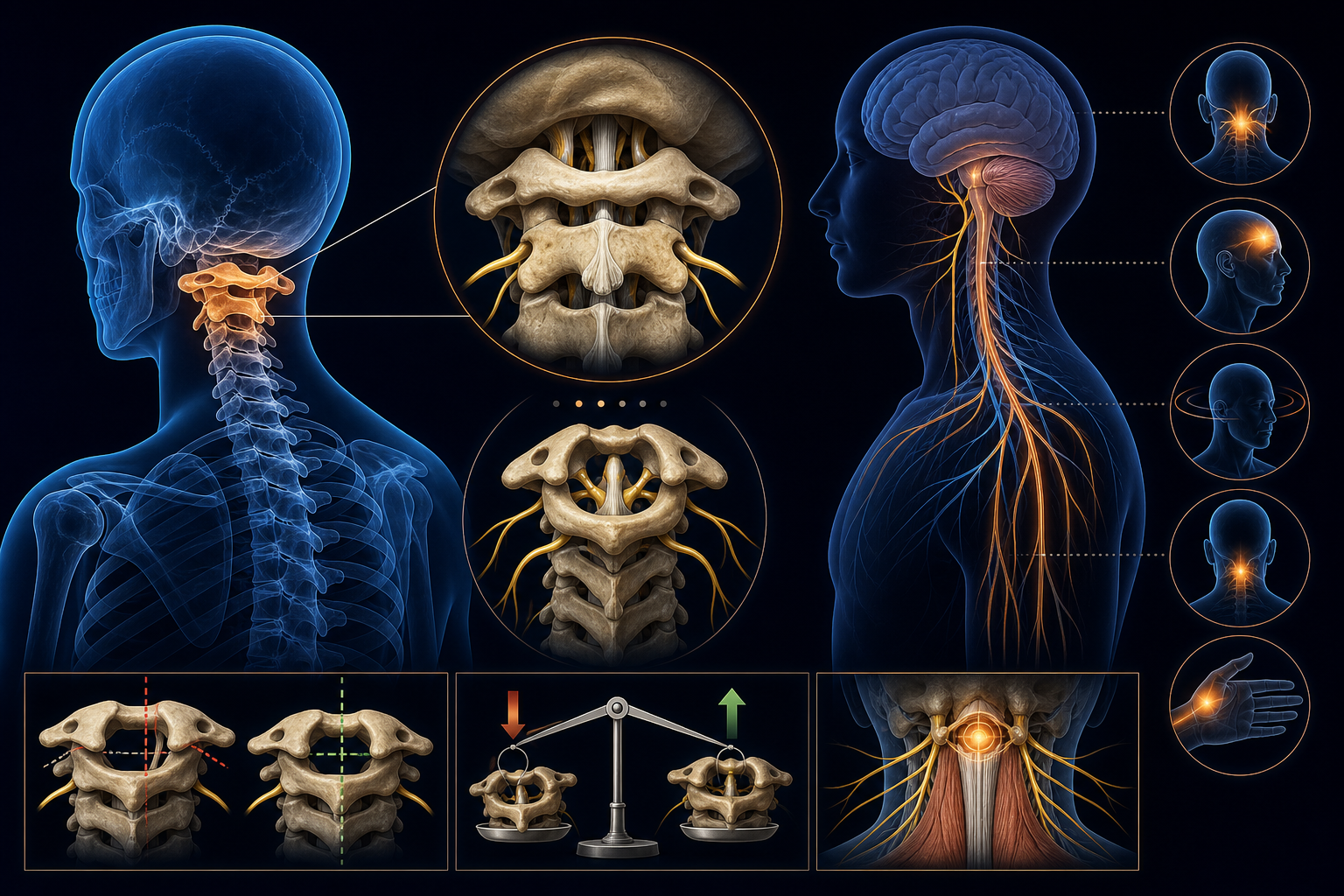
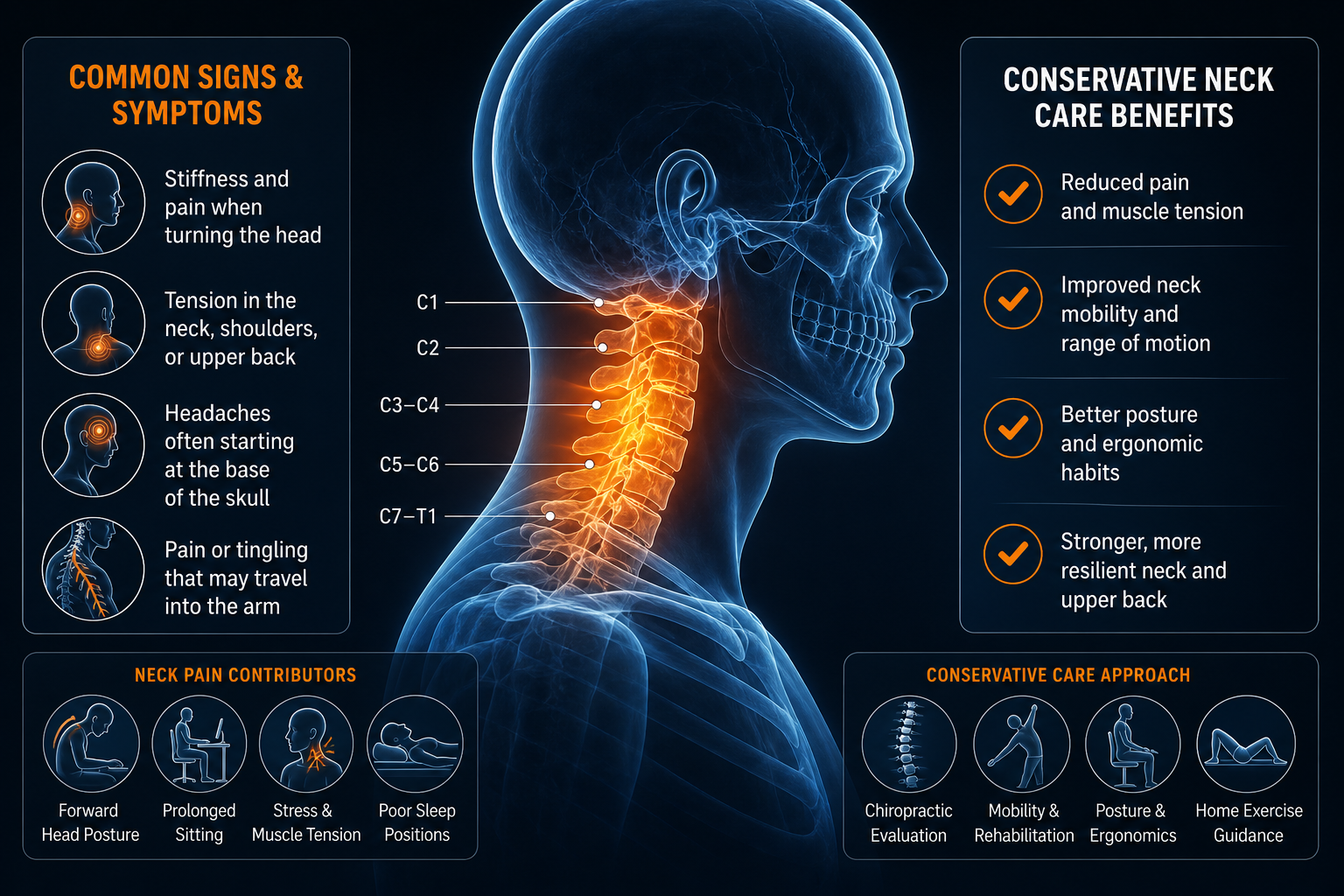
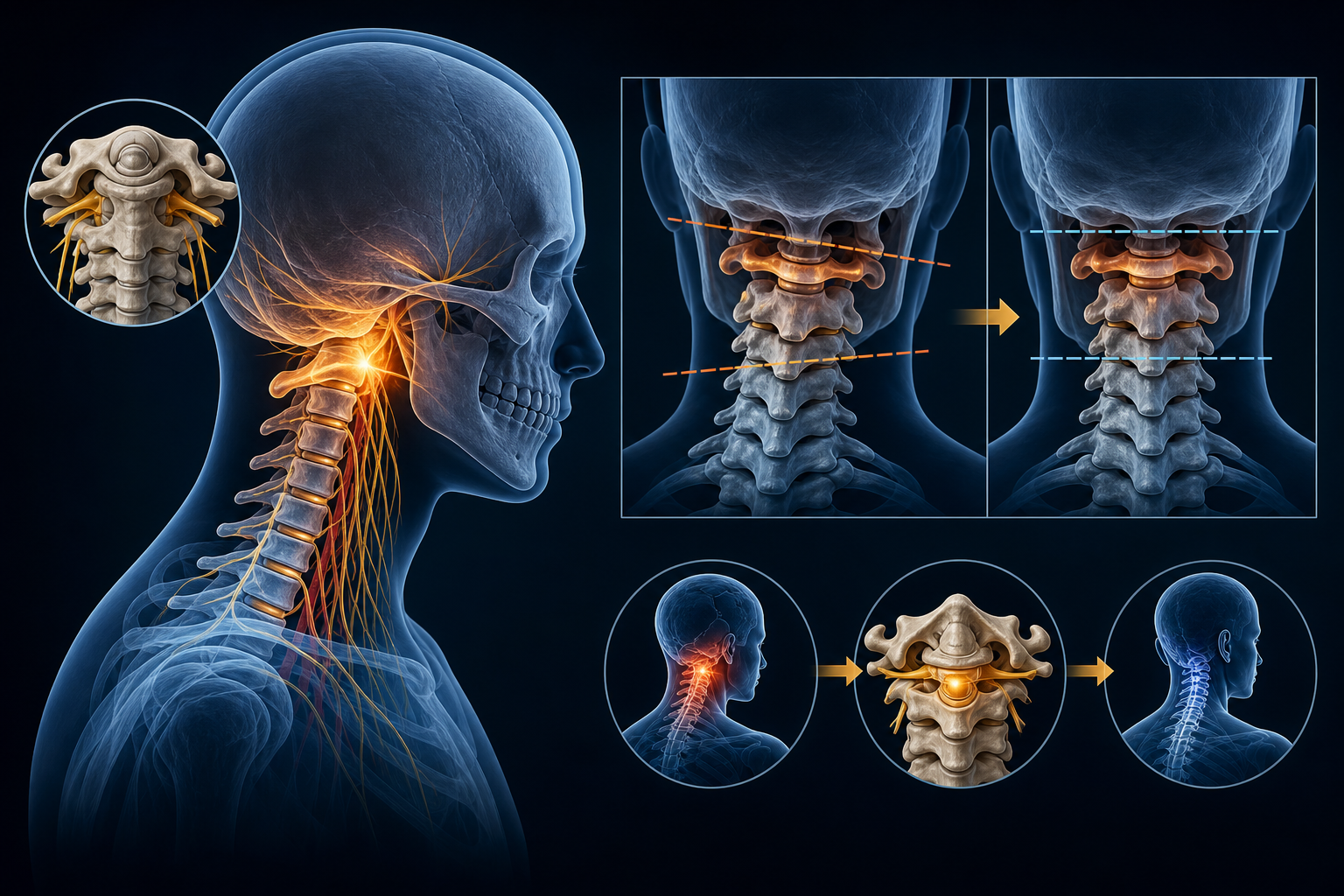
Spondylosis, often referred to as spinal osteoarthritis, is a degenerative condition that affects the spine, leading to pain and stiffness. It commonly impacts the cervical (neck), thoracic (mid-back), and lumbar (lower back) regions. Chiropractic care offers non-invasive solutions to manage and alleviate the symptoms of spondylosis, focusing on spinal alignment and overall well-being.
Understanding Spondylosis
Spondylosis involves the wear and tear of the spinal discs and joints. It is primarily seen in older adults but can occur in younger individuals due to genetic factors, injury, or lifestyle.
Key Characteristics
- Disc Degeneration: The spinal discs lose hydration and elasticity, leading to reduced disc height and potential herniation.
- Bone Spurs: These are bony growths that develop along the edges of bones, potentially causing nerve compression.
- Joint Degeneration: The facet joints in the spine may degenerate, causing pain and reduced mobility.
Common Symptoms
- Chronic pain in the affected region
- Stiffness and limited range of motion
- Numbness or tingling in the limbs (if nerves are affected)
- Muscle weakness
Chiropractic Approach to Spondylosis
1. Spinal Adjustments:
Chiropractors use spinal adjustments to improve spinal alignment. These adjustments can reduce pressure on the nerves, enhance mobility, and decrease pain. Techniques such as the diversified method, which involves quick, precise thrusts, are commonly used.
2. Flexion-Distraction Technique:
This technique is particularly effective for lumbar spondylosis. It involves the use of a specialized table that gently stretches the spine, reducing pressure on the discs and nerves.
3. Manual Therapy:
Manual therapy includes a range of techniques such as:
- Soft Tissue Manipulation: Helps in relieving muscle tension and improving blood flow.
- Myofascial Release: Targets the connective tissue (fascia) to release tension and improve mobility.
4. Physiotherapy and Rehabilitation:
Chiropractors often incorporate physiotherapy exercises tailored to the patient's condition. These exercises strengthen the muscles supporting the spine, enhance flexibility, and prevent further degeneration.
5. Lifestyle and Ergonomic Advice:
Advice on maintaining proper posture, ergonomic adjustments at work, and daily activities can prevent exacerbation of spondylosis symptoms. Recommendations may include:
- Proper lifting techniques
- Ergonomic office setups
- Stretching routines to reduce stiffness
6. Nutritional Counseling:
Nutrition plays a crucial role in managing inflammation and supporting overall spinal health. Chiropractors may recommend dietary adjustments, supplements, and hydration strategies to support recovery and maintenance.
Research Insights
Spinal Adjustments and Pain Relief:
Studies have shown that spinal adjustments can significantly reduce pain and improve function in patients with spondylosis. The mechanical adjustment of the spine helps in realigning vertebrae, reducing nerve compression and inflammation
Role of Manual Therapy:
Manual therapy techniques such as soft tissue manipulation and myofascial release have been found to effectively reduce muscle tension and improve blood circulation, which is critical in managing spondylosis symptoms
Conclusion
Chiropractic care offers a holistic, non-invasive approach to managing spondylosis. Through spinal adjustments, manual therapy, physiotherapy, lifestyle modifications, and nutritional counseling, patients can experience significant relief from pain and improved quality of life. Early intervention and a comprehensive care plan tailored to individual needs are essential for optimal outcomes.
For more detailed information and personalized chiropractic care, visit Medximity.com