A back pain chiropractor in Sarasota can identify whether your lumbar discomfort stems from a facet joint restriction, a disc bulge pressing on the L4-L5 nerve root, or a chronically tight quadratus lumborum — and then treat it without a scalpel or a prescription pad. Roughly 80% of adults experience back pain at some point, and in a city where golf swings, paddleboard sessions, and desk-bound remote work all compete for your spine's attention, Sarasota residents deal with it more often than they should have to.
What Causes Back Pain — and Why It Flares Up So Often
Back pain rarely appears out of nowhere. Most episodes trace back to a handful of mechanical causes that accumulate over weeks or months before a single awkward movement triggers a flare-up.
The Usual Structural Culprits
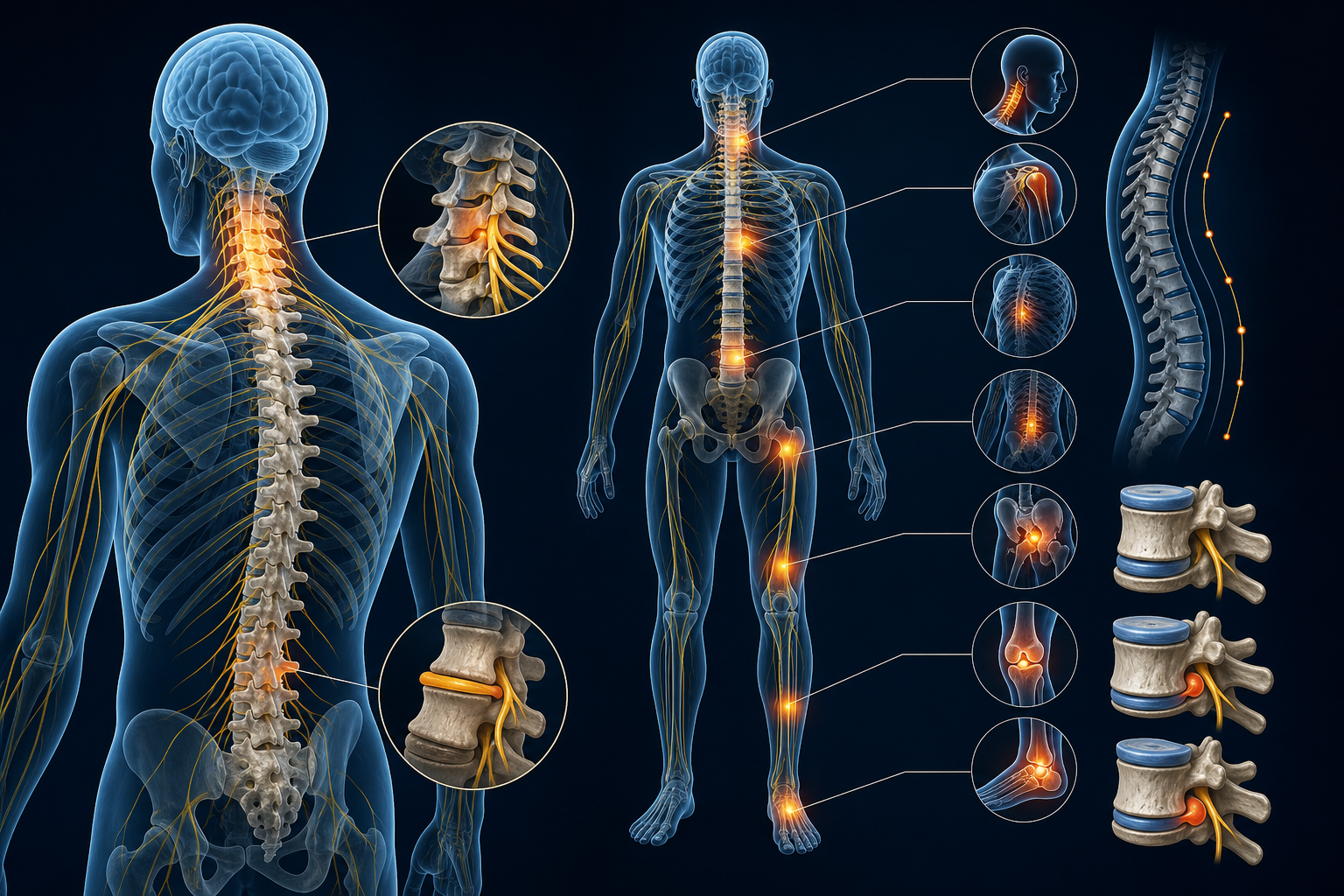
- Disc irritation: The intervertebral discs between L4-L5 and L5-S1 absorb the majority of compressive load when you sit, bend, or twist. Prolonged sitting — common in Sarasota's growing remote-work population — dehydrates these discs and makes them vulnerable to bulging.
- Facet joint dysfunction: The paired zygapophyseal (facet) joints along the posterior spine guide movement. When they lock or become inflamed, you get that sharp, one-sided low-back catch that worsens with extension.
- Sacroiliac (SI) joint misalignment: The SI joint connects the sacrum to the ilium. Uneven loading — one-sided sports like golf, or carrying a child on the same hip — can shift it enough to cause deep, achy pain near the belt line.
- Muscular trigger points: The erector spinae group, the multifidus, and the quadratus lumborum develop painful trigger points from repetitive strain or poor posture.
What causes lower back pain to flare up is usually a combination of cumulative tissue stress plus one acute event: picking up a suitcase, a hard sneeze, or even just bending to tie a shoe. The tissue was already compromised; the movement was the last straw.
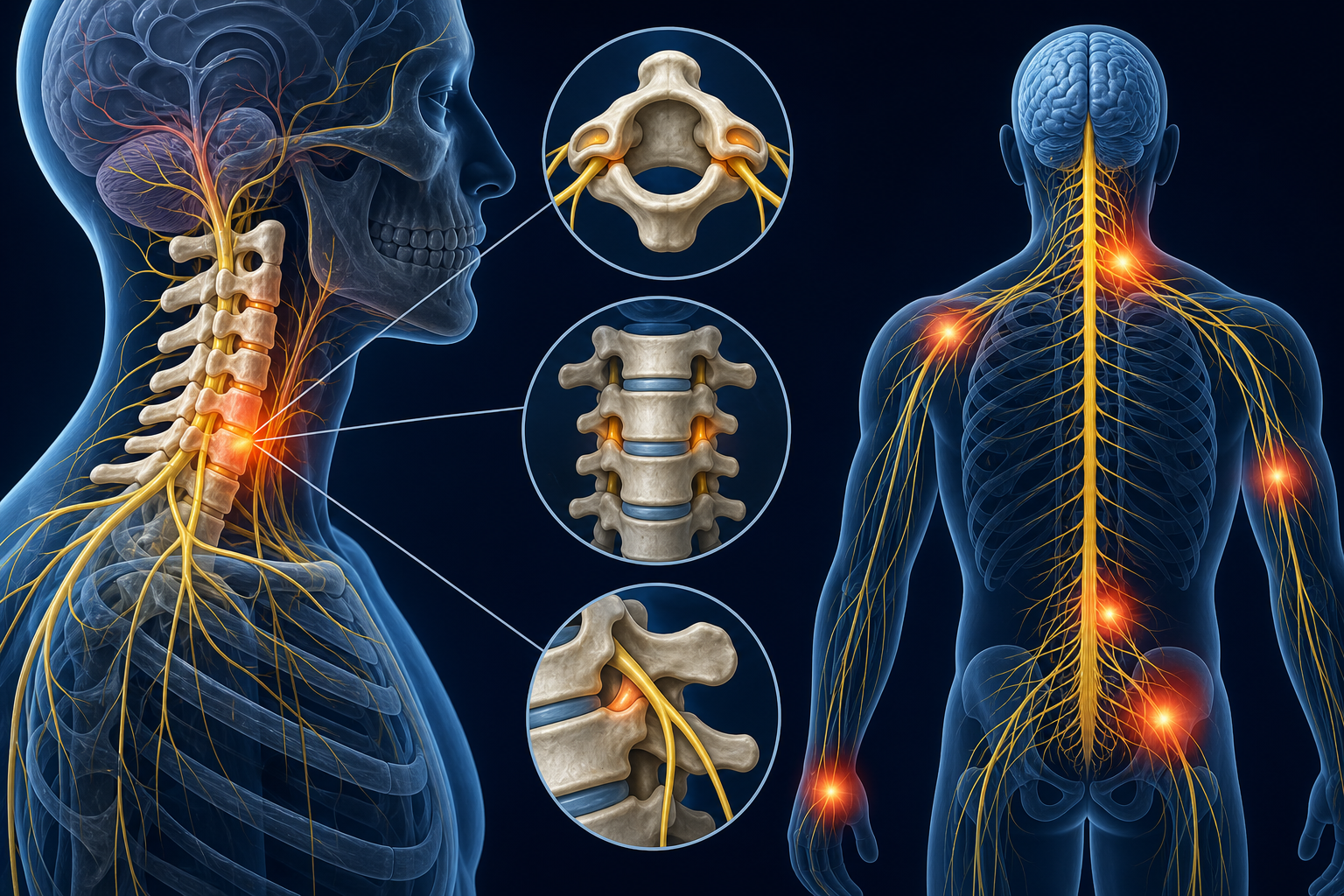
If your back pain radiates into the buttock or down the leg, that pattern often points to sciatic nerve involvement, which responds well to targeted chiropractic and rehab protocols.
Is Chiropractic Care Good for Back Pain?
Yes — and the research is specific. A 2018 study in JAMA Network Open found that spinal manipulation reduced low-back pain intensity and improved function in active-duty adults over six weeks. A 2017 JAMA systematic review concluded that spinal manipulation produces "modest improvements in pain and function" for acute low-back pain, comparable to other recommended first-line approaches.
How long does it take chiropractic to fix back pain? For acute episodes (less than 6 weeks), most patients report meaningful improvement within 4–6 visits over 2–3 weeks. Chronic back pain — lasting longer than 12 weeks — typically requires 8–12 sessions, sometimes combined with therapeutic exercise and soft-tissue work, with reassessments every 4 weeks.
Research published in The Spine Journal found that 73% of participants rated chiropractic treatment as "very helpful" for low-back pain, compared to 17% who said the same about prescription approaches.
For patients searching for back pain treatment without surgery in Sarasota, chiropractic care is one of the strongest conservative options — particularly when combined with active rehab strategies that support long-term healing.
What Happens at Your First Chiropractic Appointment?
Walk in expecting about 45–60 minutes. Here is the typical sequence at a Sarasota chiropractic practice:
- Health history intake: You fill out forms covering past injuries, current symptoms, daily activities, and what makes the pain better or worse. Be specific — "pain when I stand up from sitting for more than 30 minutes" is far more useful than "my back hurts."
- Orthopedic and neurological exam: The chiropractor tests your range of motion (ROM), muscle strength, reflexes, and sensation. Specific provocative tests — like the straight-leg raise for disc involvement or Kemp's test for facet joints — help narrow the diagnosis.
- Imaging if warranted: Not every patient needs X-rays. But if there is a history of trauma, neurological deficits, or your symptoms do not match the exam findings, imaging helps rule out fractures or significant structural changes.
- Report of findings: The provider explains what they found, what is causing your pain, and lays out a treatment plan with a specific visit count and timeline. If you hear "come three times a week indefinitely," consider getting a second opinion.
- First treatment: Many chiropractors begin treatment on the first visit with a spinal adjustment and possibly soft-tissue work, so you leave with at least some relief rather than just a diagnosis.
Common Chiropractic Techniques Used for Back Pain
Not all chiropractic adjustments are the same. Sarasota chiropractors use a range of evidence-based approaches depending on your specific condition, your body type, and your comfort level.
Spinal Manipulation vs. Mobilization
A chiropractic adjustment for lower back pain relief typically involves a high-velocity, low-amplitude (HVLA) thrust to a restricted spinal segment. You may hear a pop — that is a gas release from the joint capsule, not bone cracking. For patients who prefer a gentler approach, spinal mobilization uses slow, graded pressure to restore movement without the thrust.
Spinal Manipulation vs. Physical Therapy for Back Pain
Factor Spinal Manipulation (Chiropractic) Physical Therapy Primary mechanism Restores joint motion, modulates pain signaling via mechanoreceptors Strengthens stabilizing muscles, retrains movement patterns Best for Acute joint restrictions, facet dysfunction, SI joint misalignment Post-acute rehab, muscle weakness, balance/coordination deficits Typical duration 4–8 visits over 2–4 weeks for acute cases 6–12 visits over 4–8 weeks Speed of initial relief Often noticeable within 1–2 visits Gradual improvement over 2–3 weeks Works best when combined with Therapeutic exercise, ergonomic changes Manual therapy, spinal manipulationThe honest answer: these approaches are complementary, not competing. Many Sarasota practices — and many chiropractors — integrate both manual therapy and rehabilitative exercise in the same visit. If yours does not, and your pain persists past the acute phase, ask about adding sport-specific rehab or therapeutic exercise to your plan.
Additional Techniques You May Encounter
- Flexion-distraction (Cox technique): A specialized table gently distracts the lumbar spine while the provider applies targeted pressure. This is one of the most studied protocols for disc-related low-back pain and is particularly effective for L4-L5 and L5-S1 disc bulges.
- Instrument-assisted adjusting (Activator): A spring-loaded device delivers a controlled impulse to a specific vertebra. Preferred by patients who dislike manual twisting.
- Myofascial release and trigger point therapy: Hands-on soft-tissue work targeting the erector spinae, piriformis, or quadratus lumborum to reduce muscle spasm and improve spinal mobility before the adjustment.
How to Choose the Right Chiropractor in Sarasota
Sarasota has dozens of chiropractic practices, and they are not interchangeable. Here is how to choose a chiropractor near Sarasota, Florida, who is a good match for your specific back problem.
- Check credentials and specialization: All Florida chiropractors hold a Doctor of Chiropractic (DC) degree and a state license. Beyond that, look for additional training relevant to your condition — a Diplomate in Rehabilitation (DACRB) for chronic pain, or Cox Flexion-Distraction certification if you have a disc issue. If you need the best chiropractor for a herniated disc in Sarasota, ask specifically about their experience with disc cases and their typical outcomes.
- Evaluate their assessment process: A thorough provider spends 30+ minutes on an initial exam. If they adjust you within 5 minutes of walking in without an exam, leave.
- Ask about treatment plans: Good plans have defined endpoints: "We will re-evaluate after 8 visits to see if you have hit these benchmarks." Open-ended plans with no exit criteria are a red flag.
- Look for evidence-based practice: Providers who reference outcome measures (like the Oswestry Disability Index or numeric pain scale), use functional testing, and adjust the plan based on your progress are practicing with accountability.
- Confirm logistics: If you are searching for a back pain chiropractor in Sarasota, FL, accepting new patients, search the Medximity directory to see provider profiles, specialties, and availability in your area.
When Should You See a Provider About Back Pain?
Not all back pain requires professional care. A mild ache after yardwork that resolves in 2–3 days with movement and ice is normal tissue response. Seek chiropractic evaluation when:
- Pain persists beyond 7–10 days without improvement
- Pain radiates below the knee (possible sciatic nerve compression)
- You can not stand up straight from back pain — this antalgic lean often indicates an acute disc protrusion or severe muscle guarding
- You have numbness, tingling, or weakness in one or both legs
- Pain worsens at night or is not affected by position changes
Red Flags That Require Immediate Emergency Care
Go to the ER — not a chiropractor — if you experience:
- Loss of bladder or bowel control combined with low-back pain (possible cauda equina syndrome — a neurological emergency)
- Sudden, severe back pain with a history of osteoporosis or recent significant trauma
- Progressive weakness in both legs
- Unexplained weight loss combined with constant back pain unrelieved by rest
These presentations are rare, but catching them early changes outcomes dramatically.
A Home Protocol While You Wait for Your Appointment
If your appointment is a few days out, try this McGill Big Three routine — three exercises developed by spine biomechanist Dr. Stuart McGill that build core endurance without loading the spine:
- Modified curl-up: Lie on your back with one knee bent, hands under the natural arch of your low back. Lift your head and shoulders just off the floor — hold 10 seconds. Do not flatten your back. 3 sets of 6 reps.
- Side plank (modified): Lie on your side propped on your elbow, knees bent at 90 degrees. Lift your hips so your body forms a straight line from shoulder to knee. Hold 10 seconds. 3 sets of 4 reps per side.
- Bird-dog: From hands and knees, extend your right arm forward and left leg back simultaneously. Keep your spine neutral — no rotation, no sagging. Hold 8 seconds, return. 3 sets of 5 reps per side.
These are safe for most acute back pain presentations. Stop any exercise that increases radiating leg pain. Also review workplace ergonomic adjustments if your back pain correlates with your desk setup.
What to Do Next
If your back pain has lasted more than a week, is limiting your daily activities, or includes any of the nerve-related symptoms listed above, schedule an evaluation with a chiropractor who performs a thorough exam and uses measurable outcome benchmarks.
Here is how to move forward:
- Find a back pain chiropractor in Sarasota through the Medximity provider directory — filter by specialty, availability, and location.
- Before your visit, write down when the pain started, what makes it better or worse, and whether it radiates into the buttock or leg.
- At your first visit, ask about the expected number of sessions, what outcome measures they use, and what your home exercise plan will include.
- If your provider recommends ongoing care, expect a re-evaluation at 4 weeks with clear criteria for progress.
Back pain responds well to conservative, non-invasive care — especially when you get specific about the cause and match it with the right technique. Browse Sarasota-area providers on Medximity and take the first step toward a concrete diagnosis and a real plan.