A downtown Los Angeles chiropractor treats conditions ranging from chronic lower back pain and sciatica to whiplash from auto accidents on the 110 or the 10. Whether you commute through DTLA, work at a desk in a high-rise on Figueroa, or train at a gym near Pershing Square, chiropractic care addresses the musculoskeletal strain that city life accelerates. This guide covers what to expect, how to choose the right provider, and when chiropractic care is — and isn't — the right call.
What a Downtown Los Angeles Chiropractor Can Help With
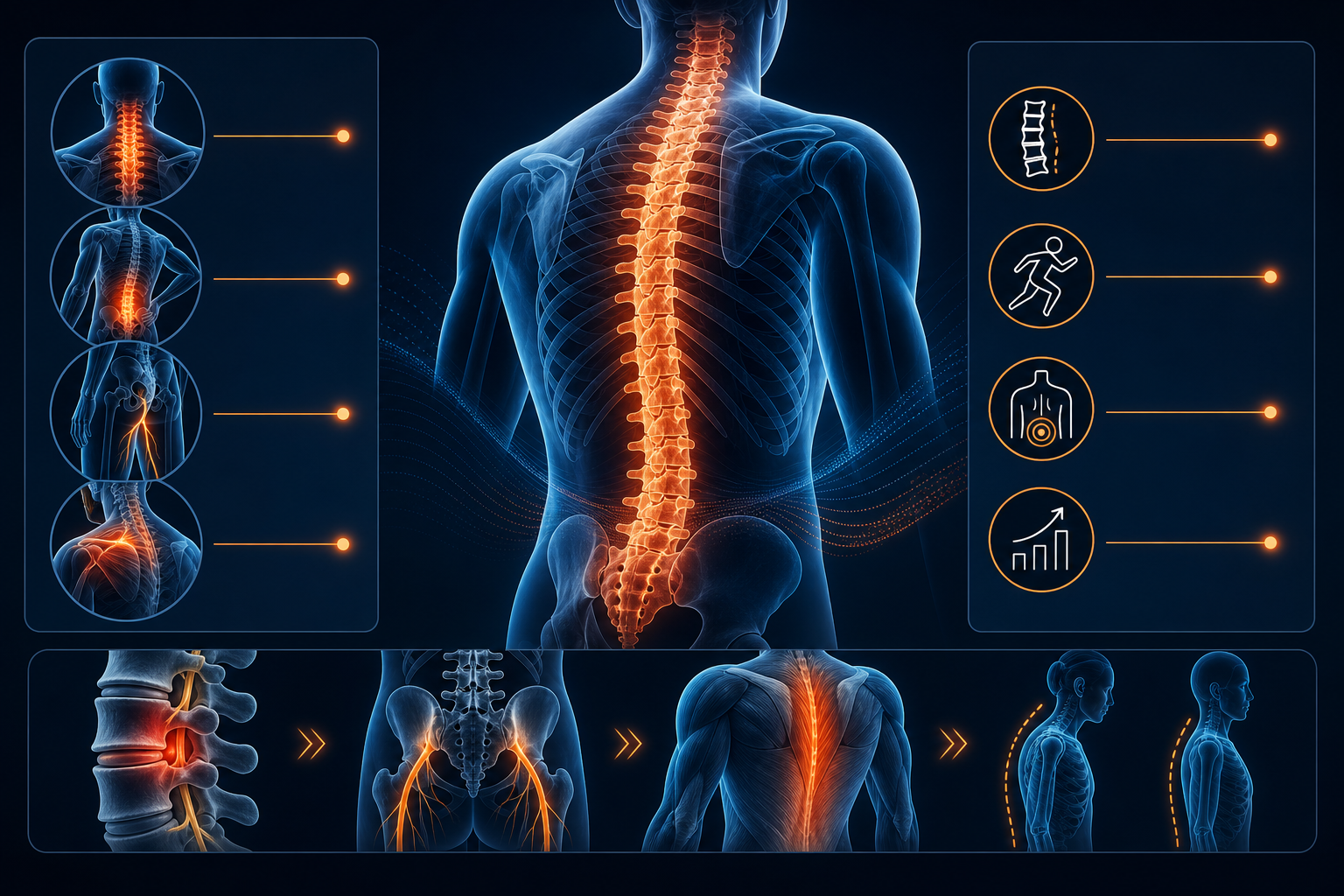
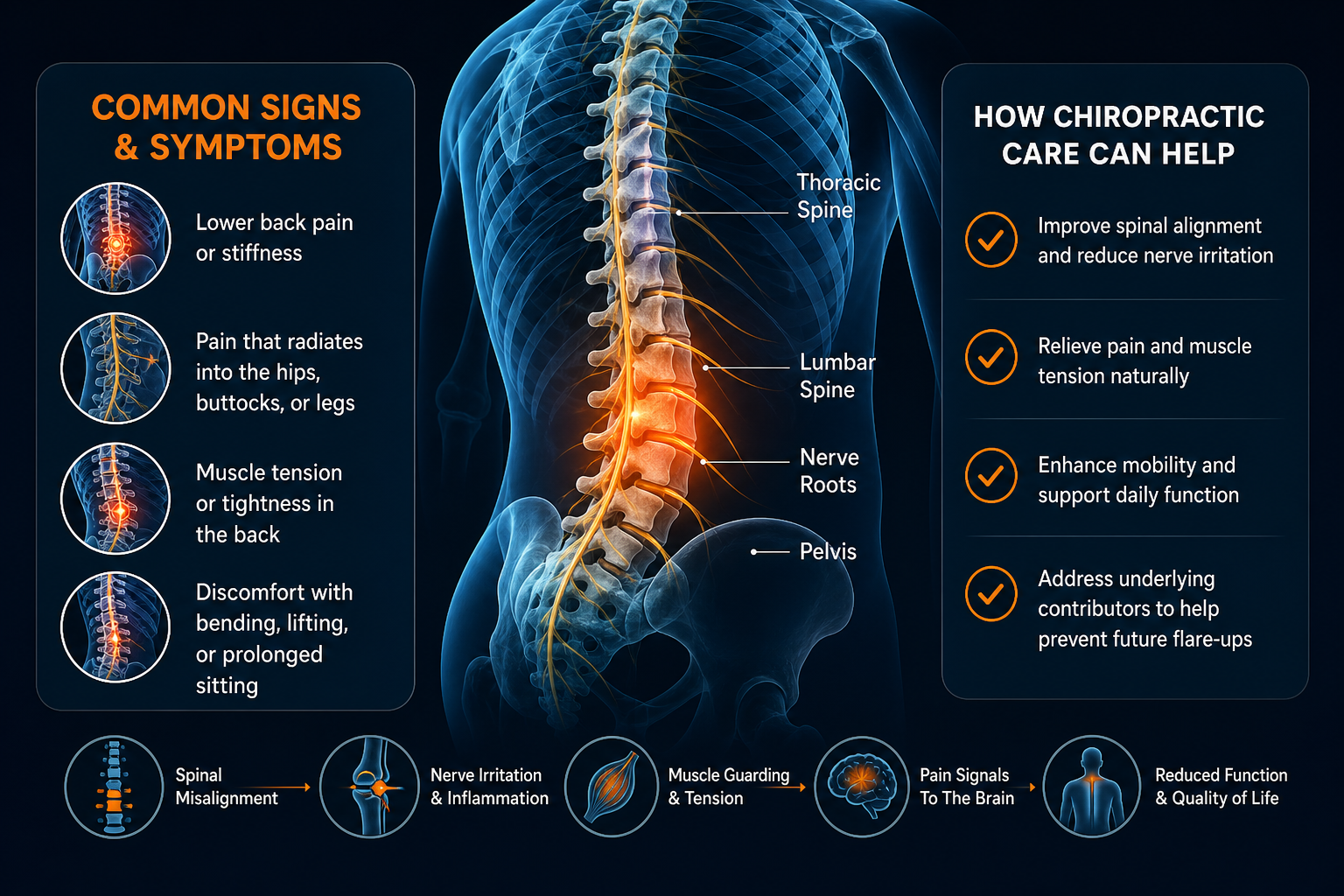
Chiropractors specialize in disorders of the spine, peripheral joints, and the nervous system as it relates to musculoskeletal function. The most common reason patients in downtown LA seek chiropractic care is lower back pain — specifically, pain originating from the lumbar facet joints (L4-L5, L5-S1), the sacroiliac joint, or irritation of the sciatic nerve as it exits the lumbar spine and runs through the piriformis muscle.
Conditions Treated
- Lower back pain — disc bulges, facet syndrome, SI joint dysfunction. A chiropractor for lower back pain in downtown LA will typically assess your lumbar ROM and palpate for segmental restriction before any adjustment.
- Neck pain and cervicogenic headaches — what does a chiropractor do for neck pain? They restore mobility to locked cervical segments (usually C2-C5), release the suboccipital muscles and upper trapezius, and address forward-head posture. If you're dealing with headaches that start at the base of your skull, read more about occipital neuralgia and chiropractic treatment.
- Sciatica — a chiropractor for sciatica pain relief in Los Angeles uses flexion-distraction, spinal manipulation, and targeted stretching of the piriformis to decompress the L5 nerve root or relieve entrapment along the sciatic pathway.
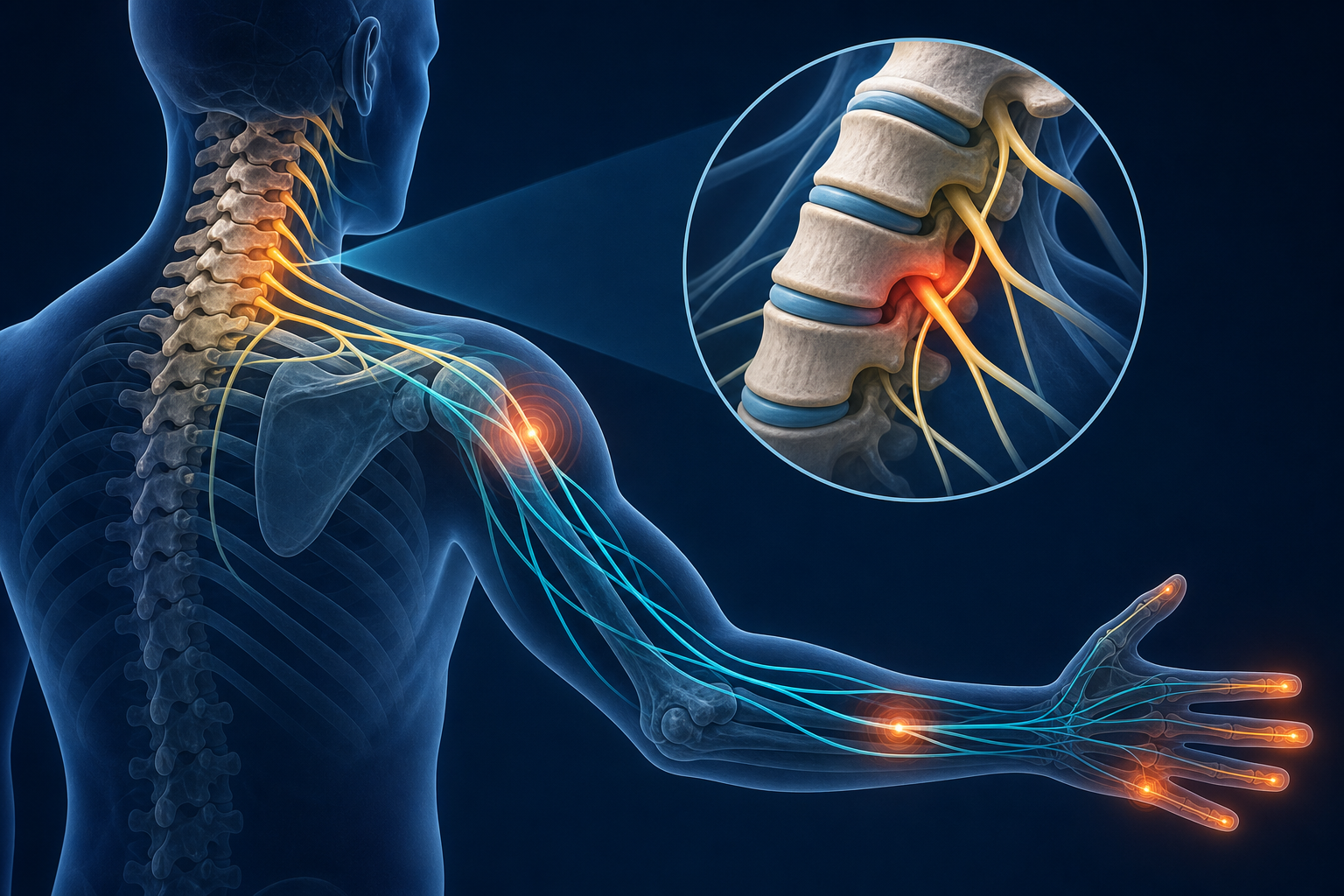
- Repetitive strain injuries — desk-bound workers in DTLA develop thoracic outlet compression, carpal tunnel-like symptoms, and lateral epicondylitis (tennis elbow) from sustained keyboard posture.
- Numbness and tingling — if you're experiencing leg numbness, a chiropractor can help determine whether it's nerve root compression or peripheral entrapment.
Research published in the Journal of Manipulative and Physiological Therapeutics found that spinal manipulation produced clinically significant improvement in acute low back pain within 2–4 weeks in 73% of patients studied.
How to Choose the Right Chiropractor in DTLA
Figuring out how to choose a good chiropractor in Los Angeles comes down to credentials, technique fit, and transparency. Not every chiropractor practices the same way, and DTLA has enough providers that you can — and should — be selective.
What to Look For
- Active California chiropractic license — verify through the California Board of Chiropractic Examiners. Every DC must complete a 4-year doctoral program and pass national board exams.
- Technique alignment — some providers are manual-adjustment focused (Diversified, Gonstead), others use instrument-based methods (Activator). Ask what techniques they use and why.
- Transparent treatment plans — a responsible provider gives you a clear diagnosis and an estimated timeline. If someone recommends 40 visits before examining you, leave.
- Insurance and billing clarity — is chiropractic care covered by insurance in California? Yes. Most PPO and HMO plans in California cover chiropractic. Many providers also accept auto insurance (MedPay/PIP) and liens for personal injury cases. Ask about coverage before your first appointment.
- Reviews and patient outcomes — check Google reviews for specifics about conditions similar to yours, not just star ratings.
For a deeper breakdown, see our guide on finding the right chiropractor for you.
What to Expect at Your First Chiropractic Visit
If you're wondering what to expect at your first chiropractic appointment, here's the sequence: intake paperwork, a focused history, a physical exam, and — in most cases — treatment on the same day.
- Intake (10–15 minutes): health history, mechanism of injury, pain location and duration, prior imaging.
- Exam (15–20 minutes): orthopedic tests (straight leg raise for sciatic involvement, Kemp's test for facet irritation), range-of-motion measurement, palpation of the spine and paraspinal muscles. Some providers take X-rays on-site.
- Report of findings: your provider explains the diagnosis, expected treatment frequency, and prognosis. A typical acute care plan runs 6–12 visits over 3–6 weeks.
- First adjustment: usually 5–10 minutes. You may hear a cavitation (popping sound) from the joint — this is gas release within the synovial capsule, not bone cracking.
How long does it take to see results from chiropractic? Most patients with uncomplicated mechanical back pain report noticeable improvement within 3–4 visits. Chronic conditions or post-accident injuries may require 8–12 weeks of consistent care before meaningful progress.
Common Techniques Used by Los Angeles Chiropractors
Technique What It Does Best For Sessions to Improvement Diversified High-velocity, low-amplitude thrust to specific spinal segments Acute joint restriction, general spinal stiffness 3–6 Gonstead Precise adjustment targeting a single misaligned vertebra using X-ray analysis Disc issues, complex spinal misalignment 6–10 Flexion-Distraction (Cox) Gentle, pump-like traction on a segmented table to open disc spaces Disc herniation, spinal stenosis, sciatica 8–12 Activator Method Spring-loaded instrument delivers a controlled impulse Sensitive patients, elderly, pediatric 4–8 Spinal Decompression Motorized traction gradually stretches the spine to relieve disc pressure Chronic disc bulge, degenerative disc disease 12–20If you're searching for spinal decompression therapy in downtown Los Angeles, look for a practice with a dedicated decompression table (Hill DT, DRX9000) rather than one improvising with a standard traction unit. The difference in outcomes is measurable.
Chiropractic Care and Personal Injury: What DTLA Patients Should Know
Downtown LA has some of the highest traffic density in the country. Rear-end collisions on the 110 South, side-impact crashes on Olympic Boulevard, and parking lot fender-benders around LA Live generate a steady stream of whiplash and soft-tissue injuries.
A chiropractor for car accident injury in Los Angeles plays a specific role in the personal injury treatment chain:
- Documentation: your chiropractor creates the clinical record — mechanism of injury, objective findings, treatment rendered — that supports your insurance or legal claim. Gaps in treatment weaken claims.
- Whiplash protocol: cervical spine assessment targeting the sternocleidomastoid, scalene muscles, and cervical facet joints (C4-C7). Treatment typically combines cervical adjustment, myofascial release, and therapeutic exercise over 8–12 weeks.
- Lien-based treatment: many DTLA chiropractors accept attorney liens, meaning you pay nothing upfront — the provider is reimbursed from your injury settlement.
California law allows auto accident patients to see a chiropractor without a physician referral. You are not required to go through your primary care provider first.
Red flag: if you experience loss of consciousness, bilateral arm numbness, difficulty speaking, or severe headache after a collision, go to the emergency room immediately. These symptoms suggest a concussion or cervical spinal cord involvement that requires emergent imaging. After clearance, you can learn more about chiropractic management of post-concussion syndrome.
When Should You See a Chiropractor vs. Another Provider?
The chiropractic adjustment vs. physical therapy for back pain question comes up constantly. The honest answer: it depends on the problem.
Scenario Best First Provider Why Acute joint "locking" — you can't turn your neck or bend forward Chiropractor Manual adjustment restores joint mobility faster than exercise alone Post-surgical rehab (shoulder, knee) Physical therapist PTs specialize in progressive loading and surgical protocol compliance Chronic low back pain with weak core Both — chiropractic + PT Adjustment addresses joint restriction; PT builds stabilization Muscle tightness and trigger points (upper traps, levator scapulae) Chiropractor or massage therapist Myofascial release + adjustment covers both the joint and soft tissue Stress-related tension, general wellness Acupuncture + chiropractic Complementary approaches for systemic tension and spinal alignmentMany providers in the DTLA area practice in multidisciplinary settings where you can access chiropractic, PT, massage, and acupuncture under one roof. This streamlines your care and reduces the number of separate appointments you need to manage around a downtown work schedule.
A Home Exercise You Can Start Today
For lower back stiffness from prolonged sitting — the most common complaint among DTLA office workers — try the cat-cow stretch:
- Get on all fours. Wrists under shoulders, knees under hips.
- Cat: exhale, round your spine toward the ceiling, tuck your chin to chest. Hold 3 seconds.
- Cow: inhale, drop your belly toward the floor, lift your head and tailbone. Hold 3 seconds.
- Repeat 10 cycles, twice per day — once mid-morning, once before leaving the office.
This mobilizes the thoracolumbar junction (T12-L1) and reduces compressive load on the lumbar discs. It does not replace professional care, but it buys you comfort between appointments.
What to Do Next
If you're dealing with back pain, neck stiffness, sciatica, or a recent auto accident injury, your next step is straightforward: get evaluated. A single visit gives you a diagnosis, a treatment estimate, and a clear understanding of whether chiropractic is the right fit.
- Ready to book? Find a chiropractor near you on Medximity and filter by location, insurance accepted, and patient ratings.
- Not sure which provider type you need? Browse providers across chiropractic, physical therapy, acupuncture, and massage to compare options.
- Timing your visit? Read our guide on the best time to see a chiropractor — especially relevant if you're fitting appointments around a DTLA work schedule.
Walk-in availability varies by practice. If you need a walk-in chiropractor open now in downtown LA, use Medximity's search filters to check same-day availability and office hours before heading in.