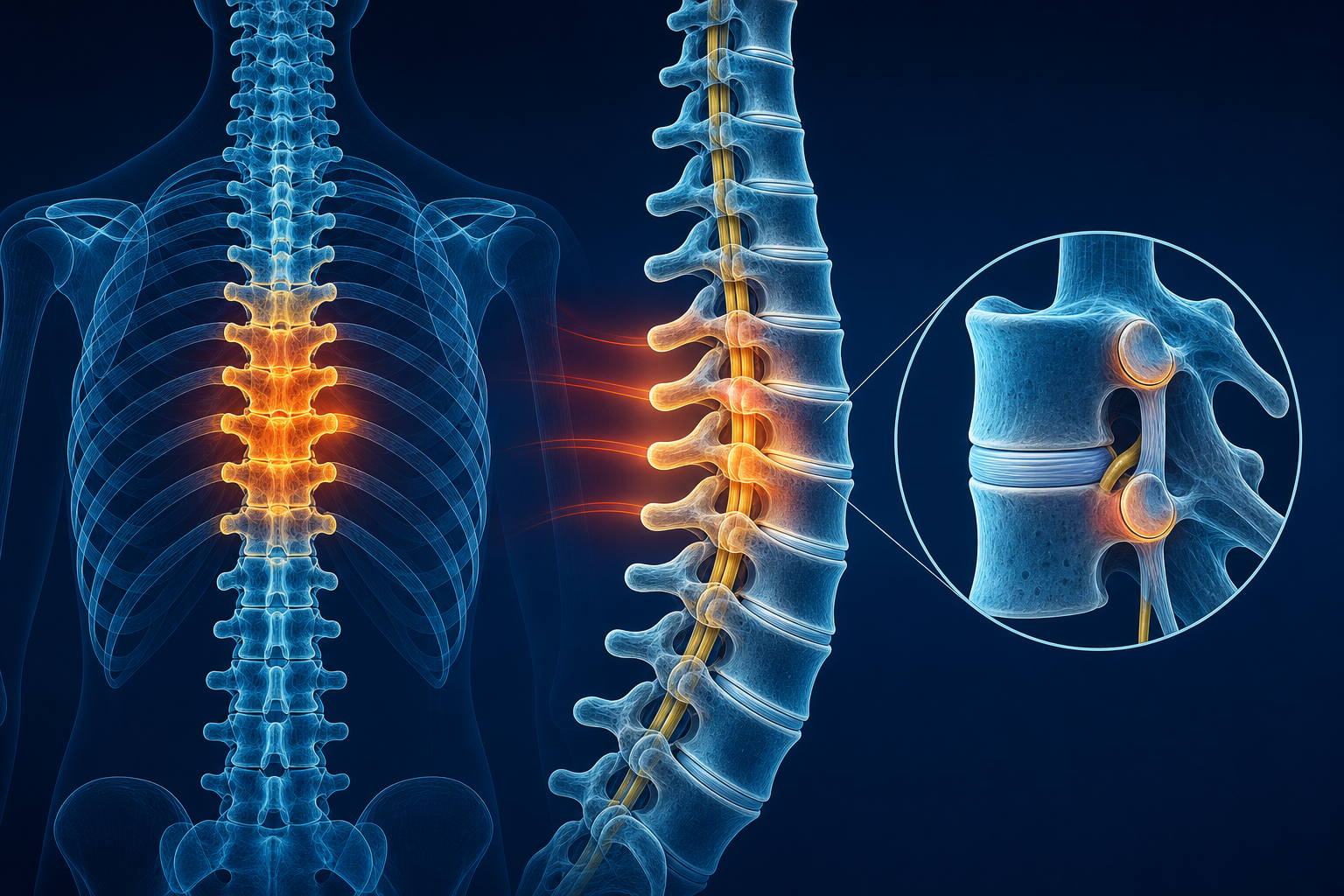
Most people are familiar with low back pain or neck stiffness, but the middle portion of the spine — the thoracic region — receives far less attention until something goes wrong. Thoracic spine pain can range from a dull, persistent ache between the shoulder blades to sharp, breath-catching discomfort that makes it hard to concentrate on anything else. For many people, the pain is confusing precisely because the mid back is not where they expect trouble, and its symptoms can sometimes feel more like chest tightness or rib pressure than a straightforward back problem.
This guide explains what the thoracic spine is, what causes pain there, what symptoms are typical, and what thoracic spine pain treatment options are available — including conservative approaches that do not involve surgery or prescription medication. Whether your discomfort developed after hours at a desk, a sports injury, or gradually over months, understanding the basics can help you take the right next steps.
What Is the Thoracic Spine?
The spine is divided into three main regions: the cervical spine (neck), the thoracic spine (mid and upper back), and the lumbar spine (lower back). The thoracic spine consists of twelve vertebrae — labeled T1 through T12 — that run from roughly the base of the neck down to the bottom of the rib cage. Each thoracic vertebra connects to a pair of ribs, forming the structural framework that protects the heart and lungs.
Because the thoracic spine is anchored by the rib cage on both sides, it is considerably more stable — and less mobile — than the cervical or lumbar regions. That stability is protective, but it also means that when something does go wrong, it can be harder for the body to compensate, and symptoms can persist longer than they might in a more flexible area.
Why Thoracic Pain Is Often Overlooked
The relative rigidity of the thoracic spine means it is less prone to the disc herniations and degenerative instability common in the lumbar region. As a result, mid back pain is sometimes dismissed or misattributed — to stress, to poor posture alone, or occasionally to cardiovascular or respiratory conditions because the rib cage is involved. Getting a proper evaluation from a qualified provider is the most reliable way to understand what is actually happening.
Common Symptoms of Thoracic Spine Pain
Thoracic spine pain symptoms and treatment options are closely connected — because the character of the pain often points toward its cause, which in turn guides the most appropriate care. Symptoms vary widely, but several patterns appear consistently.
Aching or Stiffness Between the Shoulder Blades
A persistent, dull ache in the upper or mid back — particularly between or just below the shoulder blades — is one of the most frequently reported presentations. It often worsens after prolonged sitting or standing, and many people notice it most after a long workday or an extended drive. Upper back pain from sitting at a desk all day is among the most common chief complaints seen by both chiropractors and physical therapists.
Sharp or Stabbing Pain with Movement
Some people experience sharper, more localized pain that spikes with specific movements — twisting the torso, reaching overhead, or bending forward. This type of pain may suggest joint involvement, muscular strain around a specific segment, or, in some cases, a rib that is not moving freely at its thoracic attachment point.
Mid Back Pain That Feels Like Chest Pressure
One of the more alarming — and frequently misunderstood — presentations is mid back pain that feels like chest pressure. Because the thoracic vertebrae connect directly to the ribs, irritation of the thoracic joints or intercostal nerves can produce a wrapping, squeezing sensation around the chest wall. This can mimic the feeling of tightness associated with cardiac or respiratory issues, which is why any new chest pressure — especially if accompanied by shortness of breath, pain radiating down the arm, sweating, or dizziness — warrants immediate medical evaluation to rule out a cardiac cause before assuming a musculoskeletal origin.
Is Mid Back Pain Related to Breathing Problems?
This is a question many patients ask, and the honest answer is: it can be, indirectly. Thoracic spine stiffness or rib joint dysfunction can make deep breathing uncomfortable, causing people to breathe more shallowly without realizing it. The pain itself does not damage lung tissue, but restricted thoracic mobility may reduce the full expansion of the rib cage. Physical therapy techniques that address thoracic mobility can sometimes improve breathing comfort alongside reducing pain. If you have genuine difficulty breathing — not just discomfort when taking a deep breath — seek medical evaluation promptly.
Pain That Wraps Around the Rib Cage
Nerve irritation originating in the thoracic spine can travel along the path of the intercostal nerves, producing pain, tingling, or a burning sensation that wraps around one side of the rib cage. This pattern, sometimes described as a band of discomfort, may be mistaken for shingles (before any rash appears), a pulled muscle, or a rib injury.
Postural Fatigue and Muscle Tension
Many people with chronic thoracic spine pain describe a generalized sense of fatigue or heaviness in the upper back that is not exactly pain but is certainly uncomfortable. The muscles supporting the thoracic spine — the rhomboids, middle trapezius, erector spinae, and serratus posterior — can develop chronic tension patterns when posture is compromised over long periods.
What Causes Pain in the Middle of Your Back?
Understanding what causes pain in the middle of your back requires looking at both structural and lifestyle factors. The thoracic spine is robust, but it is not immune to the cumulative effects of modern movement habits, sports demands, or age-related changes.
Poor Posture and Prolonged Sitting
The single most common contributing factor to thoracic spine pain in working-age adults is sustained forward flexion — the rounded, slumped posture that develops naturally when sitting at a desk, looking at a phone, or driving for extended periods. Over time, this position compresses the anterior (front) aspects of the thoracic vertebrae and discs, places chronic tension on the posterior muscles and ligaments, and may gradually increase the natural kyphotic (forward) curve of the thoracic spine.
Upper back pain from sitting at a desk all day is not simply a matter of weak muscles. It reflects a complex interplay of joint loading, muscle imbalance, and reduced thoracic mobility that accumulates over months and years. Ergonomic correction is an important part of recovery, but it rarely resolves established pain on its own without hands-on care.
Muscle Strains and Overuse
Acute muscle strains — from lifting, sudden twisting, or a misstep — are a frequent cause of sharp, well-localized mid back pain. Middle back pain in athletes causes and recovery is a distinct sub-topic because athletic populations encounter both acute strains and repetitive stress injuries. Rowers, swimmers, gymnasts, baseball pitchers, and golfers all place asymmetric or high-load demands on the thoracic spine and its surrounding musculature, making them particularly susceptible to thoracic overuse syndromes.
Thoracic Facet Joint Dysfunction
Each thoracic vertebra has two pairs of small joints — called facet joints or zygapophyseal joints — that guide and limit spinal motion. These joints can become irritated, inflamed, or mechanically restricted, producing localized pain that often worsens with extension (leaning back) or rotation. Chiropractors and physical therapists frequently identify and treat facet joint dysfunction as a primary driver of mid back pain.
Rib-Vertebral Joint Restrictions
Where each rib attaches to its corresponding thoracic vertebra, there are small synovial joints called costovertebral and costotransverse joints. These joints can become restricted — sometimes described informally as a "rib out of place" — producing sharp, often breath-sensitive pain. Manipulation or mobilization of these joints is a common and generally effective treatment approach.
Disc-Related Issues
Thoracic disc herniations are far less common than lumbar disc herniations, but they do occur, particularly at the lower thoracic levels (T8 through T12) where the spine begins transitioning toward the more mobile lumbar region. A thoracic disc herniation can produce localized pain, referred pain around the rib cage, or in more significant cases, symptoms affecting the lower extremities. Imaging is typically required to confirm disc involvement, and evaluation by a qualified provider is essential.
Osteoporosis and Vertebral Compression Fractures
In older adults — particularly postmenopausal women — reduced bone density (osteoporosis) can make thoracic vertebrae susceptible to compression fractures. These fractures may occur with minimal trauma or even spontaneously, producing sudden, severe mid back pain. Any new, severe thoracic pain in an older adult, or anyone with known osteoporosis, warrants medical evaluation before any manual treatment is initiated.
Degenerative Changes
Like all joints, the thoracic facet joints and discs undergo gradual age-related changes over time. Mild degenerative findings are common in imaging studies and do not always correlate with pain — many people have visible wear on imaging without significant symptoms. However, degenerative changes can contribute to reduced mobility and increased sensitivity in the thoracic region, particularly when combined with other factors like poor posture or occupational demands.
Scoliosis
Abnormal lateral curvature of the spine — scoliosis — most commonly develops in the thoracic region. While mild scoliosis may not cause significant pain, more pronounced curves can alter the mechanical loading of thoracic joints and muscles, contributing to chronic discomfort. Scoliosis-related thoracic pain often benefits from a targeted physical therapy approach that addresses the specific curvature pattern.
When Should You Worry About Thoracic Back Pain?
Knowing when to worry about thoracic back pain is important, because most mid back pain is musculoskeletal in origin and responds well to conservative care — but a smaller subset of cases involves causes that require urgent medical attention.
Red Flags That Warrant Prompt Medical Evaluation
Seek prompt evaluation — and emergency care if symptoms are severe or sudden — in any of these situations:
- Chest pain, pressure, or tightness accompanied by shortness of breath, arm pain, sweating, or nausea — these may indicate a cardiac event and should be treated as a medical emergency until ruled out.
- Thoracic pain following significant trauma — a car accident, fall from height, or direct impact to the spine.
- Pain accompanied by weakness, numbness, or tingling in the legs, or any changes in bladder or bowel function, which may indicate spinal cord involvement.
- Unexplained weight loss, fever, or night sweats combined with back pain — these may suggest an infectious, inflammatory, or systemic cause.
- Severe, unrelenting pain that is not relieved by rest or position change, especially in older adults.
- History of cancer combined with new thoracic pain.
If none of these apply and your pain developed gradually or followed a recognizable mechanical trigger, conservative musculoskeletal care is typically appropriate as a first step — ideally after an initial provider evaluation to confirm the diagnosis.
How Long Does Thoracic Back Pain Last?
How long does thoracic back pain last? The honest answer is that it depends significantly on the underlying cause, how quickly care begins, and what changes are made to the habits that contributed to the problem in the first place.
Acute muscle strains often improve substantially within one to three weeks with appropriate rest, gentle movement, and conservative treatment. Facet joint irritation and rib-vertebral restrictions may resolve in a similar timeframe with targeted manual care. Chronic or postural-driven thoracic pain — particularly when it has been present for months — typically requires a longer course of treatment, often six to twelve weeks of consistent care, along with meaningful ergonomic and movement changes.
Without addressing underlying contributing factors — especially sustained poor posture or repetitive movement patterns — improvement may be temporary even after effective treatment. This is why the best outcomes tend to involve a combination of hands-on care and patient education, not passive treatment alone.
Thoracic Spine Pain Treatment Without Surgery
The good news for most people with thoracic spine pain is that thoracic spine pain treatment without surgery is not only possible but is the recommended starting point for the vast majority of cases. Conservative care encompasses several evidence-informed approaches that may be used individually or in combination depending on the specific presentation.
Chiropractic Care
Chiropractic adjustment of the thoracic spine involves controlled, targeted force applied to specific vertebral segments to restore joint mobility, reduce local muscle guarding, and alleviate pain. Thoracic manipulation has a strong clinical rationale and is commonly used to address facet joint restrictions, rib-vertebral joint dysfunction, and postural-related stiffness. Many patients notice meaningful improvement in comfort and range of motion within the first few sessions, though the number of treatments needed varies based on the severity and duration of the condition.
If you are trying to decide between a chiropractor or physical therapist for mid back pain, the distinction is not always a strict either/or choice — many patients benefit from both, and some providers offer integrated approaches. Chiropractors tend to emphasize joint manipulation and mobilization as a primary tool, while physical therapists typically lead with exercise, movement retraining, and manual therapy. Both approaches can be effective for thoracic spine pain, and the best choice depends on your specific diagnosis, preferences, and how your body responds.
Find a chiropractor near you on Medximity to explore chiropractic care for mid back pain.
Physical Therapy
Physical therapy for thoracic spine pain typically combines hands-on manual therapy with a progressive exercise program designed to restore mobility, correct muscular imbalances, and build the endurance needed to support healthy thoracic posture over time. A physical therapist may use joint mobilization, soft tissue work, dry needling (where licensed), and therapeutic exercise — particularly exercises targeting the thoracic extensors, scapular stabilizers, and deep postural muscles of the spine.
For athletes with middle back pain, physical therapy that addresses sport-specific movement patterns and loading is particularly valuable for achieving a durable recovery rather than simply managing symptoms.
Search for physical therapists on Medximity who specialize in mid back pain and spinal rehabilitation.
Soft Tissue Therapy and Massage
Therapeutic massage and soft tissue mobilization can help reduce muscle tension, improve circulation, and reduce the protective muscle guarding that often accompanies thoracic joint dysfunction. While soft tissue work alone may not resolve the underlying joint restriction driving the pain, it can meaningfully improve comfort and make other treatments more effective.
Postural Correction and Ergonomic Modifications
Because upper back pain from sitting at a desk all day is so commonly rooted in sustained forward flexion, ergonomic changes are often an essential component of lasting recovery. A provider may recommend adjustments to chair height, monitor position, keyboard placement, and work habits — including the frequency and nature of movement breaks. Ergonomic advice is most effective when it is individualized to the person's workspace, body proportions, and work demands rather than based on generic guidelines.
Therapeutic Exercise
Exercise is one of the most consistently supported interventions for spinal pain of any region. For the thoracic spine specifically, exercises that promote thoracic extension, scapular retraction, rotational mobility, and core endurance tend to be particularly beneficial. A structured home exercise program — learned from a qualified provider rather than assembled from general online sources — ensures that the exercises are appropriate for the individual's presentation and progressed safely.
Natural Remedies for Thoracic Spine Pain Relief
Many people seek natural remedies for thoracic spine pain relief alongside or before professional care. Several self-management strategies may help reduce discomfort and support recovery:
- Heat therapy — applying a heating pad or warm pack to the mid back for 15–20 minutes may reduce muscle tension and improve comfort, particularly for chronic or postural pain. Heat is generally preferred over ice for non-acute, tension-driven thoracic discomfort.
- Gentle mobility exercises — thoracic extension over a foam roller, thoracic rotation in a chair, or cat-cow stretches in a hands-and-knees position may help maintain or restore mobility between treatment sessions. These should be performed gently and stopped if they produce sharp or worsening pain.
- Postural awareness — setting a reminder to change position or briefly stand every 30–45 minutes during prolonged sitting can reduce cumulative joint loading over the course of a workday.
- Sleep positioning — sleeping on a supportive mattress with a pillow configuration that keeps the cervical spine neutral can reduce overnight thoracic strain.
- Stress management — psychological stress is associated with increased muscle tension throughout the upper back and shoulders, and approaches such as diaphragmatic breathing, meditation, or gentle yoga may offer some supportive benefit for thoracic discomfort.
These approaches may provide meaningful support, but they are not substitutes for professional evaluation when pain is persistent, severe, or accompanied by any of the red-flag symptoms described earlier.
Chiropractor or Physical Therapist for Mid Back Pain: How to Choose
The question of whether to see a chiropractor or physical therapist for mid back pain is one of the most common questions patients bring to Medximity's provider search. Both are licensed, trained musculoskeletal specialists with expertise relevant to thoracic spine pain — and both can deliver effective care for the most common presentations.
Consider Chiropractic Care If:
- Your pain is primarily joint-related — stiff, clicking, or restricted in a specific segment
- You have a rib-vertebral restriction or facet joint irritation that may respond to direct manipulation
- You want fast-acting relief from joint-driven pain alongside corrective care
Consider Physical Therapy If:
- Your pain is strongly tied to muscular weakness, imbalance, or movement dysfunction
- You are an athlete seeking a return-to-sport protocol after a thoracic injury
- You want a structured, exercise-based program with measurable functional goals
- You have a more complex history — scoliosis, post-surgical recovery, or significant deconditioning
In many cases, a combined or sequential approach works best. A chiropractor may address the acute joint restriction while recommending a physical therapist for the longer-term rehabilitation phase. Many integrated practices offer both under one roof.
Search for mid back pain specialists near you on Medximity and filter by specialty, location, and insurance to find the right fit.
Middle Back Pain in Athletes: Causes and Recovery
Middle back pain in athletes deserves specific attention because the causes, demands, and recovery expectations differ from sedentary or occupational presentations. Athletes place the thoracic spine under loads and movement patterns that go far beyond everyday activity, and the structural demands vary significantly by sport.
Common Athletic Causes
- Rowing and paddling sports — sustained spinal flexion under load creates high compressive stress on the posterior thoracic structures
- Overhead sports (swimming, volleyball, tennis serving, baseball pitching) — repetitive shoulder elevation requires thoracic extension and rotation, and restrictions here are often compensated in ways that increase injury risk
- Gymnastics and weightlifting — high spinal loading combined with extreme ranges of motion
- Contact sports — direct impact to the thoracic region can cause acute rib-vertebral injury, muscle contusion, or in rare cases stress fracture
Recovery Principles for Athletes
Athlete recovery from thoracic spine pain generally follows a staged approach: reduce acute pain and inflammation, restore normal joint and tissue mobility, rebuild strength and endurance in the relevant supporting musculature, and then progressively return to sport-specific loads. The timeline varies considerably based on the severity of the injury and the demands of the sport, and return-to-play decisions should involve the athlete's healthcare team rather than being self-directed.
Ignoring thoracic pain and training through it — a temptation common in competitive athletes — can extend recovery significantly and sometimes converts a manageable acute injury into a chronic problem. Early conservative care typically leads to faster return to full activity.
Finding a Mid Back Pain Specialist Near You
When you are ready to seek professional care, finding the right provider matters as much as finding any provider. A mid back pain specialist — whether a chiropractor, physical therapist, or rehabilitation physician — should take a thorough history, perform a physical examination of the thoracic spine and surrounding structures, and develop an individualized care plan rather than applying a one-size approach.
Medximity's provider directory makes it easier to search by specialty, location, and specific conditions treated, so you can find providers with relevant experience in thoracic spine care near you.
Browse chiropractors specializing in spinal care on Medximity or explore physical therapists in your area who treat mid and upper back pain.
When contacting a provider, it can be helpful to describe the location, character, and duration of your pain, any known triggers or relieving factors, and whether you have any of the red-flag symptoms described in this article. This context helps a provider prepare appropriately for your first visit and ensures you receive the most relevant evaluation.
Related Resources on Medximity
If you found this guide helpful, you may also want to explore these related articles:
- Understanding Cervical Spine Pain: Neck Pain Causes and Treatment
- Lumbar Spine Pain: What's Really Causing Your Lower Back Pain
- How Chiropractic Care Works for Spinal Pain
- Physical Therapy for Back Pain: What to Expect at Your First Visit
Key Takeaways
- Thoracic spine pain affects the mid and upper back, and its causes range from postural habits and muscle strain to joint dysfunction and, less commonly, disc or structural issues.
- Symptoms may include aching between the shoulder blades, sharp pain with movement, chest-pressure sensations, or rib-wrapping discomfort — all of which deserve proper evaluation.
- Certain red-flag symptoms — particularly chest pain with cardiac symptoms, neurological changes, or pain after significant trauma — require urgent medical attention before conservative care begins.
- Most thoracic spine pain responds well to conservative care, including chiropractic adjustment, physical therapy, therapeutic exercise, and ergonomic correction.
- Recovery timelines vary: acute strains may resolve in one to three weeks, while chronic or postural-driven pain often requires six to twelve weeks of consistent care and lifestyle adjustment.
- Athletes with mid back pain benefit from sport-specific rehabilitation and staged return-to-activity protocols.
- Self-care strategies — heat, gentle mobility work, postural awareness — can support professional treatment but are not replacements for evaluation of persistent or severe pain.
Frequently Asked Questions About Thoracic Spine Pain
What does thoracic spine pain feel like?
Thoracic spine pain most commonly presents as a dull ache or stiffness between or below the shoulder blades, though it can also feel like a sharp, localized pain with movement, a wrapping sensation around the rib cage, or — in some cases — a pressure-like feeling in the chest. The exact character varies depending on whether joints, muscles, nerves, or discs are involved.
Can poor posture really cause mid back pain?
Yes — sustained forward flexion from prolonged sitting, screen use, or driving is one of the most common contributors to chronic thoracic spine pain. Over time, this posture compresses spinal joints, creates muscular imbalances, and gradually increases the thoracic kyphotic curve. Ergonomic changes and targeted exercises are typically important parts of addressing posture-related pain.
Is mid back pain that feels like chest pressure dangerous?
It can be, or it may be entirely musculoskeletal in origin. The thoracic spine's connection to the rib cage means that joint or nerve irritation can genuinely produce chest-pressure or squeezing sensations. However, if chest pressure is accompanied by shortness of breath, arm pain, sweating, nausea, or dizziness, it should be evaluated as a potential cardiac emergency immediately. A provider can help distinguish musculoskeletal from systemic causes once cardiac and other urgent conditions are ruled out.
How long will my thoracic back pain last?
Acute thoracic muscle strains often improve significantly within one to three weeks. Pain related to joint restrictions or repetitive stress may take somewhat longer. Chronic or postural-driven pain that has been present for months typically requires a dedicated course of conservative care — often six to twelve weeks — alongside meaningful changes to posture and movement habits. Without addressing contributing factors, pain relief may be temporary.
Should I see a chiropractor or physical therapist for mid back pain?
Both are trained to evaluate and treat thoracic spine pain, and both can be effective depending on the nature of your condition. Chiropractors typically emphasize joint manipulation and mobilization, which may be particularly helpful for facet joint or rib-vertebral restrictions. Physical therapists typically lead with exercise-based rehabilitation and manual therapy, which may be more appropriate when muscular imbalance, movement dysfunction, or a need for progressive strength building is prominent. Many patients benefit from both, either together or sequentially.
Are there natural remedies that help thoracic spine pain?
Several self-management strategies may help support recovery: heat therapy for muscle tension, gentle thoracic mobility exercises such as foam roller extension or cat-cow stretches, frequent movement breaks during prolonged sitting, and stress-reduction practices that reduce upper back muscle tension. These approaches can complement professional care, but persistent, severe, or red-flag pain should not be managed with self-care alone.
Can thoracic spine pain affect breathing?
Severe thoracic stiffness or rib-vertebral joint restrictions can make deep breathing uncomfortable, leading some people to breathe more shallowly without noticing it. The pain itself does not damage lung function, but restricted thoracic mobility may reduce comfortable rib cage expansion. If you experience genuine difficulty breathing — beyond discomfort with a deep breath — prompt medical evaluation is appropriate to rule out pulmonary or cardiac causes.
When should I worry about thoracic back pain?
Seek prompt or emergency medical evaluation if your thoracic pain is accompanied by cardiac-type chest symptoms, follows significant trauma, causes leg weakness or numbness, is associated with bladder or bowel changes, or comes with unexplained weight loss, fever, or night sweats. In older adults or those with osteoporosis, severe new-onset thoracic pain also warrants evaluation before any manual treatment. For pain without these features, conservative musculoskeletal care is typically the appropriate starting point.
", "faq_data": [ { "q": "What does thoracic spine pain feel like?", "a": "Thoracic spine pain most commonly presents as a dull ache or stiffness between or below the shoulder blades, though it can also feel like a sharp, localized pain with movement, a wrapping sensation around the rib cage, or — in some cases — a pressure-like feeling in the chest. The exact character varies depending on whether joints, muscles, nerves, or discs are involved." }, { "q": "Can poor posture really cause mid back pain?", "a": "Yes — sustained forward flexion from prolonged sitting, screen use, or driving is one of the most common contributors to chronic thoracic spine pain. Over time, this posture compresses spinal joints, creates muscular imbalances, and gradually increases the thoracic kyphotic curve. Ergonomic changes and targeted exercises are typically important parts of addressing posture-related pain." }, { "q": "Is mid back pain that feels like chest pressure dangerous?", "a": "It can be, or it may be entirely musculoskeletal in origin. The thoracic spine's connection to the rib cage means that joint or nerve irritation can genuinely produce chest-pressure or squeezing sensations. However, if chest pressure is accompanied by shortness of breath, arm pain, sweating, nausea, or dizziness, it should be evaluated as a potential cardiac emergency immediately." }, { "q": "How long will my thoracic back pain last?", "a": "Acute thoracic muscle strains often improve significantly within one to three weeks. Chronic or postural-driven pain that has been present for months typically requires a dedicated course of conservative care — often six to twelve weeks — alongside meaningful changes to posture and movement habits." }, { "q": "Should I see a chiropractor or physical therapist for mid back pain?", "a": "Both are trained to evaluate and treat thoracic spine pain effectively. Chiropractors typically emphasize joint manipulation and mobilization, while physical therapists typically lead with exercise-based rehabilitation and manual therapy. Many patients benefit from both approaches, either together or sequentially." }, { "q": "Are there natural remedies that help thoracic spine pain?", "a": "Several self-management strategies may help support recovery: heat therapy for muscle tension, gentle thoracic mobility exercises, frequent movement breaks during prolonged sitting, and stress-reduction practices. These approaches can complement professional care, but persistent or severe pain should not be managed with self-care alone." }, { "q": "Can thoracic spine pain affect breathing?", "a": "Severe thoracic stiffness or rib-vertebral joint restrictions can make deep breathing uncomfortable, leading some people to breathe more shallowly without noticing. If you experience genuine difficulty breathing beyond discomfort with a deep breath, prompt medical evaluation is appropriate to rule out pulmonary or cardiac causes." }, { "q": "When should I worry about thoracic back pain?", "a": "Seek prompt or emergency medical evaluation if your thoracic pain is accompanied by cardiac-type chest symptoms, follows significant trauma, causes leg weakness or numbness, is associated with bladder or bowel changes, or comes with unexplained weight loss, fever, or night sweats. For pain without these features, conservative musculoskeletal care is typically the appropriate starting point." } ], "key_takeaways": [ "Thoracic spine pain affects the mid and upper back, and its causes range from postural habits and muscle strain to joint dysfunction and, less commonly, disc or structural issues.", "Symptoms may include aching between the shoulder blades, sharp pain with movement, chest-pressure sensations, or rib-wrapping discomfort — all of which deserve proper evaluation.", "Certain red-flag symptoms — particularly chest pain with cardiac symptoms, neurological changes, or pain after significant trauma — require urgent medical attention before conservative care begins.", "Most thoracic spine pain responds well to conservative care, including chiropractic adjustment, physical therapy, therapeutic exercise, and ergonomic correction.", "Recovery timelines vary: acute strains may resolve in one to three weeks, while chronic or postural-driven pain often requires six to twelve weeks of consistent care and lifestyle adjustment.", "Athletes with mid back pain benefit from sport-specific rehabilitation and staged return-to-activity protocols.", "Self-care strategies — heat, gentle mobility work, postural awareness — can support professional treatment but are not replacements for evaluation of persistent or severe pain." ], "tags": [ "thoracic spine pain", "mid back pain", "upper back pain", "chiropractic care", "physical therapy", "spinal health", "back pain treatment", "posture", "musculoskeletal health", "sports injury", "natural pain relief", "ergonomics", "spine anatomy", "rib pain", "conservative care" ], "schema_markup": { "@context": "https://schema.org", "@type": "Article", "headline": "Understanding Thoracic Spine Pain: Symptoms, Causes, and Treatment", "description": "A comprehensive guide to thoracic spine pain covering anatomy, common symptoms, what causes pain in the middle of the back, red flags, and thoracic spine pain treatment options without surgery.", "url": "https://medximity.com/blog/understanding-thoracic-spine-pain-symptoms-causes-treatment", "publisher": { "@type": "Organization", "name": "Medximity", "url": "https://medximity.com" }, "mainEntityOfPage": { "@type": "WebPage", "@id": "https://medximity.com/blog/understanding-thoracic-spine-pain-symptoms-causes-treatment" }, "speakable": { "@type": "SpeakableSpecification", "cssSelector": ["h1", "h2", "#faq"] } } }