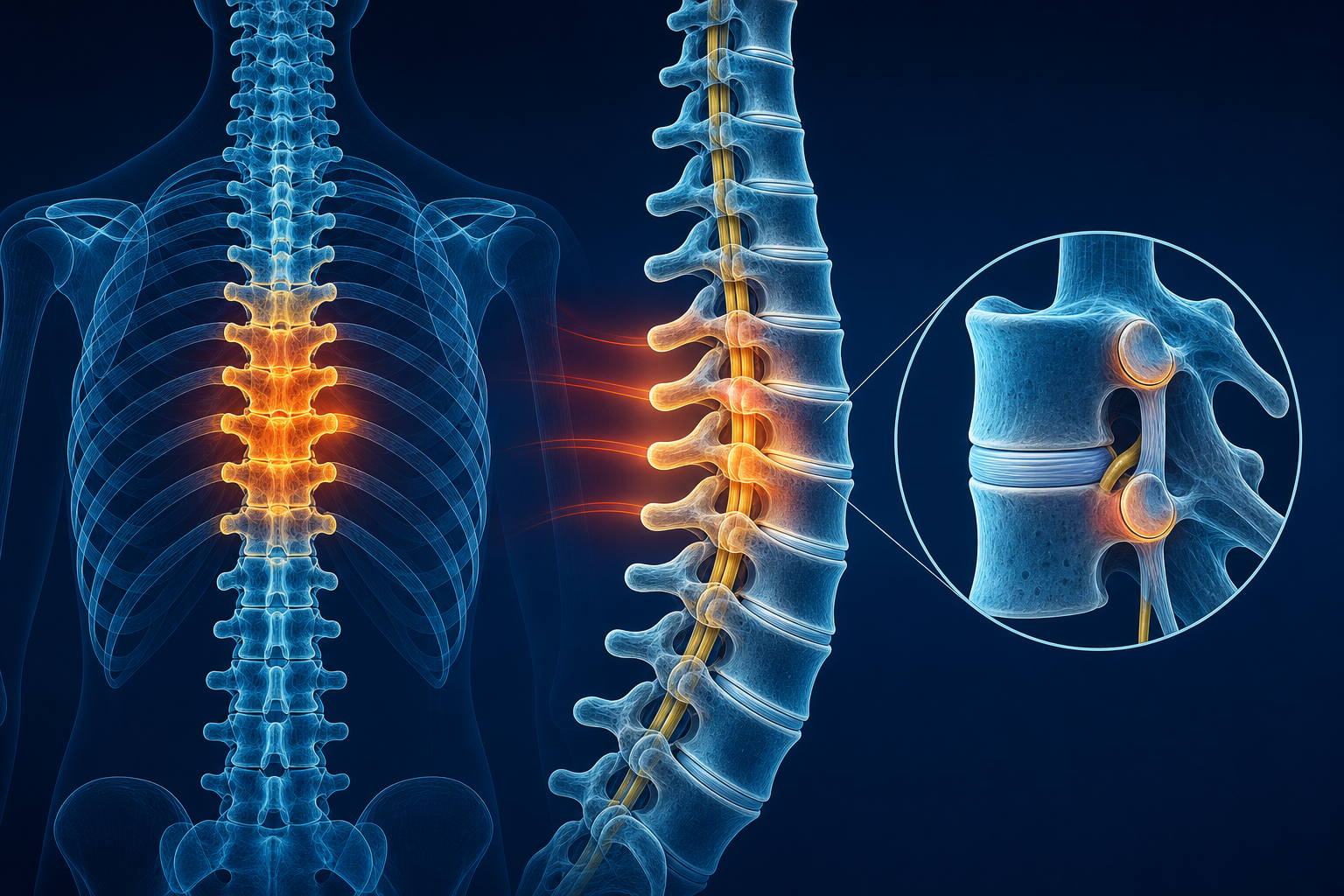
Thoracic spine pain, a condition that affects the middle portion of the back, can range from mild discomfort to severe pain, often leading to limitations in mobility and daily function. Understanding the causes, symptoms, chiropractic care, and preventive measures is essential for managing this condition and maintaining spinal health.
Introduction to Thoracic Spine Anatomy
The thoracic spine consists of 12 vertebrae (T1 to T12) that are located between the cervical spine (neck) and the lumbar spine (lower back). It plays a crucial role in providing stability, protecting the spinal cord, and supporting the rib cage, which houses vital organs like the lungs and heart. The thoracic spine is designed for stability rather than mobility, compared to the cervical and lumbar regions, making it less prone to injury but more susceptible to stiffness and discomfort.
Causes of Thoracic Spine Pain
Thoracic spine pain can arise from various causes, both structural and functional. Below are the most common causes:
1. Poor Posture
Sitting or standing with improper posture for extended periods can strain the thoracic spine. This is common in individuals who spend long hours working at desks or using mobile devices, resulting in forward head posture and rounded shoulders. Over time, this can lead to muscle imbalances and chronic pain.
2. Muscle Strain
The muscles around the thoracic spine can become strained due to overuse, repetitive movements, or lifting heavy objects incorrectly. Muscle strain often leads to localized pain and discomfort that worsens with movement.
3. Intervertebral Disc Degeneration
As individuals age, the intervertebral discs that act as cushions between the vertebrae may degenerate. This can cause the discs to become less flexible and lose their ability to absorb shocks, leading to pain. Thoracic disc degeneration, although less common than in the cervical or lumbar regions, can still occur.
4. Scoliosis
Scoliosis, a condition characterized by an abnormal curvature of the spine, often affects the thoracic region. In more severe cases, scoliosis can cause pain and discomfort as the spine and surrounding muscles are misaligned.
5. Thoracic Outlet Syndrome
Thoracic Outlet Syndrome occurs when the nerves or blood vessels between the collarbone and the first rib are compressed. This condition can lead to pain in the thoracic spine, along with numbness and tingling in the arms.
6. Osteoporosis
Osteoporosis weakens bones, making them more prone to fractures. In the thoracic spine, compression fractures can occur, leading to sudden, sharp pain, especially in older adults.
7. Trauma or Injury
Accidents falls, or sports injuries can result in fractures, sprains, or dislocations in the thoracic spine, causing significant pain and potentially leading to long-term complications if not treated properly.
Symptoms of Thoracic Spine Pain
The symptoms of thoracic spine pain can vary based on the underlying cause but commonly include:
Localized pain in the middle back that can be dull or sharp.
Stiffness and reduced range of motion in the thoracic region.
Muscle tightness or spasms, especially after prolonged periods of sitting or standing.
Pain radiating around the rib cage or into the chest may be mistaken for heart-related issues.
Numbness or tingling if nerve compression is involved, as seen in conditions like thoracic outlet syndrome.
Chiropractic Care for Thoracic Spine Pain
Chiropractic care offers a non-invasive approach to managing thoracic spine pain by addressing misalignments, reducing inflammation, and promoting healing through manual adjustments and other techniques.
1. Spinal Adjustments
Chiropractors use spinal manipulation to realign the vertebrae and relieve pressure on the spinal cord and nerves. Adjustments are particularly effective in treating subluxations (misaligned vertebrae) and restoring proper function to the thoracic spine.
2. Soft Tissue Therapy
In addition to adjustments, chiropractors often use soft tissue therapies such as massage or myofascial release to reduce muscle tension and improve blood circulation in the affected areas. This can help alleviate pain caused by muscle strain or overuse.
3. Posture Correction
Chiropractors emphasize the importance of maintaining proper posture to prevent thoracic spine pain. They may recommend exercises to strengthen the core and back muscles, as well as stretches to improve flexibility and reduce strain on the thoracic region.
4. Therapeutic Exercises
Chiropractors often prescribe specific exercises to improve mobility and strengthen the muscles supporting the thoracic spine. These exercises may include stretching, strengthening, and conditioning routines aimed at restoring function and preventing future injuries.
5. Lifestyle Modifications
Education on lifestyle changes, such as proper ergonomics, lifting techniques, and ways to avoid repetitive stress, is a key component of chiropractic care. By addressing the root causes of thoracic spine pain, chiropractors help patients adopt habits that support long-term spinal health.
Preventive Measures for Thoracic Spine Pain
Preventing thoracic spine pain requires a proactive approach to maintaining a healthy spine and avoiding behaviors that contribute to strain or injury. Here are some effective preventive strategies:
1. Maintain Proper Posture
Proper posture is crucial for preventing thoracic spine pain. Sitting with the spine aligned, avoiding slouching, and using ergonomic furniture can help reduce strain on the thoracic region. Regularly adjusting your posture and taking breaks during prolonged sitting is also important.
2. Strengthen Core Muscles
Strong core muscles provide better support for the spine, reducing the risk of injury. Incorporating exercises that target the abdominal, lower back, and hip muscles can help maintain spinal alignment and prevent pain.
3. Regular Stretching
Stretching the muscles surrounding the thoracic spine helps maintain flexibility and prevents stiffness. Stretching exercises such as shoulder rolls, chest openers, and thoracic rotations are particularly beneficial.
4. Avoid Heavy Lifting
Improper lifting techniques can strain the thoracic spine, leading to pain and injury. When lifting heavy objects, it is important to use proper form—keeping the back straight, bending the knees, and engaging the core.
5. Stay Active
Regular physical activity helps keep the spine healthy by improving circulation, maintaining muscle strength, and promoting flexibility. Activities such as swimming, walking, and yoga can support overall spinal health and prevent thoracic spine pain.
6. Ergonomic Workspace Setup
For individuals who spend long hours at a desk, setting up an ergonomic workspace can reduce strain on the thoracic spine. This includes using a chair with lumbar support, positioning the computer monitor at eye level, and keeping the keyboard and mouse within easy reach.
Conclusion
Thoracic spine pain can be managed effectively through a combination of chiropractic care, lifestyle modifications, and preventive strategies. Whether caused by poor posture, muscle strain, or structural issues, addressing the underlying cause is essential for long-term relief. Chiropractic care offers a non-invasive, holistic approach to treating thoracic spine pain, helping individuals regain mobility and reduce discomfort. By incorporating preventive measures such as maintaining proper posture, strengthening core muscles, and staying active, individuals can protect their thoracic spine and maintain a healthy, pain-free lifestyle.