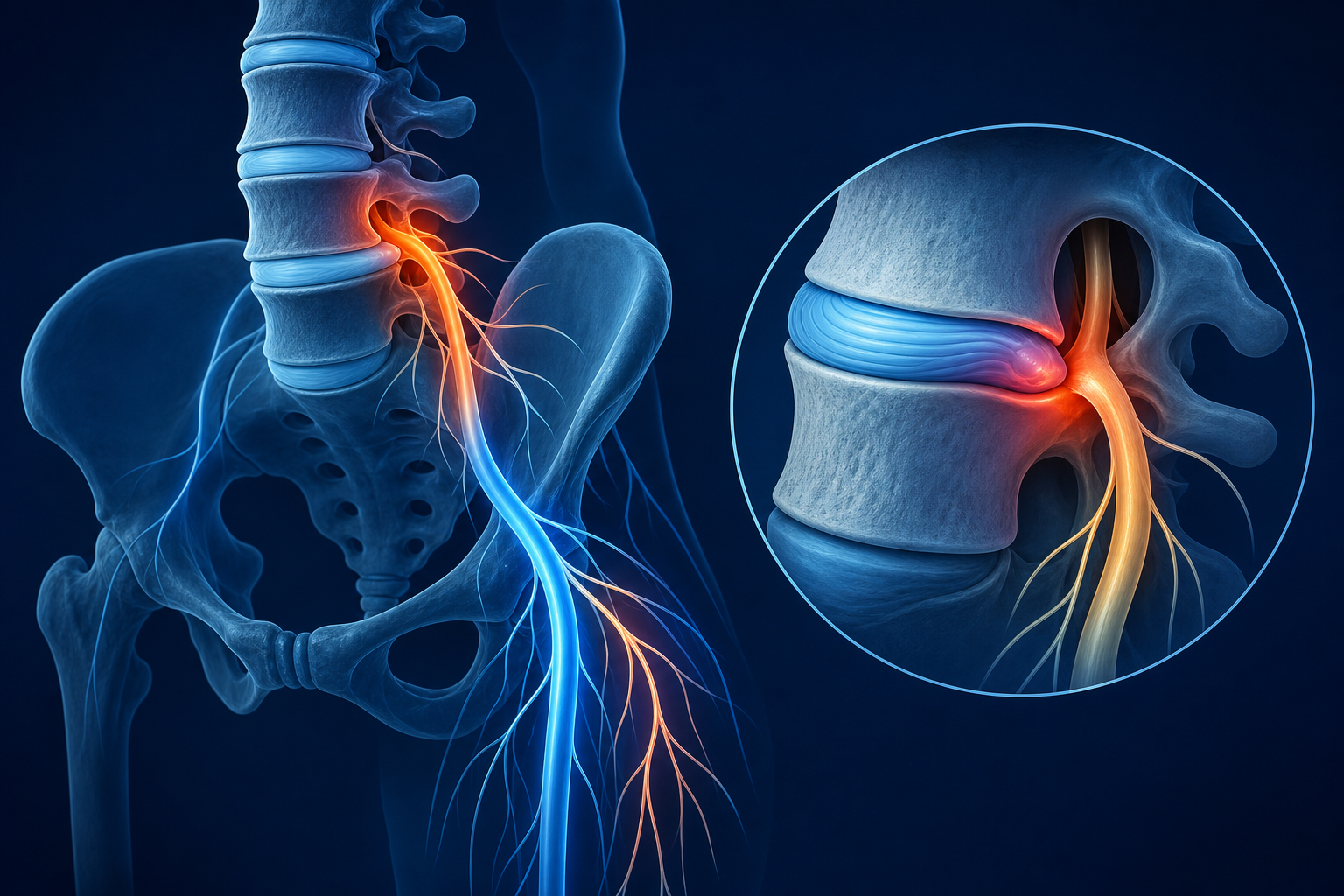
What Is Radiculopathy?
Radiculopathy is a clinical term for pain, numbness, tingling, or weakness that originates at a compressed or irritated nerve root in the spine and travels along the path that nerve serves. You may hear patients or providers describe it simply as a pinched nerve in the spine. The sensation is often sharp, electric, or burning — and it can follow a very specific route, such as shooting pain down the leg or radiating numbness into the arm and fingers.
It is one of the more common reasons patients seek care from chiropractors and physical therapists, and in many cases it responds well to conservative, non-surgical treatment. If you are experiencing these symptoms, a qualified provider can evaluate your spine and help identify the underlying cause. Search for a provider near you on Medximity to get a personalized assessment.
Common Symptoms of Radiculopathy
Because radiculopathy is a nerve-root problem, its symptoms can feel different from ordinary muscle soreness. Patients frequently describe:
- Sharp, shooting, or electric pain that radiates down the arm or leg
- Numbness or tingling in the arm, hand, leg, or foot
- Muscle weakness in the affected limb
- Pain that worsens with certain positions — such as pain when sitting or standing for long periods
- A sensation of the limb "falling asleep" more often than usual
Symptoms vary depending on where along the spine the nerve root is affected. The two most common forms are cervical radiculopathy and lumbar radiculopathy.
Cervical Radiculopathy: Symptoms in the Neck and Arm
Cervical radiculopathy involves a nerve root compressed in the neck (cervical spine). Typical symptoms include numbness or tingling in the arm, forearm, or fingers, weakness in the grip, and pain that may feel worse when turning the head. Many patients with cervical radiculopathy symptoms mistake the arm pain for a shoulder or rotator-cuff problem — a provider evaluation can help clarify the source.
Lumbar Radiculopathy and Sciatica
Lumbar radiculopathy affects the lower back and can produce radiating nerve pain down the leg — often called sciatica when the sciatic nerve is involved. It is normal to wonder, "Is it normal to have shooting pain down my leg?" While occasional muscle cramps differ from true radiculopathy, persistent shooting or burning pain that follows the back of the leg from the hip to the foot warrants professional evaluation. Learn more about sciatica and lumbar radiculopathy in our related guide.
What Causes Radiculopathy? (Pinched Nerve Explained)
The spine is built around stacked vertebrae cushioned by intervertebral discs, with nerve roots exiting through small openings on each side. Radiculopathy occurs when something narrows that space and presses on a nerve root. The most common causes include:
- Herniated or bulging disc: When the soft inner material of a disc pushes outward, it can press directly on a nearby nerve root. This is why patients often ask about radiculopathy vs. a herniated disc — a herniation is one of the leading causes of radiculopathy, not a separate condition.
- Degenerative disc disease or bone spurs: As spinal discs thin with age, bone spurs (osteophytes) can form and encroach on nerve-root channels.
- Spinal stenosis: Narrowing of the spinal canal can compress multiple nerve roots, often producing bilateral or more diffuse symptoms.
- Poor posture and repetitive strain: Extended periods of sitting, heavy lifting, or repetitive twisting can increase disc pressure and accelerate nerve-root irritation.
Radiculopathy Treatment Without Surgery
Many patients achieve meaningful relief through conservative, non-surgical care. Treatment effectiveness varies by severity and cause, but research generally supports a stepwise approach starting with conservative options before considering more invasive interventions. Natural treatment for nerve-root compression pain may include:
Chiropractic Care for Pinched Nerve Relief
Spinal manipulation and mobilization techniques used by chiropractors aim to restore proper alignment, reduce joint restriction, and relieve mechanical pressure on affected nerve roots. Some patients report significant improvement in radiating pain and mobility after a course of chiropractic care. Find a chiropractor near you who specializes in spinal nerve conditions to discuss whether this approach is appropriate for your situation.
Physical Therapy Exercises for Radiculopathy
A physical therapist can design an individualized program of stretching, strengthening, and neural-mobilization exercises that may reduce nerve-root irritation and help prevent recurrence. Core stabilization, gentle McKenzie-method extensions, and nerve-gliding techniques are among the strategies commonly used. Search for physical therapists on Medximity who have experience treating radiculopathy.
Supportive and Lifestyle Strategies
Ergonomic adjustments at a workstation, temporary activity modification, targeted stretching, and heat or ice application may support recovery alongside professional care. These measures work best as a complement to — not a replacement for — a provider's guidance.
How Long Does Radiculopathy Take to Heal?
Recovery timelines vary considerably. Mild radiculopathy caused by a recent disc irritation may improve within a few weeks with consistent conservative care. More chronic cases involving degenerative changes may require several months of treatment and ongoing management. A provider can give you a realistic picture of what to expect based on your imaging, symptom duration, and response to initial treatment. The key message: early intervention is generally associated with better outcomes, so do not wait out worsening symptoms without seeking an evaluation.
When to See a Provider
Seek prompt professional care if you experience any of the following:
- Progressive weakness in an arm or leg
- Loss of bladder or bowel control (this requires emergency evaluation)
- Symptoms that worsen rapidly despite rest
- Pain following a traumatic injury
For persistent but non-emergency symptoms — radiating arm or leg pain, ongoing numbness, or discomfort with sitting and standing — scheduling an appointment with a chiropractor or physical therapist is a reasonable and well-supported first step. Use the Medximity provider directory to find specialists experienced in spinal conditions near you.
Frequently Asked Questions About Radiculopathy
What is the difference between radiculopathy and a herniated disc?
A herniated disc is a structural finding — the disc's inner material has pushed out of its normal boundary. Radiculopathy is the set of symptoms (pain, numbness, weakness) that results when that herniation — or another cause — compresses a nerve root. You can have a herniated disc without radiculopathy, and radiculopathy can be caused by things other than disc herniation, such as bone spurs or spinal stenosis.
Is shooting pain down the leg always sciatica?
Not necessarily. While lumbar radiculopathy involving the sciatic nerve is a common cause of leg pain, shooting pain can also arise from piriformis syndrome, sacroiliac joint dysfunction, or other conditions. A clinical evaluation — often including a physical exam and imaging — is needed to identify the specific source and guide treatment appropriately.
Can radiculopathy heal on its own without treatment?
Mild cases sometimes improve with rest and time, particularly when caused by a recent, minor disc irritation. However, ongoing nerve-root compression that is not addressed may lead to persistent weakness or sensory changes. Conservative treatment is associated with faster and more complete recovery in many cases, which is why early evaluation is generally recommended.
Is chiropractic care safe for radiculopathy?
For most patients with cervical or lumbar radiculopathy from disc or joint causes, chiropractic care is considered a safe conservative option when performed by a licensed clinician after a proper evaluation. Your chiropractor will review your history and any imaging before recommending specific techniques. Certain conditions — such as severe instability or rapidly progressive neurological symptoms — may require a different approach, which a provider can discuss with you.
What physical therapy exercises help radiculopathy?
Exercises depend on the location and cause of nerve-root compression, but commonly include nerve-gliding or neural-mobilization techniques, core stabilization exercises, and direction-specific movements (such as McKenzie extensions for certain lumbar cases). A physical therapist will assess your specific presentation before prescribing exercises — self-directed programs without evaluation can occasionally aggravate symptoms.


