Getting into a car accident is stressful enough on its own. When you have Medicare Advantage — a private insurance plan that delivers your Medicare benefits — the billing picture after a crash can get complicated quickly. Auto insurance, health insurance, Medicare coordination rules, and possibly a personal injury claim may all overlap. Understanding which coverage pays first, what Medicare Advantage will and won't cover, and how to avoid unexpected denials can make a real difference in your recovery.
This article is general educational information. Coverage details vary by plan and by state, and your specific situation may require guidance from a licensed attorney or a benefits specialist. With that said, here is what most Medicare Advantage beneficiaries need to understand before their first post-accident appointment.
If you are still deciding where to seek care, our guide to chiropractic care after a car accident can help you understand your conservative treatment options.
How Medicare Advantage Fits Into the Auto Accident Billing Picture
Medicare Advantage plans — also called Medicare Part C — are sold by private insurers approved by the Centers for Medicare & Medicaid Services (CMS). They cover at least the same services original Medicare covers, and many plans add dental, vision, and other benefits. But the coverage rules that govern auto accident claims are shaped by federal law, not just your plan's handbook.
The Medicare Secondary Payer Rule
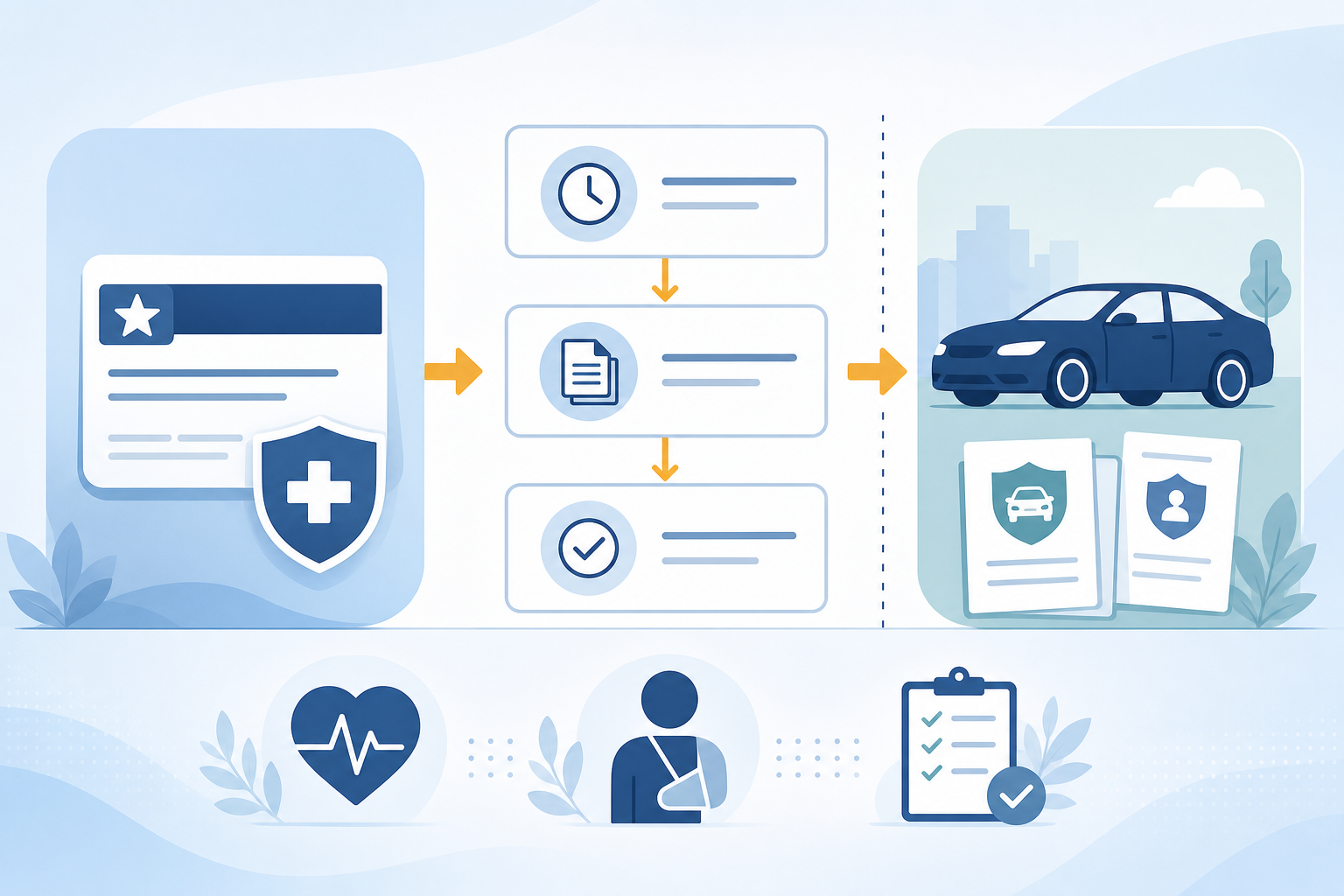
Federal law establishes Medicare — including Medicare Advantage — as a secondary payer when another source of payment is available for your accident-related care. In practice, this means your auto insurance is expected to pay first. Medicare Advantage steps in only after the primary payer — your auto coverage, MedPay, or the at-fault driver's liability insurance — has been applied or has been exhausted.
This rule applies even if you have not yet filed a claim against the other driver or received any settlement. Medicare Advantage plans are required to follow these coordination-of-benefits rules, so the order of payment is not something you or your provider can simply negotiate around.
What Counts as a Primary Payer After an Auto Accident
Primary payers in an auto accident context typically include:
- No-fault or Personal Injury Protection (PIP) coverage — required in no-fault states and pays your medical bills regardless of fault, up to policy limits
- Medical Payments coverage (MedPay) — an optional add-on that covers medical expenses after an accident
- Liability insurance — the at-fault driver's coverage, which may take months to resolve
- Workers' compensation — if the accident happened while you were working
Until these sources are exhausted or confirmed unavailable, Medicare Advantage generally should not be billed as the primary payer for accident-related services.
What Happens When Auto Insurance Is Exhausted or Unavailable
Once your auto insurance benefits — PIP, MedPay, or liability coverage — have been fully used, Medicare Advantage may step in to cover medically necessary treatment, subject to your plan's normal rules. This is where the secondary payer role becomes practically important.
Conditional Payments
If you need ongoing care and auto insurance is slow to pay, Medicare Advantage may make what are known as conditional payments — that is, it pays your bills provisionally, with the expectation of being reimbursed if a settlement or judgment comes through later. If you do eventually settle a personal injury claim, federal law requires that Medicare Advantage be repaid for any accident-related expenses it covered. This is called a Medicare Advantage lien or subrogation right, and failing to address it in a settlement can create serious financial and legal complications.
If a personal injury claim is involved, working with a qualified attorney is strongly advisable. Learn more in our overview of how personal injury claims intersect with medical treatment.
Does Medicare Advantage Cover Chiropractic Treatment After an Accident?
Chiropractic care is one of the most commonly sought treatments after a car accident, particularly for whiplash, cervical strain, and lower back injuries. Whether Medicare Advantage will cover it depends on a few factors.
What Original Medicare Covers — and What Plans May Add
Original Medicare Part B covers manual manipulation of the spine to correct a subluxation — a specific chiropractic service — when it is deemed medically necessary. Many Medicare Advantage plans cover at least this much and some cover additional chiropractic visits beyond what original Medicare provides. However, the specific number of visits, co-pay requirements, and whether a referral is needed varies by plan.
Importantly, Medicare Advantage plans generally will not cover chiropractic services billed under auto insurance simultaneously. If your PIP or MedPay is the active primary payer, your chiropractor must bill that coverage first.
Finding a Chiropractor Who Accepts Medicare Advantage After an Accident
Not every chiropractor participates with every Medicare Advantage plan, and not every chiropractor is experienced with accident-related billing protocols. Before scheduling, confirm that your provider:
- Is in-network with your specific Medicare Advantage plan
- Understands the coordination of benefits process for auto accident patients
- Is willing to bill auto insurance first and Medicare Advantage as secondary
You can search for chiropractors near you on Medximity and filter by insurance accepted to find providers experienced with accident cases and Medicare Advantage billing.
Does Medicare Advantage Cover Physical Therapy After a Car Accident?
Physical therapy for accident-related injuries — such as soft tissue injuries, joint dysfunction, or post-surgical rehabilitation — may be covered by Medicare Advantage when it meets medical necessity criteria. Original Medicare covers outpatient physical therapy under Part B, and Medicare Advantage plans must cover at least the same services.
As with chiropractic care, the coordination-of-benefits order applies. Auto insurance is primary; Medicare Advantage is secondary. Some plans require prior authorization for physical therapy, so confirming your plan's requirements before beginning treatment can help avoid a claim denial later.
For more on what to expect from physical therapy after an injury, read our article on physical therapy after a car accident.
What If Your Medicare Advantage Claim Is Denied After a Car Accident?
Claim denials after auto accidents are not uncommon, and they are not always final. Common reasons for denial include:
- The insurer determined that auto coverage was available and should have paid first
- The service was not deemed medically necessary
- The provider was out-of-network
- Prior authorization was not obtained
- Documentation was insufficient to establish that the treatment was accident-related
Your Right to Appeal
Medicare Advantage plans are required to have a formal appeals process. If a claim is denied, you have the right to request a redetermination from the plan, and if that is unsuccessful, to escalate to an independent review entity. Denials related to the secondary payer rules can be particularly complex, and consulting with a patient advocate, a billing specialist, or a personal injury attorney familiar with Medicare issues may help you navigate the process effectively.
Letters of Protection and Medicare Advantage — Proceed With Caution
In personal injury cases, some providers offer to treat patients under a letter of protection (LOP) — an agreement to defer billing until a settlement is reached. While this arrangement is common in personal injury practice, it interacts with Medicare Advantage in complicated ways.
Medicare regulations generally do not permit Medicare beneficiaries to waive their Medicare coverage in favor of a letter of protection arrangement. If you are enrolled in Medicare Advantage, a provider who accepts an LOP from you and agrees not to bill Medicare may be putting both of you at risk of compliance issues. This is an area where legal and billing expertise is genuinely necessary — the rules are nuanced, vary by situation, and can have significant financial consequences. Always consult with an attorney and your plan before agreeing to any deferred-billing arrangement.
MedPay Exhausted — Can Medicare Advantage Pick Up the Remaining Bills?
If your MedPay coverage has been fully exhausted and you still have outstanding accident-related medical bills, Medicare Advantage may cover ongoing medically necessary treatment as the secondary payer — as long as services are covered under your plan and documentation supports medical necessity. At that point, the standard Medicare Advantage billing rules apply: in-network providers, co-pays, deductibles, and prior authorization requirements all remain in effect.
Keep clear records of what your auto insurance paid, what it denied, and when coverage limits were reached. Your provider's billing department will need this documentation to submit a proper claim to Medicare Advantage as secondary.
How Long Does Medicare Advantage Take to Pay Accident Claims?
Payment timelines for Medicare Advantage accident claims vary, but federal regulations generally require Medicare Advantage plans to process clean claims within 30 days for electronic submissions and 45 days for paper submissions. Claims involving coordination of benefits — where auto insurance is involved — may take longer due to the need to verify that primary coverage has been applied or exhausted. Incomplete documentation is one of the most common causes of delay, so working with providers who have experience billing Medicare Advantage for accident cases can help keep the process moving.
Medicare Advantage vs. Original Medicare After a Car Accident
One meaningful difference between Medicare Advantage and original Medicare in accident cases is how lien and reimbursement rules are handled. Original Medicare's secondary payer requirements are governed by the federal Medicare Secondary Payer Act, and they are well established in personal injury practice. Medicare Advantage plans have their own contractual subrogation and reimbursement rights, which may differ from original Medicare's in terms of calculation method and enforcement.
Some courts have treated Medicare Advantage subrogation rights differently than original Medicare lien rights, which can affect personal injury settlements. If you have a pending injury claim, your attorney needs to be aware of which type of Medicare coverage you have — the distinction matters legally and financially.
Whether you need a chiropractor or a physical therapist experienced with Medicare Advantage billing, search Medximity's provider directory to find qualified specialists near you.
Should You Work With a Personal Injury Attorney If You Have Medicare Advantage?
If your accident involved another driver's negligence, significant injuries, or ongoing care needs, consulting a personal injury attorney is generally advisable regardless of your insurance situation. When Medicare Advantage is involved, the case for legal guidance is stronger, because:
- Subrogation and reimbursement rights must be properly addressed in any settlement
- Lien resolution errors can leave you personally liable for amounts Medicare Advantage paid
- Coordination of benefits disputes may require formal appeals
- LOP and deferred billing arrangements carry compliance risks for Medicare beneficiaries
Laws governing personal injury claims and Medicare interactions vary significantly by state. An attorney licensed in your jurisdiction can review your specific facts and advise you appropriately — this article cannot substitute for that guidance.
Medximity connects patients with providers who work closely with the legal community. Find accident treatment providers in your area who understand the medical-legal coordination involved in these cases.
Key Steps After a Car Accident When You Have Medicare Advantage
- Seek medical evaluation promptly. Delaying care can complicate both your recovery and your claim.
- Notify your Medicare Advantage plan that you were in an accident and that auto insurance is involved.
- Confirm your auto insurance coverage — PIP limits, MedPay amounts, and how to submit medical claims.
- Choose providers carefully — make sure they accept your Medicare Advantage plan and understand accident billing.
- Keep documentation of every bill, payment, and denial from all payers.
- Consult an attorney if another driver was at fault or if your bills are likely to exceed your auto coverage limits.
Recovery after a car accident is challenging enough without billing confusion slowing you down. Understanding the coordination-of-benefits rules that govern Medicare Advantage as a secondary payer gives you a clearer picture of what to expect — and helps you advocate for the care you need.