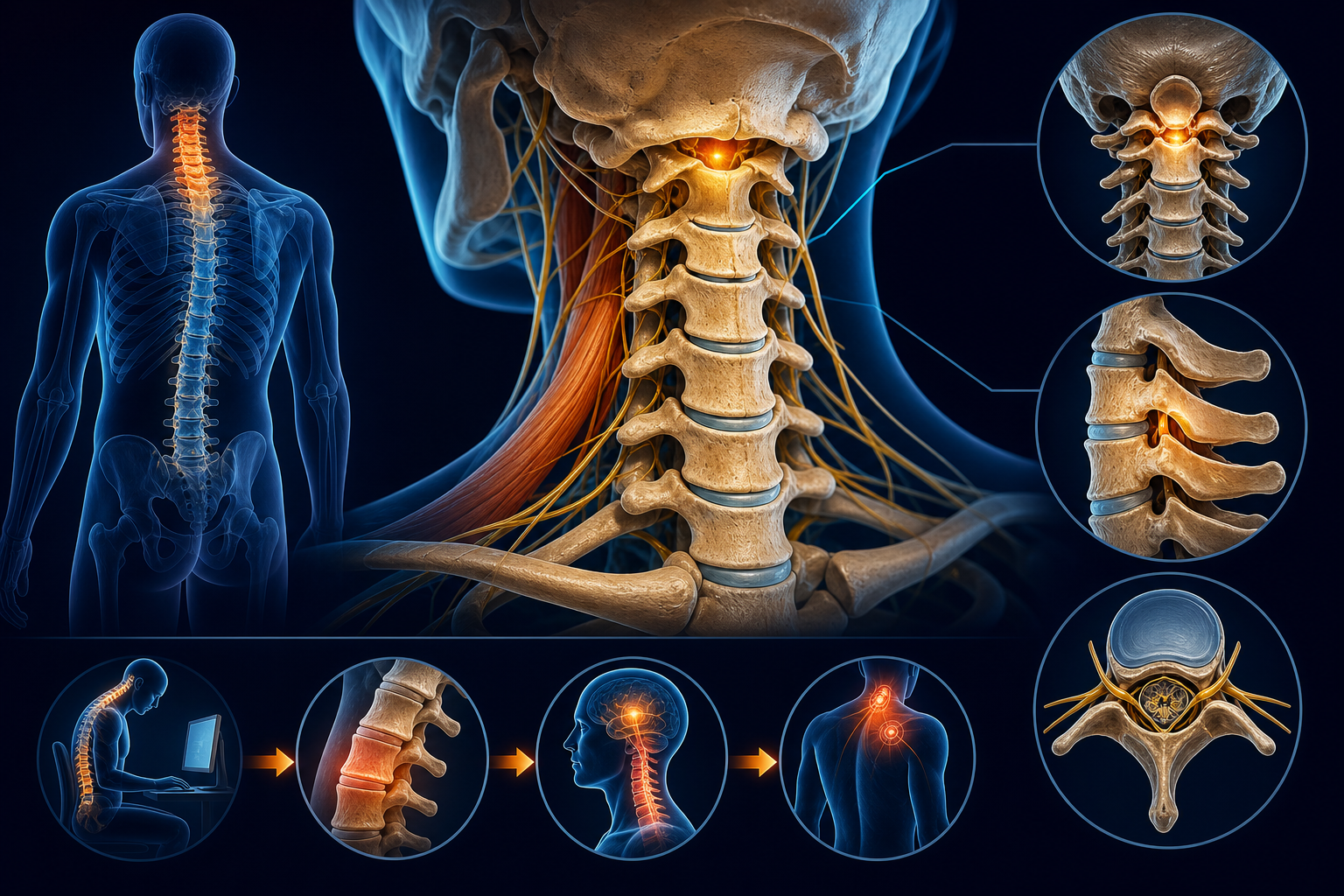
Understanding Muscle Pain (Myalgia): Symptoms, Causes, and Treatment starts with a simple idea: muscle pain is common, but it can come from many different sources. Myalgia may feel like a dull ache, tightness, cramping, tenderness, burning, or pain that appears when you move a specific body part. In many cases, muscle pain improves with time, rest, gentle movement, hydration, and appropriate conservative care. In other cases, ongoing or worsening pain may be a sign that a qualified provider should evaluate what is contributing to your symptoms.
If you are wondering, what is myalgia muscle pain, why your muscles ache, whether your symptoms are normal, or how long myalgia lasts, this guide can help you understand the basics. It is not a diagnosis and does not replace medical care. A provider can review your health history, examine the painful area, and help determine whether physical therapy, chiropractic care, home exercise, ergonomic changes, or another appropriate plan may be a good fit for your situation.
Patients often start their search online because they want practical answers: Is it normal to have muscle pain? What are the common symptoms of muscle pain? What is the difference between myalgia vs normal muscle soreness? When should I look for a chiropractor for muscle pain near me or a physical therapist for muscle pain? The sections below walk through those questions in plain language.
What Is Myalgia Muscle Pain?
Myalgia means muscle pain. It can affect one small area, such as the calf, shoulder, neck, or forearm, or it can feel more widespread. Some people describe myalgia as soreness, stiffness, heaviness, tenderness, or an ache that becomes more noticeable with activity. Others notice muscle pain when moving arms, climbing stairs, turning the neck, standing up from a chair, or returning to exercise after a break.
Muscles are active tissues. They contract, relax, stabilize joints, support posture, and help you move through daily tasks. When a muscle is overloaded, irritated, strained, under-recovered, or affected by another health factor, it may become painful. Nearby structures can also contribute. Tendons, ligaments, joints, nerves, fascia, and the spine can all refer discomfort into areas that feel muscular.
Because muscle pain has many possible causes, the best provider for muscle pain depends on the pattern of symptoms. A physical therapist may be helpful when pain is connected to movement, weakness, posture, recovery after injury, or return to activity. A chiropractor may be helpful when pain is associated with spinal or joint mechanics, stiffness, or musculoskeletal irritation. A primary care provider or medical specialist may be needed when symptoms are widespread, unexplained, associated with illness, or accompanied by warning signs.
Common Symptoms of Muscle Pain
The common symptoms of muscle pain can vary from person to person. Some symptoms are mild and short-lived. Others interfere with sleep, work, exercise, or daily activities. Paying attention to the quality, location, timing, and triggers of your pain can help a provider understand what may be happening.
Aching, soreness, or tenderness
Many people describe myalgia as a deep ache or soreness. The area may be tender when pressed, stretched, or used. This can happen after new exercise, repeated lifting, long hours at a desk, yard work, or a sudden movement. Tenderness may also develop when muscles are guarding or tightening around an irritated joint.
Stiffness and limited movement
Muscle pain often comes with stiffness. You may notice that it takes longer to warm up in the morning, that your neck does not turn as far as usual, or that your hips, back, or shoulders feel restricted. Stiffness can be related to muscle tension, joint mobility, inflammation, or protective guarding after irritation.
Cramping or spasms
A muscle cramp is a sudden, involuntary contraction. A spasm may feel like tightening, pulling, or a knot in the muscle. Cramping can be associated with fatigue, dehydration, prolonged positioning, overuse, or certain health factors. Recurrent or severe cramping should be discussed with a qualified provider, especially if it is new, unexplained, or associated with weakness or swelling.
Muscle pain when moving arms or legs
Muscle pain when moving arms may come from shoulder, neck, upper back, or arm muscles, but it can also be influenced by joints, tendons, or nerves. For example, discomfort when reaching overhead may involve the shoulder complex, while pain that travels from the neck into the arm may require a different evaluation. Leg muscle pain with walking, stairs, squatting, or running may be related to hip, knee, ankle, spine, or soft-tissue mechanics. A provider can assess the movement pattern rather than assuming the muscle alone is the problem.
Weakness, fatigue, or reduced endurance
Some people with myalgia feel that the muscle tires quickly or cannot perform as well as usual. Mild fatigue after exertion can be normal, but persistent weakness, sudden weakness, or weakness that affects walking, gripping, balance, or daily function should be evaluated. Weakness can have many causes, and a professional assessment is important when it is significant or worsening.
Pain that changes with posture or activity
Musculoskeletal muscle pain often changes with movement, posture, rest, or activity level. Pain that worsens after prolonged sitting may suggest a posture or mobility component. Pain that appears only during a specific exercise may point to load, technique, flexibility, strength, or recovery factors. Pain that does not change at all with movement may need a broader medical evaluation.
Why Do My Muscles Ache?
If you are asking, why do my muscles ache, the answer may involve one factor or several overlapping contributors. Muscle pain can be related to recent activity, repetitive stress, injury, tension, illness, sleep, stress, hydration, or underlying health conditions. The goal is not to guess, but to look for patterns that guide the next step.
Exercise, overuse, and delayed soreness
One of the most common reasons for muscle aches is increased activity. A new workout, heavier weight, more repetitions, a longer walk, or an unfamiliar movement can challenge muscle tissue. Delayed onset muscle soreness, often called DOMS, typically appears several hours after activity and may peak a day or two later. It is commonly associated with exercise that loads muscles in a new way, especially lowering or lengthening movements.
Normal post-exercise soreness usually improves gradually and does not cause severe swelling, major weakness, or loss of function. If pain is sharp, one-sided, associated with a pop, or prevents normal movement, it may be more than routine soreness and should be assessed.
Muscle strain
A strain occurs when muscle fibers or the tendon that connects muscle to bone are overstretched or irritated. Strains can happen suddenly, such as during a lift, sprint, or fall, or they can build gradually from repeated overload. Symptoms may include localized pain, tenderness, swelling, bruising, tightness, or difficulty using the area. Conservative care may include activity modification, progressive mobility, strengthening, and guidance on returning to activity safely.
Posture and repetitive stress
Long periods of sitting, standing, driving, typing, phone use, or repetitive work can contribute to muscle irritation. For example, neck and shoulder muscles may ache after hours of forward-head posture or prolonged computer use. Forearm muscles may become sore with repetitive gripping or keyboard activity. Low back and hip muscles may ache when they are asked to support the same position for too long. Ergonomic changes, movement breaks, and targeted exercise may help some patients reduce recurring symptoms.
Joint or spine-related irritation
Sometimes pain that feels muscular is influenced by joints or spinal movement. Stiffness in the neck, mid-back, low back, shoulder, hip, or pelvis can cause surrounding muscles to guard. This guarding may feel like tightness, spasms, or aching. Conditions discussed on Medximity, such as back pain and neck pain, often include a muscle component even when the source is not only muscle tissue.
Stress, sleep, and recovery
Stress and poor sleep can influence pain sensitivity, muscle tension, and recovery. Many patients notice that their shoulders, jaw, neck, or low back feel tighter during stressful periods. Sleep is also when the body supports many recovery processes. If sleep is consistently disrupted, muscle aches may feel more intense or last longer. Gentle movement, relaxation strategies, and a structured plan from a provider may help some patients manage these contributors.
Illness or whole-body causes
Widespread muscle aches may occur with viral illnesses, systemic inflammation, certain metabolic issues, or other health conditions. Medication side effects can also be associated with muscle symptoms for some people. Because these causes are not always musculoskeletal, widespread, unexplained, recurrent, or severe myalgia should be discussed with a medical provider. If symptoms are accompanied by fever, rash, dark urine, chest pain, trouble breathing, severe weakness, confusion, or significant swelling, seek urgent medical attention.
Myalgia vs Normal Muscle Soreness
Many patients want to understand myalgia vs normal muscle soreness. The terms can overlap, but the pattern matters. Normal muscle soreness is usually linked to a clear activity, such as exercise, lifting, moving furniture, or a physically demanding day. It tends to feel symmetrical or predictable based on the muscles used. It should gradually improve over a few days.
Myalgia is a broader term. It can describe normal soreness, but it can also describe muscle pain related to strain, overuse, tension, illness, joint dysfunction, nerve irritation, or other factors. If pain is intense, persistent, unexplained, or associated with other symptoms, it deserves more attention than routine soreness.
Signs soreness may be part of normal recovery
- It began after a new or more intense activity.
- It feels like a dull ache or stiffness rather than sharp pain.
- It affects muscles that were clearly used.
- It improves with light movement, rest, hydration, and time.
- It does not cause major weakness, swelling, bruising, numbness, or loss of function.
Signs muscle pain should be evaluated
- Pain is severe, sudden, or worsening.
- Pain followed a fall, collision, or traumatic injury.
- You noticed a pop, tearing sensation, significant bruising, or swelling.
- You have numbness, tingling, radiating pain, or weakness.
- Pain lasts longer than expected or keeps returning.
- You have fever, unexplained weight loss, rash, dark urine, chest pain, or trouble breathing.
- Muscle pain limits work, sleep, walking, lifting, or daily activities.
When in doubt, it is reasonable to speak with a qualified provider. An evaluation can help clarify whether you are dealing with routine soreness, a musculoskeletal condition, or a concern that needs additional medical attention.
How Long Does Myalgia Last?
How long myalgia lasts depends on the cause, severity, your health history, your activity level, and whether the painful tissue continues to be irritated. Mild post-exercise soreness may improve within several days. A mild strain may take longer and may require a gradual return to activity. Chronic or recurring muscle pain can last weeks or months if the underlying contributors are not addressed.
Time alone is not the only measure. Pay attention to the trend. Pain that is steadily improving is different from pain that is worsening, spreading, or interfering more with daily function. If you have been modifying activity and using gentle self-care but symptoms are not improving, a provider can help evaluate strength, mobility, posture, joint mechanics, and movement habits.
Factors that may prolong muscle pain
- Returning to intense activity too quickly.
- Repeatedly loading the same painful area without recovery.
- Poor sleep or high stress.
- Limited mobility in nearby joints.
- Weakness or imbalance around the painful area.
- Work or sport demands that continue to irritate the tissue.
- Underlying health factors that affect healing or pain sensitivity.
For persistent symptoms, conservative care may focus on identifying the driver of the pain and building a plan that supports recovery without unnecessary flare-ups.
Muscle Pain Treatment Without Medication
Many people search for muscle pain treatment without medication because they want conservative options before considering other approaches. Non-drug strategies may help some patients manage symptoms, restore movement, and reduce the chance of recurrence. The right plan depends on the cause of the pain and should be tailored to the person.
Relative rest, not complete inactivity
Short-term rest may help after an acute strain or flare-up, but complete inactivity for too long can sometimes increase stiffness and reduce tolerance to movement. Relative rest means avoiding the activities that clearly worsen symptoms while continuing gentle, comfortable movement as appropriate. A provider can help you find the right balance.
Gentle movement and mobility
Light walking, range-of-motion exercise, and gentle mobility work may help some types of muscle pain. Movement can support circulation, reduce stiffness, and help you learn which positions feel better or worse. The goal is not to push through sharp pain. A good rule is to keep movement controlled, comfortable, and gradual unless your provider gives different guidance.
Heat or cold
Some patients use cold for a recent injury or swelling and heat for muscle tightness or stiffness. Responses vary. Cold may temporarily reduce pain sensitivity in some cases, while heat may help a tight area relax. Avoid extreme temperatures, protect the skin, and speak with a provider if you have circulation problems, reduced sensation, or other conditions that may make heat or cold less safe.
Hydration, nutrition, and sleep
Hydration, balanced nutrition, and adequate sleep support general recovery. They are not cures for myalgia, but they may influence how the body responds to exercise, stress, and tissue irritation. If muscle cramps or widespread aches are frequent, it may be worth discussing broader health factors with a medical provider.
Stretching and strengthening
Stretching may help some patients with tightness, but it is not always the answer. A painful muscle may feel tight because it is overworked, under-supported, or guarding. In those cases, strengthening nearby muscles, improving joint mobility, or changing load may matter more than stretching alone. A physical therapist can assess which approach is appropriate.
Ergonomics and activity changes
If muscle pain keeps returning during work, driving, exercise, or household tasks, small changes may reduce repeated irritation. This can include adjusting desk height, changing screen position, using movement breaks, varying tasks, improving lifting mechanics, or gradually building tolerance for an activity. Ergonomics works best when paired with movement and strengthening rather than used as the only strategy.
For a broader look at conservative care options, Medximity provides information about physical therapy treatment and chiropractic care for musculoskeletal concerns.
Physical Therapy for Muscle Pain
Physical therapy for muscle pain may be appropriate when pain affects movement, strength, posture, balance, work tasks, exercise, or recovery after injury. Physical therapists evaluate how your body moves and how different tissues and joints contribute to your symptoms. They often use a combination of education, exercise, manual therapy, mobility work, and progressive activity planning.
What a physical therapist may evaluate
- Where the pain is located and what movements trigger it.
- Range of motion in nearby joints.
- Strength and endurance of the involved muscles.
- Posture, gait, lifting mechanics, or sport-specific movement.
- Flexibility and tissue sensitivity.
- Balance, coordination, and functional limitations.
- Your goals, work demands, exercise routine, and daily activities.
What treatment may include
A physical therapy plan may include gentle mobility exercises, progressive strengthening, neuromuscular re-education, stretching when appropriate, hands-on techniques, posture coaching, and a home exercise plan. For a runner with calf myalgia, the plan may focus on calf strength, ankle mobility, training load, footwear considerations, and return-to-run progression. For a desk worker with neck and shoulder muscle pain, the plan may include thoracic mobility, scapular strengthening, workstation changes, and movement breaks.
Physical therapy does not usually aim only to make the pain quieter for the day. It often focuses on improving capacity so the painful area can better tolerate daily demands. Progress can be gradual, especially when symptoms have been present for a long time.
When to consider physical therapy
You may consider physical therapy if muscle pain has lasted more than a few days without improvement, keeps returning, limits movement, affects work or exercise, or follows an injury. You can search Medximity for physical therapy providers near you and compare options based on location and services.
Chiropractic Care for Muscle Pain
Chiropractic care may be considered when muscle pain appears related to spinal or joint stiffness, posture, movement restriction, or musculoskeletal irritation. Chiropractors commonly evaluate the spine, joints, muscles, and nervous system to understand how movement patterns may be contributing to symptoms. For some patients, chiropractic care may be part of a conservative plan that also includes stretching, strengthening, soft-tissue work, and home guidance.
How joint mechanics can affect muscles
Muscles and joints work together. If a joint is stiff, irritated, or moving poorly, nearby muscles may tighten to protect the area. This can feel like a knot, spasm, or deep ache. Conversely, weak or fatigued muscles may place extra stress on nearby joints. A chiropractic evaluation may look at how the painful area moves as part of the larger region, such as the neck and shoulder, low back and hip, or pelvis and leg.
What to expect from a chiropractic visit
During a chiropractic visit for muscle pain, the provider may ask about symptom onset, aggravating activities, previous injuries, work posture, sleep position, exercise, and health history. The exam may include range-of-motion testing, orthopedic or neurological screening when indicated, palpation, posture or movement assessment, and discussion of conservative treatment options. Treatment may include spinal or joint manipulation when appropriate, mobilization, soft-tissue techniques, therapeutic exercise, and self-care recommendations.
Chiropractic care is not the right fit for every type of muscle pain. A responsible provider should refer you for medical evaluation when symptoms suggest a condition outside the scope of conservative musculoskeletal care. If you are searching for a chiropractor for muscle pain near me, look for a provider who explains the exam findings, discusses reasonable expectations, and coordinates care when needed.
Natural Treatment for Muscle Aches: What May Help
Natural treatment for muscle aches usually refers to conservative, non-drug approaches that support recovery and movement. These strategies may help some people feel better, but they should be used thoughtfully. Natural does not automatically mean risk-free, and persistent or severe symptoms still deserve evaluation.
Movement snacks throughout the day
Short, frequent movement breaks can be useful for muscle pain linked to prolonged sitting or repetitive positions. Standing, walking, shoulder rolls, gentle spinal movement, and hip mobility drills may reduce stiffness for some people. The key is consistency and comfort, not intensity.
Breathing and relaxation strategies
When stress contributes to muscle tension, relaxation strategies may help lower guarding. Slow breathing, gentle stretching, mindfulness, and calming routines before bed may be helpful for some patients. These strategies do not replace care for an injury, but they may support the overall recovery environment.
Gradual return to exercise
After a painful flare-up, returning to activity gradually may reduce the chance of another flare. This can mean lowering intensity, shortening duration, reducing weight, changing range of motion, or spacing out hard training days. A provider can help you progress safely based on your symptoms and goals.
Massage and soft-tissue work
Massage, foam rolling, or other soft-tissue techniques may temporarily reduce tightness or discomfort for some people. These approaches may be most useful when combined with movement, strength, and load management. If soft-tissue work causes significant bruising, sharp pain, numbness, or worsening symptoms, stop and consult a provider.
When Should You See a Provider for Muscle Pain?
It can be normal to have muscle pain after unfamiliar exercise or a demanding day. However, it is not always something to ignore. You should consider seeing a provider when pain is not improving, keeps returning, limits normal activity, or is associated with symptoms that raise concern.
Schedule a non-urgent evaluation when:
- Pain lasts longer than expected or has not improved after several days of self-care.
- You are avoiding normal activities because of pain.
- You have recurring muscle tightness, spasms, or aches in the same area.
- You notice reduced range of motion, strength, or endurance.
- Your pain is connected to work posture, lifting, sports, or repetitive activity.
- You want guidance on safe exercise, stretching, or return to activity.
Seek urgent medical attention when:
- Muscle pain is severe, sudden, or follows major trauma.
- You have chest pain, shortness of breath, fainting, or confusion.
- You have significant weakness, loss of coordination, or trouble walking.
- You notice dark urine, severe swelling, or extreme tenderness after intense exercise.
- You have fever, rash, spreading redness, or signs of infection.
- You have numbness, loss of bladder or bowel control, or rapidly worsening neurological symptoms.
These warning signs do not mean one specific condition is present, but they do mean timely medical evaluation is important.
What to Expect at a Provider Visit for Muscle Pain
A provider visit for muscle pain usually begins with a conversation. The provider will want to understand when the pain started, what it feels like, where it is located, what makes it better or worse, and whether you have had similar symptoms before. They may also ask about exercise, work demands, recent illness, sleep, stress, medications, and past injuries.
History and symptom review
Clear details can help. Try to describe whether the pain is sharp, dull, cramping, burning, aching, or tight. Note whether it stays in one place or travels. Mention whether you have numbness, tingling, weakness, swelling, fever, or changes in daily function. If muscle pain appears during a specific movement, such as lifting the arm or climbing stairs, tell the provider exactly when it happens.
Movement and physical exam
The exam may include observing posture, walking, squatting, reaching, bending, or other movements related to your symptoms. The provider may test range of motion, strength, reflexes, sensation, joint mobility, and tenderness. The goal is to understand which tissues may be involved and whether conservative care is appropriate.
Care plan and follow-up
If conservative care is appropriate, your plan may include activity modification, home exercises, manual therapy, strengthening, mobility work, ergonomic recommendations, and follow-up visits to monitor progress. The provider should explain what changes to watch for and when to seek additional evaluation. If symptoms suggest a non-musculoskeletal issue or a more urgent concern, you may be referred to a medical provider or appropriate specialist.
How to Choose the Best Provider for Muscle Pain
The best provider for muscle pain depends on your symptoms, goals, and medical history. For movement-related pain, a physical therapist or chiropractor may be a good place to start. For widespread, unexplained, severe, or illness-related pain, a primary care provider or medical specialist may be more appropriate. Some patients benefit from coordinated care among multiple providers.
Questions to ask before scheduling
- Do you commonly treat muscle pain in this area of the body?
- What should I expect during the first visit?
- Will you evaluate movement, strength, and function?
- Do you provide a home exercise or self-care plan?
- How do you decide whether I need referral for medical evaluation?
- What are realistic goals for the first few weeks of care?
Medximity helps patients compare conservative care options and find providers by specialty and location. You can start with the Medximity information page on muscle pain, explore physical therapy, learn about chiropractic care, or search directly for nearby providers.
Practical Self-Care Tips While You Wait for an Appointment
If your symptoms are mild and you do not have warning signs, gentle self-care may help while you monitor your symptoms or wait for an appointment. Keep these steps conservative and stop anything that clearly worsens pain.
- Reduce the aggravating load. Temporarily scale back the activity that triggered symptoms rather than stopping all movement.
- Keep moving comfortably. Light walking or gentle range-of-motion work may help with stiffness.
- Use heat or cold carefully. Choose what feels better, protect your skin, and avoid extreme temperatures.
- Prioritize sleep. Rest can influence pain sensitivity and recovery.
- Hydrate and eat balanced meals. General health habits support your body as it recovers.
- Track your symptoms. Note what improves or worsens pain, how long symptoms last, and whether function is changing.
- Avoid pushing through sharp pain. Discomfort and effort are not the same as pain that signals irritation.
Self-care is not a substitute for evaluation when pain is severe, persistent, recurrent, or associated with concerning symptoms.
Frequently Asked Questions About Muscle Pain and Myalgia
Is it normal to have muscle pain?
It can be normal to have muscle pain after new exercise, physical work, or prolonged positions. However, pain that is severe, unexplained, worsening, recurrent, or associated with weakness, swelling, fever, numbness, chest pain, or trouble breathing should be evaluated.
What is myalgia muscle pain?
Myalgia is the medical term for muscle pain. It may feel like aching, soreness, tenderness, cramping, tightness, or pain with movement. Myalgia can be related to exercise, strain, overuse, posture, illness, stress, or other health factors.
How long does myalgia last?
Mild soreness may improve within a few days, while strains or recurring muscle pain may last longer. The timeline depends on the cause, severity, activity level, and overall health. If symptoms are not improving or keep returning, consider seeing a provider.
What is the difference between myalgia and normal muscle soreness?
Normal muscle soreness usually follows a clear activity and gradually improves. Myalgia is a broader term that can include normal soreness but may also describe pain related to injury, overuse, illness, joint irritation, or other causes.
Can physical therapy help muscle pain?
Physical therapy may help some patients with muscle pain by addressing mobility, strength, movement patterns, posture, and activity progression. A physical therapist can create a plan based on your symptoms and goals.
Can a chiropractor help with muscle pain?
A chiropractor may help when muscle pain is related to spinal or joint stiffness, posture, or musculoskeletal movement patterns. Chiropractic care may include manual therapy, joint mobilization or manipulation when appropriate, exercise, and self-care guidance.
What are conservative treatment options for muscle pain without medication?
Conservative options may include relative rest, gentle movement, stretching when appropriate, strengthening, heat or cold, hydration, sleep support, ergonomic changes, physical therapy, and chiropractic care. The best approach depends on the cause of the pain.
When should muscle pain be urgent?
Seek urgent medical attention for muscle pain with chest pain, trouble breathing, fainting, confusion, severe weakness, major trauma, dark urine, severe swelling, fever, spreading redness, or rapidly worsening neurological symptoms.
Finding Care for Muscle Pain Through Medximity
Muscle pain is common, but it should still be taken seriously when it affects your life or does not follow the pattern of normal soreness. Understanding Muscle Pain (Myalgia): Symptoms, Causes, and Treatment can help you ask better questions and choose the right next step. Conservative providers such as physical therapists and chiropractors may help evaluate movement-related myalgia, guide safe activity, and support recovery with non-medication strategies when appropriate.
If you are ready to compare care options, use Medximity to find physical therapy providers or chiropractors near you. If your symptoms are severe, widespread, unexplained, or accompanied by warning signs, seek medical evaluation promptly.