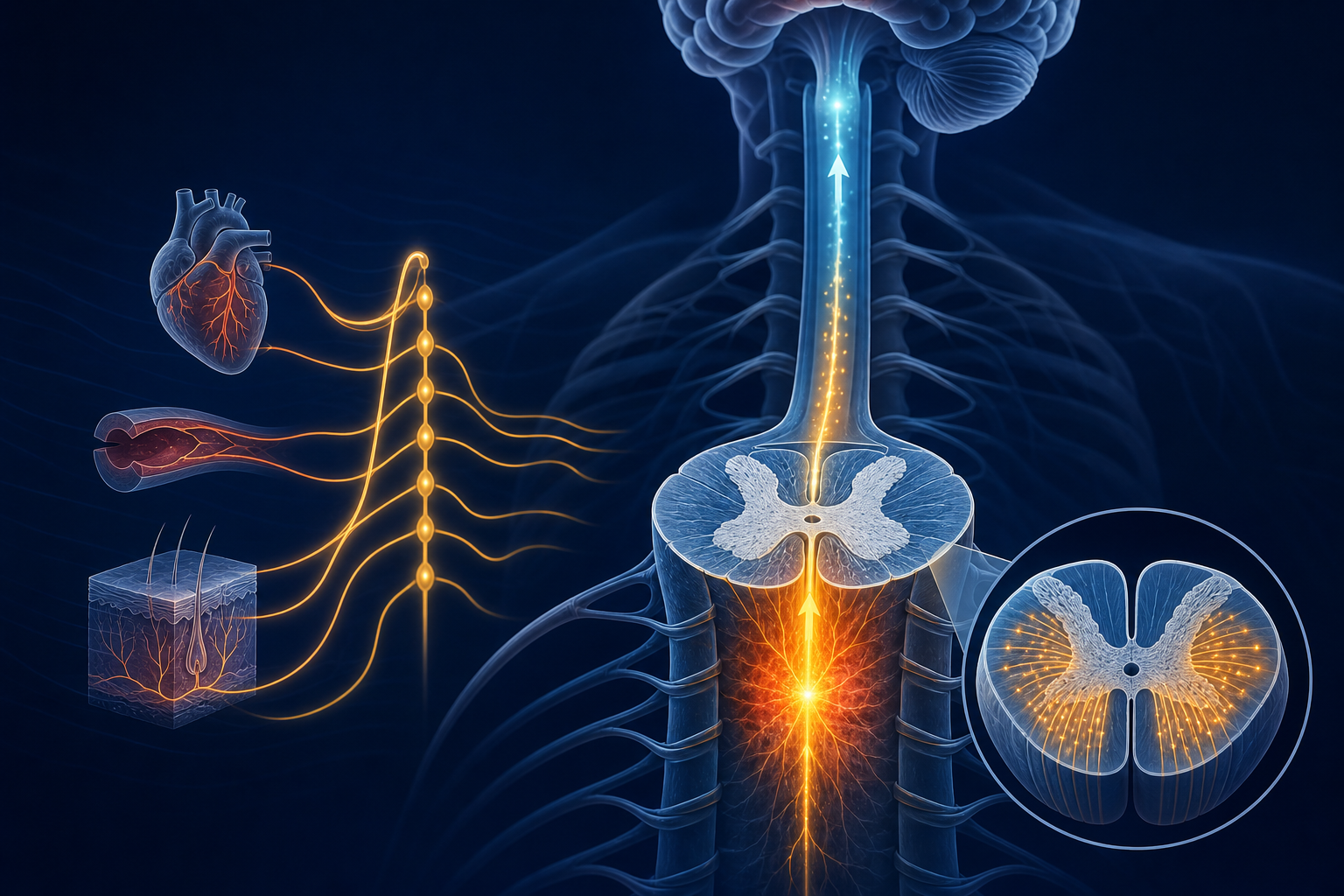
For people living with a spinal cord injury (SCI), autonomic dysreflexia (AD) is one of the most important conditions to understand. It can appear suddenly, escalate quickly, and — without prompt action — carry serious health risks. Yet many patients and caregivers first encounter the term only after an alarming episode has already occurred.
This article explains what autonomic dysreflexia is, what triggers it, how to recognize it, and what steps may help — including when professional care becomes essential.
What Is Autonomic Dysreflexia?
Autonomic dysreflexia is an overreaction of the autonomic nervous system — the part of your nervous system that regulates involuntary functions like blood pressure, heart rate, and sweating. In people with a spinal cord injury at or above the T6 vertebral level, the normal feedback loop between the body and brain is disrupted. When a pain or irritation signal arises below the level of injury, the body responds with a massive reflex that can send blood pressure to dangerously elevated levels before the brain can moderate the response.
The condition is sometimes called autonomic hyperreflexia and is considered a medical emergency when blood pressure reaches critically high thresholds. Understanding what triggers it is a core part of life after a high-level spinal cord injury.
Learn more about how the spine and nervous system interact in our Spinal Cord Injury Rehabilitation Guide.
Who Is at Risk?
Autonomic dysreflexia most commonly affects individuals with complete or incomplete spinal cord injuries at or above the T6 level, though cases have been reported in injuries as low as T10. The higher the level of injury, the greater the risk and the more intense the potential response. People with cervical (neck-level) injuries are generally at higher risk than those with lower thoracic injuries.
AD is rare in people without a spinal cord injury, though it has occasionally been reported in other neurological conditions. If you or a loved one has a high-level SCI, understanding this condition is not optional — it is a practical necessity.
Autonomic Dysreflexia Symptoms: What to Watch For
Episodes of autonomic dysreflexia can develop within minutes. The most characteristic sign is a sudden, severe pounding headache — often described as throbbing — accompanying a rapid rise in blood pressure. A systolic blood pressure increase of 20–40 mmHg or more above a person's baseline is considered significant. Other symptoms may include:
- Profuse sweating above the level of injury, particularly on the face and neck
- Flushing or redness of the skin above the injury level
- Pale, cool, or goose-bumped skin below the injury level
- Nasal congestion
- Blurred vision or spots in the visual field
- Slow heart rate (bradycardia), though elevated heart rate can also occur
- Anxiety or a sense that something is wrong
Not every episode looks the same. Some individuals experience only mild symptoms; others have severe presentations. Importantly, the absence of pain does not mean the absence of danger — many people with complete SCI cannot feel the triggering stimulus below their injury level.
What Triggers Autonomic Dysreflexia?
Any stimulus that would normally be perceived as uncomfortable or painful below the level of injury can potentially trigger an episode. The most common triggers involve the bladder and bowel:
Bladder and Bowel Triggers
- Bladder distension — a full or blocked bladder is the single most common trigger. A kinked catheter, blocked drainage bag, or delayed catheterization can rapidly provoke an episode.
- Urinary tract infections (UTIs) — chronic or recurring UTIs are a significant risk factor.
- Bowel distension or constipation — a full rectum or bowel impaction is the second most frequent trigger.
- Digital stimulation during bowel care — routine bowel management procedures can sometimes provoke a response.
Other Common Triggers
- Pressure sores or skin irritation (tight clothing, wrinkles in bedding, ingrown toenails)
- Fractures or other injuries below the level of injury that go unfelt
- Menstruation, pregnancy, or labor in women with SCI
- Sexual activity
- Surgical or medical procedures performed below the injury level
- Temperature extremes
Identifying and addressing personal trigger patterns — often with the help of a rehabilitation specialist — is a key part of long-term management. Explore our rehabilitation provider directory to find specialists experienced with spinal cord injury care.
Is Autonomic Dysreflexia Life-Threatening Without Treatment?
Yes — untreated severe autonomic dysreflexia can be life-threatening. Sustained extremely high blood pressure may lead to stroke, seizure, cardiac complications, retinal hemorrhage, or death. This is why medical professionals and SCI rehabilitation organizations consistently classify acute AD as a medical emergency. The risk is real, and recognizing an episode early significantly improves outcomes.
Autonomic Dysreflexia Emergency Steps
If you or someone you care for experiences sudden, severe headache with suspected high blood pressure following a spinal cord injury, the following general steps are widely recommended in SCI care guidelines — but they are not a substitute for emergency medical care. Always call emergency services if symptoms are severe or blood pressure cannot be lowered quickly.
Immediate Actions
- Sit up. Elevating the head and letting the legs drop can help lower blood pressure using gravity.
- Loosen anything restrictive. Remove tight clothing, belts, footwear, or compression devices.
- Check the bladder first. Inspect the catheter for kinks or blockages; if no catheter is in place and the bladder is full, catheterize if trained to do so.
- Check the bowel. If the bladder is not the cause, a bowel check may be needed — use anesthetic gel if available to avoid worsening the stimulus.
- Look for skin irritants. Check for pressure areas, wrinkles in clothing, or other sources of skin irritation.
- Monitor blood pressure. If available, check blood pressure every few minutes.
- Seek emergency care if symptoms persist. If the trigger cannot be identified and resolved quickly, or if blood pressure remains critically elevated, call emergency services immediately.
An emergency action plan developed with your healthcare team — often called an AD card or protocol — is an invaluable tool for anyone living with high-level SCI. Ask your rehabilitation provider about creating one.
How Long Does an Autonomic Dysreflexia Episode Last?
Episode duration varies depending on how quickly the triggering stimulus is identified and removed. When the cause is found and resolved promptly — such as unclamping a blocked catheter — blood pressure may normalize within minutes. If the trigger is not found or is more complex (such as a pressure injury or internal issue), the episode may persist and escalate. Prolonged episodes require emergency medical intervention.
Autonomic Dysreflexia vs. Orthostatic Hypotension: Key Differences
Both conditions involve abnormal blood pressure responses and are common after spinal cord injury, but they work in opposite directions:
- Autonomic dysreflexia involves a sudden spike in blood pressure, typically triggered by a noxious stimulus below the injury level, and is most common in high-level SCI.
- Orthostatic hypotension involves a sudden drop in blood pressure when moving from lying to sitting or standing, leading to lightheadedness or fainting.
Some individuals with SCI may experience both conditions at different times, which makes individualized care planning with a knowledgeable provider all the more important. Read our related article on managing orthostatic hypotension after spinal cord injury for a fuller picture.
Can Physical Therapy Help Manage Autonomic Dysreflexia?
Physical therapy does not treat an acute AD episode, but it may play a meaningful role in long-term management and prevention. A physical therapist experienced in spinal cord injury rehabilitation can help with:
- Developing safe positioning strategies that reduce pressure-related triggers
- Skin inspection routines and pressure relief techniques that may lower the risk of sores and irritation
- Bowel and bladder management education (often in coordination with occupational therapy and nursing)
- Exercise programming that supports cardiovascular health and overall function
- Caregiver training so that those assisting the patient recognize warning signs and respond appropriately
Research in SCI rehabilitation suggests that consistent, well-structured rehabilitation care is associated with better functional outcomes and quality of life for people living with high-level spinal cord injuries. Find a physical therapist near you with experience in neurological and spinal cord injury rehabilitation.
Natural and Lifestyle Approaches to Reducing Episodes
While there is no lifestyle approach that eliminates the risk of autonomic dysreflexia, several evidence-informed habits may help reduce the frequency or severity of episodes:
- Consistent bladder management — adhering to a catheterization schedule to prevent overdistension, and monitoring for signs of UTI.
- Regular bowel programs — a structured bowel routine may reduce the likelihood of distension or impaction.
- Skin checks — daily inspection for pressure injuries, irritation, or ingrown nails.
- Temperature management — avoiding extreme heat or cold, which can stress the autonomic system.
- Clothing choices — wearing loose, non-restrictive clothing and avoiding tight waistbands or footwear.
- Patient and caregiver education — the more informed everyone in the care circle is, the faster potential triggers can be identified and resolved.
These approaches work best when developed collaboratively with a rehabilitation team familiar with your specific injury level and history.
Finding an Autonomic Dysreflexia Specialist
Managing autonomic dysreflexia well typically involves a multidisciplinary team: a physiatrist (rehabilitation medicine physician), a urologist experienced with neurogenic bladder, a physical therapist, an occupational therapist, and sometimes a neurologist. Finding providers who have direct experience with spinal cord injury care is important, as AD management requires familiarity with both the condition's urgency and its long-term patterns.
Use our spinal cord injury specialist directory to search for qualified rehabilitation providers in your area. You can also browse chiropractors who specialize in neurological and post-injury care, or explore our broader guide to navigating life after spinal cord injury.
When to Seek Emergency Care
Call emergency services immediately if:
- Blood pressure is critically elevated and not coming down after removing the suspected trigger
- The person experiences loss of consciousness, seizure, or vision changes
- The trigger cannot be identified within a few minutes
- Symptoms are worsening rather than improving
Autonomic dysreflexia is manageable, but it demands respect. A prepared patient and care team are the most effective safeguard.
Frequently Asked Questions About Autonomic Dysreflexia
What is autonomic dysreflexia and how dangerous is it?
Autonomic dysreflexia is an abnormal, exaggerated response of the autonomic nervous system that causes a sudden, severe spike in blood pressure, most often in people with spinal cord injuries at or above the T6 level. Without prompt treatment, it can lead to stroke, cardiac complications, or other life-threatening events, making it one of the most serious medical emergencies in SCI care.
What are the most common symptoms of autonomic dysreflexia?
The most recognizable symptoms are a sudden, pounding headache and a rapid rise in blood pressure, often accompanied by sweating and flushing above the injury level, pale or cool skin below it, nasal congestion, and sometimes slow heart rate or blurred vision.
What triggers autonomic dysreflexia in spinal cord injury?
The most common triggers are bladder distension (a full or blocked catheter) and bowel distension or constipation. Other triggers include skin irritation, pressure sores, urinary tract infections, tight clothing, temperature extremes, and medical procedures performed below the level of injury.
What should I do during an autonomic dysreflexia episode at home?
Sit up immediately to help lower blood pressure, loosen any restrictive clothing, and check the bladder and bowel for distension. Remove any identifiable trigger as quickly as possible. If symptoms do not improve promptly or blood pressure remains critically high, call emergency services. Always follow any emergency protocol developed with your healthcare team.
How long does an autonomic dysreflexia episode last?
When the trigger is quickly identified and removed, blood pressure may normalize within minutes. If the trigger is not found or is more complex, the episode can persist and requires emergency medical attention.
Is autonomic dysreflexia different from orthostatic hypotension?
Yes. Autonomic dysreflexia causes a sudden spike in blood pressure triggered by a stimulus below the injury level, while orthostatic hypotension causes a drop in blood pressure when changing position. Both can occur in people with spinal cord injury but have different causes and management approaches.
Can physical therapy help with autonomic dysreflexia?
Physical therapy does not treat acute episodes, but it may support long-term prevention through skin care education, safe positioning, bowel and bladder management guidance, and caregiver training. A physical therapist experienced in spinal cord injury care is a valuable part of the management team.
How can I find an autonomic dysreflexia specialist near me?
Look for physiatrists, rehabilitation medicine physicians, or neurologists with experience in spinal cord injury care. Medximity's provider directory can help you search for qualified specialists and rehabilitation providers in your area.


