Does Cigna Cover Auto Accident Treatment? What Patients Need to Know depends on several factors: your Cigna plan, whether the provider is in network, whether the care is considered medically necessary, and whether auto insurance benefits such as personal injury protection, medical payments coverage, or another payer may be responsible before health insurance. In many cases, Cigna may help cover evaluation and conservative treatment after a car accident, including visits related to neck pain, back pain, whiplash-associated symptoms, and rehabilitation, but patients should verify benefits before starting care whenever possible.
If you were recently in a crash and are searching for auto accident treatment near me Cigna, the most useful first step is to contact both your health insurance plan and the treating provider’s office. Ask whether the provider accepts your plan, whether accident-related care requires special claim handling, and whether prior authorization is needed for physical therapy or other services. You can also use Medximity to find conservative care options, including chiropractors near you and physical therapists near you.
This article is educational only. Insurance coverage varies by plan and state, and auto accident billing can involve health insurance, auto insurance, workers’ compensation, or a liability claim depending on the facts. For coverage decisions, rely on your plan documents and direct confirmation from Cigna or the administrator listed on your insurance card. For legal questions, consult a licensed attorney in your jurisdiction.
Quick Answer: Does Cigna Cover Car Accident Treatment?
Cigna may cover car accident treatment when the care is a covered benefit under your plan, medically necessary, properly documented, and not excluded or payable first by another type of insurance. Many Cigna plans include benefits for office visits, diagnostic evaluation, chiropractic care, physical therapy, and rehabilitation, but the exact coverage can vary widely.
For example, one patient’s plan may allow chiropractic visits with a copay and no referral, while another plan may require a referral, use visit limits, or require prior authorization after a certain number of therapy sessions. Some plans may cover physical therapy after a car accident with cost-sharing similar to other outpatient therapy. Others may apply deductibles, coinsurance, network rules, or medical necessity review.
Auto accidents can also trigger coordination of benefits. That means Cigna may ask whether another insurer is responsible for the bill. Depending on your state and auto policy, personal injury protection, medical payments coverage, or another payer may need to be billed before your health plan processes the claim. This is one reason accident-related claims sometimes take longer than routine office visits.
Why Auto Accident Treatment Coverage Can Be More Complicated Than a Regular Visit
A typical visit for neck pain or back pain may be billed directly to health insurance. A visit after a motor vehicle crash can involve additional questions because the injury may be connected to an auto policy, a workplace event, or a third-party liability claim. Health insurers commonly request more information before paying claims related to accidents.
Health insurance may ask who is financially responsible
After a crash, Cigna or its claims administrator may send an accident questionnaire. This form usually asks when the accident occurred, whether another vehicle was involved, whether the injury happened at work, whether auto insurance is available, and whether an attorney is involved. The purpose is to determine whether another payer should be primary.
Completing these forms promptly may help reduce claim delays. If the insurer does not receive requested accident information, claims may be denied or held until the information is supplied.
Plan rules still apply
Even when Cigna covers accident-related care, standard plan rules often still apply. These may include:
- Deductibles before benefits begin
- Copays or coinsurance for each visit
- Network requirements
- Referral requirements for certain plans
- Prior authorization for some services
- Visit limits for chiropractic or therapy benefits
- Medical necessity review
Because these details are plan-specific, a provider’s office may be able to help verify benefits, but only the insurer can confirm final coverage and payment.
What Is Auto Accident Treatment?
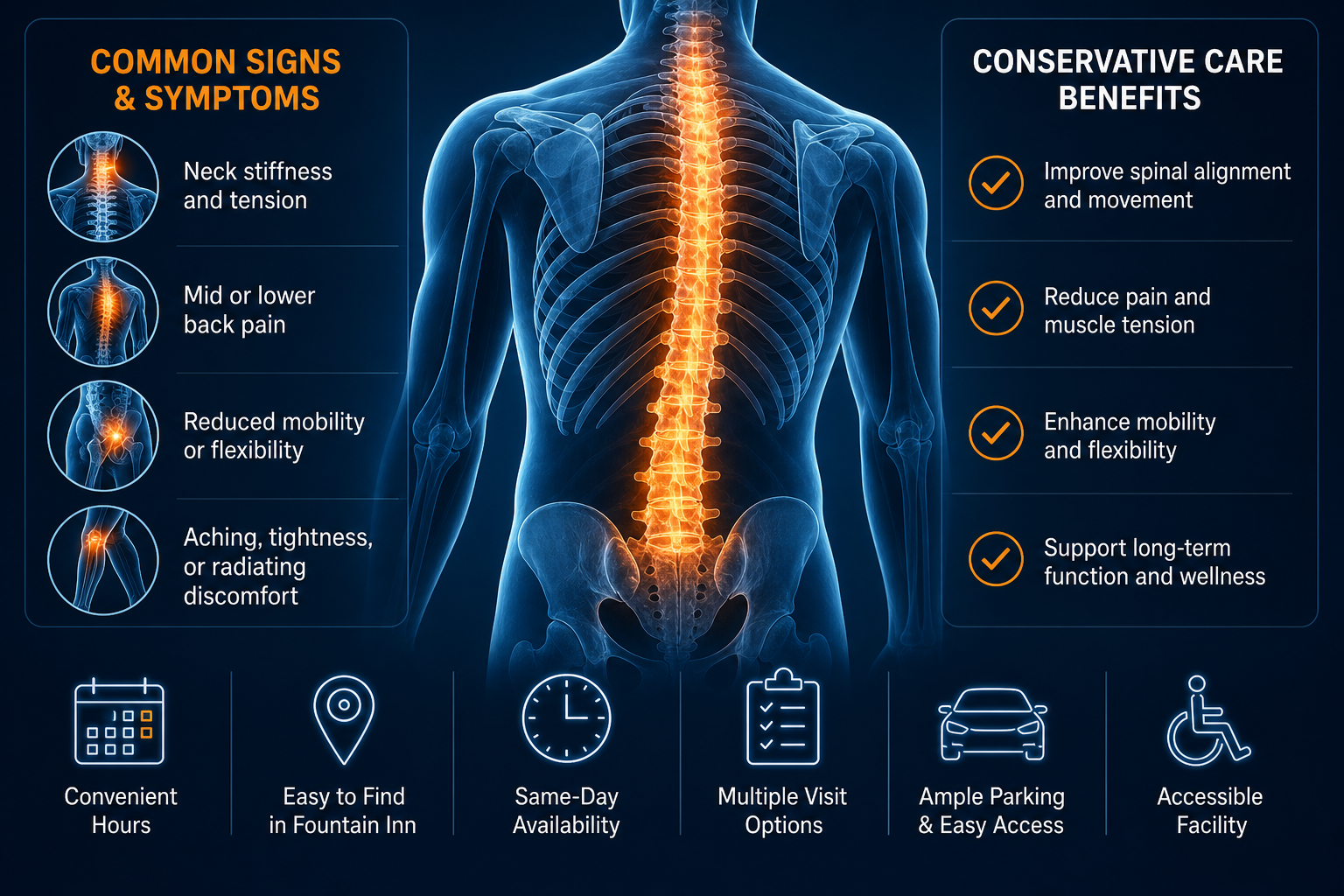
Auto accident treatment is medical evaluation and care for symptoms or injuries that may be related to a crash. In the conservative care setting, this often includes assessment and non-surgical treatment for musculoskeletal problems such as neck pain, back pain, headaches, shoulder pain, hip discomfort, reduced range of motion, muscle guarding, and whiplash-associated symptoms.
Conservative treatment may include chiropractic care, physical therapy, therapeutic exercise, mobility work, manual therapy, posture and ergonomics coaching, balance or coordination training, and progressive rehabilitation. The goal is not to promise a cure, but to help reduce pain, improve function, restore movement when possible, and support a safer return to normal activity.
If you are looking for car accident rehab without surgery, Medximity can help you learn about chiropractic care, physical therapy, and other conservative treatment options available through local providers.
Common Symptoms After a Car Accident
Symptoms after a crash can appear immediately, or they may become more noticeable over the next several hours or days. The timing and severity can vary based on the mechanism of the crash, previous health history, age, activity level, and other factors. A qualified provider can evaluate your specific situation and help determine whether conservative care is appropriate.
Neck pain after car accident treatment
Neck pain after a car accident is common, especially after rear-end or side-impact crashes. The neck may move quickly through flexion and extension, which can irritate muscles, ligaments, joints, discs, or nerves. Some patients also report headaches, stiffness, shoulder tension, dizziness, or difficulty turning the head.
Neck pain after car accident treatment may include a clinical exam, range-of-motion testing, orthopedic or neurologic screening when appropriate, gentle mobility work, manual therapy, chiropractic adjustment when clinically suitable, therapeutic exercise, and home-care guidance. Treatment should be based on the patient’s presentation and should be modified if symptoms change.
To learn more about this type of injury pattern, visit Medximity’s resource on whiplash symptoms and conservative care.
Back pain when sitting after accident
Back pain when sitting after an accident may be related to irritated spinal joints, muscle strain, disc irritation, sacroiliac joint stress, hip tightness, or protective muscle guarding. Sitting often increases load through the lower back and pelvis, which can make symptoms more noticeable during driving, desk work, or long periods of rest.
Conservative care may include movement assessment, core and hip strengthening, mobility exercises, posture coaching, spinal or soft-tissue techniques, and graded return to activity. A provider may also suggest modifications such as changing seat position, using short walking breaks, or avoiding prolonged static posture when symptoms are aggravated.
If your main complaint is lower back pain, Medximity’s guide to back pain treatment options can help you understand common conservative approaches.
Headaches, shoulder pain, and radiating symptoms
Some patients experience headaches after a crash, especially when neck stiffness or upper back tension is present. Shoulder pain may occur from seat belt restraint, bracing on the steering wheel, or sudden force through the upper body. Tingling, numbness, weakness, or pain traveling into the arm or leg should be evaluated carefully because these symptoms may involve nerve irritation or another condition that needs prompt attention.
Any new, worsening, or unusual symptom after a crash should be discussed with a qualified healthcare provider. Severe symptoms may require urgent or emergency evaluation.
When to See a Provider After a Car Accident
Consider seeing a healthcare provider after a car accident if you have pain, stiffness, reduced mobility, headaches, numbness, tingling, weakness, difficulty sleeping because of discomfort, pain that worsens with sitting or driving, or symptoms that do not improve over a few days. Even if symptoms seem mild, an evaluation may help document your condition and guide safe activity.
Seek urgent medical attention right away if you have severe headache, loss of consciousness, confusion, chest pain, shortness of breath, severe abdominal pain, uncontrolled bleeding, new weakness, loss of bladder or bowel control, suspected fracture, severe dizziness, or any symptom that feels serious or rapidly worsening. Conservative care providers can be part of recovery, but emergency symptoms should be evaluated in an emergency setting.
If your symptoms are musculoskeletal and you are stable, you may choose to schedule with a chiropractor, physical therapist, or other qualified provider. Medximity’s article on when to see a chiropractor after a car accident explains common timing considerations and what patients often ask before their first visit.
Cigna Chiropractic Care After Car Accident
Cigna chiropractic care after car accident may be covered under some plans when chiropractic benefits are included and the services are medically necessary. Coverage can depend on the provider’s network status, the type of plan, whether a referral is required, visit limits, and whether the service is considered covered for your diagnosis and symptoms.
Chiropractic care after a crash may include spinal and extremity evaluation, movement assessment, manual therapy, spinal manipulation or adjustment when appropriate, soft-tissue work, stretching, strengthening exercises, and education about posture and activity. Chiropractors may also coordinate with other providers when imaging, medical evaluation, or a different level of care may be needed.
Questions to ask before starting chiropractic care
Before scheduling, consider asking the chiropractic office and Cigna these questions:
- Is this chiropractor in network with my Cigna plan?
- Does my plan cover chiropractic care for accident-related injuries?
- Do I need a referral from a primary care provider?
- Are there annual visit limits or diagnosis-based limits?
- Is prior authorization required?
- What are my copay, deductible, and coinsurance amounts?
- Will auto insurance need to be billed first?
- How are records and treatment plans documented?
If you are searching for the best chiropractor for car accident near me, focus less on advertising claims and more on practical qualifications: experience with post-accident musculoskeletal care, clear documentation, conservative treatment planning, communication with your other providers, and willingness to explain benefits before care begins. You can start with Medximity’s chiropractor directory to compare local options.
Physical Therapy After Car Accident Cigna Coverage
Physical therapy after car accident Cigna coverage may be available when outpatient physical therapy is a covered benefit and the treatment is medically necessary. Physical therapy may help patients work on strength, mobility, balance, coordination, posture, and functional movement after a crash. It is often used for neck pain, back pain, shoulder injuries, hip or knee pain, gait changes, and general deconditioning after injury.
Physical therapy plans are usually individualized. A therapist may evaluate range of motion, strength, pain behavior, joint mobility, nerve-related symptoms, movement patterns, and functional limitations. Treatment may include therapeutic exercise, neuromuscular re-education, manual therapy, stretching, home exercise instruction, and gradual return-to-activity planning.
Cigna prior authorization physical therapy accident
Cigna prior authorization physical therapy accident requirements vary by plan. Some plans allow an initial evaluation and a limited number of visits before authorization is needed. Others require authorization before treatment begins or after a specific visit threshold. Some employer-sponsored plans use third-party utilization management for therapy services.
If prior authorization is required, the provider may need to submit clinical information such as diagnosis codes, evaluation findings, functional limitations, treatment goals, expected frequency and duration, and progress updates. Authorization is not a guarantee of payment, and lack of authorization when required can lead to denied claims.
Patients can help by providing accurate accident details, completing requested insurance forms, attending scheduled visits, and following the home program as recommended. If coverage is limited, ask the provider whether a self-pay estimate, reduced visit frequency, or home-based plan may be appropriate for your situation.
PIP vs Health Insurance After a Car Accident
Understanding PIP vs health insurance car accident billing can prevent confusion. Personal injury protection, often called PIP, is auto insurance coverage available in some states and policies. It may pay for certain medical expenses after a crash regardless of fault, subject to policy terms and state law. Medical payments coverage, often called MedPay, is another type of auto policy benefit that may help with accident-related medical bills in some situations.
Health insurance, such as a Cigna plan, is different. It generally covers medically necessary care under the health plan’s terms, but it may coordinate with auto insurance when the treatment is accident-related. In some cases, auto insurance may be primary. In other cases, health insurance may process the claim and later seek reimbursement if another party is responsible. This process is often called subrogation or reimbursement, but the rules vary by plan and jurisdiction.
Because laws vary by state and policy language matters, patients should not assume one payer will automatically cover everything. Contact your auto insurer, Cigna, and the provider’s billing office early so you understand how claims may be submitted.
Does Health Insurance Cover Car Accident Treatment?
Does health insurance cover car accident treatment? Often, it may, but not always in the same way as a routine medical visit. Health insurance may cover accident-related treatment when the services are covered benefits and medically necessary, but coordination of benefits, exclusions, liens, reimbursement rights, and auto policy requirements can affect how claims are handled.
Common reasons a health insurance claim after a crash may be delayed or denied include:
- The insurer needs accident details before processing the claim
- Auto insurance should be billed first under the plan rules
- The provider is out of network
- Prior authorization was required but not obtained
- The service is not covered under the plan
- Visit limits have been reached
- The documentation does not support medical necessity
- The diagnosis or billing codes do not match the submitted records
A denial does not always mean the care can never be covered. Sometimes additional information, corrected billing, or documentation is needed. Ask the provider’s billing office and the insurer what is required and whether an appeal process is available under your plan.
What to Expect at Your First Auto Accident Treatment Visit
Your first visit should include a detailed history and examination. The provider will likely ask about the crash mechanism, symptom onset, pain location, activities that worsen or improve symptoms, prior injuries, current medications, and any evaluation already completed. Bring your health insurance card, auto insurance information if available, claim number if one exists, photo identification, and any discharge paperwork or imaging reports.
Clinical evaluation
The provider may assess posture, range of motion, muscle tenderness, joint mobility, strength, reflexes, sensation, balance, gait, and functional movements such as bending, lifting, sitting, or walking. The exact exam depends on your symptoms and the provider’s scope of practice.
If the provider identifies signs that may require medical imaging, emergency evaluation, or referral to another clinician, they should explain why and help guide next steps. Conservative care is appropriate for many musculoskeletal complaints, but it is not the right setting for every post-crash symptom.
Treatment planning
If conservative care is appropriate, the provider may recommend a treatment plan. This plan may include visit frequency, short-term goals, home exercises, activity modifications, and expected reassessment points. Plans should be adjusted based on progress and tolerance.
For example, early care may focus on calming irritated tissues and restoring comfortable movement. Later stages may emphasize strength, endurance, coordination, and return to work, exercise, driving, or daily tasks. Recovery is not always linear; temporary symptom fluctuations can occur, especially as activity increases.
Insurance and documentation
Expect paperwork. Accident-related care often requires more documentation than routine wellness visits. The office may ask for health insurance details, auto claim information, accident date, attorney information if applicable, and consent forms. The provider’s notes may document the mechanism of injury, objective findings, treatment provided, response to care, and functional limitations.
Good documentation matters for both clinical continuity and claim processing. It helps show why care was provided, what changed over time, and whether ongoing treatment appears medically necessary.
How Long Does Whiplash Therapy Take?
How long does whiplash therapy take? There is no single timeline. Some patients with mild symptoms may improve over a few weeks with appropriate activity, education, and conservative care. Others may need a longer rehabilitation plan, especially if symptoms are more intense, movement is limited, headaches are frequent, nerve symptoms are present, or there were previous neck problems.
Factors that may influence the length of therapy include:
- Severity and direction of the crash forces
- How soon symptoms began
- Baseline health and previous injuries
- Work demands and driving requirements
- Sleep quality and stress level
- Consistency with home exercises
- Presence of headaches, dizziness, or radiating symptoms
- Insurance visit limits or authorization requirements
A provider should reassess progress periodically. If symptoms are not improving as expected, the plan may need to change, or referral to another healthcare professional may be appropriate. Patients should avoid any provider who promises a fixed recovery timeline without evaluating them.
Car Accident Rehab Without Surgery
Many patients prefer to start with car accident rehab without surgery when their condition is appropriate for conservative care. Conservative rehabilitation may help improve mobility, reduce fear of movement, rebuild strength, and support daily function. It can be especially useful for soft-tissue injuries, joint stiffness, posture-related discomfort, and gradual return to activity.
Common conservative options may include:
- Chiropractic care: Manual therapy, spinal or extremity adjustment when appropriate, mobility work, and patient education.
- Physical therapy: Exercise-based rehab, movement retraining, strengthening, stretching, and functional progression.
- Therapeutic exercise: Targeted movements to improve range of motion, stability, endurance, and coordination.
- Manual therapy: Hands-on techniques that may help with soft-tissue tension and joint mobility.
- Ergonomic coaching: Guidance for sitting, driving, sleeping, workstation setup, and lifting mechanics.
- Home exercise programs: Simple, progressive exercises that support between-visit improvement.
Conservative care should be matched to the patient. More treatment is not automatically better. The goal is a reasonable, documented plan that supports measurable improvement and safe activity.
How to Verify Cigna Coverage Before Treatment
Before starting treatment, take a few practical steps to reduce surprises. If you are in pain, you may not be able to complete every step before the first visit, but gathering information early can help.
1. Check your plan type and network
Look at your Cigna card and plan portal or call the member services number listed on the card. Ask whether the provider is in network for your specific plan. A provider may accept some Cigna plans but not others.
2. Ask about accident-related billing
Tell Cigna the treatment is related to a motor vehicle accident. Ask whether auto insurance, PIP, or MedPay must be billed first. Ask whether an accident questionnaire is required and how to submit it.
3. Confirm chiropractic and therapy benefits
Ask whether your plan includes chiropractic benefits and outpatient physical therapy benefits. Confirm visit limits, copays, deductibles, coinsurance, referral rules, and whether telehealth or home exercise instruction is covered if relevant.
4. Ask about prior authorization
Prior authorization requirements can be different for chiropractic care, physical therapy, imaging, or specialist visits. If you are specifically concerned about Cigna prior authorization physical therapy accident treatment, ask when authorization is required, who submits it, and what happens if additional visits are needed.
5. Request a cost estimate from the provider
The provider’s office may be able to estimate your out-of-pocket responsibility based on verified benefits. The final amount can still depend on claim processing, deductibles, and insurer decisions, but an estimate is better than guessing.
Choosing an Auto Accident Provider Who Accepts Cigna
When searching for auto accident treatment near me Cigna, choose a provider who can evaluate your symptoms, explain your treatment options, and handle accident-related documentation carefully. Convenience matters, but so does fit. A nearby office is helpful only if the provider offers the type of care you need and communicates clearly about coverage.
Consider asking:
- Do you accept my specific Cigna plan?
- Do you treat patients after motor vehicle accidents?
- Do you provide conservative rehab for neck pain, back pain, and whiplash symptoms?
- How do you document progress and medical necessity?
- Do you coordinate care with other providers when needed?
- Can you explain expected costs before treatment begins?
- What happens if my plan requires prior authorization?
Use Medximity to compare local providers, review specialties, and find care that matches your needs. You can begin with Medximity provider search, browse local chiropractors, or explore physical therapy clinics.
Documentation Patients Should Keep After a Crash
Keeping organized records may make medical and insurance conversations easier. Consider saving copies of:
- Insurance cards for health and auto coverage
- Claim numbers from auto insurance
- Accident date and basic crash details
- Emergency or urgent care discharge papers
- Imaging reports, if any
- Provider referrals, if required
- Treatment plans and visit summaries
- Receipts, explanations of benefits, and bills
- Insurance letters or accident questionnaires
- A simple symptom and activity log
A symptom log does not need to be dramatic or lengthy. It can simply note pain location, activities that aggravate symptoms, missed work or activity limitations, and changes over time. Share clinically relevant information with your provider so the treatment plan reflects your actual function.
Common Mistakes That Can Delay Coverage
Accident-related claims are often more paperwork-heavy than ordinary office visits. These common mistakes can create delays:
- Assuming Cigna will automatically pay before auto insurance is reviewed
- Not completing an accident questionnaire
- Seeing an out-of-network provider without understanding the cost
- Starting therapy without required prior authorization
- Missing appointments needed for reassessment
- Not telling the provider about new or worsening symptoms
- Confusing a benefit quote with a guarantee of payment
- Waiting too long to clarify denied or pending claims
If you receive a denial or a request for information, do not ignore it. Call the number on the notice, ask what is missing, and notify the provider’s billing office. Many claim issues are administrative, but they usually require timely response.
How Medximity Helps Patients Find Post-Accident Care
Medximity helps patients search for chiropractors, physical therapists, and other conservative care providers in one place. After a crash, that can be helpful because patients often need care quickly but still want to compare options thoughtfully.
Through Medximity, you can search by specialty, location, and care focus. Provider profiles may help you understand what services are offered and whether a practice may be a good match for symptoms such as neck pain, back pain, or mobility limitations after an accident. Because insurance participation can change, always confirm Cigna network status directly with the provider and insurer before relying on coverage.
For additional education, read Medximity’s guide to what to expect after a car accident injury evaluation.
Frequently Asked Questions
Does Cigna cover car accident treatment?
Cigna may cover car accident treatment if the care is included in your plan, medically necessary, properly documented, and not required to be paid first by auto insurance or another payer. Benefits vary, so confirm coverage with Cigna and the provider before treatment when possible.
Does Cigna cover chiropractic care after a car accident?
Some Cigna plans cover chiropractic care after a car accident, but coverage depends on your plan’s chiropractic benefits, network rules, visit limits, referral requirements, and medical necessity criteria. Ask whether your chiropractor is in network and whether prior authorization is required.
Does Cigna cover physical therapy after a car accident?
Cigna may cover physical therapy after a car accident when outpatient therapy is a covered benefit and the plan’s requirements are met. Your plan may require prior authorization, progress documentation, or use of an in-network physical therapist.
What is the difference between PIP and health insurance after a car accident?
PIP is auto insurance coverage available in some states and policies that may pay certain medical expenses after a crash. Health insurance, such as Cigna, covers care under a health plan. Depending on state law and policy terms, PIP or MedPay may need to be billed before health insurance.
Will Cigna require prior authorization for physical therapy after an accident?
Some Cigna plans require prior authorization for physical therapy, either before treatment begins or after a certain number of visits. Requirements vary by plan. Ask Cigna and the therapy office who submits authorization and what clinical information is needed.
How long does whiplash therapy take?
Whiplash therapy timelines vary. Some patients improve within a few weeks, while others need longer care depending on symptom severity, prior injuries, headaches, nerve symptoms, work demands, and response to treatment. A provider should reassess your progress and adjust the plan as needed.
Can I get car accident rehab without surgery?
Many patients with musculoskeletal symptoms can begin with conservative rehab when appropriate. Chiropractic care, physical therapy, therapeutic exercise, manual therapy, and posture coaching may help improve movement and function without surgery. A qualified provider can help determine whether conservative care fits your situation.
How do I find auto accident treatment near me that accepts Cigna?
Start by searching Medximity for local chiropractors or physical therapists, then confirm directly with the office and Cigna that the provider is in network for your specific plan. Ask about accident-related billing, prior authorization, estimated costs, and whether auto insurance must be billed first.
Bottom Line
Cigna may cover auto accident treatment, including chiropractic care and physical therapy, but coverage depends on your specific health plan, the provider’s network status, medical necessity, prior authorization rules, and whether auto insurance benefits apply. If you have neck pain, back pain when sitting, whiplash symptoms, or reduced function after a crash, consider scheduling an evaluation with a qualified provider and verifying benefits early.
Medximity can help you compare conservative care options and find providers who may support your recovery after a car accident. Start with Medximity’s provider search and confirm insurance details before beginning care.
This article is for educational purposes only and is not a substitute for professional medical advice, diagnosis, or treatment. Always consult a qualified healthcare provider about your specific condition. If you may be experiencing a medical emergency, call 911 or seek emergency care immediately.